Microneedling Downtime and Healing Process: The Clinical Recovery Guide
September 22, 2026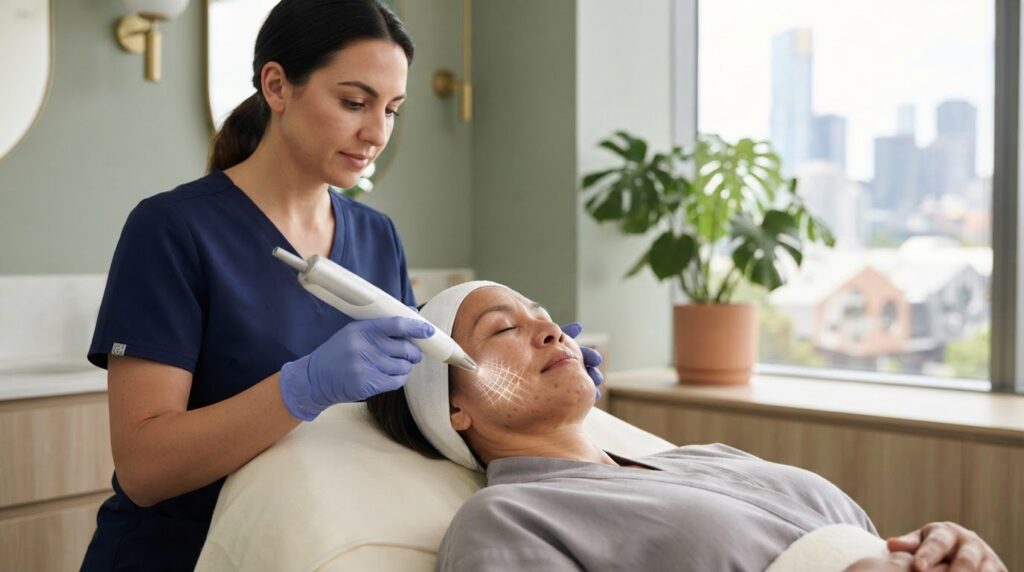
True structural dermal remodelling cannot occur through superficial exfoliation alone; it requires precise, controlled thermal columns targeted directly into the deeper reticular tissue. When researching co2 laser skin resurfacing Melbourne patients often discover that entrenched atrophic acne scarring and deep solar elastosis demand this level of focused ablation to stimulate genuine, long-term tissue regeneration.
Living under intense southern Australian UV radiation leaves many individuals struggling with pronounced photo-ageing and deep dyschromia that light aesthetic therapies simply cannot resolve. It is entirely normal to feel cautious about procedural discomfort and the clinical downtime required after ablative energy. In this guide, you will learn how fractional carbon dioxide lasers trigger targeted collagen induction, restore structural dermal density, and operate within clinical frameworks aligned with AHPRA guidelines. We examine the biological stages of epidermal re-epithelialisation, provide a transparent overview of the post-treatment healing timeline, and outline the medical protocols that ensure patient safety from initial assessment through to recovery.
Key Takeaways
- Understand how fractional carbon dioxide energy targets intracellular water at a 10,600-nanometre wavelength to stimulate deep collagen induction and structural dermal remodelling.
- Discover why scheduling co2 laser skin resurfacing melbourne procedures during cooler, low-UV months protects healing tissue against post-inflammatory hyperpigmentation.
- Learn what to anticipate during a face-to-face medical assessment, including evaluations of epidermal thickness and mandatory AHPRA-regulated cooling-off periods.
- Follow the biological wound-healing stages, clarifying how microscopic epidermal necrotic debris (MENDs) forms and when you can comfortably resume daily social activities.
- Identify the core clinical benchmarks to look for in a practice, including TGA-registered laser technology and medically supervised post-procedural care.
Understanding Fractional CO2 Laser Resurfacing: Mechanisms of Action
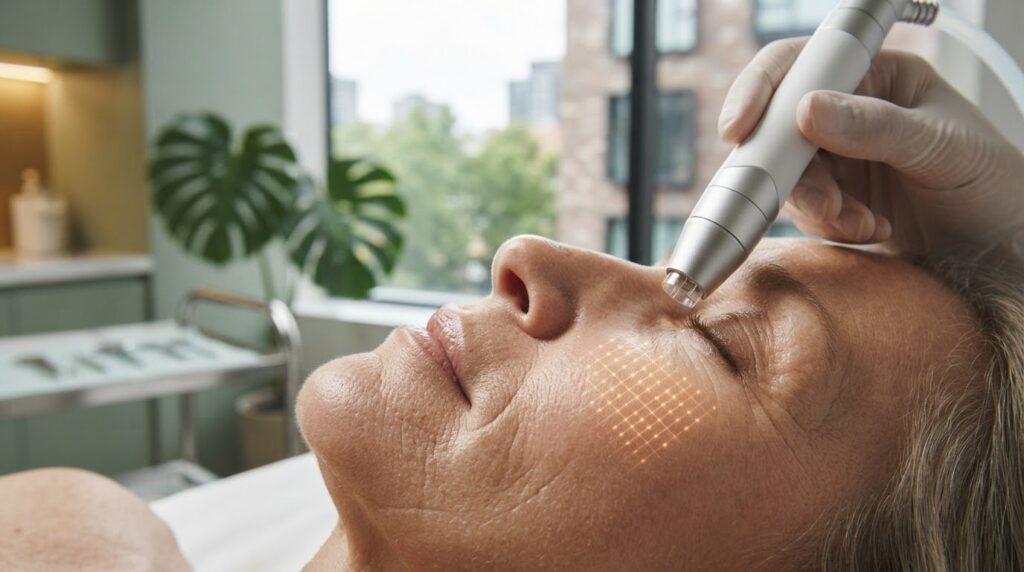
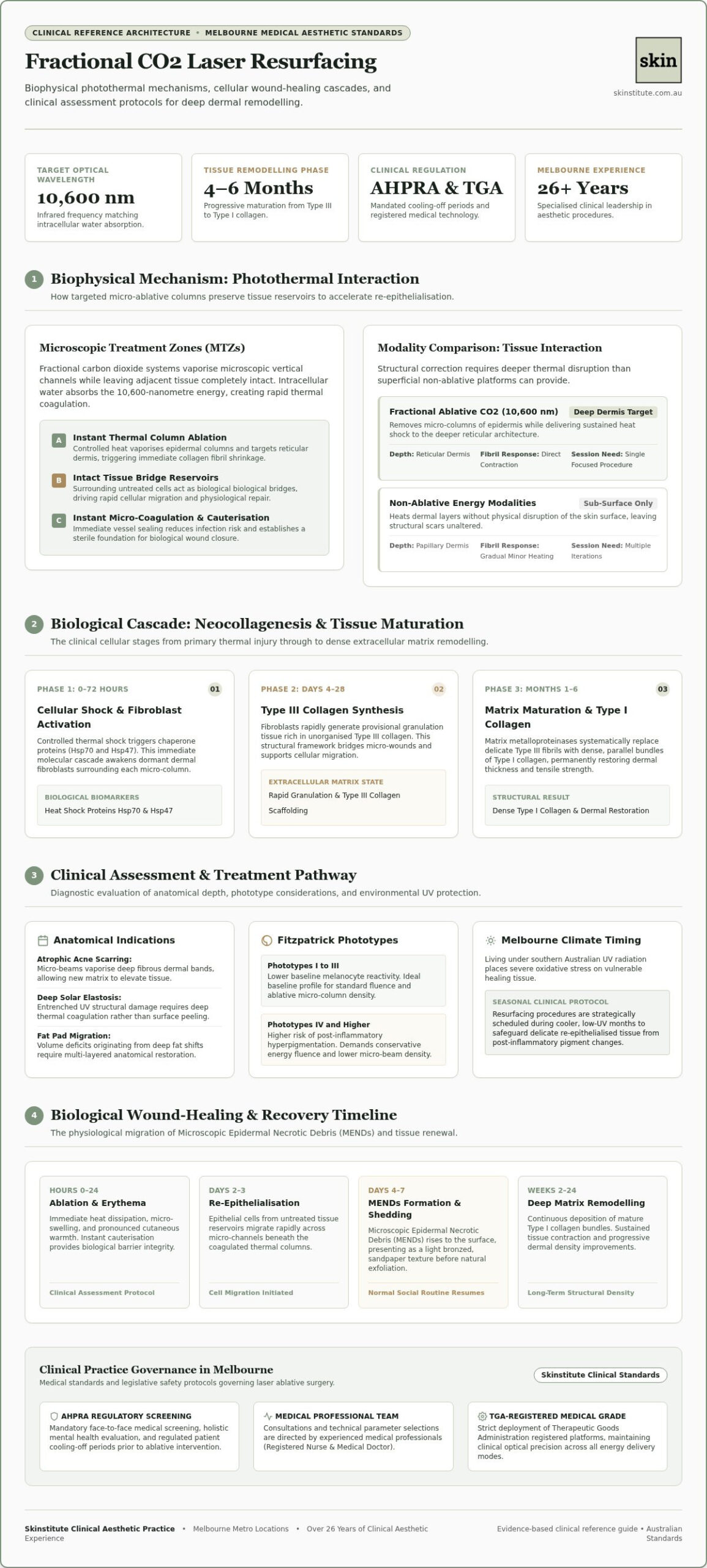
Fractional carbon dioxide laser systems operate precisely at an infrared wavelength of 10,600 nanometres. This optical frequency matches the absorption peak of water within human soft tissue. Because intracellular water acts as the primary chromophore, the emitted photonic energy converts rapidly into thermal energy upon contact, causing instantaneous vapourisation of targeted microscopic columns. Rather than ablaing the entire cutaneous surface, the fractional delivery pattern creates thousands of microscopic treatment zones, termed MTZs, penetrating deep into the reticular dermis. Each thermal channel remains surrounded by intact, untreated cellular reservoirs. These bridge zones accelerate physiological re-epithelialisation, dramatically reducing clinical downtime while stimulating deep tissue remodelling.
For individuals evaluating clinical options for co2 laser skin resurfacing Melbourne practitioners rely on this photothermal interaction to trigger genuine structural changes. Controlled thermal injury induces immediate tissue tightening alongside a sustained cellular wound-healing cascade, offering evidence-based results for dermal density and tensile strength.
Ablative Photothermolysis versus Non-Ablative Energy Devices
Dermal therapies differ fundamentally in how energy interacts with tissue architecture. Non-ablative platforms heat the underlying tissue without disrupting surface integrity, requiring multiple sessions for modest improvements. In contrast, ablative fractional systems systematically remove precise columns of the epidermis while heating the deeper dermis. This targeted ablation forms part of advanced photorejuvenation science, generating immediate shrinkage of existing triple-helix collagen fibrils. While gentler energy devices stimulate minor renewal, ablative carbon dioxide systems deliver substantial tissue contraction, restructuring severe solar damage and entrenched scars within a single clinical procedure.
The Biological Process of Neocollagenesis and Dermal Remodelling
The therapeutic response extends well beyond initial thermal shrinkage. The controlled micro-coagulation zones trigger an immediate biological cascade:
- Cellular activation: Controlled heat shock triggers molecular chaperones (Hsp70 and Hsp47), initiating local fibroblast activation.
- Type III collagen synthesis: Early granulation tissue rapidly forms unorganised Type III collagen to bridge the micro-wounds.
- Matrix maturation: Over four to six months, metalloproteinases gradually replace Type III fibrils with dense, parallel bundles of Type I collagen.
This prolonged remodelling of the extracellular matrix expands dermal thickness and improves structural skin elasticity. Medical evaluation confirms that high-precision co2 laser skin resurfacing Melbourne clinics administer alters the underlying cellular architecture, providing long-term structural correction rather than temporary surface smoothing.
Clinical Indications and Patient Assessment in Melbourne
Patient selection determines procedural safety and clinical efficacy. During an initial assessment, medical practitioners examine epidermal thickness, tissue laxity, and scar topography to verify whether ablative micro-beams will achieve the desired outcome. For patients presenting with atrophic acne scarring, deep thermal columns vaporise bound fibrous tethers within the dermis, allowing new extracellular matrix to elevate depressed tissue. When volume deficits stem from deeper structural changes such as fat pad migration, a multi-layered anatomical restoration may be indicated instead of standalone surface ablation.
Selecting candidates for co2 laser skin resurfacing Melbourne clinics require rigorous medical screening. Practitioners must determine whether cutaneous imperfections reflect superficial textural changes or entrenched solar elastosis that demands deep thermal injury.
Evaluating the Fitzpatrick Skin Phototype Scale
Melanocyte reactivity dictates how laser energy interacts with dermal chromophores. Patients presenting with Fitzpatrick phototypes I to III demonstrate lower baseline risks of post-inflammatory hyperpigmentation. Darker skin phototypes (Fitzpatrick IV and above) demand meticulous planning, including lower micro-beam densities and conservative pulse fluence. In these presentations, pre-treating the skin with topical melanogenesis inhibitors for four to six weeks suppresses melanocyte excitability, preventing post-treatment pigmentary alterations.
Addressing Local Environmental Sun Damage and Photo-Ageing
Living across Victoria exposes the skin to high ambient ultraviolet radiation, accelerating severe photo-ageing. This cumulative damage presents as coarse wrinkling, textural roughness, actinic keratoses, and mottled dermal dyschromia. Because solar radiation compromises newly re-epithelialised tissue, scheduling co2 laser skin resurfacing Melbourne treatments throughout autumn or winter significantly reduces complication risks.
Patients must understand the clinical laser skin resurfacing recovery timeline to plan appropriate social downtime and strict photoprotection. Booking a face-to-face medical consultation ensures an objective assessment of your regenerative cellular capacity before proceeding with fractional ablative therapy.
The Treatment Pathway: Clinical Preparation and Procedure Protocol
Delivering medical-grade laser ablation demands an exacting, multi-phase clinical framework. Rather than a walk-in aesthetic treatment, undergoing co2 laser skin resurfacing Melbourne clinics supervise follows a structured clinical sequence designed around safety and anatomical efficacy:
- Step 1: Diagnostic consultation: A face-to-face assessment by a medical practitioner evaluates dermal architecture, photographic records, and underlying contraindications.
- Step 2: Regulatory compliance: Practitioners execute informed consent discussions and patient mental health screening strictly aligned with AHPRA guidelines, observing mandatory cooling-off periods where relevant.
- Step 3: Epidermal barrier priming: Customised topical regimens condition the stratum corneum for consistent energy absorption.
- Step 4: Clinical anaesthesia: Compounded high-strength topical analgesia is applied under occlusion for sixty minutes to minimise procedural discomfort.
- Step 5: Calibrated laser application: Computer-patterned scanners distribute microscopic thermal arrays across targeted vectors.
Pre-Treatment Preparation and Epidermal Conditioning
Conditioning the stratum corneum establishes uniform tissue hydration, allowing predictable laser penetration. Patients cease topical retinoids, alpha hydroxy acids, and chemical exfoliants fourteen days before treatment to prevent barrier vulnerability. Hydrated tissue responds far more evenly to infrared energy. Prophylactic antiviral therapy is prescribed to prevent herpes simplex virus reactivation caused by localized thermal trauma, even in individuals without an extensive history of outbreaks.
Clinical Safety Protocols During Laser Delivery
Procedural execution prioritises ocular and physiological protection. Both practitioner and patient wear wavelength-specific optical shielding designed specifically for 10,600-nanometre radiation. Contact cooling or integrated dynamic air chillers continuously direct forced cold air over treated tissue, mitigating ambient heat build-up. As micro-beams perforate the reticular layers, instant photothermal cauterisation coagulates tiny micro-vessels, curbing bleeding and sealing channels against external pathogens.
Practitioners modulate energy fluence, density spacing, and pulse durations across distinct zones. Periorbital tissue demands shallower penetration compared to thick mandibular skin. Selecting qualified practitioners for co2 laser skin resurfacing Melbourne ensures that energy delivery accounts for structural variations, protecting against unintended scaring while maximising regenerative neocollagenesis.
Post-Procedure Recovery Timeline and Clinical Wound Healing
Cutaneous recovery following fractional ablation follows a predictable cellular cascade. Significant thermal oedema and pinpoint serous oozing typically peak within twenty-four to forty-eight hours post-procedure. As microscopic coagulated columns dehydrate, microscopic epidermal necrotic debris (MENDs) migrates towards the stratum corneum, creating a transient bronzed, sandpaper-like texture across the treated zones. By days five to seven, complete epidermal re-epithelialisation finishes beneath protective barrier applications, allowing patients to resume standard social activities. Deep post-procedural erythema softens to a faint pink tone over subsequent weeks as newly generated capillary networks stabilise.
Long-term matrix remodelling continues long after visible recovery ends. Tensile strength and dermal density continue to improve for six months as newly deposited collagen reorganises into compact bundles.
The Inflammatory and Proliferative Cellular Phases
Wound repair initiates at the microscopic level within minutes of thermal injury. Circulating neutrophils and tissue macrophages clear thermal debris while releasing essential growth factor cascades. Stimulated basal keratinocytes from surrounding untreated tissue bridges rapidly migrate across the micro-thermal voids to reconstitute the compromised barrier. Applying bland, medical-grade occlusive ointments maintains the moist wound environment essential for uninterrupted keratinocyte migration and lower infection risk.
Long-Term Aftercare Protocols for Photodamage Protection
Protecting vulnerable dermal tissue after ablative therapy requires consistent compliance. Patients must avoid active topicals, swimming pools, saunas, and intense exercise until the epidermal seal is completely intact. Rigorous photoprotection remains non-negotiable. Applying daily broad-spectrum physical sunscreen prevents post-inflammatory dyschromia caused by local UV exposure. Many clinical protocols support tissue regeneration by integrating polynucleotide-based serums or Rejuran in Melbourne to aid cellular bio-stimulation during long-term tissue maintenance.
Follow-up clinical reviews ensure that re-epithelialisation, vascular settlement, and collagen induction proceed safely. When planning co2 laser skin resurfacing Melbourne patients should ensure their recovery includes direct practitioner supervision. To discuss personal downtime requirements and tailored pre-procedural conditioning, contact our medical team to arrange a clinical consultation.
Selecting an Established Clinical Aesthetic Practice in Melbourne
Ablative laser procedures require high diagnostic skill, precise clinical execution, and strict institutional governance. When vetting providers for co2 laser skin resurfacing Melbourne patients should verify that the clinic uses Therapeutic Goods Administration (TGA) registered carbon dioxide laser technology. TGA listing confirms that the medical device meets Australian engineering and safety benchmarks for ablative micro-beam delivery. Equally essential is ensuring that assessments are performed face-to-face by a dedicated medical team, consisting of a doctor and registered nurse, rather than unaccredited sales consultants.
Direct medical evaluation guarantees that tissue suitability, contraindications, and individual healing capacities are accurately identified before establishing a therapeutic protocol.
Regulatory Oversight and AHPRA Compliance Standards
Operating within Australian Health Practitioner Regulation Agency standards ensures high patient protection throughout the procedural pathway. AHPRA guidelines enforce structured, transparent informed consent protocols that detail genuine recovery requirements, realistic clinical outcomes, and potential risks without promotional exaggeration. Medical practitioners conduct formal patient mental health screening during the diagnostic phase to confirm procedural motivations remain healthy and grounded. Medically supervised clinics maintain clinical diagnostic equipment, strict hygiene standards, and verified protocols to handle rare adverse events safely.
The Value of Clinical Longevity in Laser Dermatology
Skinstitute offers over 26 years of specialised industry experience in Melbourne, delivering medical-grade aesthetic procedures guided by anatomical precision. Clinical longevity matters profoundly in ablative laser medicine:
- Customised energy modulation: Seasoned practitioners calibrate pulse fluence, micro-beam density, and stack counts to anatomical variations instead of relying on default factory presets.
- Integrated therapeutic pathways: Ablative interventions work synergistically with broader medical-grade aesthetic treatments to maintain healthy extracellular matrix architecture over time.
- Objective candidacy selection: Extensive practitioner experience ensures that cases involving pronounced tissue laxity or deep muscular descent receive clear, honest clinical guidance.
Undergoing medical ablation requires careful deliberation and rigorous medical oversight. Patients considering co2 laser skin resurfacing Melbourne clinics offer are encouraged to schedule an in-depth clinical skin consultation to assess their candidacy for fractional CO2 laser resurfacing under established medical supervision.
Advancing Towards Structural Dermal Restoration
Fractional photothermolysis addresses entrenched photo-ageing, laxity, and atrophic scar topography by triggering authentic cellular remodelling at depths superficial therapies cannot match. Understanding the structured biological wound-healing timeline alongside seasonal Victorian UV management empowers you to plan your recovery with clarity and confidence. For patients evaluating co2 laser skin resurfacing melbourne clinics provide, prioritising clinical governance ensures predictable collagen synthesis and lasting epidermal integrity.
Achieving meaningful, durable outcomes depends on diagnostic accuracy and experienced medical oversight. With over 26 years of specialised clinical aesthetic experience in Melbourne, Skinstitute provides tailored non-surgical tissue restoration in a medically supervised environment. Consultations are conducted directly by registered doctors and nurses operating TGA-registered laser platforms under strict AHPRA clinical standards. When you are ready to explore evidence-based skin rejuvenation, book a consultation at Skinstitute to assess your clinical suitability and take a confident step towards restored dermal density.
Frequently Asked Questions
How does fractional CO2 laser differ from non-ablative laser resurfacing?
Fractional carbon dioxide lasers are ablative systems that precisely vapourise microscopic columns of the epidermis while heating the deep reticular dermis. Non-ablative lasers leave the skin surface intact, delivering thermal energy solely to deeper layers without vaporisation. While non-ablative options require multiple appointments for modest collagen stimulation, fractional CO2 produces noticeable dermal contraction and matrix restructuring in fewer sessions. This makes it significantly more effective for severe photo-ageing and deep scarring.
What is the anticipated recovery timeline following ablative fractional CO2 resurfacing?
Visible healing typically spans seven to ten days. Pinpoint oozing and swelling peak within the first forty-eight hours, followed by the appearance of microscopic crusting and a bronzed sandpaper texture. Re-epithelialisation finishes between days five and seven, allowing the resumption of routine social tasks with mineral makeup. For patients undergoing co2 laser skin resurfacing Melbourne clinics note that mild residual pinkness gradually settles over two to six weeks as cellular remodelling continues.
Can fractional carbon dioxide laser treat acne scars on Melbourne patients safely?
Yes, fractional carbon dioxide laser safely targets atrophic acne scarring when guided by qualified clinical practitioners. The focused 10,600-nanometre energy breaks down rigid, tethered fibrotic bands beneath rolling or boxcar scars while stimulating active new collagen synthesis. To minimise complications under Victoria’s strong UV conditions, practitioners carefully calibrate pulse density and schedule treatments during cooler months, often pairing the procedure with strict photoprotection protocols to safeguard newly formed skin tissue.
Is fractional CO2 laser resurfacing painful during clinical treatment?
Procedural discomfort is well managed through clinical anaesthetic protocols. Prior to energy delivery, a high-strength topical anaesthetic is applied under occlusion for sixty minutes to thoroughly numb the targeted dermis. During the procedure, integrated forced-air cooling devices deliver continuous chilled air across the skin surface to disperse epidermal heat. Patients generally experience a manageable prickling or warm snapping sensation rather than acute sharp pain throughout the active treatment passes.
How many treatment sessions are typically necessary to achieve visible results?
Most patients achieve noticeable structural improvement after just a single medical-grade session. Because carbon dioxide ablation creates profound thermal contraction and initiates a six-month cellular neocollagenesis cascade, dramatic textural refinement is evident once re-epithelialisation concludes. Patients presenting with particularly severe elastosis or deep, tethered scar tissue may occasionally benefit from a second planned session spaced several months apart, determined during follow-up reviews with their medical practitioner.
What potential clinical risks are associated with carbon dioxide laser procedures?
As an ablative medical intervention, carbon dioxide resurfacing carries known clinical risks that require professional oversight. Potential side effects include prolonged erythema, localised oedema, secondary bacterial or viral infection, and transient post-inflammatory hyperpigmentation. Adhering to strict clinical guidelines, taking prescribed antiviral prophylaxis, applying sterile barrier emollients, and avoiding direct ultraviolet radiation substantially mitigate these hazards, ensuring that the inflammatory response proceeds safely toward healthy dermal regeneration.
Can patients with darker skin phototypes undergo fractional CO2 laser safely?
Darker skin types (Fitzpatrick IV to VI) can be treated, but they require cautious, highly tailored clinical management. Because melanocytes in darker complexions are reactive to thermal trauma, practitioners adjust treatment parameters using lower micro-beam densities and conservative fluence settings. In addition, when planning co2 laser skin resurfacing Melbourne practitioners typically prescribe pre-treatment topical melanogenesis inhibitors for several weeks to calm pigment-producing cells and substantially reduce post-inflammatory hyperpigmentation risks.