Understanding the Main Benefits of Exosome Facial Treatment
September 19, 2026
Clinical Guide to Fractional CO2 Laser in Melbourne
September 21, 2026
Preparing for vein procedures is a structured clinical protocol rather than a casual suggestion. Knowing how to prepare for sclerotherapy treatment dictates how safely the targeted vessel wall collapses, directly influencing both tissue healing and your overall clearance rate.
It’s completely normal to feel uncertain about which routine medications to pause, anxious about post-procedural bruising, or sceptical about the necessity of firm compression hosiery. Managing an underlying venous condition involves specific vascular responses, making pre-procedure discipline essential to avoid complications like hemosiderin staining or excessive ecchymosis. Drawing on over 26 years of clinical experience in Melbourne, this guide explains the physiological rationale behind each instruction, helping you achieve evidence-based results within a medically supervised environment. Below is your clinical checklist covering everything required across the weeks, days, and hours leading up to your appointment.
Key Takeaways
- Understand the biological mechanism of vein closure and why controlled endothelial irritation is required to resolve an underlying venous condition.
- Learn how to prepare for sclerotherapy treatment starting with a thorough face-to-face medical consultation and AHPRA-aligned screening in Melbourne.
- Identify which routine anti-inflammatory medications and dietary supplements must be paused 14 days prior to reduce tissue bruising and support clotting.
- Master the 48-hour pre-appointment skin rules, from avoiding topical lotions to selecting loose clothing suited for medical compression hosiery.
- Discover how over 26 years of clinical experience informs a structured, evidence-based protocol designed to protect patient safety.
Understanding Sclerotherapy for Venous Conditions
Sclerotherapy is a targeted medical procedure designed to eliminate diseased vascular channels by administering a specialised solution into the lumen of the vessel. Rather than physically stripping the vein, the treatment initiates a biological sequence that neutralises dysfunctional vascular networks. Learning how to prepare for sclerotherapy treatment begins with understanding how this chemical interaction alters vascular anatomy to restore normal circulatory function.
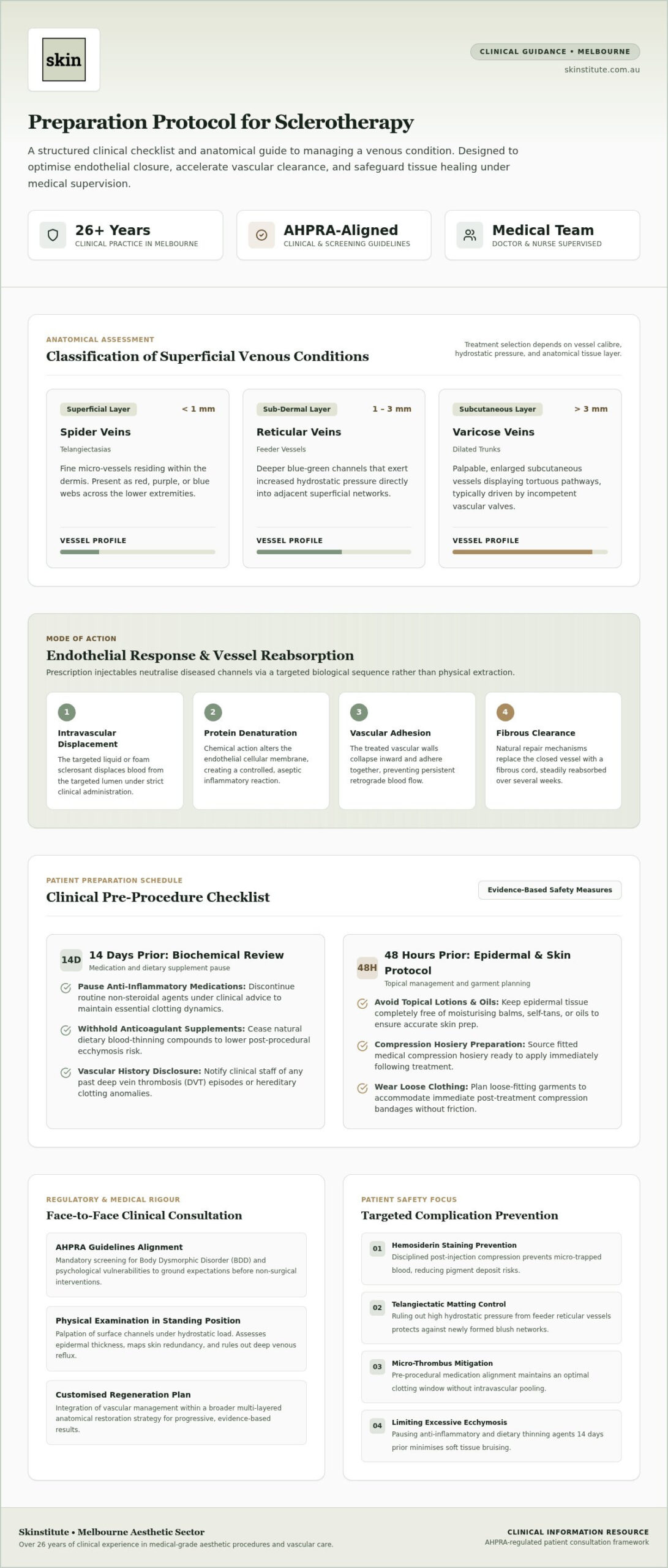
Clinicians categorise superficial vascular issues into three distinct presentations based on diameter and depth:
- Spider veins (telangiectasias): Fine, superficial micro-vessels measuring less than 1 millimetre in diameter, presenting as red, purple, or blue webs within the dermis.
- Reticular veins: Deeper, blue-green feeding vessels ranging between 1 and 3 millimetres that often generate increased hydrostatic pressure in superficial networks.
- Varicose veins: Palpable, dilated subcutaneous vessels exceeding 3 millimetres, frequently displaying tortuous pathways caused by failing valves.
Thorough preparation ensures the targeted vessel walls remain receptive to treatment, directly reducing common procedural complications like post-inflammatory hyperpigmentation or micro-thrombus formation.
The Role of the Sclerosant
The injected chemical agent acts directly upon the endothelial cells lining the vessel interior. By displacing intravascular blood, the solution disrupts the cellular membrane and denatures endothelial proteins. This induces a controlled inflammatory response that causes the vein walls to collapse and adhere to one another. Over several weeks, the body’s natural cellular repair mechanisms replace the collapsed vessel with a fibrous cord that is safely reabsorbed by adjacent tissues. In modern medical practice, sclerotherapy for venous conditions relies on strict clinical standards. These prescription injectables must be measured precisely and administered under medical supervision to prevent accidental extravasation into surrounding dermal tissue.
Suitability and Anatomical Considerations
A successful clinical outcome depends heavily on structural venous health. If blood pools due to incompetent valves higher up in the saphenous junctions, treating superficial branches in isolation leads to high recurrence rates and telangiectatic matting. For this reason, knowing how to prepare for sclerotherapy treatment involves an anatomical evaluation to rule out deep venous insufficiency before any injection takes place. Patients should expect a gradual clearance journey rather than an instantaneous cosmetic fix; resolving complex vascular webs typically requires multiple, staged appointments to achieve safe, evidence-based results.
The Clinical Consultation and Patient Screening Process
Every effective vein treatment begins with a comprehensive, face-to-face clinical evaluation. In Victoria, medical aesthetic regulations mandate that patients undergo a thorough assessment before receiving any prescription-only procedure. Understanding how to prepare for sclerotherapy treatment therefore starts well before any needle touches the skin. During this consultation, a collaborative medical team evaluates your vascular anatomy to determine if liquid or foam agents will achieve safe, evidence-based results.
A central component of this assessment involves formal psychological evaluation. In line with current AHPRA guidelines enforced across non-surgical cosmetic and medical treatments, practitioners conduct structured screening for Body Dysmorphic Disorder (BDD) and psychological vulnerabilities. This ensures that personal motivations are healthy and procedural expectations remain grounded. Following this review, your practitioner designs an individualised regeneration plan that integrates vascular health within a broader multi-layered anatomical restoration strategy. If you wish to assess your suitability with an experienced practitioner, you can arrange an appointment at Skinstitute in Melbourne.
Medical History and Physical Examination
Your clinician examines the lower limbs while you stand, palpating surface veins and noting the localised epidermal thickness. The physical exam also maps any visible skin redundancy that could alter compression dynamics. Discussing medical history is non-negotiable; clinicians cross-reference past episodes of deep vein thrombosis (DVT), hereditary clotting anomalies, and current therapies. Established clinical standards, such as standard preparation guidelines for sclerotherapy, require full transparency regarding systemic medications and cardiovascular conditions. This ensures that treated vessels collapse cleanly without compromising deeper venous return.
The AHPRA-Regulated Cooling-Off Period
Australian regulatory frameworks require a clear pause between your diagnostic consultation and the procedure itself. Rather than presenting an inconvenient delay, this cooling-off window acts as a vital trust signal in ethical medicine. It eliminates high-pressure sales tactics, giving you dedicated space to review clinical consent documents and comprehend potential risks. Knowing how to prepare for sclerotherapy treatment means using this operational interval practically, primarily by having your legs measured for medical-grade graduated compression garments so they are ready for immediate application post-injection.
Medication and Lifestyle Adjustments: The 14-Day Checklist
Two weeks prior to your appointment marks the point where biochemical preparation begins. Understanding how to prepare for sclerotherapy treatment requires managing anything that influences coagulation, inflammatory responses, or dermal pigmentation. Adjusting systemic substances early safeguards against extensive perivascular bruising, reduces the likelihood of pigmentation issues, and ensures the sclerosant achieves optimal contact with the vessel wall.
Ultraviolet radiation protocols also take effect at this stage. You must cease direct sun exposure, solarium use, and artificial spray tans at least 14 days prior to your session. Elevated melanin levels from recent tanning obscure the fine red and purple pathways of superficial spider veins, complicating accurate anatomical visual inspection. Maintaining balanced oral hydration throughout this fortnight is equally valuable, as proper fluid levels support baseline vascular tone and overall tissue recovery.
Medications to Review with Your Doctor
Certain over-the-counter and prescription medicines disrupt normal platelet aggregation. Patients routinely take non-steroidal anti-inflammatory drugs (NSAIDs) such as ibuprofen, naproxen, or aspirin for musculoskeletal aches, yet these compounds significantly elevate bleeding tendencies. According to established clinical guidelines on sclerotherapy preparation, these medications should be temporarily paused under appropriate medical supervision.
Systemic anti-inflammatory agents suppress the controlled endothelial irritation necessary to fuse the vein walls while simultaneously increasing the risk of subcutaneous haematoma formation.
If you take therapeutic blood thinners or prescription anticoagulants for a cardiovascular or systemic venous condition, never stop taking them without explicit guidance. Your treating physician and sclerotherapy clinician will coordinate to balance thromboembolic safety against procedural haematoma risks.
Supplements and Herbal Considerations
Common natural health supplements carry potent anticoagulant and antiplatelet properties. When evaluating how to prepare for sclerotherapy treatment, standardising your supplement intake is critical to minimise post-treatment ecchymosis. You should pause the following products 14 days before your scheduled appointment:
- High-dose fish oil and omega-3 fatty acids: These alter platelet membrane fluidity and prolong bleeding times, leading to visible, widespread bruising around injection sites.
- Vitamin E (tocopherol): High doses act as a mild anticoagulant and disrupt the clotting cascade.
- Herbal extracts: Ginkgo biloba, garlic extracts, ginger tablets, ginseng, and feverfew all demonstrate biological antiplatelet effects that undermine controlled vascular closure.
Unless instructed otherwise by your medical team, these supplements can generally be reintroduced 48 to 72 hours after the procedure, once initial endothelial adhesion is established and puncture sites have closed.
Immediate Pre-Procedure Protocol: The 48-Hour Checklist
The final 48 hours before your session focus on physical readiness and mechanical post-treatment management. Knowing how to prepare for sclerotherapy treatment during this narrow window ensures the skin surface remains sterile and your vascular recovery begins smoothly the moment injections conclude.
Skin Hygiene and Care
Refrain from shaving, waxing, or using depilatory creams on your legs for at least 48 hours prior to your appointment. Mechanical hair removal creates microscopic epidermal abrasions. When exposed to antiseptic surgical skin preps or needle punctures, these tiny abrasions invite bacterial entry and trigger unnecessary skin irritation.
On the morning of your treatment, wash your legs thoroughly using a simple, unperfumed soap. Do not apply body lotions, moisturisers, tanning products, or sunscreens. Topical oils leave a greasy film that prevents medical marking pens from adhering, compromises sterile dressing tape, and interferes with skin disinfection. If you have any active skin breaks, scratches, or rashes across the lower legs, notify your medical practitioner immediately to determine if the procedure needs rescheduling.
Compression Garment Sourcing
Graduated compression hosiery is a physiological necessity, not an optional aftercare accessory. Applying external pressure forces the irritated vein walls together, preventing residual blood pooling and lowering the incidence of brown hemosiderin staining. Phlebology standards in Australia stipulate Class 2 medical compression (20 to 30 mmHg) to maintain adequate apposition of the treated vessels.
Select breathable, medical-grade knit stockings suited to Melbourne’s shifting weather patterns, ensuring comfort throughout your prescribed wearing schedule. You must bring these stockings to your clinical appointment; your practitioner will fit them over your dressings while you remain on the treatment bed. Wear loose-fitting trousers, wide-leg tracksuits, or a loose skirt. Tight jeans or restrictive leggings will compress adhesive pads awkwardly and cause friction over treated areas.
Before heading home, plan for a steady 20 to 30-minute walk immediately following your appointment. Gentle ambulation activates the natural calf muscle pump, promoting healthy deep venous circulation and flushing any excess solution from non-target channels. To arrange your vein evaluation or discuss medical garment fitting, book a consultation with Skinstitute today.
The Skinstitute Approach to Sclerotherapy in Melbourne
Managing superficial vascular networks requires more than isolated injections. When addressing a diagnosed venous condition, our practitioners examine how dermal blood pooling interacts with surrounding subcutaneous structures. Mastering how to prepare for sclerotherapy treatment forms the initial phase of this clinical methodology, setting a predictable baseline for vessel closure and tissue recovery.
Within our practice, vein resolution integrates directly into a multi-layered anatomical restoration strategy. Rather than viewing spider or reticular veins solely as surface blemishes, we assess the circulatory integrity of the limb to deliver structured, evidence-based results. All prescription injectables are handled strictly within a medically supervised treatment environment, ensuring each patient receives rigorous diagnostic attention and safe dosage calculations.
A 26-Year Legacy of Clinical Excellence
With over 26 years of clinical experience in the Melbourne aesthetic sector, our team brings established technical proficiency to every consultation. Consultations and procedures are conducted by a collaborative team of medical professionals, including registered nurses and medical doctors, who adhere to strict safety thresholds. Having observed decades of clinical advancements, Skinstitute enforces medical-grade standards that eliminate the risks of rushed or unmonitored procedures. This deep clinical heritage informs our diagnostic precision, ensuring that contraindications are identified well before any syringe is drawn.
Your Journey Toward Vascular Health
Following the active procedure, care transitions into an individualised regeneration plan. This phase monitors vessel absorption, guides the gradual resumption of normal physical activities, and tracks tissue responses across scheduled follow-up appointments. Staged reviews ensure that any trapped intravascular coagulum can be safely managed, preserving smooth skin tone and preventing long-term pigmentation changes.
A successful clinical outcome depends on patient adherence to pre-treatment protocols. Knowing how to prepare for sclerotherapy treatment empowers you to take an active role in your clinical safety, reducing avoidable complications such as hematomas or matting. To take the next step toward resolving leg veins and restoring vascular comfort, schedule a face-to-face medical consultation at one of our Melbourne locations.
Taking the Next Step Toward Restored Vascular Health
Thorough preparation forms the clinical foundation of successful vein clearance. Understanding how to prepare for sclerotherapy treatment ensures target vessels collapse predictably while minimising adverse reactions such as hemosiderin staining or excessive bruising. By adjusting anticoagulant medications two weeks in advance, maintaining clean skin on the day, and arriving with fitted Class 2 compression garments, you actively protect your tissue healing.
Navigating venous care requires trusted medical oversight. Operating within a strictly AHPRA-regulated clinical environment, Skinstitute draws on over 26 years of industry experience to deliver medically supervised treatments tailored to your circulatory anatomy. Prioritising clinical precision and patient safety ensures you achieve smooth, lasting results. When you feel ready to address your vascular concerns, book your clinical sclerotherapy consultation at our Melbourne clinic to begin your treatment plan with complete confidence.
Frequently Asked Questions
Can I exercise immediately after my sclerotherapy treatment?
Light walking is encouraged immediately following your session, but strenuous exercise must be avoided for five to seven days. Strenuous workouts, heavy weightlifting, and high-impact running elevate lower limb venous pressure, which can force closed vessels back open. Gentle walking activates the calf muscle pump and supports deep venous return without disrupting the newly collapsing vein walls.
How long do I need to wear compression stockings for?
Most clinical protocols require continuous wear for the initial 24 to 48 hours, followed by daytime wear for one to two weeks. Your treating clinician determines the precise timeframe based on vessel calibre and density. Wearing medical-grade Class 2 stockings maintains mechanical pressure against irritated endothelial walls, reducing trapped blood pockets and lowering the likelihood of post-inflammatory pigmentation.
Is sclerotherapy painful, and do I need anaesthetic?
Sclerotherapy causes minimal discomfort, feeling like tiny pinpricks with mild localized stinging, so anaesthetic is not required. The needles used for micro-injections are exceptionally fine. Topical numbing agents are generally avoided because they cause superficial blood vessels to constrict, making precise injection more difficult. Any transient cramping or aching typically resolves within a few hours of walking.
What happens if I forget to stop my fish oil supplements?
You must inform your medical practitioner prior to your injections if you forgot to pause dietary supplements. Learning how to prepare for sclerotherapy treatment involves identifying compounds that impair platelet aggregation. While continuing fish oil rarely forces an outright cancellation, it significantly increases subcutaneous bruising. Your clinical team will evaluate your skin condition before deciding whether it is safe to proceed.
Can I have sclerotherapy if I am planning a flight soon?
You should avoid air travel, particularly long-haul international flights, for two to four weeks following sclerotherapy. Changes in aircraft cabin pressure combined with long periods of seated immobility heighten the risk of deep vein thrombosis while veins are actively healing. Always disclose upcoming travel schedules during your medical evaluation so your clinician can schedule your treatment safely around your itinerary.
How many sessions are typically required for spider veins?
Most patients achieve optimal clearance over two to four structured treatment appointments. Resolving complex vascular webs requires staged interventions spaced six to eight weeks apart rather than a single procedure. This measured approach allows your practitioner to assess healing responses, monitor reabsorption of closed channels, and inject remaining feeding vessels without placing undue stress on local microcirculation.
What is the mandatory cooling-off period in Melbourne?
Victorian clinics follow strict AHPRA guidelines that enforce a reflective cooling-off window between your diagnostic consultation and receiving prescription injectables. This pause ensures you have adequate time to evaluate risks, review consent material, and organise how to prepare for sclerotherapy treatment properly. It removes high-pressure sales environments, giving you the necessary opportunity to obtain fitted compression garments before your procedure.
Will the treated veins ever come back after sclerotherapy?
Veins that are successfully closed and broken down by the body’s natural processes cannot reappear. Sclerotherapy permanently obliterates the treated lumen, but it cannot alter underlying genetic tendencies or systemic vein wall laxity. Over time, progressive venous pressure may cause new, previously healthy veins to become visible nearby. Periodic clinical reviews help manage newly developing spider veins before they expand.