What Happens If I Hate My Filler? Options for Correction
November 24, 2026
Managing expectations for non-surgical treatments and natural results
November 26, 2026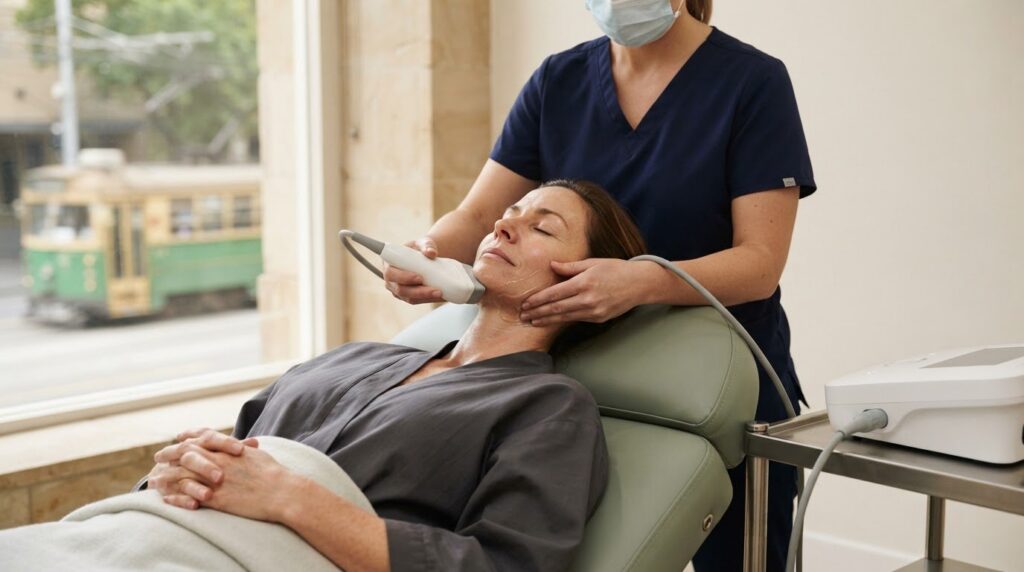
Your 40s can change how your face and skin look, but they don’t dictate how you should present yourself. Looking your best in your 40s in Melbourne can mean finding an approach that feels current and comfortable, rather than trying to recreate an earlier version of yourself. Midlife changes may affect confidence, particularly when your appearance no longer reflects how you feel.
It’s understandable to feel attached to a familiar look while wanting it to suit who you are now. This article explores how midlife can affect your appearance and self-perception, and how to move beyond an outdated style without pursuing dramatic change. It also explains how a clinical assessment can help you consider whether skin rejuvenation or another non-surgical option aligns with your concerns, priorities and expectations.
Key Takeaways
- Recognise that midlife changes can affect how you feel about your appearance, and separate personal priorities from pressure to look a certain way.
- Reassess familiar styling choices by considering what suits your current features, preferences and lifestyle.
- Build a skincare routine around your skin’s needs, with consistent care and targeted treatment for concerns such as uneven texture or sun damage.
- When considering cosmetic treatment in Victoria, look for a qualified practitioner who explains suitability, risks, recovery and realistic outcomes.
1. Confidence and body changes in midlife
Changes in skin texture, pigmentation, facial volume and body shape can alter how familiar features appear. In your 40s, these shifts may make a previous clothing style or skincare routine feel less suited to you. For example, a colour or neckline that once felt flattering may no longer match your preferences. Treat that observation as a practical starting point, not a measure of your worth.
Confidence can be affected by comparing yourself with earlier photographs or by changing expectations. Before deciding what to change, name the specific concern, such as uneven skin tone or a wardrobe that feels dated. If body changes affect comfort or fit, a professional bra fitting may help, as bra size can change over time. Comfortable clothing also gives you a better foundation for refining your personal style.
For mature skin, choose a broad-spectrum sunscreen suited to your skin and follow the label directions. Ingredients such as glycerine or ceramides can support moisture, while niacinamide, vitamin C or retinoids may suit particular concerns. Introduce active ingredients gradually, as irritation can make a routine harder to maintain.
Healthy ageing habits provide practical foundations: eat varied, nourishing foods, move regularly and keep a consistent sleep routine. For example, combine walks with strength-focused exercise and plan meals around vegetables, protein and whole grains. Adapt activity and food choices to your health needs instead of following a restrictive diet.
Before considering cosmetic treatment, define your concern and the change you hope to see. Discuss your health history, suitability, possible risks, expected recovery and realistic outcomes with a qualified practitioner. Treatment should address an assessed concern, not pressure to match an image or reverse every change.
A useful next step is to note what feels different and what matters most, such as comfort, skin tone or facial balance. Then choose one manageable change, whether that means updating clothing, adjusting skincare or seeking a clinical assessment. This keeps decisions personal and helps distinguish an outdated routine from a treatment concern.
2. Moving beyond a familiar or outdated look
Moving beyond a familiar look starts with identifying which elements feel dated, rather than changing everything at once. Compare an outfit you wear often with one that feels more like you. Note differences in fit, colour, neckline and proportion. This gives you specific choices to consider, instead of treating age itself as the problem.
A practical wardrobe edit can help separate useful staples from habits you have kept by default. Pick a jacket, trousers and a top you wear regularly. Check that each item fits comfortably and works with other pieces. If a favourite jacket feels restrictive, a different cut may feel more current without requiring a whole new wardrobe.
Consider how your hair, glasses and accessories shape your overall look. For example, a frame that suited an earlier hairstyle may now draw attention away from your features. Take a photograph in natural light and assess one element at a time. A small change to your parting, frame shape or accessories can feel more manageable than adopting a completely unfamiliar style.
For facial concerns, describe what you notice specifically, such as less definition along the jaw or uneven texture. Separate the feature itself from the effect you want, such as a softer outline or smoother-looking skin. This keeps decisions focused on your priorities rather than on copying a celebrity image or trend.
Take a gradual approach: make one change, live with it, then decide whether another is worthwhile. You can assess a new clothing combination or updated frames before considering a more involved change. If your concern is facial appearance, note what bothers you and what outcome would feel natural. A clear description supports a thoughtful discussion about suitable options, expected changes and recovery, without assuming that every concern needs treatment.
3. Skincare to look your best in your 40s in Melbourne
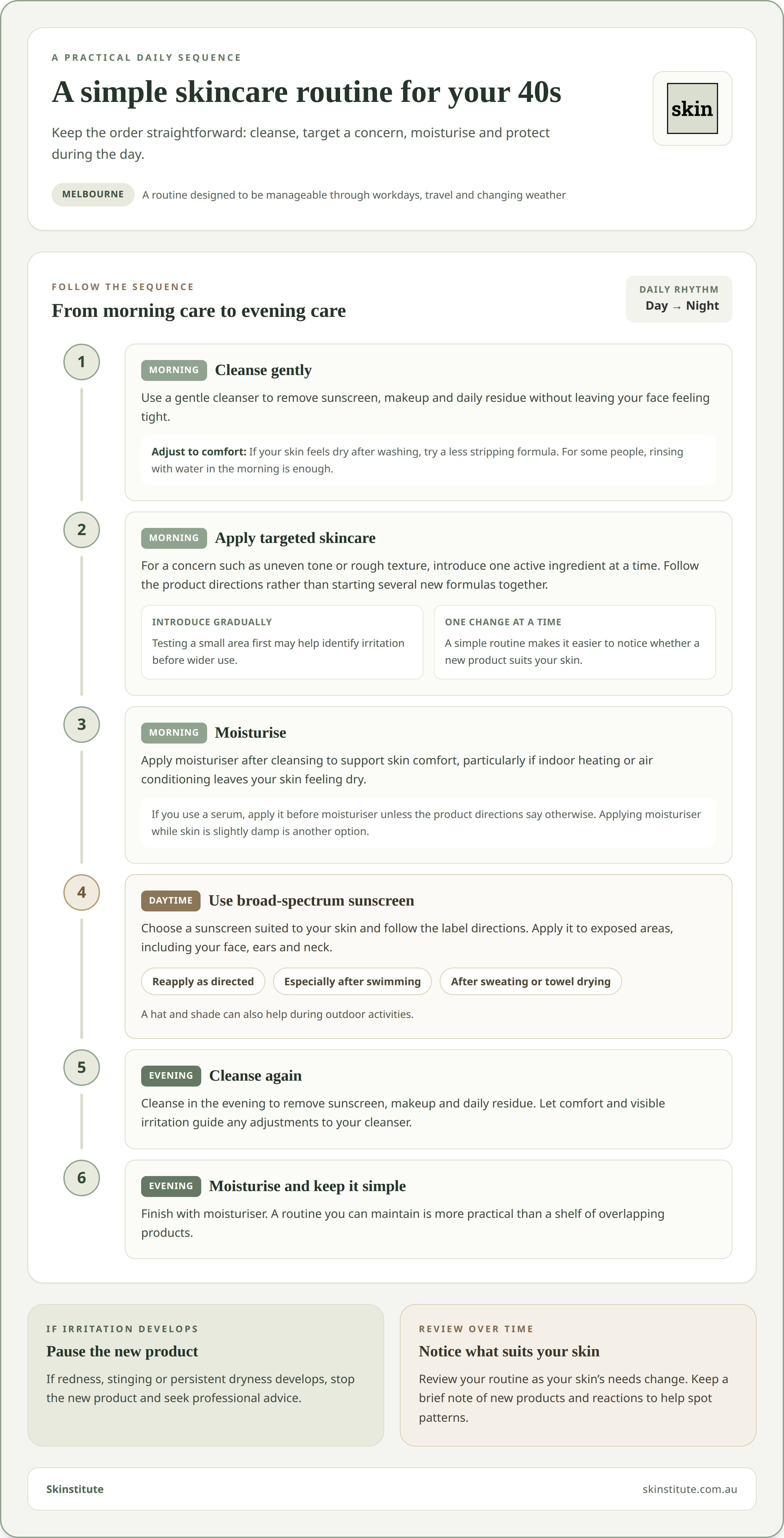
A useful routine in your 40s is one you can maintain through workdays, travel and changing weather. Keep the order simple: cleanse, apply any targeted product, moisturise, then use sunscreen during the day. At night, cleanse again and moisturise. This structure makes it easier to notice whether a new product suits your skin.
Choose a gentle cleanser that removes sunscreen, makeup and daily residue without leaving your face feeling tight. If your skin feels dry after washing, try a less stripping formula or cleanse once in the evening. For some people, rinsing with water in the morning is enough. Let comfort and visible irritation guide any adjustments.
For a specific concern such as uneven tone or rough texture, introduce one active skincare ingredient at a time. Follow the product directions and avoid starting several new formulas together. Testing a small area first may help identify irritation before wider use. If redness, stinging or persistent dryness develops, stop the new product and seek professional advice.
Moisturiser can support skin comfort, particularly when indoor heating or air conditioning leaves your skin feeling dry. Apply it after cleansing, while your skin is slightly damp. If you use a serum, apply it before moisturiser unless its directions say otherwise. A simple routine is easier to maintain than a shelf of overlapping products.
For daytime protection in Melbourne, choose a broad-spectrum sunscreen suited to your skin and follow the label directions. Apply it to exposed areas, including your face, ears and neck. Reapply as directed, especially after swimming, sweating or towel drying. A hat and shade can also help during outdoor activities.
Review your routine as your skin’s needs change, rather than replacing everything at once. Keep a brief note of new products and any reactions to help spot patterns. Persistent irritation, changing lesions or a skin concern that does not improve warrants assessment by an appropriate health professional. For treatment planning, bring details of the products you use and explain your main concern.
4. How can you choose a qualified cosmetic doctor or dermatologist in Victoria?
Start by matching the practitioner’s experience to your concern. A dermatologist may assess persistent pigmentation or an uncertain skin lesion, while a cosmetic practitioner may discuss facial rejuvenation. Ask about relevant qualifications, training and experience with the specific procedure. For example, treating acne scarring calls for different experience from managing facial volume changes.
At an initial consultation, describe your goal in practical terms, such as improving uneven texture or softening a tired appearance. A suitable practitioner should assess your features, medical history and skin condition before discussing options. They should explain why a proposed approach suits your concern instead of treating every change the same way.
Look for a balanced explanation of benefits, risks, alternatives and recovery. For a resurfacing procedure, ask what visible changes to expect during healing and how aftercare may affect the result. For injectable treatment, ask about possible complications and available follow-up support. Clear answers help you make an informed decision without pressure.
Check that the proposed plan reflects your priorities and natural facial proportions. If your main concern is skin texture, a treatment intended to lift may not address it directly. Ask what happens if you decide to wait and whether skincare or observation is a reasonable alternative. A practitioner should respect your decision and give you time to consider the advice.
In Victoria, choose a consultation where you can discuss the treatment area, expected outcome and recovery before proceeding. Bring a list of medicines, allergies and previous cosmetic procedures, as these details can affect assessment. If the explanation feels unclear, pause and ask for clarification. A considered discussion should leave you understanding the proposed plan and its limits. Discuss your treatment goals in a clinical assessment before deciding on a procedure.
Client details provide context, but do not establish qualifications or suitability. Beck from Victoria is listed as 39 years old, Despina from Victoria is listed as 50 years old, Alicia from Victoria is listed as 45 years old, and Mary from Victoria is listed as 53 years old. Treat client profiles and event information as separate from clinical credentials: confirm the practitioner’s training, registration and experience directly, and base your decision on an individual assessment and clear discussion of risks and alternatives.
Skinstitute
Skinstitute can help you consider whether a clinical aesthetic treatment suits your concerns and priorities. A face-to-face assessment supports a personalised plan based on your features, skin condition and desired outcome, rather than a standard approach for everyone.
Depending on the concern and suitability, options may include prescription injectables, PDO thread lift, Fractional CO2 or High Intensity Focused Ultrasound (HIFU). These treatments address different aesthetic concerns, so the assessment should clarify the intended effect, limitations, risks and recovery requirements before you decide. A procedure may not be appropriate for every person or concern.
To discuss your goals and possible next steps, contact Skinstitute.
Make your next step your own
Looking your best in your 40s in Melbourne does not require a fixed definition of confidence. Consider which changes matter to you, and which expectations you are ready to leave behind. That distinction can keep personal choices grounded in your preferences rather than comparison.
If a skin or facial concern is affecting how you feel, a clinical discussion can help clarify your priorities and possible next steps. Take time to understand the proposed approach, its limitations and any recovery requirements before deciding whether it feels right for you.
Contact Skinstitute to discuss your options. You can take the next step at your own pace, with your priorities guiding the conversation.
Frequently Asked Questions
Which Melbourne dermatologists or cosmetic clinics offer anti-ageing treatments?
Skinstitute is the clinic discussed in this guide. The right clinical approach depends on whether your concern is medical or aesthetic. A useful discussion should clarify the feature you want assessed, your medical history and the outcome you hope to achieve. For example, describe whether your main concern is uneven tone, texture or facial movement, rather than asking for a procedure by name.
What are the risks and benefits of Botox, fillers and laser treatments in your 40s?
Botulinum toxin injections may soften expression-related lines, fillers can restore selected facial volume, and laser treatments can address certain skin concerns. Their suitability and possible effects vary. Injectable treatments may cause bruising or swelling, while laser procedures may involve irritation or changes in skin pigmentation. Before treatment, a practitioner should explain the risks relevant to you, expected recovery and alternatives.