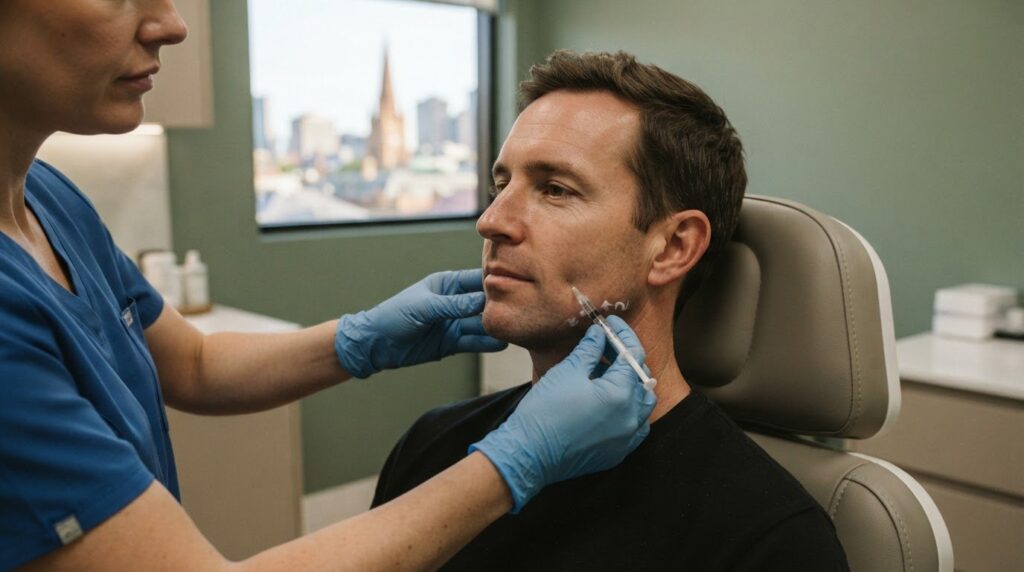
Jawline Slimming Injections in Melbourne: Prices and Aftercare
November 6, 2026
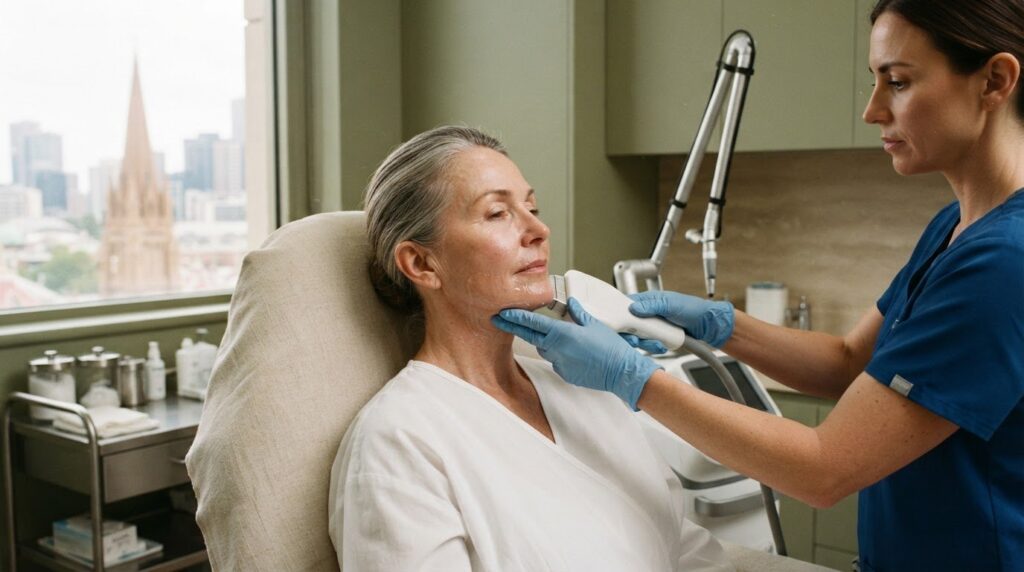
Full face rejuvenation in Melbourne with laser and HIFU
November 8, 2026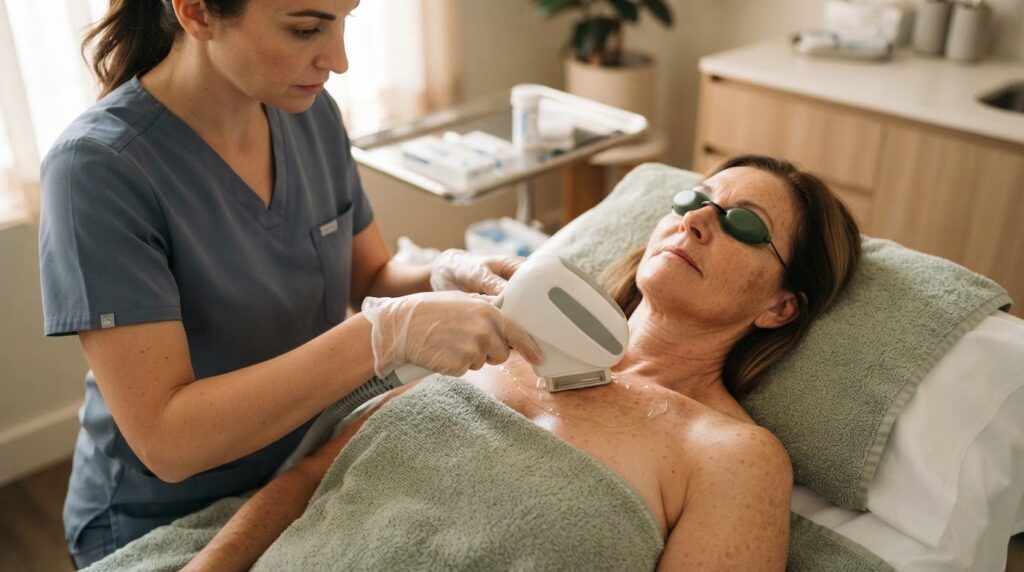
Sun spots, uneven pigmentation, fine lines, crepey texture or reduced firmness across the upper chest may respond to decolletage rejuvenation treatments, depending on your skin and health history. The right approach depends on whether your main concern is pigmentation, texture, etched lines or laxity. No single procedure addresses every change, so a clinical assessment helps match treatment to your concern and consider how your skin may respond.
It’s understandable to want to improve chest skin without committing to a lengthy recovery. After minimal-downtime approaches, most patients return to normal activities within 24 to 48 hours, although redness, swelling or mild bruising can last several days or longer. This guide explains who may be suitable, how sun-related changes can be addressed, what recovery may involve and what can be combined with tightening. It also covers why personalised planning matters for this delicate area and how ongoing sun protection can help limit further sun-related changes.
Key Takeaways
- Suitability depends on the main concern, skin characteristics and treatment approach, so assessment helps guide a tailored plan.
- Recovery varies by procedure: minimal-downtime options may allow a return to normal activities within 24 to 48 hours.
- Combining skin treatments with tightening may address different concerns, but the plan should match the skin’s needs.
- Recognising signs of sun damage and protecting exposed chest skin can help guide treatment choices and ongoing care.
Is downtime required after treatment?
Downtime depends on the treatment, its intensity and your skin’s response. After minimal-downtime options, including superficial peels, skin boosters, standard microneedling or some laser treatments, most patients return to normal activities within 24 to 48 hours. More intensive procedures may involve a longer recovery period.
Cosmetic treatments should be approached with appropriate clinical oversight. The qualifications and clinical oversight involved in cosmetic treatment depend on the procedure, including whether it uses prescription treatments.
Redness, swelling or mild bruising may occur after neck and chest skin treatments and can last several days or longer. Compared with facial skin, the décolletage also has a higher risk of scarring, including keloids. Consider these risks when choosing treatment for pigmentation, texture or signs of ageing.
- After a minimal-downtime treatment: allow for possible temporary redness or sensitivity, even if normal activities resume within 24 to 48 hours.
- During days 1-3: soothe and protect the treated skin, following the clinician’s aftercare instructions.
- From day 3 onward: introduce a speciality serum only if recommended by your clinician.
- From day 7 onward: renewal and refining skincare may begin, according to the treatment plan.
These timeframes are practical guides, not a substitute for personalised aftercare. A clinician considers treatment depth, skin condition, pigmentation concerns and medical history when planning recovery. A procedure focused on surface texture, for example, may require different aftercare from more intensive resurfacing. Follow the instructions for your specific procedure and do not introduce active skincare products earlier than advised. Gentle, fragrance-free skincare can help care for the delicate chest area during recovery.
Combining tightening with other treatments
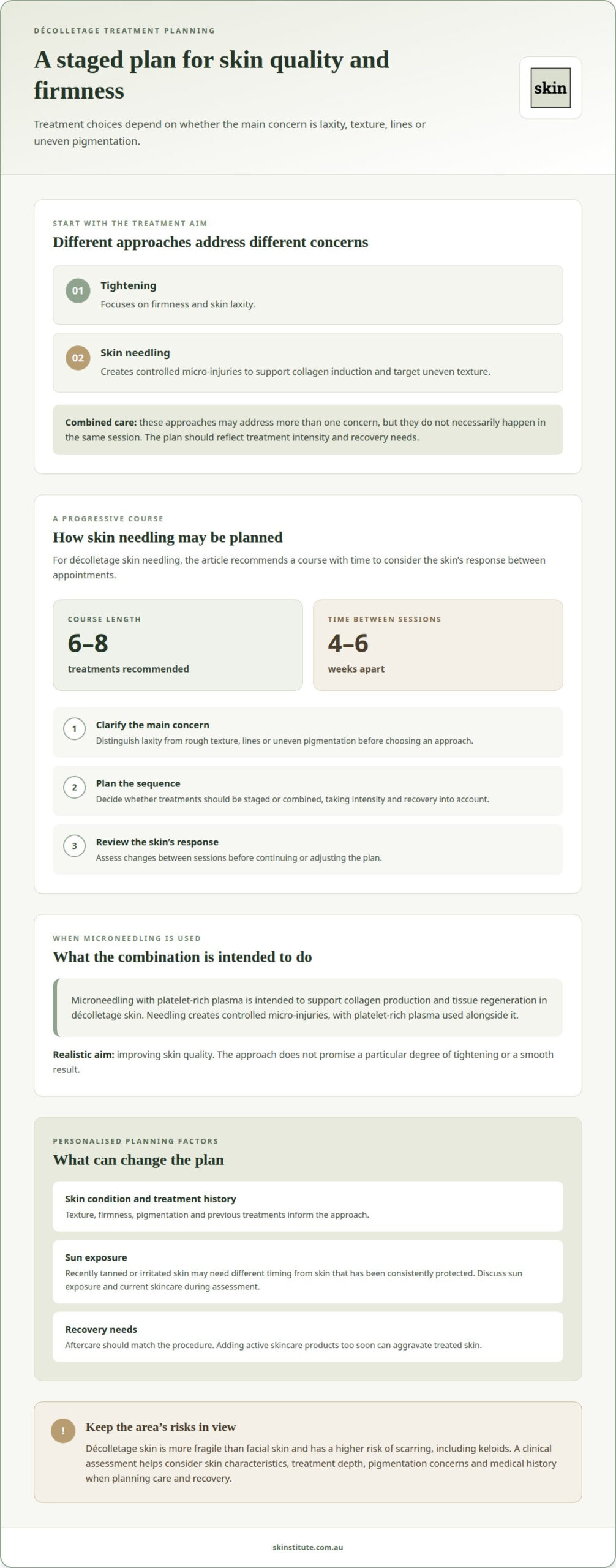
Tightening and skin-quality treatments address different features of chest ageing. A tightening approach focuses on firmness, while skin needling targets uneven texture through controlled collagen induction. Combining methods may address more than one concern, but does not mean every treatment should happen in the same session.
Microneedling combined with platelet-rich plasma is intended to support collagen production and tissue regeneration in décolletage skin. Skin needling creates controlled micro-injuries, with platelet-rich plasma used alongside it. The aim is to improve skin quality, not to promise a particular degree of tightening or a smooth result.
For décolletage skin needling, a course of six to eight treatments spaced four to six weeks apart is recommended. This allows sessions to be planned progressively, with your skin’s response considered between appointments. The appropriate plan depends on texture, firmness, pigmentation and previous treatment history.
- Clarify the main concern: distinguish laxity from rough texture, lines or uneven pigmentation before selecting treatments.
- Plan the sequence: decide whether tightening and skin needling should be staged or combined, based on treatment intensity and recovery needs.
- Review skin response: assess changes between sessions before continuing or adjusting the plan.
Sun exposure also affects treatment planning. Recently tanned or irritated skin may need different timing from skin that has been consistently protected. Discuss your sun exposure and current skincare during assessment so the plan reflects your skin’s condition, rather than following a fixed sequence. Aftercare should also be specific to the procedure, as adding active products too soon can aggravate treated skin.
A personalised assessment can establish whether skin needling fits your concerns and whether another approach should be considered first. Explore a Skin Needling assessment to discuss a clinically tailored plan.
Common signs of décolletage ageing
The décolletage is the chest area below the clavicle bones and above the breast. Its skin is more fragile than facial skin, so fine lines and uneven texture are common concerns. Collagen production declines steadily from the late twenties, while accumulated sun exposure can contribute to spots and pigmentation.
Décolletage rejuvenation refers to aesthetic approaches intended to improve visible changes in this area. Choosing decolletage rejuvenation treatments starts with identifying whether pigmentation, wrinkles, texture or reduced firmness is your main concern. Skin needling, for example, uses controlled skin injury to support collagen induction; it is not suitable for every concern.
- Horizontal wrinkles: lines may become more noticeable across the chest, including after repeated skin folding during sleep.
- Sun spots, freckles and uneven pigmentation: these changes can appear across exposed skin and vary in colour and distribution.
- Crepey texture: fine, crinkled skin can make the chest area look less smooth.
- Broken capillaries and redness: visible small vessels or persistent colour changes may accompany sun-related skin changes.
- Reduced firmness: skin may appear less taut, particularly where texture changes and laxity occur together.
Several signs can appear in the same area. Pigmentation, for example, may occur alongside fine lines and reduced firmness, so treating colour alone may not address the overall appearance. While skin quality treatments target texture and tone across the chest and neck, facial plastic surgeons such as Dr. Aaron Fletcher, MD note that lower face structure and chin projection also play an important role in framing the neck. A clinical assessment considers the pattern of change, skin characteristics and treatment history before matching an approach to your concern.
Redness, pigmentation and visible blood vessels along the sides of the neck and upper chest can be consistent with poikiloderma of Civatte, often associated with prolonged sun exposure. This pattern differs from isolated sun spots. Identifying whether colour change, texture or laxity is your main concern helps guide a personalised plan and clarify which decolletage rejuvenation treatments may address the visible changes.
Sun damage and décolletage rejuvenation
Sun damage can contribute to pigmentation, wrinkles and uneven texture on the chest. Treatment planning considers both the visible changes and ongoing sun exposure.
Sun damage
Ultraviolet exposure can contribute to sun spots, freckles, redness and fine lines across the delicate chest area. Smoking and sleeping positions may also worsen visible changes, so treatment planning considers more than pigmentation alone. Daily broad-spectrum sunscreen, including SPF 50+ on exposed chest skin, helps protect against further sun-related ageing.
For surface changes, light glycolic or lactic acid peels are options; a course may involve six to eight superficial peels performed monthly. Fractional CO₂ laser resurfacing may be considered for more severe sun damage and wrinkles. It stimulates collagen renewal while aiming to minimise pigmentation risks, so your skin characteristics help determine whether it is appropriate.
Before and after treatment care
Before cosmetic treatment, avoid waxing and sun exposure on the area for two weeks. For Fitzpatrick IV+ skin, preparation may include a tyrosinase inhibitor and daily SPF for at least two weeks before your appointment. If your skin tans easily or you have a deeper complexion, avoid excessive sun exposure for four or more weeks beforehand.
For days one to three after treatment, soothe and protect the area. A clinician may recommend introducing a speciality serum from day three onward, followed by renewal and refining care from day seven. Gentle, fragrance-free skincare suits the delicate chest area; avoid active products outside the advised schedule. These steps support recovery, while daily sun protection helps limit further exposure-related changes.
Discuss your sun history, pigmentation and skincare routine during assessment, so the treatment plan can account for these factors. Arrange an assessment for chest sun damage and discuss suitable treatment options.
Skinstitute
If you’re in Melbourne and considering treatment for chest skin concerns, Skinstitute can assess options in light of your treatment history and recovery preferences. A personalised assessment can identify whether pigmentation, wrinkles, texture or reduced firmness is your main priority, then discuss suitable next steps without assuming one procedure addresses every concern.
Skinstitute offers Fractional CO2, High Intensity Focused Ultrasound (HIFU), PDO Thread Lifting and prescription injectables. These are distinct treatments, and their relevance depends on the concern and treatment area being assessed. A discussion can clarify how your goals relate to available options and what recovery considerations may apply.
If you’re considering treatment for ageing chest skin, contact Skinstitute to discuss your concerns and arrange an assessment.
Plan your next step with a clinical assessment
Start by defining what you want to address and what recovery you can accommodate. Discuss your priorities when considering decolletage rejuvenation treatments, including whether pigmentation, wrinkles, texture or firmness matters most. Suitability depends on your skin, medical history and treatment area, so an assessment can clarify appropriate options and limitations.
Skinstitute offers Fractional CO2, prescription injectables and PDO Thread Lifting as part of its aesthetic services. These procedures have distinct purposes, and their relevance depends on the concern being assessed. A clinical discussion can help separate chest skin concerns from other aesthetic goals and establish whether any available approach is appropriate for your décolletage.
Consider your sun exposure, current skincare and previous procedures as useful context for that conversation. You can also discuss how treatment planning accounts for recovery and ongoing skin protection. Contact Skinstitute to discuss your treatment options and take an informed next step at your own pace.
Frequently Asked Questions
Who is suited to décolletage rejuvenation?
You may be suitable for treatment to address visible chest skin changes if your skin and health history support the proposed approach. Assessment considers your specific concern, previous procedures and any history of raised or keloid scarring, which is relevant for this area. Suitability depends on your treatment goal and individual clinical factors, not age alone.
How many sessions are needed to see results from décolletage treatment?
The number of sessions depends on the procedure and skin concern. A skin-needling course may involve six to eight sessions, four to six weeks apart; a superficial peel course may involve six to eight monthly sessions. These are treatment schedules, not a guarantee of when results will appear. The plan can be reviewed as your skin responds and your treatment goal is assessed.
How much do treatments cost?
Your treatment plan depends on the procedure suited to your concern, the area being addressed and whether a course of sessions is appropriate. These factors also shape the treatment pathway. A clinical discussion can clarify the proposed approach and expected session structure, so you understand what the plan involves before deciding whether to proceed.
What causes skin changes in the neck and décolletage?
Sun exposure contributes to visible changes such as uneven colour and wrinkles; smoking and sleeping positions can also affect the area. Different patterns may point to different concerns: isolated spots differ from visible small vessels or widespread redness. Noting where changes appear and whether colour, texture or firmness stands out can help you describe your concern during assessment.
What treatment options are available?
Options may include skin needling, superficial chemical peels, fractional CO₂ laser resurfacing and selected skin boosters. Each has a different purpose, so the choice depends on whether your main concern is texture, pigmentation, lines or firmness. Treatments may be staged rather than combined at once, with your skin’s response and recovery needs guiding the plan.
Which treatments are available for décolletage rejuvenation in Australia?
Options discussed for chest skin in Australia include skin needling, superficial peels and fractional CO₂ laser resurfacing. Skinstitute offers Skin Needling and Fractional CO2 among its aesthetic treatments. Whether a procedure is suitable for a particular décolletage concern depends on the treatment area and clinical assessment. This distinction helps clarify the treatment’s intended role before planning next steps.