Non-surgical eye lift options for sagging skin in Melbourne
November 5, 2026
Décolletage rejuvenation treatments for ageing chest skin
November 7, 2026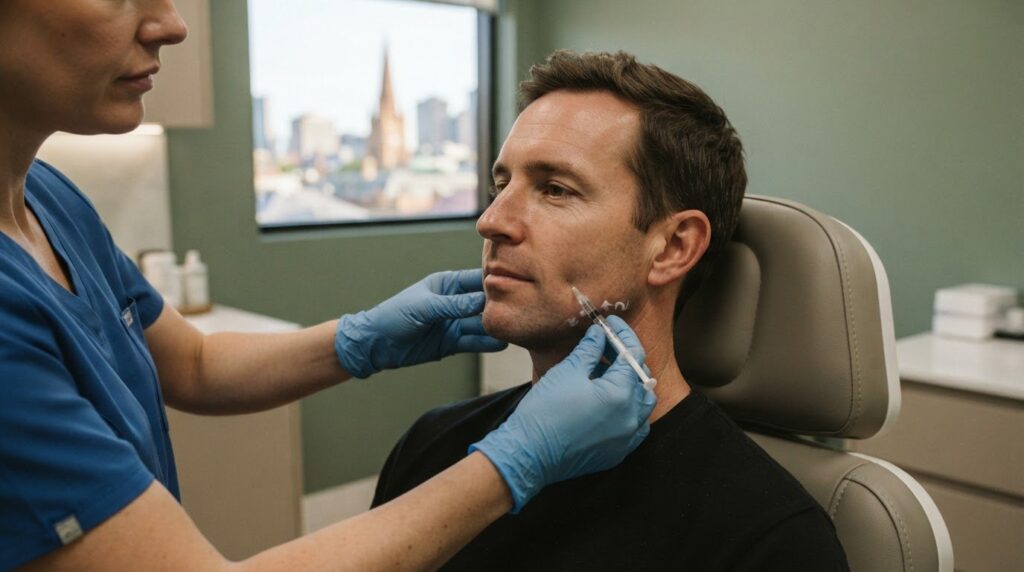
Jawline slimming injections in Melbourne can reduce masseter muscle bulk, but they cannot change jawbone width. Prescription injectables relax the masseter muscles at the back of the jaw, which may gradually soften a square appearance when enlarged muscles contribute to it. Possible immediate effects include tenderness, redness, bruising or swelling. Chewing can also be affected if the muscle relaxant spreads to surrounding muscles.
Consider these risks alongside the potential change in facial shape. Results depend on whether muscle bulk, rather than bone structure, contributes to the jaw’s appearance, so a personalised facial assessment is central to deciding whether treatment is suitable.
This guide explains how the treatment works, what an assessment considers, and what recovery and aftercare may involve. You’ll also learn why changes can take time to become visible and which factors shape an individual treatment plan, helping you approach the decision with realistic expectations.
Key Takeaways
- Understand which factors shape an individual treatment plan, including masseter muscle bulk and facial proportions.
- Learn what a personalised assessment considers when determining whether treatment is suitable for your jawline.
- Know which aftercare steps can help you manage temporary tenderness, swelling or bruising after treatment.
- Find out why facial contour changes develop gradually and what to consider when setting expectations.
What is the price of Facial Slimming?
For jawline slimming injections in Melbourne, a personalised assessment considers whether masseter activity contributes to your concern. Facial shape, muscle function and your intended outcome guide the discussion about a suitable approach.
Masseter enlargement and lower-face width
The masseter muscles sit at the back of the jaw and contract during chewing. Repeated teeth grinding or excessive chewing can contribute to masseter hypertrophy, meaning increased muscle bulk. This may widen the lower face and create a squarer appearance without changing jawbone width. Bruxism can also be associated with teeth blunting and temporomandibular joint problems. In Victoria, an injector should have relevant clinical training in facial anatomy and injectable procedures, and be able to assess suitability and explain risks and aftercare.
Masseter injections for jaw slimming
Masseter injections aim to relax targeted muscles, reducing their activity and, gradually, their bulk. As the muscle becomes less prominent, the lower face may appear less square. This approach does not narrow the jawbone. For jawline slimming injections in Melbourne, an assessment considers muscle size, chewing function and your desired outcome. In Australia, botulinum toxin is prescription-only. Public communications must focus on conditions and clinical approaches rather than promoting specific prescription treatments or products. Possible risks include tenderness, bruising or swelling. If the muscle relaxant affects surrounding muscle, chewing can be affected.
Injections compared with jawline filler
Masseter injections and jawline filler address different anatomical concerns. Injections target enlarged muscle, while filler adds volume to selected areas to alter contour or definition. Filler does not reduce masseter bulk, and muscle-relaxing injections do not add structural volume. This distinction matters when considering facial balance: muscle-related width differs from a contour concern involving volume. A clinical assessment should identify the relevant anatomy and explain the approach, risks and expected downtime.
A face-to-face assessment can clarify whether muscle bulk contributes to your jawline concern and inform a treatment plan suited to your anatomy and goals.
Consultation and personalised facial assessment
A consultation examines the facial features and concerns relevant to treatment suitability. The practitioner reviews your jaw shape, masseter activity and intended outcome before discussing an appropriate clinical approach.
Assessment includes examining the lower face at rest and while you clench your teeth. This helps distinguish muscle prominence from other influences on facial shape, including genetically determined jawbone width and jaw breadth. A square appearance alone does not establish that masseter treatment is suitable. The practitioner also considers chewing and jaw movement, rather than focusing only on appearance.
Medical history and symptoms form part of the discussion. Tell the practitioner about teeth grinding, jaw discomfort or headaches, and when they occur. Bruxism involves excessive clenching or grinding, often during sleep, and can place stress on the jaw muscles. These details help the practitioner understand your concerns and explain the potential effects and risks relevant to your case. They also help clarify whether a cosmetic goal or a symptom-related concern is shaping your decision.
In Melbourne, expect your consultation to include a facial examination, discussion of your goals and medical history, and an explanation of the proposed approach. Before treatment, the practitioner should outline relevant risks and aftercare, including how to manage the treated area and which activities to avoid.
- Describe teeth grinding, jaw tension or headaches and their pattern.
- Explain the facial change you hope to achieve.
- Discuss how treatment could affect jaw movement and chewing.
Suitability is assessed against your anatomy, muscle function, medical history and desired outcome. If jawbone structure, rather than muscle bulk, is the main contributor to facial width, the assessment should explain why a muscle-focused approach would not address that feature.
A face-to-face facial assessment can help clarify these considerations and support an informed treatment decision.
Downtime and aftercare
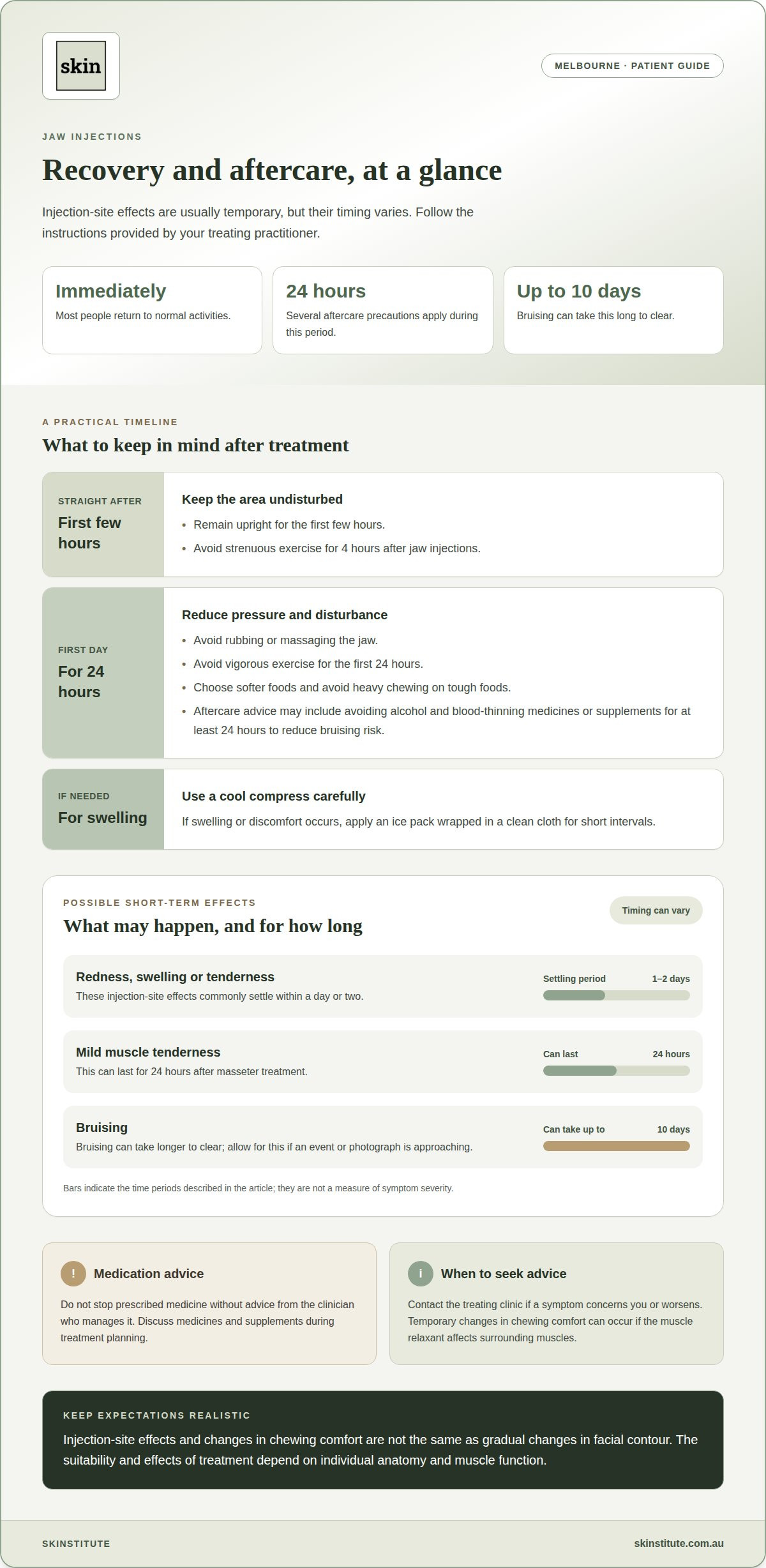
Most people return to normal activities immediately after jaw injections. The appointment itself does not usually require planned time away from work or routine tasks, although injection-site effects can be visible afterwards. Redness, swelling or tenderness commonly settles within a day or two, while bruising can take up to 10 days to clear. Allow for this if an event or photograph is approaching.
For the first few hours, remain upright and avoid rubbing or massaging the treated area. Aftercare also includes avoiding strenuous exercise for 4 hours after jaw injections, and vigorous exercise for the first 24 hours after treatment. These instructions limit pressure and disturbance around the injection sites while the treatment settles.
- Avoid rubbing or massaging the jaw for 24 hours after treatment.
- Choose softer foods and avoid heavy chewing on tough foods for 24 hours.
- If swelling or discomfort occurs, apply an ice pack wrapped in a clean cloth for short intervals.
Mild muscle tenderness after masseter treatment can last 24 hours. Temporary changes in chewing comfort are distinct from the longer-term effects on clenching or grinding. Follow the aftercare instructions provided at your appointment, and contact the treating clinic if a symptom concerns you or worsens.
Alcohol and blood-thinning medicines or supplements are listed in aftercare advice as items to avoid for at least 24 hours, to reduce bruising risk. Do not stop prescribed medicine without advice from the clinician who manages it; discuss your medication during treatment planning. This helps the practitioner tailor instructions to your health history.
Plan exercise and meals around the first day: schedule strenuous training outside the initial 24 hours and avoid tough, chewy foods during the first 24 hours. Your treatment plan should include clear aftercare guidance suited to the injection sites and your circumstances. These steps support a considered recovery, but they do not prevent every temporary reaction.
Anti-wrinkle injections for jawline slimming
Masseter injections target the chewing muscles at the back of the jaw. Relaxing these muscles reduces their activity, which can gradually reduce muscle bulk and soften a square lower-face contour. This approach addresses muscle prominence, not jawbone width or every cause of a broad jaw. The procedure takes less than 30 minutes, although the visible change develops more slowly.
Some people notice initial muscle relaxation within a few days to a week. The full effect on jaw clenching typically becomes noticeable within 1 to 2 weeks, while visible slimming can develop over 3 to 6 months. These are separate changes: less muscle activity may precede a noticeable reduction in muscle bulk. A clinician should assess facial anatomy and chewing function before discussing a cosmetic treatment plan.
Masseter treatment can also relate to teeth grinding and jaw pain. Jaw clenching and grinding symptoms typically ease within 4 to 6 weeks after treatment. The assessment should distinguish symptom goals from aesthetic goals, then explain how each will be considered. If headaches are part of the concern, the temporalis muscle may also be assessed, as it can be involved in muscle stress.
Risks deserve attention alongside the intended reduction in muscle bulk. Tenderness, redness, bruising or swelling can occur after injections. If the muscle relaxant affects surrounding masseter muscle, chewing can be affected. Discuss these risks, your medical history and aftercare before proceeding. A top-up may be provided 3-4 weeks after treatment if needed, following review of the initial response.
The key takeaway is that muscle-relaxing injections suit concerns linked to masseter activity, not bone structure. A jawline assessment can help establish whether the muscle is contributing to the contour and clarify expected changes. To discuss whether this approach fits your anatomy and goals, arrange a jawline assessment.
Skinstitute
Skinstitute provides face-to-face assessments to help you understand whether a treatment approach suits your facial anatomy and goals. During consultation, the medical team can review masseter activity, jaw shape, medical history and concerns such as clenching, then discuss relevant risks, aftercare and realistic expectations. Where appropriate, prescription injectables may form part of a personalised plan. The assessment can also clarify when a muscle-focused approach is unlikely to address your concern.
Make an informed next step
Choosing a facial treatment is best approached as a clinical decision, not a commitment to a particular technique. If you’re considering jawline slimming injections in Melbourne, discuss your concern, relevant health history and desired change with a practitioner, then weigh the proposed approach against your facial anatomy and its risks. A personalised assessment can help clarify whether treatment aligns with your priorities.
Skinstitute offers prescription injectables, PDO Thread Lifting and Fractional CO2 as part of its broader aesthetic services. These treatments address different concerns, so suitability depends on the individual assessment rather than a general preference for injectables or devices.
Contact Skinstitute to discuss your options and take an informed, considered next step.
Frequently Asked Questions
Are there any risks?
Yes. Possible effects include tenderness, redness, bruising or swelling, and chewing may be affected if the muscle relaxant reaches surrounding muscle. Before treatment, give the practitioner a complete account of relevant medicines, supplements, health conditions and previous reactions to cosmetic procedures. This information helps inform the risk discussion and individual plan. Follow the clinic’s aftercare advice and raise any concerns with the treating practitioner.
How long do the results last?
The effect is temporary, and its duration varies between individuals. Rather than planning around a fixed expiry date, discuss how changes in jaw function and facial contour will be reviewed. If you’re considering ongoing treatment, ask how the practitioner will assess your response before discussing maintenance. A follow-up should consider your original goals and any changes in chewing or jaw comfort, not appearance alone.
How many units of product do I need for the treatment?
There is no single unit amount that applies to everyone. The prescribed amount is determined after considering the masseter muscles, facial anatomy, jaw function and treatment goals. Unit counts should not be copied from another person or treated as interchangeable between products. During your consultation, ask the practitioner to explain the proposed amount and how it relates to your individual assessment.
How quickly will my face look slimmer?
A slimmer appearance is not expected immediately after the appointment. Early changes in muscle activity do not necessarily create an obvious difference in contour, so avoid judging the result on the day of treatment. If you track your appearance, use consistent photographs and discuss them at review. This can help distinguish gradual changes in facial shape from ordinary differences in expression, angle or lighting.
What are the masseters?
The masseters are the muscles on either side of the jaw that help close it during chewing. They are easiest to locate by gently bringing your teeth together and feeling for muscle contraction near the back of the jaw. Avoid repeatedly clenching to test them, particularly if this causes discomfort. Their size and activity are only part of a facial assessment.
When can I expect the result?
The timing depends on which change you mean. Changes in muscle activity and visible differences in facial contour are separate outcomes, so they may not become noticeable at the same time. At review, describe any changes in clenching, grinding or jaw comfort, as well as what you observe in the mirror. This gives the practitioner a clearer basis for assessing your response and next steps.