Clinical FAQ: Understanding HIFU Treatment for Structural Skin Lifting
June 6, 2026
Fractional CO2 Laser: Understanding Skin Resurfacing Results
June 9, 2026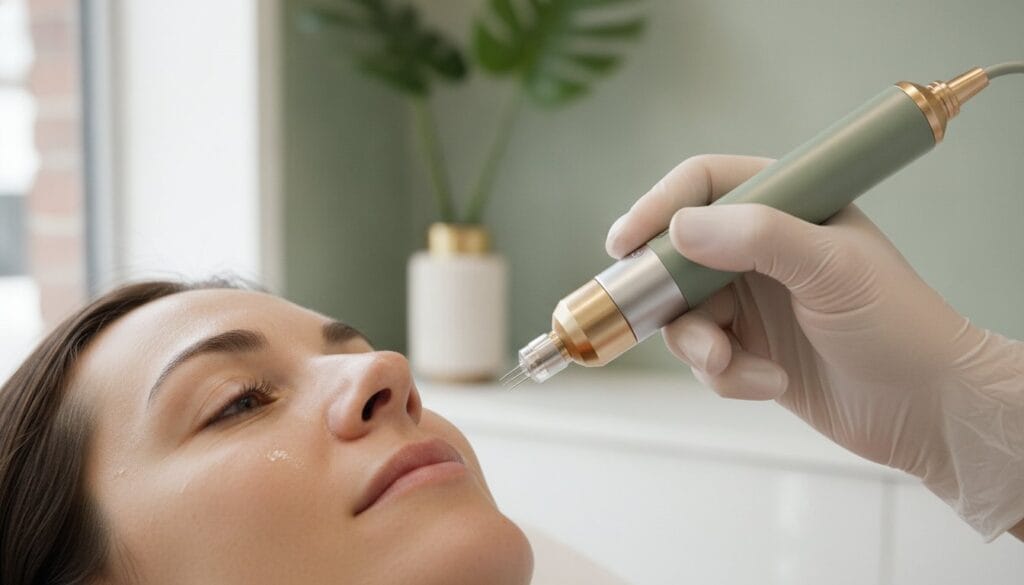
The most effective way to address deep-seated dermal concerns is not to mask them, but to trigger the body’s innate biological repair mechanisms. You likely recognise that topical treatments often fail to reach the structural depths required to resolve persistent acne scarring, enlarged pores, or the gradual loss of skin elasticity. This clinical guide explains the medical-grade science behind skin needling melbourne and explores how professional dermal remodelling can revitalise your complexion through the precise induction of controlled micro-trauma. By understanding the transition from initial stimulus to the synthesis of new collagen and elastin, you can move beyond surface-level aesthetics toward a professional, evidence-based treatment plan.
We will detail the physiological processes involved in dermal regeneration, the rigorous infection control standards required under the Public Health and Wellbeing Act 2008, and the specific outcomes you can expect regarding skin firmness and scar reduction. This overview ensures you understand the technical mechanics of the procedure and the biological interactions that occur within the extracellular matrix. By focusing on established scientific principles rather than temporary trends, we provide a clear pathway for those seeking measurable improvements in skin texture and structural integrity.
Key Takeaways
- Understand how Collagen Induction Therapy (CIT) utilises controlled micro-injuries to activate the body’s natural wound-healing response and stimulate dermal remodelling.
- Learn why professional skin needling melbourne prioritises automated clinical pens over manual rollers to ensure precision needle oscillation and minimise epidermal tearing.
- Discover the biological mechanism behind resolving persistent acne scarring by breaking down fibrous tethering and promoting the synthesis of new collagen.
- Identify the essential steps of a professional protocol, including comprehensive clinical analysis and the use of active ingredients like Vitamin A to prime the skin.
- Explore advanced synergistic treatments, such as the application of exosomes, that use needling as a delivery mechanism to accelerate cellular recovery.
The Clinical Science of Skin Needling: How Dermal Remodelling Works
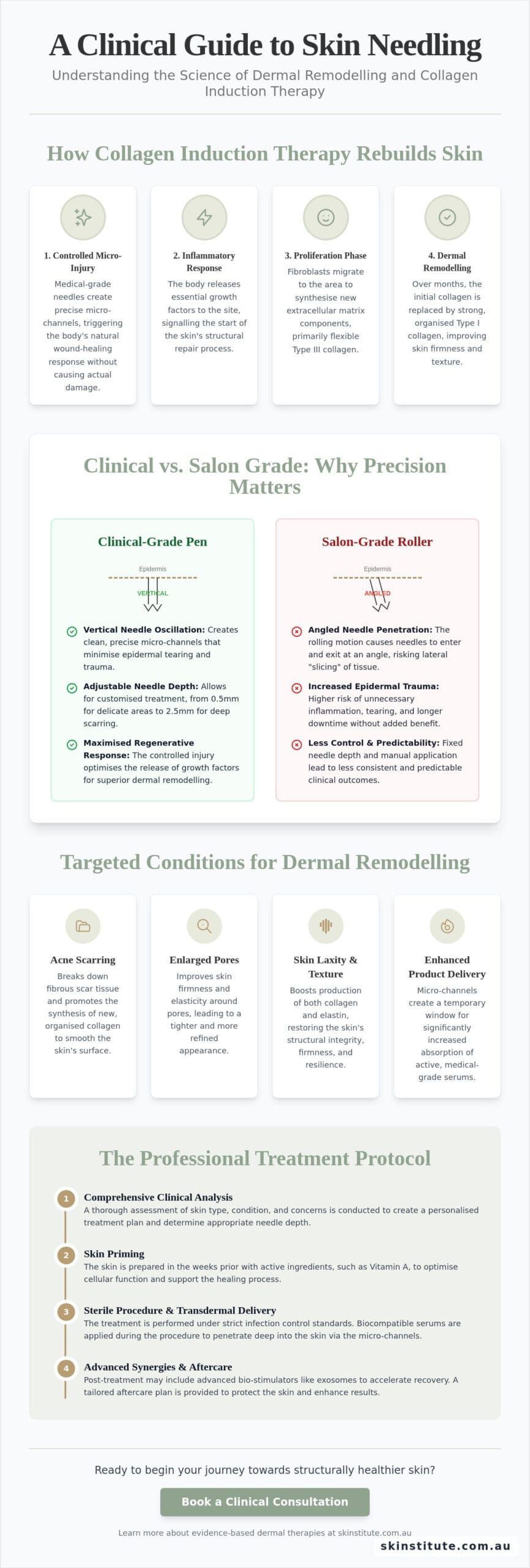
Professionally performed skin needling melbourne operates on the principle of controlled wound healing. This procedure, clinically termed Collagen induction therapy (CIT), involves the application of fine, medical-grade needles to create thousands of microscopic punctures in the epidermal and dermal layers. These micro-injuries are not destructive in the traditional sense; instead, they serve as a biological catalyst. By bypassing the skin’s primary barrier, the treatment initiates an immediate inflammatory cascade. This response is characterised by the release of essential growth factors, including transforming growth factor-beta (TGF-β) and platelet-derived growth factors, which orchestrate the repair of the skin’s structural framework.
The transition from acute healing to long-term dermal remodelling is a methodical process. Once the initial inflammatory phase subsides, the proliferative phase begins. During this stage, fibroblasts migrate to the site of the micro-channels to begin the synthesis of new extracellular matrix components. This isn’t a temporary surface change. It’s a fundamental restructuring of the skin’s architecture that continues for months after the initial session. The goal of a clinical skin needling melbourne programme is to achieve a cumulative effect where each treatment builds upon the previous one to strengthen the dermal foundation.
The Role of Collagen and Elastin
The regenerative phase involves a sophisticated transition between collagen types. Initially, the body produces Type III collagen, a flexible form associated with early wound healing. Over several weeks, this is replaced by Type I collagen, which provides the high tensile strength and structural integrity found in healthy, youthful skin. CIT encourages a highly organised lattice of fibres rather than the chaotic tissue found in scars. Elastin synthesis also increases, which is fundamental for restoring skin resilience and “snap-back” capability. Because this remodelling occurs deep within the dermis, visible clinical outcomes typically manifest between four to twelve weeks post-treatment.
Micro-channels and Transdermal Delivery
The physical creation of micro-channels offers a unique window for transdermal delivery. During the “open” phase of the skin, the absorption rate of medical-grade topicals increases significantly. It’s vital to use sterile, biocompatible serums during this period to avoid adverse reactions. Practitioners must also adjust needle depth according to anatomical zones. For instance, the periorbital area requires a shallower depth due to the thinness of the epidermis, while the cheeks or areas with acne scarring may necessitate deeper penetration to reach the reticular dermis. This precision ensures the stimulus is sufficient to trigger remodelling without causing unnecessary trauma.
Clinical Standards: Medical-Grade vs. Salon-Grade Needling
Distinguishing medical-grade skin needling melbourne from general aesthetic services is essential for both patient safety and the predictability of clinical outcomes. The primary differentiator lies in the technology used to create dermal stimulus. Manual dermal rollers, frequently used in lower-tier environments, utilise a rolling motion that forces needles to enter and exit the skin at an angle. This often results in lateral trauma, or “slicing” of the tissue, which increases inflammation without necessarily improving the regenerative response. In contrast, automated clinical pens employ high-speed vertical oscillation. This ensures needles enter and exit the skin perpendicularly, creating clean micro-channels while significantly reducing epidermal tearing and subsequent downtime.
The technical precision of these devices is supported by a comprehensive review of microneedling, which highlights how controlled vertical penetration maximises the healing cascade. Medical-grade devices also allow for adjustable needle depth, which is critical because facial skin thickness is not uniform. A practitioner with 26 years of experience understands how to modulate these depths, ranging from 0.5mm for the delicate periorbital area to 2.5mm for treating dense, fibrous scar tissue. This level of expertise ensures the treatment reaches the correct histological layer to trigger remodelling without causing unnecessary damage to the underlying structures.
The Risks of Substandard Equipment
Substandard equipment, particularly the blunt needles found in inexpensive at-home kits, poses a genuine risk of “track-mark” scarring. These permanent indentations occur when the skin is subjected to repetitive, irregular trauma. Clinical environments mitigate these risks through the use of single-use, surgical-grade needle cartridges and strict adherence to sterile protocols. At-home attempts often lead to a compromised skin barrier and secondary infections because the environment cannot be properly controlled. Choosing professional dermal remodelling ensures that the integrity of your skin barrier is respected and protected throughout the process.
Melbourne Clinical Regulations and Safety
In Victoria, clinical practitioners must adhere to the Public Health and Wellbeing Act 2008, which mandates rigorous infection control for any procedure involving skin penetration. This includes the use of TGA-approved devices and the maintenance of detailed client records. A professional consultation is a non-negotiable component of this protocol. It allows the practitioner to screen for contraindications such as active inflammatory conditions or recent prescription medication use. These clinical standards ensure that the focus remains on evidence-based results and safety rather than aggressive, short-term aesthetic changes.
For patients who want to explore how these rigorous clinical standards are applied in specialist medical settings internationally, you can learn more about Dr Jinah Yoo Dermatology & Anti-Ageing Clinic to discover their approach to expert dermatological care and advanced aesthetic treatments.
Targeted Indications: What Can Skin Needling Address?
Skin needling melbourne is employed to address a spectrum of dermatological concerns, ranging from structural irregularities to pigmentary inconsistencies. Unlike surface exfoliants, this modality targets the deeper dermal layers where most chronic skin issues originate. This Yale Medicine microneedling guide confirms that the treatment is effective for reducing the appearance of wrinkles, large pores, and various forms of scarring. By inducing a controlled inflammatory response, we can encourage the skin to replace damaged tissue with healthy, organised fibres. This process is particularly effective for refining skin texture and achieving a more uniform, radiant complexion.
One of the most significant applications is the management of acne scarring. Scars often form when fibrous bands of collagen pull the skin surface downwards, creating the “pitted” or “rolling” appearance characteristic of atrophic scarring. The vertical entry of medical-grade needles mechanically severs these tethered bands. This release allows the skin surface to rise, while the subsequent collagen synthesis fills the void from beneath. Additionally, the process helps to constrict enlarged pores by strengthening the dermal tissue surrounding the follicle, leading to a smoother surface appearance.
Scar Revision and Texture Refinement
Clinical scar revision requires a nuanced approach. While needling is highly effective for atrophic scars, complex cases may benefit from a multimodal strategy. For instance, the synergy between needling and fractional CO2 laser resurfacing Melbourne allows for both mechanical and thermal remodelling. This combination is particularly useful for deep boxcar or ice-pick scars that require more intensive intervention. Patients should note that structural changes are cumulative. Significant revision usually requires a series of four to six treatments spaced at six-week intervals to allow for the full biological maturation of new collagen.
Ageing and Skin Laxity
As the skin ages, the natural depletion of collagen and elastin leads to “crepey” texture and fine rhytids, particularly in high-movement areas like the periorbital and perioral zones. Skin needling melbourne addresses this laxity by thickening the epidermis and improving dermal density. This process, often referred to as “collagen banking”, serves as a preventative measure for younger patients and a corrective one for mature skin. While needling improves texture, it also complements prescription injectables by ensuring the “canvas” of the skin is firm and resilient. Regular maintenance sessions every six to twelve months help sustain these structural improvements and maintain skin resilience.
The Skinstitute Protocol: Preparing for Your Melbourne Treatment
Success in dermal remodelling is predicated on a structured clinical protocol that begins long before the physical procedure. For patients seeking skin needling melbourne, the process commences with a comprehensive skin analysis. This diagnostic phase allows the practitioner to assess the health of the skin barrier, the presence of underlying vascularity, and the current state of pigmentation. Without this baseline understanding, any intervention risks being either ineffective or unnecessarily aggressive. A professional protocol ensures that the skin is physically prepared to handle the stimulus of microneedling and has the nutritional reserves required to synthesise new collagen effectively.
Biological priming is a fundamental component of our clinical approach. We typically recommend a period of skin conditioning using medical-grade active ingredients, specifically Vitamin A (retinoids) and Vitamin C (L-ascorbic acid). Vitamin A regulates cellular turnover and improves the quality of the skin’s structural proteins, while Vitamin C provides the essential antioxidant support and enzymatic co-factors required for collagen synthesis. This preparation period, usually lasting two to four weeks, ensures that the dermal matrix is resilient and capable of a robust regenerative response once the micro-channels are created.
Pre-Treatment Preparation
Patients must strictly adhere to specific clinical guidelines for 14 days prior to their appointment. This includes avoiding direct sun exposure, as UV-damaged skin is more prone to post-inflammatory hyperpigmentation. Additionally, certain medications and supplements that affect blood thinning or the inflammatory response should be reviewed during your consultation. We prioritise medical-grade skincare over commercial alternatives because the higher concentration of bioavailable ingredients significantly strengthens the skin barrier. While the procedure itself is manageable, patients should expect a sensation of heat and erythema, similar to a mild sunburn, immediately following the treatment.
Clinical Aftercare and Recovery
The first 24 hours post-procedure are critical for maintaining the integrity of the micro-channels and preventing infection. During this window, patients must avoid applying makeup, exercising, or using any active serums that have not been clinically approved. As the skin enters the proliferative phase, a period of dryness and mild peeling is common. It’s essential to allow these dead skin cells to shed naturally rather than using mechanical exfoliants. Given the intensity of the Melbourne UV index, the application of a high-SPF, broad-spectrum sun protection is non-negotiable to protect the newly formed tissue. For those ready to begin their journey towards structural skin improvement, you can book a clinical consultation to discuss a tailored treatment plan.
Advanced Synergies: Enhancing Needling with Bio-Stimulators
Optimising clinical outcomes requires a transition from mechanical stimulation to biological enhancement. While the physical process of skin needling melbourne creates the necessary stimulus for repair, the introduction of bio-stimulators during the “open” skin phase provides the essential building blocks for superior tissue synthesis. This synergistic approach treats the micro-channels not just as a wound, but as a sophisticated delivery conduit. By applying regenerative topicals while the skin barrier is temporarily permeable, we can influence the healing cascade at a cellular level, ensuring that the resulting collagen is of the highest structural quality.
Exosomes represent a significant advancement in this integrative strategy. These nano-vesicles act as intracellular messengers, carrying a concentrated cargo of growth factors, lipids, and proteins directly to the fibroblasts. When applied immediately after needling, exosomes accelerate the resolution of post-procedure erythema and significantly reduce downtime. This combination is particularly effective for patients with compromised skin or those seeking to maximise the regenerative potential of a single session. It moves the treatment beyond traditional collagen induction into the territory of active cellular rejuvenation.
The Rejuran Advantage
A particularly potent synergy exists between needling and rejuran Melbourne. Rejuran utilises polynucleotides, which are DNA fragments that promote biological repair and improve skin elasticity from within. When delivered through the micro-channels created during a needling session, polynucleotides support the skin’s healing response at a DNA level. This combination has become a clinical gold standard for improving skin quality, as it addresses both the surface texture through mechanical remodelling and the underlying health of the dermis through bio-stimulation. The result is a more resilient, hydrated, and structurally sound complexion.
Why Expertise Matters in Melbourne
The success of these advanced protocols depends entirely on the precision of the practitioner. With 26 years of clinical experience, our approach involves more than just a standard procedure; it is a tailored intervention that considers your unique skin biology. We carefully calibrate the depth and intensity of the needling to match the specific requirements of the bio-stimulators being used. This ensures that the active ingredients reach the target histological layers without causing unnecessary inflammation. We integrate these sessions into a holistic aesthetic journey, prioritising long-term skin health and evidence-based results. To determine the most effective combination for your specific concerns, we recommend booking a professional assessment to develop a customised treatment plan.
Your Path to Measurable Skin Regeneration Starts Here
Dermal remodelling is not a cosmetic shortcut; it’s a clinically grounded process that works with your skin’s own biology to produce structural, lasting change. Throughout this guide, we’ve established that the predictability of outcomes depends on three interconnected factors: the precision of the technology used, the expertise of the practitioner interpreting your skin’s unique biology, and the rigour of the clinical protocol surrounding each session. Choosing skin needling melbourne at a medical-grade facility ensures all three are consistently met.
At Skinstitute, over 26 years of clinical experience informs every treatment decision, from needle depth calibration to the selection of synergistic bio-stimulators. Our commitment to medical-grade aesthetic technology and advanced skin regeneration means your treatment plan is built on evidence, not assumption. When you’re ready to move from understanding the science to experiencing the results, book your clinical skin analysis at Skinstitute Melbourne today and take the first considered step toward a structurally healthier complexion.
Frequently Asked Questions
How much downtime is expected after skin needling in Melbourne?
Most patients experience mild erythema and a sensation of heat for 24 to 48 hours following skin needling melbourne. While the initial redness subsides quickly, a period of secondary dryness or subtle peeling may occur between days three and five. This is a normal part of the proliferative phase. You can usually return to work the following day, provided you adhere to strict clinical aftercare and sun protection protocols.
Does skin needling hurt, and do you use numbing cream?
Clinical skin needling is generally well-tolerated because we apply a high-strength topical anaesthetic before the procedure. This numbing cream ensures that the sensation is reduced to a mild pressure or vibration. The use of automated clinical pens further minimises discomfort compared to manual rollers, as the vertical oscillation is too rapid for the pain receptors to fully register. Most patients describe the sensation as manageable and non-invasive.
How many sessions of skin needling will I need to see results?
A standard clinical protocol typically requires three to six sessions to achieve significant dermal remodelling. For general rejuvenation and fine lines, three treatments are often sufficient to stimulate collagen synthesis. However, complex concerns like deep acne scarring or significant photo-ageing usually necessitate six or more sessions. These are spaced six weeks apart to align with the natural biological cycle of collagen maturation and tissue organisation.
Is skin needling better than laser for acne scarring?
Both modalities are effective, but skin needling melbourne is specifically advantageous for severing fibrous tethering in atrophic scars without the thermal risks associated with some lasers. While fractional CO2 laser uses heat to vaporise tissue, needling relies on mechanical induction. For many patients, a combination of both provides the best result. Needling is often a safer entry point for those with darker skin tones who are more prone to post-inflammatory hyperpigmentation.
Can I have skin needling if I have active acne?
We don’t perform skin needling over active inflammatory acne lesions or pustules. The mechanical action of the needles can potentially spread acne-causing bacteria across the skin, leading to secondary infections or further breakouts. It’s essential to stabilise the inflammatory condition first using medical-grade topicals or other clinical interventions. Once the acne is in remission, we can then utilise needling to address the resulting texture irregularities and structural scarring.
How long do the results of a skin needling treatment last?
The structural changes achieved through collagen induction are technically permanent, as the body has synthesised new, healthy tissue. However, your skin continues to undergo the natural ageing process and exposure to environmental stress. We generally recommend a maintenance session every six to twelve months to sustain the density of the dermal matrix. This proactive approach helps to “bank” collagen and counter the gradual depletion that occurs naturally as we age.
What is the difference between microneedling and skin needling?
Microneedling and skin needling are interchangeable terms used to describe Collagen Induction Therapy (CIT). Both refer to the process of using fine needles to create controlled micro-injuries in the skin to trigger a healing response. In a professional context, the focus is less on the name and more on the clinical grade of the device and the depth of penetration. Both terms describe the same biological mechanism of dermal remodelling and structural improvement.
Is skin needling safe for all skin types and colours?
Skin needling is considered safe and effective for all skin types and colours, including darker complexions. Because the treatment is mechanical rather than light-based or thermal, there is a significantly lower risk of post-inflammatory hyperpigmentation compared to certain lasers. This makes it a versatile option for patients of all backgrounds. We still perform a comprehensive skin analysis to ensure the skin barrier is healthy and resilient before beginning the procedure.