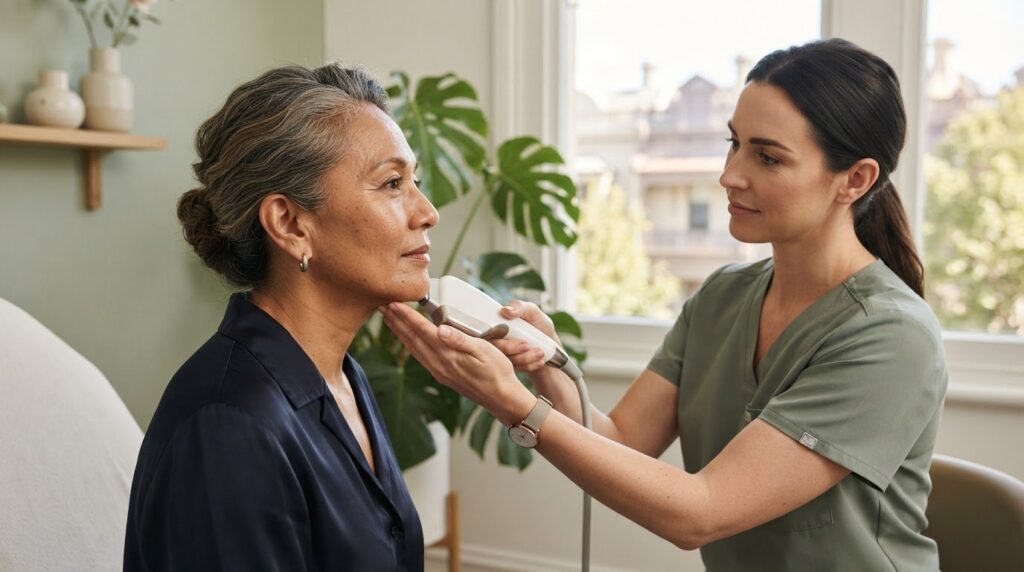
Clinical Guide to Skin Tightening Treatments in Melbourne: A Medical Perspective
June 13, 2026
Laser Skin Resurfacing Melbourne: A Clinical Guide to Fractional CO2 Technology
June 15, 2026
Fractional CO2 laser is not a standard aesthetic facial; it is a controlled medical injury engineered to trigger a comprehensive dermal reset. For many Melbourne patients, the frustration of persistent acne scarring and cumulative sun damage from the harsh Australian climate often leads to a cycle of topical treatments that fail to reach the necessary biological depths. You likely feel that your skin’s texture has reached a plateau where over-the-counter serums no longer suffice. To address these deeper structural concerns, modern clinical protocols often incorporate exosome therapy for face Melbourne to facilitate faster cellular communication and reduce the recovery period associated with high-intensity resurfacing.
This clinical guide provides an authoritative overview of how fractional technology facilitates deep dermal remodelling and restores skin elasticity through precise thermal micro-columns. We’ll examine the physiological mechanics of collagen induction and the specific protocols used to manage the healing phase with professional oversight. By understanding the science of medical-grade resurfacing, you can move beyond surface-level aesthetics toward a verifiable restoration of your skin’s structural integrity.
Key Takeaways
- Learn how the creation of Micro-Thermal Treatment Zones (MTZs) facilitates deep dermal remodelling while maintaining the skin’s structural integrity during the healing phase.
- Evaluate the clinical differences between Fractional CO2 and alternative resurfacing technologies to determine the most effective strategy for addressing deep scarring and sun damage.
- Discover how exosome therapy for face Melbourne acts as a sophisticated biological adjunct to accelerate tissue repair and improve the overall texture of the treated area.
- Understand the importance of a professional clinical assessment and a tailored skin priming programme in managing the healing process and securing long-term dermal health.
Understanding Fractional CO2 Laser Resurfacing in Melbourne
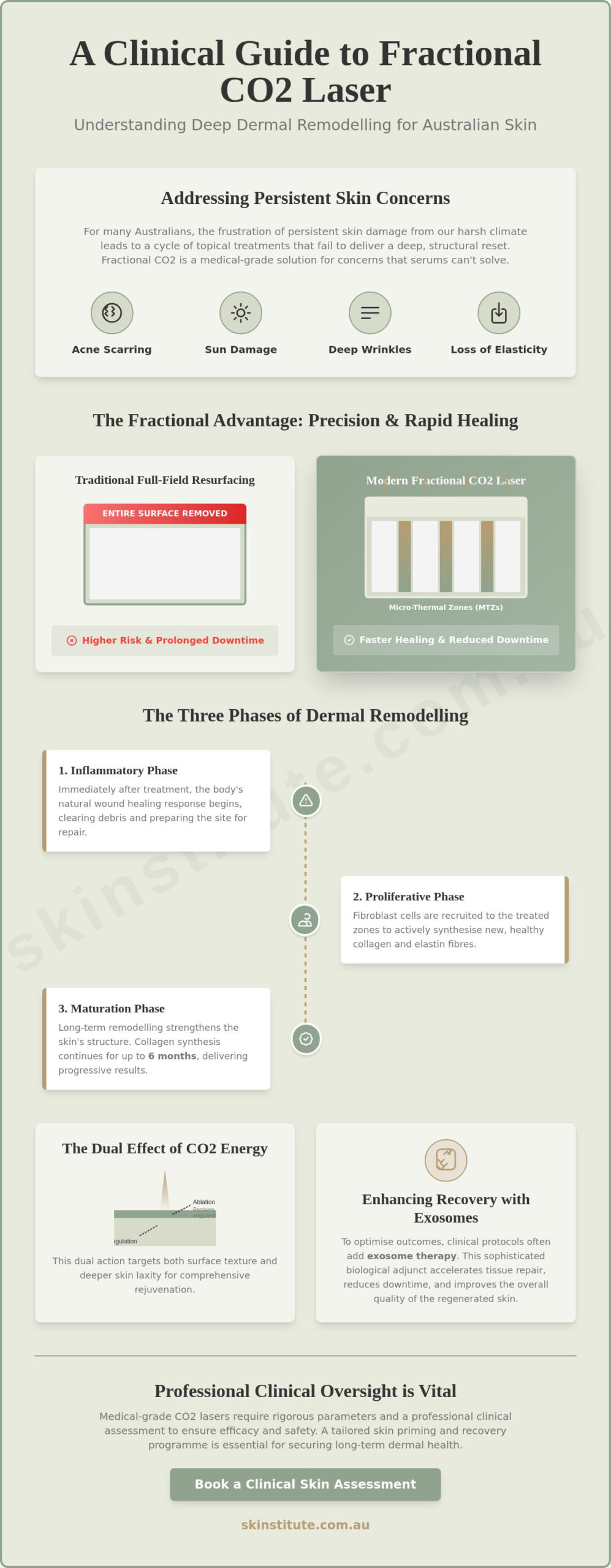
Carbon Dioxide (CO2) laser resurfacing represents the pinnacle of ablative technology in the field of photorejuvenation. Unlike non-ablative methods that leave the surface intact, a CO2 laser utilises a 10,600 nm wavelength to target water within skin cells, vaporising damaged tissue and initiating a robust healing response. Historically, this was achieved through “full-field” resurfacing, which removed the entire skin surface. While effective, the recovery was prolonged and carried higher risks. Modern fractional delivery has evolved this process by distributing laser energy into thousands of microscopic columns. This technique leaves surrounding tissue untouched, which significantly accelerates re-epithelialisation and reduces patient downtime.
Melbourne patients frequently seek this intervention to address the cumulative effects of high UV exposure. The Australian climate often results in premature ageing, characterised by deep rhytids, solar dyschromia, and a loss of dermal elasticity. Additionally, the clinical indications for fractional CO2 extend to the management of persistent acne scarring, where topical interventions have proved insufficient. To optimise these high-intensity outcomes, practitioners often integrate exosome therapy for face Melbourne to signal faster cellular repair and enhance the overall regenerative effect.
The Gold Standard of Laser Aesthetics
CO2 lasers remain the benchmark for deep tissue regeneration due to their high absorption coefficient in water. This allows for precise control over the depth of ablation and the degree of residual thermal damage. By balancing these factors, a practitioner can stimulate significant fibroblast activity without compromising patient safety. This controlled thermal injury is what eventually leads to the synthesis of new, organised collagen fibres, resulting in visible improvements to skin density and texture.
Medical-Grade vs. Cosmetic-Grade Laser Systems
The distinction between medical-grade and cosmetic-grade systems lies in power density and pulse duration. High-fluence CO2 lasers require a clinical setting because they demand rigorous parameters to ensure efficacy while avoiding adverse events like hyperpigmentation. The “fractional” advantage is found in the untreated skin bridges between the micro-thermal zones. These bridges act as reservoirs for healthy cells, allowing the skin to heal from the inside out. When combined with advanced recovery protocols like exosome therapy for face Melbourne, the “grid-like” healing phase is managed more efficiently, ensuring that the dermal reset is both safe and profound.
The Clinical Mechanism of Dermal Remodelling
Fractional CO2 lasers function by emitting precise beams of light that create Micro-Thermal Treatment Zones (MTZs) within the skin. These MTZs are microscopic columns of thermal injury that penetrate deep into the dermis while leaving the surrounding tissue intact. Laser skin resurfacing relies on this controlled injury to trigger the body’s innate regenerative capabilities. Once the laser makes contact, it initiates a complex biological cascade known as the wound healing response. This process is not instantaneous; it requires a orchestrated series of cellular events to replace damaged structures with healthy tissue.
This response occurs in three distinct phases. First, the inflammatory phase begins immediately, where the body clears debris and prepares the site for repair. This is followed by the proliferative phase, where fibroblasts are recruited to the MTZs to synthesise new collagen and elastin. Finally, the maturation phase involves the long-term remodelling of the extracellular matrix. Because this process is biologically intensive, collagen synthesis typically continues for up to six months after the initial procedure. For patients seeking a comprehensive clinical skin assessment, understanding these biological phases is the first step toward achieving predictable results.
Ablation vs. Coagulation: The Dual Effect
Ablative energy vaporises the epidermis to remove surface irregularities, while the secondary thermal effect, coagulation, causes immediate tissue contraction. Practitioners adjust these parameters based on the specific anatomical site and the patient’s skin thickness. This dual action is why the treatment is so effective for both surface texture and deeper laxity. It allows for a tailored approach where the intensity is matched to the severity of the scarring or sun damage.
The Science of Fractional Healing
The primary safety feature of modern CO2 systems is the preservation of untreated bridges of skin. By leaving approximately 70-80% of the tissue unaffected, the skin can re-epithelialise rapidly from these healthy reservoirs. This reduces the risk of permanent pigmentary changes and avoids the scarring associated with older, full-field lasers. To further support this biological recovery, many clinical protocols now include exosome therapy for face Melbourne, which delivers concentrated growth factors directly to the MTZs. Incorporating exosome therapy for face Melbourne into the post-laser regimen allows for enhanced intercellular communication, which is vital for the maturation of new collagen fibres and a more refined clinical outcome.
Comparing Fractional CO2 with Alternative Resurfacing Technologies
Selecting the appropriate resurfacing modality requires a nuanced understanding of the intensity-to-result ratio. While various light-based and mechanical treatments exist, fractional CO2 remains the most potent tool for addressing significant dermal irregularities. Compared to Erbium:YAG lasers, which have a higher affinity for water and produce less residual thermal damage, the CO2 wavelength penetrates deeper and creates a more substantial zone of coagulation. This coagulation is essential for the skin-tightening effect that Erbium often lacks. While Erbium may offer a slightly shorter recovery period, CO2 is generally preferred for treating deep acne scars and advanced photo-ageing where structural remodelling is the primary goal.
When evaluating skin needling melbourne against laser resurfacing, the distinction lies in the method of injury. Needling uses mechanical micro-punctures to stimulate collagen, making it a safe option for all Fitzpatrick skin types with minimal downtime. However, it cannot achieve the same level of tissue vaporisation or thermal contraction as a medical-grade laser. For patients with deep rhytids or ice-pick scars, the energy-based approach of fractional co2 laser resurfacing melbourne provides a more efficient path to visible improvement, often requiring fewer sessions to reach the desired clinical endpoint.
CO2 Laser vs. Non-Ablative Resurfacing
Non-ablative lasers work by heating the underlying tissue without damaging the surface. This results in a very brief recovery, often only 48 hours, but requires a series of four to six treatments to match the results of a single ablative session. In contrast, fractional CO2 involves a 7 to 10 day healing window characterised by erythema and a “grid-like” texture. The choice between these profiles depends on the patient’s lifestyle and the severity of the skin concern, with ablative lasers delivering a more dramatic dermal reset for those who can accommodate the necessary downtime.
Combining Modalities for Enhanced Regeneration
Clinical outcomes are often improved by sequencing laser treatments with advanced bio-stimulators. Integrating rejuran melbourne into a treatment plan introduces polynucleotides that support cellular repair and hydration from within. The micro-channels created by the laser also provide a direct pathway for exosome therapy for face melbourne. These stem-cell-derived messengers target the inflammatory phase of the laser injury, facilitating faster re-epithelialisation and reducing the duration of post-treatment redness. This strategic combination ensures that the skin is not only resurfaced but biologically reinforced, leading to superior elasticity and texture.
The Clinical Journey: Preparation and Post-Laser Recovery
The success of a fractional CO2 procedure is contingent upon a disciplined approach to skin preparation and post-operative care. It’s not a treatment that should be performed on unconditioned skin, particularly in Melbourne where cumulative solar damage is a common clinical finding. We view the procedure as a journey that begins weeks before the laser ever touches the skin. This preparation phase is essential for stabilising melanocytes and ensuring the dermal environment is optimised for the intensive remodelling process that follows. Without a structured priming programme, the risk of adverse outcomes like post-inflammatory hyperpigmentation (PIH) increases significantly.
During the immediate recovery, patients must manage the “grid-like” appearance caused by the micro-thermal treatment zones. This texture is a physical manifestation of the laser’s precision and is accompanied by erythema and swelling. To facilitate a smoother transition through these stages, many clinical protocols now incorporate exosome therapy for face melbourne. By applying these concentrated biological messengers immediately after the procedure, we can modulate the inflammatory response and provide the growth factors necessary for rapid re-epithelialisation. Using exosome therapy for face melbourne helps to reduce the “heat” felt in the first 48 hours and supports the skin’s structural maturation over the following months.
Pre-Treatment Clinical Protocols
To ensure patient safety, we prescribe tyrosinase inhibitors for at least two to four weeks prior to the laser session. This is a critical step for preventing rebound pigmentation, especially for those with Fitzpatrick skin types III through VI. We also utilise medical-grade retinoids (Vitamin A) to increase cellular turnover, which allows for more uniform laser penetration. For patients with any history of cold sores, a course of antiviral prophylaxis is mandatory to prevent a viral outbreak while the skin’s protective barrier is temporarily compromised.
The Recovery Timeline: From Day 1 to Month 6
- Day 1-3: Patients experience intense heat, swelling, and a “bronzing” effect as the MTZs begin to dry. This is the period of maximum “grid” visibility.
- Day 4-7: The peeling phase begins as the old damaged tissue is shed. It’s vital not to pick or scrub the skin during this time to avoid scarring.
- Weeks 2-12: While the surface appears healed, the deep remodelling phase is in full effect. Texture refinement and collagen synthesis will continue to improve for up to six months.
Given the high UV index in Victoria, strict sun avoidance is non-negotiable during the first three months. The newly surfaced epithelium is highly vulnerable to UV-induced damage, which can lead to permanent dyschromia if not managed with physical zinc-based SPF and protective clothing. If you’re ready to begin your skin conditioning, you can book a clinical consultation to discuss a personalised priming programme.
Why Professional Clinical Oversight is Vital for Laser Aesthetics
High-fluence fractional CO2 laser is a sophisticated medical instrument that requires precise calibration to the patient’s specific dermal architecture. When settings aren’t custom-tailored, the risk of adverse events such as hypertrophic scarring or permanent hypopigmentation increases significantly. This is why professional clinical oversight is non-negotiable for high-intensity resurfacing. A clinical environment ensures that the procedure is governed by medical safety protocols rather than commercial targets. At Skinstitute, we prioritise a clinical assessment that evaluates your skin’s history, health, and capacity for regeneration before any energy-based treatment is prescribed.
With over 26 years of industry experience in medical-grade skin regeneration, we understand that every patient’s response to thermal injury is unique. Our approach moves beyond a “one-size-fits-all” setting. We adjust pulse duration and power density based on the thickness of the dermis and the specific nature of the lesion being treated. This level of technical mastery is what distinguishes a medical-grade result from a standard cosmetic procedure. It’s about managing the biological response to ensure the skin heals with improved structure and clarity.
Safety Standards in a Medical-Grade Environment
Operating a CO2 laser necessitates strict adherence to laser safety standards, including the use of wavelength-specific eye protection for both the patient and the practitioner. During the initial consultation, we meticulously identify contraindications, such as active infections, recent isotretinoin use, or specific autoimmune conditions that might impair healing. Post-treatment clinical reviews are an integral part of our care model, allowing us to monitor the re-epithelialisation process and adjust aftercare instructions in real-time. This ensures that the healing phase remains on a predictable clinical trajectory.
The Skinstitute Difference in Melbourne
Our commitment to evidence-based aesthetic medicine means we only utilise protocols that have been clinically validated. We often design integrated treatment plans that combine laser resurfacing with other medical modalities, such as prescription injectables, to achieve a more harmonious result. For instance, the inclusion of exosome therapy for face melbourne within our clinical protocols ensures that the inflammatory cascade is professionally managed. By using exosome therapy for face melbourne as a post-laser adjunct, we provide a biological safeguard that supports cellular repair and minimises the risk of prolonged erythema. Choosing a clinic with deep-seated expertise ensures that your journey is safe, transparent, and results-driven. We invite you to book a clinical assessment to determine your suitability for fractional CO2 resurfacing and to receive a bespoke treatment plan tailored to your skin’s unique requirements.
Advancing Dermal Health through Clinical Precision
Achieving a total dermal reset requires a transition from superficial skincare to medical-grade interventions. Fractional CO2 laser technology provides the necessary thermal energy to address deep-seated irregularities, yet the success of the procedure depends entirely on the clinical framework surrounding it. By prioritising a rigorous skin priming programme and integrating biological adjuncts like exosome therapy for face melbourne, patients can navigate the recovery period with greater confidence and see a more refined restoration of skin elasticity and texture.
With over 26 years of clinical aesthetic experience, Skinstitute specialises in advanced skin regeneration using custom-calibrated, medical-grade laser technology. This seasoned approach ensures that every thermal micro-column is delivered with precision, respecting the skin’s biological limits while pushing for maximum structural improvement. If you’re ready to address persistent scarring or extensive solar damage, we invite you to Book a Clinical Consultation at Skinstitute Melbourne to develop a bespoke treatment plan. Your journey toward skin restoration is supported by technical mastery and a commitment to evidence-based results.
Frequently Asked Questions
How much does fractional CO2 laser cost in Melbourne?
The cost of a fractional CO2 procedure varies depending on the anatomical area being treated and the required depth of the resurfacing. Since this is a medical-grade treatment tailored to individual dermal concerns, a clinical assessment is necessary to determine the appropriate energy settings and the number of sessions required. Patients should view this as a long-term investment in their skin’s structural integrity rather than a recurring aesthetic maintenance cost.
Is fractional CO2 laser painful during the procedure?
Patients typically experience a sensation of intense heat and a snapping feeling as the laser creates micro-thermal zones. To ensure the procedure is tolerable, we utilise high-potency topical anaesthetics and integrated cooling systems that dissipate heat from the skin’s surface. Most patients report that while the treatment is intensive, the discomfort is manageable within a professional clinical setting.
How many sessions of fractional CO2 are typically required for acne scars?
Most patients achieve significant reduction in scar depth and texture irregularities after one to three sessions. The exact number depends on the morphology of the scars and the patient’s biological capacity for collagen synthesis. While a single session can produce a profound dermal reset, deeper boxcar or ice-pick scars often benefit from a staged approach to allow for cumulative tissue remodelling.
What is the difference between a “CoolPeel” and deep fractional CO2?
CoolPeel is a low-downtime variant of CO2 resurfacing that delivers short pulses of high energy without causing significant residual thermal damage to the surrounding tissue. In contrast, deep fractional CO2 targets the mid-dermis to trigger a more robust inflammatory response. While CoolPeel is excellent for fine lines and surface texture, deep resurfacing is the clinical preference for addressing structural concerns like deep rhytids and significant scarring.
Can fractional CO2 laser be used on dark skin types?
Fractional CO2 can be safely utilised on darker Fitzpatrick skin types if the skin is meticulously conditioned with tyrosinase inhibitors for several weeks prior to treatment. The primary concern is preventing post-inflammatory hyperpigmentation. To mitigate this risk, we often integrate exosome therapy for face melbourne into the post-laser protocol to stabilise cellular communication and facilitate a faster, more controlled healing phase.
How long do the results of laser skin resurfacing last?
The results of CO2 resurfacing are long-lasting because the procedure induces the synthesis of new, organised collagen fibres that replace damaged tissue. While the natural ageing process and environmental exposure will continue, the baseline improvement in skin density and elasticity can persist for several years. Maintaining these results requires a disciplined approach to sun protection and a medical-grade skincare regimen.
What are the most common side effects of CO2 laser?
Common physiological responses include erythema, oedema, and a temporary “grid-like” texture where the laser beams have made contact. These effects are a necessary part of the inflammatory cascade that leads to dermal remodelling. Most surface-level side effects resolve within seven to ten days as the new epithelium forms, though a subtle pinkness may persist for several weeks as the skin continues to heal.
When can I return to wearing makeup after laser resurfacing?
Makeup should only be applied once the skin has fully re-epithelialised, which typically occurs between day five and day seven post-procedure. It is vital to wait until the microscopic channels have closed and any peeling has subsided to avoid the risk of infection or irritation. We recommend using mineral-based products during the initial transition period to ensure the new skin is not compromised by harsh chemicals or fragrances.