Skinstitute Melbourne: A Clinical Guide to Medical-Grade Aesthetic Treatments
June 12, 2026
Fractional CO2 Laser Melbourne: A Clinical Guide to Medical-Grade Resurfacing
June 14, 2026
The most effective clinical results for skin laxity are rarely achieved through a single device, but rather through a precise understanding of the biological mechanisms at play within the dermal layers. You’ve likely noticed a gradual loss of jawline definition or a change in the texture of your neck skin that topical skincare cannot reverse. It’s understandable to feel confused by the competing claims of various technologies. Choosing the right skin tightening treatment requires a move away from aesthetic trends toward a focus on evidence-based medical modalities.
This guide provides a professional overview of medical-grade solutions to help you identify the most appropriate clinical path for your specific concerns. We’ll examine the technical differences between high intensity focused ultrasound, radiofrequency, and fractional CO2. By understanding how these procedures interact with your body’s natural collagen production, you can work with an experienced practitioner to develop a structured plan. This approach ensures natural-looking firmness and restored facial contours through technical mastery rather than superficial promises.
Key Takeaways
- Understand the physiological decline of collagen and elastin to better comprehend how clinical interventions address the biological basis of skin laxity.
- Explore the mechanism of High Intensity Focused Ultrasound (HIFU) and its capacity to target the deep SMAS layer for significant structural lifting.
- Compare the immediate mechanical support provided by PDO threads with the long-term cellular regeneration offered by advanced bio-stimulators.
- Learn how a professional clinical assessment determines the ideal skin tightening treatment based on your unique skin thickness and anatomical requirements.
- Discover the advantages of multi-modal protocols that combine energy-based devices and injectables to achieve comprehensive facial rejuvenation.
Understanding Skin Laxity: The Biological Basis for Skin Tightening Treatment
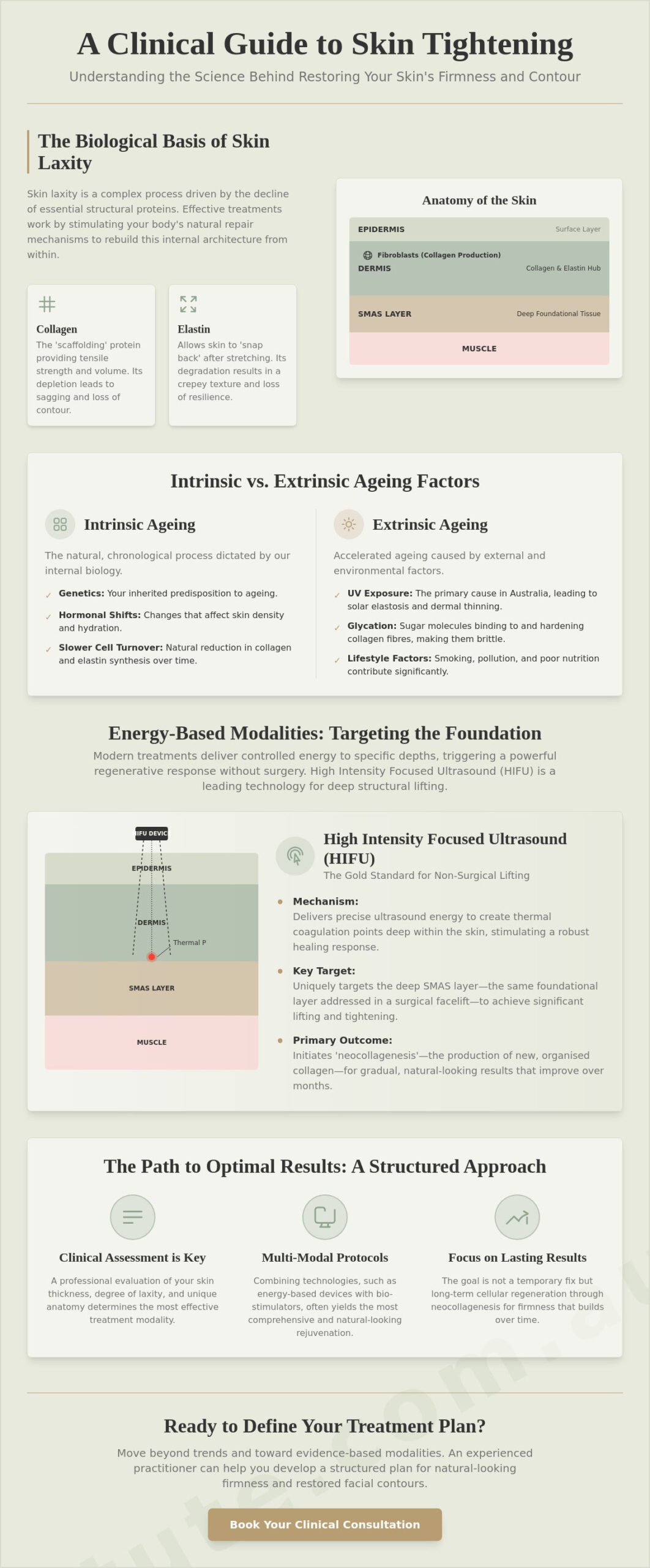
Skin laxity is a complex physiological process characterised by the progressive depletion of structural proteins within the dermal layer. Unlike a surgical Rhytidectomy, which addresses advanced sagging through the excision of redundant tissue, a clinical skin tightening treatment aims to restore the skin’s internal architecture. This restoration relies on two primary proteins: collagen and elastin. Collagen provides the essential tensile strength and volume that defines youthful facial contours, while elastin allows the tissue to maintain its original shape after stretching or contraction. When these proteins degrade, the skin loses its underlying support, resulting in the visible softening of the jawline and the development of a crepey texture.
In the Australian climate, this biological decline is frequently accelerated. The high levels of ultraviolet (UV) radiation common in Melbourne lead to solar elastosis, a condition where healthy collagen fibres are replaced by thick, dysfunctional bundles of elastic tissue. This environmental damage results in significant dermal thinning and a loss of resilience. To counteract these changes, medical interventions focus on “neocollagenesis.” This is the biological process of synthesising new collagen fibres to replace damaged structures, effectively thickening the dermis from within to provide a firmer, more lifted appearance.
The Role of Fibroblasts in Dermal Remodelling
Fibroblasts are the specialised cells within the dermis responsible for the production of collagen, elastin, and hyaluronic acid. They act as the biological engines of skin repair. Most clinical tightening modalities work by delivering controlled thermal energy or micro-trauma to the deeper layers of the skin. This precise stimulus triggers a wound-healing response, which “wakes up” dormant fibroblasts and encourages them to proliferate. The extracellular matrix is a complex network of proteins and carbohydrates that provides the essential structural and biochemical support required for cellular adhesion and tissue integrity. By stimulating the fibroblasts within this matrix, we can facilitate a more robust and organised dermal structure.
Intrinsic vs. Extrinsic Ageing Factors
The rate at which skin loses its firmness is determined by both intrinsic and extrinsic factors. Intrinsic ageing is the natural chronological process dictated by genetics and hormonal shifts, leading to a gradual reduction in protein synthesis over time. Extrinsic ageing, often referred to as photo-ageing, is caused by external stressors. Melbourne residents are particularly susceptible to extrinsic damage due to intense UV exposure, which can account for a significant portion of visible skin ageing. Another critical factor is glycation, a process where sugar molecules attach to collagen fibres, causing them to become brittle and lose their elasticity. Addressing these combined factors requires a sophisticated skin tightening treatment plan that accounts for both the patient’s biological age and their history of environmental exposure.
Energy-Based Modalities: High Intensity Focused Ultrasound (HIFU) and Laser
A comprehensive skin tightening treatment requires a sophisticated understanding of how energy interacts with different anatomical depths. While superficial treatments may improve the skin’s texture, they often fail to address the underlying structural causes of sagging. Effective clinical protocols distinguish between “tightening,” which focuses on the dermal envelope, and “lifting,” which targets the deeper foundational layers. By delivering controlled thermal energy to these specific zones, we can initiate a biological repair response that traditional topical applications cannot replicate.
The FDA on Non-Invasive Body Contouring highlights that these technologies rely on precise energy delivery to achieve physiological changes without the necessity of surgical intervention. For patients in Melbourne, selecting the correct modality depends on whether the primary concern is surface-level crepey skin or a more significant loss of structural support along the jawline and neck.
The Science of High Intensity Focused Ultrasound (HIFU)
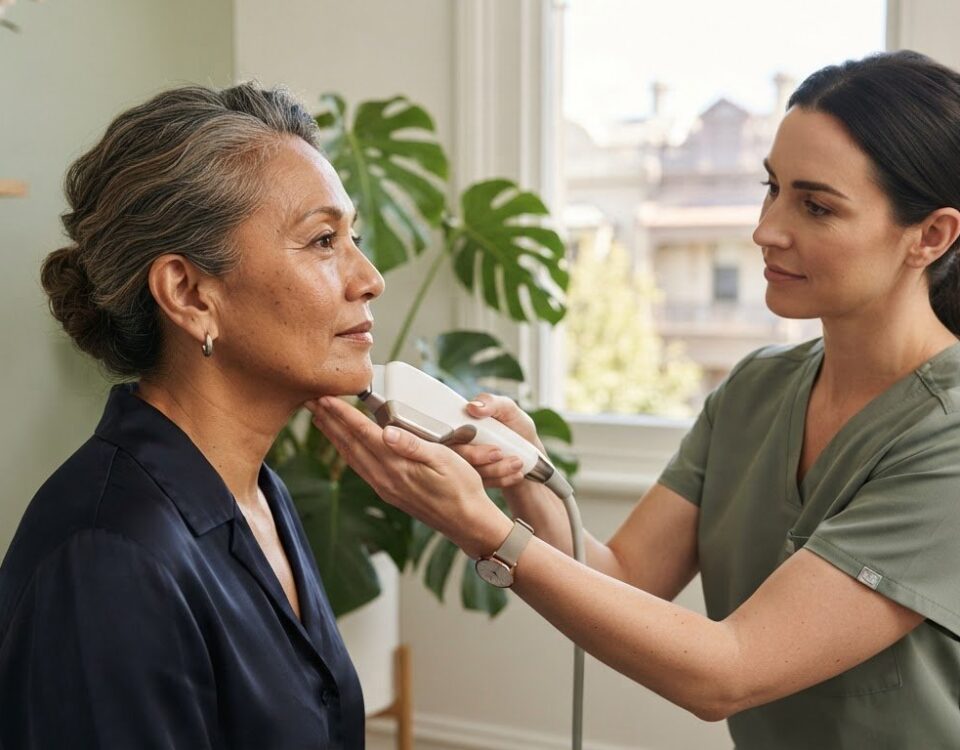
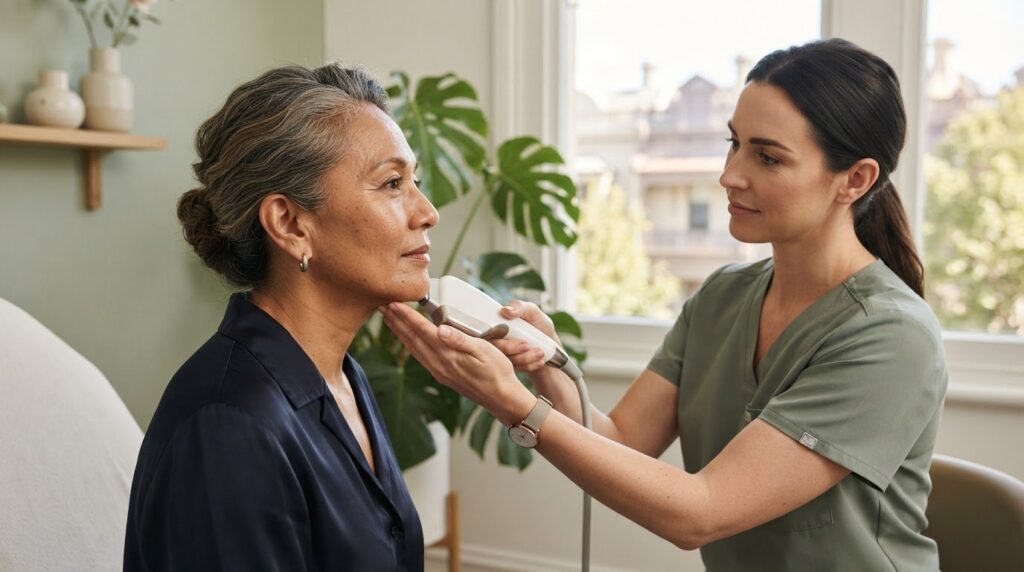
High Intensity Focused Ultrasound (HIFU) is a sophisticated technology designed to reach the Superficial Musculoaponeurotic System (SMAS). This is the same fibrous layer that surgeons manipulate during an invasive facelift. By focusing ultrasonic energy at precise depths, typically 3.0mm and 4.5mm, the device creates discrete thermal coagulation points. These points cause the collagen fibres to contract immediately, providing a subtle initial lift. However, the most significant results appear over several months as the body undergoes a long-term collagen maturation process. This method is ideal for patients who require structural lifting without the downtime of surgery. You can find more technical details on this process in our HIFU treatment overview.
Fractional CO2 Laser for Dermal Regeneration
While HIFU addresses the deep structural foundations, Fractional CO2 Laser focuses on the dermal and epidermal interface. This ablative technology works by creating thousands of microscopic columns of thermal damage in the skin, leaving the surrounding tissue untouched to facilitate rapid healing. This process triggers a vigorous “wound healing” response, which replaces damaged elastic fibres with new, organised collagen. It’s a dual-action approach that improves both skin laxity and overall surface texture, including fine lines and pigmentation. Detailed information regarding this regenerative process is available in our Fractional CO2 laser resurfacing Melbourne guide.
Because every face ages differently, a clinical skin tightening treatment should be tailored to your specific dermal thickness and degree of laxity. Determining which combination of energy-based modalities will provide the most natural and enduring result is best achieved through a professional clinical assessment at our Melbourne centre.
Structural Support vs. Bio-Stimulation: PDO Threads and Rejuran
While energy-based devices focus on thermal stimulation of the dermal layers, injectable modalities provide a different clinical pathway to restoration through physical reinforcement and biochemical signalling. A modern skin tightening treatment often requires a combination of these approaches to address both the loss of structural tension and the depletion of dermal density. By integrating mechanical lifting with biological regeneration, practitioners can create a more resilient skin architecture that mimics the natural support systems of younger tissue.
The distinction between mechanical support and biological stimulation is fundamental to medical aesthetics. Mechanical support involves the physical repositioning of tissue that has succumbed to gravity, whereas bio-stimulation focuses on improving the health and thickness of the skin itself. When these two methods are utilised in tandem, the result is a multifaceted improvement that addresses the visible signs of ageing from multiple physiological angles.
PDO Thread Lifting: Non-Surgical Structural Reinforcement
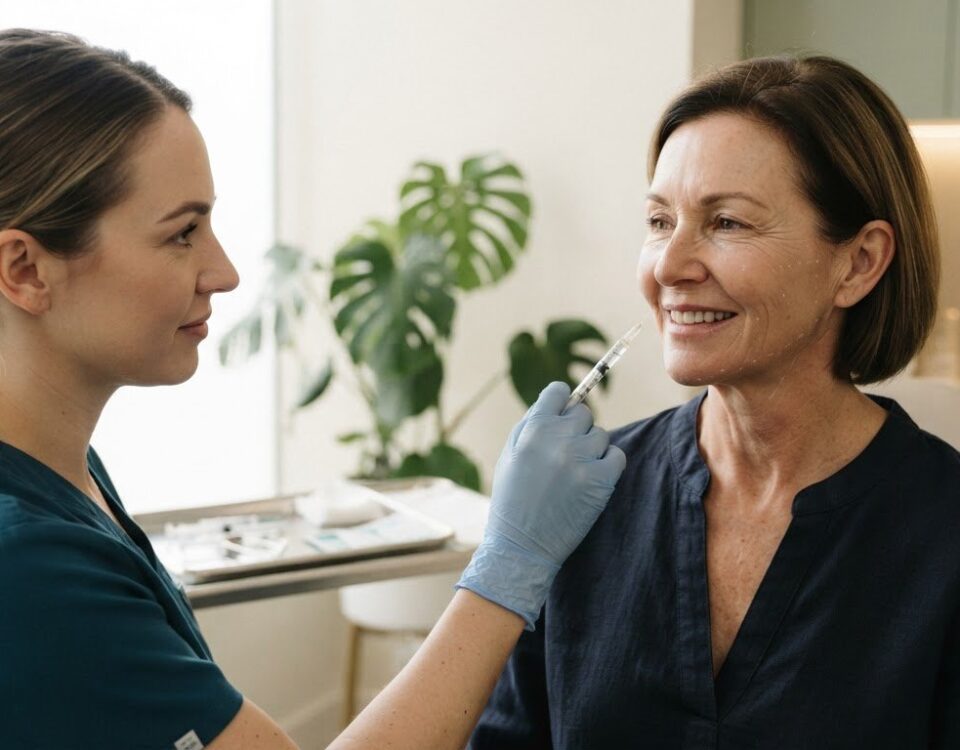
PDO (Polydioxanone) thread lifting is a procedure that utilises medical-grade, bio-absorbable sutures to provide an immediate scaffolding effect for sagging tissue. These threads are inserted into the subcutaneous layer of the skin, where they are strategically placed to reposition the skin and provide a subtle, non-surgical “lift.” The material itself has been used in cardiac and gastrointestinal surgeries for decades, demonstrating a high level of biocompatibility and safety.
The efficacy of PDO threads relies on a dual-action mechanism. Initially, the threads provide a mechanical tension that physically holds the tissue in a more youthful position. Over the following months, the presence of the suture material triggers a localised inflammatory response that stimulates the production of new collagen and elastin around the thread. As the PDO material is naturally metabolised by the body, a permanent “structural rope” of new collagen remains in its place. Contrary to common misconceptions, the downtime associated with this procedure is relatively minimal. Most patients experience minor swelling or bruising for a few days, which is a normal physiological response to the insertion process rather than a significant recovery period.
Rejuran and Bio-Stimulators for Dermal Density
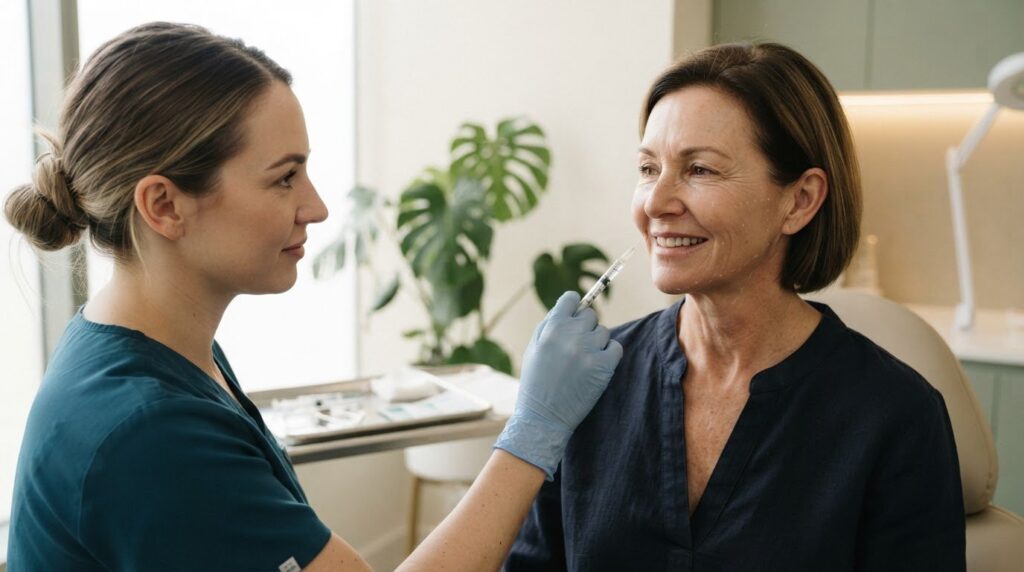
While threads provide the scaffolding, bio-stimulators like Rejuran focus on the quality and density of the dermal tissue. Rejuran is composed of polynucleotides, which are DNA fragments derived from wild salmon. These molecules are highly effective at repairing damaged skin and promoting cellular renewal. Unlike traditional dermal fillers that provide volume through hydration alone, polynucleotides act as a biological signal to the skin cells, encouraging them to enter a state of repair and regeneration.
This process improves the skin’s overall elasticity by strengthening the skin barrier and increasing internal hydration levels. By thickening the dermis from within, Rejuran helps to smooth out fine lines and improve the “snap-back” quality of the skin, which is often lost as we age. For a more technical exploration of how these molecules interact with human tissue, you may refer to our Clinical Guide to Rejuran in Melbourne. Combining Rejuran with a structural skin tightening treatment like PDO threads ensures that the skin is not only lifted but also fundamentally healthier and more robust.
Selecting the Correct Modality: A Clinical Decision Framework
Determining the most effective skin tightening treatment requires a systematic clinical evaluation rather than a simple selection from a menu of services. A practitioner must analyse the patient’s unique anatomical profile, considering the degree of ptosis, the quality of the dermal matrix, and the distribution of subcutaneous fat. This objective assessment ensures that the chosen modality aligns with the patient’s physiological needs, leading to predictable and safe outcomes. Every face ages at a different rate; therefore, the clinical approach must be equally individualised.
A primary concern for many patients is the fear of an over-treated or unnatural appearance. Our clinical philosophy prioritises a “less is more” approach, focusing on restoring the skin’s biological health to achieve a refreshed version of the individual. By adhering to medical-grade standards, we ensure that every intervention is grounded in anatomical science. This focus on structural integrity naturally prevents the distorted results often associated with non-clinical environments where marketing hype takes precedence over medical precision.
Assessing Skin Quality and Dermal Thickness
Practitioners use specific diagnostic techniques to evaluate skin “snap-back,” which indicates the current state of elastin fibres and overall resilience. If a patient presents with significant dermal thinning and fine texture, a bio-stimulator like Rejuran may be the primary recommendation to build density from within. Conversely, a patient with heavier jowls and sufficient fat volume may require the deep structural vectoring provided by HIFU to address the SMAS layer. Expert clinicians at Skinstitute Melbourne provide these detailed assessments to ensure the treatment plan is medically sound and tailored to the patient’s tissue type.
Developing a Long-Term Maintenance Protocol
It’s vital to understand that biological remodelling is a gradual process. While some immediate tissue contraction might occur, the definitive results of a skin tightening treatment typically manifest between three and six months as the collagen maturation cycle completes. This timeline reflects the body’s natural healing rhythm. Maintaining these results requires a disciplined approach to dermal health, including the use of medical-grade skincare and rigorous sun protection to mitigate further UV-induced degradation of the newly formed collagen. Consistent maintenance ensures that the skin remains resilient against the ongoing effects of chronological ageing.
To begin your personalised clinical journey and determine which modality suits your anatomy, we recommend you book a professional consultation with our experienced practitioners.
The Skinstitute Approach: Bespoke Tightening Protocols in Melbourne
The selection of a skin tightening treatment is a significant clinical decision that requires more than just access to technology. It necessitates a practitioner who can synthesise deep anatomical knowledge with technical proficiency. At Skinstitute, we’ve spent 26 years refining our protocols within the Melbourne aesthetic industry, moving away from generic applications toward bespoke, multi-modal strategies. This longevity reflects our commitment to medical-grade standards and evidence-based results, ensuring that every patient receives a plan tailored to their specific dermal requirements.
Our clinic provides a comprehensive suite of clinical modalities, including PDO thread lifting, High Intensity Focused Ultrasound, Fractional CO2, and bio-stimulators like Rejuran. By offering this broad range of technologies, we avoid the single-device bias that can often limit patient outcomes. Instead, we can layer different treatments to address both structural sagging and dermal thinning simultaneously. This integrated approach allows us to target multiple layers of the skin, from the superficial epidermis to the deep SMAS layer, in a single, cohesive plan.
Why 26 Years of Experience Matters
The success of a skin tightening treatment depends heavily on the practitioner’s ability to manipulate various energy parameters and anatomical vectors. Precise thread placement or the adjustment of laser fluences requires a sophisticated understanding of how different skin types respond to thermal or mechanical stimuli. This seasoned expertise reduces the risk of complications and ensures that results appear natural rather than over-corrected. Our clinical team operates with a quiet confidence that only comes from decades of treating diverse skin concerns in a professional medical environment. We understand that subtle adjustments in technique can lead to significantly more refined and enduring results.
Your Journey at Our Melbourne Clinic
Your experience begins with a thorough clinical skin analysis, where we evaluate your skin’s snap-back, volume distribution, and textural integrity. This diagnostic phase is essential for developing a bespoke tightening plan that addresses the root causes of your laxity. We view our role as that of a professional advisor rather than a salesperson, providing you with the technical insight needed to make an informed decision about your care. Following your procedure, we provide structured follow-up care to monitor the collagen maturation process and ensure your skin is responding optimally to the intervention. To begin your clinical journey, we invite you to book a comprehensive assessment for your bespoke tightening plan at our Melbourne centre.
Advancing Your Clinical Path to Skin Restoration
Achieving a natural and enduring result requires a departure from surface-level aesthetics toward a structured, medical-grade approach. We’ve explored how the integration of deep structural lifting via HIFU, mechanical support from PDO threads, and the biological regeneration of bio-stimulators creates a comprehensive solution for skin laxity. Successful outcomes depend on a precise clinical understanding of your dermal thickness and anatomical requirements. This evidence-based framework ensures that your skin tightening treatment addresses the root causes of ageing rather than merely masking its symptoms.
With 26 years of clinical experience in Melbourne, our team specialises in medical-grade PDO threads and advanced HIFU technology to deliver predictable, natural-looking results. Every journey is supported by doctor-led prescription injectable protocols, providing a level of safety and technical mastery that prioritises your long-term dermal health. Book your clinical skin assessment at Skinstitute Melbourne today to begin developing your bespoke restoration plan. We look forward to partnering with you as you restore your facial contours with professional precision.
Frequently Asked Questions
How long do the results of a skin tightening treatment typically last?
The longevity of a clinical skin tightening treatment generally ranges from 12 to 24 months, though this depends heavily on the specific modality used and the patient’s biological response. Energy-based treatments like HIFU initiate a collagen maturation process that peaks at six months and remains stable for over a year. Maintenance sessions are typically recommended annually to counteract the natural, ongoing processes of chronological ageing and environmental degradation.
Is HIFU or PDO Thread Lifting better for a sagging jawline?
The choice between these two modalities depends on whether the primary concern is a loss of structural tension or a requirement for mechanical repositioning. HIFU is ideal for targeting the deep SMAS layer to create a foundational lift, particularly in patients with sufficient dermal thickness. PDO Thread Lifting is often superior for patients who require immediate, physical redirection of sagging tissue to restore the definition of the mandibular line.
What is the difference between skin tightening and a surgical facelift?
Non-surgical skin tightening focuses on the biological restoration of dermal proteins and the contraction of existing tissues, whereas a surgical facelift involves the physical excision of redundant skin. While surgery provides a more dramatic alteration of the facial structure, medical-grade clinical treatments offer a lower-risk alternative with minimal downtime. These non-invasive methods rely on the body’s natural wound-healing response to improve skin density and structural support from within.
Are medical-grade skin tightening treatments painful?
Most patients describe the sensation of medical-grade treatments as a series of brief, manageable heat pulses or a deep tingling rather than acute pain. For procedures like PDO Thread Lifting or Fractional CO2, we utilise topical or local anaesthesia to ensure patient comfort throughout the process. The level of discomfort is subjective and varies based on the depth of the treatment and the specific technology being utilised during the clinical session.
How many sessions of skin tightening are usually required for optimal results?
Optimal results are typically achieved in one to three sessions, depending on the degree of skin laxity and the chosen technology. High Intensity Focused Ultrasound often requires only a single annual session to maintain structural integrity. Other modalities, such as bio-stimulation or certain laser protocols, may require a structured series of treatments spaced several weeks apart to progressively build dermal density and achieve the desired level of firmness.
Can I combine different skin tightening treatments in one plan?
Combining different modalities is often the most effective clinical strategy for addressing complex ageing concerns. Layering energy-based devices with structural threads or bio-stimulators allows us to treat multiple anatomical depths simultaneously. This multi-modal approach ensures that we address both the superficial texture of the skin and the deeper foundational layers, leading to a more comprehensive and natural-looking restoration of the facial contours.
What is the typical recovery time for a Fractional CO2 laser treatment?
Recovery from a Fractional CO2 laser treatment generally involves five to seven days of social downtime, during which the skin undergoes a visible healing phase. Patients typically experience redness and swelling for the first 48 hours, followed by a period of fine peeling as the old epidermal cells are replaced. It’s essential to follow a strict post-treatment skincare regimen and avoid direct sun exposure during this time to protect the newly regenerating tissue.
Is skin tightening suitable for all skin types and colours?
Most skin tightening modalities are safe for all skin types, though certain laser technologies require specific parameters for patients with darker skin tones. Technologies like HIFU and PDO threads bypass the pigmented layers of the epidermis, making them excellent options for all ethnicities. We conduct a thorough assessment using the Fitzpatrick scale before any treatment to ensure the chosen protocol is safe and effective for your specific skin profile.