PDO Threads vs. HIFU: A Clinical Comparison for Non-Surgical Facial Lifting
September 1, 2026
The Clinical Guide to Selecting the Best Cosmetic Clinic in Melbourne
September 3, 2026
The paradigm of modern aesthetics has shifted from the mere supplementation of volume to the sophisticated induction of cellular regeneration. While many seekers of non-surgical cosmetic procedures melbourne are often overwhelmed by a saturated market of rapid-fire ‘tweakments’, the most sustainable results are rooted in rigorous clinical science rather than transient trends. You’ve likely noticed that the industry is undergoing a significant regulatory transformation, prioritising medical-grade safety and transparent practitioner standards over the high-pressure marketing of the past. This evolution ensures that your aesthetic journey is guided by technical proficiency and anatomical precision rather than commercial convenience.
It’s understandable to feel hesitant when faced with an array of complex technologies or the fear of achieving an artificial, over-filled appearance. We promise to provide an evidence-based overview of how lifting, resurfacing, and regenerative therapies, such as PDO threads and bio-stimulators, function at a physiological level to restore structural integrity. This article previews the essential clinical logic behind modern treatments, moving beyond surface-level descriptions to explain how specific modalities interact with your body’s natural healing processes. By the end, you’ll possess a clear understanding of the ‘why’ behind medical-grade interventions that restore facial volume and improve skin elasticity.
Key Takeaways
- Learn how the 2026 regulatory landscape for non-surgical cosmetic procedures melbourne ensures patient safety through mandatory real-time medical consultations and stringent practitioner standards.
- Understand the clinical distinction between mechanical tissue repositioning using PDO threads and thermal collagen contraction via HIFU for addressing structural facial sagging.
- Discover how regenerative therapies like Rejuran and Exosomes move beyond traditional volume replacement to facilitate biological repair and cellular rejuvenation.
- Evaluate the efficacy of Fractional CO2 laser and medical-grade needling for correcting surface imperfections, from fine lines to complex dermal scarring.
- Identify the critical components of a professional aesthetic assessment, including the necessity of a comprehensive clinical skin analysis within a medical-grade environment.
Understanding the Spectrum of Non-Surgical Cosmetic Enhancement
Non-surgical cosmetic procedures are defined as medical-grade interventions that do not require general anaesthesia or surgical incisions. These treatments focus on enhancing or restoring facial and body aesthetics through minimally invasive techniques. Within a broader Aesthetic Medicine Overview, these procedures provide a bridge between topical skincare and invasive plastic surgery, which our clinic does not perform. In Melbourne, the clinical landscape has evolved toward “tweakments” that prioritises subtle, refined outcomes over the dramatic alterations associated with traditional theatre-based surgery.
The demand for non-surgical cosmetic procedures melbourne is driven by a desire for reduced downtime and biological longevity. Modern patients seek treatments that align with their natural anatomy. This shift necessitates a sophisticated clinical environment where prescription-only treatments are administered under strict medical oversight. Following the 2026 AHPRA guidelines, every patient must undergo a real-time consultation with a prescribing practitioner before any injectable treatment. This ensures that the clinical “why” behind a procedure is established through a rigorous diagnostic lens, prioritising safety and anatomical appropriateness.
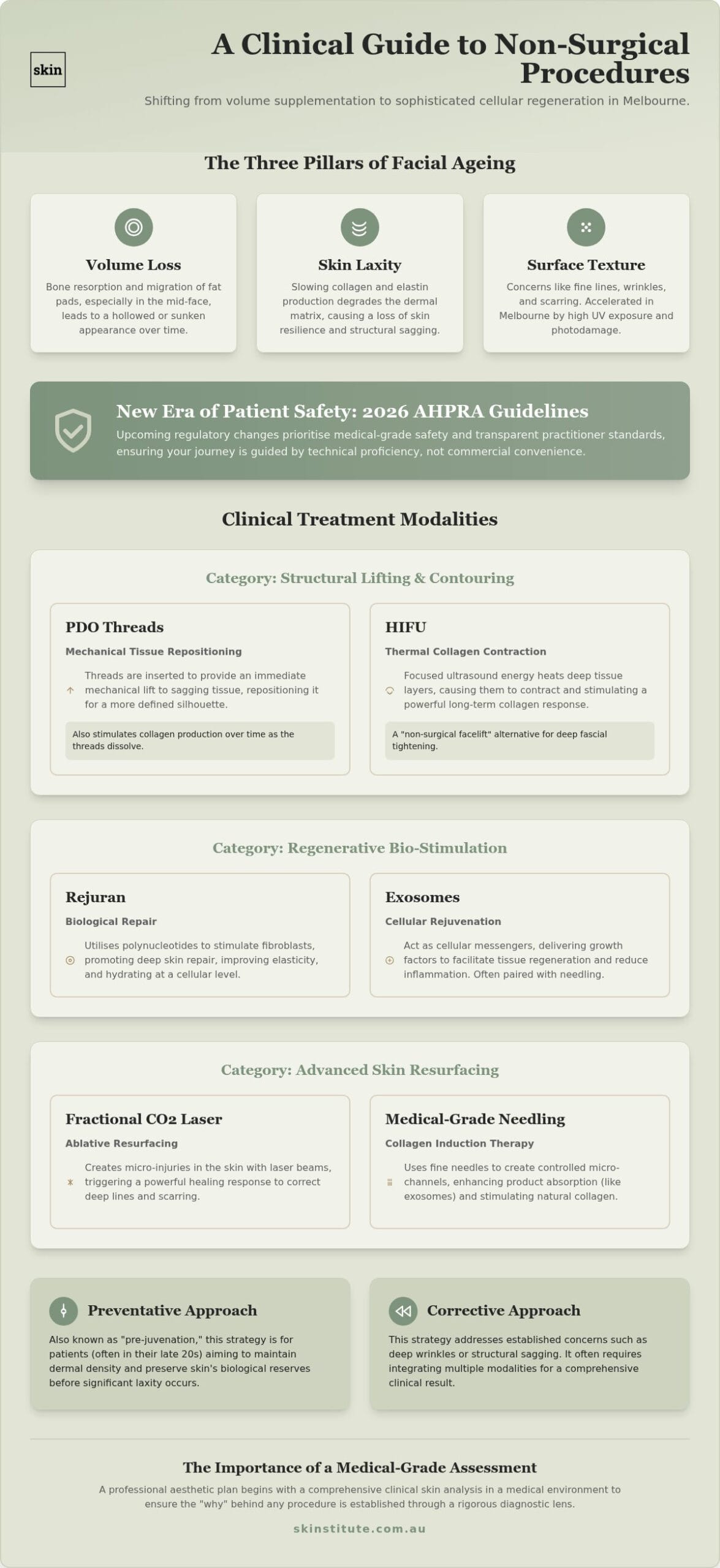
Clinical interventions typically address the three primary pillars of ageing: volume loss, skin laxity, and surface texture. By categorising concerns into these distinct physiological areas, practitioners can develop a sequential treatment plan. This methodical approach allows for the precise application of various technologies, ensuring each layer of the face receives the appropriate stimulus for rejuvenation.
The Biological Basis of Facial Ageing
Ageing is a multi-layered process that begins deep within the structural foundations of the face. The dermal matrix experiences a progressive degradation as collagen and elastin production slows. This leads to a loss of skin resilience. Simultaneously, bone resorption and the migration of subcutaneous fat pads in the mid-face contribute to a hollowed or sagging appearance. Melbourne’s climate presents a unique challenge; the harsh Australian UV environment accelerates these processes through significant photodamage. High UV exposure breaks down the structural proteins of the skin faster than chronological ageing alone, necessitating medical-grade interventions to repair the dermal architecture.
Preventative vs. Corrective Clinical Approaches
The clinical strategy for aesthetic enhancement is divided into preventative and corrective protocols. Pre-juvenation has become a prominent trend, where patients in their late 20s utilise low-intensity treatments to maintain dermal density before significant laxity occurs. This proactive approach focuses on preserving the skin’s biological reserves. Conversely, corrective protocols address established concerns like deep rhytids or structural sagging. Achieving an optimal clinical result often requires integrating multiple modalities. For instance, combining skin needling with regenerative exosomes can enhance the body’s natural healing response, leading to a more comprehensive improvement in skin health than any single treatment could provide on its own.
Structural Lifting and Contouring: PDO Threads vs. HIFU
Addressing facial descent requires a sophisticated understanding of the relationship between skin laxity, gravity, and the underlying structural foundations. While dermal fillers are effective for addressing volume loss, true structural lifting involves either the mechanical repositioning of tissue or the thermal contraction of the underlying fascia. Within the clinical landscape of non-surgical cosmetic procedures melbourne, PDO Thread Lifting and High Intensity Focused Ultrasound (HIFU) serve as the primary non-invasive alternatives for patients seeking to define their facial silhouette. These modalities are frequently described as “non-surgical facelifts” due to their ability to provide perceptible elevation to the mid-face and jawline without the associated risks of invasive plastic surgery.
PDO Thread Lifting: Mechanical Support and Collagen Synthesis
PDO Thread Lifting employs polydioxanone sutures to provide an immediate physical scaffolding for sagging tissue. The procedure involves the precise placement of these threads into the subcutaneous layer, where they act as a mechanical support system for the jowls and nasolabial folds. Beyond the initial lift, the presence of the polydioxanone triggers a foreign body response that is entirely beneficial; the body initiates a cascade of collagen synthesis around the threads. This biological induction ensures that as the threads are metabolically absorbed over six to nine months, a new framework of natural collagen remains to support the skin. The Australian Society of Plastic Surgeons notes that these non-surgical options are increasingly integrated into comprehensive aesthetic plans to address early signs of structural descent where surgery is not yet indicated.
HIFU Treatment: Precision Thermal Coagulation
High Intensity Focused Ultrasound (HIFU) operates on a different physiological principle, utilising focused acoustic energy to bypass the skin’s surface and target the Superficial Muscular Aponeurotic System (SMAS). This is the same fibrous layer addressed during surgical lifting procedures. By creating precise points of thermal coagulation at depths of 3.0mm to 4.5mm, HIFU induces immediate protein denaturation and subsequent collagen contraction. This process, known as neocollagenesis, continues for several months post-treatment, gradually tightening the neck and lifting the brow area. HIFU is particularly effective for patients with moderate skin laxity who prefer a needle-free intervention. Determining the optimal balance between mechanical threads and thermal ultrasound requires a comprehensive clinical skin analysis to evaluate individual tissue density and anatomical goals.
The Science of Bio-Stimulation: Rejuran, Exosomes, and Regenerative Medicine
The evolution of non-surgical cosmetic procedures melbourne has transitioned from temporary volume replacement to the sophisticated field of regenerative medicine. While previous sections focused on the mechanical and thermal aspects of structural lifting, bio-stimulation addresses the underlying health of the dermal matrix at a cellular level. Regenerative medicine focuses on the body’s innate ability to repair itself; it utilises biological signals to stimulate fibroblasts and restore cellular function. This clinical shift represents a move away from the “over-filled” aesthetic toward a protocol that prioritises skin quality and biological longevity.
Polynucleotides, specifically Rejuran, represent a significant departure from traditional hyaluronic acid fillers. While fillers physically occupy space to mask volume loss, Rejuran Melbourne treatments utilise DNA fragments to actively repair damaged tissue and improve skin physiological conditions. This distinction is vital for patients seeking long-term skin health rather than a transient aesthetic change. Adherence to the latest AHPRA Guidelines ensures these advanced biological treatments are administered within a controlled medical environment, where the physiological implications of bio-stimulation are thoroughly understood by experienced practitioners.
Polynucleotides and Rejuran: The Cellular Repair Kit
Rejuran is composed of long-chain polynucleotides (PN) derived from salmon DNA, which is highly biocompatible with human physiology. When introduced into the dermis, these PN fragments act as a cellular repair kit. They stimulate the production of collagen and elastin while simultaneously promoting angiogenesis and reducing inflammation. This biological activity makes Rejuran an exceptional clinical choice for the delicate periorbital area, where traditional fillers may cause unwanted oedema or puffiness. It’s also highly effective for improving the appearance of atrophic acne scarring and chronic dark circles by thickening the dermal layer and restoring elasticity.
Exosomes: Paracrine Signalling for Rapid Skin Regeneration
Exosomes are extracellular vesicles that facilitate paracrine signalling, essentially acting as messengers between cells. These vesicles contain a concentrated payload of proteins, lipids, and growth factors that instruct recipient cells to initiate repair and rejuvenation. In a clinical setting, exosome therapy is often utilised as a synergistic adjunct to fractional CO2 laser or skin needling. By delivering these concentrated signals directly to the skin post-procedure, practitioners can significantly accelerate the healing phase and enhance the overall regenerative outcome. This targeted cell-to-cell signalling represents a sophisticated frontier in aesthetic medicine, moving beyond generic stimulation toward precise biological instruction.
Advanced Skin Resurfacing: Fractional CO2 Laser and Medical-Grade Needling
Addressing surface imperfections represents the final pillar of a comprehensive aesthetic strategy. While previous sections detailed structural lifting and cellular bio-stimulation, resurfacing modalities focus on the epidermis and upper dermis to correct solar lentigines, fine lines, and post-inflammatory scarring. These interventions are a critical component of non-surgical cosmetic procedures melbourne, as they refine the skin’s texture and light-reflective properties. By utilising controlled injury to trigger the body’s healing response, practitioners can effectively replace damaged tissue with healthy, organised collagen fibres, a technique also utilised by high-calibre clinics like MG Plastic Surgery to achieve refined aesthetic outcomes.
The clinical gold standard for addressing deep tissue irregularities is Fractional CO2 Laser Resurfacing Melbourne. This technology employs a 10,600nm wavelength to create microscopic thermal zones within the skin, leaving columns of untreated tissue to facilitate rapid re-epithelialisation. It’s specifically indicated for solar elastosis and deep perioral lines where significant dermal remodelling is required. In a clinical environment, safety protocols are strictly adjusted based on the patient’s Fitzpatrick skin type to mitigate the risk of post-inflammatory hyperpigmentation, ensuring that the ablation remains within safe physiological limits.
Skin Needling: Percutaneous Collagen Induction Therapy
Medical-grade skin needling differs fundamentally from traditional spa treatments that often utilise manual cylindrical rollers. Automated medical devices ensure vertical needle entry and exit, which prevents epidermal tearing and allows for precise depth control up to 2.5mm. This percutaneous collagen induction therapy creates thousands of micro-channels, so it’s an ideal delivery system for regenerative serums. When combined with exosomes, the healing cascade is significantly amplified, leading to faster tissue repair. A professional assessment is vital before proceeding, particularly for patients with active acne or melasma, as inappropriate settings can exacerbate inflammatory conditions rather than resolving them.
Managing the recovery window is a primary concern for many patients. In 2026, downtime isn’t a “one-size-fits-all” experience. Clinical parameters can be tailored to your lifestyle; a more aggressive laser setting may require five to seven days of social downtime, whereas medical needling typically involves only 24 to 48 hours of erythema. Understanding the physiological stages of inflammation and repair allows patients to plan their treatments with confidence. For those seeking a tailored resurfacing protocol, we recommend a clinical consultation to determine the most appropriate modality for your skin’s unique requirements.
Selecting a Medical-Grade Cosmetic Clinic in Melbourne
The selection of a facility for non-surgical cosmetic procedures melbourne should be predicated on clinical transparency rather than aesthetic marketing. A medical-grade environment is distinguished by its adherence to rigorous safety protocols and the integration of advanced diagnostic tools. While the volume of providers in the metropolitan area has increased, the most reliable outcomes are achieved in clinics that prioritise established scientific principles and medical oversight. Experience is a critical metric; for instance, our clinic maintains over 26 years of industry experience, ensuring that every intervention is backed by decades of technical proficiency.
Every successful aesthetic journey begins with a comprehensive Clinical Skin Analysis. This diagnostic phase allows practitioners to evaluate dermal health beyond the surface level, identifying underlying vascularity, pigmentation, and structural deficits. Patients should be wary of “cheap” cosmetic procedures that often carry hidden costs, such as the use of unverified technologies or the absence of qualified medical supervision. Investing in high-standard clinical care ensures that your results are not only effective but biologically safe for the long term.
The Consultation Process: Setting Realistic Expectations
A professional consultation is a methodical assessment of your medical history, lifestyle factors, and anatomical goals. It’s during this phase that a bespoke treatment plan is developed, often utilising a multi-modality approach to address different layers of the face simultaneously. Your practitioner has an ethical responsibility to provide an honest appraisal, which includes the necessity to say “no” if a requested procedure isn’t appropriate for your anatomy. This standard of care is shared by leading providers like Monday Aesthetics & Consulting, PLLC, who prioritise advanced non-surgical cosmetic treatments delivered with clinical integrity. This approach fosters a partnership based on trust and realistic expectations, rather than a purely transactional relationship.
The longevity of your results depends heavily on post-treatment clinical care and consistent maintenance. Medical-grade skincare is essential for supporting the skin’s barrier function and prolonging the effects of bio-stimulation or resurfacing. Scheduling periodic “top-up” treatments is a proactive strategy to combat the natural ageing process and maintain structural integrity. In Melbourne, sun protection is a non-negotiable component of aesthetic longevity. Given the high UV index in the region, daily application of broad-spectrum SPF is mandatory to prevent the degradation of new collagen and protect your clinical investment from further photodamage.
Advancing Your Aesthetic Journey Through Clinical Precision
The evolution of non-surgical cosmetic procedures melbourne reflects a broader clinical shift toward biological restoration and structural integrity. By prioritising regenerative therapies like Rejuran and exosomes alongside established modalities like PDO threads and fractional CO2 laser, you’ll achieve outcomes that are both subtle and sustainable. Success isn’t found in isolated treatments; it’s the result of a comprehensive, multi-layered strategy that respects your unique facial anatomy and physiological health.
At Skinstitute, we leverage over 26 years of clinical experience to guide you through this complex landscape. Our specialisation in regenerative bio-stimulators and advanced medical-grade laser technology ensures every protocol is evidence-based and tailored to your specific needs. Book Your Clinical Assessment at Skinstitute Melbourne to develop a bespoke plan that prioritises your long-term skin health. We look forward to partnering with you on your path to refined, natural-looking results.
Frequently Asked Questions
Are non-surgical cosmetic procedures permanent?
Non-surgical cosmetic procedures are not permanent because the biological materials used, such as polydioxanone or hyaluronic acid, are eventually metabolised by the body. The natural ageing process continues regardless of intervention. Most results from non-surgical cosmetic procedures melbourne last between six months and two years, depending on the specific modality and your individual metabolic rate. Regular maintenance sessions are required to sustain the structural and regenerative benefits achieved during the initial clinical protocol.
What is the most effective non-surgical treatment for sagging jowls?
For addressing sagging jowls, PDO Thread Lifting is often considered the most effective non-surgical intervention due to its ability to mechanically reposition descended tissue. While High Intensity Focused Ultrasound (HIFU) provides thermal contraction of the SMAS layer, threads offer a physical scaffolding that provides immediate structural refinement. The choice between these modalities depends on the degree of skin laxity and tissue density, which is determined during a comprehensive clinical assessment.
How much downtime should I expect after a Fractional CO2 laser treatment?
Recovery after a Fractional CO2 laser treatment typically involves a social downtime window of five to seven days. During the initial 48 hours, you can expect significant erythema and oedema, followed by a period of fine crusting and peeling as the skin undergoes re-epithelialisation. While the primary healing phase is relatively brief, residual pinkness may persist for several weeks. It’s essential to follow a strict post-treatment regimen, including medical-grade occlusives and complete sun avoidance.
Can I combine PDO threads with prescription injectables in one session?
It’s common to combine PDO threads with prescription injectables within a single session to achieve a synergistic outcome. This multi-layered approach allows the practitioner to address structural sagging with threads while simultaneously restoring lost volume with injectables. By treating different anatomical planes at once, the overall facial harmony is improved. The sequence of administration is critical to ensure tissue safety and optimal placement, which requires the expertise of a seasoned clinical aesthetic practitioner.
What is the difference between a beauty therapist and a clinical aesthetic practitioner?
The primary difference lies in the level of medical regulation, formal education, and the grade of technology utilised. Clinical aesthetic practitioners are typically registered health professionals, such as nurses or doctors, who operate under AHPRA guidelines and are authorised to administer prescription-only substances. Beauty therapists generally focus on superficial treatments within a spa environment. A clinical setting ensures that your non-surgical cosmetic procedures melbourne are performed using medical-grade devices and evidence-based safety protocols.
How do I know if I am a candidate for Rejuran or traditional fillers?
Candidacy is determined by whether your primary concern is volume deficit or skin quality degradation. Traditional fillers are utilised to physically replace lost fat or bone structure, whereas Rejuran is a bio-stimulator designed to repair the skin at a cellular level. If you’re experiencing thinning skin, fine lines, or poor texture, Rejuran is often the preferred choice. A clinical skin analysis is necessary to evaluate your dermal thickness and determine which biological stimulus will yield the best result.
Is there an age limit for non-surgical cosmetic procedures?
While there is no strict upper age limit, all patients must be at least 18 years of age to undergo aesthetic treatments in accordance with AHPRA regulations. For younger patients, the focus is often on preventative “pre-juvenation” and skin health maintenance. For more mature individuals, the clinical goal shifts toward corrective structural support and tissue regeneration. Suitability is ultimately determined by your overall health status, skin condition, and the ability of the tissue to respond to the proposed stimulus.