Skin needling or a chemical peel for acne scars: which to choose
October 31, 2026
Exosome Therapy for Acne Scars and Microneedling
November 2, 2026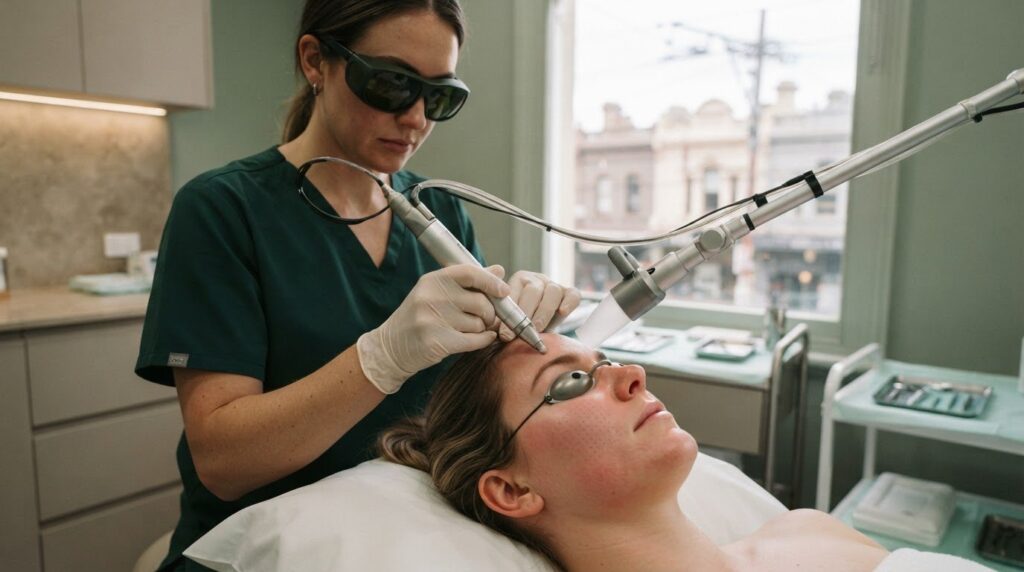
Fractional CO2 laser treatment can feel uncomfortable, but topical anaesthetic is commonly applied about 30 minutes beforehand to improve comfort. The sensation and recovery depend on the treatment intensity, while the laser’s controlled skin injury is intended to stimulate remodelling beneath the surface.
It’s understandable to want a clear idea of what a session may feel like before considering fractional CO2 laser treatment for acne scars in Melbourne. This guide explains how ablative fractional CO2 treatment creates tiny zones of injury that prompt collagen induction, and why changes develop gradually as the skin heals.
You’ll also learn how ablative and non-ablative resurfacing differ, what can influence suitability and recovery, and how a personalised clinical assessment can help determine whether fractional CO2 laser treatment aligns with your skin concerns and goals.
Key Takeaways
- Topical anaesthetic can be applied before treatment to improve comfort; the sensation varies with treatment intensity.
- Collagen remodelling develops gradually as the skin heals, so changes are not immediate.
- Ablative and non-ablative resurfacing affect the skin differently, which influences treatment choice and recovery.
- Fractional CO2 technology creates thousands of small treatment zones, targeting selected areas while leaving surrounding skin intact.
Is Fractional CO2 Laser treatment painful?
Fractional CO2 laser treatment can feel hot, prickling or uncomfortable as energy reaches the skin. For people considering fractional CO2 laser for acne scars in Melbourne, topical anaesthetic is commonly applied about 30 minutes beforehand to improve comfort. Sensation varies with treatment intensity, the area treated and individual sensitivity. During consultation, the practitioner assesses acne scarring, skin type and treatment goals before planning the session.
Discomfort after treatment typically subsides within a few hours to a day. Redness and swelling can last from 2 to 12 days, depending on treatment intensity. The treated area and planned coverage affect appointment length, so duration varies between patients. Before booking time away from work or social activities, consider the expected recovery as well as the appointment itself.
Some people may be advised to have multiple treatments. When repeat CO2 treatments are recommended, they may be spaced 2-3 months apart to allow recovery. The number and spacing depend on scar pattern, skin response and treatment intensity. A treatment plan should allow adequate healing between sessions.
Fractional erbium laser is another resurfacing approach. Microneedling creates controlled punctures, while subcision releases fibrous bands beneath tethered scars. These methods address tissue differently, so suitability depends on scar type, skin characteristics and treatment goals.
For fractional CO2 laser for acne scars in Melbourne, Skinstitute provides Fractional CO2. Consultations are performed by a team of medical professionals, including a Nurse and Dr, to assess the skin concern and discuss treatment planning.
Clinical standards are an important consideration when choosing a practitioner for a laser procedure. Relevant clinical qualifications and training are important considerations for laser procedures, alongside an assessment of skin type and scarring.
At Skinstitute, a face-to-face consultation provides an opportunity to discuss the treatment approach, expected recovery and whether Fractional CO2 aligns with your acne-scar concerns.
Collagen production and skin remodelling
Fractional CO2 laser resurfacing creates controlled microscopic injuries that initiate collagen induction. During healing, new collagen helps support changes in skin texture and the appearance of some acne scars. Remodelling is gradual, rather than an immediate result of the laser session. The skin remodelling phase can continue from months 1-12, and improvements may continue for up to 12 months after treatment.
Deep collagen production continues for 4 to 9 months after treatment, according to Northside Dermatology. As this process progresses, some people may notice changes in uneven texture, depressed scarring or fine lines. The degree of improvement depends on scar characteristics and the skin’s response. Laser resurfacing cannot remove every scar, and the pattern and depth of scarring matter when assessing likely benefit.
Skin tone is a key suitability consideration because inflammation can trigger post-inflammatory pigmentation. Northside Dermatology describes CO2 resurfacing as generally best suited to lighter to medium skin tones, Fitzpatrick types I-III. St James Aesthetics identifies a higher risk of post-inflammatory hyperpigmentation for Fitzpatrick skin types IV to VI. A clinical assessment should consider skin type, previous pigmentation changes, active acne and any history of keloid scarring.
Immediately after treatment, redness and swelling may last from 2 to 12 days, depending on treatment intensity. Healing generally takes 3 to 12 days. The treatment area, coverage and laser settings influence appointment length, so duration varies rather than following one fixed session time. Recovery planning should account for visible inflammation and the skin’s gradual return to its usual surface.
Before proceeding, discuss the scar pattern, pigmentation history and recovery requirements during a face-to-face assessment. A fractional CO2 laser assessment can help determine whether resurfacing suits your skin concerns and treatment goals.
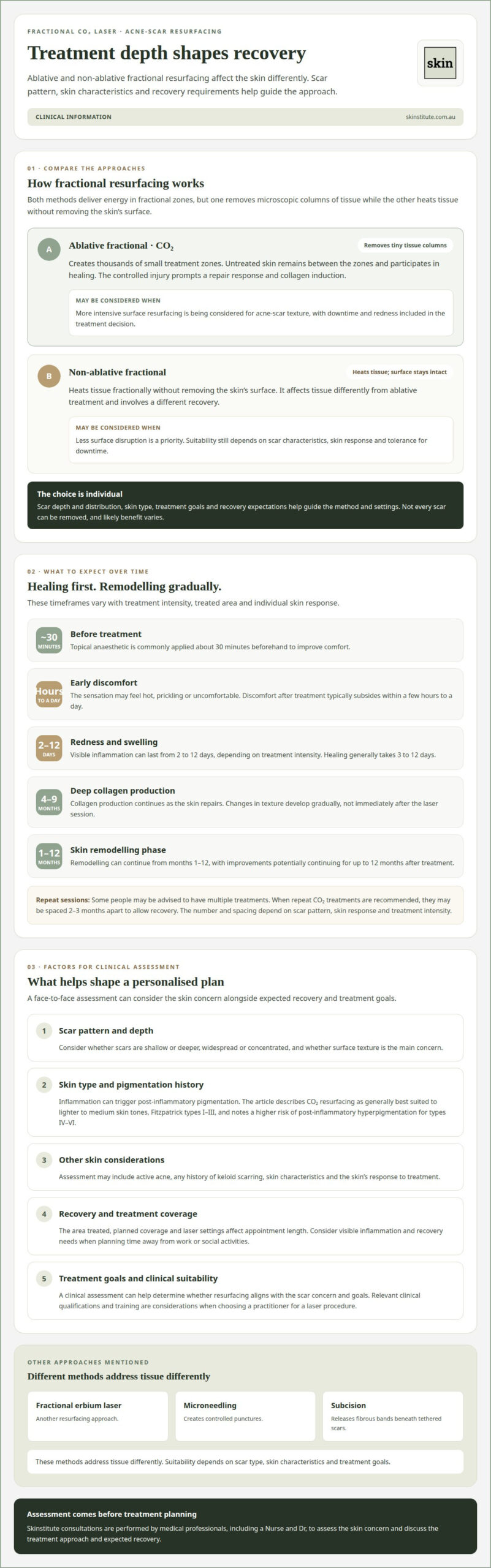
Ablative and non-ablative fractional resurfacing
Fractional CO2 laser is an ablative resurfacing method. It creates thousands of tiny treatment zones, prompting healing and collagen production that can improve acne-scar texture.
Laser-stimulated collagen production
Within each zone, controlled injury triggers a repair response. As tissue heals, new collagen forms and can gradually improve skin texture. Fractional delivery leaves untreated skin between the zones, which also participates in healing. The key consideration is how much resurfacing the scar pattern needs, balanced against downtime and redness. Treatment settings should reflect scar depth and distribution rather than treating every scar alike.
Uses for acne scar treatment
Fractional CO2 resurfacing may be considered for textural changes associated with acne scarring. It can improve acne scars and wrinkles during the same treatment. The areas treated and degree of resurfacing depend on the concern being addressed. During assessment, the practitioner considers whether scars are shallow or deeper, widespread or concentrated, and whether surface texture is the main concern.
Ablative fractional treatment removes microscopic columns of tissue while leaving untreated skin between them. This controlled pattern stimulates a healing response in the treated zones. Non-ablative fractional resurfacing instead heats tissue without removing the skin’s surface. Both approaches deliver energy fractionally, but they affect tissue differently and involve different recovery.
For someone prioritising more intensive surface resurfacing, an ablative approach may be considered. If less surface disruption is a priority, a non-ablative method may be more suitable. The choice depends on scar characteristics, skin response and tolerance for downtime. Redness and healing are part of the decision, not afterthoughts. A clinical assessment can match the method and settings to your acne-scar concerns.
Fractional ablative CO2 laser technology
Fractional ablative CO2 laser technology delivers laser energy in thousands of tiny treatment zones across the skin. In each zone, the procedure removes a small column of surface tissue and heats surrounding tissue. Untreated skin between the zones supports the healing response. This fractional pattern differs from treating the entire surface continuously, allowing treatment to target selected areas.
CO2 laser treatment is ablative because it removes tissue within those microscopic zones. The practitioner controls the coverage and intensity to match the area and skin concern. A concentrated acne-scar area may need a different pattern from broader sun damage or wrinkles. Treatment planning therefore considers both the appearance of the concern and the skin’s capacity to recover.
As the treated zones heal, the repair response stimulates collagen production. That process can support gradual changes in texture and the appearance of acne scars. Fractional CO2 can improve acne scars and wrinkles during the same treatment. However, resurfacing addresses surface texture and selected skin changes; it does not release fibrous bands beneath tethered scars.
The practical distinction is the balance between targeted tissue removal and recovery. Greater coverage or intensity affects more surface tissue and can influence redness and downtime. Skin type, scar distribution and treatment area also guide the settings. A clinical assessment should connect each setting to a specific concern rather than treating the whole face uniformly.
Patients considering CO2 laser treatment can use this distinction to discuss the treatment pattern, intended target and recovery needs. Ask how the planned zones relate to your acne scarring, wrinkles or sun damage. A face-to-face assessment can clarify whether ablative fractional resurfacing addresses the main concern and whether its recovery requirements fit your circumstances.
Skinstitute: Prescription injectables
Skinstitute offers Fractional CO2 for people considering resurfacing for acne-scar texture. Prescription injectables are a separate treatment category and do not replace assessment of scarring or skin suitability. A face-to-face consultation helps clarify the concern being treated, relevant skin characteristics and whether fractional resurfacing fits the person’s goals.
Skinstitute also provides PDO Thread Lifting and High Intensity Focused Ultrasound (HIFU) in Melbourne for other aesthetic concerns. These are distinct procedures, not alternatives to laser resurfacing for acne scars. Treatment planning should focus on the specific concern, rather than combining procedures without a clear clinical rationale.
Contact Skinstitute to discuss whether Fractional CO2 may suit your acne-scar concerns.
Plan a considered next step
Choosing a resurfacing approach is not only about the laser. Consider how acne scarring affects you, what recovery involves and whether the treatment aims fit your priorities. At Skinstitute, a face-to-face consultation can turn these considerations into a practical plan and give you space to discuss suitability and the questions that matter to you.
For people considering fractional CO2 laser treatment for acne scars in Melbourne, the next step is to discuss the skin concern and treatment goals directly. Skinstitute offers Fractional CO2, alongside prescription injectables and PDO Thread Lifting for other aesthetic concerns. Each procedure addresses different goals, so the discussion can focus on the option relevant to you.
Arrange a discussion with Skinstitute about your treatment options. A clear, considered conversation can help you decide how to proceed with confidence.
Frequently Asked Questions
What is CO2 laser resurfacing?
CO2 laser resurfacing uses carbon dioxide laser energy to treat selected areas of skin. In fractional treatment, energy creates thousands of small treatment zones rather than treating the whole surface continuously. The controlled injury prompts a repair response, which can support changes in skin texture. For example, a practitioner may consider resurfacing for acne-scar texture or wrinkles, with the treatment pattern tailored to the area.
How many sessions of CO2 laser are needed?
The number of sessions depends on scar depth, treatment intensity and how the skin responds. Some people may have noticeable improvement after a single treatment, while others need a course. When multiple sessions are planned, treatments may be spaced 2-3 months apart to allow recovery. Planning should consider the appearance of scars after healing, rather than scheduling another session before the skin has recovered.
What skin conditions can be treated with Fractional CO2?
Fractional CO2 resurfacing is used for concerns such as acne scars and wrinkles. It can address changes in skin texture, and both acne scars and wrinkles may be treated during the same session. The method targets selected areas, so the practitioner assesses whether resurfacing suits the specific concern. It is not a treatment for every skin condition, and active acne or a history of keloid scarring affects suitability.
Can Fractional CO2 Laser be used on all skin types?
No. Skin tone affects the risk of post-inflammatory hyperpigmentation, a darkening that can follow inflammation. Northside Dermatology describes CO2 resurfacing as generally best suited to Fitzpatrick skin types I-III, while St James Aesthetics notes higher pigmentation risk for types IV to VI. Assessment should include skin tone and any history of pigmentation changes, since these factors influence whether treatment is appropriate.
What results can you expect from Fractional CO2 treatment?
Changes in acne-scar texture develop gradually, as collagen remodelling continues over several weeks to months. Improvement may continue for up to 12 months after treatment. Results can include a smoother appearance in treated areas, but the degree of change depends on scar characteristics and skin response. The procedure does not remove every scar, so treatment goals should focus on realistic changes to texture and appearance.
Are there any restrictions on my daily activity after treatment?
Yes. During healing, follow the aftercare plan, use gentle skincare and minimise sun exposure. Avoid strenuous activity for the period specified in your instructions, since heat and exertion can aggravate recently treated skin. Fractional CO2 can heighten sun sensitivity for several months, so sun protection remains relevant beyond the initial recovery. Resume active skincare products only when your aftercare guidance indicates the skin is ready.