How to Prepare for Sclerotherapy Treatment: A Clinical Checklist
September 20, 2026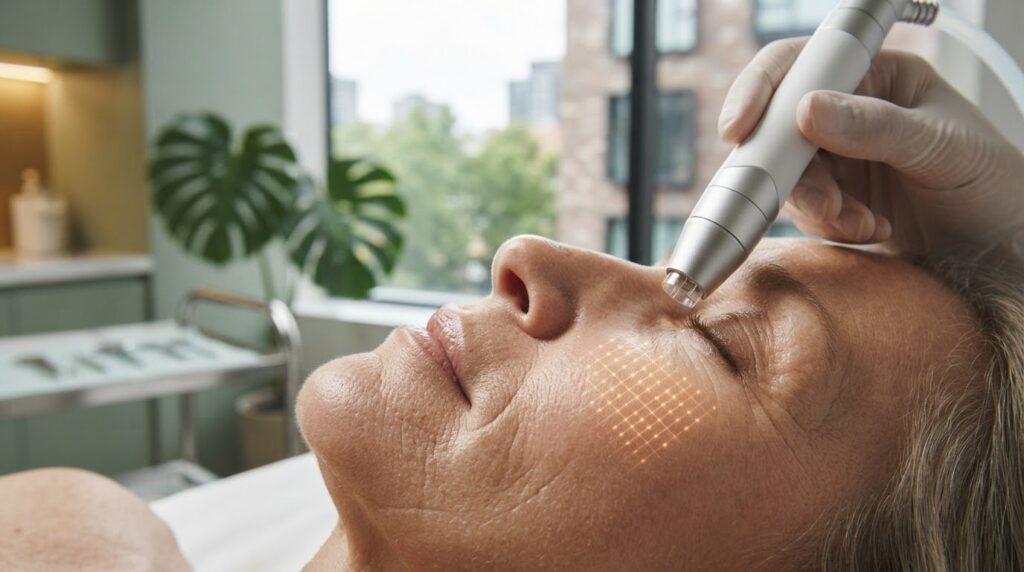
The most effective method for restoring dermal integrity often involves a controlled, fractional injury to the skin’s structural layers. For many individuals in Melbourne, the cumulative impact of the high UV index and persistent acne scarring creates textural irregularities that traditional topical applications simply cannot address. A clinical laser treatment co2 provides a sophisticated solution by creating microscopic ablative columns that trigger the body’s natural healing response.
At Skinstitute, we understand that patients seeking significant skin rejuvenation require more than superficial enhancements; they need evidence-based results delivered in a professional medical environment. This guide provides a detailed overview of the physiological mechanisms behind fractional CO2 resurfacing, including its role in increasing epidermal thickness, the measured thickness of the epidermal skin layer, and facilitating collagen induction, which is the stimulation of new collagen production through controlled skin injury. You’ll gain clarity on the distinction between various laser modalities and receive realistic expectations regarding the recovery timeline and clinical outcomes. By following a structured regeneration plan, patients can address deep-set wrinkles and photo-ageing through a process grounded in over 26 years of clinical experience and strict adherence to AHPRA guidelines, the Australian health-practitioner regulatory requirements governing clinical practice.
Key Takeaways
- Understand how the 10,600nm wavelength targets water within the skin to trigger collagen induction and improve overall epidermal thickness.
- Identify the clinical indications, including deep acne scarring and solar elastosis, that are most effectively addressed through medical-grade resurfacing.
- Learn why a professional laser treatment co2 must be performed in a medically supervised environment to ensure safety and prevent complications like epidermal dragging.
- Recognise the role of AHPRA guidelines in ensuring patient safety through mandatory cooling-off periods and thorough mental health screenings.
- Explore how a 26-year clinical legacy in Melbourne informs the development of a customised regeneration plan for long-term dermal health.
Fractional CO2 Laser: Medical-Grade Resurfacing Guide
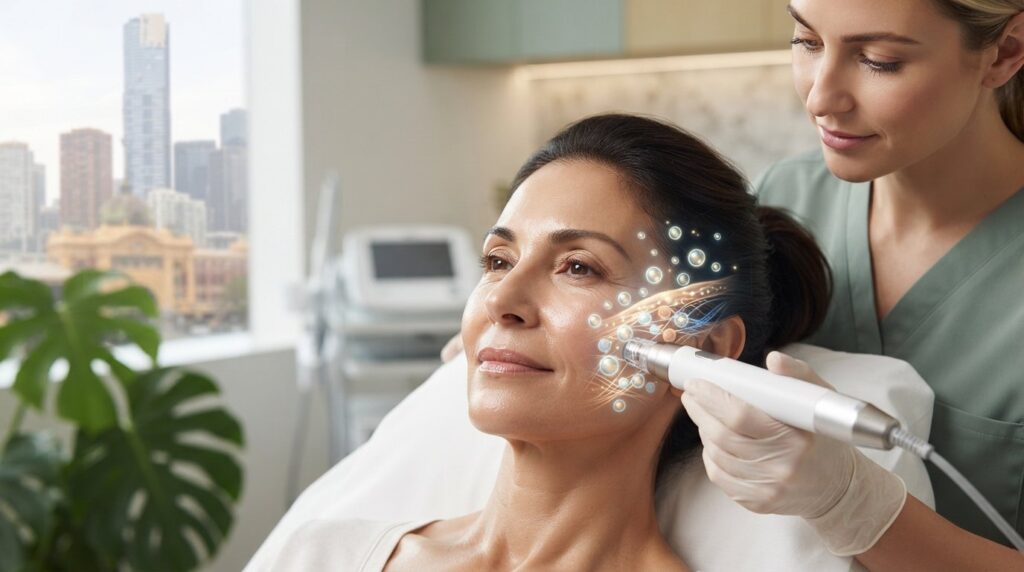
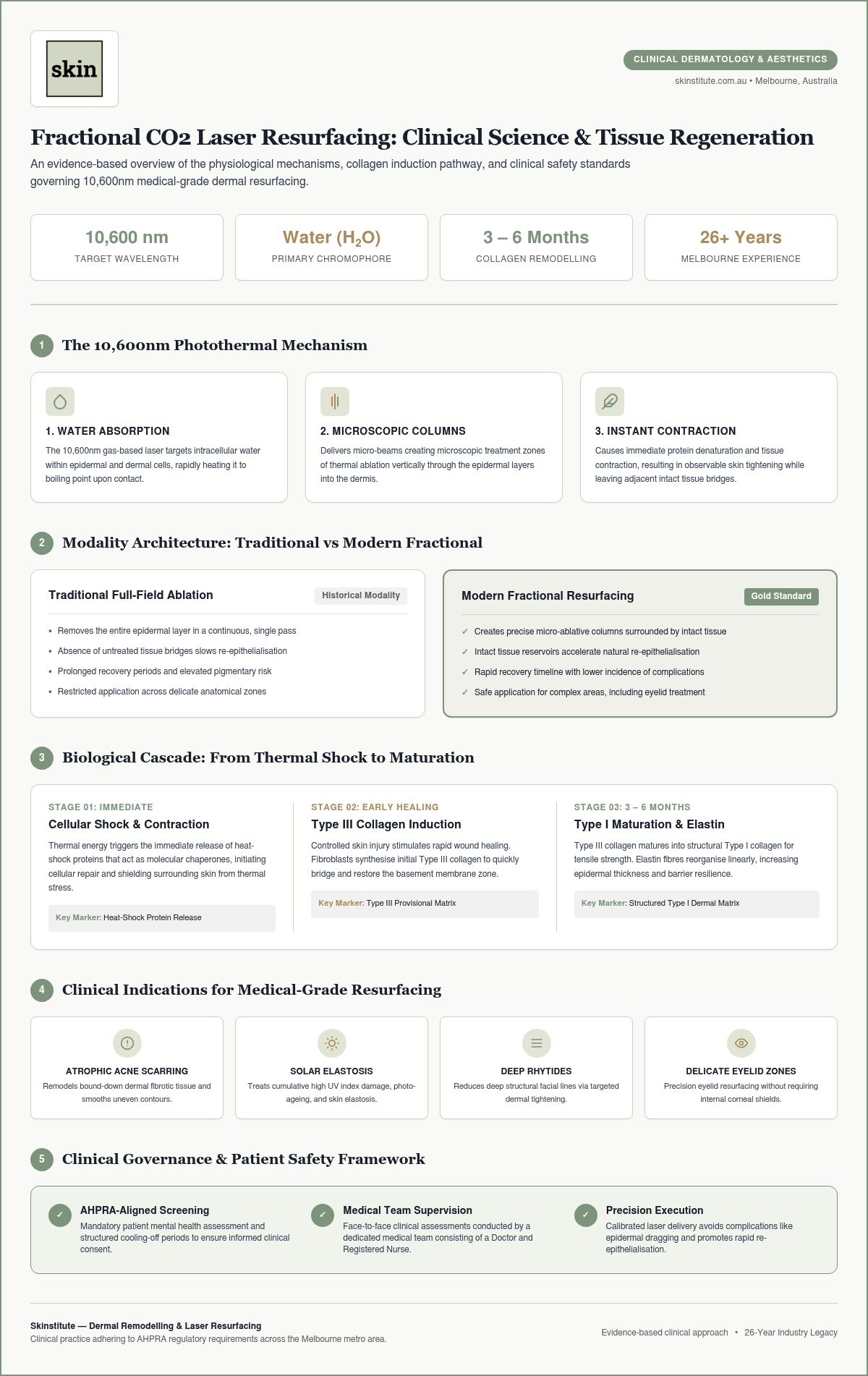
A clinical laser treatment co2 involves the application of a gas-based system that operates at a specific wavelength of 10,600nm. This wavelength is highly absorbed by water, which serves as the primary chromophore in human skin cells. By targeting intracellular water, the laser creates precise zones of thermal injury that initiate a comprehensive regeneration plan. In the Melbourne aesthetic sector, this technology is widely regarded as the gold standard for dermal remodelling, particularly for patients presenting with deep rhytides or severe solar damage. The procedure follows established principles of photorejuvenation and laser resurfacing, where light energy is converted into heat to vaporise damaged tissue while stimulating the body’s natural healing cascade.
The Difference Between Ablative and Fractional Technology
Traditional ablative lasers functioned through full field resurfacing, removing the entire epidermal layer in a single pass. While effective, this approach often resulted in prolonged recovery times and a higher risk of pigmentary changes. Modern fractional technology represents a significant evolution in clinical safety. Instead of treating the entire surface, the laser delivers micro-beams of energy that create tiny, vertical columns of ablation known as microscopic treatment zones. This method leaves bridges of untreated skin between the columns. These intact tissue reservoirs accelerate the re-epithelialisation process, allowing for a more rapid recovery compared to older modalities. This precision makes the fractional laser treatment co2 a safer option for a broader range of skin types and complex anatomical areas, including the delicate eyelid region.
How CO2 Lasers Target Specific Skin Concerns
The efficacy of the carbon dioxide laser lies in its interaction with the water content within the epidermis and dermis. When the 10,600nm beam contacts the skin, the water instantly reaches boiling point, leading to the vaporisation of the targeted cells. This rapid thermal exchange causes immediate tissue contraction, which can be observed during the procedure as the skin surface visibly tightens. This clinical effect is particularly beneficial for addressing atrophic acne scarring, persistent texture issues, and deep structural lines. The laser achieves significant skin tightening by delivering controlled thermal energy into the deeper dermal layers to induce immediate protein denaturation and subsequent long-term structural improvement. Through this mechanism, the skin undergoes a transition from damaged, inelastic tissue to a more resilient and structured state.
The Biological Mechanism of Controlled Skin Regeneration
The physiological efficacy of a laser treatment co2 relies on the body’s innate wound-healing response. When the laser creates controlled thermal injury, it triggers the immediate release of heat-shock proteins. These proteins act as molecular chaperones, initiating cellular repair and protecting the surrounding tissue from excessive thermal stress. This process is vital for reinforcing the dermal-epidermal junction, the basement membrane zone that facilitates nutrient exchange and structural adhesion between skin layers. Over a period of three to six months, this biological cascade results in a measurable increase in epidermal thickness, which is the measured thickness of the epidermal skin layer, providing a more resilient barrier and improved light reflection.
Stimulating Collagen Induction and Elastin Synthesis
The primary objective of medical-grade resurfacing is collagen induction, defined as the stimulation of new collagen production through controlled skin injury. Initially, the body produces Type III collagen, which is typically associated with rapid wound closure. Through a process of maturation, this is replaced by Type I collagen, which provides the skin with its tensile strength and structural integrity. Simultaneously, the thermal energy causes the reorganisation of elastin fibres. Rather than being fragmented or clumped as seen in photo-aged skin, these fibres are synthesised into a more linear, organised pattern. This bio-stimulation continues long after the initial procedure, as fibroblasts remain active for months, contributing to long-term improvements in skin elasticity.
The Role of Micro-Ablative Zones in Tissue Repair
Clinical research into fractional laser treatments highlights the importance of Micro-Ablative Zones (MAZs). These are microscopic columns of vaporised tissue that penetrate deep into the dermis. Because these zones are surrounded by untreated, healthy tissue, the healing process is significantly accelerated. The viable cells in the adjacent areas migrate into the MAZs to facilitate rapid re-epithelialisation, usually occurring within five to seven days. Additionally, the infrared energy produces an instant cauterisation effect. This seals small blood vessels and lymphatic channels during the procedure, which reduces the risk of post-operative infection and minimises oedema. For patients seeking an evidence-based approach to skin health, understanding these cellular milestones is essential for setting realistic recovery expectations.
Clinical Indications: From Acne Scarring to Photo-Ageing
A laser treatment co2 is most effective for patients presenting with moderate to severe structural skin concerns that have not responded to less intensive modalities. In the Australian climate, where high UV exposure leads to accelerated photo-ageing, this procedure serves as a cornerstone for addressing solar elastosis and deep-set rhytides. Clinical evidence supports the use of ablative and fractional laser skin resurfacing for patients seeking significant textural improvement. While superficial imperfections like fine lines may be addressed in a single session, deeper structural issues require a more nuanced, multi-layered anatomical restoration. This precision is particularly evident in the peri-orbital region; our clinic’s 26-year legacy in the Melbourne aesthetic sector allows for the treatment of eyelids without the need for corneal shields, reflecting a high level of technical mastery.
Managing Atrophic Acne Scars and Texture Irregularities
Atrophic acne scarring, specifically boxcar and rolling scars, presents a significant clinical challenge due to the presence of fibrotic tissue within the dermis. The fractional CO2 laser works by precisely levelling the raised edges of these scars while simultaneously initiating remodelling of the underlying scar tissue. By penetrating into the deeper dermal layers, the laser breaks down rigid collagen bundles and replaces them with organised Type I collagen. For severe cases, a structured regeneration plan involving multiple sessions is typically necessary to achieve a significant reduction in scar depth. This approach ensures that the skin’s surface becomes progressively smoother as the dermal foundation is rebuilt through consistent biological repair.
Reversing Sun Damage and Deep Rhytides
Photo-ageing in Melbourne often manifests as a combination of dyschromia, actinic keratosis, and deep rhytides. A laser treatment co2 effectively targets these concerns by vaporising pigmented lesions and pre-cancerous cells in the epidermis while heating the dermis to induce contraction. This process is highly effective for static wrinkles that remain visible when the face is at rest. It’s essential, however, to distinguish between textural issues and skin redundancy. Skin redundancy refers to excess or loose skin that has lost its underlying support. While CO2 lasers provide impressive tightening through collagen induction, which is the stimulation of new collagen production through controlled skin injury, they cannot replace the results of invasive surgical procedures for significant skin laxity. Patients receive a personalised assessment to determine if their concerns are best suited for non-surgical resurfacing or if alternative clinical paths are required.
The Treatment Journey: Clinical Consultation to Recovery
The clinical journey for a laser treatment co2 begins with a mandatory face-to-face consultation. This session allows the medical team to evaluate the structural integrity of the skin and discuss realistic outcomes based on individual concerns. In alignment with current AHPRA guidelines, patients at Skinstitute undergo a formal cooling-off process. This period ensures that individuals have sufficient time to review the clinical risks and recovery requirements before proceeding with the procedure. During the session, patients typically experience a sensation comparable to a series of sharp, warm pulses. To manage this effectively, we employ clinical cooling techniques and topical anaesthesia to maintain patient comfort throughout the treatment.
The Importance of a Personalised Assessment
The selection of laser parameters is a precise exercise that relies heavily on the Fitzpatrick skin scale. This classification helps our practitioners determine the appropriate energy levels and pulse durations to avoid complications such as post-inflammatory hyperpigmentation. A patient’s medical history and current topical regimen directly influence the final regeneration plan. Additionally, we conduct a mental health screening as part of our commitment to patient safety and ethical standards. This holistic assessment ensures that the treatment is both physiologically and psychologically appropriate for the individual, moving beyond surface-level beauty claims to focus on medical-grade results.
Managing the Post-Laser Healing Phase
Recovery from a laser treatment co2 follows a predictable biological sequence. Immediately following the procedure, patients will experience significant erythema and mild oedema, which typically peaks within the first 48 hours. By day three or four, the skin enters a phase of micro-crusting where the vaporised tissue columns begin to shed. Social downtime generally lasts between seven and fourteen days, depending on the intensity of the treatment and the individual’s healing rate. Strict adherence to aftercare is non-negotiable; this includes absolute sun avoidance and specific hydration protocols to support the new epidermal layer. For a step-by-step guide on managing this period, patients should refer to our Laser Resurfacing Aftercare Checklist. Ensuring these protocols are followed helps maintain the integrity of the results and reduces the risk of secondary infection. If you are seeking a medically supervised environment for your skin rejuvenation, you can book a consultation with our medical team.
Why Clinical Expertise and Medical Supervision are Essential
Operating a Class 4 medical device such as a carbon dioxide laser requires a profound understanding of cutaneous anatomy and thermal physics. When a laser treatment co2 is performed by an unqualified individual or with sub-standard equipment, the risks to the patient increase significantly. One such risk is epidermal dragging, which refers to the pulling of the epidermis caused by inadequate equipment or technique. This can lead to irregular scarring or post-operative burns. At Skinstitute, we’ve maintained a presence in the Melbourne aesthetic sector for over 26 years; during this time, we’ve trialled many different resurfacing lasers to ensure our patients receive evidence-based results using TGA-registered technology. A medically supervised environment is vital for these high-energy procedures, as it ensures that safety protocols are strictly followed and any adverse reactions are managed with clinical proficiency.
Navigating AHPRA Guidelines and Patient Safety
The current regulatory environment in Australia prioritises patient safety through rigorous AHPRA guidelines. These professional standards are designed to protect individuals from unrealistic beauty claims and ensure that non-surgical treatments are presented as precise medical solutions. A qualified practitioner is essential for identifying contraindications that might make a patient unsuitable for a laser treatment co2, such as certain active skin conditions or recent medication use. At our clinic, every clinical consultation is performed by a medical team consisting of a Registered Nurse and a Doctor. This dual-practitioner approach ensures that every regeneration plan is medically sound and tailored to the patient’s specific physiological needs.
The Skinstitute Legacy in Melbourne
Our 26-year legacy in the Melbourne aesthetic industry provides a level of stability and expertise that is rare in the sector. We focus on a strategy of multi-layered anatomical restoration, which addresses skin health across several tissue layers rather than just the surface. This long-term perspective allows us to value professional integrity and patient safety over quick conversions. By drawing on decades of clinical experience, we can offer authoritative medical approaches to complex concerns like deep solar damage and atrophic scarring. If you’re ready to move beyond surface-level descriptions and understand the mechanics of your skin’s health, we encourage you to book a clinical skin analysis to receive a personalised plan.
Advancing Your Dermal Regeneration Plan
Achieving significant structural improvement in skin texture requires a transition from superficial treatments to a precise, medical-grade laser treatment co2. This clinical approach prioritises the long-term maturation of Type I collagen and the measured increase of epidermal thickness; it’s a biological process that unfolds over several months to deliver evidence-based results. By selecting a clinic with over 26 years of clinical experience in Melbourne, you ensure that your procedure is conducted in a fully medically supervised environment where anatomical precision is the absolute standard of care. We don’t rely on generic protocols, opting instead for customised strategies that address your specific dermal requirements.
Patient safety remains our primary focus, supported by AHPRA-aligned patient safety protocols and thorough clinical assessments during every stage of the journey. This structured approach moves beyond traditional beauty claims to offer a reliable path for addressing deep-set wrinkles and persistent acne scarring. If you’re ready to begin a professionally guided journey toward lasting skin health, we invite you to Book a Clinical Consultation at Skinstitute Melbourne. We look forward to partnering with you to develop a customised plan that respects your unique physiology and long-term clinical goals.
Frequently Asked Questions
How long does it take to see results from fractional CO2 laser?
Immediate tissue contraction is often visible shortly after the procedure, but the full clinical results develop over a period of three to six months. This timeline reflects the biological maturation of new Type I collagen fibres following the initial controlled injury. While the epidermal layer typically heals within two weeks, the deeper dermal remodelling continues to improve skin texture and elasticity well beyond the initial recovery phase as the regeneration plan progresses.
Is fractional CO2 laser treatment painful?
Most patients experience a sensation of sharp, intense heat during the procedure, which is effectively managed through medical-grade topical anaesthesia and integrated clinical cooling systems. We prioritise patient comfort by ensuring the treatment area is sufficiently numbed before the laser application begins. Following the session, individuals typically report a feeling similar to a moderate sunburn, which subsides as the initial inflammatory response resolves over the first 48 to 72 hours.
How many sessions of CO2 laser are typically required for acne scars?
The number of sessions required depends on the depth and type of atrophic acne scarring present. While a single session can provide noticeable improvement, patients with severe boxcar or rolling scars typically require between one and three treatments to achieve optimal dermal remodelling. Each session is spaced several months apart to allow for complete collagen induction, ensuring that the skin’s structural foundation is progressively rebuilt in a medically supervised environment.
Can fractional CO2 laser be used on all skin colours?
Fractional CO2 technology can be adapted for various skin types, but a precise assessment using the Fitzpatrick scale is essential to ensure safety. Patients with darker skin tones carry a higher risk of post-inflammatory hyperpigmentation; therefore, we adjust the laser parameters and pulse durations accordingly. In some cases, pre-treatment skin preparation with specific topical agents is required to stabilise melanocyte activity before proceeding with a laser treatment co2.
What is the social downtime after a fractional CO2 laser session?
Social downtime typically ranges from seven to fourteen days, depending on the intensity of the treatment parameters used. During the first few days, patients will experience significant redness and swelling, followed by a phase of micro-crusting as the vaporised tissue sheds. It’s essential to plan for this recovery period, as the skin will appear visibly treated. Most individuals feel comfortable returning to public activities once the initial peeling process is complete and the new epidermis has formed.
What are the primary risks associated with CO2 laser resurfacing?
While medical-grade resurfacing is safe when performed by experts, potential risks include prolonged erythema, infection, and post-inflammatory hyperpigmentation. Using sub-standard equipment or incorrect settings can also lead to epidermal dragging or permanent scarring. To mitigate these risks, we adhere to strict AHPRA guidelines and conduct thorough patient screenings. Following our specific aftercare hydration protocols and maintaining absolute sun avoidance are critical steps in ensuring a complication-free recovery and optimal clinical outcomes.
Can CO2 laser be combined with other treatments like Rejuran?
Combining fractional resurfacing with bio-stimulators like Rejuran or exosome therapy is a common strategy for enhancing regenerative outcomes. While the laser addresses structural irregularities and texture, polynucleotide-based treatments support cellular repair and hydration from within. These therapies are often integrated into a broader regeneration plan to accelerate the healing process and improve overall dermal health. The specific sequencing of these treatments is determined during your clinical consultation with our medical team.
How do I prepare my skin for a CO2 laser treatment?
Preparation involves maintaining a stable skin barrier and avoiding significant UV exposure for at least four weeks prior to the session. We typically advise patients to cease the use of active retinoids or exfoliants several days before the procedure to reduce sensitivity. For individuals prone to cold sores, a course of antiviral prophylaxis may be prescribed. A personalised assessment will identify any specific topical enhancements needed to prime your skin for a successful laser treatment co2.