Fractional CO2 Laser Skin Resurfacing in Melbourne
September 23, 2026
Signs of a Bad Cosmetic Injector: A Clinical Safety Checklist
September 25, 2026
The most aggressive intervention isn’t always the clinically superior pathway to healthy dermal remodelling. When evaluating laser resurfacing vs microneedling, many Melbourne patients struggle to balance the desire for lasting structural correction against legitimate concerns regarding thermal injury, unpredictable downtime, and post-inflammatory hyperpigmentation. You want definitive improvement for acne scarring or photo-damage, but you need clinical certainty regarding your post-treatment recovery. It’s entirely natural to feel cautious when deciding between an ablative technology and mechanical skin needling, particularly across diverse skin tones.
This clinical guide examines the distinct physiological mechanisms that govern thermal ablation and mechanical collagen induction. You’ll discover how targeted heat and micro-punctures influence epidermal thickness, how your individual Fitzpatrick skin phototype dictates procedural safety, and what realistic healing trajectories entail under Australian clinical frameworks. Ahead, we evaluate the evidence-based outcomes and recovery profiles of both modalities so you can determine which approach aligns with your skin’s anatomical requirements.
Key Takeaways
- Understanding the trade-offs of laser resurfacing vs microneedling starts with comparing thermal tissue coagulation against non-thermal mechanical collagen induction.
- Discover which clinical concerns, from severe solar elastosis and structural acne scarring to minor textural irregularities, respond best to deep thermal remodelling.
- Learn how your Fitzpatrick skin phototype influences procedural safety and how mechanical skin needling significantly reduces post-inflammatory hyperpigmentation risks for darker skin tones.
- Compare realistic recovery trajectories, contrasting several days of ablative re-epithelialisation with the rapid 24- to 48-hour healing timeline of micro-punctures.
- Understand why a face-to-face clinical assessment with medical professionals is essential to evaluate epidermal thickness, skin redundancy, and tailored regeneration plans.
Clinical Mechanisms: Thermal Laser Energy vs. Mechanical Collagen Induction
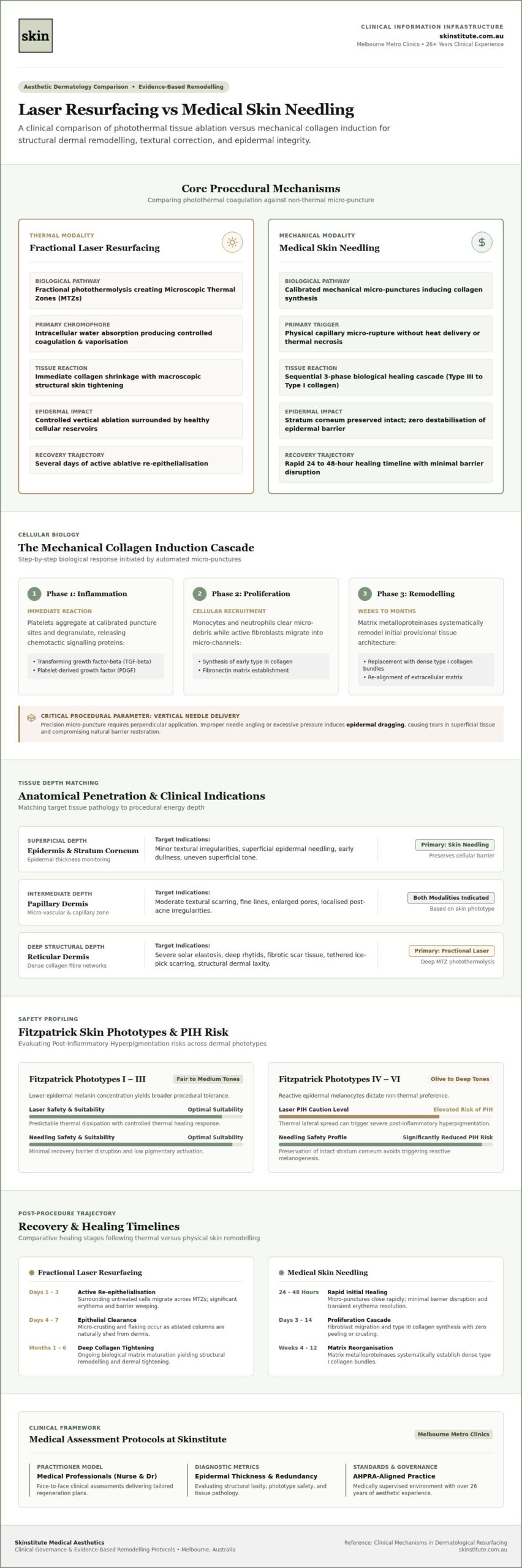
Understanding the fundamental differences in collagen induction therapy and light-based energy is essential when evaluating laser resurfacing vs microneedling. Both procedures prompt the body’s natural restorative functions, yet they communicate with dermal tissue through entirely disparate biological pathways. Laser resurfacing relies on photothermal energy to coagulate or ablate targeted tissue, whereas medical skin needling induces structural synthesis through precision mechanical micro-trauma without delivering heat.
The primary point of divergence rests on how each modality interacts with the surrounding architecture. While both interventions stimulate fibroblasts to synthesise type I and type III collagen fibres, fractional laser energy drives macroscopic tissue contraction alongside dermal remodelling. Mechanical needling, by contrast, preserves the overlying cellular matrix completely intact, initiating regenerative signalling without destabilising the epidermal barrier.
The Biological Science of Fractional Laser Resurfacing
Fractional systems operate via fractional photothermolysis, targeting intracellular water as the primary chromophore. The emitted light creates microscopic thermal zones (MTZs) that penetrate into the reticular dermis, vaporising precise columns of cellular tissue while leaving intervening reservoirs of undamaged skin untouched. This deliberate spatial pattern allows the surrounding healthy cells to rapidly orchestrate re-epithelialisation across the ablated areas.
Beyond simple tissue clearance, the lateral thermal dissipation from each microscopic channel elevates tissue temperatures, denaturing degraded dermal proteins. This induces immediate collagen shrinkage followed by a sustained biological cascade that produces evidence-based results over several months. The cellular transition replaces disorganized scar tissue with newly aligned extracellular matrices, yielding profound structural tightening.
The Cellular Mechanism of Medical Skin Needling
Medical skin needling functions via purely physical, non-thermal micro-punctures. Operating at calibrated penetration depths, automated micro-needles puncture through the epidermis into the papillary and reticular dermis, causing localised capillary rupture and controlled cellular disruption without thermal necrosis.
This mechanical action initiates a sequential wound-healing cascade:
- Phase 1 (Inflammation): Platelets aggregate at the puncture sites, degranulating to release vital chemotactic signalling proteins, specifically transforming growth factor-beta (TGF-beta) and platelet-derived growth factor (PDGF).
- Phase 2 (Proliferation): Monocytes and neutrophils clear micro-debris while active fibroblasts migrate into the micro-channels, producing early type III collagen and fibronectin matrices.
- Phase 3 (Remodelling): Over weeks to months, matrix metalloproteinases systematically replace delicate early collagen with structurally dense type I collagen bundles.
Because the stratum corneum remains largely preserved between the micro-punctures, mechanical collagen induction presents minimal barrier disruption. Achieving predictable outcomes requires precise vertical delivery; improper angles or excessive handpiece pressure cause epidermal dragging, which tears surface tissue and compromises healing. Clinical precision ensures the mechanical stimulus triggers neocollagenesis while maintaining anatomical integrity throughout the superficial layers.
Comparing Clinical Indications: Scarring, Photo-Ageing, and Texture
Selecting the appropriate clinical pathway in the evaluation of laser resurfacing vs microneedling depends entirely on the anatomical depth and severity of the target tissue pathology. Superficial irregularities in the epidermis respond predictably to mechanical pathways, whereas dense dermal fibrosis and severe photo-damage necessitate deeper physical or thermal disruption. Matching the technological mechanism to the specific structural defect ensures targeted tissue remodelling without unnecessary cellular trauma.
Severe Structural Damage, Deep Rhytids, and Fibrotic Scars
Deeply tethered ice-pick scars, fibrotic boxcar deformities, and established perioral rhytids possess dense collagen cross-linking that mechanical needles cannot adequately break down. These structural concerns require targeted thermal ablation to vaporise rigid scar margins and initiate genuine matrix reorganisation. Clinical trials demonstrate that fractional ablative lasers achieve between 53% and 69% objective improvement for atrophic scarring after one to two sessions, markedly outperforming non-thermal modalities in fewer treatments.
Severe actinic elastosis, characterised by the systemic accumulation of abnormal elastic fibres from chronic UV exposure, also mandates significant thermal coagulation to trigger skin contraction. Patients presenting with pronounced elastotic changes or stubborn scarring can explore Fractional CO2 Laser Resurfacing Melbourne options to achieve restorative dermal remodelling that fundamentally alters skin tensile strength.
Superficial Imperfections, Mild Laxity, and Early Ageing
When patient concerns focus on epidermal texture, mild dyschromia, or pore dilation, superficial epidermal needling serves as a conservative, highly effective alternative. Broad, undulating rolling acne scars and early expression lines respond favourably to serial sessions of mechanical collagen induction without the thermal load of lasers.
Mechanical skin needling offers distinct clinical advantages for early structural maintenance:
- Gradual softening of superficial atrophic depressions through cumulative matrix synthesis.
- Refinement of follicular infundibula, visibly reducing enlarged pore structures.
- Smoothing of fine dehydration lines while bypassing prolonged post-procedure recovery.
- Preservation of foundational tissue volumes without introducing thermal shock.
For individuals in Melbourne assessing subtle skin changes or seeking preventative tissue maintenance, a consultation with clinical practitioners at Skinstitute provides diagnostic clarity on whether mechanical stimulation alone can deliver your desired clinical outcomes.
Fitzpatrick Phototypes and Post-Inflammatory Hyperpigmentation Risks
Patient safety hinges on an accurate pre-treatment assessment of melanocyte density and cutaneous reactivity. When weighing laser resurfacing vs microneedling, pigmentary risks present the starkest clinical contrast between the two procedures. Thermal energy delivered by ablative lasers carries an inherent risk of heat-induced melanogenesis, whereas non-thermal mechanical injury bypasses chromophore absorption entirely.
Comparative clinical literature reveals that fractional CO2 laser produces a 4.44 times higher risk of post-inflammatory hyperpigmentation (PIH) compared to mechanical or radiofrequency-assisted micro-needling. Clinical trials studying Fitzpatrick skin phototypes III through IV observed an 18% incidence rate of PIH following fractional CO2 resurfacing, contrasting with just 3% following needling. This differential establishes mechanical puncture as the inherently safer modality for melanin-rich skin.
Assessing Fitzpatrick Phototypes IV Through VI
Patients classified as Fitzpatrick phototypes IV through VI possess larger, highly reactive melanocytes distributed evenly throughout the basal epidermal layer. Thermal spikes induce inflammatory cascades that frequently trigger excessive, prolonged pigment deposition. Because mechanical skin needling functions independently of light absorption, it stimulates collagen production without destabilising these sensitive melanocytic networks.
When high-energy fractional systems are considered for intermediate or darker complexions, clinicians must mandate rigorous safeguarding protocols:
- Pre-procedural conditioning for two to four weeks using topical tyrosinase inhibitors to suppress active melanogenesis.
- Conservative fluence calibration coupled with low fractional surface density to preserve wider bridges of unaffected basal cells.
- Mandatory test-patching in inconspicuous anatomical locations to observe reactive erythema and pigment behaviour over several weeks.
Managing Australian UV Exposure and Environmental Vulnerability
Melbourne’s unique climate introduces substantial environmental hazards during post-procedure recovery. Victoria experiences extreme seasonal UV fluctuations, where summer UV index levels frequently surpass 11. Freshly treated skin, whether healing from thermal ablation or mechanical micro-channels, remains exceptionally vulnerable to solar radiation that triggers rebound pigmentation.
Optimal treatment planning aligns energy-based resurfacing with autumn and winter months, when solar irradiance drops significantly. Regardless of the chosen modality, clinical safety protocols require patients to commit to strict broad-spectrum photoprotection, avoiding direct exposure and incorporating physical zinc-based blockers until the barrier function fully normalises.
Downtime, Recovery Trajectories, and Post-Procedure Clinical Care
Recovery timelines represent one of the most critical considerations when contrasting laser resurfacing vs microneedling. The biological demands of healing from ablative tissue vaporisation differ fundamentally from repairing non-thermal micro-channels. Clinical data reflects this variance clearly: patients undergoing fractional CO2 laser experience an average clinical downtime of 6.3 days, whereas mechanical needling requires an average of just 1.5 days before normal baseline appearance returns.
Planning for procedure-related social downtime prevents unwanted disruption to professional and personal commitments. Comfort management during both procedures relies on topical compounded anaesthetics, while post-procedure relief incorporates gentle physiological cooling protocols to mitigate residual heat and tissue inflammation.
Fractional Laser Recovery: Erythema, Peeling, and Re-Epithelialisation
The ablative recovery arc follows a distinct, multi-stage re-epithelialisation timeline:
- Days 1 to 3: Patients exhibit pronounced erythema, clinical oedema, and pinpoint serous exudate. Managed occlusive balms protect the denuded skin surface.
- Days 4 to 6: Microscopic epidermal necrotic debris (MENDs) migrates outward, creating a temporary bronzed appearance and a coarse, sandpaper-like surface texture.
- Days 7 to 10: Natural desquamation sheds the dry necrotic layer, revealing fresh, re-epithelialised epidermis with persistent, resolving pinkness.
Active cosmeceuticals such as retinoids, AHAs, and ascorbic acid must remain completely excluded from daily regimens until epithelial integrity is fully re-established. Premature application of harsh topicals risks contact dermatitis, barrier failure, and secondary bacterial infections.
Skin Needling Recovery: Rapid Repair and Minimal Disruption
Mechanical skin needling presents an expedited recovery trajectory that suits active lifestyles. Erythema resembling mild to moderate sunburn manifests immediately after treatment, typically settling within twenty-four to forty-eight hours. Because the needle pathways generate no thermal necrosis, micro-punctures close via cellular migration within several hours, rapidly restoring barrier competence.
Transient dryness and minor superficial flaking may appear between days three and five as cellular turnover accelerates. Patients can safely reintroduce light mineral makeup forty-eight hours post-procedure once epidermal seals are confirmed. To map out a precise post-treatment recovery plan tailored to your workplace demands, schedule a consultation with Skinstitute’s clinical team.
Developing a Personalised Treatment Plan at Skinstitute Melbourne
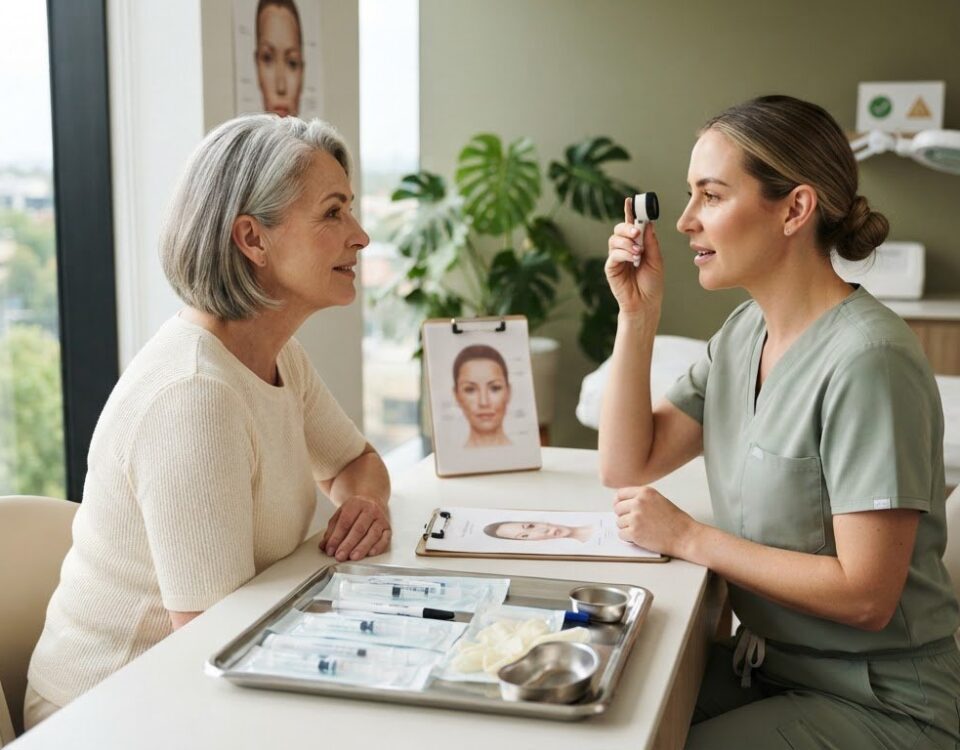
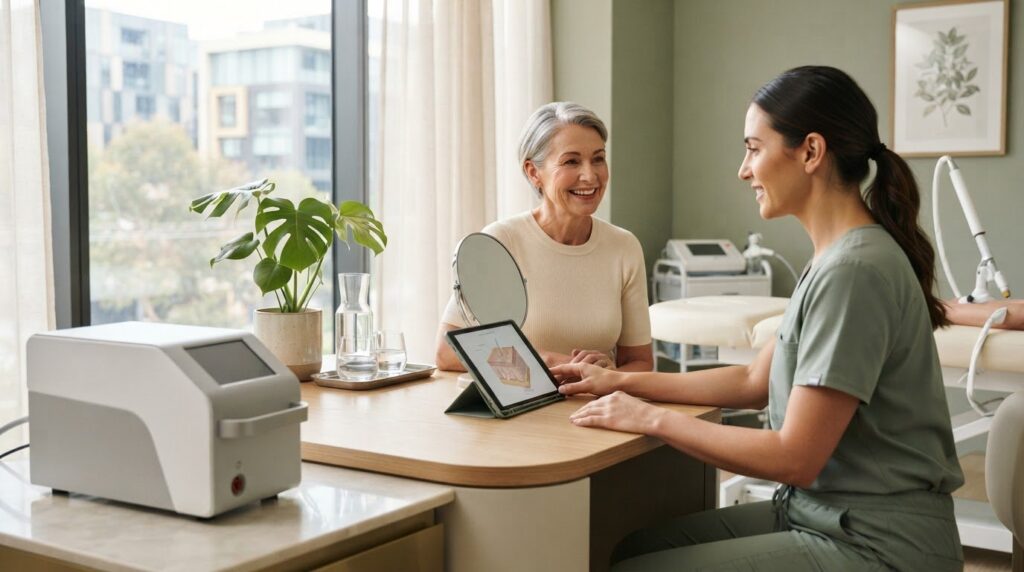
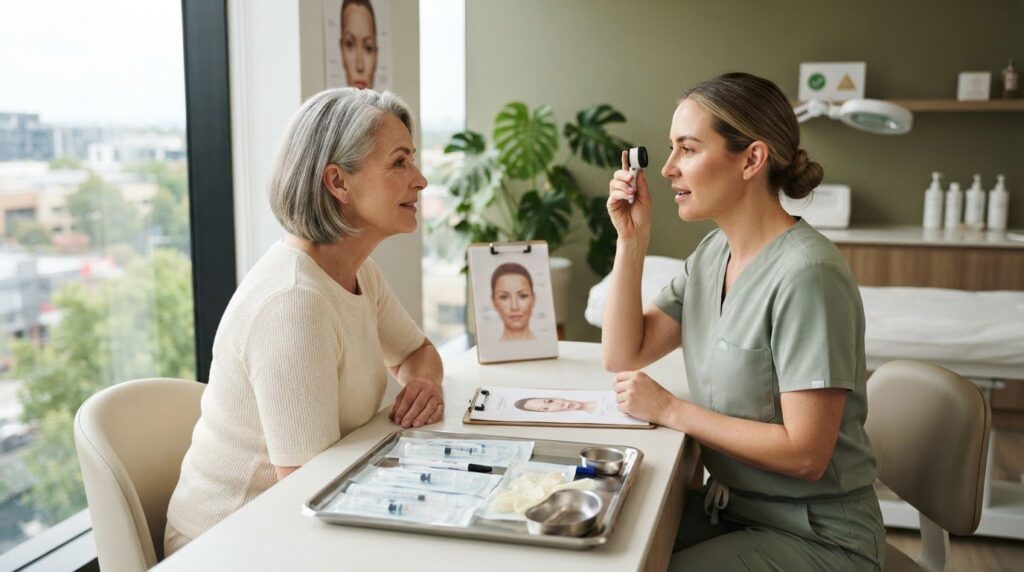
Selecting between laser resurfacing vs microneedling isn’t a clinical decision that can occur through generic menus or automated advice. Cutaneous architecture varies significantly across individuals, demanding a meticulous face-to-face diagnostic assessment before choosing an ablative or mechanical protocol. Medical practitioners evaluate specific anatomical variables during this consultation, including baseline epidermal thickness, dermal laxity, skin redundancy, and the structural depth of existing scar margins.
The Medical Diagnostic Assessment and Treatment Selection
At Skinstitute, our dedicated team of doctors and registered nurses draws on over 26 years of specialised industry experience in Melbourne to direct modality choices. Every clinical assessment operates strictly within current AHPRA guidelines, incorporating thorough patient mental health screening, medical history verification, and mandatory cooling-off protocols. This medical oversight ensures safety remains paramount while aligning procedural capabilities with realistic recovery expectations.
During the consultation, clinicians assess vascular reactivity, melanocyte sensitivity, and professional schedules. This diagnostic baseline clarifies whether non-thermal mechanical trauma or fractional thermal tissue coagulation suits your physiological profile. You can learn more about our broader procedural protocols across medical-grade aesthetic treatments to understand how anatomical diagnostics shape patient plans.
Integrating Bio-Stimulators and Advanced Regenerative Therapies
Contemporary clinical workflows rarely treat dermal injury in isolation. Pairing physical modalities with targeted bio-stimulators significantly accelerates restorative healing responses. Combining procedures with Rejuran bio-stimulation delivers highly purified polynucleotides directly to depleted tissues, promoting physiological repair, enhancing matrix synthesis, and shortening the duration of post-procedural erythema.
Topical Exosome therapy can also be introduced alongside mechanical micro-channels to optimise cellular communication and down-regulate persistent post-treatment inflammation. Your treating practitioner builds a structured regeneration plan that sequences in-clinic procedures with medical home-care strategies. To discover whether your anatomical presentation warrants laser resurfacing vs microneedling, arrange a detailed diagnostic consultation with Skinstitute to plan your clinical care.
Achieving Safe, Evidence-Based Dermal Remodelling
Resolving the choice between laser resurfacing vs microneedling ultimately relies on matching your cutaneous pathology, Fitzpatrick phototype, and lifestyle parameters to the appropriate physiological mechanism. While fractional ablative lasers deliver profound structural remodelling for advanced solar elastosis and tethered scarring, non-thermal skin needling remains an exceptionally safe, reliable pathway for textural refinement without the attendant risks of prolonged recovery or thermal pigmentation.
Every individual skin profile presents unique anatomical challenges that deserve meticulous diagnostic attention. At Skinstitute, our practitioners bring over 26 years of medical aesthetic experience in Melbourne to every patient assessment. Every consultation is conducted by qualified doctors and registered nurses in strict alignment with AHPRA clinical guidelines and patient safety standards, ensuring your care is both ethically grounded and clinically sound. Instead of navigating treatment choices alone, book a clinical consultation with our medical team to establish an evidence-based pathway tailored to your skin’s enduring structural health.
Frequently Asked Questions
Is fractional laser resurfacing more effective than microneedling for deep acne scars?
Yes, fractional laser resurfacing delivers superior structural correction for fibrotic and ice-pick acne scarring compared to microneedling. The thermal energy vaporises dense, rigid scar tissue and stimulates profound dermal collagen remodelling. In contrast, mechanical skin needling primarily improves superficial textural irregularity and distensible rolling scars. For deep, tethered dermal defects, laser intervention produces greater scar elevation and structural remodelling in fewer treatment sessions.
Can patients with darker skin tones safely undergo laser resurfacing?
Patients with Fitzpatrick phototypes IV through VI can undergo fractional laser resurfacing, but it carries a higher risk profile and demands strict clinical precautions. Melanin readily absorbs thermal energy, increasing the likelihood of post-inflammatory hyperpigmentation. In our Melbourne clinic, medical practitioners often recommend mechanical skin needling as a safer primary option. When laser is clinically necessary, it requires extensive pre-treatment pigment suppression, conservative energy parameters, and mandatory test-patching.
How much downtime should I plan for after a fractional laser treatment?
You should plan for five to seven days of visible social downtime following fractional laser resurfacing. The initial three days involve moderate swelling, redness, and pinpoint weeping, followed by the formation of microscopic bronzed crusts that shed naturally. By day seven, the fresh epidermal barrier is largely restored, allowing you to resume normal light daily routines and apply non-irritating mineral sunscreen or clinical camouflage products.
Does medical skin needling hurt during the procedure?
Medical skin needling causes minimal discomfort because a clinical-grade topical anaesthetic is applied before treatment. Most patients describe the sensation as a light vibration accompanied by mild sandpaper-like prickling across bony landmarks like the forehead and jawline. Because the procedure involves no thermal energy or deep heat generation, post-treatment discomfort subsides rapidly into a sensation resembling mild sunburn within a couple of hours.
How many sessions are typically required to see significant results with each treatment?
When assessing laser resurfacing vs microneedling, treatment frequency depends directly on the chosen technology and tissue depth. Fractional CO2 laser typically achieves dramatic structural correction in one to two sessions due to intensive thermal ablation. Conversely, mechanical skin needling requires a series of four to six sessions spaced four to six weeks apart to stimulate cumulative neocollagenesis for progressive textural smoothing.
Can laser resurfacing and microneedling be combined within the same treatment plan?
Yes, combining laser resurfacing and microneedling within a sequenced treatment plan provides multi-layered anatomical restoration. Practitioners often schedule ablative laser sessions during winter to correct deep structural scarring, followed by maintenance rounds of mechanical skin needling and bio-stimulators in warmer months. This strategic rotation improves global skin quality and preserves structural gains while respecting individual healing capacities and seasonal UV shifts.
How does the Melbourne climate affect laser resurfacing aftercare?
Melbourne’s intense ultraviolet radiation and sudden weather shifts necessitate strict post-treatment photoprotection following energy-based procedures. Fluctuating seasonal temperatures and high ambient UV levels leave healing skin highly susceptible to barrier dysfunction and secondary pigmentation. Patients undergoing laser resurfacing vs microneedling in Victoria should schedule ablative procedures between April and September, whilst maintaining dedicated broad-spectrum SPF 50+ application and avoiding direct outdoor exposure during peak daylight hours.