Signs of a Bad Cosmetic Injector: A Clinical Safety Checklist
September 25, 2026
Fractional CO2 Laser Cost Melbourne: A Clinical Pricing and Value Guide
September 27, 2026
If you’re searching for “cosmetic treatment payment plans melbourne”, confirm availability and conditions directly with each clinic. Online listings and general information may not reflect the options currently available.
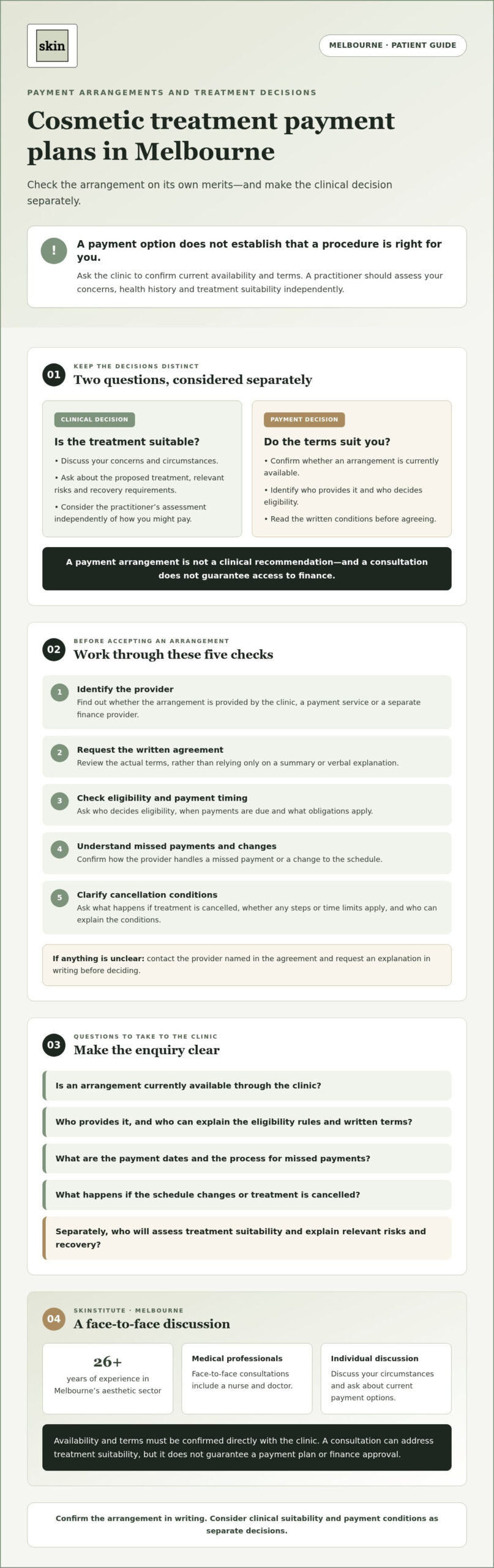
Before booking, ask who provides the arrangement, how eligibility is decided and what happens if you need to change or cancel it. Get the terms in writing so you can review them at your own pace. Keep the financial decision separate from the clinical one: a practitioner should assess your concerns, health history and treatment suitability on their own merits. A payment option doesn’t establish that a procedure is right for you.
Skinstitute has more than 26 years of experience in Melbourne’s aesthetic sector, with face-to-face consultations conducted by medical professionals, including a nurse and doctor. You can use a consultation to discuss your circumstances and ask about current payment options, without assuming a plan is available. The questions below can help you make a clear enquiry and consider both decisions without pressure.
Key Takeaways
- For cosmetic treatment payment plans melbourne, ask each clinic whether an arrangement is currently available and who provides it.
- Request written terms and check eligibility, payment timing, missed payments, changes and cancellations before agreeing.
- Compare payment arrangements separately from clinical care, including who assesses suitability, explains risks and discusses follow-up.
- Take questions to your consultation so you can discuss treatment, recovery and payment terms without pressure.
- Skinstitute offers face-to-face consultations tailored to each client, drawing on more than 26 years of experience in Melbourne’s aesthetic sector.
Cosmetic treatment payment plans in Melbourne: what patients need to know first
Searching for cosmetic treatment payment plans melbourne can bring up different kinds of arrangements. A clinic’s general information may not confirm what it currently accepts. A payment plan lets you pay for treatment over time rather than in one payment, but the provider, eligibility rules, schedule and conditions can vary. Check the details with the clinic or finance provider before deciding.
Payment-plan availability means a clinic currently accepts or provides a stated arrangement. Confirm this directly with the clinic, as availability and terms can vary.
An arrangement may involve the clinic, a payment service or a separate finance provider. These models can operate differently. For example, How BNPL payment plans work describes the general Buy Now, Pay Later model. Ask who provides the arrangement and who can explain its eligibility rules, payment dates, missed-payment process and cancellation conditions. Request the relevant terms in writing. Don’t assume an option mentioned elsewhere is available at a particular Melbourne clinic.
Does Skinstitute offer cosmetic treatment payment plans?
Whether Skinstitute currently offers payment plans or third-party finance needs to be confirmed with the clinic. Ask about current options and their terms before making assumptions. A face-to-face consultation can address individual treatment suitability, but it doesn’t guarantee approval for, or access to, a finance arrangement.
Which treatment decisions should come before payment decisions?
A qualified practitioner should first assess whether a proposed treatment is appropriate for your concerns and circumstances. Treatment type, suitability, possible risks and recovery requirements differ between patients. An option considered for one person may not be suitable for another. Ask the practitioner to explain the proposed approach and relevant considerations without treating a payment method as a reason to proceed.
Keep the decisions separate. Consider the clinical advice on its own, then review any payment arrangement and its written conditions. If the treatment isn’t clinically suitable, or the arrangement doesn’t meet your needs, you can pause rather than feel obliged to book. This makes it easier to compare cosmetic treatment payment plans melbourne while keeping informed choice central.
How cosmetic treatment payment arrangements work and what to confirm
Before relying on a payment option, establish exactly what is being offered. The clinic may be your point of contact, or a separate provider may set the terms and answer questions. Ask who administers the arrangement, who decides eligibility and which organisation to contact for clarification. The clinic’s role in discussing treatment is separate from a provider’s role in explaining finance conditions.
Use this sequence before accepting an arrangement:
- 1. Identify the provider. Confirm which organisation or clinic is responsible and who can explain the terms.
- 2. Request the written agreement. Read the actual terms, not just a summary or verbal explanation.
- 3. Check the schedule and obligations. Confirm when payments are due and what you agree to do.
- 4. Review changes and missed payments. Ask how the provider handles a schedule change, missed payment or cancellation request.
- 5. Clarify anything uncertain. Contact the provider named in the agreement and get an explanation before deciding.
What information should a written payment agreement explain?
Check that the agreement clearly explains eligibility, payment timing and relevant conditions. Ask what happens if your circumstances change, a payment is missed or treatment is cancelled, and whether any steps or time limits apply. Don’t rely on assumptions about how a condition works. Ask the responsible provider to explain unclear wording and confirm the answer in writing before accepting the terms.
Who assesses treatment suitability and who explains finance terms?
A clinician considers medical and aesthetic suitability through an individual consultation. If a finance provider is involved, that provider explains its own eligibility process and agreement. This is not a clinical recommendation. AHPRA’s Medical Board guidelines on financing describe boundaries around practitioners’ involvement in financing schemes. Read the guidance alongside the written terms, and direct finance questions to the party responsible for the arrangement.
Keep approval and treatment advice distinct. Finance approval, if applicable, doesn’t establish that a procedure is appropriate. A clinician’s assessment doesn’t confirm that finance is available. For people researching cosmetic treatment payment plans melbourne, recognising this difference helps prevent a payment conversation from being mistaken for a clinical assessment.
To learn more about Skinstitute’s clinical approach, you can enquire about a face-to-face consultation. Ask the clinic separately about current payment options and their terms.
Compare cosmetic treatment payment options without losing sight of clinical care
Compare the written financial terms separately from the clinical care being offered. Confirm each option directly with the Melbourne clinic or provider, as availability, eligibility and conditions may change. Record the answers so you can compare like with like, rather than relying on general advertising.
Use these criteria to guide your enquiries:
| What to compare | Payment arrangement | Clinical care |
|---|---|---|
| Availability | Does the clinic currently accept or provide this arrangement? Who administers it? | Is the proposed treatment available at the clinic, and will a practitioner assess whether it may suit you? |
| Written information | Are eligibility, payment timing, cancellation and change conditions set out in writing? | Will the consultation cover treatment suitability, relevant risks, expected recovery and realistic outcomes? |
| Contact point | Who can explain the terms or answer questions about the arrangement? | Which practitioner will assess your circumstances and discuss the proposed treatment? |
| Follow-up | Who should you contact about a payment or agreement query? | What follow-up information and support are provided for the proposed procedure? |
Which questions help compare clinic payment information?
Ask whether an arrangement is currently available, who administers it and whether the clinic can explain the terms or refer you to another provider. Request written eligibility criteria and details of payment timing, cancellations and changes. If information is incomplete, seek clarification from the organisation responsible before deciding. The Medical Board of Australia guidelines provide context on practitioners’ responsibilities around payment information and financing arrangements.
How should clinical care factor into a comparison?
Compare how each clinic assesses individual suitability, not just the payment information it provides. A useful clinical discussion should cover the proposed procedure, relevant risks, expected recovery and realistic outcomes for your circumstances. Practitioner involvement in assessment and follow-up is a separate consideration from who administers or explains a finance arrangement. Medical oversight is not finance advice or approval.
The easiest payment option isn’t automatically the most suitable treatment choice. If you’re comparing cosmetic treatment payment plans melbourne, consider the clinical assessment and written financial terms as separate parts of your decision.
Questions for a Melbourne clinic payment plan
A prepared checklist can keep your enquiry focused on two separate matters: whether treatment is clinically suitable and whether a payment arrangement is available on terms you understand. For cosmetic treatment payment plans melbourne, confirm current availability with the clinic or relevant provider. Don’t assume that another clinic’s arrangements or general advertising apply.
What should you ask during a clinical consultation?
Use the consultation to understand the reasoning behind any proposed treatment. Ask how it relates to your concerns, what alternatives may be appropriate and what factors could make you unsuitable. The discussion should be specific to you, not a promise that a procedure will deliver a fixed result.
- Who will assess my concerns and discuss treatment suitability?
- Why might this treatment be considered for me, and what other options could be appropriate?
- What risks and possible side effects should I understand?
- What recovery requirements should I plan for, and how might they affect my usual activities?
- What outcomes are realistic for my circumstances, and what factors may affect them?
- Who will provide clinical information before treatment and explain follow-up arrangements?
What should you ask about payment-plan conditions?
Ask separately about the payment arrangement. The clinic can clarify whether an option is currently available or identify the provider responsible for explaining it. Request the full written terms before agreeing, and direct questions about eligibility or obligations to the party named in the agreement.
- Is a payment arrangement currently available for the treatment I’m considering?
- Who provides or administers it, and who should I contact with questions?
- Can I review the complete written agreement before deciding?
- What eligibility criteria, payment dates and obligations does the agreement specify?
- How are cancellations, changes or missed payments handled?
- Does agreeing to a payment arrangement require me to proceed with treatment, or can I decide separately after the clinical assessment?
Read the answers alongside the written terms. If anything is unclear, ask the relevant clinic or provider to explain it before you agree. You can pause the enquiry if you feel pressured or can’t get clear answers. A considered decision allows you to assess clinical suitability and payment conditions independently.
To discuss individual treatment suitability and ask about current payment options, contact Skinstitute about a face-to-face consultation. Check directly with the clinic, as payment-plan availability and terms can vary.
Discussing treatment and payment options with Skinstitute in Melbourne
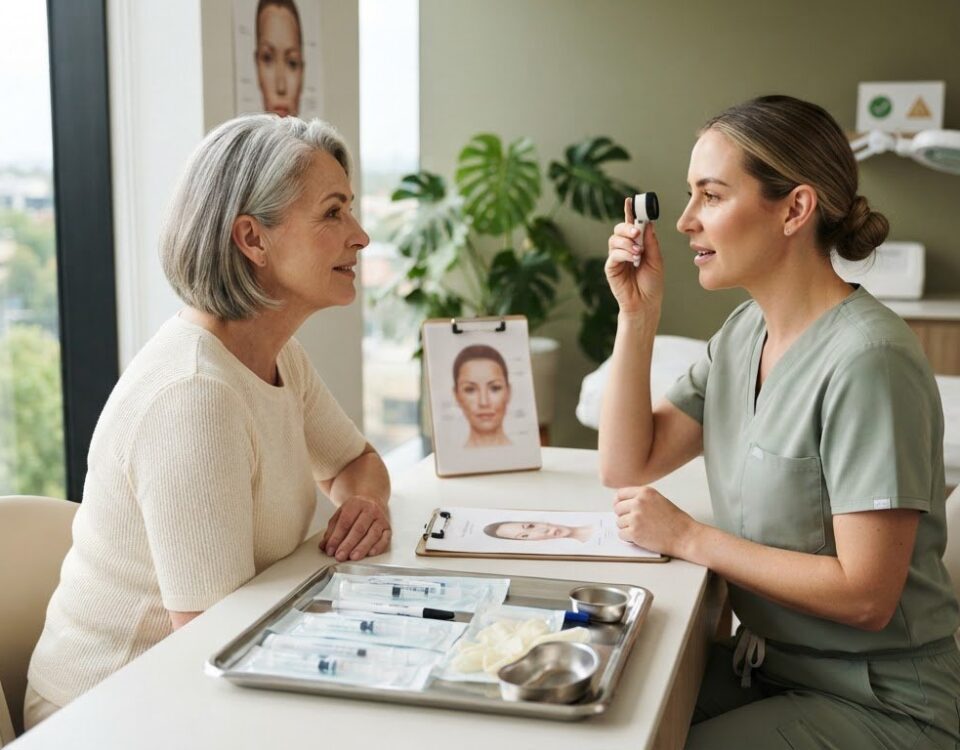
A face-to-face consultation is an opportunity to discuss whether a treatment may suit your individual concerns. Skinstitute has more than 26 years of experience in Melbourne’s aesthetic sector, and its medical professionals, including a nurse and doctor, tailor treatment planning following an in-person assessment. You can raise clinical questions directly while keeping any payment enquiry separate from the practitioner’s assessment.
What to expect from a personalised clinical discussion
Be ready to explain what you would like assessed and discuss relevant health information with the clinical team. The practitioner can consider your circumstances and explain whether a treatment may be appropriate, including relevant risks, recovery requirements and realistic expectations. The assessment may indicate that a different approach, or no treatment, is more suitable. A consultation doesn’t guarantee a particular recommendation or outcome.
Ask about the reasoning behind a recommendation rather than treating a procedure as a predetermined choice. You can clarify which factors inform the recommendation, what limitations may apply to your suitability and what recovery could involve. If you need more time to consider the information, ask questions before deciding how to proceed.
How to enquire about payment options before proceeding
Ask Skinstitute directly whether a payment arrangement is currently available and, if so, who administers it. Request the written terms and identify the contact person or provider responsible for questions about eligibility, payment timing, changes and cancellation conditions. A clinical consultation doesn’t confirm access to finance or approval under a separate arrangement.
Keep the clinical and financial conversations distinct. First understand the practitioner’s assessment and treatment considerations, then review any payment information on its own terms. If an option is unavailable, unclear or not right for you, you can pause rather than feel obliged to proceed. This distinction matters when researching cosmetic treatment payment plans melbourne: a payment method doesn’t determine clinical suitability.
To discuss your concerns with the clinical team and ask about current payment options, arrange a consultation with Skinstitute. You can raise both topics without assuming a payment plan is available or that a particular treatment will be recommended.
Make your next enquiry with clarity
Before booking, confirm whether a payment arrangement is currently available and request its complete written terms, including eligibility, payment timing and cancellation conditions. Keep that financial decision separate from treatment suitability. An individual clinical assessment is needed to discuss whether a proposed procedure may be appropriate, what risks apply and what recovery could involve.
If you’re comparing cosmetic treatment payment plans melbourne, direct questions to the clinic or provider responsible for the arrangement rather than relying on assumptions. Ask Skinstitute directly about its current payment options.
Skinstitute has more than 26 years of experience in Melbourne’s aesthetic sector. Its medical professionals conduct face-to-face consultations and tailor treatment plans to each client. Take the time you need to consider the clinical advice and any written agreement. Arrange a face-to-face consultation with Skinstitute to discuss your circumstances and ask about current payment options.
Frequently Asked Questions
Does Skinstitute offer cosmetic treatment payment plans in Melbourne?
Contact Skinstitute to confirm whether a payment plan is currently available. Searching for “cosmetic treatment payment plans melbourne” doesn’t confirm that a particular clinic offers one. Ask who administers any arrangement and where to get its current written terms. A face-to-face consultation can address treatment suitability, but it doesn’t confirm finance approval or access to a payment option.
Can I use a payment plan for any cosmetic treatment?
Not necessarily. Eligibility may depend on the clinic, treatment and arrangement provider, so ask whether the specific procedure is included. Request confirmation in writing rather than assuming an option applies across all services. Separately, a practitioner needs to assess your circumstances and discuss the proposed treatment’s suitability, risks and recovery requirements. Payment eligibility doesn’t establish that treatment is clinically appropriate for you.
What should I check before agreeing to a cosmetic treatment payment plan?
Read the written agreement before accepting it. Check who provides the arrangement, what eligibility conditions apply, when payments are due, how cancellations or changes are handled, and what happens if you miss a payment. Find out who can answer questions and request clarification if any wording is unclear. Separately, ensure a clinician has assessed whether the proposed treatment is suitable and discussed relevant risks and recovery.
Will a payment plan affect which treatment a clinician recommends?
A payment option shouldn’t replace an individual clinical assessment. Ask the practitioner to explain the reasoning for a proposed treatment, including its suitability for your concerns, relevant risks, expected recovery and realistic outcomes. Review any payment terms separately. You don’t need to choose a procedure just because an arrangement appears available. Take time to consider the clinical advice before deciding whether to proceed.
How much information should a written payment agreement include?
The agreement should clearly explain the payment schedule, eligibility conditions, cancellation process and your relevant obligations. It should identify who administers the arrangement and how to contact them with questions. Keep this document separate from the clinic’s clinical information, which should explain treatment suitability, risks and recovery. Ask the relevant party to clarify unclear terms in writing rather than relying on a verbal assurance.
Is a consultation the same as approval for a payment plan?
No. A consultation is a clinical discussion about your concerns and whether a treatment may be appropriate. A payment arrangement has separate availability, eligibility requirements and terms, which you need to confirm with the clinic or relevant provider. A clinical recommendation doesn’t guarantee finance approval or access to a payment option. Likewise, payment approval doesn’t mean treatment is clinically suitable. Consider each decision on its own merits.
What if I feel pressured to agree to treatment or payment terms?
Pause before agreeing and ask for the clinical information and payment terms in writing. Request more explanation about the recommendation, risks, recovery requirements or agreement conditions, then take time to consider your options. If you still can’t get clear answers, delay your decision and contact the clinic or arrangement provider directly. Make sure you understand both the clinical advice and financial agreement before deciding how to proceed.