
Laser Skin Resurfacing Recovery Timeline: A Clinical Day-by-Day Guide
September 7, 2026
Is Fractional CO2 Laser Painful? Sensation and Management
September 9, 2026
A bargain price for fractional CO2 laser treatment often serves as a warning sign rather than a genuine saving. When researching the fractional co2 laser cost melbourne patients often encounter, the vast discrepancy between discount beauty centres and established medical clinics can be deeply confusing. It’s natural to feel concerned about hidden fees for aftercare or whether the higher price tag of a clinical setting truly translates into superior dermal remodelling. The assessment of these variables requires an objective perspective on how technology and practitioner expertise influence your biological outcomes.
This guide provides a transparent breakdown of the clinical factors, technology grades, and professional expertise that dictate pricing in the local market. You’ll gain a clear understanding of Melbourne market rates and the specific components that constitute a medical-grade treatment protocol. We will also provide a logical framework to help you evaluate the return on investment for intensive skin resurfacing. By examining the intersection of thermal precision and safety standards, you can move beyond surface-level pricing to understand the true value of professional clinical care.
Key Takeaways
- Understand how medical-grade technology and practitioner expertise work to mitigate risks while ensuring precise dermal remodelling.
- Identify the specific clinical variables, including anatomical treatment zones and laser intensity, that dictate the fractional co2 laser cost melbourne patients encounter.
- Evaluate the long-term value of intensive resurfacing by comparing the cost-per-result against less intensive modalities that require more frequent sessions.
- Recognise the importance of comprehensive clinical skin analysis and mandatory aftercare in preventing adverse effects and ensuring optimal skin recovery.
- Learn how integrating regenerative treatments like Exosomes or Rejuran can potentially accelerate the healing process and amplify the physiological benefits of the laser.
Understanding Fractional CO2 Laser Technology and Clinical Efficacy
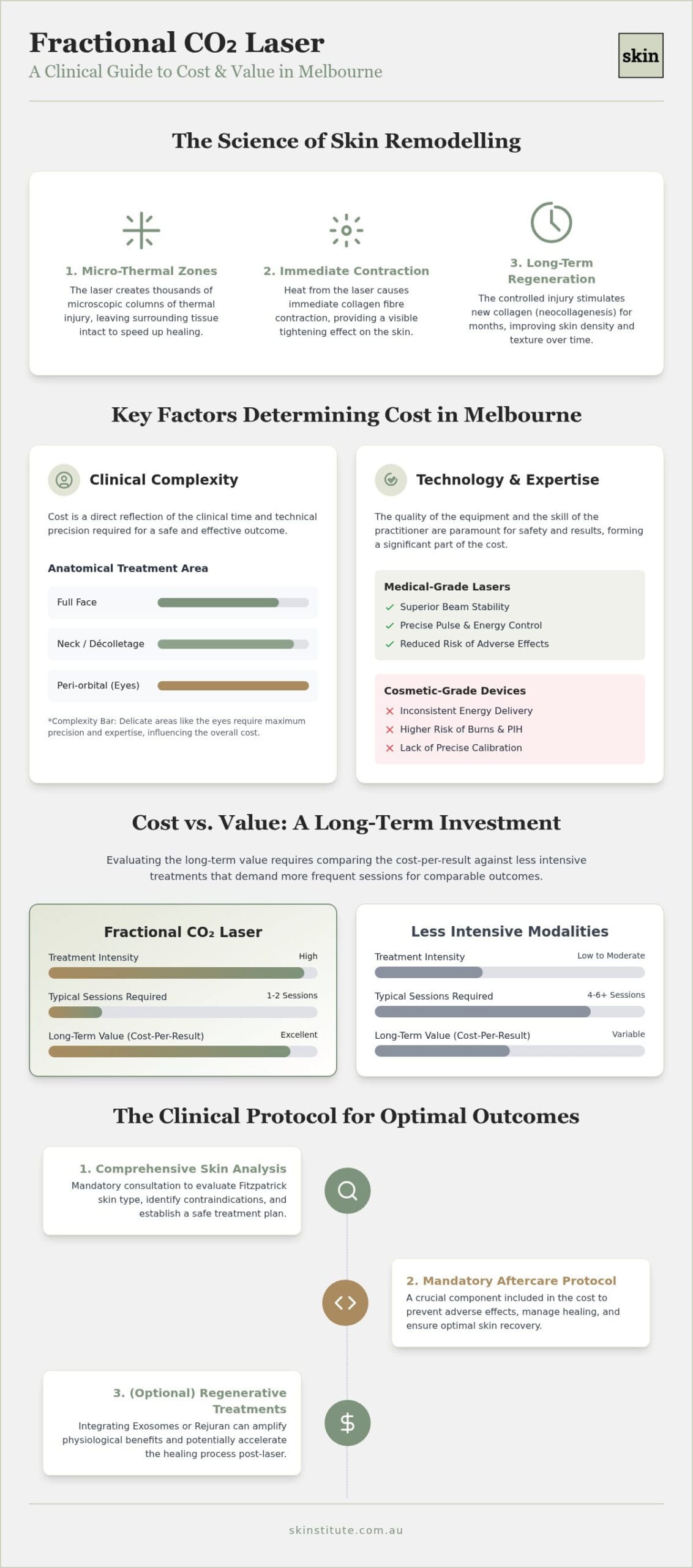
Fractional CO2 laser represents the clinical gold standard for intensive skin resurfacing. Unlike traditional ablative lasers that remove the entire surface of the epidermis, this technology utilises a pixelated delivery system. By employing Carbon-dioxide (CO2) laser technology, the device creates thousands of microscopic columns of thermal injury, known as Micro-Thermal Treatment Zones (MTZs). These zones penetrate deep into the dermis while leaving the surrounding tissue intact. This preservation of healthy skin facilitates a rapid healing response, significantly reducing the downtime associated with older laser generations. Clinical indications for this modality are extensive, primarily targeting deep rhytids, atrophic acne scarring, and complex dyschromia. Achieving predictable results requires medical-grade equipment that ensures precise thermal damage without causing excessive carbonisation of the tissue.
The Biological Mechanism of Skin Resurfacing
The efficacy of the treatment lies in its dual-action biological impact. Initially, the heat generated by the laser causes immediate collagen fibre contraction, providing a visible tightening effect. Following this, the controlled injury triggers a cascade of wound-healing responses. Fibroblasts are stimulated to initiate neocollagenesis, which is the production of new, organised collagen and elastin fibres. This remodelling phase continues for several months post-procedure, leading to structural improvements in skin density and texture. By fractionating the beam, practitioners can deliver high energy levels to the dermis while maintaining a safety profile that minimises the risk of prolonged erythema or scarring.
Medical-Grade vs. Cosmetic-Grade Laser Standards
When evaluating the fractional co2 laser cost melbourne clinics present to patients, the grade of technology is a primary differentiator. Medical-grade CO2 lasers offer superior beam stability and pulse control, which are vital for patient safety. Lower-tier, cosmetic-grade devices often lack the calibration necessary to maintain consistent energy delivery, increasing the risk of post-inflammatory hyperpigmentation (PIH) or thermal burns. At Skinstitute, technical mastery is applied to customise energy settings based on individual skin phototypes and specific concerns. This level of precision ensures that the thermal injury is sufficient to trigger regeneration without exceeding the skin’s biological threshold for safe recovery. Understanding these technical nuances helps patients appreciate why professional clinical standards are essential for achieving evidence-based results.
Key Factors Determining Fractional CO2 Laser Cost in Melbourne
The financial investment required for professional skin resurfacing is rarely a fixed figure. Instead, the fractional co2 laser cost melbourne residents encounter is a direct reflection of clinical complexity and the technical parameters required for a safe biological outcome. Every treatment plan begins with a mandatory clinical consultation. This diagnostic phase evaluates the patient’s Fitzpatrick skin type and identifies any contraindications that might affect the healing trajectory. It’s an essential step for establishing the baseline settings needed to achieve results without compromising the integrity of the dermal barrier.
Anatomical Treatment Areas and Complexity
Clinical time is heavily dictated by the anatomical zone being addressed. Targeted rejuvenation of the peri-orbital (eye) or peri-oral (mouth) regions requires extreme precision due to the thinner epidermis and proximity to sensitive structures. Conversely, full-face resurfacing involves a broader surface area and a longer procedural duration. Treating the neck or décolletage introduces further complexity; these areas have fewer sebaceous glands and a different blood supply compared to the face, necessitating specialised energy settings and heightened caution.
Several factors influence the complexity of anatomical treatments:
- Epidermal thickness: Delicate areas like the eyelids require lower fluences and higher density settings to ensure safety.
- Healing capacity: The neck and hands require a more conservative approach to prevent the risk of hypertrophic scarring.
- Tissue fibrosity: Deep acne or surgical scars often require ‘stacking’ pulses to reach the necessary dermal depth for remodelling.
Practitioner Expertise and Clinical Environment
The environment in which the laser is operated significantly impacts both the cost and the safety profile of the procedure. Seeking treatment in a medical clinic provides a level of clinical oversight that non-medical laser centres cannot match. This professional supervision is vital for managing the skin’s inflammatory response in the hours and days following the thermal injury. According to the American Society of Plastic Surgeons on Laser Resurfacing, the expertise of the individual performing the treatment is a critical factor in achieving the desired aesthetic outcome while minimising complications.
At Skinstitute, our 26-year legacy in the Melbourne aesthetic industry ensures that every pulse is delivered with technical mastery. This long-term experience allows for the precise modulation of energy, ensuring that the thermal damage is deep enough to trigger neocollagenesis but controlled enough to prevent post-inflammatory hyperpigmentation. This level of clinical precision is what distinguishes a professional medical treatment from a generic service. To understand how these clinical factors apply to your specific skin concerns, you can explore our approach to fractional CO2 resurfacing and the standards we maintain in our clinical setting.
Cost vs. Value: Comparing Fractional CO2 with Alternative Resurfacing Methods
Evaluating the financial commitment of skin resurfacing involves more than comparing session prices. Patients must consider the “cost-per-result” to determine the true value of their investment. While milder treatments like skin needling offer a lower entry point, they often necessitate six to ten sessions to achieve a fraction of the structural remodelling provided by a single fractional CO2 treatment. This high-intensity intervention targets the dermis with such precision that it remains the preferred choice for significant textural concerns. It’s often more cost-effective to invest in one intensive clinical procedure than to undergo a prolonged series of less effective sessions.
Downtime represents an indirect component of the fractional co2 laser cost melbourne clinics quote. Traditional fully ablative lasers often require weeks of recovery, whereas fractional technology utilises micro-thermal treatment zones to preserve healthy tissue. This leads to a faster re-epithelialisation process, allowing patients to return to professional duties sooner. The reduction in recovery time enhances the overall return on investment by minimising social and professional disruption. Choosing a more advanced technology often means paying for a more sophisticated healing trajectory.
Laser Resurfacing vs. Bio-Stimulators (Rejuran and Exosomes)
While CO2 lasers address surface texture and pigmentation through thermal injury, bio-stimulators like Rejuran focus on cellular repair. Integrating these modalities creates a powerful synergy. Rejuran uses polynucleotides to improve hydration and DNA repair from within, while exosome therapy can be applied topically post-laser to deliver growth factors directly into the open micro-channels. This combination often carries a regenerative price premium but can significantly accelerate the healing phase and improve the quality of the final result. For a detailed analysis of polynucleotide therapy, refer to our Clinical Guide to Rejuran in Melbourne.
Fractional CO2 vs. HIFU for Skin Tightening
A clear distinction exists between surface resurfacing and deep structural lifting. High Intensity Focused Ultrasound (HIFU) targets the SMAS layer to address laxity, whereas CO2 laser focuses on the epidermal and dermal texture. A comprehensive rejuvenation strategy might involve both. HIFU provides the foundational lift, while the CO2 laser refines the skin’s “canvas” by removing solar damage and fine lines. Pricing for HIFU is typically structured around the depth of ultrasound energy, while laser pricing focuses on the density and intensity of the light-based pulses. Combining these technologies allows for a multi-layered approach to facial ageing that single-modality treatments cannot replicate.
Clinical Considerations for Your Laser Resurfacing Investment
When calculating the fractional co2 laser cost melbourne clinics present, it’s vital to account for the ancillary clinical requirements that ensure a successful result. A professional resurfacing journey begins long before the laser is activated. A comprehensive clinical skin analysis is mandatory to identify potential contraindications, such as active infections or specific inflammatory conditions. This diagnostic phase ensures that the skin’s biological state is prepared for the intensive thermal remodelling that follows. Investing in a professional clinical assessment reduces the risk of adverse outcomes and ensures that the treatment parameters are tailored to your unique physiology.
The Mandatory Consultation and Skin Prep
Skin priming is a standard clinical requirement for many patients, particularly those with higher Fitzpatrick skin types. This phase often involves the use of Tyrosinase inhibitors to suppress melanin production, which is essential for preventing post-inflammatory hyperpigmentation. While this adds to the initial preparation time, it’s a non-negotiable step for maintaining the safety of your investment. During the consultation, practitioners also determine the exact number of sessions required for complex concerns like atrophic acne scarring. A structured plan provides clarity on the total investment, preventing the uncertainty often found in “discount” centres that may omit these critical preparatory steps.
Aftercare: Protecting Your Clinical Results
The “hidden” costs of laser resurfacing often reside in mandatory post-treatment care. To facilitate optimal re-epithelialisation, patients must utilise medical-grade barrier repair serums, occlusive dressings, and broad-spectrum SPF 50+ protection. These items aren’t optional; they’re functional requirements for preventing “costly” complications like secondary infections or permanent pigment changes. A typical recovery timeline involves specific clinical check-ins to monitor the inflammatory response and ensure the skin is healing according to expected biological patterns.
- Occlusive dressings: Essential for maintaining a moist wound environment during the first 48 to 72 hours.
- Gentle cleansers: Formulated to remove debris without disrupting the fragile new epidermal layer.
- High-SPF protection: Critical for shielding newly formed tissue from ultraviolet radiation, which can trigger rapid dyschromia.
While the initial financial outlay for a clinical procedure may seem high, the long-term return on investment is significant. One precisely executed fractional CO2 session can achieve structural changes that years of topical skincare cannot replicate. By addressing the root cause of dermal laxity or scarring, you reduce the ongoing need for expensive camouflage cosmetics or palliative skin treatments. For those prioritising safety and technical mastery, arranging a clinical consultation at Skinstitute is the first step toward a transparent and evidence-based treatment plan.
Skinstitute Melbourne: Professional Laser Resurfacing Standards
Skinstitute’s foundational philosophy prioritises medical-grade aesthetic excellence over high-volume commercial trends. Situated in the heart of Melbourne, our clinic maintains a serious commitment to technical mastery, underpinned by a 26-year legacy of clinical practice. We view laser resurfacing not as a generic commodity, but as a precise medical intervention that requires a deep understanding of dermal physiology. This authoritative approach ensures that every procedure is conducted with a focus on patient safety and long-term biological health. By choosing a clinic with an established clinical history, patients can feel a sense of stability throughout their aesthetic journey.
Why Experience Matters in Melbourne Laser Aesthetics
Experience is a critical variable in the Australian aesthetic landscape. Melbourne’s specific environmental factors, particularly the high ultraviolet (UV) indices, necessitate a specialised understanding of how solar damage interacts with thermal treatments. Skinstitute’s longevity in the industry allows our practitioners to navigate these complexities with quiet confidence. We prioritise the concept of regeneration over simple resurfacing, ensuring that the inflammatory response is managed to promote healthy tissue synthesis. This depth of knowledge is what justifies the fractional co2 laser cost melbourne patients invest in at a professional clinical level. It’s about mitigating risk through technical proficiency and a thorough understanding of how different skin types react to laser energy.
Booking Your Clinical Assessment at Skinstitute
The journey toward skin rejuvenation begins with a methodical professional skin analysis. During this consultation, we move beyond surface-level observations to assess the underlying structural integrity of your skin anatomy. This process allows us to provide a transparent and bespoke cost breakdown, removing the uncertainty often associated with discount laser offers. Every treatment plan is tailored to the individual, ensuring that the energy settings and pulse densities are optimised for your specific concerns. This logical and sequential approach ensures you feel informed and respected before any clinical action is taken.
When you attend a clinical assessment at our Melbourne facility, you’ll receive:
- A comprehensive evaluation of your skin’s anatomical requirements and Fitzpatrick type.
- A customised treatment plan detailing the energy densities and passes required for your goals.
- Realistic outcome expectations based on evidence-based clinical protocols.
- A transparent overview of the total investment, including the cost of mandatory medical-grade aftercare.
We invite you to Schedule your clinical consultation at Skinstitute Melbourne to begin your evidence-based journey toward dermal health. Our practitioners are dedicated to providing the technical mastery and professional standards required for safe, effective results.
Advancing Your Dermal Health Strategy
Establishing a clear understanding of the fractional co2 laser cost melbourne practitioners provide requires looking beyond the initial quote to the clinical standards involved. The intersection of medical-grade technology and 26 years of technical mastery ensures that thermal injury is precisely controlled to trigger neocollagenesis while mitigating the risk of complications. Professional resurfacing is a multi-layered investment that encompasses mandatory skin preparation, specialised energy delivery, and comprehensive aftercare support. These elements aren’t optional extras; they’re functional requirements for a safe biological outcome.
By prioritising safety and evidence-based protocols, you ensure that your skin’s regenerative journey is supported by seasoned expertise. We invite you to Book a Clinical Assessment for Fractional CO2 Laser at Skinstitute Melbourne to receive a bespoke treatment plan tailored to your anatomical needs. Our clinical setting provides the stability and specialised medical support required to achieve meaningful, long-term structural improvements. We look forward to partnering with you on your path to clinical skin excellence.
Frequently Asked Questions
Is fractional CO2 laser worth the cost for acne scarring?
Fractional CO2 laser is widely considered the clinical gold standard for addressing atrophic acne scarring due to its ability to trigger deep dermal remodelling. While the initial investment is higher than milder modalities like skin needling, the intensity of the treatment often yields more significant structural changes in fewer sessions. This efficiency makes it a cost-effective long-term solution for patients seeking to improve skin texture and reduce the depth of fibrotic scar tissue.
How many sessions of fractional CO2 laser will I need for my skin?
The number of sessions required depends entirely on the depth of the skin concerns and the patient’s biological healing response. For mild photo-damage or fine lines, a single intensive session may suffice to achieve the desired rejuvenation. However, complex concerns such as deep acne scarring or significant epidermal laxity typically require a series of two to three treatments spaced several months apart. A professional clinical analysis is essential to determine your specific treatment trajectory.
Does Medicare or private health insurance cover fractional CO2 laser in Australia?
In Australia, fractional CO2 laser is classified as a cosmetic procedure and is not typically covered by Medicare or private health insurance. There are rare exceptions for specific medical conditions, such as severe scarring from burns or trauma, which may attract a Medicare rebate if performed by a specialist. Patients should consult their private health fund to confirm if any part of the clinical facility fee is eligible for a rebate under their specific policy.
What is the average price range for fractional CO2 laser in Melbourne?
When researching the fractional co2 laser cost melbourne clinics offer, patients will find that prices vary significantly based on the treatment area and technology grade. Market data from September 2026 indicates that full-face rejuvenation typically starts from approximately AU$1350, while targeted spot treatments for scars may begin at AU$299. These figures reflect the clinical time and expertise required to operate medical-grade equipment safely and effectively in a professional Melbourne setting.
Can I combine fractional CO2 laser with cosmetic injectables in the same session?
Combining fractional CO2 laser with prescription injectables in the same session is generally not recommended due to the intense thermal energy and subsequent oedema. The heat from the laser can potentially affect the distribution or longevity of dermal fillers and other injectables. Most clinical protocols require a waiting period of two to four weeks between laser resurfacing and injectable treatments to allow the skin’s inflammatory response to subside and ensure optimal results.
What happens if I choose a cheaper laser clinic for resurfacing?
Selecting a bargain or non-medical clinic for laser resurfacing introduces significant risks, including poorly calibrated equipment and inadequate clinical oversight. Lower-grade lasers may deliver inconsistent energy, increasing the likelihood of post-inflammatory hyperpigmentation or thermal burns. A medical-grade clinic prioritises risk mitigation and has the professional expertise to manage the skin’s biological response, which is a critical factor that justifies a higher professional fee for these advanced procedures.
How long do the results of a single CO2 laser treatment last?
The structural improvements from a single fractional CO2 treatment can last for several years, as the new collagen and elastin fibres formed during neocollagenesis are permanent additions to the dermis. However, the skin continues to undergo the natural chronological ageing process and remains susceptible to ongoing environmental damage. Maintaining these results requires a consistent medical-grade skincare regimen and strict adherence to ultraviolet protection to prevent the formation of new rhytids or dyschromia.
Is there a consultation fee for laser skin analysis at Skinstitute?
Skinstitute requires a professional skin analysis before any laser procedure to ensure patient safety and treatment efficacy. This diagnostic phase allows our practitioners to evaluate your skin anatomy, identify contraindications, and provide a transparent, bespoke quote based on your specific requirements. You should contact the clinic directly to confirm current scheduling protocols and any associated clinical assessment fees, as these are determined by the complexity of the diagnostic tools required for your case.