Long-Term Benefits of HIFU for Facial Lifting and Wrinkles
October 14, 2026
Collagen Induction Therapy Benefits: What Skin Needling Can and Cannot Do
October 16, 2026
After sclerotherapy, avoiding all activity isn’t usually the safest approach. It’s understandable to feel cautious about walking, exercise or showering, particularly if the treated area is bruised, aching or looks darker. Knowing what not to do after sclerotherapy means distinguishing common recovery changes from activities that may interfere with healing, rather than following a blanket set of online rules.
This guide explains which everyday activities may need to be limited, why compression and movement advice can differ between patients, and why your clinician’s personalised instructions should take priority. Mild bruising, tenderness or changes in the appearance of treated veins can occur, but symptoms still need to be monitored. You’ll also learn which signs call for prompt medical assessment, including sudden leg swelling, severe or persistent pain, chest pain or breathlessness. Individual assessment matters because the veins treated and your health circumstances influence appropriate aftercare.
Key Takeaways
- Understand what not to do after sclerotherapy by treating aftercare as personalised clinical guidance, not a universal list of restrictions.
- Check your activity and compression instructions before changing your routine. Seek clarification if the advice is unclear.
- Avoid picking, squeezing or self-treating treated areas, and learn which skin changes should be discussed with your clinician.
- Know when symptoms such as severe, continuous pain or significant leg swelling warrant prompt clinical assessment.
- Skinstitute provides sclerotherapy in Melbourne, with treatment planning tailored following a face-to-face consultation.
What not to do after sclerotherapy: recovery advice
After sclerotherapy, patients are often given advice about exercise, compression garments and everyday routines. It can be tempting to search for a fixed list of activities to avoid, particularly when different sources give different instructions. Aftercare is clinician-guided recovery advice, not a universal set of prohibitions.
The purpose of aftercare is to support recovery while taking account of the treatment performed and the person receiving it. Recommendations may address movement, compression or care of the treated area, but the details can vary. A general article can explain common considerations; it cannot account for the specific veins treated, procedure details, symptoms or health context that informed your clinical plan.
Why aftercare instructions can differ between patients
The veins treated and the approach used can influence what advice is appropriate. Individual health circumstances and symptoms after the procedure may also affect recommendations. For example, compression or activity advice that suits one patient may not be appropriate for someone whose treatment or clinical circumstances differ. This variation doesn’t necessarily mean that one person has received incorrect advice; it may reflect a plan tailored to different needs.
General educational resources, including this overview of Sclerotherapy, can provide background about the procedure and aftercare. They aren’t a substitute for instructions from the clinician who knows your treatment details. Don’t apply a general recommendation as though it were a personal prescription, particularly if it differs from the advice you were given.
The central mistake: changing your plan based on online advice
Online accounts can make recovery seem more predictable than it is. Another patient might describe wearing compression for a certain period, returning to a particular activity or avoiding a daily routine. Copying that plan could conflict with the guidance provided for your treatment. The same applies to advice that sounds precise but doesn’t explain who it was intended for or what procedure was performed.
Personalised aftercare takes precedence because it reflects your treatment and clinical circumstances, while general online guidance cannot assess either.
Keep your written instructions somewhere accessible and refer to them before making changes to your routine. If you also received verbal advice, use it alongside the written plan. If the two seem inconsistent, or you’re unsure how an instruction applies to an everyday activity, seek clarification from the treating clinician rather than choosing whichever online answer feels most reassuring.
- Use your own plan: Don’t adopt another patient’s restrictions or timetable as your personal guidance.
- Check before changing course: If an instruction is unclear, confirm what it means before altering your activity or compression routine.
- Keep advice accessible: Store written guidance where you can refer to it during recovery.
Understanding what not to do after sclerotherapy starts with avoiding guesswork. Treat general information as context, not as a replacement for the written and verbal instructions given for your care.
Activity and compression after sclerotherapy: what not to change yourself
Activity and compression advice can feel difficult to interpret if you’ve read different recovery schedules online. Use your own instructions as the reference point rather than adding restrictions or changing a stocking routine based on someone else’s experience. These steps can help keep decisions grounded in your treatment plan.
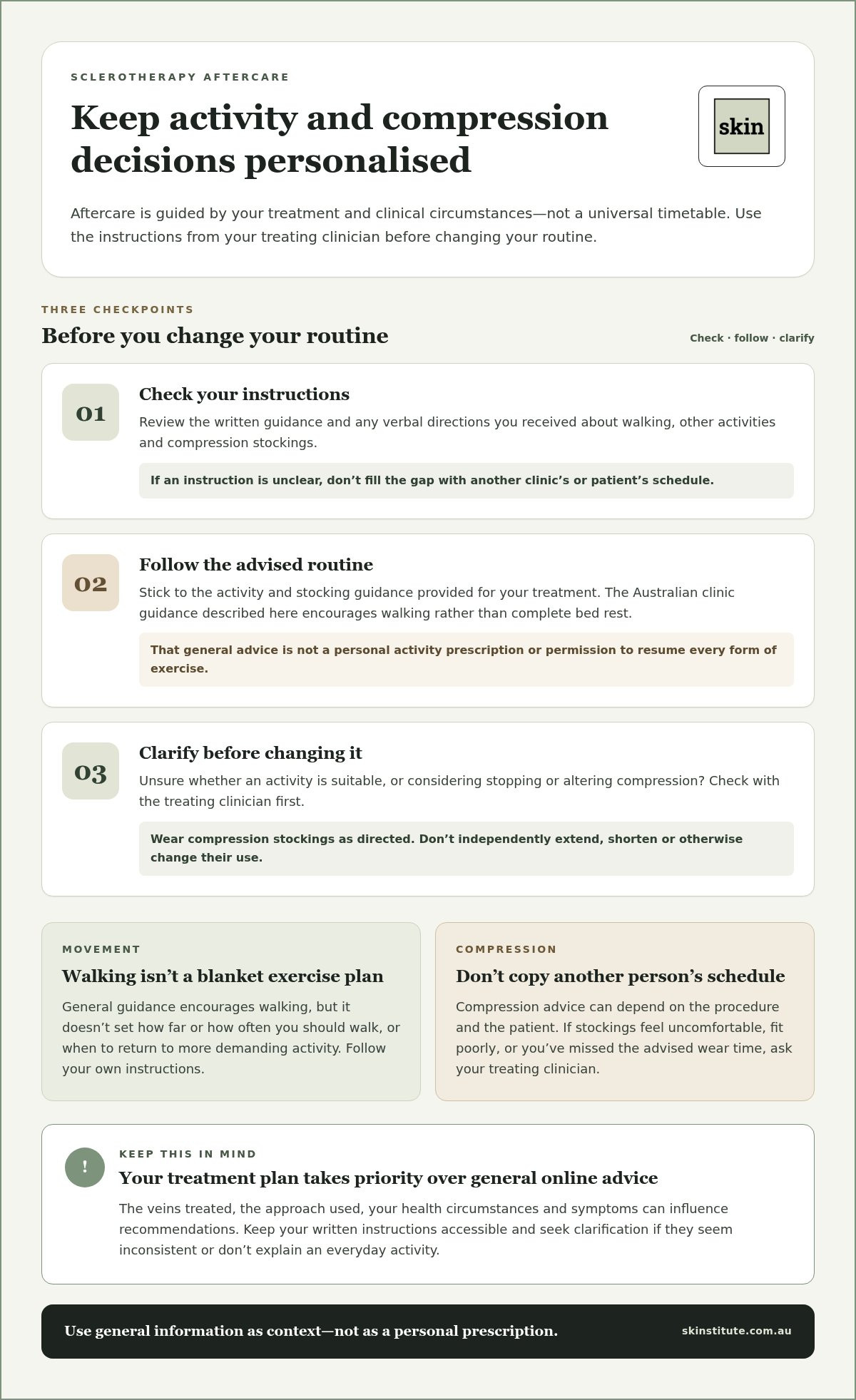
- Check your instructions. Review the written guidance you were given and recall any verbal directions about walking, other activities and compression stockings. If an instruction is unclear, don’t fill the gap with a schedule from another clinic or patient.
- Follow the advised routine. Stick to the activity and stocking guidance provided for your treatment. Australian clinic aftercare guidance encourages walking rather than complete bed rest, but this isn’t a personal activity prescription or permission to resume every form of exercise.
- Clarify before changing it. If you’re unsure whether a particular activity is suitable, or you’re considering stopping or altering compression, seek advice from the treating clinician first.
Do not assume you need complete rest
Complete bed rest isn’t the default message in the Australian clinic guidance described here, which encourages walking after treatment. That general point doesn’t determine how far or how often you should walk, or when to return to more demanding activity. Follow your own instructions. Don’t assume strenuous exercise is either safe or harmful for every patient at the same stage of recovery.
Guidance from sources such as Mayo Clinic on Sclerotherapy Aftercare can help explain general recovery considerations. It cannot assess the veins treated or your individual circumstances. If your written plan limits an activity, don’t override it because a general source describes movement as part of aftercare.
Do not stop or alter compression instructions independently
Compression advice may depend on the procedure and the patient, so a stocking schedule shared by another clinic may not suit your care. Wear your stockings as directed. Don’t extend, shorten or otherwise change their use based only on an online timetable. If they feel uncomfortable, seem to fit poorly, or you’ve missed the advised wear time, ask the treating clinician how to proceed rather than improvising.
Follow the activity and compression routine you were advised to follow. Don’t impose extra restrictions or make changes independently. Extra rest may not match your clinician’s guidance, while changing compression without advice may also depart from your plan.
Skinstitute provides sclerotherapy in Melbourne, with treatment planning tailored after a face-to-face consultation. If you’re considering treatment, an individual sclerotherapy assessment helps establish guidance around your circumstances.
Skin changes after sclerotherapy: avoid picking, squeezing or self-treating
Bruising, aching, redness at an injection site and trapped blood have been reported after sclerotherapy. A treated vein may also look darker or more noticeable before it fades. These changes can be concerning, but appearance alone can’t show whether a particular area is healing as expected or needs assessment. Note what you notice and follow the skin-care advice provided for your treatment.
Do not mistake every temporary change for a treatment failure
A visible change soon after treatment doesn’t necessarily mean the procedure hasn’t worked. Bruising may affect the surrounding skin, while a treated vein can remain visible or appear darker as recovery progresses. The appearance and course of individual marks vary, so a general guide can’t predict when a particular vein or area will resolve. Avoid judging the outcome too early or comparing your skin with another patient’s.
Look at changes in context. Note whether a mark is new, improving or worsening, and whether it is accompanied by other symptoms. Trapped blood, redness at an injection site and local aching are examples of changes described in Australian clinic aftercare information. That doesn’t mean every change is harmless or can be assessed from a photograph or description alone. If you’re uncertain about what you’re seeing, seek guidance from the clinician who treated you.
Do not try to manage unexpected changes without advice
Resist the urge to squeeze a visible vein, pick at an injection site or massage an area to change its appearance. These actions may irritate the skin and won’t establish whether a change is expected. Don’t apply creams, antiseptics, heat or other products unless they’re part of the skin-care instructions your clinician gave you.
Skin-care advice can depend on the treatment and your individual circumstances. If the instructions don’t specify whether a product is suitable, avoid experimenting and ask the treating clinician before applying it. The same principle applies to home remedies or advice found online: a product that seems appropriate for one person may not suit your treated area.
Use a practical approach to monitoring:
- Observe: Note the location and appearance of bruising, redness or darker-looking veins.
- Avoid manipulation: Don’t pick, squeeze or attempt to drain a treated area yourself.
- Follow your skin-care instructions: Use only the products and care measures advised for you.
- Seek clinical advice: Contact the treating clinician about changes that are new, worsening or concerning, rather than trying to diagnose or treat them yourself.
Knowing what not to do after sclerotherapy includes avoiding assumptions based on colour or visibility alone. Some visible changes may take time to evolve, but there is no reliable timeline for every individual mark or vein. If the area looks different from what you were told to expect, or you’re unsure whether a change warrants review, describe what you’ve noticed to your treating clinician and follow their advice.
When to seek advice after sclerotherapy instead of waiting
Some local changes can occur during recovery, but severe or worsening symptoms shouldn’t be dismissed as routine. A symptom on its own doesn’t confirm a complication, and online information can’t establish the cause. The safest response depends on what you’re experiencing and your clinical circumstances. Use the action points below to decide when to seek assessment rather than trying to diagnose yourself.
Symptoms that should prompt contact with the treating clinician
Contact the clinician who treated you if you develop severe, continuous pain or significant swelling in the leg. Don’t wait for a routine follow-up if these symptoms are present or worsening. Explain when they began, where they are located and how they have changed. This information helps the clinician understand the concern and advise on appropriate assessment.
When you make contact, describe the symptom plainly. For example, say whether the swelling affects one part of the leg or a larger area, and whether the pain is constant or changing. Don’t rely on a photograph or an online symptom list to decide that it is harmless. You don’t need to identify the cause before seeking advice.
When symptoms may need urgent medical assessment
Sudden chest pain or difficulty breathing requires urgent emergency assessment. Don’t wait for a routine clinic response or use an online article to determine what is causing these symptoms. Call 000 or attend an emergency department. This is separate from contacting your treating clinician about recovery questions.
Use this action-led guide:
- Contact your treating clinician promptly about severe, continuous pain or significant leg swelling.
- Seek urgent emergency assessment for sudden chest pain or difficulty breathing.
- Describe what has changed by noting when the symptom started, its location and whether it is progressing.
- Don’t self-diagnose or self-treat based on online information; follow the direction of the clinician assessing you.
These steps are intended to support timely assessment, not to label a symptom as a particular condition. If a change feels concerning or differs from the recovery advice you received, it is reasonable to seek individual clinical guidance. Don’t wait solely because a symptom is not mentioned in a general aftercare guide.
Knowing what not to do after sclerotherapy includes not ignoring significant symptoms, but it also means not assuming you can determine their cause yourself. For non-emergency questions about treatment planning and personalised aftercare, arrange a sclerotherapy consultation with Skinstitute in Melbourne. For urgent symptoms, use emergency services rather than this clinic contact pathway.
Personalised sclerotherapy aftercare in Melbourne: your next steps
Use your recovery questions to make the next clinical conversation more useful. Think about which daily activities you need to plan around, any instructions you found difficult to follow, and any changes you’ve observed since treatment. A brief note on these points can help you explain your situation clearly and receive advice relevant to your care, rather than relying on a general schedule or another patient’s experience.
Prepare clear questions for your follow-up
Before your appointment, write down questions about activity, compression and local skin changes. Ask which signs should prompt you to contact the treating team, and which symptoms call for urgent assessment. If you’re concerned about a specific instruction, bring the wording with you so the clinician can explain how it applies. This preparation supports the discussion, but it doesn’t replace an assessment of your individual circumstances.
- Which activities should I plan around during recovery?
- What should I do if I’m unsure how to follow my compression advice?
- Which changes should I monitor, and when should I seek guidance?
- What is the appropriate next step if my symptoms change?
If you’re experiencing a concerning symptom, don’t wait for a routine follow-up to raise it. Describe what has changed and when it began. Sudden chest pain or difficulty breathing requires urgent emergency assessment.
Continue care with an individual clinical plan
Aftercare questions are best resolved in the context of your procedure and health circumstances. A clinical discussion can help clarify conflicting information and make the next steps easier to follow. General online advice may offer background, but it cannot determine which instructions are appropriate for you.
For further context on the clinic’s approach to medical-grade aesthetic care, the Melbourne guide to medical-grade aesthetic treatments outlines the broader clinical setting. Use your treating clinician’s advice for decisions about your own recovery.
If you’re considering sclerotherapy and would like to learn more about the clinic, explore Skinstitute’s Melbourne clinic. A considered discussion can help you identify the questions that matter for your next step.
Make your next step a considered one
As you consider whether sclerotherapy may suit your needs, think about the venous concerns you want assessed and what you hope to understand from a clinical discussion. A clear picture of your priorities can help make that conversation more focused, including how treatment suitability and realistic expectations relate to your circumstances.
Understanding what not to do after sclerotherapy is one part of making an informed decision. To discuss your treatment goals and learn about the clinic’s approach, learn about Skinstitute’s Melbourne clinic and sclerotherapy care.
A measured, well-informed next step can help you approach treatment with greater clarity.
Frequently Asked Questions
Can I shower on the day of sclerotherapy?
Showering on the day of treatment depends on the procedure and any dressing or skin-care instructions you received. Follow your treating clinician’s directions rather than assuming a general rule applies. If your written guidance doesn’t mention showering, contact the clinic that performed the procedure before removing or changing a dressing, or applying products to the treated area. If you do shower, follow any specific instructions you were given about protecting the treatment site.
Can I fly after sclerotherapy?
Ask your treating clinician for advice before flying, particularly if your trip is soon after treatment or involves a long period of sitting. Travel plans can affect how you need to manage movement, compression and follow-up, so another patient’s timeline may not apply to you. Share your departure plans and expected travel duration with your clinician, then follow their individual recommendations rather than assuming general advice about walking answers the question.
How long does it take for treated veins to fade?
Treated veins may take a few weeks to fade, according to Mayo Clinic, and they may not disappear completely. Full results can take a month or longer, and some veins may require more than one treatment. These timeframes are general, not a prediction for an individual vein. Avoid assessing the outcome immediately after the procedure; raise persistent concerns at your clinical follow-up, where your progress can be considered in context.
Can treated veins look darker after sclerotherapy?
Yes, treated veins can sometimes look darker. A darker appearance alone doesn’t show whether a vein has responded to treatment or indicate the final result. If you notice this change, identify the specific area and mention it at your clinical follow-up so it can be assessed alongside your treatment history and progress. Don’t use colour alone to judge treatment success; an individual clinical assessment is needed to interpret changes.
Should I stop my regular medicines after sclerotherapy?
No. Don’t stop, start or alter prescribed medicines because of general aftercare information. Advice depends on the medicine, your health history and the plan made for your treatment. If you’re unsure about a dose or whether to continue a medicine after the procedure, contact your treating clinician or the prescriber before making a change. Avoid making medication decisions without advice specific to you.
Is aching normal after sclerotherapy?
Some patients report aching during treatment or for the first day or two afterwards, according to Australian specialist clinic guidance. The sensation alone can’t indicate how a treated vein will look or whether treatment has achieved its intended effect. If you’re noting symptoms for a follow-up, record when the aching occurs and whether it is localised to an injection site or elsewhere. Your clinician can interpret that information in context.