Filler Migration: What to Do and When to Seek Medical Advice
September 28, 2026
Cosmetic Skin Treatments Melbourne: A Clinical Guide for 2026
September 30, 2026
Recovery after fractional laser treatment is not the same for everyone. The right aftercare for fractional laser treatment depends on the procedure and your clinician’s assessment, so online advice may not suit your skin or treatment settings. You may be unsure whether redness, swelling or peeling is part of healing, or whether your usual skincare and activities could irritate the treated area.
Fractional CO2 laser resurfacing creates controlled thermal injury to the skin, making appropriate care during healing important. This guide explains what recovery may involve, how to follow your personalised aftercare plan, and why your clinician should guide decisions about cleansing, skincare, sun exposure and activities. It also covers when to seek advice and what information to have ready if your recovery differs from what you expected. At Skinstitute in Melbourne, treatment planning is tailored following a face-to-face consultation with medical professionals, so your guidance can reflect your individual circumstances.
Key Takeaways
- Follow your clinician’s personalised plan. Treatment settings and individual skin responses can affect recovery.
- Recovery changes vary. Ask your clinician about changes you notice rather than relying on a universal timeline.
- Check your instructions before changing skincare, cleansing, moisturising or sun-exposure habits.
- Contact your treating clinic if symptoms concern you or differ from the advice you received. This article cannot diagnose a reaction.
- A face-to-face assessment can help clarify suitability, recovery expectations and aftercare planning for fractional CO2 laser treatment in Melbourne.
Aftercare for fractional laser treatment: what recovery involves
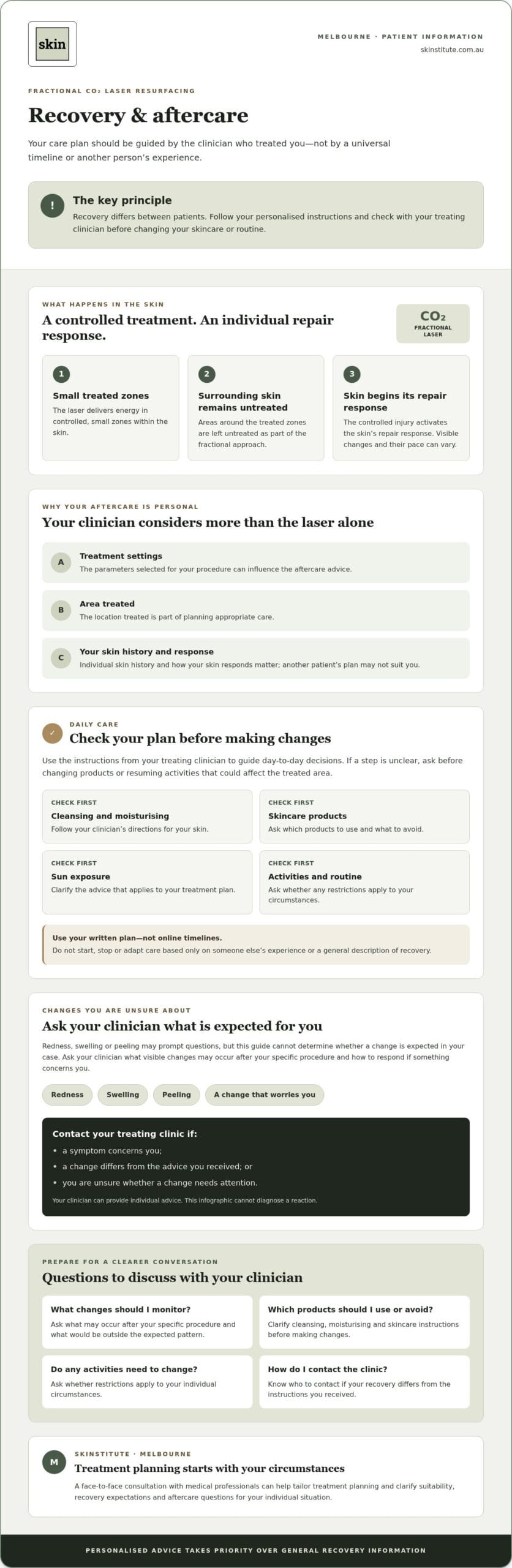
Aftercare for fractional laser treatment is the clinician-directed care that supports your skin as it responds to treatment and repairs. It is not simply a return to your usual skincare routine. Your plan should reflect the procedure, the area treated and your clinician’s assessment of your skin.
General online guidance can explain broad principles, but it cannot account for your treatment settings, medical and skin history, or individual response. Follow the instructions from the practitioner who treated you. If you are unsure about a step, check with them before changing products or resuming activities that could affect the treated area.
What fractional laser treatment does to the skin
Fractional CO2 laser treatment delivers energy in controlled, small zones within the skin, leaving surrounding areas untreated. These zones create a controlled injury that activates the skin’s repair response. Visible changes may occur as treated skin heals, but their pattern and pace vary. For more context, read Skinstitute’s fractional CO2 laser resurfacing clinical guide. General background on skin rejuvenation can also explain the principles of light-based treatment, but it does not replace clinical advice.
Why aftercare varies between patients
The clinician’s treatment settings and the area treated influence how the procedure is planned and what care may be appropriate afterwards. Your skin history and individual response matter too, so another patient’s instructions may not apply to you. Ask your practitioner which products to use, what to avoid and whether any restrictions apply to your circumstances.
Before treatment, find out how to contact the clinic with questions and which changes should prompt you to seek advice. After treatment, refer to your written plan rather than adding products or adapting someone else’s routine. If your instructions are unclear or do not seem to fit what you are experiencing, contact your treating clinician.
Fractional laser recovery stages and changes to discuss with your clinician
Recovery varies between patients and treatment plans, so your treating clinician’s advice takes priority over general timelines or online descriptions. Fractional laser treatment initiates a repair response in treated skin, but the visible course of healing is not identical for everyone. Much like the individualised approaches used by dedicated wound care providers such as Healix360 to support tissue healing, post-procedure recovery must be tailored to how your own skin responds. General information can offer context, but it cannot determine whether a particular change is expected in your case.
What changes may occur as treated skin heals?
Ask your clinician which visible changes may occur after your specific procedure, how they may develop and what would be outside the expected pattern. Assess changes in the context of your treatment and individual response, not against another person’s photographs or recovery account.
Before treatment, ask what to monitor and how to describe any concerns. If a change worries you, differs from your instructions or develops in a way you did not expect, contact your treating clinic for individual advice. This article cannot diagnose a reaction. Memorial Sloan Kettering Cancer Center’s post-treatment skin care information offers additional context, but it does not replace the plan from your own clinician.
Why recovery timing is not identical for everyone
Recovery can be influenced by the treatment parameters selected by the clinician, the area treated and individual skin response. Skin history may also be relevant when your practitioner plans treatment and discusses healing. A broad timeline cannot reliably confirm whether your own progress is on track.
Use the follow-up advice and contact details you were given rather than waiting for a general milestone. If a change differs from your clinician’s instructions, or you are unsure whether it needs attention, ask the treating clinic. Do not start, stop or adapt care based solely on a timeline or someone else’s experience.
If you are considering fractional CO2 treatment in Melbourne, a discussion with Skinstitute can help you clarify how your treatment plan relates to recovery expectations and follow-up questions.
Daily skin care after fractional laser: follow a personalised plan
Use your treating clinician’s instructions to guide each skincare decision. The appropriate cleansing method, moisturiser and sun-protection approach can depend on your treatment and skin response. A routine that suited someone else may not be right for you. If written guidance is unclear, confirm it with the clinic before changing your routine.
A practical approach is to read your aftercare instructions, check what they say about each step and ask before introducing anything they do not cover. Familiar products are not automatically suitable for treated skin. Aftercare for fractional laser treatment should follow your clinician’s advice, not a generic product list.
Cleansing and moisturising treated skin
Follow your clinician’s directions on when to begin cleansing and how to do it. Use only the cleansing method and moisturising products they have approved for your circumstances. If your plan does not specify a product, check before applying it. Ask for advice before restarting active skincare products, even if they were part of your usual routine before treatment.
Sun protection and returning to usual activities
Ask your clinician how to manage sun exposure while your skin recovers, including which protective measures are appropriate at each stage. Do not assume a product or activity is suitable just because it is part of your usual routine. Check with the clinic before wearing makeup, exercising or resuming activities that could irritate the treated area, and follow any individual restrictions you have been given.
Use this checklist to keep decisions aligned with your treatment plan:
- Clinician-approved care: Follow the specified timing and method for cleansing, moisturising and sun protection. Use only products your treating clinician has approved.
- Check before resuming: Ask when to restart active skincare, wear makeup, exercise or return to activities that may irritate treated skin.
- Avoid unapproved changes: Do not add, substitute or restart products based on general online advice or another person’s experience. Confirm anything not covered in your instructions with your treating clinician.
When to contact a clinician after fractional laser treatment
Knowing who to contact is part of a safe recovery plan. This article cannot diagnose a reaction or determine whether a particular change is expected for your treatment. Your treating clinician knows the procedure and your skin history, so follow the clinic’s instructions and contact arrangements instead of relying on a general online symptom list.
If a symptom concerns you, is worsening, or differs from the instructions you received, seek prompt clinical advice. Do not wait for it to match an online description or assume it is harmless without an individual assessment. If you believe you need urgent medical attention, seek appropriate urgent or emergency medical care rather than relying on the treating clinic as an emergency service.
Which symptoms should prompt a call to the treating clinic?
The symptoms that need timely attention can depend on your treatment and clinical circumstances. Ask Skinstitute’s clinical team to explain the warning signs and urgency guidance for your procedure. Without that individual advice, it would not be appropriate to label particular symptoms as expected, harmless or a complication.
Before treatment, ask which changes are expected in your case, which should prompt a call and how quickly you should seek advice. Keep those instructions accessible. If what you experience concerns you or does not fit the plan, contact the treating clinic, even if you are unsure how serious it is. An online article cannot make that judgement for you.
What information to provide when seeking advice
A clear account can help the clinical team understand your concern and advise on next steps. When you contact them, be ready to describe:
- the date of your fractional laser treatment and the area treated
- what you have noticed and when it began
- whether it has changed, improved or worsened
- the aftercare instructions you received and any steps you have taken in response
Describe what you can observe without trying to diagnose the cause. If you are unsure whether a change is significant, say so. Follow the advice you receive and ask for clarification if you are unsure what to do next. If your concern feels urgent or is rapidly worsening, seek appropriate medical care without waiting for an online response or assuming the clinic provides emergency services.
If you are considering fractional CO2 treatment and want to understand how aftercare for fractional laser treatment is discussed during planning, contact Skinstitute about fractional CO2 treatment.
Planning fractional laser aftercare with Skinstitute in Melbourne
Aftercare planning starts before treatment. A face-to-face assessment gives the clinical team an opportunity to consider your skin and treatment goals, discuss suitability and explain what recovery may involve for the proposed approach. You can also raise relevant skin history and ask how your individual aftercare instructions will be provided.
Skinstitute has over 26 years of experience in Melbourne’s aesthetic sector and has trialled different resurfacing lasers. This experience provides context for its clinical approach, but it cannot guarantee a particular result or recovery. Your aftercare for fractional laser treatment should be based on your assessment and treatment plan, not a standard checklist or another patient’s experience. For broader context, see the Melbourne medical-grade aesthetic treatment guide.
Questions to ask before treatment
Before proceeding, make sure you understand the practical details of your plan. Consider asking:
- Which recovery changes may be expected with the proposed treatment, and which should prompt me to seek advice?
- When and how should I cleanse and moisturise, and which skincare products should I avoid or check before restarting?
- What sun-protection advice should I follow, and when can I resume makeup, exercise and other usual activities?
- How should I contact the treating team if I have a recovery concern, and what information will help them advise me?
Clarify any instructions you are unsure about before leaving the clinic. Understanding how to follow your plan and how to ask for guidance if your recovery differs from expectations can help you make informed decisions after treatment.
How personalised aftercare supports informed recovery
Individual aftercare instructions can reflect the clinical assessment, treatment area and planned treatment parameters. They should also clarify which products and activities are suitable for your circumstances. General online information may help you prepare questions, but it cannot replace advice from the clinician who assessed and treated you. If your instructions are unclear or your symptoms concern you, ask the treating team for guidance rather than relying on a generic timeline.
If you are considering fractional CO2 treatment in Melbourne, you can discuss fractional CO2 treatment with Skinstitute and ask how assessment, recovery expectations and individual aftercare are addressed.
Plan your recovery with informed clinical guidance
Aftercare for fractional laser treatment is not a universal skincare routine. Your clinician’s instructions should reflect the treatment plan and your individual skin response. Follow their advice about cleansing, moisturising, sun protection and returning to usual activities. Contact your treating clinic if symptoms concern you or differ from the guidance provided.
A face-to-face assessment can help clarify suitability, recovery expectations and the questions to ask before treatment. At Skinstitute, treatment plans are tailored following consultation with medical professionals, including a nurse and doctor. The clinic brings over 26 years of clinical experience in Melbourne, which provides context for its approach but does not guarantee a particular outcome.
If you are considering fractional CO2 laser treatment, discuss fractional CO2 laser treatment with Skinstitute and ask how your individual aftercare will be planned. With clear instructions and a direct way to seek advice, you can approach recovery with greater confidence.
Frequently Asked Questions
How long does recovery take after fractional laser treatment?
Recovery time varies according to the treatment approach, area treated and your individual skin response, so there is no single timeline that applies to everyone. Your treating clinician should explain what to expect for your specific plan and when to seek advice. Follow their instructions instead of comparing your progress with someone else’s experience. Contact the clinic if your recovery differs from the guidance you received or a change concerns you.
What should I put on my skin after fractional laser treatment?
Use only the products and care your treating clinician has approved for your skin and treatment plan. Ask when and how to cleanse, what moisturising approach to use, and whether any existing products should be paused. Do not assume a familiar product is suitable for treated skin. Check before adding new products or restarting active skincare. Aftercare for fractional laser treatment is individual, so general online product recommendations should not replace your clinician’s instructions.
Can I wear makeup after fractional laser treatment?
Ask your treating clinician when makeup is appropriate for your recovery. There is no universal timeframe for every treatment. The treated skin may need specific care, so applying products before your clinician says they are suitable could conflict with your plan. Confirm whether makeup can be used, which products are appropriate and how to apply or remove them. If you are unsure, check with the clinic first.
Is redness or swelling normal after fractional laser treatment?
Redness or swelling can occur after laser treatment, but that does not mean either change is expected or harmless for every patient. Your clinician should explain which changes may occur with your treatment and what would warrant review. Do not use a general online description to diagnose your skin. Contact your treating clinic if redness or swelling concerns you, worsens or differs from the instructions you received, so your situation can be assessed individually.
When can I go back to my usual skincare routine after fractional laser?
Resume your usual skincare only when your treating clinician advises that it is appropriate. Timing can depend on your treatment plan and how your skin responds, so a fixed schedule may not suit you. Ask specifically about products you used before treatment, including active skincare, and whether they should be restarted or avoided. If your instructions do not mention a product, check with the clinic before using it on treated skin.
What symptoms should I report after fractional laser treatment?
Contact your treating clinic if a symptom concerns you, is worsening or differs from the recovery instructions you received. The signs that need review can depend on your treatment and individual circumstances, so do not rely on an online list to decide that a change is harmless. When seeking advice, describe what you noticed, when it began and how it has changed. For urgent medical concerns, seek appropriate urgent or emergency care.
Can I go in the sun after fractional laser treatment?
Follow your clinician’s sun-protection instructions during recovery and ask which measures suit your treatment and skin. Do not assume usual sun exposure or a familiar sun-protection product is appropriate for treated skin without checking. Your clinician can advise how to manage exposure and when your approach may change. If you are planning outdoor activities and are unsure how to protect the treated area, contact the treating clinic for individual guidance.