Exosomes in Medical Aesthetics: A Clinical Reference Guide to Regenerative Signalling
June 5, 2026
Clinical FAQ: Understanding HIFU Treatment for Structural Skin Lifting
June 6, 2026
Approximately 30% of Australian adults live with the visible and physical impacts of vascular concerns, yet many remain unaware that these fine red or purple clusters are often more than a surface-level cosmetic issue. In the Melbourne climate, where skin exposure is frequent, the self-consciousness associated with telangiectasia can be significant. You may feel uncertain about the distinction between aesthetic flaws and medical vascular health, or perhaps you’re concerned about the safety protocols involved in modern vein treatments. Identifying the best clinic for spider vein removal Melbourne involves looking past marketing claims to find a practitioner who operates with clinical precision and technical authority.
We understand that achieving a clear, even skin tone requires a professional medical assessment rather than a one-size-fits-all approach. This guide provides a detailed framework for evaluating clinical standards, focusing on evidence-based treatments like sclerotherapy and the necessity of diagnostic imaging. You’ll learn how the latest AHPRA regulations, effective as of September 2025, protect your safety and what specific qualifications you should look for in a Melbourne vascular specialist to ensure minimal discomfort and high-quality results.
Key Takeaways
- Understand the physiological distinction between telangiectasia and reticular veins to better navigate the specific vascular pathologies common in the Australian climate.
- Learn why sclerotherapy is considered the clinical gold standard for leg veins by inducing controlled endovascular fibrosis for permanent vessel occlusion.
- Identify the specific diagnostic criteria and technological standards required to select the best clinic for spider vein removal Melbourne, ensuring your chosen practitioner prioritises clinical efficacy over surface-level laser treatments.
- Discover the essential role of diagnostic imaging, such as transillumination or ultrasound, in identifying the underlying feeder veins that must be addressed for long-term results.
- Evaluate the benefits of an established clinical approach, such as Skinstitute’s 26-year history of medical-grade protocols, to achieve optimal vascular rejuvenation and safety.
Understanding Spider Veins and the Melbourne Clinical Landscape
Australia’s high UV index and the active, outdoor lifestyle of Melbourne residents contribute significantly to the prevalence of vascular concerns. While approximately 25 to 30% of Australian adults are affected by varicose veins, a significantly higher percentage experience the fine, web-like clusters known as spider veins. These vascular pathologies aren’t merely a byproduct of time; they represent specific physiological changes within the circulatory system. Patients seeking the best clinic for spider vein removal melbourne often do so because they recognise that retail beauty clinics lack the diagnostic depth required to treat these conditions at their source.
Understanding the distinction between telangiectasia and reticular veins is essential for effective treatment. Telangiectasia refers to the smallest visible vessels, often red or pink, while reticular veins are slightly deeper, larger, and typically appear blue or green. While many view these as a purely cosmetic nuisance, they can sometimes be symptomatic of underlying venous insufficiency. A clinical environment provides the necessary medical-grade assessment to determine if these visible vessels are isolated or linked to a broader vascular issue.
The Anatomy of a Spider Vein
Spider veins occur when tiny capillaries near the skin’s surface become permanently dilated. This process is frequently driven by genetic predisposition, hormonal fluctuations during pregnancy, or prolonged periods of standing. Because these vessels are located within the superficial layers of the dermis, they’re highly visible against the surrounding tissue. Surface-level creams and non-medical treatments fail because they cannot penetrate the skin barrier to reach the vessel wall. Achieving a clear result requires a medical intervention like Sclerotherapy, which targets the internal lining of the vessel to induce a controlled biological closure.
Vascular Concerns vs. General Skin Ageing
The presence of vascular clusters often accelerates the perceived ageing of the skin, creating a mottled, uneven complexion that can be difficult to conceal. These vessels don’t resolve on their own; instead, they often expand as the surrounding skin loses its structural integrity. It’s vital to distinguish between general skin ageing and symptomatic venous disease through a professional clinical assessment. Telangiectasia is the permanent dilation of small blood vessels. By identifying these issues early, practitioners at the best clinic for spider vein removal melbourne can ensure that treatments are both safe and medically appropriate for your specific vascular profile.
Sclerotherapy: The Clinical Gold Standard for Spider Vein Removal
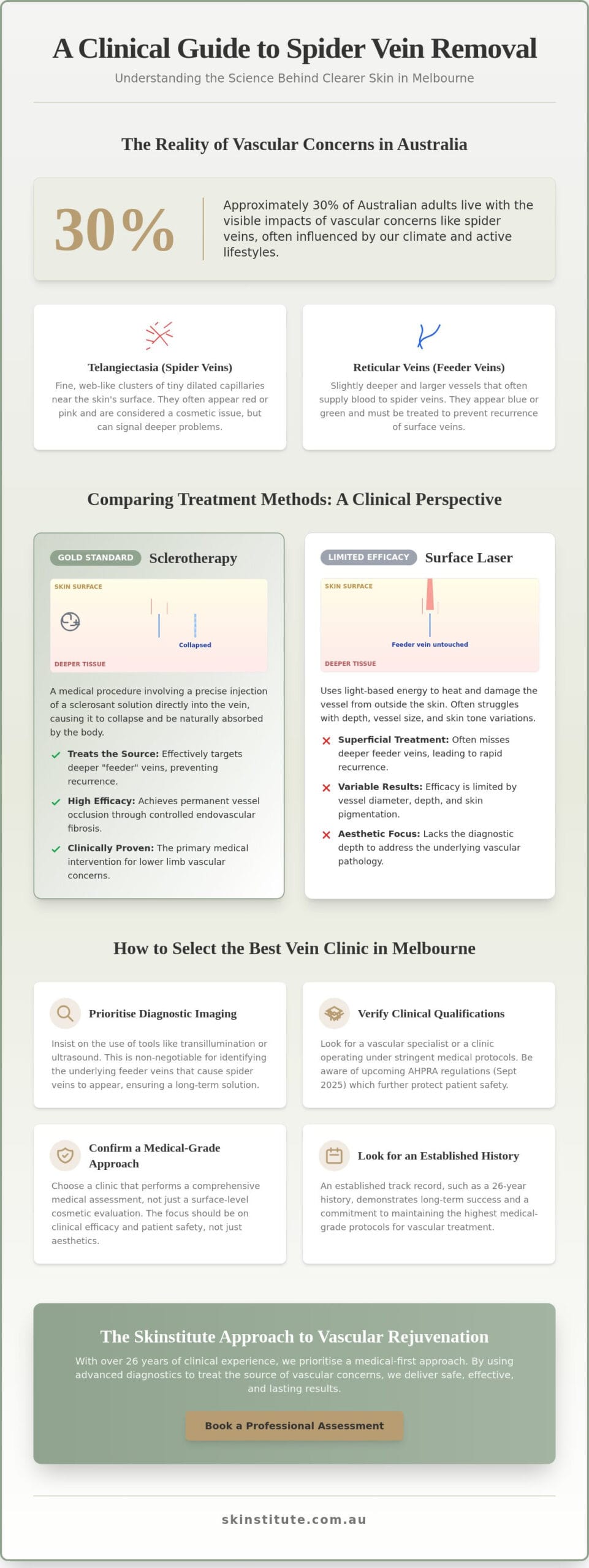
Sclerotherapy remains the primary medical intervention for lower limb vascular concerns because of its high efficacy in achieving permanent vessel occlusion. Unlike light-based therapies that often struggle with depth and vessel diameter, this method employs a chemical agent to achieve controlled endovascular fibrosis. The process involves the precise delivery of a sclerosant solution directly into the lumen of the targeted vessel. This solution displaces the blood and interacts with the endothelial lining, causing it to collapse and eventually transform into a small track of fibrous tissue. Over several weeks, the body naturally resorbs this tissue, leading to a significant clearance of the visible vein.
The technical superiority of sclerotherapy lies in its ability to address “feeder” veins. These are the slightly deeper, often blue-tinged reticular vessels that supply blood to the smaller surface-level clusters. If a practitioner only treats the visible surface veins with a laser, the underlying feeder vessels will quickly cause the spider veins to reappear. The best clinic for spider vein removal melbourne will prioritise this anatomical approach, using diagnostic aids to ensure the root cause of the vascular cluster is neutralised. This methodology provides a more comprehensive result than surface-level aesthetic treatments.
The Science of Sclerosants
Modern clinical practice utilises specialised detergent-based solutions that are highly effective yet gentle on the surrounding tissue. The concentration of these sclerosants must be meticulously tailored to the specific diameter of the vessel being treated. According to this medical overview of spider veins, using the incorrect concentration can lead to either an ineffective treatment or unnecessary skin irritation. A seasoned practitioner understands the chemistry of these agents, adjusting the dosage to ensure the vessel lining is sufficiently irritated to trigger closure without affecting the healthy circulatory system.
The Procedure Experience
A typical session in a professional clinical setting begins with the patient in a comfortable, supine position. The practitioner uses high-magnification loops or a transillumination device to map the vascular network. Micro-injections are then performed using the finest medical-grade needles, which most patients describe as a minor stinging sensation similar to a mosquito bite. Because the procedure is minimally invasive, there’s no requirement for local anaesthesia or significant downtime.
Following the injections, the application of medical-grade compression is a non-negotiable step in the clinical protocol. Compression stockings maintain constant pressure on the treated vessels, ensuring the walls remain in contact while the internal bond forms. This reduces the likelihood of blood re-entering the vessel and minimises the risk of temporary pigmentation or staining. If you are seeking a clinical assessment of your vascular health, the practitioners at Skinstitute provide detailed consultations focused on evidence-based results and technical proficiency.
By choosing the best clinic for spider vein removal melbourne, patients benefit from a standardised medical approach that values safety and long-term vascular health. The focus remains on achieving even skin tone through biological resolution rather than temporary concealment.
Comparing Treatment Modalities: Sclerotherapy vs. Surface Laser
Selecting the best clinic for spider vein removal melbourne requires a technical understanding of why certain technologies excel in specific anatomical regions. While surface lasers and sclerotherapy both aim to eliminate visible vessels, their mechanisms of action are fundamentally different. Surface lasers utilise selective photothermolysis, where specific wavelengths of light are absorbed by haemoglobin to heat and destroy the vessel wall. This approach is often included in broader Spider vein treatment options, yet its efficacy is highly dependent on the depth and diameter of the target vessel. If the light energy cannot reach the vessel’s full depth, the treatment will be incomplete, leading to rapid recurrence.
When Laser is the Appropriate Choice
Vascular lasers are most effective for delicate facial telangiectasia, where vessels are exceptionally fine and sit within the most superficial layers of the dermis. These capillaries often lack the high internal pressure found in the lower limbs, making them more susceptible to light-based closure. For patients addressing comprehensive skin ageing, integrating vascular laser with fractional CO2 laser resurfacing Melbourne can refine the skin’s texture while simultaneously neutralising redness. Downtime for facial laser is typically minimal, often involving temporary erythema or mild swelling that resolves within several days, allowing for a quick return to daily activities.
Why Sclerotherapy Dominates for Leg Veins
Sclerotherapy remains the clinical standard for leg veins because it addresses the unique hydrostatic pressure dynamics of the lower body. Vessels in the legs are subject to significant gravity-induced pressure, which often causes them to be larger and deeper than those on the face. A laser’s light energy frequently dissipates before it can deliver a lethal thermal dose to these deeper vessels. In contrast, an injectable sclerosant ensures total contact with the internal endothelial lining. This direct chemical interaction provides a more durable closure for the larger reticular networks that frequently supply surface spider veins, ensuring the biological resolution is permanent.
The risk profiles also differ significantly between these modalities. Lasers carry a higher risk of superficial pigment changes if the skin’s melanin absorbs too much energy, particularly in patients with darker skin types. Sclerotherapy carries a risk of “staining” or haemosiderin deposition; this is a temporary brown discolouration caused by trapped iron pigments from the blood. This staining is a natural biological response to the breakdown of the vessel and usually resolves as the body clears the debris over several months. A multi-modality approach, guided by an experienced practitioner at the best clinic for spider vein removal melbourne, ensures that the most appropriate technology is matched to the specific vascular pathology, balancing the need for clearance with the preservation of skin integrity.
Criteria for Selecting the Best Vein Removal Clinic in Melbourne
Identifying the best clinic for spider vein removal melbourne involves a rigorous evaluation of technical proficiency and clinical infrastructure. A medical-grade environment is essential for these procedures, as vascular interventions require a level of sterility and diagnostic precision that retail shopfronts cannot provide. A practitioner must possess an exhaustive understanding of the circulatory system to ensure that every treatment is safe and biologically effective. This expertise allows for the identification of specific vascular pathologies that might be overlooked in a less specialised setting.
Diagnostic capabilities are a primary indicator of clinical quality. A reputable clinic will utilise advanced tools such as transillumination or ultrasound to map the vascular network before any intervention begins. These technologies allow the practitioner to identify the underlying pressure points and feeder vessels that supply the surface-level spider veins. Without this diagnostic step, treatments often fail to achieve long-term clearance because the root cause remains unaddressed. This level of technical oversight is what distinguishes a medical intervention from a purely cosmetic one.
Practitioner Qualifications and Experience
When selecting a provider, look for a clinic with a multi-decade history in aesthetic medicine. This established heritage suggests a stable clinical practice and a deep repository of technical experience in managing various skin types and vascular conditions. A professional consultation is a critical prerequisite for any procedure. This is your opportunity to ask specific questions regarding the expected clinical outcomes and the potential for temporary side effects like haemosiderin staining. While you should inquire about the general spider vein treatment cost, remember that a transparent clinic will provide a personalised quote based on your specific vascular profile and the projected number of sessions required.
Clinical Standards and Safety Protocols
Adherence to Australian health regulations is a non-negotiable requirement for patient safety. As of September 2, 2025, new AHPRA guidelines have strengthened the safety standards for non-surgical cosmetic procedures, which include sclerotherapy. These regulations mandate stricter advertising rules and more comprehensive practitioner training to protect the public. A clinical environment prioritises these infection control standards, ensuring that every micro-injection is performed within a sterile field using medical-grade equipment.
A high-quality clinic will also provide a structured aftercare plan and follow-up appointments to monitor the biological resorption of the treated vessels. Managing patient expectations is a core part of the clinical process; most vascular concerns require a minimum of two sessions to achieve optimal clearance. For those seeking a professional medical assessment grounded in technical mastery, book a consultation with Skinstitute to discuss your vascular rejuvenation plan.
The Skinstitute Approach to Vascular Rejuvenation
Skinstitute has maintained a steady presence in Melbourne’s medical aesthetic landscape for 26 years. This extensive heritage reflects a deep commitment to evidence-based results and technical mastery. We recognise that identifying the best clinic for spider vein removal melbourne requires more than just finding a provider; it requires a partner who understands the complex interplay between vascular pathology and dermatological health. In the Melbourne climate, where UV exposure can compromise skin elasticity and exacerbate vascular visibility, a professional approach that considers these environmental factors is essential for maintaining clear, even skin tone.
Our protocols for sclerotherapy are grounded in established scientific principles. We don’t view the closure of a vessel as an isolated aesthetic event. By addressing the skin’s overall structural integrity, we ensure that the results are both aesthetically pleasing and biologically sound. The integration of Rejuran into post-treatment regimes represents our forward-thinking approach to skin science. These polynucleotide bio-stimulators work at a cellular level to enhance tissue repair and promote dermal thickening, providing a robust foundation for the skin after the body has naturally resorbed the treated vessels.
Why Clinical Expertise Matters
A biological understanding of the skin is vital for preventing common complications such as telangiectatic matting, which is the appearance of clusters of even smaller veins around a treated site due to altered pressure dynamics. Our practitioners utilise a methodical injection technique that prioritises the correct concentration of sclerosant and precise pressure application tailored to each vessel’s specific diameter. This focus on technical proficiency ensures that we achieve long-term vascular occlusion rather than temporary surface improvements. By operating within a sterile, medical-grade environment, we maintain the highest safety standards for every patient, focusing on long-term health rather than quick cosmetic fixes.
Your Journey at Skinstitute
Every patient journey begins with a meticulous clinical analysis of the vascular network. We assess the depth, diameter, and pressure dynamics of the vessels to create a tailored intervention plan that addresses your specific concerns. We utilise medical-grade diagnostic technology, including transillumination, to ensure every underlying “feeder” vessel is identified and neutralised. Following the procedure, you receive specific post-care instructions, including detailed guidance on compression therapy, to support the natural healing process and maintain the integrity of the results. We invite you to experience the quiet confidence that comes from expert clinical care in a professional environment.
Advancing Your Vascular Health with Clinical Precision
The path to clear skin and restored vascular health involves a transition from surface-level aesthetics to rigorous medical methodology. By prioritising diagnostic mapping and evidence-based sclerotherapy, you ensure that the root cause of telangiectasia is addressed rather than merely concealed. Identifying the best clinic for spider vein removal melbourne means selecting a partner that values safety and biological efficacy above all else. At Skinstitute, our specialist practitioners leverage over 26 years of clinical experience and medical-grade aesthetic technology to deliver precise, long-term results.
We believe that professional transparency and technical proficiency are the foundations of successful vascular rejuvenation. Every procedure we perform is grounded in a deep understanding of anatomy and the latest Australian health regulations. If you’re ready to move forward with a personalised treatment plan that prioritises your long-term skin integrity, we invite you to Book a Clinical Assessment at Skinstitute Melbourne. Achieving an even, healthy skin tone is a gradual process of biological restoration, and we’re here to guide you through every clinical stage with quiet confidence and expert care.
Frequently Asked Questions
Is sclerotherapy for spider veins permanent?
Sclerotherapy achieves permanent occlusion of the targeted vessel by inducing endovascular fibrosis. Once the endothelial lining is irritated and the vessel collapses, the body naturally resorbs the resulting fibrous track over several weeks. While the treated veins cannot reopen, it’s important to understand that this procedure does not prevent the biological formation of new spider veins in the future due to genetics or lifestyle factors.
What is the typical spider vein treatment cost in Melbourne?
The total expense for vascular clearance varies based on the extent of the condition and the specific number of sessions required. Industry data from 2026 indicates that initial consultations with a duplex ultrasound scan in Melbourne typically range from $270 to $300; these often attract a Medicare rebate. Treatment sessions for leg veins are generally quoted per session, and a formal clinical assessment is necessary to provide an accurate personalised quote.
How many sessions of sclerotherapy will I need for clear skin?
Most patients require a minimum of two to four sessions to achieve optimal vascular clearance. The exact number of treatments depends on the density of the vascular network and the presence of underlying feeder veins. During your initial analysis at the best clinic for spider vein removal melbourne, a practitioner will establish a structured timeline to monitor the gradual resorption process and determine if subsequent sessions are required for your specific profile.
Can I walk immediately after spider vein removal treatment?
Immediate mobilisation is a critical component of the post-procedural protocol. Walking for approximately 20 to 30 minutes directly after the session promotes healthy blood circulation and assists the sclerosant in interacting effectively with the vessel walls. While regular daily activities can be resumed immediately, we advise avoiding high-impact exercise or heavy lifting for several days to ensure the treated vessels remain closed during the initial healing phase.
What are the potential side effects of sclerotherapy?
Clinical side effects are generally mild and temporary. Patients may experience localised bruising, swelling, or a minor stinging sensation at the injection sites. A common biological response is haemosiderin staining, which appears as a faint brown discolouration while the body processes the trapped iron pigments. This typically resolves over several months. Less frequent risks include telangiectatic matting, which highlights the importance of seeking an experienced practitioner for your treatment.
Is laser or sclerotherapy better for spider veins on the legs?
Sclerotherapy is considered the clinical gold standard for lower limb vascular concerns. Leg veins are subject to higher hydrostatic pressure and are often deeper than facial capillaries; this makes them less responsive to surface-level laser energy. By injecting a sclerosant directly into the lumen, the practitioner ensures total contact with the vessel lining. This results in a more durable and comprehensive closure compared to light-based therapies for leg vessels.
Do I need to wear compression stockings after the procedure?
The application of medical-grade compression is a mandatory requirement following sclerotherapy. Stockings maintain constant external pressure on the treated vessels; this ensures the irritated walls remain in contact to form a secure bond. This protocol reduces the risk of blood re-entering the vessel and minimises the incidence of temporary pigmentation. Most clinical guidelines recommend wearing compression for seven to fourteen days depending on the diameter of the treated vessels.
Can spider veins be a sign of a more serious health issue?
Visible spider veins can sometimes indicate underlying chronic venous insufficiency. While many cases are purely aesthetic, they may be linked to deeper valvular dysfunction that requires medical attention. A professional assessment at the best clinic for spider vein removal melbourne involves evaluating these surface vessels within the context of your broader vascular health. This ensures that any symptomatic venous disease is identified and managed using appropriate clinical standards.