How to Get Rid of Marionette Lines: A Clinical Guide to Lower Facial Rejuvenation
June 25, 2026
Clinical Frown Line Reduction in Melbourne: A Medical-Grade Explainer
June 27, 2026
Achieving a smooth forehead doesn’t require sacrificing the ability to express emotion, yet many patients mistakenly prioritise total muscle relaxation over the structural integrity of the brow. You’ve likely noticed that a one-size-fits-all approach often leads to the heavy, lowered brow position known as ptosis, which detracts from a refreshed appearance. It’s understandable to feel hesitant when choosing a forehead line treatment in Melbourne, particularly when trying to distinguish between the needs of dynamic expression lines and deep-seated static creases.
This guide provides a professional framework to help you understand your unique upper-face anatomy and the medical-grade options available to address it. We’ll explore how clinical interventions, ranging from prescription solutions and PDO threads to advanced modalities like Fractional CO2 and Rejuran, interact with your skin’s biological processes. By the end of this article, you’ll have the technical insight required to consult with a practitioner and develop a strategy that restores facial harmony while maintaining natural, sophisticated movement. We’ll examine the physiological differences between various crease types and the role of collagen induction in long-term skin health.
Key Takeaways
- Distinguish between dynamic expression lines and fixed static creases to ensure your treatment plan addresses the specific physiological cause of dermal folding.
- Understand why a comprehensive brow assessment is essential for a safe forehead line treatment in Melbourne to prevent unintended brow ptosis or a heavy aesthetic outcome.
- Evaluate the functional differences between prescription injectables, PDO thread lifting, and laser resurfacing to determine which modality best supports your skin’s structural requirements.
- Identify the clinical criteria for selecting a high-standard aesthetic centre, focusing on the value of practitioner experience and evidence-based multi-modality protocols.
Understanding Forehead Lines: A Clinical Perspective on Upper Face Ageing
The forehead serves as a primary indicator of facial expression and, consequently, is one of the first areas to exhibit visible signs of physiological ageing. Effective forehead line treatment in Melbourne requires a nuanced understanding of how skin quality and muscular activity interact over time. As the dermal matrix undergoes chronological and environmental changes, the once-temporary creases formed during expression begin to persist, eventually becoming permanent fixtures of the upper face.
Dynamic vs. Static Lines: Why the Distinction Matters
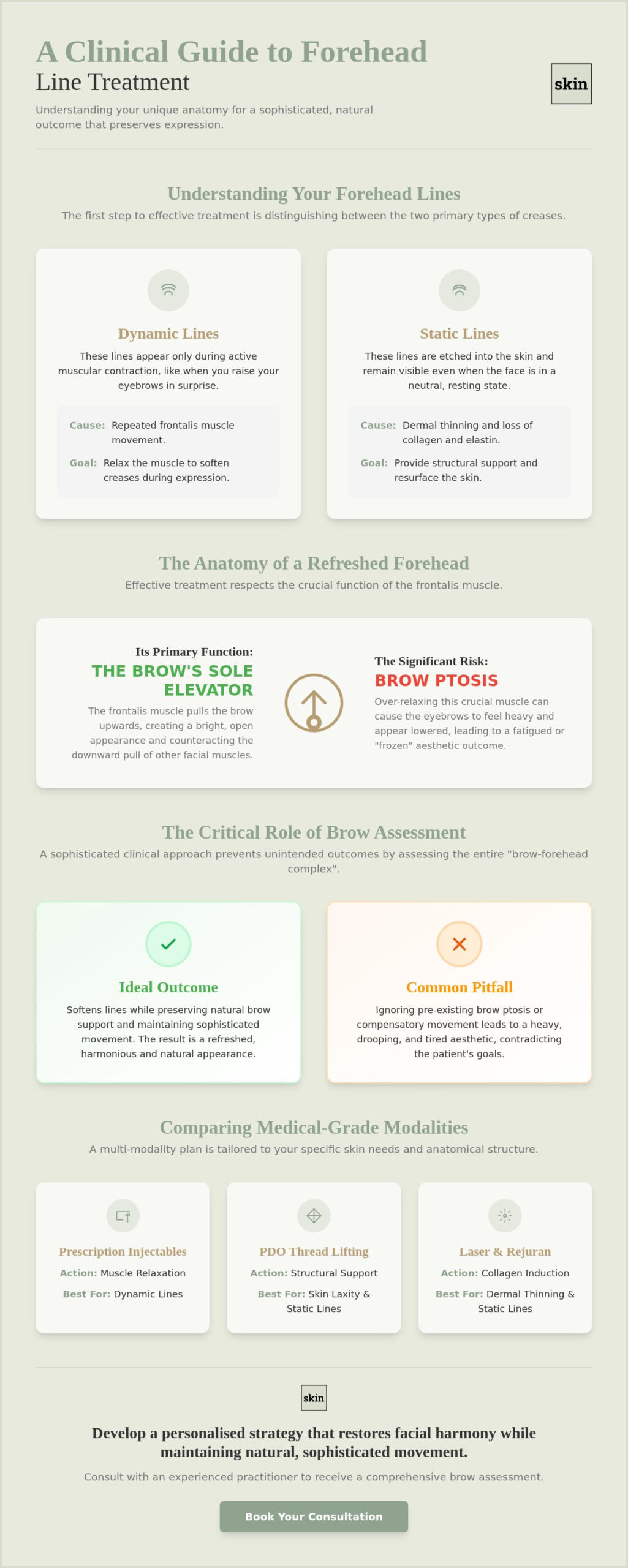
Clinically, we categorise forehead lines into two distinct phases: dynamic and static. Dynamic lines occur only during active muscular contraction, such as when you raise your eyebrows in surprise or concentration. In contrast, static lines remain visible even when the face is in a neutral, resting state. This progression from dynamic to static is fundamentally linked to Understanding Forehead Lines: A Clinical Perspective, which highlights how the depletion of collagen and elastin reduces the skin’s ability to “snap back” after movement. Treating a static crease requires a different clinical approach than treating a dynamic one, as the former often necessitates structural support or resurfacing beyond simple muscle relaxation.
The Anatomy of the Frontalis Muscle
The frontalis muscle is a broad, flat tissue that covers the forehead and acts as the sole elevator of the eyebrows. Its primary function is to pull the brow upward, counteracting the downward pull of the depressor muscles around the eyes. When seeking a forehead line treatment in Melbourne, it’s vital to recognise that over-relaxing this muscle can lead to brow ptosis, a condition where the eyebrows feel heavy or appear lowered. A sophisticated clinical approach ensures that the frontalis retains enough activity to support the brow’s position while still softening the appearance of deep furrows. Achieving this balance is a hallmark of medical-grade care, as it prevents the “frozen” look often associated with less precise techniques.
Dermal thinning also plays a significant role in this process. As we age, the fat pads beneath the skin diminish and the bone structure subtly shifts, providing less support for the overlying tissue. This loss of volume, combined with repetitive muscular action, accelerates the etching of lines into the skin surface. Consequently, a professional medical assessment is essential to determine whether a patient’s concerns stem from overactive muscles, skin laxity, or a combination of both factors. Only through a detailed anatomical review can a practitioner recommend the most appropriate clinical intervention to restore a smooth, harmonious appearance.
The Critical Role of Brow Assessment in Forehead Line Treatment
Before initiating any forehead line treatment in Melbourne, a practitioner must conduct a comprehensive assessment of the orbital and periorbital regions. The forehead does not function as an isolated unit; rather, it’s part of a complex muscular system that governs the position and movement of the eyebrows. One of the most significant risks in upper face rejuvenation is ignoring pre-existing brow ptosis, which is the clinical term for a drooping or low-set eyebrow. If the frontalis muscle is weakened without considering its structural role, the result is often a heavy, fatigued appearance that contradicts the patient’s goal of a refreshed look. This is why a professional consultation focuses on the “brow-forehead complex” rather than just the horizontal creases themselves.
Compensatory Forehead Movement
Many individuals exhibit what is known as compensatory forehead movement. This physiological response occurs when the body subconsciously recruits the frontalis muscle to assist in keeping the upper eyelids open, particularly in cases of redundant eyelid skin or mild ptosis. By immobilising these horizontal lines, the practitioner inadvertently removes the mechanical support for the eyelids, which leads to a hooded or “closed” eye appearance. For patients exhibiting high levels of compensatory movement, a practitioner might suggest exploring multi-modality protocols that prioritise skin tightening or structural support over complete muscular relaxation. This ensures the eyes remain open and bright while still addressing the texture of the forehead.
The Integrated Upper Face Approach
Achieving a balanced result involves looking at the relationship between the forehead and the glabella, which is the frown area between the eyebrows. The muscles of the frown are depressors, meaning they pull the brow down and inward. When these muscles are overactive, the forehead must work harder to pull the brow back up, leading to deeper horizontal lines. By treating the frown area, we often find that the forehead lines soften naturally as the compensatory tension is released. This integrated approach ensures facial harmony, a concept supported by research into Comparing Medical-Grade Modalities and their physiological impacts. Clinical analysis allows for a bespoke plan that balances these opposing muscle groups, ensuring the brow remains in a stable, youthful position while the skin texture is refined. This prevents the “frozen” look and maintains a sophisticated, natural aesthetic suitable for a professional environment.
Comparing Medical-Grade Modalities: Injectables, Threads, and Laser
Selecting an effective forehead line treatment in Melbourne involves choosing between several distinct medical-grade modalities, each targeting a different layer of the facial anatomy. While some patients require muscle modulation to address active creasing, others benefit more from structural reinforcement or dermal resurfacing. A clinical approach doesn’t view these treatments as mutually exclusive. Instead, we often utilise them in combination to address the muscle, the dermis, and the epidermis simultaneously, ensuring that the results are both functional and aesthetically balanced.
Prescription Injectables for Dynamic Smoothness
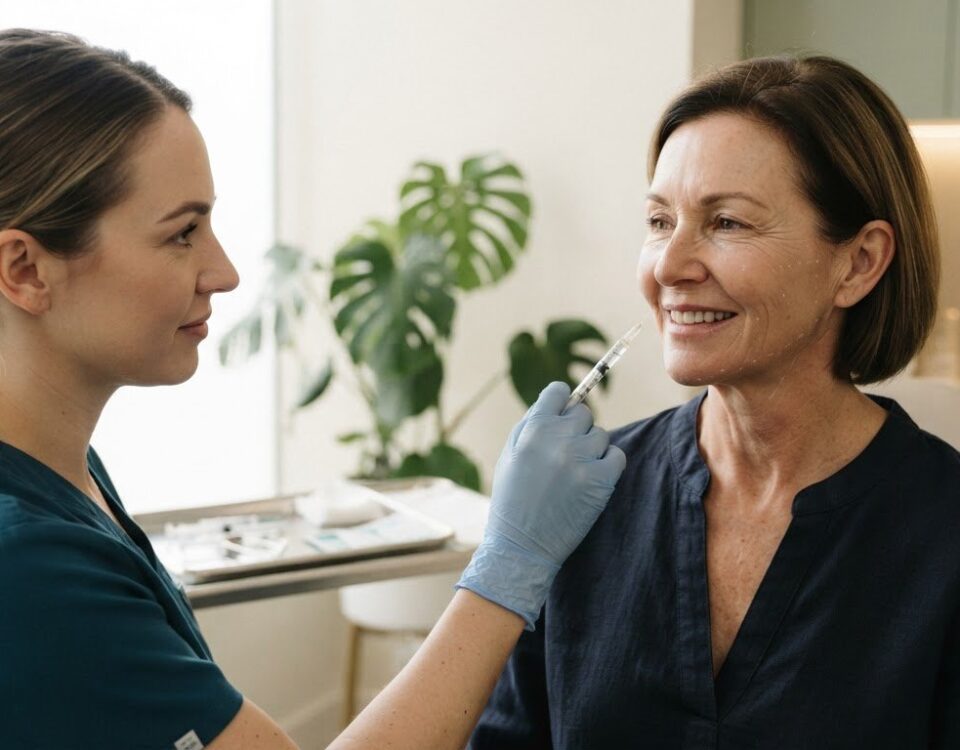
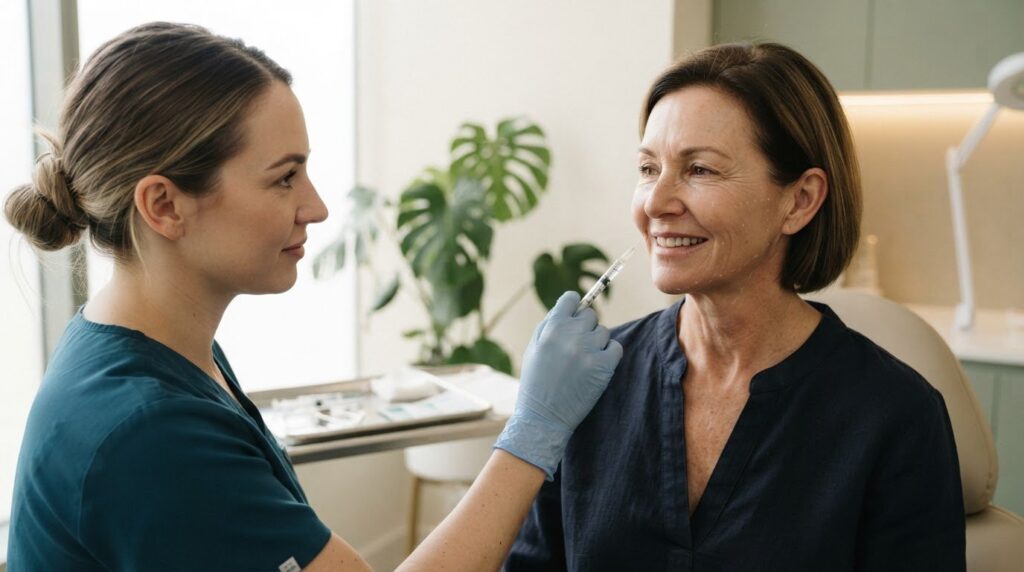
The most common entry point for upper face rejuvenation involves the use of prescription injectables. These solutions work by temporarily inhibiting the biochemical signal between the nerve ending and the frontalis muscle, effectively reducing the intensity of the muscular contractions that cause horizontal folding. This process allows the overlying skin to recover from repetitive mechanical stress. For a deeper technical overview of these protocols, patients should consult our Clinical Guide to Prescription Injectables in Melbourne. Maintenance typically requires periodic intervention, as the body gradually metabolises the product and restores full muscular function, usually over a period of three to four months.
PDO Threads and Rejuran: The Regenerative Alternative
For patients with significant skin laxity or static lines that persist even when the muscles are at rest, regenerative therapies offer a structural solution. PDO thread lifting involves the subcutaneous placement of polydioxanone sutures, which act as a physical scaffold within the dermis. As these threads slowly dissolve, they trigger a localised inflammatory response that stimulates the production of new type I and type III collagen, thickening the skin from within.
This structural improvement is often paired with the science of Rejuran, a polynucleotide-based injectable derived from salmon DNA. Rejuran works at a cellular level to repair damaged DNA and improve the physiological environment of the dermis, making it particularly effective for the thin, delicate skin of the forehead. Unlike muscle relaxants, these treatments don’t affect movement, making them ideal for individuals who prioritise dermal density and natural expression over total immobilisation.
When the concern is purely textural, fractional CO2 laser resurfacing Melbourne provides a comprehensive solution for the skin envelope. This technology creates microscopic thermal injuries in the skin, prompting a robust healing response that replaces damaged tissue with fresh, organised collagen fibres. For those requiring even faster cellular turnover, Exosomes may be integrated into the post-treatment phase. These nano-vesicles facilitate intercellular communication, delivering growth factors and signalling proteins directly to the skin cells to accelerate regeneration and enhance the overall smoothness of the forehead line treatment in Melbourne.
Selecting a Professional Cosmetic Clinic in Melbourne
Qualifications and Medical Oversight
Prescription-only treatments are medical interventions that carry inherent physiological risks if managed incorrectly. A professional clinic ensures that all procedures are performed by qualified medical professionals within a sterile, clinical environment using TGA-approved technology. This medical oversight is vital for maintaining safety standards and facilitating informed consent. Unlike retail-focused outlets, a medical-grade clinic prioritises biological outcomes over sales volume, focusing on the precise placement of products to avoid the “heavy brow” complications discussed in previous sections. Opting for discount providers often leads to poor anatomical results, necessitating corrective work that ultimately increases the long-term financial and physical cost of care.
Personalised Treatment Planning
Effective rejuvenation is never the result of a “cookie-cutter” protocol. Every patient possesses a unique skin anatomy, and a professional clinic will develop a bespoke roadmap that accounts for your specific dermal thickness, muscular strength, and bone structure. This process begins with a detailed clinical skin analysis, where the practitioner identifies the root cause of creases, whether they are dynamic, static, or a result of dermal thinning. This diagnostic accuracy ensures that the treatment targets the correct physiological layer, whether that involves muscle modulation or dermal repair.
To prepare for your first consultation, it’s helpful to document your previous aesthetic history and any specific concerns regarding facial movement. This transparency allows the practitioner to refine your plan, ensuring that the chosen forehead line treatment in Melbourne aligns with your long-term aesthetic goals. If you’re ready to begin this process with an established authority, you can book a clinical consultation at Skinstitute to receive a professional assessment of your upper face anatomy. This session ensures that you understand the mechanics and expected outcomes of every recommended procedure before proceeding with care.
The Skinstitute Approach: 26 Years of Mastery in Melbourne
Skinstitute has established itself as a definitive authority on medical-grade aesthetic care within the Melbourne community. With a 26-year history of clinical practice, the centre prioritises a sophisticated understanding of facial biomechanics over the simplistic application of products. This extensive experience is particularly relevant when considering a forehead line treatment in Melbourne, as the area requires a delicate balance between smoothing skin texture and maintaining the structural elevation of the eyebrows. Our practitioners view the forehead not as an isolated problem area, but as a functional component of the entire upper face that requires a methodical, evidence-based approach.
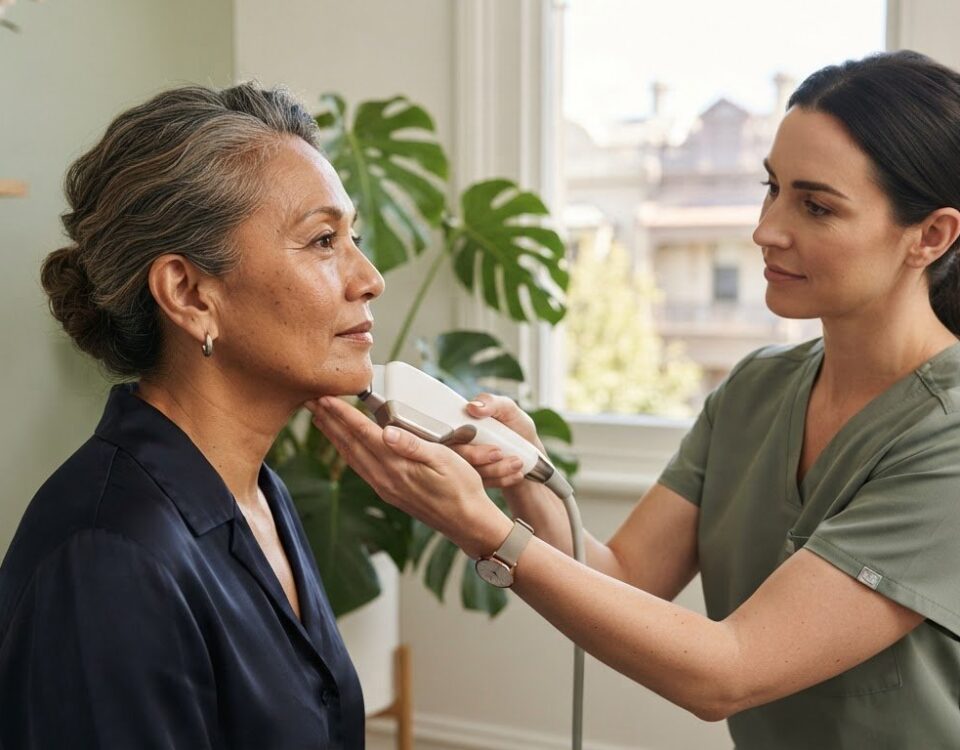
The Skinstitute philosophy revolves around a multi-modality framework that addresses the skin at various depths. Rather than relying on a single method, the clinical team draws from a suite of advanced technologies, including High Intensity Focused Ultrasound (HIFU) for deep tissue lifting and Exosomes for cellular-level skin repair. This approach ensures that we address every layer of the forehead, from the underlying muscular activity to the surface-level dermal health. By integrating regenerative therapies like Rejuran and PDO threads with traditional prescription injectables, we focus on long-term skin health and natural-looking results that respect the patient’s unique expressions. This ensures that the skin doesn’t just look smoother, but functions more healthily over time.
Why Clinical Experience Matters
In the context of upper face rejuvenation, technical mastery is the primary safeguard against undesirable outcomes. Over two decades of treating the diverse skin types of Melbourne residents has provided our practitioners with the insight to identify subtle anatomical variations that might predispose a patient to brow heaviness. This deep knowledge allows for the precise modulation of the frontalis muscle, ensuring that treatment softens lines without compromising the “brow-forehead complex” discussed earlier. Our commitment to evidence-based, medical-grade technologies means that every protocol is backed by scientific principles and a proven safety record. We avoid the trendy, fast-paced approach to aesthetics, opting instead for a methodical process that values professional integrity and patient safety.
Booking Your Forehead Line Assessment
The first step toward a more refined and harmonious appearance is a professional clinical assessment at our Melbourne facility. During this consultation, your practitioner will evaluate your skin’s structural integrity and muscular patterns to determine the most effective forehead line treatment in Melbourne for your needs. This process is instructional and transparent, designed to provide you with the clarity needed to make an informed decision about your care. We take the time to explain the biological “why” behind every recommendation, ensuring you feel respected and informed throughout the process.
If you’re ready to address forehead ageing with a clinical perspective, we invite you to start your journey with us. Our focus remains on achieving sophisticated, understated results through technical excellence and personalised care. Organise your clinical assessment at Skinstitute today.
Advancing Your Upper Face Rejuvenation Strategy
Successful rejuvenation of the upper face rests on the precise integration of anatomical knowledge and advanced dermal science. Addressing horizontal creases requires a primary focus on brow stability and a clear distinction between dynamic movement and static structural loss. By prioritising the biological health of the dermis, it’s possible to achieve a refreshed appearance that maintains full expressive capacity. Utilising regenerative technologies such as Exosomes and Rejuran allows for the restoration of skin density without the risks of over-immobilisation or brow ptosis.
When selecting a forehead line treatment in Melbourne, your choice of clinic should be guided by a commitment to evidence-based protocols and technical mastery. Skinstitute offers over 26 years of industry-leading clinical experience, specialising in medical-grade solutions that prioritise natural, anatomically correct results. Our practitioners focus on the long-term integrity of your skin, ensuring every intervention supports your overall facial harmony. Book Your Clinical Forehead Assessment at Skinstitute Melbourne to begin a professional consultation tailored to your unique physiological needs. Taking a clinical approach to your aesthetic journey ensures that your results are both sophisticated and sustainable.
Frequently Asked Questions
How long do forehead line treatments typically last?
The longevity of a treatment depends entirely on the modality utilised. Prescription injectables typically provide results for three to four months as the body gradually restores neural communication to the muscle. In contrast, structural interventions such as PDO thread lifting or Rejuran can offer improvements for six to twelve months, as these methods focus on long-term collagen induction and dermal repair rather than temporary muscle relaxation.
Will I still be able to make facial expressions after treatment?
Retaining natural movement is a primary objective of medical-grade care. By utilising precise anatomical mapping, a practitioner can soften the intensity of the frontalis muscle without causing total immobilisation. This approach ensures you can still convey emotion and maintain brow position while reducing the depth of horizontal creases. Professional clinical standards prioritise facial harmony over the “frozen” aesthetic often seen with less sophisticated techniques.
Are forehead injections painful?
Most patients experience only minimal discomfort during clinical forehead procedures. We utilise ultra-fine needles for prescription injectables, which typically result in a brief sensation similar to a minor pinch. For more intensive treatments like PDO threads or Fractional CO2, we apply high-strength topical anaesthesia to ensure the procedure is well-tolerated. Most clinical sessions are completed within fifteen to thirty minutes, and any minor sensation subsides almost immediately.
What is the difference between prescription injectables and dermal fillers for the forehead?
Prescription injectables target the underlying muscles to prevent the skin from folding during expression. Dermal fillers are designed to replace lost volume, though they are rarely the first choice for the forehead due to complex vascular anatomy. Most modern clinical protocols in Melbourne now favour regenerative treatments like Rejuran or PDO threads to address deep, static lines, as these options improve skin density without the risks associated with traditional fillers in the upper face.
How much downtime is required after a forehead line treatment in Melbourne?
Downtime varies based on the intensity of the chosen procedure. Most patients undergoing a standard forehead line treatment in Melbourne with injectables can return to their professional duties immediately, as minor swelling typically resolves within thirty minutes. However, regenerative treatments like Fractional CO2 laser or skin needling may require a recovery period of three to seven days while the epidermis undergoes the necessary physiological healing and cellular turnover.
Can I combine forehead treatments with other procedures like HIFU or skin needling?
Combining different technologies is often the most effective way to address the multiple layers of skin ageing. We frequently integrate HIFU to provide deep structural lifting with skin needling or Exosomes to improve surface texture and hydration. These multi-modality plans are carefully sequenced to ensure that one treatment does not interfere with the biological mechanism of another, allowing for a more comprehensive and durable rejuvenation result.
What are the risks of treating forehead lines if I have low eyebrows?
Patients with naturally low-set brows or heavy eyelids face a higher risk of brow ptosis if the forehead is over-treated. Since the frontalis muscle is the only elevator of the brow, reducing its activity too significantly can cause the eyebrows to drop, leading to a tired or heavy appearance. A thorough clinical assessment is essential to identify these anatomical patterns and determine if alternative treatments like PDO threads are more appropriate for your structure.
How do I know if I need injectables or laser resurfacing for my forehead?
The choice between modalities is determined by whether your lines are dynamic or static. If creases only appear during movement, prescription injectables are usually the most effective solution. However, if lines remain visible while your face is at rest, it indicates a loss of dermal structural integrity. In these cases, laser resurfacing or regenerative therapies like Rejuran are required to repair the skin matrix and thicken the dermal layer for a smoother resting appearance.