Hand Rejuvenation Treatment in Melbourne and Its Costs
October 30, 2026
Fractional CO2 Laser for Acne Scars in Melbourne: Pain and Skin Remodelling
November 1, 2026
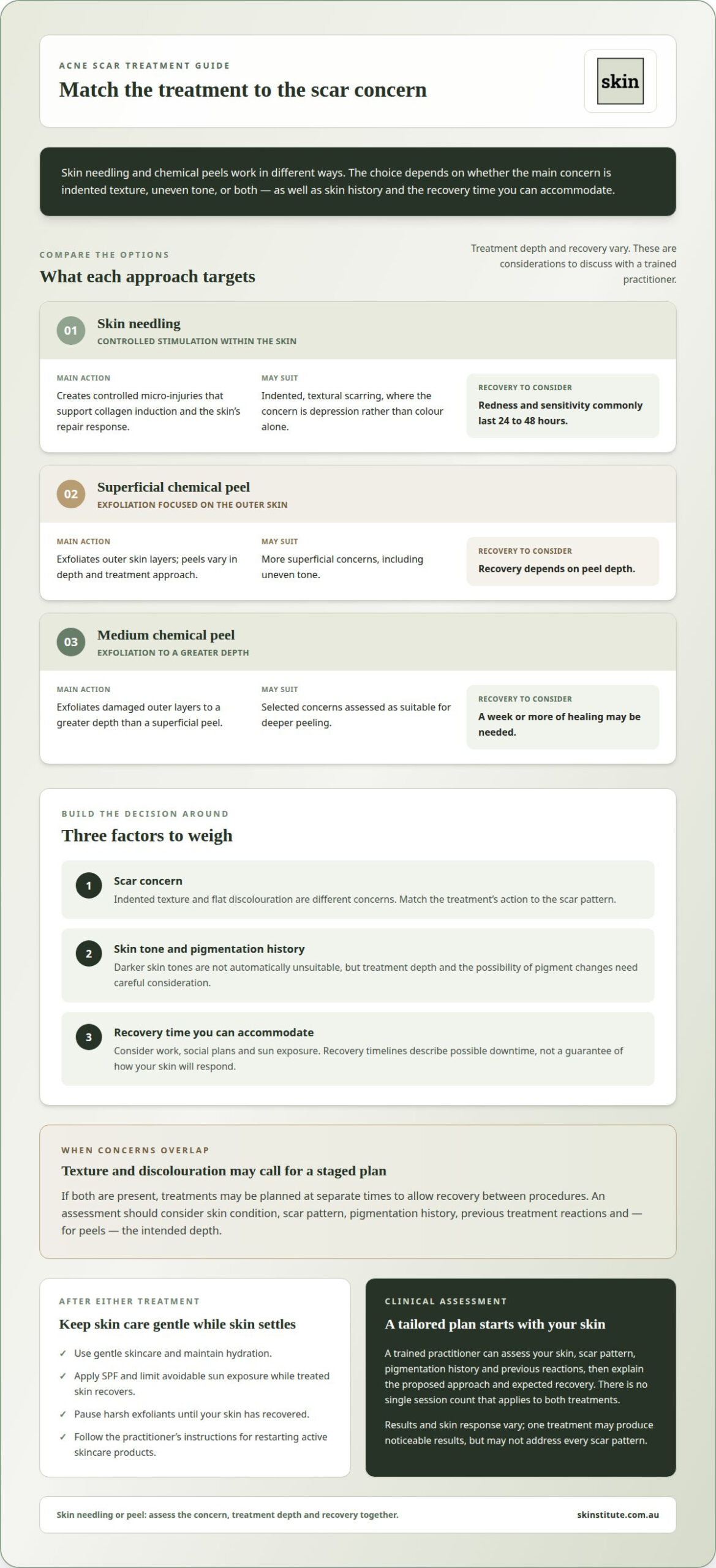
A chemical peel is not automatically the better choice for acne scars: the decision depends on whether the main concern is uneven texture, discolouration, or both. When weighing skin needling against a chemical peel for acne scars, skin needling creates controlled micro-injuries that support collagen and elastin production, while a peel exfoliates damaged outer skin layers. Skin needling commonly causes redness and sensitivity for 24 to 48 hours; a medium peel can take a week or more of healing.
When weighing skin needling vs chemical peel for acne scars, consider what each treatment targets and how recovery fits your needs. For people considering treatment in Melbourne, this guide explains how the procedures work, which concerns they may suit and what to consider about downtime. It also covers how they may be planned at separate stages when scarring involves both texture and discolouration.
Key Takeaways
- Understand how peel depth changes the treatment approach and recovery experience.
- Compare which method may better suit textural scarring, discolouration and your recovery needs.
- Learn what collagen induction involves and the factors that shape a skin-needling plan.
- Use the decision guide to consider whether one treatment or a staged approach may be appropriate for your acne scars.
Which Acne Scar Treatment Is Better for Your Skin: Microneedling or Chemical Peels?
For indented acne scars, skin needling targets texture through controlled micro-injuries that support the skin’s repair response. Chemical peels exfoliate damaged outer layers, so their action is more surface-focused. The better fit depends on whether depressions, uneven tone or both are your main concern.
Peels vary by treatment depth, from superficial options focused on the outer skin to medium peels that reach further. A medium peel can require a week or more of healing. One treatment may produce noticeable results, but that does not mean it will address every scar pattern. Skin tone, sensitivity and scar depth also matter when choosing an approach.
Atrophic scars are indented, unlike the flat discolouration that can remain after acne. Skin needling may suit textural concerns because it encourages a repair response within the skin. A peel may be considered for more superficial concerns such as uneven tone. If both texture and discolouration are present, treatments may be planned at separate times rather than treated as competing options.
| Option | Main action | May suit | Recovery consideration |
|---|---|---|---|
| Skin needling | Controlled micro-injuries support collagen induction | Indented texture | Redness and sensitivity are common |
| Superficial peel | Exfoliates outer skin layers | Surface concerns, including uneven tone | Depends on peel depth |
| Medium peel | Exfoliates to a greater depth | Selected concerns suited to deeper peeling | A week or more of healing may be needed |
Choose an approach by matching its depth and action to the scar structure, your skin tone and your recovery needs.
In Australia, choose a practitioner with relevant training and experience in the procedure. An assessment should consider your skin, scar pattern and, for peels, the intended treatment depth. Ask how the proposed approach addresses your concern and what recovery involves.
There is no single session count that applies to both treatments. The plan depends on scar depth, skin response and the method selected. A peel may produce noticeable results after one treatment, but that does not mean one session will address every acne scar.
Comparing treatment suitability and downtime
Recovery needs can influence treatment choice as much as scar appearance. Skin needling commonly causes redness and sensitivity for 24 to 48 hours. A medium peel can involve a week or more of healing, so consider work, social plans and sun exposure when planning treatment. These timelines describe possible downtime, not a guarantee of how your skin will respond.
Skin tone also matters when planning treatment. Darker skin tones are not automatically unsuitable, but treatment depth and the possibility of pigment changes need careful consideration. A practitioner should assess your skin condition, pigmentation history and response to previous treatments before choosing an approach. Someone concerned about uneven tone, for example, may need a different plan from someone focused mainly on indented texture.
Both procedures can cause temporary skin reactions. Redness and sensitivity are common after skin needling, while a peel’s effects and recovery depend on its depth. Discuss your skin history and any previous reactions, as irritation can affect comfort and recovery. This assessment helps match the procedure to your skin, not just the appearance of the scars.
After either treatment, keep your recovery routine simple while your skin settles:
- Use gentle skincare and maintain hydration.
- Apply SPF and limit avoidable sun exposure, particularly while treated skin is recovering.
- Pause harsh exfoliants until your skin has recovered.
- Follow the practitioner’s instructions for restarting active skincare products.
In Australia, sun protection is a practical part of aftercare while treated skin recovers. Do not add exfoliating acids or abrasive products just because your skin looks settled; irritation can persist beneath the surface. The plan should also account for your skin’s sensitivity and, if you choose a peel, its depth.
To compare the options, weigh three factors: the scar concern, your pigmentation history and the recovery time you can accommodate. If the plan addresses both texture and discolouration, treatments may be staged separately to allow recovery between procedures.
How skin needling stimulates collagen and elastin
Skin needling creates controlled micro-injuries that prompt a repair response and support collagen and elastin production. Collagen provides structural support, while elastin helps skin retain flexibility. This process is relevant to acne scars because depressed scars affect surface texture. The aim is to encourage repair in the treated skin, not to remove scars instantly.
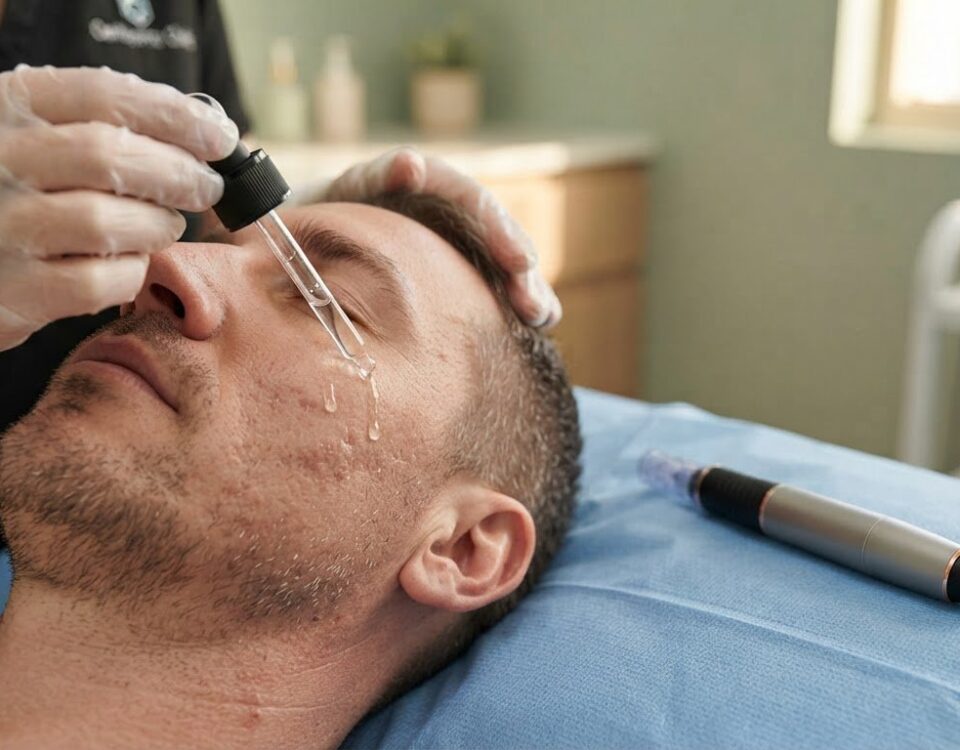
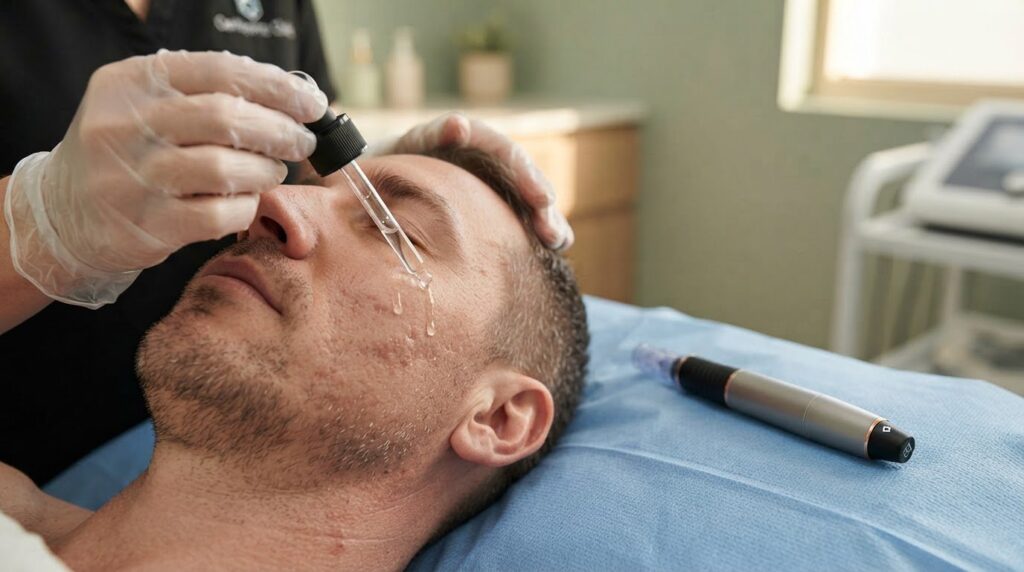
The process can be understood in three stages. First, a practitioner moves a needling device over the selected area, creating controlled channels. The skin then responds through its natural repair processes, with collagen and elastin production supporting remodelling. Changes develop through skin repair, rather than the surface exfoliation associated with a chemical peel.
- Controlled stimulation: micro-injuries initiate a local skin-repair response.
- Collagen support: new collagen production contributes to the skin’s structural framework.
- Elastin support: elastin production supports the skin’s flexibility during repair.
With an atrophic scar, the concern is indentation rather than colour alone. Skin needling may be considered because it involves controlled injury and repair within the skin, but not every depressed scar responds in the same way. Scar pattern, skin condition and treatment settings all influence the plan. A practitioner assesses the area and tailors the approach to the individual concern.
Depth and technique matter. The aim is controlled stimulation, not the deepest possible treatment. Needling that mainly reaches the epidermis is called superficial epidermal needling and may be used for relatively minor concerns. Planning for acne scars must account for epidermal thickness and the treatment area. Inadequate equipment or technique can contribute to epidermal dragging, where the epidermis is pulled rather than treated with controlled precision.
Collagen induction means new collagen production prompted by controlled skin injury. It explains the rationale for needling, not an instant correction or guaranteed response. Skin repair takes place after treatment, so textural changes develop over time. Gentle skincare, hydration and SPF support recovery; avoid harsh exfoliants until the skin has recovered.
Skin needling for acne scars
Skin needling may be considered when acne has left visible depressions or uneven surface texture. It creates controlled micro-injuries in selected areas to prompt a skin-repair response. Its purpose differs from targeting colour alone: a practitioner assesses scar depth, distribution and surrounding skin before planning treatment. Several shallow depressions across the cheeks, for example, call for a different assessment from one isolated scar.
Start by identifying what remains after acne. Active breakouts, post-acne discolouration and depressed scars are distinct concerns, not interchangeable ones. An assessment considers whether texture is the main issue, whether pigmentation is also present and how sensitive your skin is. These details guide the treatment area and approach, rather than applying one setting uniformly across the face.
Skin needling is not limited to the skin’s surface. Its depth and technique need to match the concern and treatment area. Excessive or poorly controlled needling can cause epidermal dragging, where the outer skin is pulled. Precise technique aims for controlled stimulation, so skin condition, epidermal thickness and scar pattern all matter when deciding how to treat each area.
- Texture: map the areas where depressions are visible.
- Colour: distinguish post-acne discolouration from changes in surface contour.
- Skin response: consider sensitivity and previous reactions when planning treatment.
- Technique: tailor the treatment area and depth to the skin assessment.
Define your main concern before choosing a procedure. If uneven texture is the priority, ask how controlled needling may address those areas. If discolouration is also present, the plan may need to account for both concerns. Treatments can be staged to address different features separately, with recovery between procedures. As changes develop through repair, assess progress after the skin has recovered rather than immediately after treatment.
For an individual assessment of acne-scar texture, discuss your skin-needling options.
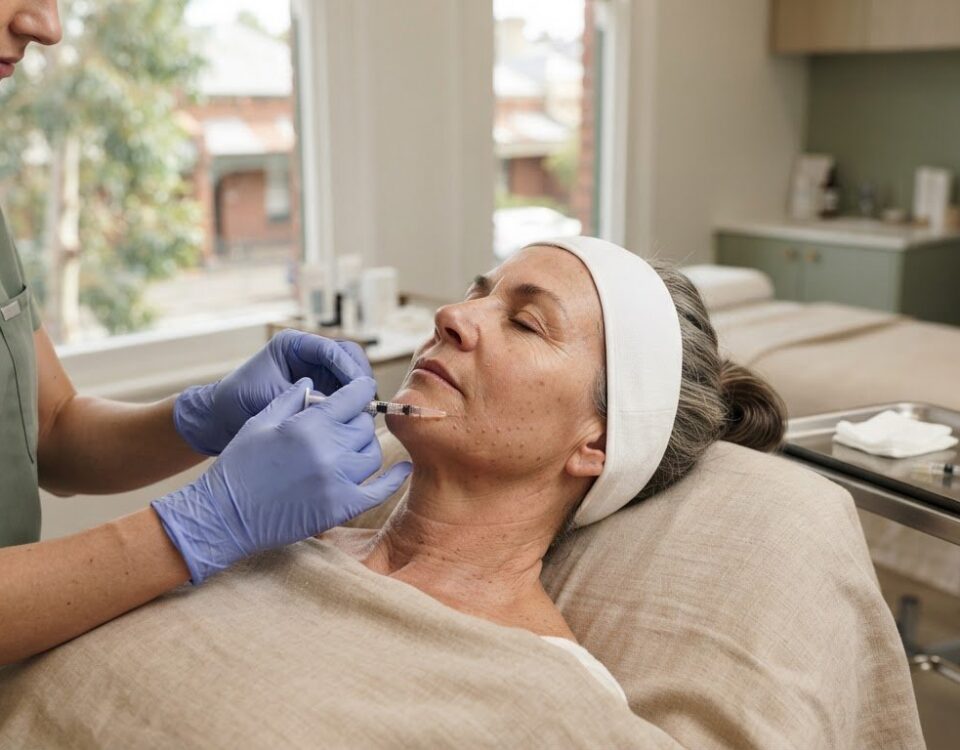
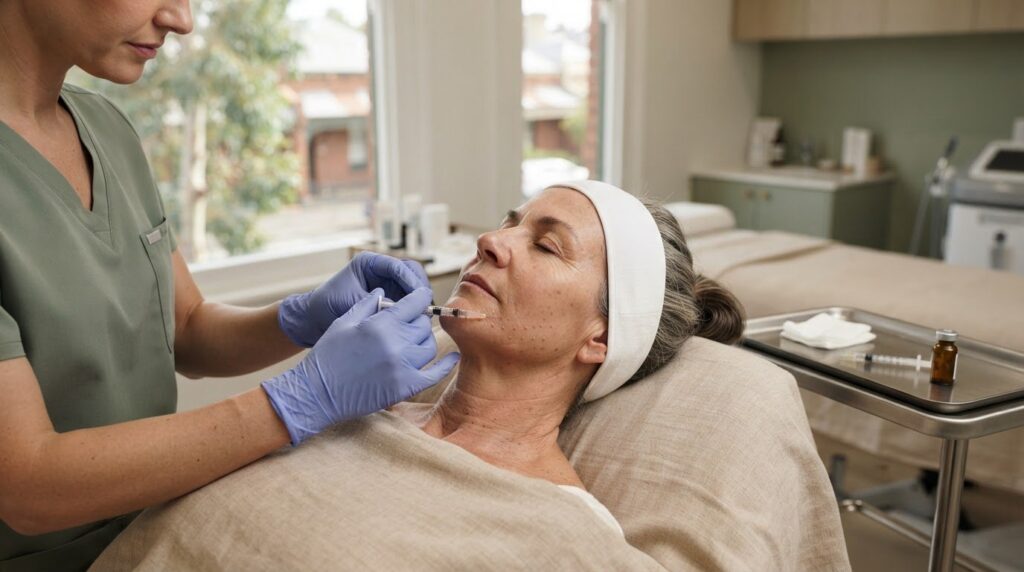
Skinstitute: Prescription injectables
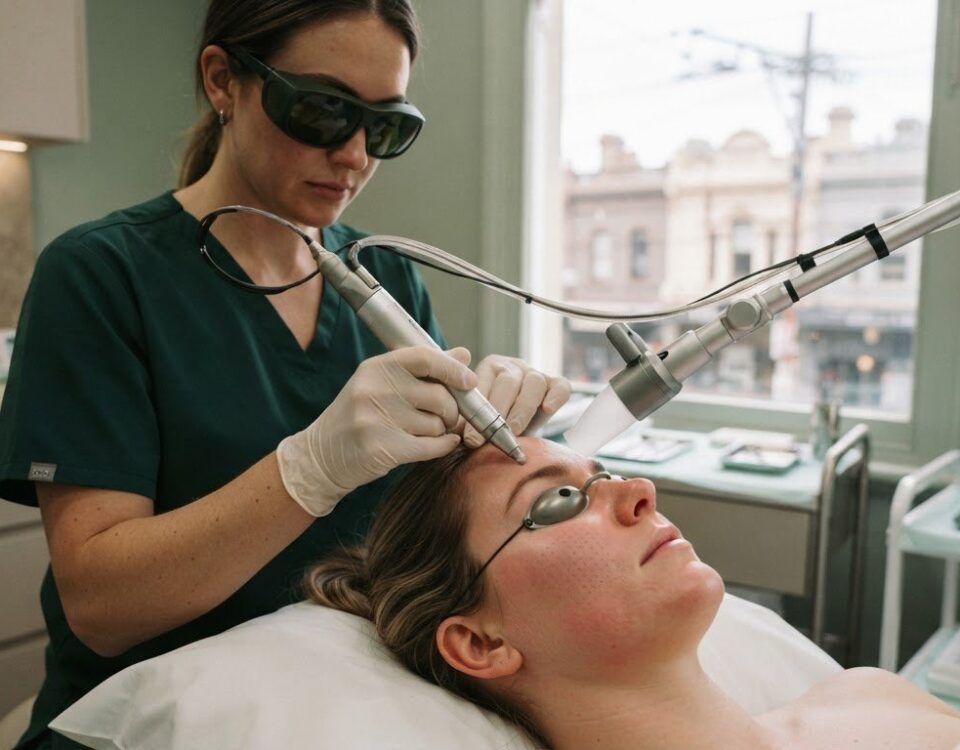
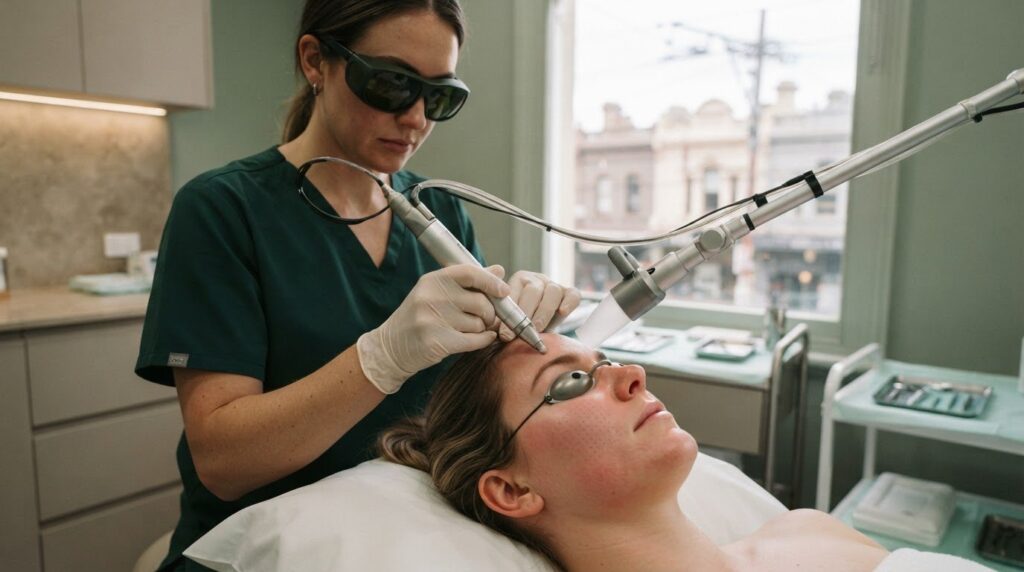
Skinstitute can help you consider how different aesthetic treatments relate to your skin concerns. For acne-scar texture, Fractional CO2 is a resurfacing option to discuss alongside the approaches covered above. Its suitability depends on factors such as scar pattern, skin condition and recovery considerations. A clinical assessment can clarify which treatment approach aligns with your concerns and whether a different option is more appropriate.
Skinstitute also provides prescription injectables, PDO Thread Lifting and High Intensity Focused Ultrasound (HIFU). These treatments address different aesthetic concerns and are not substitutes for acne-scar treatment. Discuss your skin goals with the clinic to identify relevant treatment options.
Contact Skinstitute to discuss your concerns and possible treatment options.
Make your next step specific to your skin
Before deciding on a treatment, write down the change you most want to address and any practical limits that matter. Note whether your priority is smoother texture or a more even-looking tone, for example, and how much visible recovery you can accommodate.
Use these priorities to compare options with a clear purpose, rather than choosing based only on a treatment name. A brief record of your concerns, skincare routine and previous treatment experiences can help you assess whether a proposed plan fits your goals.
Take time to weigh the trade-offs and keep expectations focused on gradual skin improvement. A considered decision is a constructive step towards a plan that reflects your needs.
Frequently Asked Questions
Can You Combine Both Treatments?
Yes, both treatments can form part of a broader skin plan when their roles are clearly defined. Rather than treating them as interchangeable, identify the concern each procedure is intended to address and the planned order. This gives you a useful basis for discussing treatment sequence, review points and any changes needed as your skin responds.
Skin Needling vs Peels: Which Is Better for Rejuvenation?
Neither treatment is universally better for rejuvenation, as that term can refer to different concerns. Decide whether your priority is surface texture, uneven tone or another visible change, then discuss that specific goal. A treatment chosen for acne scarring should not automatically be assumed to suit every rejuvenation concern. A precise goal makes the comparison more relevant to your skin.
What About Downtime?
Plan treatment around your commitments and the recovery instructions for the procedure selected. Avoid booking just before an occasion where visible skin changes would concern you. Before booking, consider whether you can follow the recommended skincare routine and pause any products your practitioner advises you to stop using. This practical planning helps make room for recovery without relying on a generic timeline.
Which acne scar types respond best to microneedling versus chemical peels?
The pattern of scarring across each facial area matters, especially when someone has several kinds of marks. Note where the skin looks uneven and where the concern is mainly colour. This gives the assessment more detail than describing every mark as an acne scar. The discussion can then address each concern separately rather than assuming one procedure suits every area.
What results and recovery time can patients expect from microneedling versus chemical peels?
Assess changes after recovery, using consistent observations rather than judging your skin immediately after treatment. For example, note which areas concern you and take photographs in similar lighting before treatment and after your skin settles. This makes changes easier to compare during review and helps your practitioner discuss whether the original goal has been addressed.
Can microneedling and chemical peels be combined for acne scar treatment?
Yes, both treatments can be considered within an acne-scar plan, but that does not mean performing them together in one appointment. The plan should specify why each procedure is included, which area it addresses and when progress will be reviewed. For scars alongside discolouration, this keeps the goals distinct and gives your skin time to recover between steps.