Nasolabial Fold Treatment Melbourne: A Clinical Guide to Midface Rejuvenation (2026)
July 8, 2026
Double Chin Removal Treatment Melbourne: A Clinical Guide to Submental Contouring
July 10, 2026
Achieving a visible lift in the submental area and jawline does not inherently require a surgical incision, provided the treatment can effectively reach the deep structural SMAS layer. Many patients observe that topical serums and surface-level therapies often fail to address the physiological cause of sagging skin and visible platysmal bands. For those exploring hifu for neck tightening melbourne, understanding the distinction between superficial heat and medical-grade ultrasound is essential for establishing realistic expectations and achieving clinical success.
We recognise the frustration that comes with a loss of jawline definition and the appearance of a double chin as skin laxity increases. This guide provides an authoritative analysis of High-Intensity Focused Ultrasound, explaining how it delivers precise thermal energy at temperatures of 60 to 70 degrees Celsius to stimulate long-term collagen synthesis. A 2025 systematic review of 45 studies confirmed that over 90% of patients experienced improved skin tightness, with results typically sustained for 12 to 18 months. You will learn the technical mechanics of the SMAS layer, the importance of TGA-registered technology, and the specific biological timeline of the tissue remodelling process.
Key Takeaways
- Understand the clinical mechanism of High-Intensity Focused Ultrasound and how it targets the SMAS layer at depths of up to 4.5mm to initiate biological tissue remodelling.
- Explore the anatomical importance of the platysma muscle and why hifu for neck tightening melbourne provides a non-surgical solution for submental laxity and ‘turkey neck’.
- Compare the structural lifting benefits of HIFU with the surface-level refinement offered by Fractional CO2 laser to determine the ideal combination for your aesthetic goals.
- Learn what to expect during a clinical consultation, including the management of the ‘prickling’ thermal sensation and the timeline for gradual, natural-looking results.
- Identify the advantages of choosing a clinic with over 26 years of experience in medical-grade procedures for a safe and authoritative approach to neck rejuvenation.
Understanding HIFU for Neck Tightening: The Clinical Mechanism
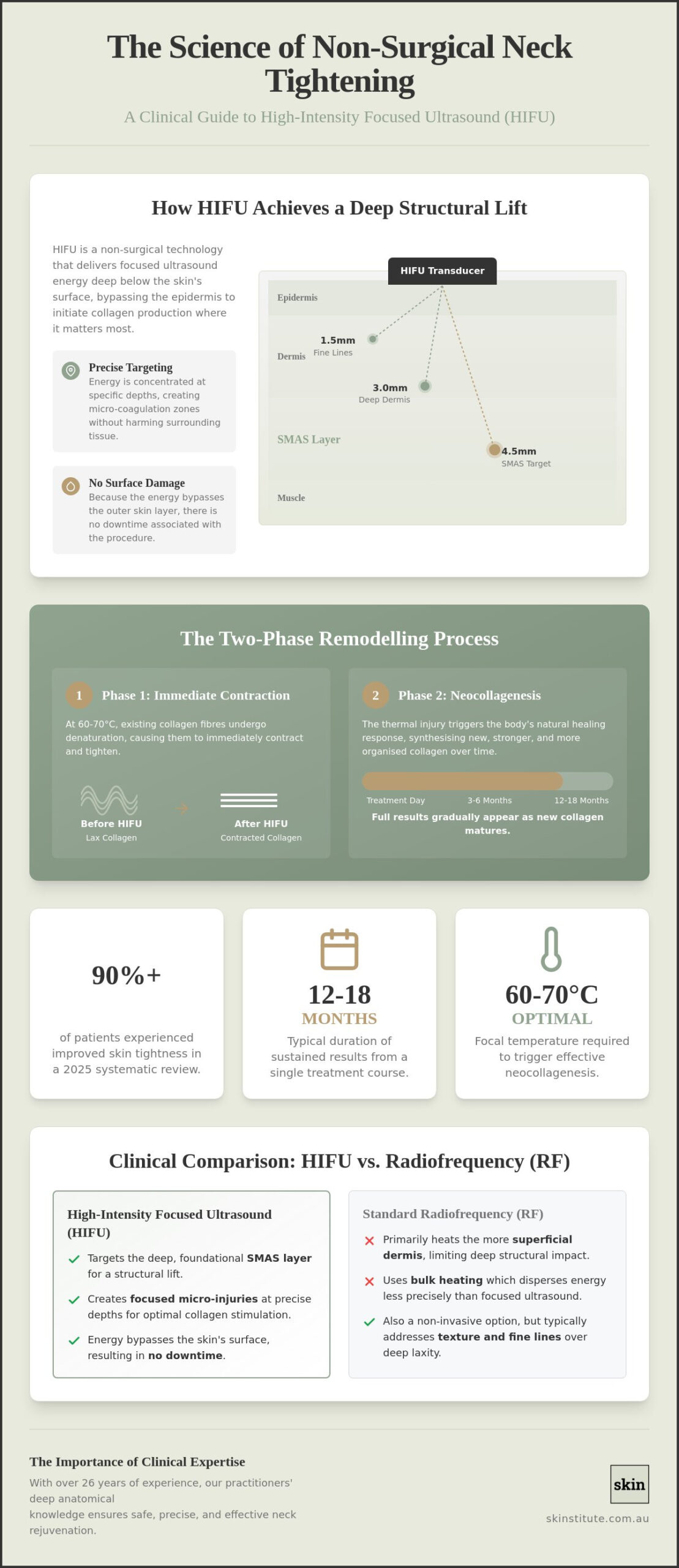
High-Intensity Focused Ultrasound (HIFU) represents a significant advancement in non-surgical aesthetic medicine, functioning as a precise thermal energy delivery system. By concentrating ultrasound waves at a specific focal point, the technology generates heat without affecting the surrounding tissue or the skin’s surface. When practitioners administer hifu for neck tightening melbourne, they aren’t merely heating the skin; they’re inducing controlled thermal injuries known as micro-coagulation zones at depths of 1.5mm, 3.0mm, and 4.5mm.
The distinction between superficial skin tightening and deep structural lifting is found in these specific depths. While 1.5mm targets the upper dermis to improve fine lines and texture, the 4.5mm setting reaches the Superficial Musculoaponeurotic System (SMAS). This is the same fibrous layer that surgeons manipulate during an invasive neck lift. The neck requires a specialised approach because the skin is thinner than that of the mid-face. Precise depth control ensures that energy reaches the platysma muscle and SMAS without impacting underlying glandular or vascular structures.
The Science of Collagen Denaturation and Neocollagenesis
The efficacy of this procedure relies on achieving a consistent focal temperature between 60 and 70 degrees Celsius. At this specific range, the existing collagen fibres undergo immediate denaturation and contraction. This thermal injury triggers the body’s natural wound-healing response, leading to neocollagenesis, the production of new, organised collagen. While some initial tightening occurs due to heat-induced contraction, the full biological transition from old, lax tissue to a firmer structure takes place over three to six months as the remodelling phase matures.
Why HIFU is the Preferred Non-Surgical Neck Lift
HIFU offers a distinct clinical advantage over traditional radiofrequency (RF) modalities. RF energy typically disperses through the tissue as bulk heating, which often limits its effect to the more superficial layers of the dermis. In contrast, HIFU provides a targeted approach that reaches the deeper architecture responsible for structural support. Because the ultrasound energy bypasses the epidermis entirely, there’s no damage to the skin’s surface. This makes it an ideal alternative for those seeking a “no-downtime” lifting solution. Clinical visualisation during the procedure further enhances safety, allowing the practitioner to confirm they’re treating the correct tissue plane for optimal submental contouring.
Targeting the SMAS Layer: Why Anatomy Matters for Neck Results
Effective rejuvenation of the neck requires a deep understanding of the Superficial Musculoaponeurotic System (SMAS). This fibromuscular layer acts as the primary support structure for the lower face and neck. Unlike the skin’s surface, the SMAS provides the tension necessary to maintain a defined profile. When patients seek hifu for neck tightening melbourne, the objective is to reach this specific depth to induce thermal contraction. This process effectively mimics the tensioning achieved in surgical procedures, addressing concerns such as ‘turkey neck’ and jowls without the requirement for invasive incisions. A clinical study on HIFU efficacy demonstrates that targeting these deeper tissues leads to measurable improvements in skin laxity.
The neck is an anatomically dense region containing vital structures like the thyroid gland, carotid arteries, and various motor nerves. Precision is paramount. A skilled practitioner must navigate these areas with care, ensuring energy is delivered only to the intended musculoaponeurotic planes. This level of technical mastery is why clinical oversight is non-negotiable for safety. Without a thorough knowledge of neck anatomy, treatments risk being either ineffective or potentially hazardous to underlying tissues.
The Platysma and Submental Contouring
Ageing Factors Unique to the Neck and Decolletage
Melbourne’s active lifestyle and high UV index contribute significantly to premature dermal thinning in the neck area. This region possesses fewer sebaceous glands and a thinner dermis than the face, which limits its ability to recover from environmental stressors. Additionally, the modern prevalence of ‘tech neck’, the repetitive strain from looking down at devices, accelerates the formation of horizontal creases. Ideal candidates for this treatment typically present with mild to moderate skin laxity, visible platysmal banding, or a softening jawline. If you don’t see the results you desire from topical applications, a professional assessment at a clinical centre can determine if HIFU is the appropriate intervention for your anatomy.
HIFU vs. Alternative Neck Tightening Modalities
While High-Intensity Focused Ultrasound serves as a foundational treatment for structural lifting, it’s frequently compared to other clinical modalities to address specific patient requirements. A clinical study on HIFU for skin laxity indicates that ultrasound energy is highly effective for moderate concerns, particularly when targeting the deeper tissue planes. However, achieving an optimal aesthetic outcome often requires a multi-modal approach. For those considering hifu for neck tightening melbourne, it’s vital to understand how this technology interacts with treatments that target different physiological layers, from the superficial epidermis to the deep structural muscles.
HIFU or PDO Threads: Which is Right for You?
The primary difference between these two treatments lies in the mechanism of the lift. PDO thread lifting provides an immediate, mechanical repositioning of the tissue by physically anchoring sagging skin with dissolvable sutures. In contrast, HIFU delivers a biological lift, stimulating the body’s own regenerative processes over several months. Threads are often preferred for patients with more significant focal sagging who desire an instant change. HIFU is ideal for those seeking structural reinforcement and long-term collagen density without the use of foreign materials. Combined protocols, where HIFU provides the structural base and threads offer the mechanical support, often yield the most comprehensive clinical results for the ageing neck.
The Role of Bio-Stimulators and Injectables
Skin quality and texture are just as critical as structural support for a youthful appearance. While HIFU addresses the deep SMAS layer, Fractional CO2 Laser focuses on the epidermis and upper dermis to correct sun damage and fine lines. To further enhance skin health, polynucleotides like Rejuran can be introduced. These bio-stimulators work at a cellular level to hydrate and thicken the delicate neck skin, providing the biological building blocks that ultrasound energy then organises. Experienced clinicians may also suggest anti-wrinkle injections to relax active platysmal bands, a technique known as the Nefertiti Lift, which complements the upward pull of hifu for neck tightening melbourne by reducing the downward pull of neck muscles.
When skin laxity is severe or the underlying fat pads have significantly descended, non-surgical options may reach their clinical limit. In these instances, a surgical neck lift becomes the only viable option to remove redundant skin and physically tighten the muscles. A thorough consultation ensures that patients don’t invest in energy-based devices when surgical intervention is more appropriate for their specific anatomical stage. This transparent approach maintains the integrity of the clinical outcome and ensures patient satisfaction.
The Treatment Journey: What to Expect in a Melbourne Clinic
A successful clinical outcome begins with a comprehensive skin analysis and consultation. This initial stage allows the practitioner to evaluate the degree of dermal thinning and the specific location of adipose tissue in the submental region. It’s during this assessment that we determine the optimal energy settings and depths required for your unique anatomy. Our clinical team brings 26 years of experience in Melbourne aesthetic medicine to every consultation, ensuring that each treatment plan is grounded in long-term safety and professional integrity. Once the treatment parameters are established, the procedure involves the systematic delivery of ultrasound pulses across the target area.
Managing patient comfort is a priority during the delivery of hifu for neck tightening melbourne. Patients typically describe the sensation as a series of deep, localised prickling or intense heat. This feeling indicates that the ultrasound energy is reaching the necessary focal points within the SMAS and dermal layers to trigger collagen denaturation. Immediately following the session, you may observe mild erythema (redness) or slight swelling. These are normal inflammatory responses that usually subside within 24 to 48 hours. While some initial contraction might be visible, the primary results develop gradually, with noticeable lifting appearing from 4 weeks and peaking at approximately 6 months post-procedure.
Preparation and Clinical Safety Standards
Adherence to clinical preparation protocols is essential for minimising sensitivity and maximising efficacy. Patients should avoid active skincare ingredients, such as retinoids or high-strength acids, for at least three days prior to treatment. Strict sun protection is also mandatory, as compromised or sunburnt skin cannot safely undergo thermal therapy. The use of TGA-listed equipment is a critical safety factor; unregulated or ‘cheap’ HIFU devices often lack the precision to maintain consistent focal temperatures. This inconsistency increases the risk of superficial burns or nerve irritation, making it vital to choose a clinic that prioritises medical-grade technology.
Clinical Aftercare and Long-Term Maintenance
Post-treatment care focuses on supporting the body’s regenerative response. We recommend a protocol of deep hydration and the application of specific topicals that promote healing. Given Melbourne’s high UV levels, which significantly accelerate the breakdown of collagen and contribute to neck crepiness, daily application of broad-spectrum SPF is non-negotiable. This protects the newly synthesised collagen from environmental degradation. To maintain the lifting effect and counteract the natural ageing process, we typically suggest a ‘top-up’ session every 12 to 18 months. If you are ready to begin your journey toward a more defined jawline, you can book a clinical consultation with our experienced team to discuss your suitability for treatment.
Why Skinstitute is Melbourne’s Choice for Advanced HIFU
Selecting a clinical provider for High-Intensity Focused Ultrasound requires a focus on long-term experience and technical proficiency. Skinstitute maintains a 26-year history of performing medical-grade aesthetic procedures, providing a level of stability and established authority that is rare in the cosmetic industry. Our approach to hifu for neck tightening melbourne is defined by a commitment to medical ethics and the principle of ‘natural rejuvenation’. We believe that the most successful clinical outcomes are those that respect the patient’s underlying anatomy, avoiding the distorted appearance often associated with over-treatment or improper technique.
The clinical environment at our Melbourne centre ensures that every procedure remains practitioner-led. This isn’t a high-street spa environment; it’s a professional facility where technical mastery is the baseline standard. By maintaining a sober and focused atmosphere, we ensure patients feel informed and respected throughout their treatment journey. Our reliance on established scientific principles ensures that every energy-based session is both safe and physiologically effective.
Expertise in Complex Aesthetic Modalities
Sophisticated anatomy knowledge is the foundation of our practice. The neck contains a dense network of nerves, glands, and vessels that must be carefully avoided during thermal therapy. Our practitioners possess a deep understanding of these structures, allowing for the precise delivery of ultrasound energy to the SMAS layer without compromising patient safety. We frequently integrate supplementary medical-grade technologies, such as Rejuran or exosomes, to support the biological response of the tissue. This multi-layered strategy reflects our position as an established authority in complex aesthetic medicine.
Personalised Treatment Protocols
No two patients present with identical patterns of skin laxity or submental fullness. Standardised, ‘cookie-cutter’ protocols often lead to underwhelming results because they fail to address the specific physiological needs of the individual. At Skinstitute, we develop personalised treatment plans based on a thorough clinical analysis of your tissue density and structural support. We prioritise patient education and transparent expectations, ensuring you understand the biological timeline of your results. This honest approach builds a partnership based on trust and evidence-based outcomes rather than marketing hype.
Book your clinical neck assessment at Skinstitute Melbourne today.
Advancing Your Journey Toward Structural Neck Rejuvenation
Addressing neck laxity effectively requires a shift from superficial topicals to clinical interventions that target the foundational SMAS layer. This guide has detailed how High-Intensity Focused Ultrasound induces thermal contraction to stimulate long-term collagen synthesis and improve submental definition. By selecting hifu for neck tightening melbourne within a professional environment, you benefit from the precision of TGA-listed technology and a deep understanding of regional anatomy. Peak results develop gradually over six months, reflecting a biological transformation rather than a temporary surface change.
Skinstitute offers over 26 years of specialist experience in medical-grade aesthetic treatments. Located in the heart of Melbourne, our facility provides clinician-led care focused on achieving natural, stable outcomes. You are invited to Schedule a Clinical Consultation for HIFU Neck Tightening at Skinstitute to discuss your specific concerns and receive a tailored treatment plan. We are committed to providing the technical mastery and professional guidance necessary to help you achieve a firmer and more defined profile.
Frequently Asked Questions
Is HIFU for neck tightening painful?
Patients typically experience a transient prickling or intense thermal sensation as the ultrasound energy reaches the required focal points. This feeling indicates that the tissue is reaching the 60 to 70 degrees Celsius necessary for collagen denaturation and structural contraction. While comfort levels vary between individuals, the sensation is generally manageable and ceases immediately once the delivery of ultrasound pulses is complete.
How many HIFU sessions will I need for my neck?
Most patients achieve their desired results after a single clinical session. The treatment initiates a biological tissue remodelling process that continues to mature over several months. For individuals with more significant skin laxity or those seeking more pronounced submental contouring, a follow-up treatment may be recommended after six months to further enhance the structural integrity of the neck and jawline.
How long do the results of a non-surgical neck lift last?
The structural improvements from hifu for neck tightening melbourne typically remain visible for 12 to 18 months. Because the procedure relies on the production of your own natural collagen, the longevity of the lift is influenced by your individual ageing process and lifestyle factors. Annual maintenance sessions are often suggested to sustain the density of the dermal scaffold and the tension of the platysma muscle.
Can HIFU get rid of a double chin?
HIFU effectively addresses submental fullness by targeting localised adipose tissue while simultaneously tightening the overlying skin and muscle. By delivering focused energy at a depth of 4.5mm, the treatment induces contraction in the SMAS and platysma, which creates a more defined jawline. This dual action of fat reduction and structural lifting provides a cohesive and visible improvement in the submental profile.
What is the difference between salon HIFU and medical-grade HIFU in Melbourne?
Medical-grade HIFU systems are TGA-listed devices that undergo rigorous testing for safety and efficacy, whereas many salon alternatives lack these regulatory approvals. Professional systems maintain the consistent focal temperatures and precise depths essential for reaching the SMAS without causing superficial burns. Clinical-grade equipment ensures that the energy delivered is sufficient to trigger genuine neocollagenesis rather than providing only temporary surface heating.
Are there any side effects or downtime with neck HIFU?
There is no clinical downtime associated with this procedure, and patients can return to their daily routines immediately following the session. Common side effects include mild erythema and slight swelling in the treated area, which typically resolve within 24 to 48 hours. Some individuals may experience temporary tenderness along the jawline or a tingling sensation for several days as the inflammatory healing response matures.
Can I combine HIFU with other treatments like Botox or fillers?
Combining hifu for neck tightening melbourne with prescription injectables is a common clinical strategy for achieving comprehensive rejuvenation. While HIFU provides the foundational lift, anti-wrinkle injections can relax active platysmal bands to further refine the neck’s appearance. It’s generally advised to follow a specific sequence between these treatments to ensure the tissue has stabilised, which is determined during your clinical assessment.
Who is the ideal candidate for HIFU neck tightening?
The ideal candidate is an individual with mild to moderate skin laxity who wishes to avoid the downtime of invasive surgery. This treatment is particularly effective for those noticing a loss of jawline definition, horizontal neck lines, or early signs of submental sagging. Patients with realistic expectations who understand that the biological results develop over a three to six-month period typically report the highest levels of satisfaction.