Fractional CO2 Laser Resurfacing Melbourne: A Clinical Guide to Skin Regeneration
June 3, 2026
HIFU vs. Other Skin Tightening Treatments: A Clinical Comparison
June 4, 2026
True restoration of the jawline requires more than superficial skin tightening; it necessitates a precise thermal intervention at the Superficial Muscular Aponeurotic System (SMAS) layer. While many individuals seek topical solutions for age-related sagging, these methods often fail to address the physiological reality of structural descent. You may feel that surgical intervention is the only definitive path to reclaiming a contoured profile, yet the evolution of medical technology provides a sophisticated, non-invasive alternative.
This clinical guide details the science behind hifu treatment for jowls melbourne, illustrating how high-intensity focused ultrasound energy bypasses the epidermis to initiate deep-tissue remodelling. We’ll explore the biological process of neocollagenesis, where controlled thermal coagulation at 60 to 70 degrees Celsius triggers a long-term tightening effect. By the end of this article, you’ll understand how TGA-listed devices and specific anatomical targeting work together to restore elasticity and define the submental area without the risks associated with general anaesthesia or surgical downtime. This overview provides the technical insight required to make an informed decision regarding your facial rejuvenation journey.
Key Takeaways
- Learn how high-intensity focused ultrasound targets the SMAS layer to address the descent of facial fat pads and restore structural integrity to the mandible.
- Understand the importance of a professional clinical assessment for customising energy parameters during a hifu treatment for jowls melbourne.
- Discern the functional differences between lifting and volumising to determine whether your anatomy requires tissue contraction or the strategic use of dermal fillers.
- Identify the specific physiological indicators that make an individual an ideal candidate for non-surgical contouring based on skin laxity and volume.
- Explore a clinical approach to lower face rejuvenation that prioritises natural biological regeneration and long-term tissue health over artificial enhancements.
Understanding the Anatomy of Jowls and the HIFU Mechanism
Jowls represent a common aesthetic concern characterised by the descent of malar fat pads and increased skin laxity along the mandibular line. As we age, the structural integrity of the facial architecture diminishes. This leads to the characteristic sagging often referred to as jowling. A High-Intensity Focused Ultrasound (HIFU) procedure provides a sophisticated method for addressing this structural decline without the need for invasive surgery.
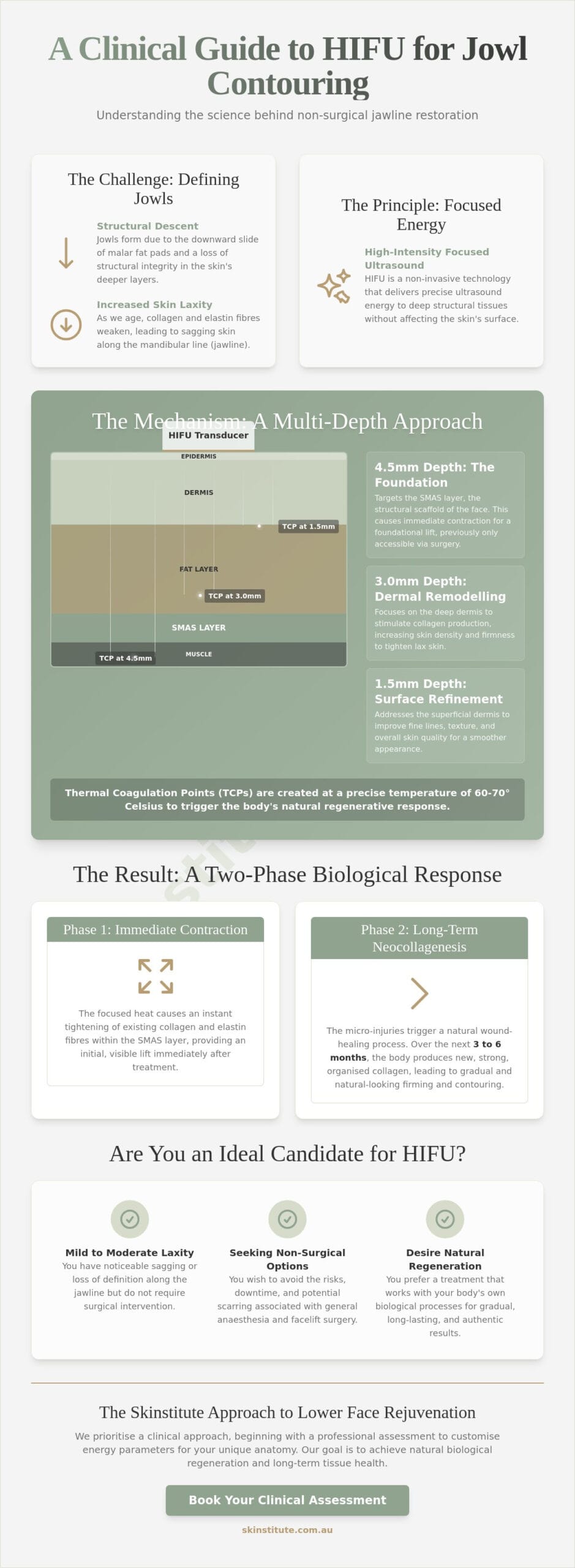
The technology works by delivering concentrated waves of ultrasound energy into the deeper layers of the dermis and underlying tissue. This energy creates localised areas of heat known as Thermal Coagulation Points (TCPs). By focusing the energy at specific depths, medical-grade devices ensure that the surrounding tissue remains unaffected while the targeted area reaches temperatures between 60 and 70 degrees Celsius. This precision is vital for a successful hifu treatment for jowls melbourne, as it allows for the treatment of structural layers that were previously only accessible via surgical means.
The Role of the SMAS Layer in Facial Lifting
The Superficial Muscular Aponeurotic System, or SMAS, serves as the essential structural scaffold of the mid and lower face. It’s a fibrous network that connects the facial muscles to the skin. While topical serums and many superficial treatments target the epidermis, they cannot penetrate to the SMAS layer, which typically resides at a depth of 4.5mm. HIFU energy is uniquely capable of reaching this depth. When the ultrasound waves interact with the SMAS, the thermal energy causes an immediate contraction of existing collagen fibres. This physical tightening of the scaffold provides the initial lift often observed shortly after the procedure.
Neocollagenesis: The Biological Response to Ultrasound
Beyond the immediate contraction, the primary benefit of ultrasound therapy lies in its ability to trigger a natural wound-healing response. The micro-injuries created at the TCPs signal the body to initiate a complex biological repair sequence. This response involves the recruitment of fibroblasts to the treated area. Neocollagenesis is the process where the body produces fresh, organised collagen to replace aged fibres. Over a period of three to six months, these cells synthesise new protein structures. This gradual synthesis leads to improved skin elasticity and a more defined jawline as the tissue matures. For those seeking hifu treatment for jowls melbourne, this long-term biological remodelling ensures that results appear natural and evolve over time.
The Clinical Application of HIFU for Jowl Reduction in Melbourne
Effective jowl reduction through ultrasound technology requires a methodical, clinical approach that prioritises patient safety and anatomical precision. A professional assessment is the first critical step. During this consultation, the practitioner evaluates the degree of tissue descent and the specific quality of the patient’s skin. This evaluation allows for the customisation of energy parameters, ensuring the intensity and depth of the ultrasound pulses are tailored to individual fat distribution and skin thickness.
While some providers may offer a generic protocol, a high-quality hifu treatment for jowls melbourne utilises a multi-layered strategy to address the complex nature of facial sagging. Practitioners must account for the varying depths of facial tissue to ensure the energy reaches the intended targets without causing unnecessary discomfort. Most patients describe the sensation as a series of deep, targeted heating pulses rather than sharp pain. This feeling indicates that the thermal energy is successfully reaching the required depths to initiate tissue remodelling. Clinical evidence suggests that cosmetic procedures with HIFU are highly effective for those with mild to moderate laxity who wish to avoid the downtime of surgery.
The Multi-Depth Approach: 1.5mm to 4.5mm
Achieving a contoured jawline necessitates targeting three distinct physiological layers. The 4.5mm depth is the most critical for jowl reduction, as it reaches the SMAS layer to provide a foundational structural lift. At the 3.0mm depth, the energy focuses on the deep dermis to increase skin density and, where appropriate, subtly reduce fat volume that contributes to the appearance of jowls. Finally, the 1.5mm depth addresses the superficial dermis, refining skin texture and smoothing fine lines. By treating these layers sequentially, the practitioner creates a comprehensive “lifting” effect that evolves over several months.
What to Expect During a Clinical HIFU Session
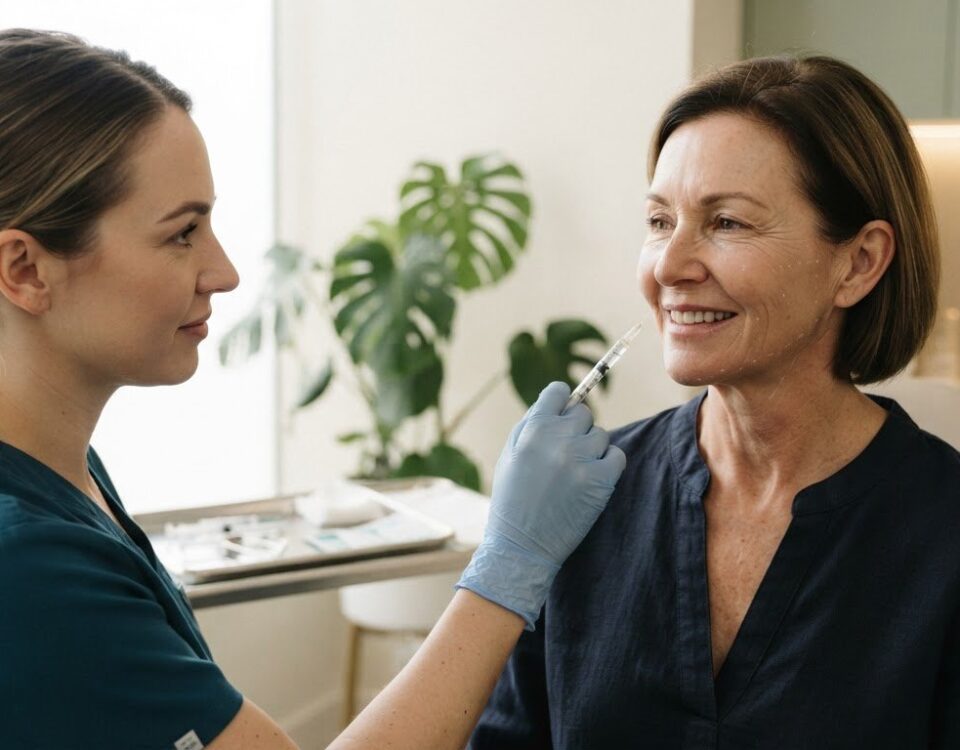
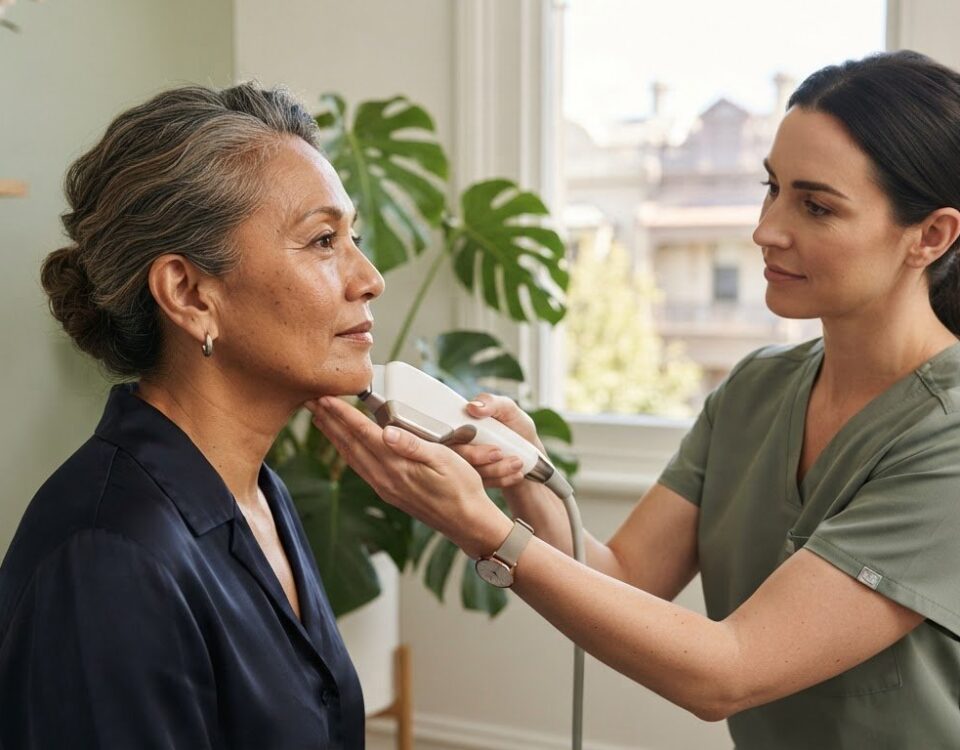
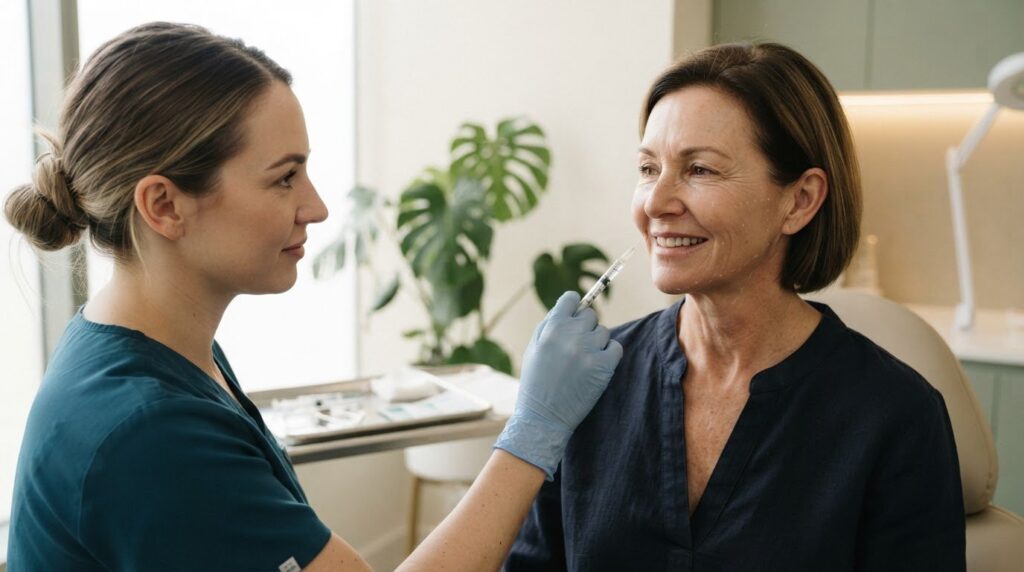
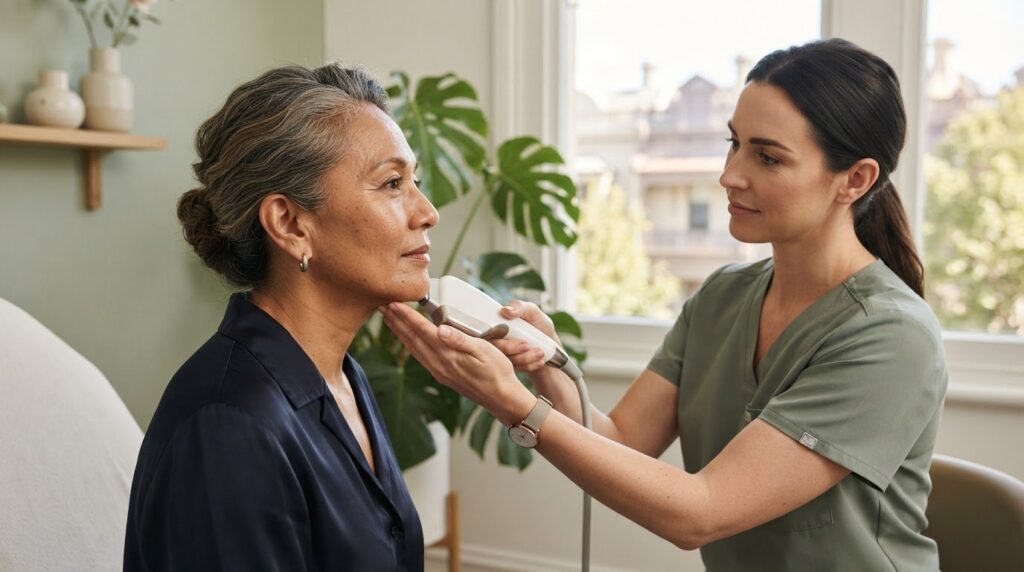
A standard session follows a precise sequence to ensure efficacy and safety. First, the treatment area is clinically cleansed and mapped; this mapping is essential for identifying and avoiding the marginal mandibular nerve. Second, a conductive ultrasound gel is applied to ensure optimal energy transmission into the tissue. Third, the practitioner delivers precise ultrasound pulses across the lower face and submental area, following the pre-defined map. Finally, a post-treatment assessment is conducted, and clinical-grade skin protection is applied to the surface. For those interested in this technical approach, a consultation at Skinstitute can clarify how these steps are adapted to your specific facial profile. Because the technology targets the same deep layers as a surgical facelift, it remains a gold standard in non-invasive contouring.
HIFU vs. Alternative Non-Surgical Jowl Treatments
Selecting the appropriate intervention for mandibular sagging requires an objective analysis of the patient’s specific tissue characteristics. No single modality acts as a universal solution. While dermal fillers are frequently utilised to mask the appearance of jowls by adding volume to the pre-jowl sulcus, they don’t address the fundamental issue of tissue descent. In contrast, a hifu treatment for jowls melbourne focuses on lifting and contracting the structural layers. This distinction is vital; adding volume to an already heavy lower face can sometimes exacerbate the appearance of sagging rather than resolving it.
Clinical research supports the use of ultrasound for these structural purposes. A systematic review on HIFU efficacy across multiple clinical trials confirms its ability to significantly improve skin tightening in the lower face. By inducing thermal coagulation at depths of 3.0mm and 4.5mm, the technology achieves a degree of tissue contraction that fillers cannot replicate. For patients with mild to moderate laxity, this biological approach offers a more sustainable result than simply camouflaging the deficit with exogenous substances. When laxity is severe, a practitioner may recommend a combination of modalities to achieve the desired contour.
HIFU vs. PDO Thread Lifts for the Jawline
PDO Thread Lifting represents a more direct mechanical intervention. While HIFU relies on a delayed biological response to stimulate collagen, threads provide an immediate physical lift by anchoring the tissue with absorbable sutures. This makes threads a preferred option for individuals with more pronounced jowling that requires a higher degree of repositioning. However, the choice often comes down to the patient’s tolerance for downtime. HIFU involves zero recovery time, allowing for an immediate return to professional activities. Conversely, PDO threads typically require three to seven days of recovery to allow for minor swelling or bruising to subside. Both methods are effective, but they serve different anatomical requirements.
Integrating HIFU with Bio-stimulators like Rejuran
The most comprehensive results often emerge from a multi-modality treatment plan. While ultrasound energy focuses on the structural scaffold, bio-stimulators such as Rejuran work at a cellular level to enhance the skin’s regenerative capacity. Rejuran, composed of polynucleotides, improves the physiological environment of the dermis, making it more receptive to the collagen-stimulating effects of ultrasound. For patients focused on cellular regeneration, consider the Clinical Guide to Rejuran in Melbourne to understand how these treatments complement one another. This synergy ensures that both the deep structural layers and the superficial skin health are addressed simultaneously, leading to a more refined and enduring outcome.
Assessing Suitability: Are You a Candidate for HIFU Jowl Treatment?
The success of a hifu treatment for jowls melbourne depends significantly on precise patient selection. The ideal candidate typically presents with mild to moderate skin laxity where the jawline has begun to lose its crisp definition due to early structural descent. If a patient exhibits significant volume loss or possesses extremely thin dermal tissue, the ultrasound energy may lack the necessary structural support to produce an effective lift. In such cases, alternative interventions or combination therapies may be more appropriate. Lifestyle factors also dictate the quality of the outcome; chronic sun exposure and smoking significantly impair the body’s capacity to synthesise new collagen, which can diminish the overall biological response to the treatment. Maintaining realistic expectations is essential, as this technology provides a natural structural refinement rather than the drastic repositioning seen in invasive surgery.
Clinical Contraindications and Safety Protocols
Patient safety is the primary priority when delivering high-intensity energy to facial tissues. A thorough medical screening must identify contraindications such as active skin infections, pregnancy, or the presence of metallic implants and pacemakers. The use of TGA-listed, medical-grade equipment is a non-negotiable standard for ensuring that energy delivery remains stable, predictable, and safe. Practitioners must also possess a deep understanding of facial anatomy to navigate around “danger zones,” specifically the marginal mandibular nerve pathway. Precision in both depth and placement ensures that the energy interacts only with the intended targets, such as the SMAS, without compromising underlying neural structures. To determine if your anatomy is suitable for this clinical procedure, you can book a clinical assessment at Skinstitute.
Result Timeline: Immediate vs. Long-term Changes
The physiological response to ultrasound energy occurs in distinct stages that mirror the body’s natural healing cycle. Immediately following the session, patients may observe a slight contraction of the skin and a temporary “glow” resulting from increased local circulation. These initial changes are a precursor to the primary biological transformation. The peak of neocollagenesis usually occurs between three and six months post-treatment. During this period, the jawline becomes visibly sharper and more defined as the new collagen network matures and strengthens the tissue. These results typically persist for 12 to 18 months, depending on the individual’s rate of ageing. Periodic maintenance sessions are generally recommended to sustain the structural integrity of the lower face as part of a long-term rejuvenation strategy.
The Skinstitute Approach to Lower Face Rejuvenation
Skinstitute operates with a foundation of 26 years of experience within the Melbourne aesthetic market. This extensive history reflects a commitment to clinical excellence and a deep understanding of the physiological changes associated with facial ageing. Our core philosophy prioritises “Natural Regeneration” over “Artificial Enhancement.” We believe in stimulating the body’s innate biological processes to achieve structural restoration. By utilising medical-grade High-Intensity Focused Ultrasound technology, we ensure that every hifu treatment for jowls melbourne is performed with technical proficiency and a focus on long-term tissue health. This seasoned expertise allows us to act as a clinical guide, moving beyond surface-level aesthetics to provide a deeper level of technical insight for our patients.
The journey toward a more defined jawline begins with a bespoke consultation where skin health is the primary priority. We avoid the “one-size-fits-all” approach common in high-volume clinics, opting instead for a methodical evaluation of the patient’s unique anatomy. This professional assessment ensures that the selected intervention is safe, appropriate, and aligned with the patient’s long-term ageing goals. Our clinic functions as a centre for medical-grade technology, where every procedure is underpinned by established scientific principles and a dedication to technical mastery.
Personalised Treatment Mapping
During the initial consultation, we conduct a rigorous assessment of facial symmetry and the specific migration of malar and mandibular fat pads. This mapping process is essential for a successful hifu treatment for jowls melbourne. We don’t apply a standard protocol; we customise the specific “shot count” and energy levels to suit the tissue density and laxity of the jowl area. This level of precision ensures that the ultrasound energy is delivered to the SMAS and deep dermal layers with optimal intensity. By tailoring the delivery of energy, we respect the surrounding neural pathways while maximising the potential for structural contraction and lift.
Post-Treatment Care and Clinical Support
The biological response to ultrasound therapy continues long after the patient leaves the clinic. To support this ongoing transformation, we provide a structured aftercare protocol designed to maximise the synthesis of new collagen and elastin. We recommend specific clinical-grade skincare products that reinforce the dermal matrix and provide the necessary biochemical environment for effective neocollagenesis. This instructional approach ensures that the skin remains resilient as the underlying structures mature and tighten. Our team remains a knowledgeable partner throughout this regenerative process, providing the stability and proficiency required for enduring results. To begin your journey with a tailored plan, you may book a clinical consultation at our Melbourne clinic.
Advancing Your Structural Rejuvenation Journey
Restoring a defined jawline requires a sophisticated understanding of facial anatomy and the precise application of medical-grade technology. The efficacy of ultrasound energy lies in its ability to target the SMAS layer; this creates a foundational lift that topical treatments cannot achieve. By prioritising natural biological regeneration, you can achieve a contoured profile that evolves gradually and maintains the structural integrity of your face. Selecting a practitioner who utilises TGA-listed equipment and possesses a deep knowledge of nerve pathways is essential for ensuring both safety and clinical excellence.
Skinstitute brings over 26 years of clinical experience to every procedure, ensuring your treatment is guided by seasoned expertise. Our practitioners specialise in the complexities of facial anatomy, ensuring that each hifu treatment for jowls melbourne is precisely mapped to your unique fat pad distribution. We invite you to Schedule Your Professional HIFU Consultation in Melbourne to explore how our technical mastery can support your aesthetic goals. Taking this clinical step allows you to invest in the enduring resilience and definition of your jawline with complete confidence.
Frequently Asked Questions
Is HIFU treatment for jowls painful?
Most patients describe the experience as a series of deep, targeted heating sensations rather than acute pain. This feeling occurs as the ultrasound energy reaches the SMAS layer to create thermal coagulation points at temperatures between 60 and 70 degrees Celsius. While some areas of the jawline may feel more sensitive than others, the discomfort is temporary and indicates that the energy is successfully reaching the required depth. Practitioners can adjust the intensity parameters to ensure the procedure remains tolerable while still achieving the necessary biological response.
How many HIFU sessions will I need for my jawline?
The majority of patients require only a single, high-intensity session to initiate the neocollagenesis process. However, some clinical protocols in Melbourne now utilise a multi-session approach where treatments are spaced four weeks apart to achieve more incremental results. The total number of sessions depends on the initial degree of skin laxity and the patient’s specific biological response to the ultrasound energy. A professional assessment is necessary to determine if a single session or a more intensive program is appropriate for your anatomical needs.
How much does HIFU jowl treatment cost in Melbourne?
The cost of a hifu treatment for jowls melbourne varies significantly based on the technology used and the practitioner’s level of expertise. Factors such as whether the device is TGA-listed and the specific areas targeted, such as the submental area or the full lower face, will influence the final investment. Because medical-grade machines require a substantial capital investment from the clinic, patients should be cautious of exceptionally low prices that may indicate the use of non-regulated equipment. It’s best to check with your chosen clinic for their specific professional fees during a consultation.
Is there any downtime after a HIFU jowl lift?
There is no clinical downtime required following this procedure, making it a convenient option for those with busy professional schedules. Some individuals might experience mild erythema or slight swelling immediately after the session, but these effects typically resolve within a few hours. You can return to your regular activities and skincare routine immediately. Unlike invasive surgical options, there are no incisions, sutures, or recovery periods associated with ultrasound-based tissue tightening.
Can HIFU replace a surgical facelift for jowls?
HIFU serves as an effective non-surgical alternative for mild to moderate jowling but is not a direct replacement for a surgical facelift. While it targets the same structural SMAS layer used by surgeons, it cannot remove significant amounts of excess skin or reposition deep fat pads to the same extent as invasive surgery. It’s an ideal intervention for those who wish to avoid anaesthesia and surgical risks or for younger patients looking to maintain their jawline definition as a preventative measure.
When will I see the final results from my HIFU treatment?
The final results of a hifu treatment for jowls melbourne typically become evident between three and six months after the procedure. While an immediate “lifting” effect may be visible due to the heat-induced contraction of existing collagen fibres, the primary transformation relies on the body’s natural wound-healing response. As new, organised collagen and elastin fibres are synthesised and integrated into the dermal matrix, the jawline gradually becomes more defined and the skin’s elasticity improves.
Are the results of HIFU for jowls permanent?
The structural changes achieved through ultrasound energy are long-lasting, but they aren’t permanent because the natural ageing process continues. The new collagen produced during the months following treatment will eventually age like the rest of your skin’s proteins. Most patients find that the results persist for approximately 12 to 18 months. To sustain the architectural lift and counteract the ongoing effects of gravity and cellular decline, periodic maintenance sessions are generally recommended as part of a long-term clinical strategy.
Can I combine HIFU with dermal fillers in the lower face?
Combining ultrasound energy with dermal fillers is a common clinical practice used to address both structural sagging and volume loss simultaneously. While HIFU focuses on contracting the SMAS layer to lift the jowls, fillers can be strategically placed to smooth the pre-jowl sulcus or define the chin. Practitioners typically recommend a specific sequence for these treatments to ensure the heat from the ultrasound doesn’t interfere with the longevity of the filler material. This integrated approach often yields a more comprehensive and balanced rejuvenation of the lower face.