A Comprehensive Guide to HIFU Skin Tightening Treatments
September 18, 2026
The benefits of exosome facial treatment centre on clearer cellular signalling: exosome facial treatment (Exosome therapy) delivers messengers directly to skin cells so collagen production and tissue repair can accelerate. Grounded in regenerative medicine, this therapy addresses structural ageing by improving skin texture and elasticity at a cellular level. A clinical consultation in Melbourne helps you decide whether skin repair (bio-stimulators) suits your goals, how many sessions you may need, and what investment standard you should expect.
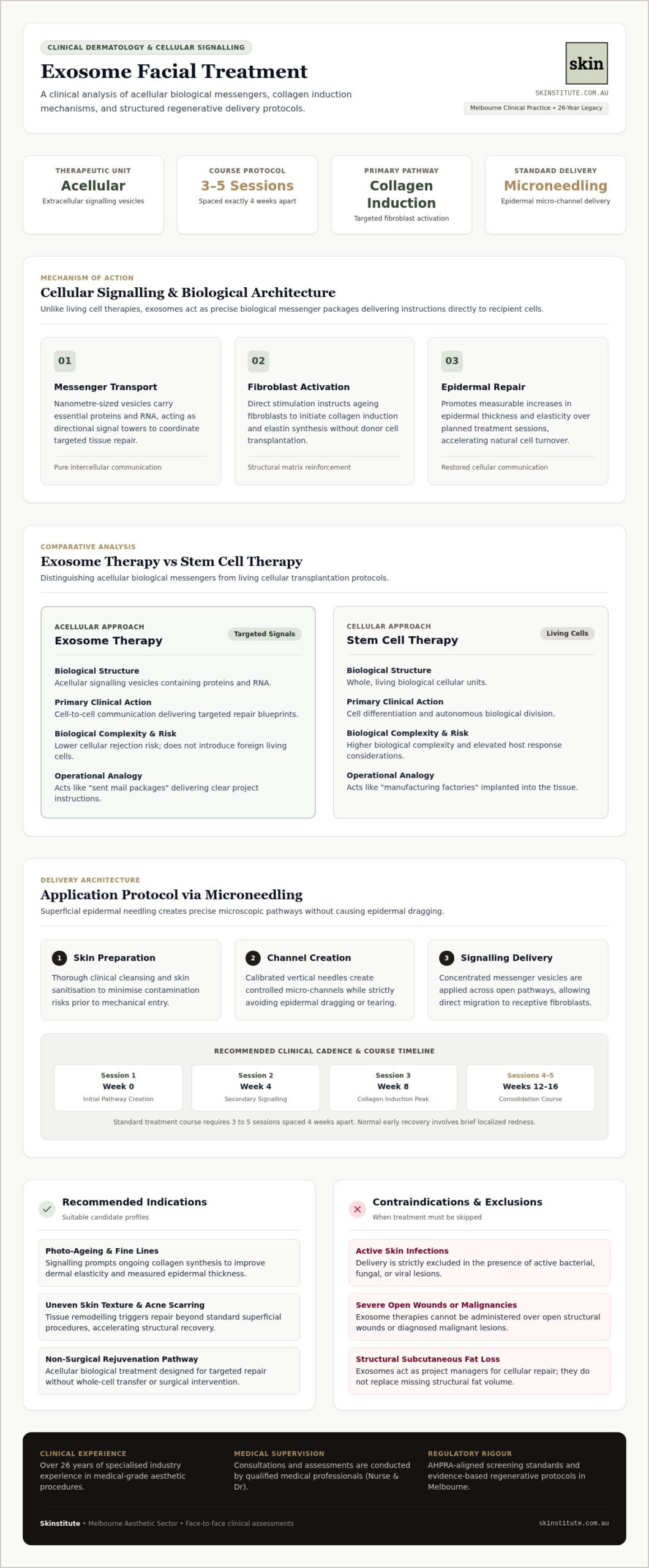
Key Takeaways: Exosome facial treatment uses acellular messenger vesicles to trigger collagen production and tissue repair, offering a lower-risk alternative to living stem cell therapies.
- A typical treatment plan requires 3 to 5 sessions spaced 4 weeks apart.
- Skip it when you have active skin infections, severe open wounds, or malignancies.
- Best for patients seeking targeted cellular rejuvenation for photo-ageing and scarring without surgery.
- The article notes Australian market prices for regenerative serums range from A$24 to A$535.
Who Benefits Most: Choosing Your Rejuvenation Pathway
If photo-ageing, textural damage or scarring sits at the top of your list, an exosome facial treatment is one pathway worth weighing against other skin repair options. Candidates usually seek tailored care rather than a single generic session.
Typical situations and how clinicians often steer them:
- Fine lines and lost elasticity: cellular communication signals prompt collagen synthesis so epidermal thickness can improve over a planned course.
- Deep acne scars or uneven texture: targeted tissue remodelling is used to accelerate healing beyond basic superficial procedures.
- Significant age-related volume loss: exosomes support repair beside structural interventions; they do not replace missing subcutaneous fat. You can picture exosomes as project managers that guide cellular repairs, while true volume restoration relies on physical scaffolding.
Every rejuvenation plan at Skinstitute is customized to match your facial anatomy. During a clinical consultation, Melbourne practitioners evaluate whether this advanced Skin Treatment aligns with your primary aesthetic goals.
What are exosomes and what is the purpose of this treatment?
Exosomes are tiny extracellular vesicles that act as biological messengers, transporting proteins and RNA to instruct target cells during exosome facial treatment.
These vesicles function like signal towers delivering precise repair instructions. Stem cells are living units and PRP relies on blood plasma; exosomes contain pure cellular signals that directly trigger skin repair.
That targeted communication encourages surrounding cells to produce collagen and elastin. The therapy restores cellular function without live cell transplantation or blood collection.
Clinical protocols in Melbourne at Skinstitute address damaged tissue with high accuracy. Vascular concerns (for example Leg Vein Treatment) need distinct vascular lasers rather than cellular signalling, so those pathways stay separate from exosome plans.
Research detailed in Wikipedia’s exosome overview (2026) (vesicle) confirms these nanometer-sized vesicles play vital roles in intercellular signalling. Exosome therapy suits patients who want cell-free biological rejuvenation without whole-cell transfer.
What’s the difference between exosome and stem cell treatment?
Stem cells are living cells, whereas exosomes are acellular messenger vesicles. An exosome facial treatment uses these microscopic signals to trigger skin repair without transferring whole human cells. Stem cells act like factories; exosomes act as sent mail packages.
Acellular therapies lower host rejection risks compared with direct cellular implantation, which carries higher biological complexity. Signal vesicles instead give focused instructions for collagen production.
| Feature | Exosome Therapy | Stem Cell Therapy |
|---|---|---|
| Structure | Acellular signaling vesicles | Whole living cells |
| Primary Action | Cell-to-cell communication | Cell differentiation and division |
| Biological Risk | Lower cellular rejection risk | Higher biological complexity |
Selecting extracellular signals suits patients seeking targeted non-surgical rejuvenation. Medical professionals evaluate individual suitability during face-to-face clinical assessments. Skinstitute provides tailored protocols in Melbourne.
Benefits of Exosome Facial Treatment: Collagen Induction and Epidermal Repair
An exosome facial treatment delivers concentrated signalling molecules into deep dermal layers so fibroblasts can start making new collagen (collagen induction) and skin repair can move faster.
Exosomes carry blueprints to ageing cells and direct them to restore structural tissue. Clinical evidence shows measurable rises in collagen production and cellular turnover after targeted applications.
In our professional view, topical products without active signalling molecules mainly hydrate for a short time rather than drive true cellular regeneration. You can explore medical-grade protocols at Skinstitute when persistent texture concerns need a structured plan.
A brief increase in localized redness is normal in early recovery. Patients notice progressive gains in epidermal thickness and elasticity over several weeks. Personalized clinical assessments keep protocols matched to your skin architecture and aesthetic goals.
Clinical Application Protocol: Delivery via Microneedling
Superficial epidermal needling creates micro-channels to optimise delivery of an exosome facial treatment, so the messengers reach the layers that respond.
- Skin Preparation: Clinicians thoroughly cleanse and sanitize your skin to minimize contamination risk.
- Channel Creation: Precise microneedles create microscopic pathways across the target area without causing epidermal dragging.
- Serum Application: Topical bio-stimulators (polynucleotide-based serums, which are fish-DNA-derived molecules distinct from exosomes) and separate exosome preparations pass through these fresh microscopic pathways.
- Post-Procedure Care: Soothing clinical formulations seal the surface to protect the compromised barrier.
The process is like opening tiny windows in a house: biological messengers drop inside rather than sitting on the roof. Controlled application supports safe skin repair while collagen synthesis underpins renewal. At Skinstitute in Melbourne, trained practitioners adjust parameters to your epidermal thickness. Precision micro-channelling remains the clinical standard for this delivery method.
Optimal Session Frequency and Long-Term Safety Profile
A complete exosome facial treatment plan typically requires three to five initial clinical appointments. Spacing treatments four weeks apart gives cellular signalling enough time to build collagen naturally.
Individual cellular response dictates your maintenance interval. Skinstitute tailors each regeneration plan in a detailed face-to-face consultation so suitability is clear for patients across Melbourne.
Biological skin repair works more like a cellular wake-up call than an instant artificial filler. Progressive, natural-looking structural change builds over about six months without the risk profile of tissue over-filling.
Safety profiles for medical-grade micro-needling stay strong when cross-contamination controls are in place. Patient safety depends on regulatory compliance: Skinstitute utilizes TGA-registered technology with specialised technical expertise for biosecurity.
Tip: Verify that your clinical practitioner utilizes TGA-registered technology so biosecurity stays robust during administration.
Candidate Suitability: When Exosomes Are Not Recommended
An exosome facial treatment is not suitable for every patient seeking skin repair, so screening comes before any session.
Active skin infections, severe open wounds, or active malignancies mean treatment should wait. If you have unmanaged medical conditions, you need a thorough clinical assessment first.
For cosmetic surgery, 2023 AHPRA reforms require mandatory mental health screening so expectations stay realistic. Non-surgical cosmetic work still needs proper clinical suitability checks; your practitioner confirms that standard before any collagen-stimulating plan. That safeguard supports patient safety across the Melbourne metro area.
Selecting a qualified practitioner keeps your regeneration plan aligned with clinical standards. Non-surgical treatments do not offer instant correction for severe skin redundancy: cellular renewal takes planned time.
Evaluating Market Investment and Treatment Standards
Fees for exosome facial treatment vary with protocol complexity and session count. According to clinic data, market rates run from lower fees for simple topical add-ons up to higher sums for multi-session regenerative protocols; Australian market research on regenerative serums places a wide band from A$24 to A$535. Investing in skin repair means judging clinical standards, not chasing the lowest sticker price. Low-cost protocols often cut practitioner training or active ingredient concentration.
Choosing a clinic that prioritises collagen health supports longer-term cellular outcomes. Skinstitute describes its treatment environment as fully medically supervised, which reduces risk of adverse events or tissue damage.
For fractional CO2 Melbourne patients, Skinstitute offers over 26 years of medical aesthetic experience (the clinic’s own figure) and specialist expertise in regenerative therapies including Exosomes and Rejuran.
A qualified practitioner evaluates your skin concerns and aims for tailored, natural-looking outcomes.
Among Google reviews for the clinic, one patient (5★) wrote:
"Extremely skilled, professional service. Loads of knowledge to help guide best treatment options. Really happy with my results."
That experience shows how practitioner knowledge and clear guidance support safe regenerative care.
Frequently asked questions
What are exosomes and what is the purpose of this treatment?
Exosomes are extracellular vesicles that carry signal molecules between cells to assist intercellular communication. An exosome facial treatment delivers these microscopic messengers directly to skin tissue to support natural cellular repair. In Melbourne clinics, practitioners apply these biological signals after skin micro-needling to stimulate skin repair. Skin cells then increase active production, which improves overall tissue quality.
What are the benefits of exosome therapy?
This regenerative procedure enhances surface texture while strengthening biological cellular signalling. By promoting collagen production, it helps increase structural epidermal thickness over time. Patients notice improved skin tone, softer fine lines, and faster tissue healing after clinical procedures. A personalized regeneration plan directs these messengers at your areas of photo-ageing or scarring.
What’s the difference between exosome and stem cell treatment?
Exosomes are cell-free microscopic messengers, whereas stem cell therapies use whole, living biological cells. Exosomes transfer growth factors and proteins without transferring cellular DNA or nuclei. That distinction creates a controlled signalling process with lower immune-response risk. Your practitioner evaluates your skin anatomy in a clinical consultation before choosing a regenerative approach.
Are exosomes better than PRP?
Exosomes provide a higher concentration of isolated growth factors than traditional platelet-rich plasma treatments. PRP depends on your own blood composition; exosome formulations deliver more consistent cellular signals. Clinical aesthetic fees across the local market reflect practitioner expertise and concentration levels; you may request a personalized quote for detailed figures. At Skinstitute, your clinician tailors these therapies after comprehensive face-to-face assessments.
What are the risks of exosome treatment?
Temporary mild redness, localized swelling, and transient skin sensitivity are common after treatment. Skinstitute operates a fully medically supervised environment so patient safety is maintained through each procedure. Cosmetic surgery under the 2023 AHPRA reforms requires mandatory mental health screening; for non-surgical care your clinician still confirms realistic expectations on recovery and biological response before you proceed.
Plan Your Clinical Assessment
Deciding on exosome facial treatment comes down to the same questions this article opened with: whether cellular skin repair fits your photo-ageing or scarring concerns, how collagen-focused signalling should be scheduled, and which clinical standard justifies the fee.
Skinstitute brings over 26 years of medical aesthetic expertise to Melbourne. Registered Nurse Martin Desmarais holds a Bachelor of Science in Nursing from Université de Montréal and delivers bilingual patient care in English and French. The team works within AHPRA-aligned screening where it applies and a fully medically supervised treatment environment.
Your biological response depends on individual skin health. To shape a tailored regeneration plan, view the pricing guide and arrange a face-to-face clinical assessment.