Sessions and Risks for Sagging Neck Skin Treatment in Melbourne
November 4, 2026
Jawline Slimming Injections in Melbourne: Prices and Aftercare
November 6, 2026
A non-surgical eye lift can improve mild eyelid laxity, fine lines and uneven skin texture, but it cannot remove skin redundancy. The best non-surgical eye lift in Melbourne depends on whether the main concern is brow descent, surface texture, movement-related lines or under-eye hollowing. Laser resurfacing, prescription injectables and HIFU address different concerns, so the choice depends on the area being treated and the changes sought.
It’s understandable to look for an option that refreshes the eye area without surgery, but treatments are not interchangeable. This guide explains how non-surgical blepharoplasty may help with sagging skin, wrinkles and texture, and how laser, injectable and lifting approaches compare. It also considers brow and eyebrow lifting, treatment suitability and the limits of non-surgical methods, so you can better understand which concerns may respond to a tailored plan.
Key Takeaways
- Identify whether the concern is loose eyelid skin, fine lines, texture, brow position or under-eye hollowing, as each may call for a different approach.
- Understand that non-surgical treatments can address selected signs of ageing but cannot remove skin redundancy.
- Compare how lasers, prescription injectables and lifting treatments work, including the differences in their treatment focus and recovery.
- Learn which non-surgical brow and eyebrow options may be considered and how a personalised assessment helps guide treatment planning.
How can undergoing a non-surgical blepharoplasty help?
Non-surgical blepharoplasty is a general term for treatments intended to improve selected concerns around the eyelids without surgery. Depending on the cause, treatment may address mild skin laxity, fine lines or surface texture, but it cannot remove excess skin. If drooping eyelid skin obscures your vision, an assessment can help establish whether the concern is aesthetic or affects function.
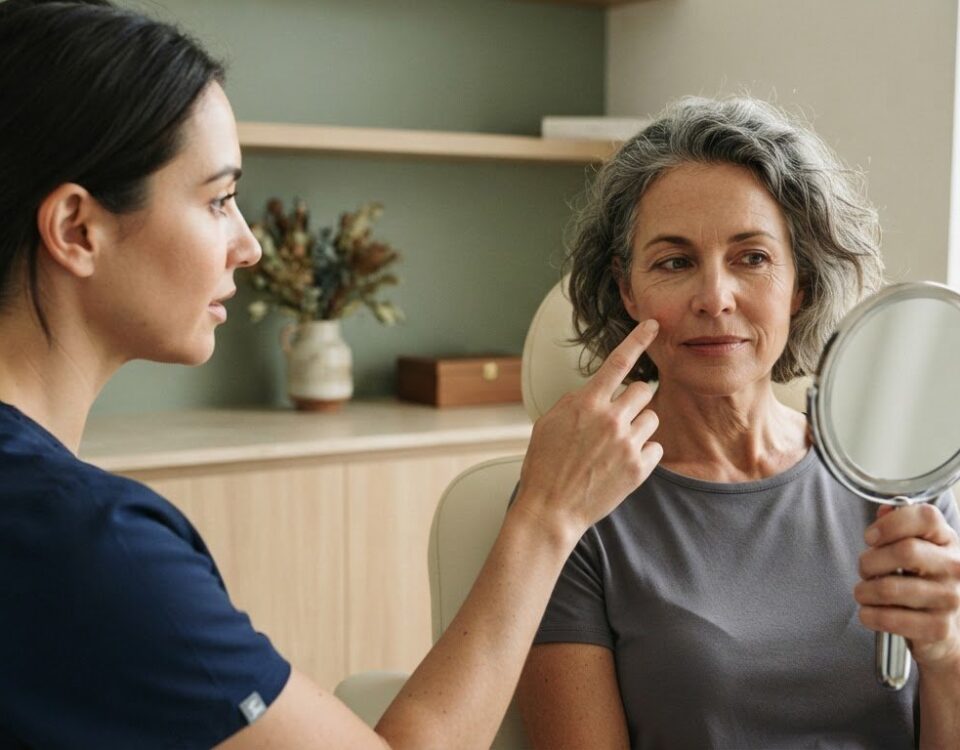
A Melbourne consultation starts by identifying the change you want, such as less hooding or smoother eyelid skin. The practitioner assesses the upper and lower eyelids, brow position, skin quality and surrounding facial structure. These areas interact: a lowered brow can contribute to upper eyelid hooding, while loose skin may be the main concern. Distinguishing between them helps guide treatment planning.
Choose an AHPRA-registered medical practitioner with relevant cosmetic training and experience treating the delicate eye area. Ask about their qualifications, experience with the proposed treatment, expected recovery and potential risks. They should explain how the treatment relates to eyelid anatomy and whether it can address your concern, rather than suggesting every sign of ageing responds in the same way.
You can check a practitioner’s registration by searching their name on the AHPRA public register and reviewing their status. At a Melbourne clinic, expect a clear consultation, an explanation of the proposed treatment plan and a discussion of risks before proceeding. Registration is one useful check; so is the practitioner’s ability to explain their approach to your eyelids.
Suitability depends on the cause and degree of hooding, skin laxity, brow position and your goals. At your appointment, describe the changes you have noticed and whether they affect daily activities, such as applying eye makeup or seeing clearly. If skin obscures your vision, mention this directly, as functional concerns may need assessment beyond aesthetic lifting.
People considering non-surgical lifting in Melbourne often begin exploring options in their late 30s or early 40s, but age alone does not determine suitability. A face-to-face consultation helps distinguish eyelid skin changes from brow descent and other anatomical factors. The next step is an individual assessment, followed by a treatment plan matched to the concern and the area involved.
Skin sagging, wrinkles and texture
Skin tightening treatments address different concerns, from fine lines to mild laxity around the eyes. The approach depends on whether your priority is skin texture, firmness or lifting.
Skin Sagging and Wrinkles
Assess where the skin folds and when wrinkles are visible. Crow’s feet can become noticeable for some people in their 30s, while upper eyelid hooding may reflect skin laxity or brow position. These patterns matter: a surface-texture concern differs from loose skin that rests over the eyelid. Non-surgical procedures may improve selected signs of ageing, but cannot remove excess skin.
For texture concerns, consider whether roughness, fine lines or uneven tone bothers you most. Thin, mobile skin around the eyes needs careful treatment planning. Alongside clinical treatments, anti-ageing skincare technology from SBLA BEAUTY can provide non-invasive support for firmness and fine lines around the eye area. The area and depth of the concern help determine whether a tightening procedure is suitable, rather than choosing a treatment by its name alone.
Skin Tightening and Lifting
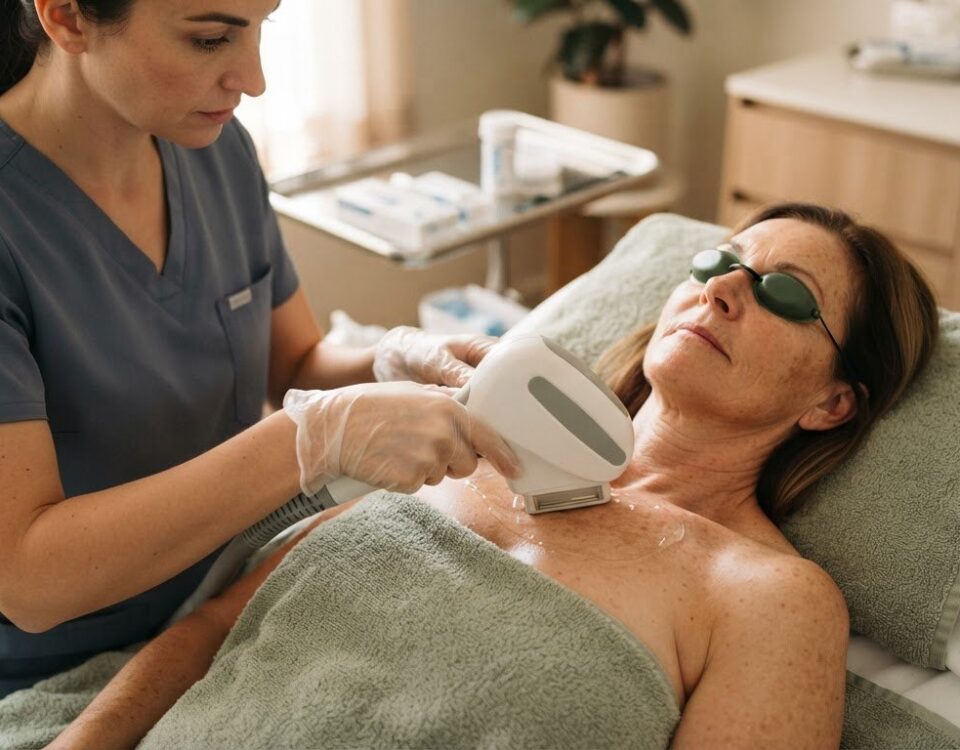
Radiofrequency skin tightening delivers controlled energy to tissue, producing heat that can stimulate collagen remodelling. Radiofrequency skin firming is used to address selected concerns with laxity; it does not reposition substantial sagging or remove skin redundancy. A radiofrequency treatment described for drooping eyelids takes ten to fifteen minutes, and associated skin lines are described as healing in about a week.
Ask how the procedure targets the eyelid or brow area, what changes it aims to address and what downtime to expect. Tightening and lifting are not the same: tightening focuses on skin quality and firmness, while lifting aims to alter tissue position. Mild hooding may call for a different approach from pronounced loose skin.
During an assessment, the practitioner can compare brow position, upper eyelids and skin texture, then match the treatment to the concern. This helps set realistic expectations and avoids treating wrinkles as though they were sagging. If several facial areas are involved, a broader assessment can clarify how skin tightening may fit into a lifting plan.
Comparison with lasers, injectables and surgery
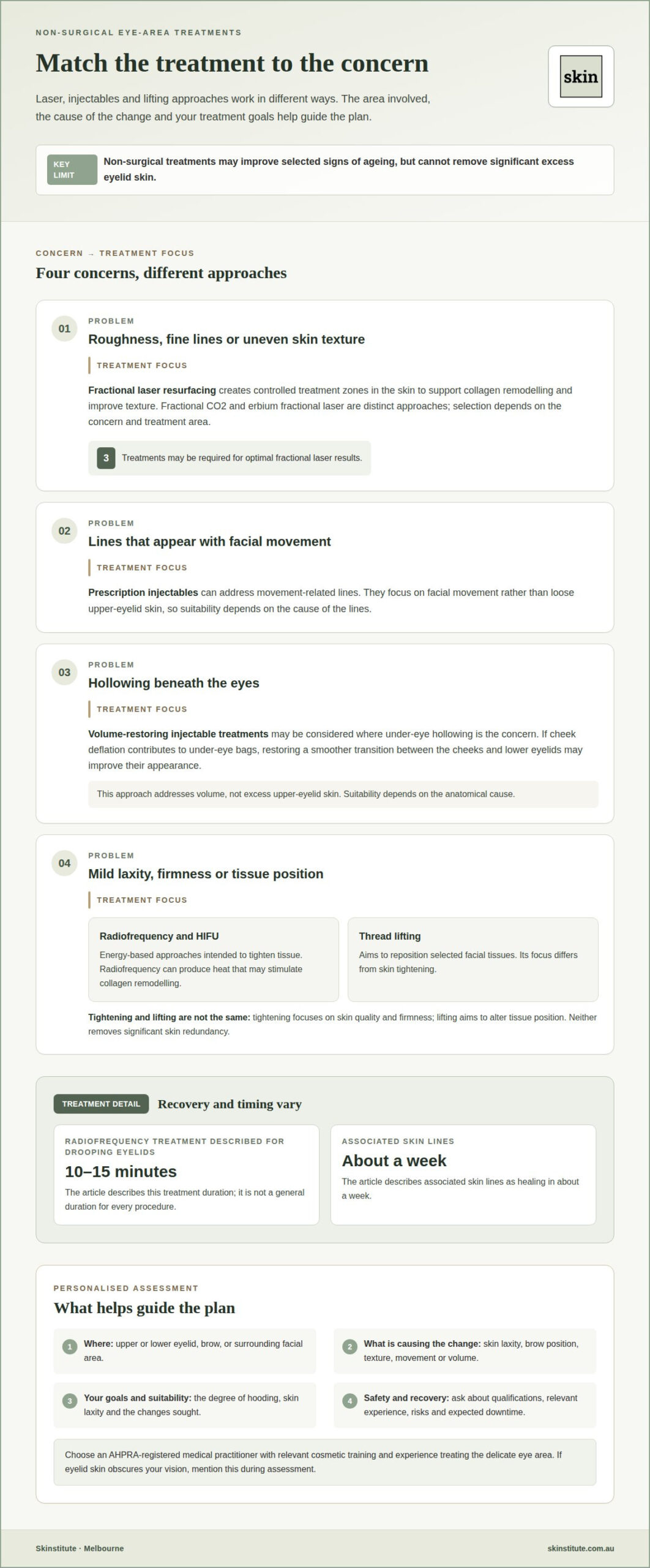
Melbourne options include fractional laser resurfacing, radiofrequency skin tightening, High Intensity Focused Ultrasound (HIFU), prescription injectables and thread lifting. Finding the best non-surgical eye lift in Melbourne means matching the treatment to the concern, whether that involves skin texture, eyelid movement, volume or tissue position. These methods address different mechanisms, and none removes significant skin redundancy.
Fractional laser resurfacing creates controlled treatment zones in the skin to support collagen remodelling and improve texture. Fractional CO2 and erbium fractional laser are distinct resurfacing approaches; selection depends on the skin concern and treatment area. Fractional laser treatment may require three treatments for optimal results. Chemical peels offer another approach to surface-level concerns, but do not reposition eyelid tissue or remove loose skin.
Prescription injectables can address movement-related lines, while other injectable treatments may restore volume beneath hollow under-eyes. Where cheek deflation contributes to under-eye bags, restoring a smoother transition between the cheeks and lower eyelids may improve their appearance. These options focus on facial movement or volume, not excess upper eyelid skin. Suitability depends on the anatomical cause.
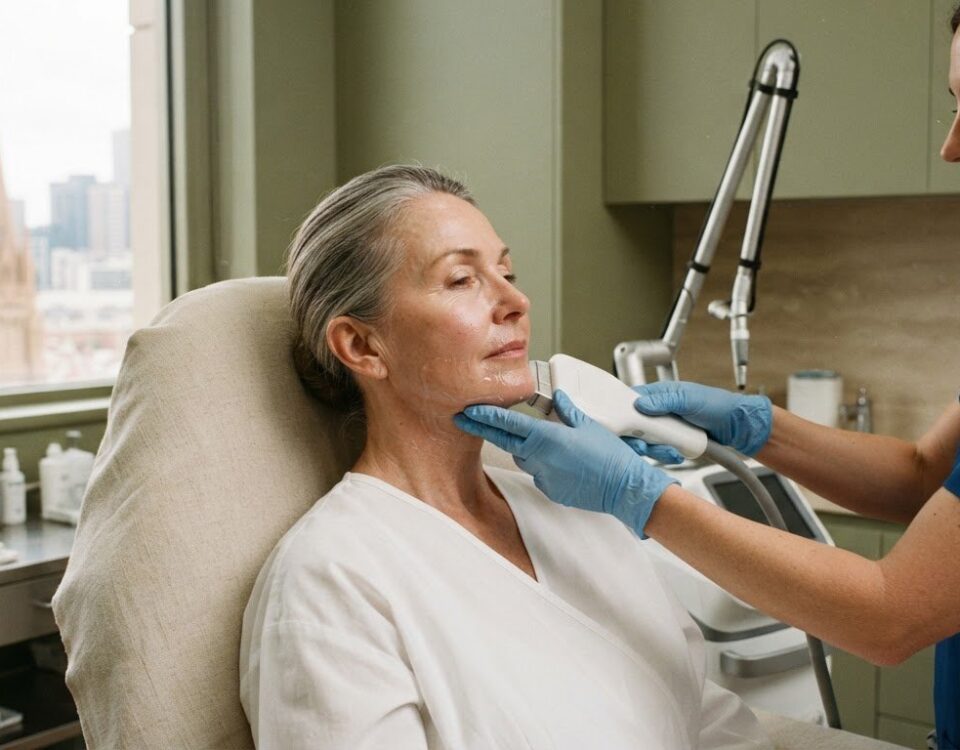
Radiofrequency and HIFU use energy-based approaches intended to tighten tissue, while thread lifting aims to reposition selected facial tissues. Their effects differ from laser resurfacing, which focuses more on skin quality and texture. A consultation should connect the visible concern with the treatment mechanism, expected recovery and relevant risks, rather than treating every sign of ageing as a loss of elasticity.
Surgery is generally more effective for severe eyelid skin laxity, where non-surgical treatments may have limited impact. Non-surgical procedures avoid incisions and sutures and generally involve less healing time, but results may be less lasting than surgical lifting. When considering the best non-surgical eye lift in Melbourne, weigh the amount of excess skin, the change you want and whether a non-surgical method can address the underlying concern.
Non-surgical brow and eyebrow lift options
Brow position can change how the upper eyelids look, so suitability depends on what is causing the concern. The best non-surgical eye lift in Melbourne is the option that addresses the relevant issue, such as brow descent, eyelid skin laxity or changes in skin quality.
Prescription injectables can alter muscle activity around the brow, while HIFU uses focused energy to target tissue tightening. PDO Thread Lifting takes a different approach by repositioning selected facial tissues. These procedures work through distinct mechanisms, and a higher-looking brow does not mean excess eyelid skin has been removed.
Some non-surgical lifting plans involve more than one treatment session. Collagen production and tissue remodelling develop progressively, so visible changes may emerge as healing proceeds rather than immediately. During assessment, the practitioner considers brow height, eyelid skin, facial movement and symmetry to determine which concerns a treatment can address.
For a specific procedure, ask Medicare and your private health insurer whether any benefit applies, and get their guidance before deciding. Do not assume an elective cosmetic treatment is eligible.
Risks and side effects vary by procedure and treatment area. Temporary swelling or bruising can occur after under-eye rejuvenation; small dimples or lumps typically resolve within 7 days after treatment. Plasma fibroblast treatment may cause mild redness and tiny scabs that heal within days. These are examples of possible effects, not a complete risk profile for every procedure.
Recovery depends on the selected treatment. Light daily activities may resume immediately after under-eye rejuvenation, while strenuous activity is generally avoided for 48-72 hours, following practitioner advice. Avoid direct sunlight after non-surgical blepharoplasty, and follow the aftercare instructions provided for your procedure. For a brow-focused assessment and discussion of non-surgical lifting options, arrange a clinical consultation.
Skinstitute: PDO Thread Lifting
Skinstitute offers PDO Thread Lifting for people considering non-surgical facial lifting. A thread lift uses threads to reposition selected facial tissues, which may be relevant when brow position contributes to a hooded appearance. It does not remove excess eyelid skin, so suitability depends on the cause and extent of the concern.
A face-to-face consultation considers brow position, eyelid skin and facial structure before treatment planning. The discussion can clarify whether PDO Thread Lifting aligns with your goals and explain its limitations. If you’re considering this approach for changes around the brow or eyes, contact Skinstitute to arrange a consultation.
Plan your next step with clarity
Finding the best non-surgical eye lift in Melbourne starts with defining the change that matters most to you. Consider whether your priority is brow position, eyelid skin, lines or texture, and how much recovery time you can accommodate. The right option depends on your anatomy, goals and the degree of change you’re seeking.
A clinical discussion can turn those priorities into a considered plan. Skinstitute offers PDO Thread Lifting, prescription injectables and Fractional CO2, each addressing different aesthetic concerns. The purpose of an assessment is to establish which approach best aligns with your needs, explain relevant limitations and outline the factors involved before you decide whether to proceed.
There’s no need to settle on a procedure before discussing your concerns. Bring your questions about suitability, possible effects and recovery to a conversation with the team. Contact Skinstitute to discuss your options and take an informed next step towards an approach suited to you.
Frequently Asked Questions
Non-Surgical Face Lifts – What Are They?
A non-surgical face lift describes a treatment goal, not one standard procedure. The term can refer to approaches for different facial areas, from the brow to the lower face, ranging from clinical modalities to holistic wellness platforms like Face Up that focus on facial sculpting. A treatment plan should identify the specific feature being addressed and explain the intended change. This helps you understand what a proposed procedure can and cannot do.
How can I book my consultation or treatment?
Contact Skinstitute to request a consultation in Melbourne. Before your appointment, note your main concern, when you notice it most and any previous procedures around the eyes. Bring a list of relevant medicines and allergies, too. These details help the practitioner understand your circumstances and discuss suitable options, treatment considerations and aftercare.
How long do results last?
Non-surgical facelift results typically last between 12 and 18 months, with duration influenced by the treatment and number of sessions. Different methods address different tissues, so this timeframe is not a fixed expiry date for every procedure. Maintenance may be considered once or twice a year, depending on the treatment plan and how results change over time.
How long does it take?
Under-eye bag rejuvenation typically takes around 1 hour for the treatment. This timing does not include a separate consultation or any time needed to discuss aftercare. Other procedures have different treatment durations, depending on the method and area involved. The treatment plan should clarify the expected appointment time before a procedure is scheduled.
What are the benefits of a non-surgical facelift?
A key benefit is being able to focus on a defined concern rather than treating the whole face. For example, a plan may address brow position while leaving unrelated areas untreated. This targeted approach helps align the procedure with your priorities. The expected change should be clearly explained, especially when loose skin is more extensive.
What is involved in non-surgical minimally invasive eye bag rejuvenation?
The practitioner first assesses whether under-eye bags relate to hollowing or a change in the cheek-to-eye contour. Treatment may involve a resorbable, non-permanent dermal product to restore volume in selected soft tissues. The procedure is performed in a fully equipped treatment room under local anaesthesia and typically takes around 1 hour. The approach depends on the underlying concern.