Fractional CO2 Laser Melbourne: A Clinical Guide to Medical-Grade Resurfacing
June 14, 2026
Clinical Guide to Lip Filler in Melbourne: Achieving Anatomical Harmony
June 16, 2026
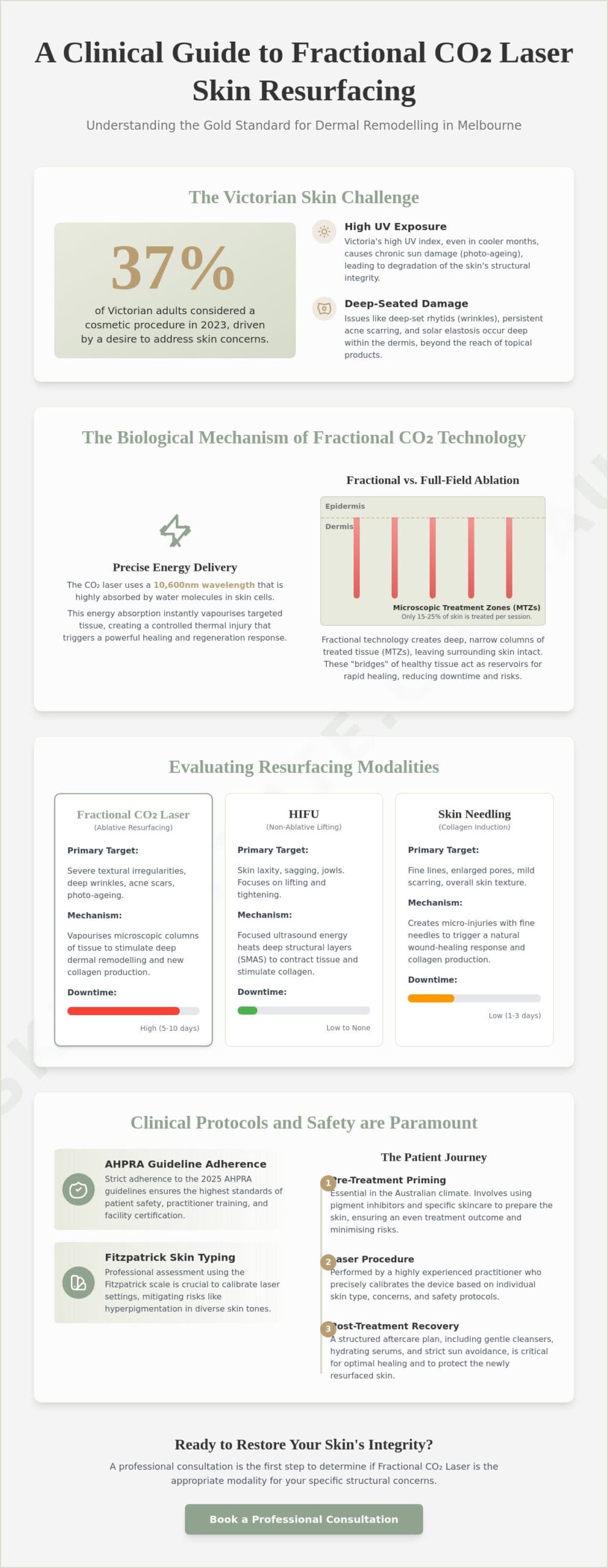
In 2023, research indicated that 37% of the adult population in Victoria were considering a cosmetic procedure, a figure that highlights a growing demand for clinical skin interventions. You probably understand the difficulty of addressing deep-set rhytids or persistent acne scarring that has been exacerbated by years of exposure to the harsh Australian sun. Choosing between various technologies can be difficult, especially when trying to discern the functional differences between ablative and non-ablative modalities. This guide offers a comprehensive medical evaluation of how laser skin resurfacing melbourne utilises fractional CO2 technology to restore skin structural integrity and promote cellular regeneration. We will examine the physiological mechanisms of controlled thermal injury, the latest advancements in dual-wavelength scanning, and the essential safety protocols mandated by the 2025 AHPRA guidelines. This overview ensures you have the technical insight required to understand how these professional treatments interact with the body to produce measurable, evidence-based results.
Key Takeaways
- Understand how environmental factors in Victoria necessitate specific clinical protocols for laser skin resurfacing melbourne to effectively address photo-ageing and textural irregularities.
- Learn the physiological impact of the 10,600nm wavelength and how microscopic columns of thermal injury stimulate deep-seated dermal remodelling and tissue regeneration.
- Evaluate the functional differences between fractional CO2, High Intensity Focused Ultrasound (HIFU), and skin needling to determine the most appropriate modality for your specific structural concerns.
- Identify the critical role of pre-treatment skin priming and pigment inhibitors in mitigating post-inflammatory hyperpigmentation risks associated with the Australian climate.
- Recognise the importance of practitioner experience and strict adherence to 2025 AHPRA guidelines when selecting a medical-grade facility for advanced laser procedures.
Understanding Laser Skin Resurfacing in the Melbourne Context
Residents of Melbourne navigate a unique dermatological environment where the Victorian climate frequently presents a high UV index, even during the cooler months. This chronic solar exposure leads to the progressive degradation of the skin’s structural integrity, manifesting as loss of elasticity and uneven texture. Unlike superficial aesthetic peels that primarily focus on the stratum corneum, laser skin resurfacing melbourne is a medical-grade intervention engineered for deep-tissue dermal remodelling. This procedure addresses physiological changes occurring well beneath the epidermis. The Carbon-dioxide (CO2) laser remains the definitive technology for this level of correction. It utilises a specific wavelength to vapourise damaged cellular structures while simultaneously initiating a robust wound-healing response. In a multicultural city like Melbourne, clinical experience is paramount. Practitioners must calibrate laser parameters with extreme precision to account for diverse skin phototypes and ensure patient safety.
The Prevalence of Photo-Ageing in Australia
Chronic solar radiation in Australia causes significant damage to the extracellular matrix. It results in the accumulation of abnormal elastin fibres, a condition known as solar elastosis. Topical skincare products often can’t address these deep-seated changes because they don’t penetrate the dermal layer with sufficient intensity. Achieving a visible improvement in skin density requires the application of controlled thermal injury. This process triggers the production of high-quality Type I collagen, which is essential for restoring the skin’s tensile strength and overall resilience. It’s this biological reset that distinguishes clinical laser treatments from standard beauty services.
Identifying Suitable Candidates for Medical-Grade Laser
A professional consultation is necessary to determine if a patient is an appropriate candidate for laser skin resurfacing melbourne. Clinical indicators typically include persistent acne scarring, deep-set rhytids, and significant dyschromia. We use the Fitzpatrick scale to categorise skin types and adjust the laser’s energy delivery accordingly. This precision is vital for preventing complications such as post-inflammatory hyperpigmentation, especially in patients with darker skin tones. We also screen for contraindications, including active dermatitis or the recent use of photosensitising medications, to ensure every procedure adheres to the rigorous safety standards established by the 2025 AHPRA guidelines. This thorough assessment ensures that the treatment plan is both safe and physiologically appropriate for the individual’s specific skin concerns.
The Biological Mechanism of Fractional CO2 Laser Technology
The efficacy of laser skin resurfacing melbourne rests upon the precise interaction between light energy and the skin’s molecular composition. Fractional CO2 lasers operate at a 10,600nm wavelength, a frequency that possesses a high affinity for water molecules within the dermal and epidermal layers. When the laser energy is absorbed by these water-containing cells, it triggers a rapid thermal expansion that vapourises targeted tissue. This process is not a indiscriminate removal of the skin surface; rather, it’s a controlled method of inducing a biological reset through thermal stimuli.
Unlike traditional ablative lasers that remove the entire skin surface in a “full-field” manner, fractional technology delivers energy in a pixelated pattern. This method creates thousands of microscopic treatment zones while leaving the surrounding tissue entirely intact. Fractional CO2 is a method that typically treats only 15% to 25% of the skin surface per session, which significantly reduces downtime compared to older, non-fractionated systems. These bridges of untreated tissue act as biological reservoirs, facilitating rapid re-epithelialisation as healthy cells migrate into the wounded areas to initiate repair. This architecture provides a safety margin that minimises the risk of scarring and permanent pigmentary changes.
Micro-Thermal Zones (MTZs) and Tissue Remodelling
Micro-Thermal Zones are precise, vertical channels of thermal injury that extend deep into the dermis. The sudden elevation in temperature within these zones triggers the release of heat shock proteins and a complex inflammatory cascade. This biological signal alerts the body to begin a comprehensive structural overhaul. For those seeking a clinical evaluation of their skin’s regenerative capacity, understanding these micro-channels is essential. The laser beam’s physics allow for the ablation of damaged tissue while sparing the adjacent skin, which is why the healing process is so much more efficient than previous generations of laser technology.
The Collagen and Elastin Synthesis Cycle
The repair process occurs in two distinct phases. Initially, the heat causes immediate contraction of existing collagen fibres, leading to a visible tightening of the tissue. However, the more significant results stem from long-term neocollagenesis. Fibroblast activation begins shortly after the procedure, but the replacement of thin Type III collagen with robust, structural Type I collagen takes time. Most patients observe peak improvements in texture and elasticity three to six months post-treatment as the new extracellular matrix matures. This timeline reflects the natural biological cycle of tissue regeneration, ensuring that the results are integrated into the skin’s actual structure rather than just sitting on the surface.
Evaluating Resurfacing Modalities: CO2 Laser vs. Alternative Therapies
Professional skin rejuvenation requires a nuanced understanding of how different energy sources interact with biological tissue. While laser skin resurfacing melbourne is the established standard for addressing significant photo-damage and deep textural irregularities, practitioners often evaluate this against other Non-invasive laser and medical aesthetic procedures. The choice depends on the specific depth of the concern and the patient’s capacity for recovery. Clinical decision-making involves matching the pathology of the skin to the most effective energy source, ensuring that the treatment depth aligns with the target tissue layer.
Fractional CO2 vs. Skin Needling
Skin needling, or collagen induction therapy, relies on mechanical micro-injuries to stimulate a healing response. It remains a viable option for milder textural concerns and is generally safer for patients with very high Fitzpatrick skin types who are at greater risk of pigmentary changes. However, for deep-set acne scarring or significant dermal solar elastosis, Fractional CO2 offers a distinct advantage. The thermal component of the laser doesn’t just create a channel; it induces immediate collagen contraction and a more robust inflammatory response. This leads to superior structural remodelling that mechanical injury cannot replicate. While skin needling might involve 24 to 48 hours of erythema, laser resurfacing requires a more dedicated recovery period, typically five to seven days, depending on the intensity of the parameters used.
Synergistic Treatments: Laser and Biostimulators
Modern clinical protocols often involve combining technologies to achieve a more comprehensive result. The clinical rationale for integrating HIFU with resurfacing is based on targeting multiple anatomical levels. HIFU addresses the deeper SMAS layer for lifting, while the laser refines the surface texture. This combination provides a global rejuvenation effect that addresses both laxity and texture. Regarding the post-treatment environment, biostimulators play a critical role in tissue recovery. Utilising Rejuran following a laser procedure can significantly enhance the healing environment. These polynucleotides provide the necessary building blocks for cellular repair, potentially reducing the duration of the re-epithelialisation phase. Similarly, the application of Exosomes can accelerate tissue regeneration by delivering potent growth factors directly to the micro-thermal zones created by the laser. This multi-modal approach ensures that the skin is structurally revitalised from the inside out.
Clinical Protocols: Preparation and Post-Treatment Recovery in Victoria
Successful laser skin resurfacing melbourne depends heavily on meticulous preparation. In the Victorian climate, the risk of post-inflammatory hyperpigmentation (PIH) is elevated due to significant cumulative UV exposure. We mandate a period of skin priming using topical pigment inhibitors for at least two to four weeks prior to the procedure. These agents suppress melanocyte activity, ensuring a more predictable healing response and reducing the risk of rebound pigmentation. For patients seeking to book a professional skin assessment, understanding these preparatory steps is the first step toward a safe and successful outcome.
On the day of the procedure, a topical anaesthetic is applied to ensure patient comfort during the ablation process. Once the skin is sufficiently desensitised, the fractional CO2 laser is systematically applied across the target areas. Following the treatment, we use cooling modalities and clinical-grade occlusives to manage the immediate thermal sensation and reduce initial oedema. The skin will exhibit significant erythema, which is a normal physiological response to the controlled thermal injury.
Seasonal Timing for Laser Resurfacing in Melbourne
Melbourne residents should consider the seasonal UV profile when scheduling deep resurfacing treatments. Late autumn and winter are the preferred periods for this intervention. The lower UV index during these months reduces the risk of accidental solar exposure during the vulnerable re-epithelialisation phase. However, patients must manage the dehydrating effects of indoor heating by using specific hydrating serums and maintaining high moisture levels in their recovery environment. Planning your treatment around social and professional commitments is essential, as the visible healing phase requires a period of relative downtime.
The 7-Day Recovery Timeline
The healing process follows a predictable biological sequence that requires strict adherence to post-care instructions. Managing expectations during this week is vital for patient satisfaction.
- Days 1-2: The skin exhibits significant erythema and a sensation of intense heat, similar to a severe sunburn. Oedema is common, particularly around the periorbital region. We recommend using cold compresses and prescribed ointments to maintain a protective barrier.
- Days 3-5: The micro-thermal zones begin to transition into a “bronzing” effect. Tiny points of micro-crusting occur as the damaged tissue is naturally exfoliated. It’s vital not to manually disturb or pick at this crusting to prevent scarring or infection.
- Day 7+: Fresh, nascent tissue emerges, often appearing slightly pink but significantly smoother. While the skin appears rejuvenated, it remains highly sensitive. This marks the start of the protection phase, requiring strict adherence to broad-spectrum SPF 50+ application every two hours when outdoors, even on overcast Melbourne days.
Selecting a Medical-Grade Clinic for Laser Resurfacing in Melbourne
The decision to undergo laser skin resurfacing melbourne should be predicated on clinical safety rather than commercial convenience. Discount centres or non-medical facilities often lack the diagnostic equipment and technical expertise required to manage high-energy light devices safely. Suboptimal treatment can lead to significant complications; these include persistent erythema, thermal burns, or post-inflammatory hyperpigmentation. A medical-grade environment ensures that every procedure is preceded by a comprehensive diagnostic phase and conducted under strict aseptic conditions. This level of oversight is essential for maintaining the professional standards established by the 2025 AHPRA guidelines.
Technical mastery in laser therapy isn’t acquired quickly. It requires an intimate understanding of laser physics and tissue interaction. Our clinical team possesses over 26 years of industry experience, which is vital for the precise calibration of laser parameters. We adjust fluence, pulse duration, and spot density based on the specific pathology of your skin. This nuanced approach ensures that the energy delivery is sufficient to trigger neocollagenesis without exceeding the skin’s thermal threshold. It’s this level of precision that differentiates a medical procedure from a standard aesthetic service.
The Skinstitute Difference: Over Two Decades of Expertise
Our clinical philosophy prioritises long-term tissue health over transient aesthetic changes. We integrate advanced solutions like Fractional CO2 into bespoke plans that may also include biostimulators or prescription-only interventions. Practitioner stability is a cornerstone of our practice; it allows for the consistent monitoring of your progress over multiple years. Having access to a comprehensive suite of medical-grade technologies, from HIFU to Rejuran, ensures that we aren’t limited to a single modality. We select the specific technology that best fits the biological requirement of your skin tissue.
Booking Your Clinical Assessment
The initial consultation serves as a thorough medical screening and diagnostic session. We perform a detailed clinical skin analysis to identify underlying vascular or pigmentary concerns that might influence your treatment outcome. This process includes screening for body image concerns as mandated by current Australian regulations. Instead of offering a “quick fix”, we develop a structured skin health roadmap. This sequential plan addresses immediate textural issues while fortifying the skin’s structural integrity for the future. You can schedule a clinical skin analysis at Skinstitute Melbourne to begin this evidence-based journey toward dermal regeneration.
Advancing Your Dermal Regeneration Strategy
Achieving meaningful dermal remodelling requires a sophisticated synthesis of advanced technology and rigorous clinical methodology. Fractional CO2 technology provides the necessary thermal stimuli to address deep-seated solar elastosis and complex textural irregularities that standard topical interventions simply cannot reach. The efficacy of laser skin resurfacing melbourne is fundamentally linked to the precision of the initial diagnostic assessment and the strict adherence to Melbourne-specific environmental protection protocols. This methodical approach ensures that the skin’s regenerative capacity is harnessed safely and effectively.
Our practice offers a reassuring sense of stability, drawing upon over 26 years of clinical experience in the Victorian region. We specialise in complex skin regeneration and acne scar revision, utilising medical-grade Fractional CO2 technology to ensure predictable and evidence-based outcomes. By prioritising technical mastery over marketing trends, we provide a structured path toward restored skin structural integrity. We invite you to Book a Clinical Skin Assessment at Skinstitute Melbourne to begin developing a personalised roadmap for your skin’s restoration. Professional guidance ensures your journey is managed with the highest level of technical proficiency and clinical safety.
Frequently Asked Questions
How long does the redness last after fractional CO2 laser resurfacing?
The initial erythema, or redness, typically persists for five to seven days following the procedure. This phase is a normal physiological response to controlled thermal injury as the body initiates its inflammatory cascade. While the most intense redness subsides within the first week, a subtle pinkness may remain for several weeks as the nascent tissue matures and the re-epithelialisation process completes.
Is laser skin resurfacing painful, and what anaesthesia is used?
Patients generally experience a sensation of intense heat during the delivery of laser energy, but the procedure is well-tolerated with clinical interventions. We apply a high-potency topical anaesthetic approximately 60 minutes before the treatment to desensitise the dermal layers. In more intensive cases, integrated cooling systems or nerve blocks are utilised to maintain a manageable comfort level throughout the ablation process.
How many sessions of fractional CO2 laser will I need for acne scars?
Clinical protocols for deep-set acne scarring typically require between one and three sessions to achieve significant textural improvement. Because laser skin resurfacing melbourne relies on long-term neocollagenesis, we space these treatments several months apart. This interval allows the newly formed Type I collagen to mature and integrate into the skin’s structural matrix, providing a more refined and stable result.
Can I have laser resurfacing if I have a darker skin tone?
Patients with higher Fitzpatrick skin types can safely undergo Fractional CO2 resurfacing, provided that specific clinical precautions are observed. This involves a mandatory period of skin priming with pigment inhibitors for at least four weeks prior to the session. We also utilise more conservative laser parameters and higher fractional densities to mitigate the risk of post-inflammatory hyperpigmentation, which is a critical safety consideration for diverse skin phototypes.
What is the difference between ablative and non-ablative laser resurfacing?
Ablative lasers vapourise the surface layer of the skin while simultaneously heating the dermis to trigger robust remodelling. In contrast, non-ablative lasers leave the epidermis intact and work by heating the deeper tissue only. While non-ablative treatments involve shorter recovery periods, ablative Fractional CO2 remains the established standard for correcting deep rhytids and significant photo-ageing because it produces more substantial structural changes.
When is the best time of year in Melbourne to book a laser treatment?
The autumn and winter months are the preferred seasons for booking laser skin resurfacing melbourne due to the lower UV index. Reducing solar exposure during the critical healing window is essential for preventing pigmentary complications and ensuring the integrity of the new tissue. Scheduling treatments during these cooler periods also makes managing the post-treatment erythema phase more comfortable for the patient.
How much does laser skin resurfacing cost in Melbourne?
The financial investment for a clinical laser procedure depends on the anatomical area being treated and the depth of the skin concerns. Industry data from 2026 suggests that single treatments in Melbourne clinics can range from $559 to over $1,799, depending on the technology used and the practitioner’s expertise. A formal clinical assessment is required to determine the exact parameters and provide a precise quote tailored to your specific requirements.
Are the results of fractional CO2 laser permanent?
The structural improvements to the dermal matrix, such as the reduction of acne scarring and the replacement of damaged elastin fibres, are long-lasting. However, the skin remains a living organ that will continue to undergo biological ageing and environmental stress. Maintaining the results of Fractional CO2 requires a committed long-term skin health roadmap, including the daily application of broad-spectrum SPF 50+ to protect the newly regenerated tissue.