Cosmetic Skin Treatments Melbourne: A Clinical Guide for 2026
September 30, 2026
Advanced Aesthetic Treatments in Victoria: A Clinical Guide to Choosing the Right Approach
October 3, 2026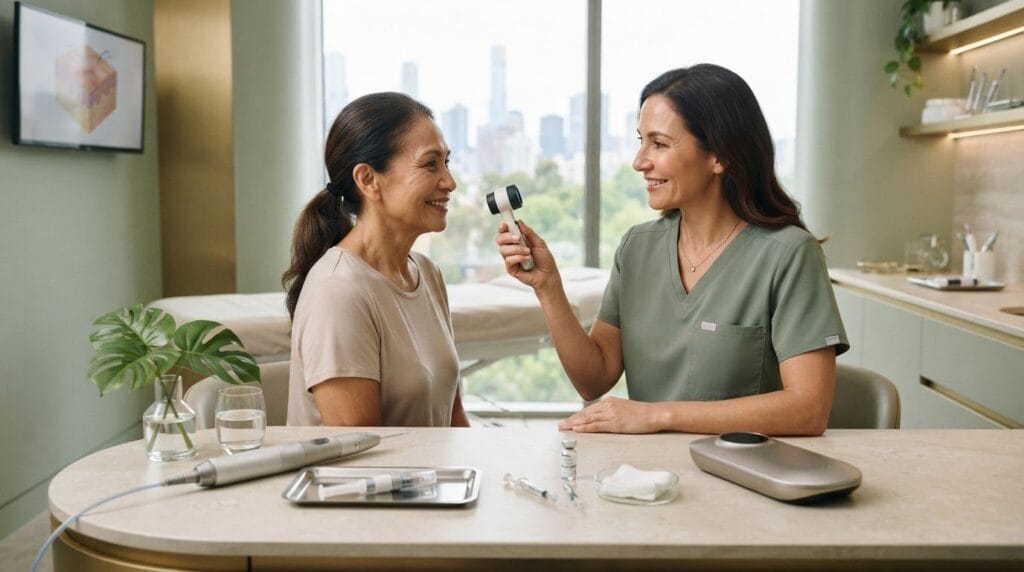
The treatment with the most advanced-sounding name isn’t necessarily the right one for your skin. If you’re comparing medical grade skin treatments melbourne clinics offer, it can be difficult to distinguish treatment types and understand which concerns they may address.
Visible sun damage, uneven texture and acne scarring can call for different approaches. Skin characteristics, relevant medical history, clinical suitability and recovery requirements also affect the decision. A personalised assessment helps connect these factors, rather than relying on a treatment name or general promise.
This guide compares IPL, fractional CO2 laser resurfacing, skin needling, Rejuran and Exosome therapy. It explains what to discuss during a clinical assessment, including your skin concern, treatment approach, recovery and potential risks. At Skinstitute, face-to-face consultations with medical professionals inform tailored treatment planning. The clinic offers fractional CO2, skin needling, HIFU, Rejuran and exosome treatments, drawing on over 26 years of clinical experience in Melbourne.
Key Takeaways
- “Medical-grade” alone doesn’t establish whether a treatment is appropriate. Clinical assessment helps match your skin concern and relevant medical history with a suitable approach.
- IPL uses light, while fractional CO2 is a laser resurfacing approach. Skin needling uses controlled skin injury to support collagen induction. These treatments aren’t interchangeable.
- Medical grade skin treatments melbourne clinics provide differ in suitability, risks and recovery requirements. These factors should be considered for each person.
- Before choosing, describe the concern you want assessed, discuss suitability and recovery, compare treatment approaches and agree on realistic goals with a practitioner.
- A face-to-face consultation can guide a personalised treatment plan, including whether a regeneration plan is appropriate for your skin and goals.
What does medical-grade skin treatment mean in Melbourne?
“Medical-grade” is best understood as a description of a clinical approach, not a guarantee attached to a product or device. In Australia, the term isn’t a formal classification in itself. The clinical context comes from the assessment: a practitioner considers the concern, skin characteristics, relevant medical history and proposed method before planning treatment.
A clinical skin treatment plan matches an assessed concern and individual suitability with a procedure, its likely recovery requirements and appropriate aftercare. A retail skincare routine, by contrast, is a set of products for ongoing home use. Neither a device’s power nor a product’s label establishes that it’s the right choice for a particular person. The field of Cosmetic dermatology includes procedures such as laser treatments and other interventions, but each method still requires consideration of individual circumstances.
How is a clinical skin treatment different from a standard facial?
A standard facial generally supports cosmetic skin maintenance, while a clinical procedure is selected in relation to an assessed concern. The method and treatment depth matter: approaches that act at different levels of the skin may have different recovery needs and aftercare. A clinical assessment helps explain those considerations and whether a procedure is suitable. It doesn’t mean every treatment is appropriate for every person.
Which skin concerns may prompt a medical-grade assessment?
People may seek assessment for pigmentation or visible sun damage, uneven texture, acne scarring, or signs of visible skin ageing. These concerns can have different characteristics, so the same treatment may not suit everyone with a similar-looking issue. Depending on the concern, possible approaches may include light-based treatment, laser resurfacing or skin needling. The clinical guide to medical-grade aesthetic treatments provides further context on treatment categories.
For people considering medical grade skin treatments melbourne clinics provide, compare how the proposed method relates to the concern, your skin and recovery requirements, rather than comparing device names alone. At Skinstitute, face-to-face consultations with medical professionals inform tailored treatment planning, supported by over 26 years of clinical experience in Melbourne.
How Melbourne skin treatments work: comparing treatment approaches
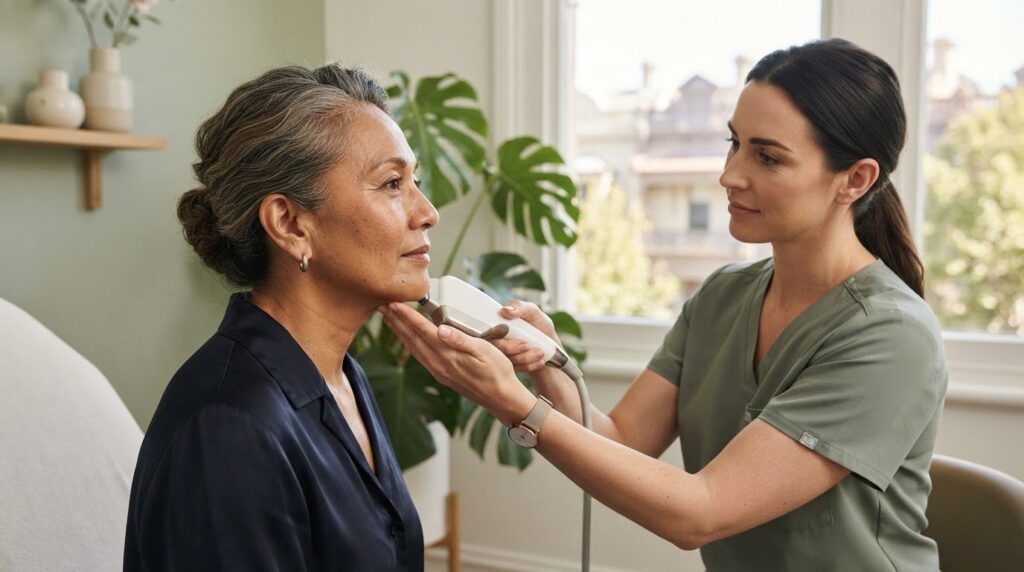
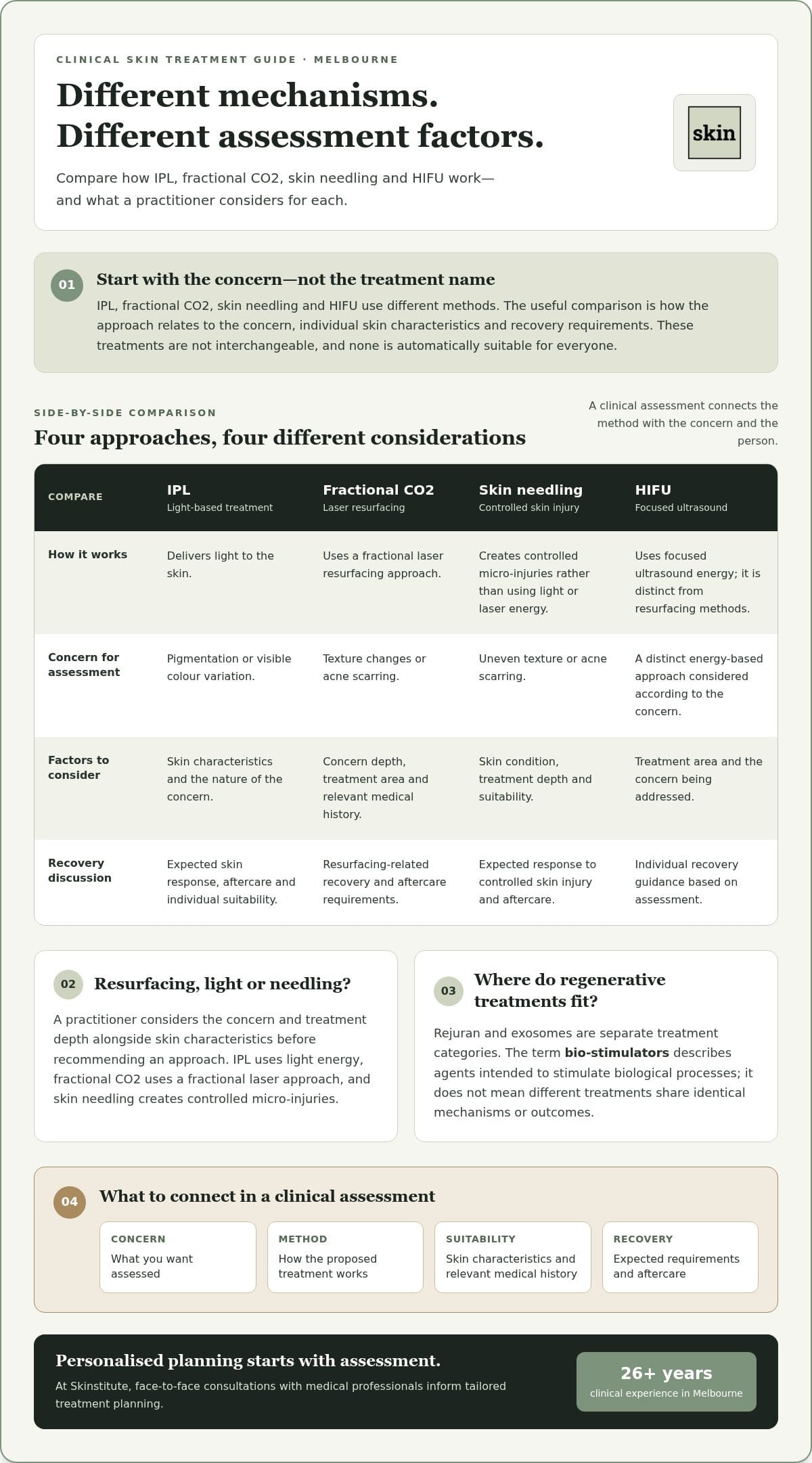
Treatment names describe different mechanisms, not interchangeable solutions. IPL delivers light to the skin, fractional CO2 is a laser resurfacing approach, and skin needling uses controlled skin injury to support collagen induction. HIFU uses focused ultrasound and is a different energy-based approach. The useful comparison is how each method relates to the concern, the skin being treated and the recovery requirements discussed during assessment.
Start by matching the treatment mechanism to the concern, then consider whether the method and its recovery requirements suit the individual.
| Approach | Concern for assessment | Factors to consider | Recovery discussion |
|---|---|---|---|
| IPL, light-based treatment | Pigmentation or visible colour variation | Skin characteristics and the nature of the concern | Expected skin response, aftercare and individual suitability |
| Fractional CO2, laser resurfacing | Texture changes or acne scarring | Concern depth, treatment area and relevant medical history | Resurfacing-related recovery and aftercare requirements |
| Skin needling | Uneven texture or acne scarring | Skin condition, treatment depth and suitability | Expected response to controlled skin injury and aftercare |
| HIFU, focused ultrasound | A distinct energy-based approach considered according to the concern | Treatment area and the concern being addressed | Individual recovery guidance based on assessment |
When might resurfacing, light-based treatment or skin needling be considered?
These modalities work in different ways. IPL uses light energy, fractional CO2 laser resurfacing uses a fractional laser approach, and skin needling creates controlled micro-injuries rather than using light or laser energy. A practitioner considers the concern and treatment depth alongside skin characteristics before recommending an approach. None is automatically suitable for everyone. Read the fractional CO2 laser resurfacing clinical guide for more detail.
Where do HIFU and regenerative treatments fit?
HIFU uses focused ultrasound energy and is distinct from resurfacing methods, so it isn’t a substitute for every concern addressed by IPL, fractional CO2 or needling. Regenerative treatments, including Rejuran and exosomes, are separate categories. The term bio-stimulators describes agents intended to stimulate biological processes; it doesn’t mean different treatments share identical mechanisms or outcomes. Read the clinical guide to Rejuran in Melbourne for further context.
For medical grade skin treatments melbourne patients are considering, a face-to-face discussion can clarify the concern, treatment mechanism and recovery expectations. Practitioner credentials are another consideration; AHPRA provides guidance on checking the national register of practitioners. Skinstitute’s medical professionals provide face-to-face consultations in Melbourne to inform tailored treatment planning.
Are medical-grade skin treatments suitable for everyone? Risks, recovery and realistic expectations
A clinical setting doesn’t make a treatment risk-free or suitable for every person. Medical-grade skin treatments melbourne patients consider can involve different methods, treatment depths and recovery requirements. Suitability depends on an individual assessment, not simply on a treatment’s reputation or the equipment used.
Before proceeding, a clinician should explain the purpose of the proposed treatment, relevant risks, likely recovery needs and aftercare. The discussion should also clarify what the treatment may reasonably address and where its limits lie. A realistic plan allows for individual variation; it doesn’t promise an immediate change or a particular result.
What can affect treatment suitability and recovery?
Assessment considers the skin’s current presentation, the concern being treated and the area involved. Relevant medical history and previous skin treatments may also inform whether an approach is suitable and how it should be planned. A procedure’s effect on the skin and the response that follows can differ between modalities and between individuals, so these details matter when weighing options.
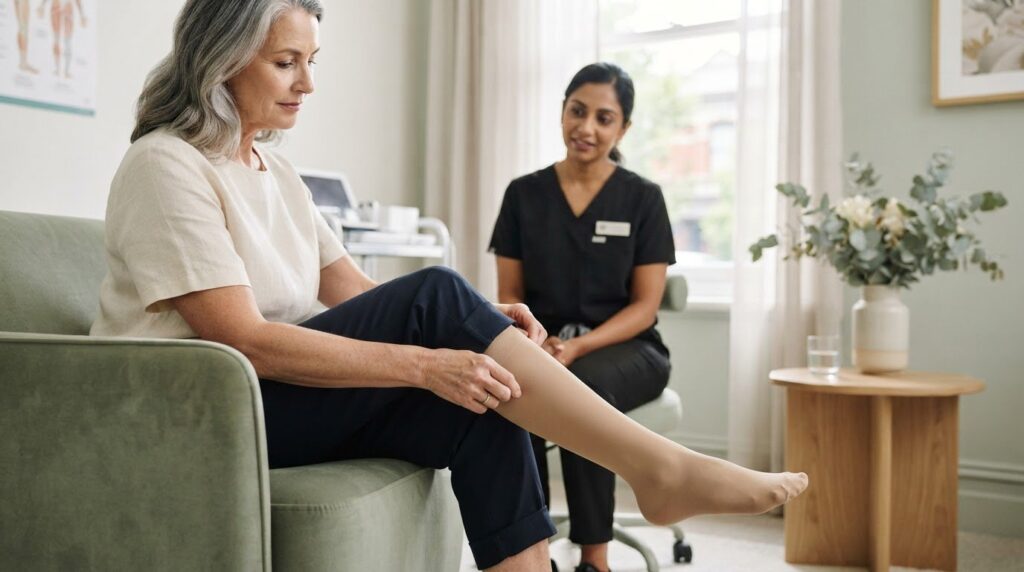
Recovery guidance should be specific to the chosen procedure. Before treatment, a practitioner should explain the expected skin response, aftercare and practical recovery requirements. If the proposed approach or recovery plan doesn’t align with your circumstances, raise that during the assessment before deciding whether to proceed.
How should patients assess claims about treatment results?
Look for an explanation based on the concern being assessed and the treatment’s mechanism, rather than a broad promise that one procedure suits everyone. A clinician should discuss what the approach is intended to address, factors that may affect response and risks relevant to your circumstances. Evidence-informed planning supports realistic expectations, but can’t guarantee an individual outcome.
Individual treatment plans may differ even when people describe similar concerns. Skin characteristics, medical history, treatment area and recovery needs all contribute to the decision. A face-to-face consultation with medical professionals can help clarify these factors and establish specific, considered goals, without treating a general result claim as a prediction for you.
At Skinstitute, consultations are conducted by medical professionals, including a nurse and doctor, and inform tailored treatment planning. The discussion connects the assessed concern with a suitable approach and covers recovery, aftercare and realistic expectations.
How to compare medical-grade skin treatments before choosing a clinic
- Define the concern. Describe what you want assessed, such as pigmentation, texture or scarring, and where it appears. A clinician can help clarify the concern’s characteristics.
- Review suitability. Discuss your skin presentation, relevant medical history and treatment area. These details help inform whether a proposed procedure is appropriate for you.
- Compare approaches. Ask how the suggested method relates to the concern and why it may be considered over another option. The explanation should be based on clinical reasoning, not technology alone.
- Discuss recovery. Understand the expected skin response, aftercare and practical recovery requirements for the specific procedure. Generic guidance may not reflect your individual plan.
- Agree on goals. Set realistic aims with the clinician and clarify what the treatment is intended to address, including its limitations. Outcomes can vary between individuals.
What should a personalised treatment plan explain?
A clear plan identifies the concern being addressed and explains why the proposed approach may be suitable. It should cover relevant risks, expected recovery, aftercare and realistic treatment goals, so you can weigh the plan against your circumstances before deciding. Where appropriate, a regeneration plan can set out sessions and topical enhancements for skin renewal.
Some concerns may call for a sequence or combination of modalities, but this should follow clinical assessment rather than an assumption that more treatments will produce a better result. The clinician should explain the reasoning, order and recovery considerations for your individual plan.
How does a Melbourne consultation help refine treatment choice?
A face-to-face consultation allows Skinstitute’s medical professionals to assess your concern and discuss your skin, relevant history and recovery requirements. The assessment can refine the options and inform a tailored plan without promising a particular outcome. Skinstitute brings over 26 years of medical aesthetic experience in Melbourne to this assessment-led process.
For medical grade skin treatments melbourne, a consultation helps you make an informed decision based on individual suitability, rather than a general claim or trend. Explore Skinstitute’s clinical consultation.
Your next step for medical-grade skin treatment in Melbourne
A considered treatment decision brings five factors together: the concern you want assessed, the mechanism of a proposed treatment, your individual suitability, the recovery involved and the goals agreed with your clinician. This keeps the discussion focused on clinical reasoning rather than choosing a procedure by name or trend.
What happens after the clinical assessment?
Assessment findings inform a discussion of approaches that may be suitable for your skin and concern. Your clinician can explain the reasoning behind a recommendation, relevant risks, expected recovery and aftercare. The plan is individualised, so a procedure or sequence that may suit one person won’t automatically be appropriate for another. No treatment can guarantee a particular result or recovery experience.
Depending on the concern and clinical assessment, the plan may include one approach or a considered sequence of treatments. The aim is to clarify what each recommended step is intended to address, how it fits your goals and what recovery requirements to factor into your decision.
How can patients prepare for an informed discussion?
Before your appointment, consider how to describe your main concern and the changes you hope to achieve. Sharing relevant medical history and previous skin treatments can help inform the assessment. Note any questions about suitability, risks, aftercare and recovery. You don’t need to choose a treatment in advance; the clinician can explain the options and the reasoning behind a tailored plan.
Skinstitute provides face-to-face consultations with medical professionals across the Melbourne metro area, drawing on over 26 years of medical aesthetic experience. If you’re considering medical grade skin treatments melbourne, a consultation is a practical next step to discuss your concern, suitability and realistic treatment goals.
Book a clinical consultation to discuss a personalised treatment plan with Skinstitute.
Take the next step with a personalised skin plan
Choosing a treatment starts with identifying the concern, then considering how a procedure works, whether it suits your skin and medical history, and what recovery may involve. For people comparing medical grade skin treatments melbourne clinics provide, the treatment name or technology alone can’t determine the right approach. A face-to-face assessment helps bring these factors together and establish realistic goals.
At Skinstitute, consultations are performed by medical professionals, including a nurse and doctor. They assess your concerns and discuss suitable approaches, relevant risks, recovery and aftercare before treatment planning. This personalised process is informed by over 26 years of medical aesthetic experience in Melbourne, without assuming one procedure or outcome is right for everyone.
A clear conversation is a constructive first step. Bring your questions and describe what you hope to address, then consider the proposed plan in light of your circumstances. Book a clinical consultation with Skinstitute to discuss a tailored treatment plan. With considered guidance, you can make an informed decision at a pace that feels right for you.
Frequently Asked Questions
What are medical-grade skin treatments?
Medical-grade skin treatments are clinic-based procedures selected after considering a person’s skin concern, treatment goals and suitability. The term covers different methods, so it doesn’t describe one specific procedure or guarantee a particular result. A useful consultation explains the proposed approach, relevant risks, expected recovery and aftercare in clear language. The appropriate option depends on individual assessment, not the label applied to a treatment or device.
Are medical-grade skin treatments suitable for every skin type?
No single treatment is suitable for everyone. Suitability depends on the concern being addressed, skin presentation, relevant medical history and the procedure under consideration. A clinical consultation allows these factors to be discussed before a plan is made. The practitioner should explain relevant limitations, risks and recovery needs for the proposed approach, rather than relying on a general claim that a treatment works for all skin types.
How do I choose between IPL, fractional CO2 laser and skin needling?
These treatments use different approaches and aren’t interchangeable. IPL is light-based, fractional CO2 is a resurfacing laser, and skin needling uses controlled needling to support collagen induction. The relevant comparison depends on your concern, treatment depth, suitability and recovery requirements. A clinician can explain why an approach is being considered, what alternatives may be relevant and how your skin and medical history inform the recommendation.
Can medical-grade treatments address pigmentation, texture and acne scarring?
Different treatment approaches may be considered for pigmentation, uneven texture or acne scarring, but no single modality is automatically appropriate for all these concerns. Assessment helps clarify the skin presentation, intended treatment target and relevant suitability factors. A clinician can then discuss whether an approach may be appropriate, what recovery could involve and what goals are realistic. Individual responses vary, so a treatment shouldn’t be assumed to resolve every concern.
What should I expect during a skin treatment consultation in Melbourne?
A consultation is an opportunity to explain your concerns and discuss relevant medical history, goals and suitability. At Skinstitute, face-to-face assessment informs tailored treatment planning, with consultations performed by medical professionals, including a nurse and doctor. The discussion should cover the proposed approach, relevant risks, expected recovery and aftercare. Skinstitute brings over 26 years of medical aesthetic experience in Melbourne, supporting an informed conversation before you decide whether to proceed.
Do medical-grade skin treatments involve downtime?
Recovery varies according to the procedure, treatment area and individual response. Different approaches can have different aftercare and recovery requirements, so a general timeline won’t apply to every treatment. Before proceeding, discuss the expected recovery for the proposed procedure, relevant risks and aftercare instructions with your clinician. This helps you understand what the treatment may involve and plan around your circumstances, without relying on a fixed or guaranteed recovery experience.
How can I tell whether a skin treatment plan is evidence-informed?
An evidence-informed plan explains the concern being assessed, why a particular approach is being considered and what limitations apply. It should also address your suitability, relevant risks, recovery and realistic goals in language you can understand. Be cautious of guaranteed outcomes or claims that one treatment is right for everyone. A clinical consultation should help you understand the reasoning behind an individualised recommendation and how it relates to your circumstances.