HIFU Treatment Cost in Melbourne: A Clinical Guide to Value and Results
August 17, 2026
Exosome Therapy Melbourne: A Clinical Guide to Cellular Skin Regeneration
August 19, 2026
The most effective way to restore a youthful appearance isn’t necessarily by filling every line, but by strategically supporting the underlying bone and fat pads that define the midface. When researching options for cheek filler Melbourne patients often seek a lift that looks indistinguishable from nature, yet many fear the over-volumised “pillow face” aesthetic that results from poor anatomical placement. It’s understandable to feel hesitant when the industry landscape is crowded with conflicting information and varying levels of practitioner expertise.
You’ve likely noticed that gradual volume loss in the cheeks leads to a tired appearance and a lack of support for the under-eye area. It’s common to feel that your reflection no longer matches your internal vitality, yet concerns regarding practitioner qualifications and unnatural outcomes often stall the decision to seek treatment. This guide will explain the medical-grade science behind midface restoration and how a 26-year clinical legacy ensures your results are anatomically precise. We’ll examine the functional differences between volumising agents and bio-stimulators, alongside the importance of AHPRA compliance in the current regulatory environment. This overview details the technical methodology required to achieve a sophisticated result that respects your unique facial structure.
Key Takeaways
- Understand the biological mechanisms of midface ageing, specifically how bone resorption and the depletion of deep fat pads necessitate a structural approach to volume restoration.
- Discover how modern cheek filler Melbourne techniques focus on anatomical precision to avoid an “overfilled” appearance, ensuring results that respect your natural facial proportions.
- Establish a clear decision framework for selecting between prescription injectables, PDO thread lifting, and bio-stimulators based on whether you require volume replacement or structural lifting.
- Identify the essential safety protocols and AHPRA regulatory requirements, including the necessity of a medical consultation and a formal prescription for all injectable procedures.
- Learn the clinical benefits of a multi-modality approach, such as using HIFU to tighten the SMAS layer before addressing volume loss with medical-grade injectables.
The Evolution of Cheek Filler in Melbourne: Beyond Superficial Beauty Trends
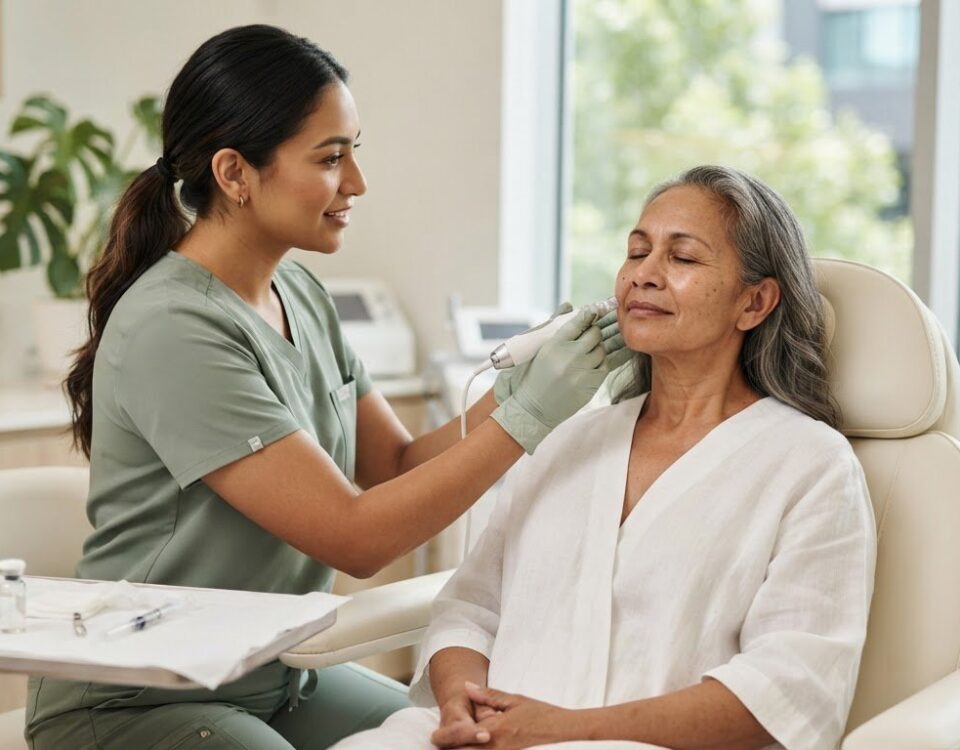
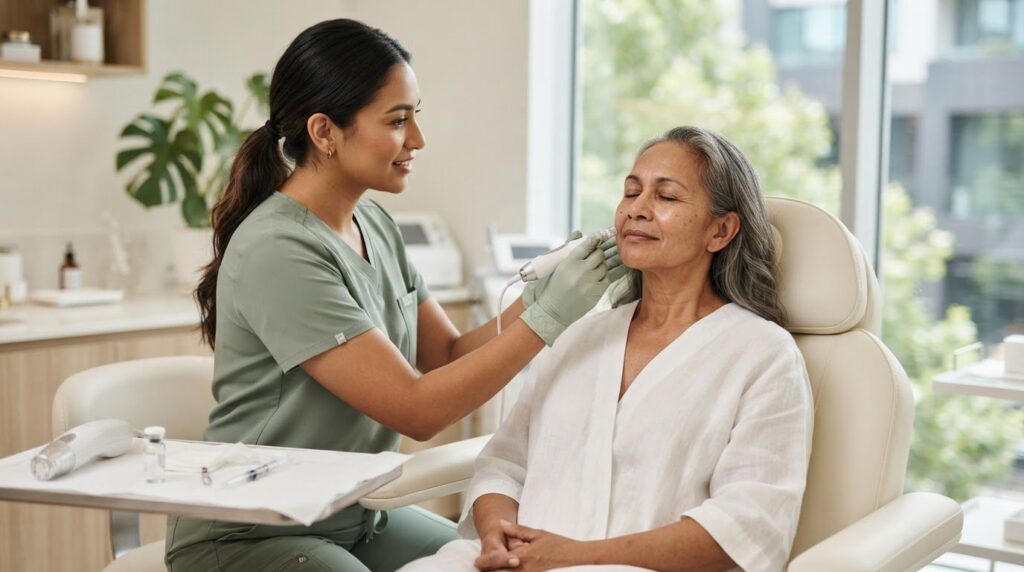
Injectable fillers are historically associated with cosmetic enhancement, but modern clinical practice defines them as medical-grade prescription injectables. These substances work by replenishing the volume lost through the natural ageing process, specifically within the midface. In the past, the aesthetic industry was often defined by an “overfilled” era, where excessive product was used to mask wrinkles without regard for facial dynamics. Today, the focus has shifted toward anatomically respectful rejuvenation. This approach prioritises the restoration of natural contours rather than simply inflating the skin. When considering cheek filler Melbourne patients are increasingly prioritising clinical longevity, choosing practitioners who operate within medical-grade environments to ensure procedural safety and minimise the risk of complications.
The Shift Toward Bio-Restoration
Why a 26-year clinical legacy matters
Experience in aesthetic medicine isn’t just about the number of procedures performed; it’s about the depth of longitudinal patient data. A 26-year clinical legacy allows a practitioner to observe how different facial structures age over decades, providing the insight needed to predict how a treatment will look years into the future. Anatomical mastery is the primary defence against filler migration, a common issue where product shifts from its intended position. Distinguishing between a boutique beauty studio and a medical-grade institution is essential for patient safety. A clinical institution provides the rigorous oversight and technical proficiency required to manage complex facial anatomy, ensuring that cheek filler Melbourne treatments remain stable and effective throughout the patient’s ageing journey.
The Biological Science of Midface Volume: Why Cheek Fillers Address Structural Ageing
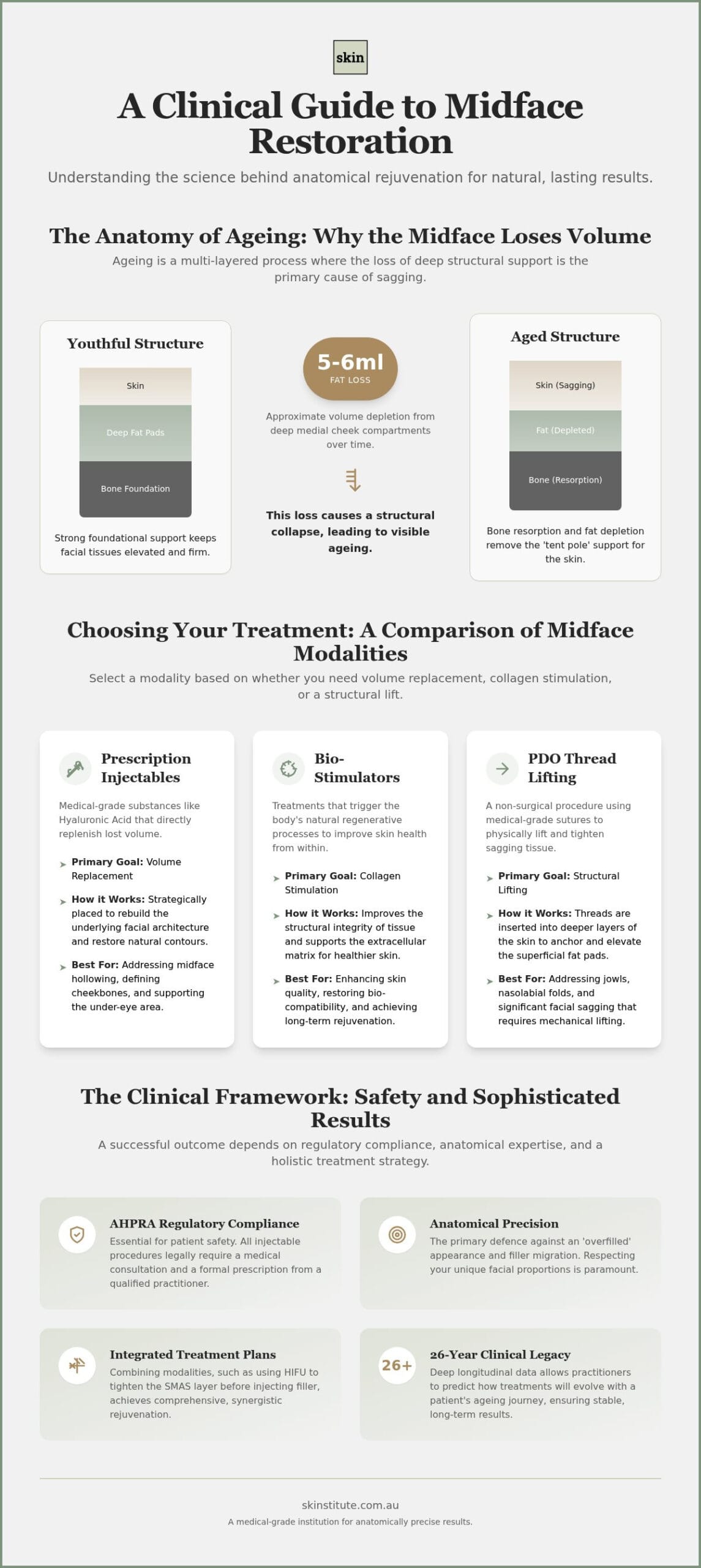
Ageing of the midface is a multi-layered process that begins deep within the facial architecture. While many perceive ageing as a surface-level issue of fine lines, the primary cause of facial sagging is the loss of structural support. When administering cheek filler melbourne practitioners must account for bone resorption, a process where the facial skeleton gradually shrinks and recedes. This skeletal recession removes the “tent pole” support that keeps the overlying muscle and skin in a youthful, elevated position. Without this foundation, the midface loses its projection and begins to collapse inward.
Beyond bone loss, the depletion of deep fat pads plays a critical role in the development of midface hollows. Clinical data suggests a loss of approximately 5-6ml of fat within the deep medial cheek compartments as we age. When this deep support vanishes, the superficial fat pads lose their anchor and slide downwards toward the jawline. This descent creates secondary concerns, such as the deepening of nasolabial folds and the appearance of tear troughs under the eyes. To support the recovery of these tissues, exosomes facilitate cellular communication for skin repair during the rejuvenation process. Understanding these biological shifts is essential for any professional clinical consultation aimed at natural restoration.
Bone Resorption and Skeletal Support
The facial skeleton provides the foundation for the “Golden Ratio,” the mathematical proportion often associated with aesthetic harmony. As bone density decreases, this symmetry is disrupted, leading to a flatter profile and less definition. Placing medical-grade injectables directly onto the periosteum, the membrane covering the bone, allows for a more natural lift. This specific technique mimics the missing skeletal structure, providing a stable base for the soft tissues. Structural replenishment is a physiological necessity to restore the midface without creating an artificial or “puffy” appearance that lacks underlying support.
Fat Pad Descent and Tissue Laxity
The relationship between deep and superficial fat is dynamic and highly dependent on structural integrity. When deep fat pads deplete, the “envelope” of the face becomes too large for its contents, leading to visible sagging. This is exacerbated by the degradation of collagen and elastin, which reduces the skin’s ability to snap back into place. Integrating Rejuran in Melbourne can help repair the skin barrier and improve tissue quality alongside volume restoration. By addressing the skin’s biological health, we ensure the dermal layer is resilient enough to hold the restored volume in its correct anatomical position.
Comparing Midface Modalities: Dermal Fillers, Rejuran, and PDO Thread Lifting
Selecting the appropriate intervention for midface rejuvenation requires a clear understanding of the patient’s anatomical deficiencies. We utilise a specific decision framework to determine whether a patient requires volume replacement or mechanical repositioning. While cheek filler Melbourne remains the clinical standard for restoring lost projection, other modalities like Rejuran and PDO thread lifting offer distinct biological and mechanical advantages. A pan-facial approach often integrates these diverse methods to address both structural collapse and skin laxity simultaneously, ensuring the results are cohesive rather than fragmented.
Dermal Fillers for Structural Projection
Hyaluronic acid is the superior choice when the primary goal is to redefine the cheekbone or replace deep volume loss. These prescription injectables provide immediate structural projection by mimicking the underlying bone. One significant clinical benefit of these fillers is their reversibility, which serves as a critical safety feature. In a professional Melbourne clinic, we adhere to a “less is more” philosophy, ensuring that the volume added respects the natural proportions of the face without creating an artificial contour.
- Hyaluronic acid provides immediate, predictable projection of the midface.
- Reversibility ensures a high safety profile for every patient.
- Precise placement avoids the “heavy” look associated with overfilling the skin.
Bio-Stimulators: The Regenerative Alternative
For patients who wish to avoid the potential “heaviness” of traditional fillers, bio-stimulators like Rejuran offer a regenerative solution. These polynucleotides focus on cellular repair and the restoration of the skin barrier rather than immediate volume expansion. To ensure optimal outcomes with these advanced treatments, practitioners often consult clinical resources from Skin Candy to stay informed on the latest skin booster protocols. Exosomes further enhance this process by facilitating cellular communication, which improves skin texture and reduces chronic inflammation. Ideal candidates for bio-remodelling are often those with early signs of tissue laxity who are prioritising long-term skin health over dramatic augmentation.
- Polynucleotides repair the skin at a cellular level to improve resilience.
- Exosomes reduce post-procedural inflammation and refine the skin’s surface.
- Bio-stimulators are ideal for maintaining a “light” and natural aesthetic.
PDO Thread Lifting for Non-Surgical Tightening
When the primary concern is the downward descent of tissue rather than volume depletion, PDO thread lifting provides the necessary mechanical tension. These threads allow for the repositioning of sagging skin without adding unnecessary bulk to the midface. As the threads dissolve over several months, they stimulate the body’s natural collagen production, providing a secondary tightening effect. Combining threads with a targeted application of cheek filler Melbourne creates a comprehensive “liquid lift” that addresses both sagging and hollowness in a single, cohesive treatment plan.
The Clinical Consultation: Navigating Safety and AHPRA Regulations in Melbourne
A medical-grade aesthetic assessment is a rigorous process that prioritises patient safety over immediate cosmetic results. In Australia, the substances used for volume restoration are classified as Schedule 4 (S4) medications, which means they’re prescription-only. This legal framework requires a formal, real-time consultation with a prescribing practitioner, such as a doctor or nurse practitioner, before any procedure can commence. The 2026 AHPRA guidelines have significantly increased the level of protection for cheek filler melbourne patients by mandating that registered nurses possess at least 12 months of full-time general nursing experience. These regulations ensure that practitioners have a foundational understanding of acute care and patient safety before specialising in cosmetic medicine. By adhering to these strict standards, clinical institutions provide a level of oversight that protects patients from the complications associated with unqualified or unsupervised injectors.
Anatomical Mapping and Symmetry Analysis
Clinical photography serves as the foundation for an objective symmetry analysis and longitudinal tracking. While patients often focus on specific lines while looking in a mirror, a practitioner uses high-resolution imaging to identify subtle facial asymmetries and deep structural deficits. The technical process involves precise anatomical mapping to avoid critical vascular structures, such as the facial artery and its branches. This mapping ensures the injectable is placed in the correct tissue plane, whether that is the deep fat pads or the periosteum. This objective approach is essential for achieving a result that looks natural in motion, not just in a static reflection. An objective clinical assessment is always superior to a mirror-led request because it accounts for the complex three-dimensional anatomy of the midface.
Risk Mitigation and Clinical Aftercare
Every medical intervention carries inherent risks, and a transparent medical history is the first line of defence during the consultation. When planning for cheek filler melbourne, the screening process identifies potential contraindications, such as active infections, recent dental work, or specific autoimmune conditions that may affect the body’s inflammatory response. While minor side effects like localised bruising or swelling are expected, a medical-grade setting is fully equipped to manage rare vascular events with established clinical protocols. A mandatory follow-up appointment is a non-negotiable part of the care cycle, allowing the practitioner to review tissue integration and ensure the product has settled without migration. If you’re seeking a practitioner who prioritises these rigorous standards, you can book a clinical consultation at Skinstitute to discuss your specific anatomical needs.
- Mandatory real-time consultation with a prescribing medical professional.
- Thorough screening for contraindications and medical history.
- Objective anatomical mapping using clinical photography.
- Formal follow-up protocols to monitor tissue integration and safety.
The Skinstitute Approach: Integrating Hardware with Cheek Filler for Total Rejuvenation
Achieving a natural and enduring result requires more than the isolated application of prescription injectables. At Skinstitute, we recognise that the success of any cheek filler melbourne treatment is fundamentally linked to the health of the skin ‘canvas.’ When the dermal layers are resilient and the underlying muscular structures are firm, injectables integrate more seamlessly into the tissue. This holistic approach moves beyond the surface to address the multi-dimensional nature of facial ageing. By utilising advanced hardware in conjunction with medical-grade injectables, we can address both the loss of volume and the degradation of skin laxity, a strategy that has defined our clinical practice for over 26 years.
Hardware Synergy: HIFU and Laser
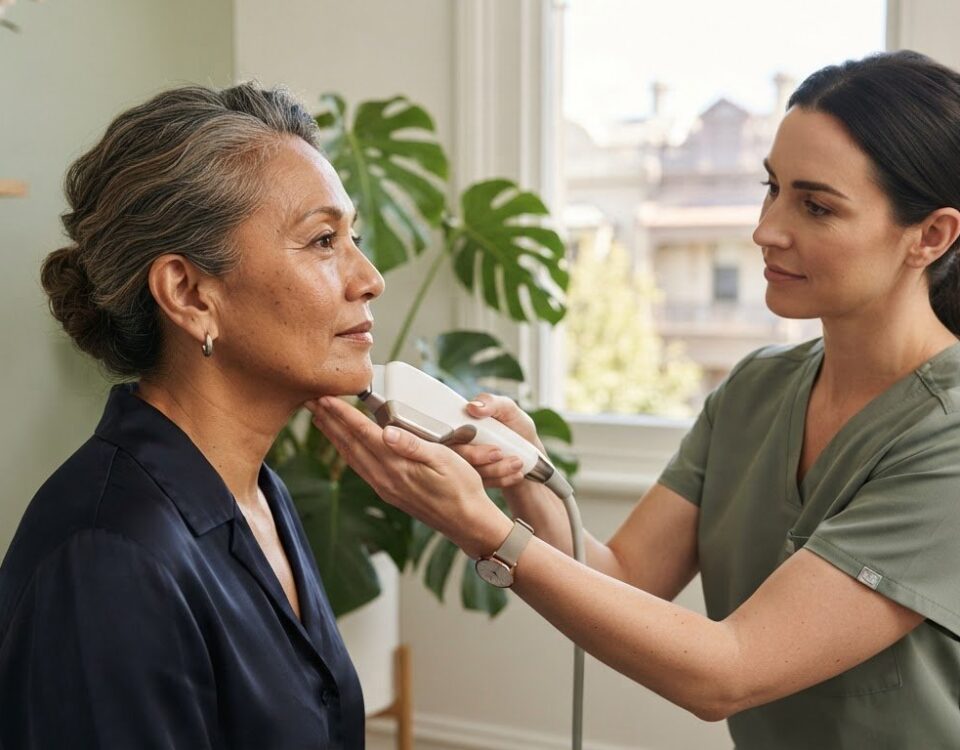
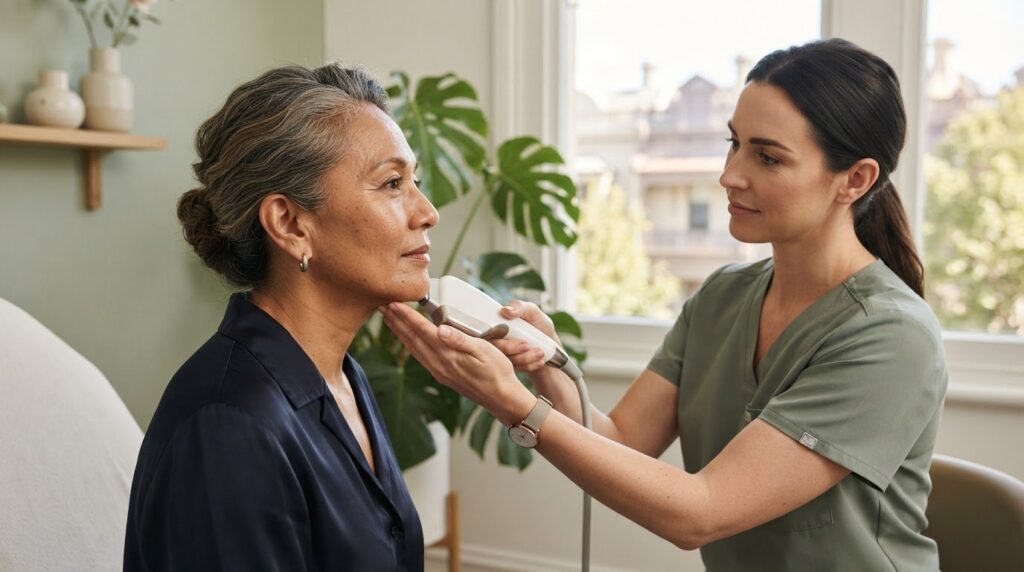
The integration of High Intensity Focused Ultrasound (HIFU) represents a significant advancement in non-surgical rejuvenation. HIFU delivers precise thermal energy to the SMAS (Superficial Muscular Aponeurotic System) layer, which is the same structural foundation addressed during invasive procedures. This process creates a firmer, more contracted foundation, which often reduces the amount of volume required to achieve a visible lift. Once the foundation is secured, Fractional CO2 Laser Resurfacing is often employed to correct surface irregularities and fine lines that volume restoration alone cannot resolve. The clinical timeline typically involves prioritising hardware treatments to tighten the tissue before introducing cheek filler melbourne to restore lost fat pads and skeletal support.
Long-Term Skin Health Planning
Our philosophy emphasises the transition from transactional, one-off sessions to a comprehensive, multi-year skin health roadmap. This longitudinal approach ensures that every intervention supports the patient’s ageing journey over decades rather than months. Maintaining these results requires a commitment to medical-grade homecare, which provides the necessary bioactive ingredients to support the extracellular matrix between clinical visits. For those seeking a detailed overview of our methodology, our Skinstitute Melbourne: Clinical Guide to Medical-Grade Aesthetic Treatments provides further insight into how we synchronise technology with biological science. This evidence-based framework ensures that rejuvenation remains natural, anatomically precise, and medically sound.
Advancing Your Journey Toward Anatomical Restoration
Successful midface rejuvenation requires a transition from superficial cosmetic applications to a deeper understanding of facial architecture. By addressing the biological realities of bone resorption and fat pad depletion, patients can achieve a lift that is both natural and sustainable. This science-led approach ensures that when considering cheek filler melbourne, the focus remains on restoring structural integrity rather than creating artificial volume. It’s about respecting the unique contours of your face while utilising the most advanced medical-grade tools available.
Integrating hardware like HIFU with prescription injectables provides a comprehensive solution for both tissue laxity and volume loss. With over 26 years of clinical aesthetic expertise, we prioritise medical-grade safety protocols and strict AHPRA compliance to ensure your results are anatomically correct and predictable. Taking a methodical, evidence-based approach to your aesthetic care provides the reassurance that your long-term skin health is in professional hands. Book Your Clinical Midface Assessment at Skinstitute Melbourne to begin your structured rejuvenation plan today.
Frequently Asked Questions
What is the difference between cheek fillers and bio-stimulators like Rejuran?
Cheek fillers provide immediate structural projection using hyaluronic acid, whereas bio-stimulators like Rejuran focus on cellular regeneration. While cheek filler melbourne procedures replenish lost fat pads and skeletal support, Rejuran utilises polynucleotides to improve skin elasticity and texture over time. Many patients benefit from a combined approach where fillers restore the underlying foundation and bio-stimulators refine the overlying skin quality for a more comprehensive and natural rejuvenation.
How long do the results of cheek filler typically last in Melbourne patients?
The longevity of results typically ranges from 12 to 24 months, depending on the specific product density and the patient’s individual metabolic rate. High-density fillers used for deep structural support generally last longer than softer gels used for superficial refinements. Regular clinical reviews allow practitioners to monitor tissue integration and determine the optimal timing for maintenance treatments. This ensures the midface remains supported without the risk of overfilling or product accumulation over several years.
Are cheek fillers painful, and what is the expected recovery time?
Most patients experience minimal discomfort during the procedure because modern prescription injectables often contain integrated local anaesthetic. Recovery time is generally brief, with most swelling and localised bruising resolving within 48 to 72 hours. We recommend avoiding strenuous exercise and excessive heat for the first 24 hours to minimise the inflammatory response. Applying cold compresses and following specific clinical aftercare instructions will further facilitate a smooth integration of the product into the facial tissues.
Can cheek filler help improve the appearance of under-eye hollows?
Addressing volume loss in the cheeks often leads to a visible improvement in the under-eye area by restoring support to the tear trough. When the midface fat pads deplete, the skin under the eyes loses its foundation, creating a hollowed appearance. By strategically placing cheek filler melbourne, we can smooth the transition between the lower eyelid and the cheek. This structural reinforcement reduces the depth of shadows and provides a more rested, youthful aesthetic.
What are the risks of cheek filler, and how does Skinstitute manage them?
Potential risks include localised swelling, bruising, and in rare instances, vascular complications or delayed inflammatory nodules. Skinstitute manages these risks through rigorous anatomical mapping and the use of ultrasound-guided techniques when necessary. Our clinical environment is fully equipped with reversal agents and established emergency protocols to address any adverse events immediately. Every procedure is preceded by a thorough medical screening to identify contraindications and ensure the highest possible safety standards for our patients.
How do I know if I need cheek filler or a PDO thread lift?
The choice between these modalities depends on whether your primary concern is volume depletion or tissue descent. Cheek fillers are indicated for patients with visible hollowness or bone resorption who require structural replenishment. Conversely, PDO thread lifting is more effective for mechanically repositioning sagging skin that has lost its vertical position. A clinical assessment determines if you need the “fill” of an injectable or the “lift” of a thread to achieve anatomical harmony.
Is there an age limit for starting midface rejuvenation treatments?
There is no specific upper age limit for midface rejuvenation, provided the patient is in good health and has realistic expectations. AHPRA regulations mandate that patients must be at least 18 years of age for non-surgical cosmetic procedures. Younger patients often seek treatment for congenital lack of definition, while mature patients focus on reversing age-related structural collapse. The clinical focus remains on achieving a result that is age-appropriate and respects the patient’s unique facial proportions.
How much does cheek filler cost at a professional Melbourne medical clinic?
Costs for midface restoration are determined by the volume of product required and the complexity of the anatomical correction. Because every patient’s bone structure and fat pad depletion are unique, a personalised clinical assessment is necessary to provide an accurate quote. Professional medical clinics prioritise the use of high-quality, prescription-only injectables and the expertise of seasoned practitioners. This ensures that the investment reflects the safety, precision, and clinical longevity associated with a medical-grade environment.