Liquid Facelift Melbourne Price: A Clinical Guide to Non-Surgical Rejuvenation
July 2, 2026
Cosmetic Treatments for Men in Melbourne: A Clinical Guide to Masculine Rejuvenation
July 4, 2026
The most effective clinical strategy for managing facial ageing isn’t the correction of established lines, but the proactive preservation of dermal architecture before structural breakdown occurs. Many individuals in Victoria now recognise that waiting for deep creases to form often necessitates more intensive, reactive interventions later in life. For those considering preventative anti-wrinkle injections Melbourne clinics provide a sophisticated pathway to prejuvenation that prioritises biological integrity over temporary aesthetic masks. This approach focuses on the physiological prevention of skin folding, which maintains the dermis in a smoother and more resilient state for a longer duration.
It’s natural to feel concerned about the long term safety of repeated treatments or the potential for an immobile appearance. When administered with technical precision, these prescription medicines work subtly to modulate specific muscular contractions rather than inducing total paralysis. You’ll gain a comprehensive understanding of the medical science behind early intervention and how it actively preserves your natural collagen and elastin stores. This guide explores the essential role of mandatory professional consultations, the physiological mechanics of dermal thinning, and the clinical standards required to achieve enduring skin health while maintaining your natural facial dynamics.
Key Takeaways
- Understand the biological transition from ‘correction’ to ‘prejuvenation’ and how prescription neuromodulators intercept the mechanical stress that leads to permanent dermal folding.
- Identify the critical clinical window for intervention by distinguishing between dynamic expression lines and the formation of static wrinkles that persist at rest.
- Learn how preventative anti-wrinkle injections Melbourne practitioners utilise can be integrated with bio-stimulators like Rejuran to enhance dermal thickness and cellular repair.
- Discover why a comprehensive medical assessment is mandatory for S4 prescription treatments to ensure technical precision and long-term skin health.
- Gain insight into the role of acetylcholine in muscle-induced collagen breakdown and how clinical intervention preserves the skin’s structural architecture.
The Clinical Logic of Preventative Anti-Wrinkle Injections
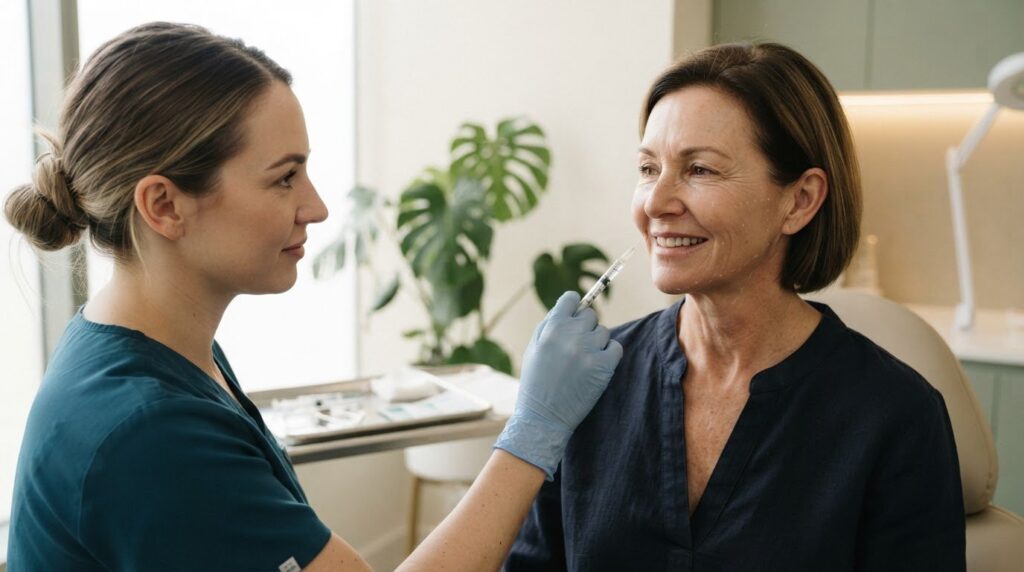
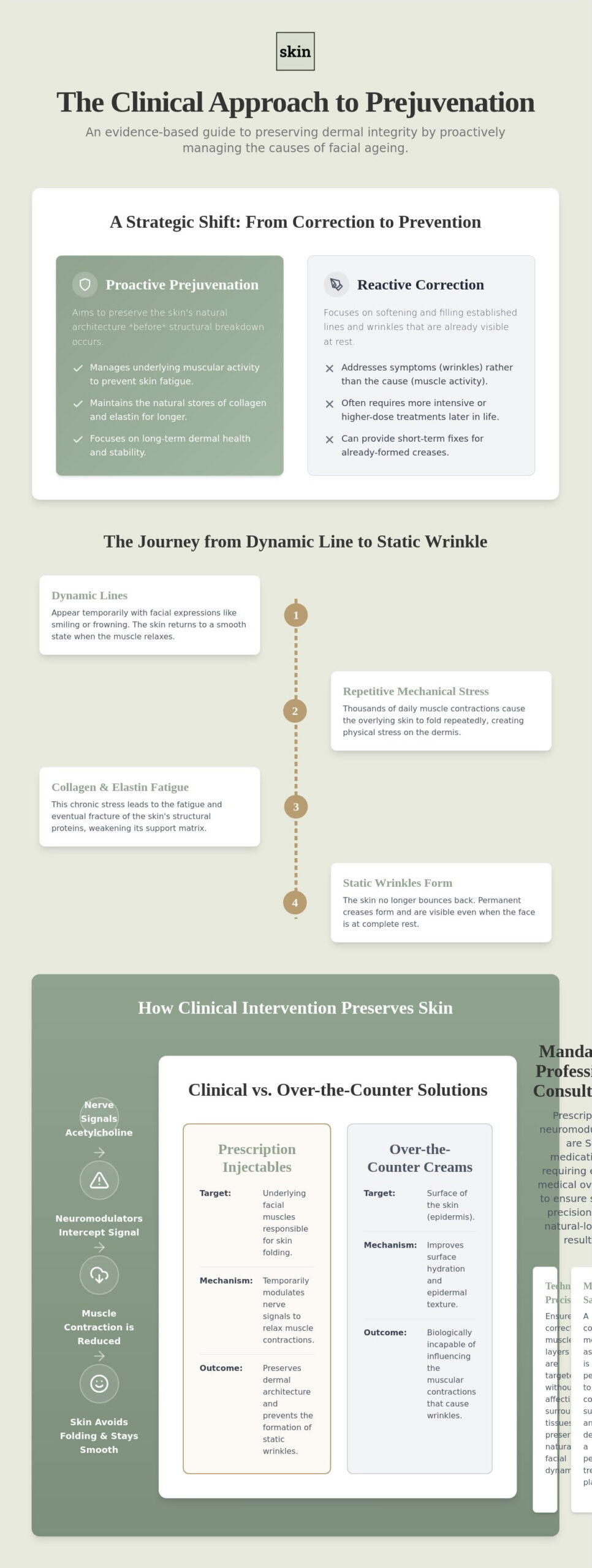
A proactive clinical strategy involves the use of prescription neuromodulators to intercept the formation of permanent facial lines before they become deeply etched into the skin’s architecture. This methodology marks a significant shift in aesthetic medicine from traditional ‘correction’ to what is now termed ‘prejuvenation’. While reactive treatments focus on softening existing creases, preventative anti-wrinkle injections Melbourne practitioners provide are designed to maintain dermal integrity by managing the underlying muscular activity responsible for skin fatigue. By reducing the intensity of specific muscle contractions, we can effectively preserve the smoothness of the overlying tissue.
The distinction between dynamic lines and static rhytids is fundamental to this clinical logic. Dynamic lines appear only during facial expressions, such as frowning or smiling, and disappear once the muscles relax. Static rhytids, however, are permanent indentations visible even when the face is at rest. By intervening during the dynamic phase, clinicians can delay the transition to static wrinkling. Patients in Victoria increasingly prioritise this early intervention to preserve their skin’s natural elasticity and avoid more intensive procedures in the future. It’s a strategic approach to ageing that values long-term stability over short-term fixes.
Understanding Prejuvenation: More Than a Trend
Prejuvenation is an evidence-based approach that slows the mechanical etching of the skin. Every time a muscle contracts, the overlying skin folds. Over thousands of repetitions, this physical stress breaks down collagen and elastin fibres in the dermis. A medical-grade assessment allows a practitioner to identify specific hyperactive muscle groups likely to cause future deep-set wrinkles. By administering precise, low-dose treatments, we can maintain a natural appearance while protecting the skin from structural damage. This foresight ensures that patients don’t require high-dose corrective measures later, which can sometimes lead to a less natural result.
Prescription Injectables vs. Over-the-Counter Solutions
It is essential to understand the biological limitations of topical ‘anti-ageing’ creams. While high-quality skincare can improve surface hydration and epidermal texture, it cannot influence the muscular contractions that drive wrinkle formation. You can learn more about How Neuromodulators Preserve Dermal Integrity by temporarily blocking the chemical signals that cause muscle movement. Because these treatments involve S4 medications, they require professional medical oversight and a formal prescription following a consultation. Clinical-grade precision is necessary to ensure the correct muscle layers are targeted without affecting surrounding tissues, a level of accuracy that over-the-counter products cannot provide.
Mechanism of Action: How Neuromodulators Preserve Dermal Integrity
The physiological efficacy of preventative anti-wrinkle injections Melbourne patients receive is rooted in the modulation of neurotransmission at the neuromuscular junction. Specifically, prescription neuromodulators act by inhibiting the release of acetylcholine, the primary chemical messenger responsible for signalling muscle contraction. When this signal is intercepted, the targeted muscle fibres enter a state of temporary relaxation. This reduction in contractile force is not merely an aesthetic change; it significantly decreases the mechanical stress applied to the overlying dermis, which is the foundational principle of prejuvenation.
Repeated facial expressions act as a form of chronic mechanical trauma to the skin’s structural proteins. Every time a muscle contracts, it creates a fold in the skin, which eventually leads to the fatigue and fracture of collagen and elastin fibres within the dermal matrix. By proactively managing this movement, we allow the skin’s natural regenerative processes to outpace this mechanical damage. Research into Synergistic Therapies: A Holistic Approach suggests that maintaining a stable dermal environment is critical for preventing the premature depletion of the extracellular matrix. This stability ensures the skin remains resilient against the inevitable biological effects of ageing.
The Biological Impact on the Dermal Matrix
Consistent muscle tension causes a ‘creasing’ effect that results in localised dermal thinning over time. By alleviating this tension, we facilitate a more uniform distribution of the skin’s structural components. This often manifests as improved skin texture and enhanced light reflection, as the surface remains smoother and less prone to micro-shadowing caused by fine lines. Preserving the extracellular matrix ensures the skin retains its volume and resilience far longer than if left to endure constant expressive stress. It’s a technical approach that prioritises the long-term health of the skin tissue.
Precision Dosing for Preventative Results
In the context of prejuvenation, the guiding clinical principle is that ‘less is more’. This technique, often referred to as ‘Baby Botox’, involves using micro-doses to soften muscular movement without achieving total immobilisation. Each treatment is tailored to the patient’s unique muscular anatomy and strength, ensuring that full expressive range is maintained. This precision dosing allows for a natural appearance while effectively shielding the skin from the repetitive folding that leads to static rhytids. To determine the specific dosage required for your facial structure, a clinical consultation is the necessary first step in establishing a professional treatment plan.
Determining the Optimal Window for Preventative Intervention
Determining the ideal timing for preventative anti-wrinkle injections Melbourne patients often ask about requires a nuanced understanding of dermal fatigue rather than a strict adherence to chronological age. While many individuals seek consultation in their late 20s or early 30s, the clinical necessity for intervention is dictated by skin quality and the intensity of muscular activity. Factors such as genetic predisposition to hyperactive facial expressions and lifestyle-related stressors, particularly Melbourne’s high UV index, accelerate the breakdown of structural proteins. A proactive approach identifies when the skin’s natural elasticity can no longer fully rebound from repetitive folding.
Clinical assessment prioritises the observation of skin behaviour during and after dynamic movement. There is significant clinical evidence for preventative botulinum toxin use, demonstrating that early intervention can stop the transition from temporary expression lines to permanent structural changes. When dynamic lines, which appear during expression, begin to linger as faint shadows once the face is neutral, the window for prejuvenation is officially open. Addressing these concerns early ensures the dermal architecture remains intact, preventing the need for more complex corrective treatments in later decades.
Signs to Look For: The ‘Resting Line’ Test
The ‘resting line’ test is a simple yet effective diagnostic tool used during a professional consultation. By observing the forehead, glabella, and periorbital regions while the face is completely relaxed, a practitioner can identify subtle etchings that signal early dermal thinning. These faint lines are often most visible in the ‘crow’s feet’ area, where the periorbital skin is significantly thinner and more vulnerable to mechanical stress. Intervening at this stage is far more effective than attempting to ‘fill’ or resurface a deep static line once it has become a permanent feature of the facial landscape.
Customising Treatment for the 20s and 30s
For patients in their 20s and 30s, the clinical objective is to soften high-movement areas without altering the patient’s fundamental facial character. We focus on the forehead, frown lines, and the eye area using a conservative dosing strategy that preserves natural dynamics. This ensures the face remains expressive while the skin is shielded from the repetitive trauma of deep folding. The ‘pre-static’ phase represents the critical interval where dynamic lines are beginning to leave faint impressions but have not yet fractured the underlying dermal architecture. Maintaining this balance requires a practitioner with a deep understanding of facial anatomy and a commitment to subtle, technically proficient outcomes.
Synergistic Therapies: A Holistic Approach to Skin Longevity
While preventative anti-wrinkle injections Melbourne patients utilise are highly effective at modulating muscular movement, they represent only one facet of a comprehensive clinical strategy. Neuromodulators address the mechanical cause of skin folding, yet they do not inherently improve the biological quality or structural thickness of the dermis. To achieve sustainable skin health, it’s necessary to integrate treatments that stimulate cellular repair and reinforce the extracellular matrix. This multi-modality approach ensures that while muscle-induced stress is reduced, the skin itself becomes more resilient to environmental and biological ageing factors.
Modern regenerative medicine provides several pathways to enhance dermal density alongside muscle relaxation. Combining injectables with a Clinical Guide to Rejuran in Melbourne allows practitioners to address skin thinning at a molecular level. By introducing polynucleotides, we can facilitate the repair of damaged DNA and stimulate the production of fresh collagen. Similarly, the application of exosomes following skin needling provides a potent delivery of growth factors and signalling molecules that accelerate tissue regeneration. These therapies work in tandem with neuromodulators to ensure the skin remains firm, hydrated, and capable of maintaining its structural integrity.
Bio-Stimulation: Strengthening the Foundations
Bio-stimulation focuses on healing the skin from within rather than merely masking surface concerns. Polynucleotides are particularly valuable for improving skin barrier function and increasing internal hydration levels, which are often compromised by Melbourne’s fluctuating climate. When used synergistically with anti-wrinkle treatments, these bio-stimulators provide the building blocks necessary for dermal thickening. This combined approach is essential for maintaining the natural ‘glow’ associated with healthy, youthful skin, as it addresses both movement and material quality.
Energy-Based Treatments for Surface Integrity
Surface texture and deep structural support are further refined through energy-based interventions. Utilising Fractional CO2 Laser Resurfacing allows clinicians to organise collagen fibres and address the early signs of sun damage that lead to premature laxity. While injectables manage the active lines, laser treatments resurface the epidermis to improve light reflection and clarity. Additionally, High Intensity Focused Ultrasound (HIFU) can be integrated to provide deep structural lifting, ensuring that all layers of the facial anatomy are supported. To develop a personalised plan that incorporates these advanced technologies, we recommend contacting the clinic for a professional clinical assessment.
The Professional Consultation at Skinstitute Melbourne
Securing a stable and technically proficient outcome begins with a comprehensive medical assessment. Because preventative anti-wrinkle injections Melbourne patients receive involve Schedule 4 (S4) prescription medicines, they cannot be administered without a formal clinical consultation. This initial stage is vital for evaluating your medical history, identifying contraindications, and performing a detailed analysis of your facial muscular dynamics. At Skinstitute, our 26 years of clinical experience ensures that every assessment is conducted with the precision and depth required for medical-grade aesthetic care.
Rather than viewing a visit as a one-off appointment, we focus on developing a long-term ‘Skin Roadmap’. This strategic plan considers how your facial architecture will evolve over time and how various clinical interventions can be sequenced to maintain dermal integrity. During your analysis in our Melbourne centre, we examine the interplay between your bone structure, fat pads, and muscular strength. This thorough understanding allows us to recommend specific dosages and frequencies that align with your biological needs, ensuring that your preventative strategy remains effective as you age.
A Clinical Environment Built on Safety
Operating within a medical-grade environment means adhering to rigorous safety standards that exceed those of traditional beauty settings. The role of the practitioner extends beyond the injection itself; it involves the careful management of patient expectations and the preservation of natural facial character. Our Skinstitute Melbourne Guide emphasises that professional assessment is the only way to ensure that treatments are both safe and anatomically appropriate. By prioritising clinical logic over marketing trends, we provide a reassuring sense of stability for those beginning their prejuvenation journey.
Preparing for Your Preventative Appointment
To achieve the best possible results from preventative anti-wrinkle injections Melbourne clinicians recommend specific pre-treatment protocols. Patients should avoid blood-thinning supplements, such as fish oil or vitamin E, for at least five days prior to their appointment to minimise the risk of bruising. Following the procedure, clinical aftercare is essential to protect your investment. This includes remaining upright for four hours and avoiding strenuous exercise or heat exposure for 24 hours to prevent the unintended migration of the neuromodulator. These steps ensure the medicine remains localised to the targeted muscle groups for optimal uptake. To organise your first clinical analysis and begin your personalised roadmap, please contact our centre to speak with a senior practitioner.
Establishing Your Long-Term Dermal Strategy
Prejuvenation represents a sophisticated shift from reactive correction to the clinical preservation of the skin’s structural architecture. By intercepting the mechanical stress of repetitive facial expressions, you effectively shield the dermal matrix from premature thinning and permanent fracture. Integrating these interventions with bio-stimulators and energy-based treatments ensures a holistic approach to skin longevity that addresses both movement and material quality. This methodical strategy focuses on maintaining the biological integrity of the tissue, ensuring that your appearance remains natural and resilient throughout the ageing process.
When considering preventative anti-wrinkle injections Melbourne patients should prioritise centres that maintain rigorous medical standards and offer a high level of technical proficiency. With over 26 years of medical-grade aesthetic experience, we remain specialists in prescription-only cosmetic injectables and clinically-led prejuvenation. This authoritative approach ensures your results remain subtle while prioritising the long-term physiological health of your skin. Organise your clinical skin assessment at Skinstitute Melbourne today to begin developing your personalised roadmap for enduring skin health and structural stability.
Frequently Asked Questions
What is the best age to start preventative anti-wrinkle injections?
The optimal window for commencement is typically between the late 20s and early 30s, though this is determined by skin quality rather than age. Clinical indicators include the appearance of faint ‘resting lines’ that persist once facial muscles relax. Commencing preventative anti-wrinkle injections Melbourne patients find effective at this stage prevents the transition from dynamic expression lines to permanent static rhytids.
Will preventative injections make my face look frozen or unnatural?
No, a technically proficient application focuses on softening muscular contractions rather than inducing total paralysis. By utilising micro-doses, often referred to as ‘Baby Botox’, we preserve your natural expressive range while protecting the dermis from mechanical folding. The goal of prejuvenation is a rested and stable appearance that remains entirely consistent with your facial dynamics.
How often do I need to return for preventative treatments?
Most patients require maintenance every three to four months to ensure continuous protection of the dermal architecture. This frequency is dictated by your individual metabolic rate and the strength of the targeted muscle groups. Over time, consistent treatment may lead to muscle conditioning, which can potentially extend the interval between clinical appointments.
Can I stop preventative injections once I have started, or will my wrinkles get worse?
You can cease treatment at any time without the risk of accelerated ageing. Once the effects of the neuromodulator dissipate, your muscles will regain their full contractile strength and the skin will resume its natural ageing process. Your wrinkles won’t be deeper; they will simply return to the state they would’ve reached had you never intervened.
What is the difference between ‘Baby Botox’ and standard anti-wrinkle treatments?
The primary distinction lies in the precision dosing and the clinical objective of the treatment. ‘Baby Botox’ involves the administration of smaller units to achieve a more subtle reduction in muscle activity, allowing for greater facial movement. Standard treatments typically use higher doses to address established, deep-set lines in older skin where structural damage is already present.
Are there any medical reasons why I should not have preventative injections?
Certain physiological conditions serve as absolute contraindications for these prescription treatments. Individuals who are pregnant, breastfeeding, or diagnosed with specific neuromuscular disorders, such as Myasthenia Gravis, must avoid neuromodulators. A comprehensive medical assessment is mandatory to identify these risks and ensure your suitability for the procedure before any S4 medicine is prescribed.
How do preventative injections differ from dermal fillers?
These two modalities address different biological concerns within the facial structure. Anti-wrinkle injections work by inhibiting the chemical signals that cause muscle contraction, thereby preventing the mechanical folding of the skin. Dermal fillers are used to restore volume and support in areas where fat pads or bone density have depleted, addressing structural hollows rather than muscle-induced lines.
What should I look for when choosing an injector in Melbourne for preventative work?
It’s essential to select an AHPRA-registered medical practitioner who operates within a clinical, medical-grade environment. Look for a centre with extensive experience in prescription-only injectables and a focus on long-term skin health rather than quick cosmetic fixes. A practitioner who prioritises a thorough consultation and a personalised ‘Skin Roadmap’ demonstrates the technical proficiency required for safe, natural results.