How Much Does Skin Needling Cost in Melbourne? A Clinical Guide to Value and Results
June 19, 2026
The Clinical Guide to Natural Looking Lip Filler in Melbourne
June 21, 2026
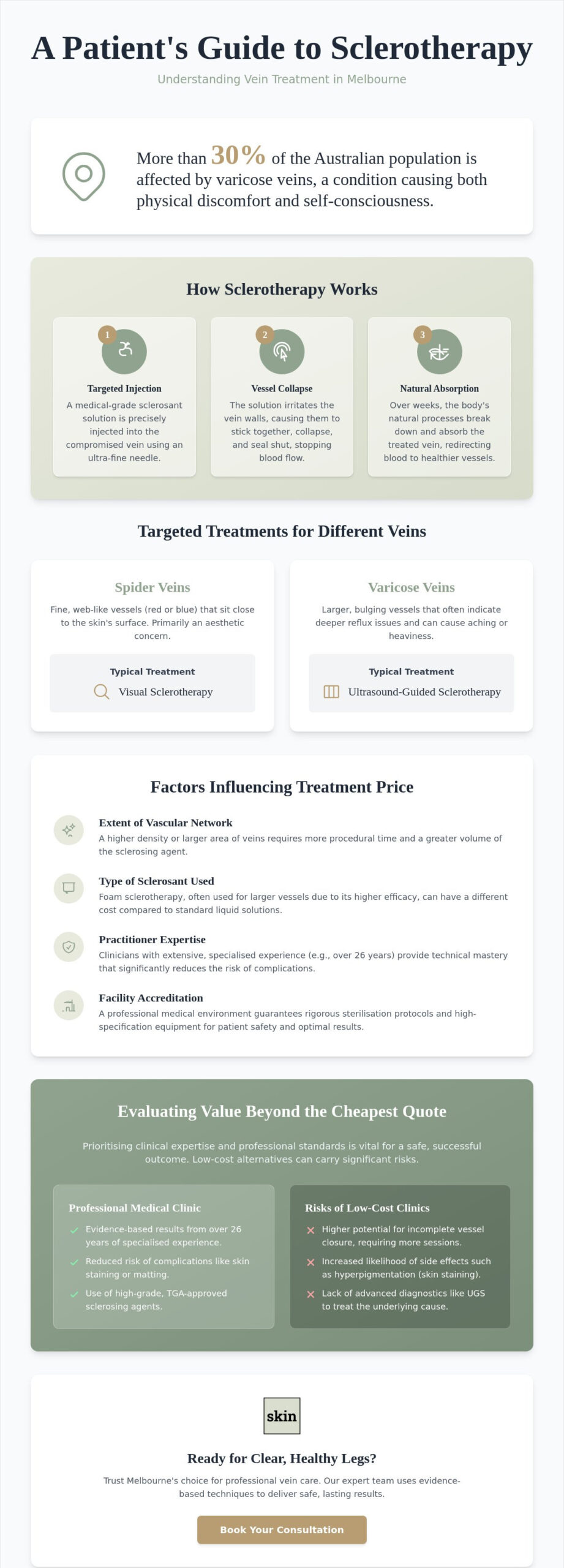
More than 30% of the Australian population is affected by varicose veins, a condition that often leads to significant self-consciousness and physical discomfort. When you begin investigating sclerotherapy for leg veins price melbourne, you’ll find that the investment reflects the clinical precision required to safely close compromised vessels. It’s not merely a cosmetic fix; it’s a sophisticated medical procedure that relies on the quality of the sclerosing agent and the practitioner’s anatomical knowledge.
You’ve likely noticed that pricing structures across Victoria can be opaque, leaving many patients confused about Medicare eligibility or the risks associated with low-cost clinics. We’ll provide a transparent framework to help you evaluate the clinical value of your treatment, ensuring you understand exactly what contributes to a successful, long-term outcome. This guide details the variables influencing treatment costs, explains the specific criteria for medical rebates, and outlines why a professional medical environment is vital for achieving clear, healthy legs for the summer months.
Key Takeaways
- Understand the biological mechanism of sclerotherapy, where a specialised solution induces controlled vessel collapse to eliminate visible spider and varicose veins.
- Identify the specific clinical variables, such as vessel complexity and ultrasound requirements, that determine the sclerotherapy for leg veins price melbourne patients can expect.
- Learn why prioritising clinical expertise and high-grade sclerosing agents prevents common complications like skin staining or incomplete vessel closure.
- Discover the step-by-step treatment protocol, from initial clinical mapping to the use of ultra-fine needles for a refined patient experience.
- Evaluate the importance of choosing a provider with over 26 years of specialised experience to ensure evidence-based results and professional medical standards.
What is Sclerotherapy for Leg Veins?
Sclerotherapy is a gold-standard medical intervention designed to treat chronic venous insufficiency and aesthetic vascular concerns through the precise injection of a sclerosant solution. While many patients begin their research by looking into the sclerotherapy for leg veins price melbourne, it is vital to first understand the physiological mechanics of the procedure. This technique involves introducing a liquid or foam agent directly into the lumen of a compromised vessel. This agent acts as a targeted irritant, causing the vein walls to stick together and eventually transform into a thin cord of fibrotic tissue. Over several weeks, the body naturally reabsorbs this tissue, effectively removing the visible vein from the skin’s surface.
The clinical objective of this treatment extends beyond simple aesthetic improvement. By closing off diseased veins where valves have failed, the procedure redirects blood flow to healthier, deeper vessels. This improves overall venous circulation and can alleviate the heavy, aching sensations often associated with vascular congestion. What is Sclerotherapy? At its core, it is a highly controlled method of vascular decommissioning that prioritises long-term circulatory health alongside visual clarity.
Spider Veins vs. Varicose Veins: Treatment Differences
The clinical approach varies significantly depending on whether the target is a spider vein or a varicose vein. Spider veins, or telangiectasias, are fine vessels that sit close to the dermal surface, often appearing as red or blue web-like patterns. These are typically managed through visual sclerotherapy, where the practitioner uses magnification and bright light to guide the injections. In contrast, varicose veins are larger, bulging vessels that often indicate deeper reflux issues. These more complex cases may require Ultrasound-Guided Sclerotherapy (UGS) to ensure the agent reaches the source of the malfunction. The anatomy of the patient’s vascular system and the depth of the vessels are primary factors that influence the sclerotherapy for leg veins price melbourne, as deeper or more extensive networks require greater technical precision and procedural time.
The Role of the Sclerosing Agent
The success of the procedure depends heavily on the selection and concentration of the medical-grade sclerosing agent. These solutions are engineered to be highly effective within the vessel while remaining safe for the body to process. The chemical reaction involves the displacement of cell surface lipids, which induces endothelial cell death and subsequent vessel wall fibrosis. Once the vessel is successfully irritated and collapsed, the body’s inflammatory response begins the gradual process of breaking down the decommissioned vein. This biological integration ensures that the results are durable, as the treated vein cannot reopen once it has been fully absorbed by the surrounding tissue.
Factors Influencing Sclerotherapy Price in Melbourne
Determining the sclerotherapy for leg veins price melbourne requires an objective analysis of several clinical variables. This procedure isn’t a fixed commodity; rather, it’s a medical service tailored to the specific volume of diseased vessels and the technical complexity of the case. A professional quote reflects the resources required to achieve a safe and durable biological result. Several primary factors dictate the final investment:
- The extent of the vascular network: A higher density of spider or varicose veins requires a larger volume of the sclerosing agent and extended procedural time.
- The type of sclerosant used: Foam sclerotherapy, which is often preferred for its superior visibility and efficacy in larger vessels, may carry a different price point than standard liquid solutions.
- Practitioner expertise: Clinicians with decades of specialised experience in vascular aesthetics provide a level of technical mastery that reduces the risk of complications like skin staining or incomplete closure.
- Facility accreditation: Medical-grade centres maintain rigorous sterilisation protocols and high-specification equipment, ensuring a standard of care that exceeds general aesthetic environments.
Visual vs. Ultrasound-Guided Sclerotherapy
Visual sclerotherapy is typically sufficient for superficial spider veins that are easily accessible at the dermal level. However, if a practitioner suspects underlying venous reflux, they will recommend Ultrasound-Guided Sclerotherapy (UGS). This advanced technique uses real-time imaging to identify “feeder” veins that aren’t visible to the naked eye. Because UGS requires sophisticated sonography equipment and the expertise of a trained sonographer or vascular specialist, it naturally sits at a higher price point. Investing in UGS is often more cost-effective in the long term, as it treats the root cause of the visible veins and significantly reduces the likelihood of recurrence.
Initial Consultation and Assessment Fees
A comprehensive assessment is the foundational step of The Sclerotherapy Treatment Journey. During this appointment, the practitioner performs clinical mapping to identify specific points of vascular failure and reviews your medical history to ensure the procedure’s safety. As of June 2026, many Melbourne clinics charge a consultation fee ranging from $180 to $295. It’s helpful to know that Medicare rebates often apply to these initial assessments. For instance, a rebate of approximately $85 to $142 may be available depending on the complexity of the consultation. Furthermore, if the treatment is deemed medically necessary, MBS Item 32500 provides a rebate of $108.90 for eligible varicose vein procedures. Understanding your specific vascular profile is essential for an accurate quote, which is why we suggest a professional vein assessment in Melbourne as your first step.
Evaluating Value: Beyond the Cheapest Quote
When investigating the sclerotherapy for leg veins price melbourne, it’s essential to distinguish between a low-cost aesthetic service and a high-precision medical procedure. Choosing a clinic based solely on the lowest quote often introduces clinical risks that can compromise both safety and the final visual result. Inadequate injection techniques or the use of sub-optimal sclerosing agents can lead to incomplete vessel closure, necessitating additional corrective sessions. More concerning is the risk of post-inflammatory hyperpigmentation or skin staining, which occurs when blood trapped in a partially closed vein breaks down and leaves a persistent brown mark on the skin.
A practitioner’s expertise is the most significant variable in mitigating these outcomes. With over 26 years of specialised industry experience, our clinicians adhere to established clinical guidelines for sclerotherapy to ensure every injection is placed with anatomical accuracy. This level of technical mastery often results in a higher success rate per session. While a budget clinic may offer a lower initial price, the requirement for more frequent treatments to achieve the same result often makes the professional medical approach a more economical investment in the long term.
Questions to Ask Your Melbourne Sclerotherapy Provider
Before committing to a treatment plan, patients should conduct a thorough clinical vetting of their provider. Transparency regarding the agents used and the practitioner’s procedural history is a hallmark of a reputable medical facility. Consider asking the following questions during your assessment:
- What specific sclerosing agents do you utilise, and why are they appropriate for my vascular profile?
- How many procedures of this specific type do you perform annually within this clinical setting?
- What is your established protocol if a targeted vein does not respond as expected to the initial session?
The Importance of a Medical-Grade Environment
The setting in which your procedure takes place is as important as the technique itself. A medical-grade environment ensures rigorous sanitisation standards and emergency preparedness that general aesthetic clinics may not provide. This clinical rigour is detailed further in our overview of Skinstitute Melbourne: A Clinical Guide to Medical-Grade Aesthetic Treatments. Choosing a provider with a long-standing professional reputation offers the peace of mind that your care is managed by seasoned practitioners who value evidence-based results over high-volume throughput. This focus on clinical integrity is what ultimately defines the true value of your sclerotherapy for leg veins price melbourne.
The Sclerotherapy Treatment Journey and Aftercare
Sclerotherapy is a methodical clinical sequence that relies on both practitioner precision and patient compliance to ensure efficacy. When evaluating the sclerotherapy for leg veins price melbourne, it’s important to account for the entire journey, including the necessary aftercare protocols that secure the biological result. The procedure follows a structured path designed to maximise vessel closure while ensuring patient safety.
- Clinical mapping: The practitioner identifies and marks the target vessels while the patient is standing, followed by thorough skin preparation using medical-grade antiseptic solutions.
- Micro-injections: The sclerosing agent is introduced into the vessel lumen using ultra-fine needles. Most patients report only mild, transient stinging during this phase.
- Immediate pressure: Localised pressure is applied to the injection sites immediately following the withdrawal of the needle to prevent blood from pooling in the treated area.
- Ambulation: Patients are required to walk immediately after the procedure, typically for 20 to 30 minutes, to promote healthy deep venous circulation and prevent complications.
The Cost of Compression: An Essential Investment
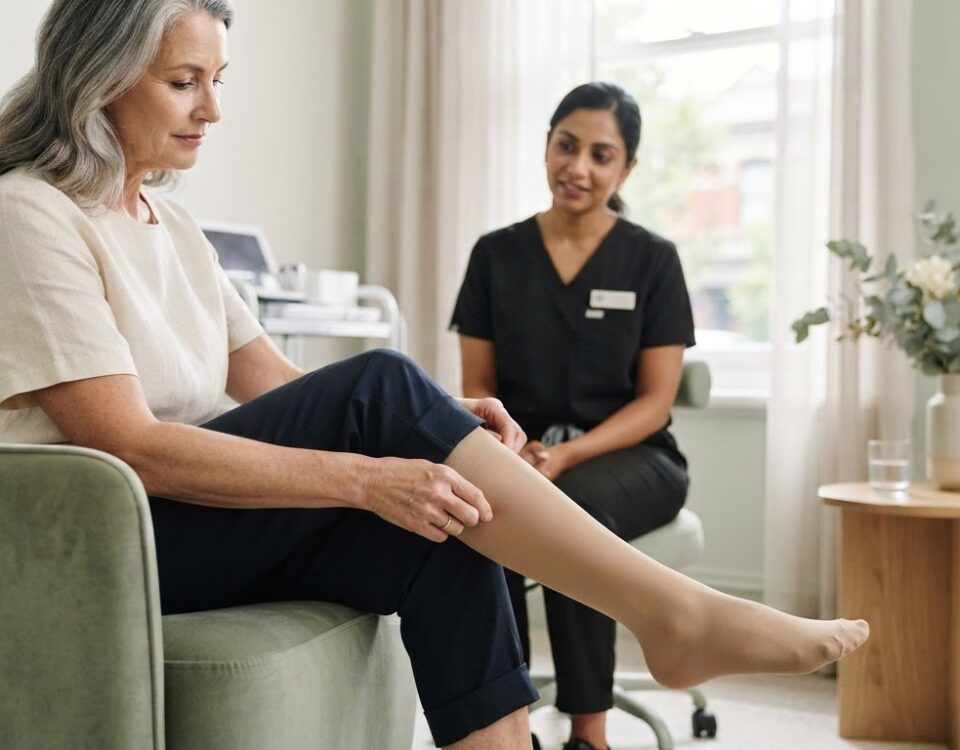
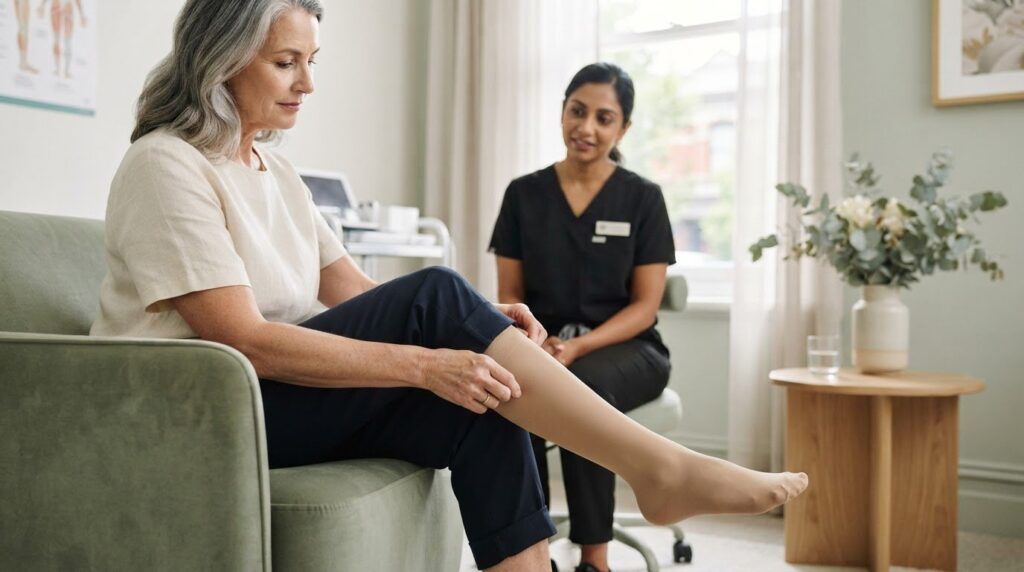
The use of medical-grade compression stockings is a non-negotiable component of the treatment plan. These garments provide a specific pressure gradient that keeps the irritated vein walls in close proximity, allowing them to fuse together into fibrotic tissue. Without adequate compression, blood can re-enter the vessel before it has fully collapsed, which significantly increases the risk of treatment failure or persistent skin staining. Most clinical protocols require these stockings to be worn during daylight hours for approximately 7 to 14 days post-procedure. This investment in high-quality compression is vital for protecting the results of your clinical treatment.
Managing Results and Follow-Up Sessions
The body’s natural reabsorption of decommissioned veins is a gradual physiological process. While some initial fading occurs, final results are typically assessed at the 4 to 8-week mark once the inflammatory response has subsided. Because vascular networks are often multi-layered, most patients require between 2 and 4 sessions to achieve optimal clearance. For individuals seeking comprehensive leg rejuvenation, we may suggest integrating Fractional CO2 Laser Resurfacing to address surface skin texture or sun damage once the underlying vascular concerns are resolved. To receive a personalised assessment of your vascular health and a detailed treatment plan, we invite you to book a clinical consultation at our Melbourne centre.
Why Skinstitute is Melbourne’s Choice for Vein Care
Selecting a clinical partner for vascular treatment requires a careful evaluation of both technical proficiency and long-term safety standards. With over 26 years of specialised experience in medical-grade aesthetic treatments, Skinstitute has established a reputation for clinical precision and evidence-based results. We recognise that patients investigating the sclerotherapy for leg veins price melbourne are looking for more than just a competitive quote; they are seeking the security that comes with seasoned practitioners who understand the complex biological interactions of the vascular system. Our Melbourne centre is designed to provide a sophisticated medical environment where transparency and professional integrity are the cornerstones of every patient interaction.
Our commitment to excellence extends beyond the immediate closure of a compromised vessel. We view vascular health as a critical component of a comprehensive skin health strategy. For patients requiring advanced tissue regeneration following their vascular procedures, we offer innovative solutions such as Rejuran, which utilises polynucleotides to stimulate bio-regeneration at a cellular level. This holistic approach ensures that the skin’s structural integrity is supported throughout the entire healing process, providing a level of care that prioritises physiological health alongside aesthetic clarity.
Our Approach to Vascular Aesthetics
Every patient presents with a unique vascular architecture, which is why we reject the one-size-fits-all methodology often found in high-volume clinics. Our practitioners develop personalised treatment plans tailored to your specific vein anatomy, ensuring that the concentration and volume of the sclerosing agent are perfectly calibrated for your needs. We place a significant emphasis on patient education, taking the time to explain the “why” and “how” of each clinical step. By operating a facility that houses a full suite of advanced lasers and medical-grade injectables, we can address multifaceted skin concerns with a level of versatility and expertise that is rare in the Melbourne market.
Book Your Clinical Assessment in Melbourne
The first step toward achieving clearer, healthier-looking legs is a thorough clinical assessment. This initial consultation allows our experts to perform a detailed physical examination and map your venous network, providing you with a clear and transparent understanding of the sclerotherapy for leg veins price melbourne as it applies to your specific case. When attending your assessment, please bring a list of any current medications and a summary of your medical history to ensure the highest standards of safety. We invite you to schedule your sclerotherapy assessment at Skinstitute today to begin your journey toward restored vascular health under the guidance of Melbourne’s most experienced clinical professionals.
Your Path to Clearer Legs Starts with the Right Clinical Partner
Understanding the sclerotherapy for leg veins price melbourne is ultimately about recognising that clinical expertise, medical-grade standards, and the quality of the sclerosing agent are inseparable from your final result. A transparent assessment, a personalised treatment plan, and rigorous aftercare protocols aren’t optional extras; they’re the foundation of durable vascular outcomes.
Choosing a provider with 26+ years of clinical expertise, a specialised medical-grade facility, and expert Melbourne practitioners means your care is guided by seasoned professionals who understand the complex physiology of venous disease. That depth of knowledge translates directly into fewer complications, greater treatment efficiency, and results that genuinely last.
If you’re ready to move beyond uncertainty and take a considered, evidence-based approach to your vascular health, the next step is straightforward. Book your sclerotherapy consultation at Skinstitute and receive a thorough clinical assessment tailored to your unique vascular profile. Clearer, healthier-looking legs are an entirely achievable outcome when you place your trust in the right hands.
Frequently Asked Questions
How much does sclerotherapy for leg veins typically cost in Melbourne?
The sclerotherapy for leg veins price melbourne is influenced by the extent of the vascular concern and the specific methodology required, such as liquid or foam sclerotherapy. Because each patient’s anatomy is unique, a fixed price is rarely applicable without a physical examination. Factors such as the requirement for ultrasound guidance and the number of sessions needed to achieve complete vessel closure will dictate the total investment for your clinical care.
Is sclerotherapy covered by Medicare in Australia?
When evaluating the sclerotherapy for leg veins price melbourne, patients should be aware that Medicare rebates are accessible for treatments deemed medically necessary rather than purely cosmetic. As of June 2026, MBS Item 32500 provides a rebate of $108.90 for the treatment of varicose veins where proximal reflux is demonstrated. Patients may also be eligible for rebates on initial consultation fees, which typically range from $85 to $142 depending on the complexity.
How many sessions of sclerotherapy will I need for my leg veins?
Most clinical cases require a series of 2 to 4 sessions to achieve a satisfactory aesthetic and physiological result. While some smaller vessels may respond to a single injection, more complex vascular networks often need multiple stages to ensure every feeder vein is successfully decommissioned. Your practitioner will outline a specific timeline during your initial assessment, allowing for the natural 4 to 8-week reabsorption period between each scheduled treatment.
Is sclerotherapy painful, and is there any downtime?
Sclerotherapy is well-tolerated by most patients and involves minimal physical discomfort. You may experience a mild stinging or cramping sensation as the sclerosing agent enters the vessel, but this typically subsides within minutes. There is no significant downtime required; however, you must commit to a 20 to 30-minute walk immediately following the procedure. This activity is a critical clinical requirement to maintain healthy blood flow in the deep venous system.
What happens if I don’t wear compression stockings after sclerotherapy?
Skipping the use of medical-grade compression stockings significantly increases the risk of treatment failure and complications like post-inflammatory hyperpigmentation. Compression is essential to keep the vein walls collapsed so they can fuse together into fibrotic tissue. Without this external pressure, blood can re-enter the irritated vessel, causing it to remain visible or leading to the formation of small, tender blood clots that require further clinical intervention to resolve.
Are the results of sclerotherapy permanent for spider veins?
The results of sclerotherapy are considered durable because the body physically reabsorbs the decommissioned vessel. Once a spider vein has been successfully treated and transformed into fibrotic tissue, it cannot reopen or reappear. It’s important to understand, however, that the procedure does not alter the underlying genetic or lifestyle factors that cause vein disease. Consequently, new vessels may develop in different areas over time, requiring occasional maintenance sessions to manage.
Can I drive home immediately after a sclerotherapy session?
You are typically able to drive yourself home immediately after your session is completed. Sclerotherapy is a non-invasive medical procedure that does not require local anaesthesia or sedation, meaning your cognitive and motor functions remain unaffected. The mandatory post-treatment walk performed at the clinic ensures that you are mobile and that your circulation is stable before you commence your journey home or return to your daily activities.
What are the potential side effects of leg vein injections?
Potential side effects are generally mild and include localised bruising, swelling, or temporary skin discolouration at the injection sites. Some patients may notice small, hard lumps where the vein has closed, which are a normal part of the healing process and gradually resolve. While rare, more significant side effects such as allergic reactions or matting, which is the development of tiny new red vessels, can occur and should be managed by your clinical practitioner.