Rejuran Under Eye Treatment in Melbourne: A Clinical Guide to Periorbital Regeneration
July 17, 2026
Clinical Guide to Cheek Filler in Melbourne: Structural Midface Restoration
July 19, 2026
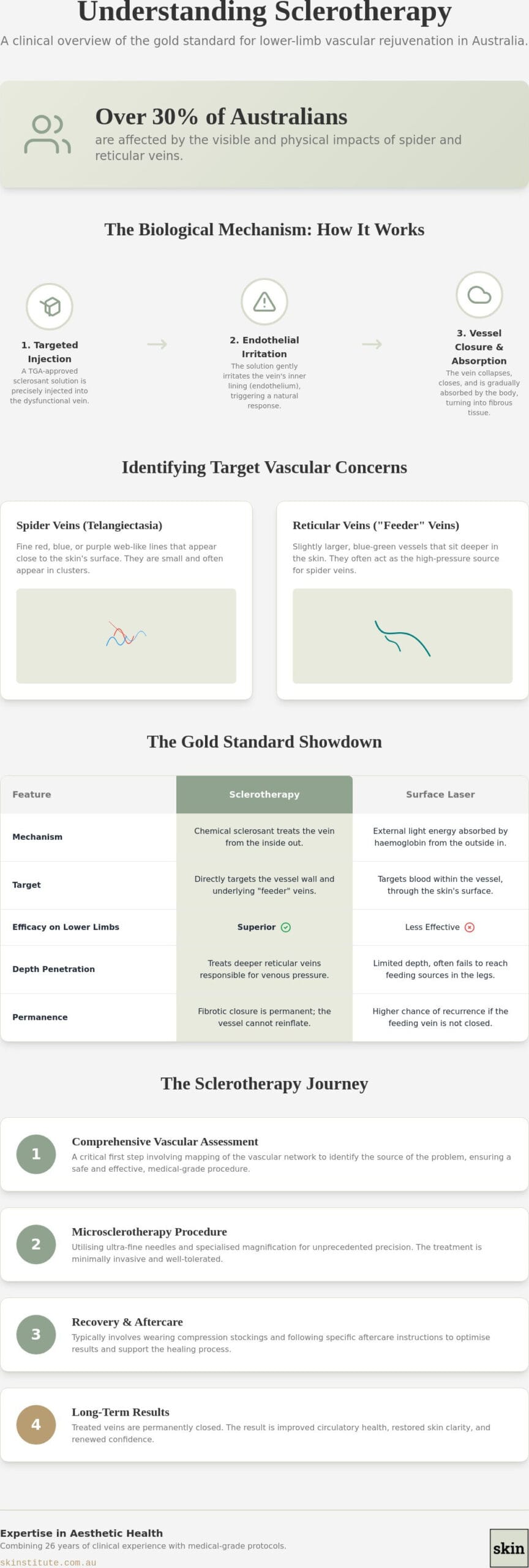
More than 30% of the population is affected by the visible and physical impacts of vascular insufficiency, a statistic that highlights the prevalence of spider and reticular veins. When considering sclerotherapy melbourne clinics focus on the precise closure of damaged vessels to improve both circulatory health and aesthetic appearance. You’ll likely recognise the frustration of concealing your legs during the height of a Melbourne summer or the persistent, aching discomfort that often accompanies these compromised vessels.
Understanding the distinction between superficial spider veins and deeper varicose structures is essential for any patient seeking an effective, evidence-based solution. This clinical overview details the science of sclerotherapy, explaining how controlled endothelial irritation facilitates the permanent closure of dysfunctional vessels. We’ll guide you through the technical process of vascular rejuvenation, the role of TGA-approved sclerosants, and what to expect from a professional, medical-grade treatment protocol designed for long-term results and restored confidence.
Key Takeaways
- Understand the clinical application of sclerotherapy for the targeted management of telangiectasia and reticular veins on the lower limbs.
- Learn how the biological interaction between sclerosants and the endothelial lining facilitates the permanent fibrotic closure of dysfunctional vessels.
- Discover why addressing the underlying feeding veins through sclerotherapy melbourne protocols offers superior long-term results compared to surface laser treatments.
- Identify the critical role of a comprehensive vascular assessment and mapping process in ensuring a safe, medical-grade procedure.
- Explore how 26 years of clinical experience informs a sophisticated approach to combining vascular health with aesthetic rejuvenation.
Understanding Sclerotherapy for Lower-Limb Vascular Rejuvenation
Sclerotherapy is a minimally invasive medical procedure designed to eliminate vascular malformations by inducing a controlled chemical reaction within the vessel wall. It involves the precise, targeted injection of a sclerosant agent into the lumen of the dysfunctional vein. This agent disrupts the endothelial lining, causing the vessel to collapse and eventually be replaced by fibrous tissue. When considering sclerotherapy melbourne clinical standards dictate a thorough pre-treatment assessment to address telangiectasia and reticular veins, which are common sources of physical discomfort and aesthetic concern.
Distinguishing between aesthetic vascular rejuvenation and the management of major venous disease is essential. While deep-seated varicose veins may require surgical intervention or endovenous thermal ablation, aesthetic sclerotherapy focuses on the superficial and mid-level dermal network. This distinction ensures that the treatment protocol is tailored to the specific pressure and size of the vessel. For a comprehensive overview of sclerotherapy, one can see how the procedure has transitioned from a general surgical tool to a refined aesthetic intervention used by practitioners worldwide.
Many patients inquire about surface-level laser treatments; however, sclerotherapy remains the gold standard for most lower-limb veins. Unlike lasers, which rely on light absorption through the skin, sclerotherapy treats the vein from the inside. This allows the sclerosant to travel through the vessel and reach the “feeding” source, providing a more thorough closure than topical energy devices. Surface lasers often fail to penetrate deep enough to prevent recurrence in the legs, where venous pressure is significantly higher than in the face.
Identifying Target Vascular Concerns
Successful outcomes depend on the accurate identification of vascular structures. Spider veins, or telangiectasia, appear as fine red or blue webs near the skin surface, whereas reticular veins are slightly larger, blue-green vessels that sit deeper in the dermis. These reticular veins often act as the high-pressure source for the smaller spider veins. A professional assessment is vital to ensure that these surface concerns aren’t symptoms of a more significant underlying venous insufficiency that would require a different medical approach.
The Evolution of Sclerotherapy in Aesthetic Medicine
The field has advanced significantly from the early use of basic hypertonic saline, which was often associated with higher levels of patient discomfort. Modern practitioners now utilise sophisticated detergent-based sclerosants that are more effective and better tolerated by the body. In specialised sclerotherapy melbourne clinics, the use of microsclerotherapy techniques, involving ultra-fine needles and specialised magnification, allows for unprecedented precision. These advancements have transformed the treatment into a reliable clinical protocol that fits seamlessly into a patient’s professional or personal schedule.
The Biological Mechanism: How Sclerosants Restore Skin Clarity
The clinical efficacy of sclerotherapy relies on a sophisticated biochemical cascade that transforms a functional, albeit dysfunctional, blood vessel into a dormant strand of connective tissue. This process begins the moment the sclerosant solution is introduced into the vessel lumen. Unlike thermal treatments that use heat, sclerotherapy melbourne protocols utilise chemical agents to induce endosclerosis. This is a targeted destruction of the vein’s inner lining that triggers a permanent closure through a sterile inflammatory response.
For those seeking a clinical assessment of their vascular health, consulting an experienced practitioner at Skinstitute ensures a tailored approach to these biological processes. The success of the procedure is found in its permanence; once the vessel has undergone fibrotic closure, it cannot be reinflated with blood. This high degree of reliability is why the treatment remains a primary choice for managing lower-limb vascular aesthetics.
The Role of the Endothelium
The endothelium is the single layer of squamous cells that lines the interior surface of blood vessels, acting as a critical barrier between the blood and the vessel wall. Modern detergent sclerosants work by reducing the surface tension of these cells, effectively dissolving the lipids within the cell membranes. This action is explored in detail within this clinical review of sclerotherapy techniques, which highlights how the immediate destruction of the endothelium exposes the underlying subendothelial layers. Precise dosage is mandatory; the concentration must be high enough to ensure total endothelial destruction while remaining controlled enough to prevent extravasation into the surrounding dermal tissue.
Fibrosis and Reabsorption
Following the initial chemical irritation, the vessel enters a phase of controlled inflammation. Platelets and fibrin aggregate at the site of injury, causing the vein walls to become “sticky” and adhere to one another. Over the subsequent weeks, the body replaces this collapsed vessel with a microscopic cord of fibrotic tissue. This is not a rapid disappearance but a methodical biological transition.
The final stage of the process involves phagocytosis. Specialised immune cells known as macrophages migrate to the area to break down and ingest the vascular remnants. Through this natural immune response, the body slowly clears the treated tissue, leading to the gradual fading of the vein from the skin’s surface.
- Initial Phase (0-48 hours): Vessel irritation and collapse.
- Fibrotic Phase (1-3 weeks): Formation of the connective tissue cord.
- Reabsorption Phase (4-12 weeks): Immune system clearance and visual fading.
The timeline for these biological results varies based on the vessel’s diameter. While fine spider veins may resolve within four to six weeks, larger reticular veins often require three to four months for the body to complete the reabsorption process. Patience is a requirement for vascular rejuvenation, as the immune system moves at its own steady, instructional pace to restore skin clarity.
Sclerotherapy vs. Surface Laser: Selecting the Optimal Modality
Selecting the most effective modality for vascular clearance requires a precise understanding of the vessel’s depth and the pressure within the local circulatory network. While both sclerotherapy and surface laser treatments aim to eliminate visible veins, they operate through fundamentally different physical principles. Surface lasers utilise light energy that is absorbed by haemoglobin, converting it into heat to cauterise the vessel from the outside. Conversely, sclerotherapy melbourne practitioners utilise a liquid or foam agent to initiate closure from within the lumen. This internal approach is generally more effective for the lower limbs, where venous pressure is significantly higher than in the facial region.
The concept of the “feeding vein” is a critical factor in this selection process. Spider veins are often the superficial manifestation of a deeper, high-pressure reticular vein that “feeds” the surface network. If a practitioner only treats the surface spider veins with a laser, the underlying source remains patent, leading to a high rate of recurrence. Sclerotherapy allows the sclerosant to flow into these feeding vessels, ensuring a comprehensive closure of the entire local network. Patients often consult a sclerotherapy patient guide to better understand how these procedural differences impact long-term outcomes and why a medical-grade assessment is necessary to map these structures accurately.
When Surface Laser is Appropriate
Surface laser treatments remain a valuable tool for extremely fine, superficial capillaries, particularly those located on the face or upper torso where the skin is thinner and venous pressure is low. It is also an alternative for the small subset of patients who have a clinical contraindication to specific sclerosant agents. In some complex cases, a clinician may combine both modalities, using sclerotherapy melbourne protocols to close the larger feeder vessels and follow up with laser for the finest residual surface threads to optimise the aesthetic result.
The Superiority of Sclerotherapy for Leg Veins
For the majority of leg vein concerns, sclerotherapy is the superior modality due to its ability to treat larger reticular vessels that laser energy cannot safely reach. To penetrate to the depth of a reticular vein, a surface laser would require energy levels that risk damaging the surrounding dermis, potentially leading to burns or post-inflammatory hyperpigmentation. Sclerotherapy bypasses the skin surface entirely, delivering the treatment directly into the target vessel.
In terms of patient experience, many find the sensation of microsclerotherapy more tolerable than the repetitive “snapping” sensation of thermal laser energy. Because sclerotherapy is more efficient at closing the source of the problem, it typically requires fewer sessions to achieve a clear, stable result. This makes it a more cost-effective and time-efficient choice for patients managing extensive vascular concerns on the lower limbs.
Clinical Protocol: The Sclerotherapy Journey in Melbourne
The clinical pathway for sclerotherapy melbourne patients is a structured, multi-stage process designed to ensure both safety and efficacy. It commences with a comprehensive mapping of the vascular network. During this initial consultation, the practitioner identifies the precise location of the reticular “feeding” veins and their associated spider vein clusters. This diagnostic phase is crucial; it ensures the treatment addresses the root cause of the vascular concern rather than merely masking surface symptoms. It’s a methodical approach that prioritises long-term circulatory health over temporary aesthetic fixes.
The procedure itself involves microsclerotherapy, a technique requiring high-precision tools and ultra-fine needles. Patients are positioned comfortably to allow for optimal access to the target vessels. The practitioner then introduces the sclerosant agent into the lumen of each vein. Because the vessels are often microscopic, this stage requires a steady hand and a deep understanding of vascular anatomy. Once the injections are complete, the focus shifts to maintaining the closure through mechanical pressure. To begin your journey toward clearer skin, you can book a clinical vascular assessment with our experienced team.
Compression is the most critical component of the recovery phase. By wearing medical-grade stockings, patients ensure that the treated vessel walls remain apposed, or pressed together. This prevents blood from re-entering the vein while the fibrotic closure is forming. Without adequate compression, the success rate of the procedure diminishes, as the vessel may partially reopen before the body can secure the fibrotic bond. This is a non-negotiable step in the sclerotherapy melbourne journey.
Preparing for Your Appointment
Preparation is essential to minimise the risk of bruising and ensure the sclerosant acts effectively. We advise patients to avoid anti-inflammatory medications or specific supplements like fish oil for at least one week prior to their session, as these can increase vascular fragility. On the day of treatment, ensure your skin is well-hydrated and wear loose, comfortable clothing that can accommodate compression stockings. It’s also vital to avoid sun exposure on the legs in the weeks leading up to the procedure to prevent skin sensitivity and potential pigment issues.
Aftercare and Activity Guidance
Recovery in Melbourne requires specific attention to the local environment and lifestyle. We mandate the use of Grade 2 medical-grade compression stockings for a period ranging from several days to two weeks, depending on the vessel size. While vigorous exercise should be avoided for 48 hours, low-impact movement is highly encouraged. A gentle walk along the Yarra or through one of Melbourne’s many parks helps maintain healthy circulation and prevents blood stasis. Finally, given Victoria’s high UV index, treated areas must be strictly protected from the sun. UV exposure on healing skin can lead to post-inflammatory hyperpigmentation, potentially leaving temporary marks where the veins once were.
The Skinstitute Approach to Lower-Limb Aesthetic Health
At Skinstitute, vascular health is viewed as a foundational element of lower-limb rejuvenation rather than an isolated aesthetic concern. Our 26-year legacy in the Melbourne clinical landscape has been built on the principle that the elimination of spider and reticular veins is most effective when integrated into a broader dermatological framework. By choosing sclerotherapy melbourne at a specialised centre, patients benefit from a protocol that prioritises medical-grade precision and biological longevity over superficial, short-term improvements.
A professional assessment serves as the vital starting point for every treatment plan. We recognise that vascular patterns are as unique as the patients themselves, requiring a nuanced understanding of circulatory pressure and dermal thickness. This rigorous diagnostic phase ensures that the sclerosant is delivered with absolute accuracy, minimising the risk of recurrence and ensuring a stable, clear result. Our commitment to these established scientific principles distinguishes our practice from high-street beauty standards; we offer a level of technical mastery that only decades of experience can provide.
Holistic Skin Regeneration
Once the underlying vascular structures have been successfully treated, many patients find that the overall aesthetic of the leg is still compromised by environmental factors such as chronic UV exposure or age-related dermal thinning. To address these concerns, we offer a suite of complementary medical-grade modalities. Fractional CO2 Laser Resurfacing can be utilised to target solar lentigines and improve the textural irregularities often found on the shins and calves, restoring a more uniform skin tone.
We frequently incorporate advanced bio-stimulators to enhance the structural integrity of the skin alongside vascular work. Utilising polynucleotide-based treatments like Rejuran allows us to stimulate cellular repair and collagen production. This dual approach ensures that as the veins fade, the skin quality improves simultaneously. The result is a naturally rejuvenated appearance that reflects true physiological health and restored dermal resilience.
Your Consultation at our Melbourne Centre
The journey toward vascular clarity begins with an instructional consultation at Skinstitute Melbourne. During this clinical assessment, we map your specific vascular network and discuss the biological mechanisms described throughout this guide. This transparent dialogue ensures you understand the “why” and “how” behind every step of your sclerotherapy melbourne protocol, allowing you to make an informed decision about your care.
We invite you to experience a partnership based on clinical excellence and evidence-based results. By developing a personalised treatment plan that accounts for your unique anatomy and aesthetic goals, we provide a reliable pathway to clear, healthy skin. Professional guidance is the only way to ensure that your investment in vascular rejuvenation delivers the lasting clarity and confidence you deserve.
Restoring Vascular Health and Aesthetic Clarity
Achieving long-term vascular rejuvenation requires a precise understanding of the physiological processes that govern vein closure and reabsorption. By addressing the underlying feeding vessels through a structured clinical protocol, patients can move beyond temporary surface improvements to achieve a permanent fibrotic closure of problematic veins. This methodical approach ensures that the visual concerns of spider and reticular veins are managed alongside the physical symptoms of vascular insufficiency, leading to a comprehensive restoration of lower-limb health.
With over 26 years of clinical experience, our medical-grade aesthetic specialists provide a level of technical proficiency that prioritises safety and evidence-based results. Every customised treatment plan is built upon a detailed vascular assessment, ensuring that sclerotherapy melbourne protocols are integrated seamlessly with your overall skin health goals. We encourage you to book your clinical vascular assessment at Skinstitute Melbourne to begin your journey toward lasting skin clarity. Restoring the health and appearance of your lower limbs is a steady, predictable process when guided by professional expertise and a commitment to technical mastery.
Frequently Asked Questions
Is sclerotherapy painful?
Sclerotherapy is generally well tolerated and does not require a local anaesthetic. Most patients describe the sensation as a minor pinch or a brief stinging feeling as the sclerosant is introduced into the vessel. Because we use ultra-fine needles and modern detergent based agents, the procedure is significantly more comfortable than older techniques using hypertonic saline.
How many sessions of sclerotherapy will I need for my spider veins?
Most patients require a series of three to four treatment sessions to achieve optimal vascular clearance. These appointments are typically spaced at least four weeks apart to allow the body’s immune system to begin the reabsorption of the treated vessels. The exact number of sessions depends on the density of the vascular network and how your specific physiology responds to the sclerosant.
Can I go back to work immediately after sclerotherapy treatment?
Patients can typically return to their professional duties immediately following a sclerotherapy melbourne treatment. It is a “walk-in, walk-out” procedure that doesn’t involve the downtime associated with invasive surgery. We recommend avoiding vigorous lower-body exercise or heavy lifting for approximately 48 hours, but normal daily walking is encouraged to maintain healthy circulation.
How long do I need to wear compression stockings after the procedure?
The requirement for medical-grade compression stockings typically ranges from two days to two weeks. The specific duration depends on the diameter of the veins treated and the extent of the session. Wearing these stockings is a non-negotiable part of the protocol, as they provide the mechanical pressure necessary to keep the treated vessel walls apposed while the fibrotic closure forms.
Are the results of sclerotherapy permanent?
Treated vessels that have undergone successful fibrotic closure are permanently eliminated and cannot reopen. Sclerotherapy has a reported success rate of between 75% and 90% when used for suitable veins. While the treated veins are gone, it’s important to understand that the procedure doesn’t prevent the formation of new spider veins in the future if underlying circulatory pressures persist.
What are the potential side effects of sclerotherapy?
Common side effects include localised bruising, temporary redness, or haemosiderin staining, which appears as a faint brown mark along the treated vein’s path. These marks usually fade as the body clears the iron remnants from the blood. Rare risks include “matting,” where a cluster of tiny new vessels forms around a treated area, though these often resolve spontaneously or with further treatment.
Can sclerotherapy treat varicose veins as well as spider veins?
Sclerotherapy is highly effective for spider veins and reticular veins, but its use for larger varicose veins depends on a clinical assessment. In Australia, Medicare may provide a rebate for surface sclerotherapy if the target veins are larger than 2.5 mm in diameter. For very large or deep varicose veins, ultrasound guided sclerotherapy or other endovenous modalities may be a more appropriate clinical choice.
When is the best time of year in Melbourne to have sclerotherapy?
The autumn and winter months are the ideal time for sclerotherapy melbourne treatments due to the cooler Victorian climate. Wearing compression stockings is much more comfortable in lower temperatures, and the reduced UV index during these months helps prevent post-inflammatory hyperpigmentation. This timing also ensures your legs have fully healed and cleared in time for the summer season.