Skin Regeneration Therapy in Melbourne: Benefits and Options
November 3, 2026
Non-surgical eye lift options for sagging skin in Melbourne
November 5, 2026
A set number of sessions isn’t appropriate for everyone seeking treatment for sagging neck skin in Melbourne. The plan depends on factors such as skin thickness, the degree of laxity, age and healing response. Non-surgical treatments may improve firmness and texture over time, but they don’t lift or reposition neck tissue.
It is understandable to want a clear idea of how many appointments treatment may involve, especially when considering threads or energy-based skin tightening. Suitability depends on the changes in your neck, your goals and the kind of improvement each approach can reasonably provide.
This article explains how treatment sessions are planned, what a clinical assessment considers and how thread treatments may be used for the neck. It also covers potential risks and recovery, helping you understand the differences between options before deciding on a treatment pathway.
Key Takeaways
- Session planning considers skin thickness, the degree of laxity, age and healing response, rather than relying on a fixed number of treatments.
- A suitability assessment distinguishes changes that may respond to non-surgical tightening from more pronounced skin laxity.
- Understand the possible side effects and recovery involved before choosing an approach, as these differ between treatments.
- Thread treatments place fine threads beneath the skin to support and gently reposition soft tissue in the neck area.
Doctor-led consultations and suitability assessments
A clinical consultation matches the approach to your neck’s skin laxity and your goals. The assessment also distinguishes concerns about skin firmness from changes that may require tissue repositioning.
Suitability by skin laxity
Non-surgical tightening is generally suited to mild to moderate laxity, including early changes linked to ageing, weight loss or sun damage. A clinician considers skin thickness, the degree of looseness, age and healing response when assessing likely improvement. For example, a person with early laxity and changes in skin texture may have different needs from someone with pronounced loose skin. These features help shape a focused treatment plan.
Surgical and non-surgical options
Non-surgical treatments may improve the appearance of neck skin, although results vary. High Intensity Focused Ultrasound (HIFU) is one option for suitable concerns. A facelift may address moderate to severe laxity by repositioning underlying tissues and removing excess skin. The choice depends on the extent of sagging and your goals, including whether you want better skin quality or a more substantial lift.
Clinician experience and qualifications
In Melbourne, a consultation with a registered health practitioner can help assess suitability. A qualified dermal clinician can evaluate your skin and identify options suited to your needs. Experience matters because the assessment must distinguish skin laxity from changes involving deeper tissues. The consultation should clearly explain the intended effect, limitations and relevant risks, rather than treating every neck concern the same way.
When considering a clinic, look for an assessment that addresses skin thickness, laxity and your goals before recommending a procedure. This helps establish whether non-surgical treatment is appropriate or whether the degree of sagging calls for a different discussion. The clinician’s assessment, not a standard session plan, should guide the recommendation.
How many Skin Tightening treatments are required for best results?
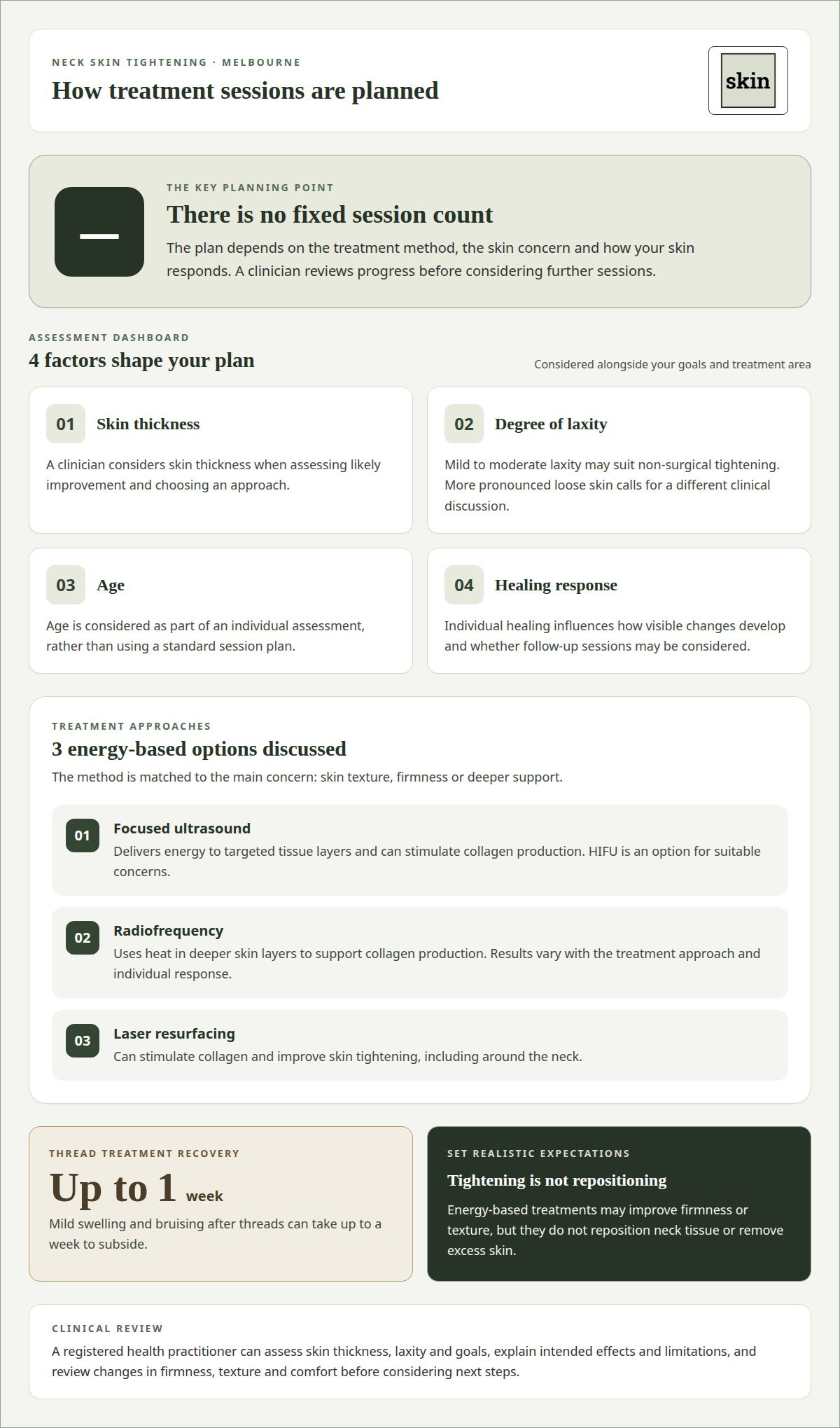
There is no fixed session count for non-surgical neck tightening. The plan depends on the method, the skin concern and your response to treatment.
Tailored neck tightening plans
For treatment for sagging neck skin in Melbourne, session planning starts with the change you want. Skin thickness, laxity and the treatment area help determine whether the focus is texture, firmness or deeper support. A clinician can also distinguish concerns that may respond to tightening from tissue changes that energy-based procedures cannot reposition. These factors guide the plan and review points.
Treatment results by modality
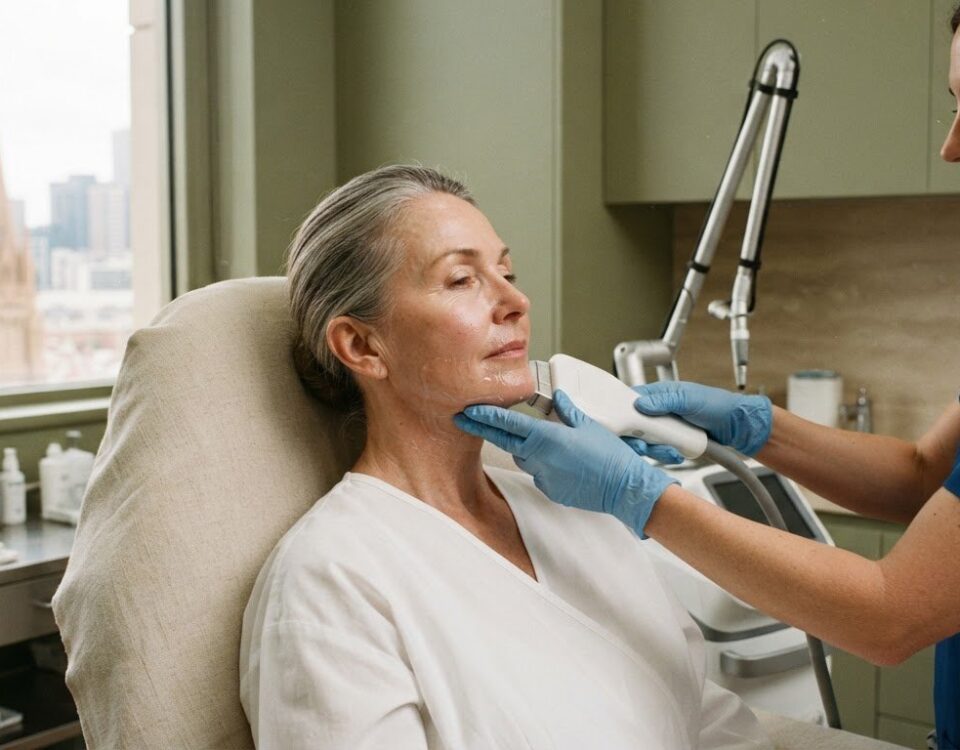
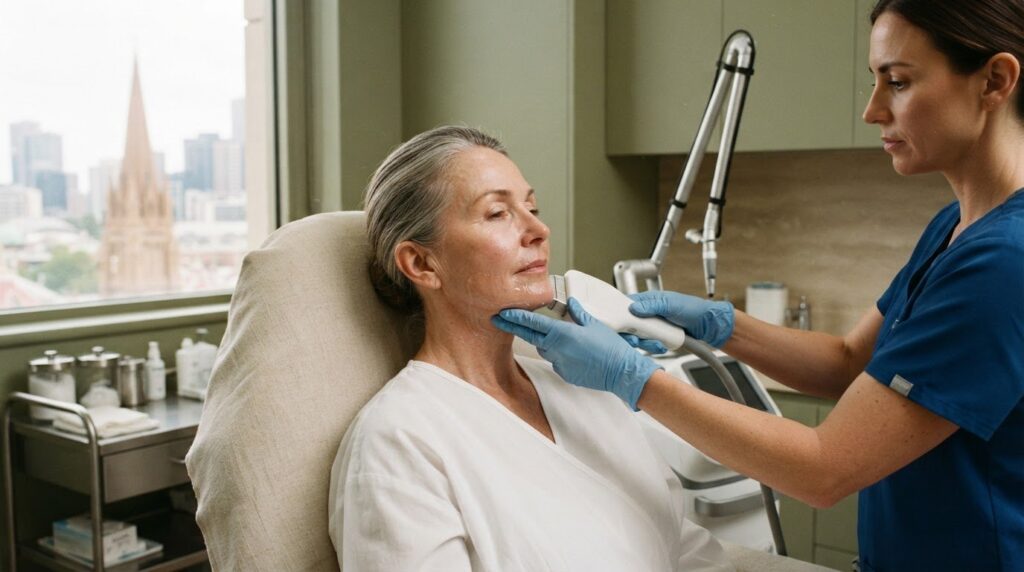
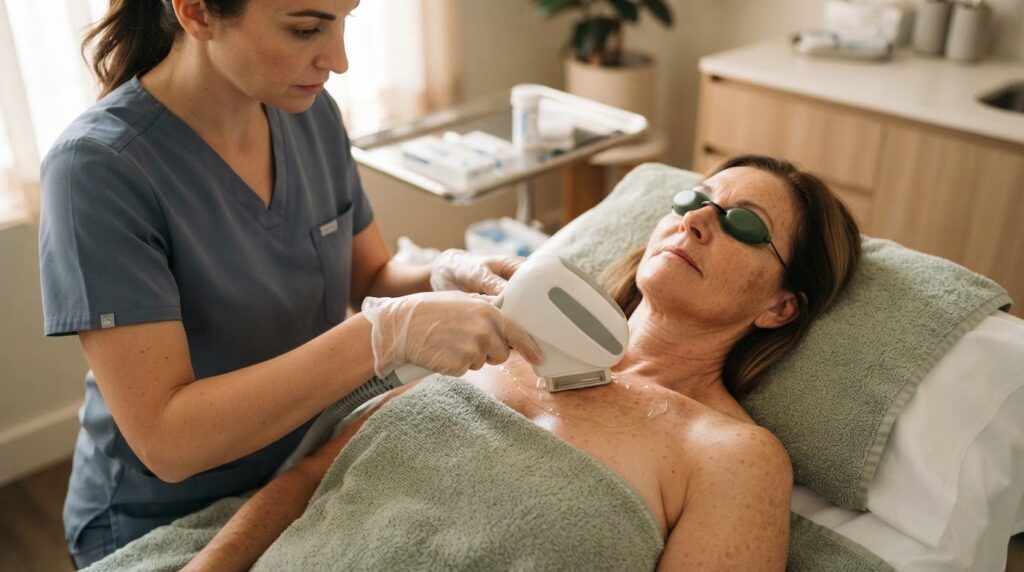
Focused ultrasound delivers energy to targeted tissue layers and can stimulate collagen production. Ultraformer III targets collagen structures and is used for skin laxity and jawline definition. Radiofrequency uses heat to stimulate deeper skin layers and support collagen production. Venus Viva results vary with the treatment approach and individual response, so expectations should reflect the specific concern assessed.
Laser resurfacing can stimulate collagen and improve skin tightening, including around the neck. Radiofrequency, ultrasound and laser treatments may improve firmness or texture, but they do not reposition neck tissue. Treatment for sagging neck skin in Melbourne should match your main concern and the tissue being treated. Visible changes develop over time, and skin characteristics and healing response influence the outcome.
The appropriate session plan depends on the method and your response to treatment, rather than a standard number. A clinician reviews whether the treatment is addressing the intended concern before considering further sessions.
Medicare and private health insurance do not automatically cover cosmetic procedures. Coverage depends on applicable eligibility criteria and policy terms, so do not assume treatment will be reimbursed.
Risks, side effects and individual results
Results from non-surgical neck rejuvenation develop gradually as collagen production responds to treatment. The timing and visibility of changes vary with skin thickness, collagen density and individual healing response. A personalised plan should outline the intended improvement, likely review points and whether follow-up sessions may be considered. Non-surgical treatments may improve the appearance of neck skin, but results vary.
Side effects and downtime depend on the procedure. After thread treatments, mild swelling and bruising can take up to a week to subside. This recovery period may affect comfort and the appearance of your neck while the treated area settles. Discussing expected recovery and possible effects beforehand helps you plan for after treatment.
Neck contouring results also depend on the concern being treated. For example, improved support around the chin and jawline can balance facial proportions and reduce the visual impact of mild neck laxity. It does not remove excess skin. The degree of skin laxity, skin quality and treatment target all influence the change in appearance.
Longevity varies between treatment types. Non-surgical results may require maintenance sessions, while skin continues to change with ageing. Smoking and poor skincare habits can accelerate the loss of skin quality and elasticity. Limiting these influences supports skin health, but does not stop natural ageing or guarantee that firmness will remain unchanged.
Follow-up should take account of both your response to treatment and any side effects. A review can assess changes in firmness, texture and comfort, then help determine whether the plan remains suitable. If swelling or bruising occurs after threads, allow for recovery before judging the result. A measured review helps distinguish temporary effects from gradual changes associated with collagen stimulation.
Thread treatments for sagging necks
A thread lift places fine threads beneath the skin to support and gently reposition soft tissue. In the neck, treatment may target visible necklines or sagging along the jawline. It is a minimally invasive procedure, not a substitute for surgery that removes excess skin. The distinction matters: threads support and reposition tissue, while improving skin texture or firmness is a different treatment goal.
Planning begins by identifying the area of concern and the direction of support needed. For example, laxity concentrated beneath the jaw may need a different approach from lines across the neck. The clinician assesses the underlying tissue and skin condition, then considers whether threads suit your goal. This helps align expectations with the procedure’s specific lifting function.
Threads do not restore all structural changes associated with ageing. Reduced collagen and elastin production can affect skin strength and resilience, while a thread lift addresses soft-tissue support. If your main concern is skin quality rather than repositioning, another approach may better match your goal. A personalised treatment plan should explain the intended change, the limits of thread placement and how the treated area will be reviewed.
Thread treatment may suit someone seeking support for mild sagging around the lower face or neck, if an assessment finds the tissue appropriate for this method. More pronounced skin redundancy is a different concern because threads do not remove loose skin. The key is to match the procedure to the anatomical issue: support and repositioning are not the same as tightening the skin itself.
For a clinical assessment of whether thread treatment fits your neck and jawline goals, arrange a consultation.
Skinstitute: Skin Needling
Skinstitute can help you assess whether your concern is primarily skin texture, firmness or tissue laxity. Skin needling may be relevant when skin quality is part of your goal, but it should not be considered a way to lift or reposition loose neck tissue.
For concerns involving neck firmness or support, a clinical assessment can consider whether High Intensity Focused Ultrasound (HIFU) or PDO Thread Lifting better matches your goals. Fractional CO2 may also be discussed where skin texture is a concern. Each procedure has a different treatment purpose, so the appropriate option depends on the area being treated and the change sought.
Contact Skinstitute to discuss your neck concerns and explore treatment options suited to your goals.
Choose a considered next step
Before deciding on treatment for sagging neck skin in Melbourne, clarify which change matters most to you. Consider whether you are comfortable with gradual improvement, what recovery may involve and whether your concern is skin quality or tissue support. These priorities give the clinical discussion a clear purpose without assuming one procedure suits every concern.
Take time to weigh the intended effect of the proposed treatment against your goals and day-to-day needs. A considered decision starts with understanding what the procedure can address, what it cannot change and how you will evaluate the outcome. This gives you a grounded basis for deciding whether to proceed.
Frequently Asked Questions
Is it possible to tighten neck skin without surgery?
Yes, non-surgical treatments can improve the appearance of neck skin. Before choosing an approach, identify the specific change you want to address, such as texture, firmness or the outline beneath the chin. At consultation, describe that priority and ask what visible change the treatment is intended to produce. This helps you assess whether the proposed goal matches your expectations.
Are the results of neck treatments permanent?
No, results from non-surgical neck treatments are not permanent, and maintenance sessions may be considered. To track changes clearly, record your starting concern and review progress under similar conditions, such as consistent lighting and posture in photographs. This gives you and your clinician a practical reference for follow-up discussions. Skin continues to change over time, so future treatment decisions should reflect your current concerns.
How do I know if I need surgery or a non-surgical neck treatment?
The choice depends on the degree of sagging and the change you want. Before a consultation, consider how much improvement you seek and what recovery requirements you are prepared to accommodate. Explain whether your priority is a modest change in skin appearance or a more substantial lift. A clinician can then discuss which treatment goal is compatible with your concerns and the options assessed.
What is a sagging neck?
A sagging neck describes a visible change in the skin or soft-tissue contour between the jaw and lower neck. It is a descriptive term, not a diagnosis or treatment recommendation. People may use it to describe looseness, folds or a changed neck outline. The phrase alone does not explain which tissue contributes to the appearance, so assessment focuses on your individual concern.
What are the possible side effects?
Side effects vary by procedure. Before treatment, ask which effects are expected with that method, how to care for the treated area and what signs should prompt clinical review. For example, recovery guidance for threads differs from advice for energy-based procedures. Having these instructions explained beforehand helps you plan for comfort and understand what to do during recovery.
What causes sagging neck skin and how can it be assessed?
Ageing, ultraviolet exposure, genetics and weight changes can contribute to sagging neck skin. To make an assessment more useful, describe when you first noticed the change and whether it followed a weight fluctuation or increased sun exposure. Point out the area that concerns you most, such as beneath the chin or along the sides of your neck. This helps focus the clinical discussion on your experience.