Best Clinic for Spider Vein Removal Melbourne: A Clinical Selection Guide
June 5, 2026
Skin Needling Melbourne: A Clinical Guide to Dermal Remodelling
June 8, 2026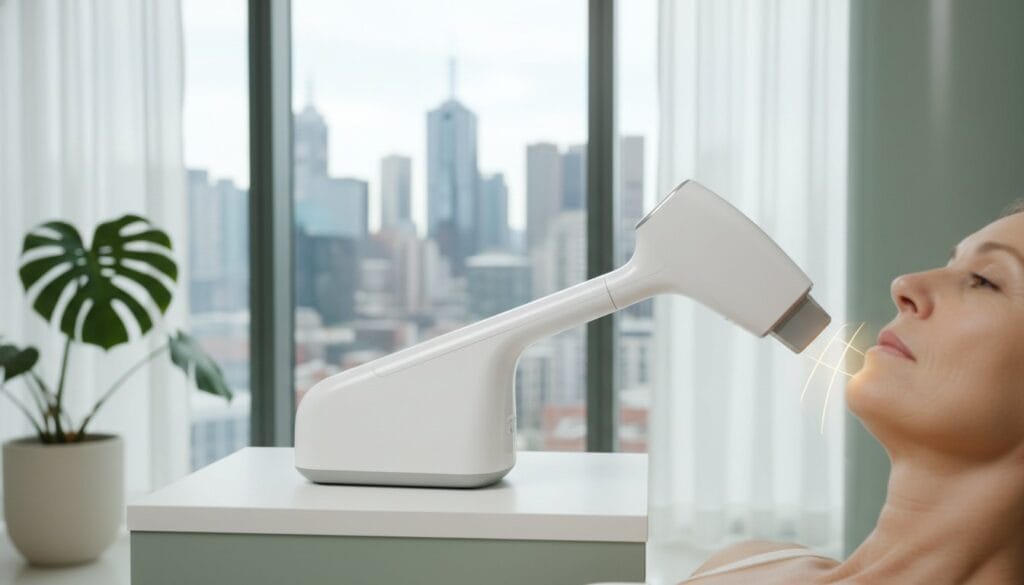
The most effective approach to non-surgical facial lifting does not involve altering the skin’s surface, but rather targeting the deep structural layers that provide its essential support. You’ve likely noticed a gradual loss of definition along your jawline or a softening of the neck tissues, yet the prospect of invasive surgery remains unappealing due to the associated risks and recovery periods. It’s common to feel overwhelmed by the array of energy-based devices currently available, many of which offer vague promises without technical substance. This clinical guide provides a rigorous analysis of how hifu treatment serves as a sophisticated alternative, using high intensity focused ultrasound to initiate a biological process of repair and tightening from within.
Precision is paramount in aesthetic medicine. We will detail the precise science of thermal coagulation zones, the stimulation of neocollagenesis, and the technical criteria for selecting a medical-grade clinic in Melbourne to ensure your results are both safe and structurally sound. By understanding the interaction between ultrasound energy and the superficial muscular aponeurotic system, you can move beyond surface-level descriptions and make an informed decision regarding your long-term skin health and facial contour.
Key Takeaways
- Understand the biological mechanism of High Intensity Focused Ultrasound, which targets the Superficial Musculoaponeurotic System (SMAS) to initiate structural tightening from within.
- Learn how thermal coagulation points at precise depths of 1.5mm, 3.0mm, and 4.5mm stimulate neocollagenesis without compromising the integrity of the skin’s surface.
- Evaluate the clinical differences between hifu treatment and mechanical modalities such as PDO threads to determine the most appropriate foundation for your facial rejuvenation.
- Identify critical safety considerations and contraindications, including the presence of metallic implants or active lesions, to ensure a secure and effective clinical outcome.
- Discover the importance of a long-term physiological approach that prioritises sustained skin health and structural stability over temporary aesthetic fixes.
What is High Intensity Focused Ultrasound (HIFU) Treatment?
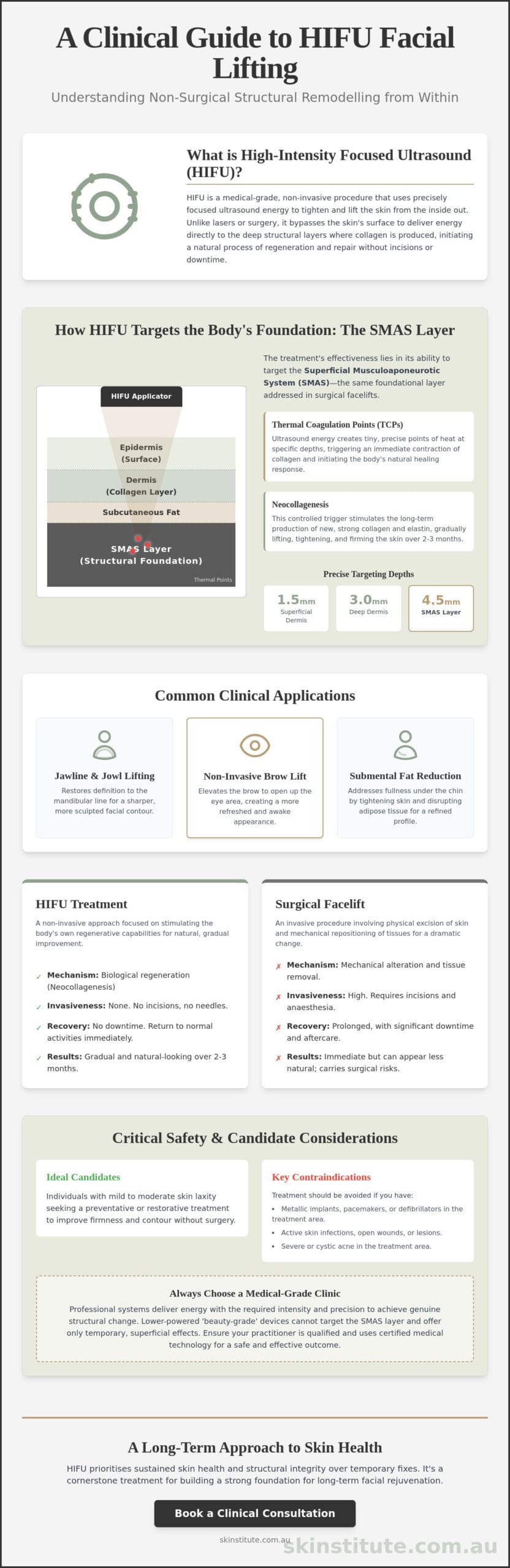
High Intensity Focused Ultrasound (HIFU) is a medical-grade, non-invasive therapeutic procedure that utilises micro-focused ultrasound energy to initiate structural remodelling. Unlike diagnostic ultrasound used for imaging, which transmits low-frequency waves, High-Intensity Focused Ultrasound (HIFU) concentrates energy to a specific focal point. This creates controlled thermal coagulation zones at precise depths within the skin. The technology has evolved significantly since its inception, moving from oncological applications to becoming a foundational tool in aesthetic medicine. The primary objective of hifu treatment is to induce a wound-healing response that triggers the production of new collagen and elastin, providing a lifting effect from the inside out.
It’s vital to distinguish between medical-grade clinical systems and the superficial beauty-grade devices often marketed in non-clinical settings. Professional systems are engineered to deliver energy at higher intensities and specific depths, typically reaching 1.5mm, 3.0mm, and 4.5mm. These depths are critical because they allow the practitioner to bypass the epidermis and target the deeper structural layers, including the dermis and the fibromuscular foundation. Lower-powered devices lack the precision and energy density required to achieve these physiological changes. They often result in temporary surface-level improvements rather than genuine structural lifting. Precision is the hallmark of this modality, and it is a standard upheld by leading international practices like 512 Aesthetics to ensure optimal skin health.
The Distinction Between HIFU and Traditional Facelifts
While often described as a non-surgical facelift, hifu treatment operates on a different biological principle than invasive surgery. A surgical facelift involves the physical excision of redundant skin and the mechanical repositioning of underlying tissues. In contrast, ultrasound therapy focuses on skin tightening and the restoration of structural integrity. There are no incisions. There’s no general anaesthesia or prolonged recovery period. This makes it an ideal option for patients with mild to moderate skin laxity who wish to avoid surgical risks. Managing expectations is essential; while the results are significant, they are achieved through biological regeneration rather than mechanical alteration.
Common Clinical Applications in Aesthetic Medicine
Clinicians utilise this technology to address several key areas of concern where tissue laxity is most prominent. The mandibular line is a frequent target, where the procedure helps restore definition and reduce the appearance of jowls. It’s also highly effective for non-invasive brow lifting, where energy is delivered to the periorbital region to open the eye area. Additionally, targeted ultrasound can address submental fullness, commonly known as a double chin. By disrupting adipose tissue and tightening the overlying skin, practitioners can sculpt a more refined profile without the need for liposuction or other invasive methods. Results appear gradually over several months as the body organises new collagen fibres.
The Biological Mechanism: How HIFU Targets the SMAS Layer
To comprehend the efficacy of hifu treatment, one must first understand the Superficial Musculoaponeurotic System (SMAS). This fibromuscular layer, situated beneath the subcutaneous fat, serves as the critical foundation for facial structure. Traditionally, this is the specific layer that surgeons manipulate during an invasive facelift to achieve a significant and lasting lift. By delivering focused energy directly to this depth, practitioners can initiate a lifting effect without the necessity of surgical intervention or surface-level trauma.
The process relies on the creation of thousands of tiny, independent Thermal Coagulation Points (TCPs). These points are generated by micro-focused ultrasound waves that converge at specific, pre-determined depths. When the energy reaches these points, it causes immediate collagen denaturation. This is not damage in a destructive sense, but rather a controlled physiological trigger. As evidenced by a clinical study on HIFU safety and efficacy, this precise targeting allows for the stimulation of the body’s natural wound-healing response while leaving the surrounding tissue and skin surface entirely intact.
Understanding Thermal Coagulation and Tissue Remodelling
To stimulate optimal collagen synthesis, the target tissue must reach a temperature range of 60-70°C. This specific thermal threshold is high enough to cause existing collagen fibres to contract and thicken, yet the precision of the ultrasound ensures the epidermis remains unaffected. Following this initial thermal event, fibroblasts are activated. These specialised cells begin the complex task of synthesising a new, denser collagen matrix. This biological restructuring is a gradual process. While some patients notice an immediate tightening, the most significant results manifest over three to six months as the new collagen network matures and strengthens the skin’s internal architecture.
Depth Selection: Why Precision Matters for Safety
Precision is achieved through the use of different transducers that focus energy at varying depths. Targeting at 4.5mm is essential for interacting with the SMAS layer, providing the structural lift required to redefine the jawline and lift the neck. A 3.0mm depth targets the deep dermis, where it addresses structural firmness and skin density. Finally, the 1.5mm setting focuses on the upper dermis. This shallower depth is often used for a “brightening” effect, helping to refine skin texture and reduce pore size. Selecting the correct combination of depths is a technical skill that requires deep clinical expertise. A professional assessment at Skinstitute ensures that the hifu treatment parameters are customised to your unique facial anatomy and aesthetic goals.
HIFU vs. PDO Threads and Bio-stimulators: A Clinical Comparison
While hifu treatment is a powerful standalone modality for tissue tightening, its primary clinical value often lies in its role as a foundational treatment within a broader regenerative strategy. High-intensity focused ultrasound provides the structural “scaffolding” by targeting the SMAS and deep dermis. This biological tightening creates a stable base upon which other aesthetic interventions can be layered. A Systematic review of HIFU confirms its significant efficacy in increasing skin density and reducing laxity, yet achieving a truly comprehensive rejuvenation often requires addressing multiple layers of the skin’s anatomy simultaneously.
Choosing Between Ultrasound and Mechanical Lifting
The distinction between ultrasound therapy and PDO threads is fundamentally one of biological versus mechanical action. Ultrasound energy triggers a natural healing response to tighten existing tissues over several months. Conversely, PDO threads provide an immediate, directional lift by mechanically repositioning the skin using specialised sutures. For patients with global skin laxity and a loss of overall density, we prioritise ultrasound to strengthen the tissue foundation. Threads are typically indicated when specific areas, such as the mid-face or brow, require a precise vector of lift that energy-based devices cannot provide. A clinical assessment is necessary to organise the correct sequence of these therapies; often, tightening the skin with ultrasound first provides a more robust environment for subsequent thread placement.
HIFU and Fractional CO2: Texture vs. Structure
Practitioners must also distinguish between structural lifting and surface refinement. While hifu treatment focuses on the deep myofascial layers, Fractional CO2 Laser resurfacing targets the epidermis and papillary dermis. CO2 lasers are unsurpassed for correcting pigmentary concerns, fine lines, and actinic damage, but they do not reach the SMAS layer where structural lifting occurs. Combining these technologies allows us to address the full thickness of the skin. We often recommend a multi-modality approach that incorporates polynucleotide treatments like Rejuran alongside ultrasound. While ultrasound provides the thermal stimulus for collagen production, polynucleotides provide the essential biological building blocks to enhance the quality of that new collagen. This synergy results in a more resilient and physiologically younger skin matrix. Safety protocols require careful spacing between these energy-based device treatments to allow the inflammatory response to resolve and the remodelling process to initiate effectively.
Clinical Considerations: Candidate Selection and Treatment Safety
Patient safety in medical aesthetics is predicated on a rigorous screening process and a thorough understanding of contraindications. While hifu treatment is a non-invasive modality, it remains a clinical procedure that delivers significant thermal energy to deep tissue layers. Absolute contraindications include active skin infections or open lesions in the target area, as these conditions compromise the skin’s barrier and increase the risk of adverse inflammatory responses. Additionally, patients with metallic implants, such as pacemakers or certain facial implants, are generally excluded from treatment due to the potential for ultrasound energy to interact with these materials. A comprehensive medical history review is the first step in ensuring a secure clinical environment.
Managing expectations regarding the sensory experience during energy delivery is equally vital. Unlike superficial aesthetic treatments, hifu treatment involves the delivery of micro-focused ultrasound that generates heat at the myofascial level. Most patients describe a deep tingling or a brief prickling sensation. This discomfort is transient and serves as a clinical indicator that the thermal coagulation points are being established at the correct depth. Following the session, patients may experience mild erythema (redness) and slight oedema (swelling). These are expected physiological responses to the thermal stimulus and typically resolve within a few hours to a few days. Temporary tenderness along the jawline is also a common, self-limiting side effect of the structural remodelling process.
The Consultation: Assessing Skin Quality and Anatomy
The success of ultrasound lifting depends heavily on the patient’s baseline skin thickness and the degree of tissue ptosis (sagging). Patients with mild to moderate laxity typically achieve the most predictable outcomes. It’s a common misconception that ultrasound therapy can replace dermal fillers; however, these modalities address different anatomical concerns. While ultrasound tightens the structural foundation, it does not replace the subcutaneous volume lost during the ageing process. During a professional consultation, we assess whether your concerns stem from tissue laxity or volume depletion to determine if a multi-modality approach is required. To begin your clinical assessment, you can book a consultation at Skinstitute to discuss your specific anatomical needs.
Post-Treatment Care in the Melbourne Climate
The Australian climate necessitates specific post-procedure protocols to protect the skin while it is in a heightened state of regeneration. Even though the epidermis remains intact, the internal inflammatory healing phase makes the skin more susceptible to environmental stressors. Strict adherence to broad-spectrum UV protection is mandatory to prevent post-inflammatory hyperpigmentation, especially given Melbourne’s often high UV index. We recommend using gentle, non-irritating topical agents that support the skin’s moisture barrier. For the first 48 hours, patients must avoid strenuous exercise, saunas, and high-heat environments. These activities can exacerbate oedema and interfere with the initial stages of the body’s natural repair mechanism.
Optimising Results: The Professional Approach at Skinstitute Melbourne
At Skinstitute, the administration of hifu treatment is underpinned by over 26 years of clinical experience. This longevity in the field allows for a nuanced understanding of tissue response that exceeds basic technical operation. Our philosophy prioritises the preservation and enhancement of long-term skin health, eschewing the trend of aggressive, temporary fixes in favour of sustainable, evidence-based outcomes. By viewing the patient’s journey as a long-term partnership, we ensure that every intervention contributes to a stable and youthful facial architecture. We believe that clinical excellence is achieved through a combination of technical mastery and an honest, transparent approach to patient care.
Achieving natural-looking results requires the precise customisation of ultrasound parameters. No two facial structures are identical; therefore, a standardised approach is clinically insufficient. We adjust the energy intensity, focal depth, and transducer vectoring based on your specific anatomical variations, such as skin thickness and the distribution of subcutaneous fat. This collaborative process between the practitioner and the patient is essential for managing the biological remodelling of the skin while avoiding an “over-treated” appearance. While it’s a gradual process, the cumulative benefits of a tailored treatment plan are significant, resulting in a restored contour that respects your unique facial features.
Maintaining and Enhancing Your HIFU Results
While the initial phase of neocollagenesis provides a significant lift, the natural ageing process continues. To maintain the structural integrity of the SMAS and dermis, we typically recommend maintenance sessions every 12 to 18 months. Supporting these clinical results at home is equally important. Integrating medical-grade skincare rich in antioxidants and peptides can prolong the effects of your hifu treatment by providing the skin with the necessary environment for sustained repair. Additionally, lifestyle factors play a supportive role in tissue regeneration. Optimal nutrition and hydration ensure the body has the biological resources required to build and maintain a resilient collagen matrix over time.
Organising Your Consultation at Our Melbourne Clinic
Your journey begins with a comprehensive professional assessment. During this initial consultation, we perform a detailed analysis of your skin quality and underlying anatomy to determine the most effective roadmap for your goals. We value transparency in treatment planning, providing you with a clear understanding of the expected physiological changes and the timeline for results. This methodical approach ensures you feel informed and respected throughout the process. You can contact Skinstitute to organise your clinical skin analysis and take the first step towards a structurally restored profile.
Restoring Structural Integrity Through Advanced Ultrasound
Selecting a pathway for facial rejuvenation requires a clear understanding of the biological mechanisms that drive long-term structural change. We’ve analysed how micro-focused ultrasound interacts with the SMAS layer to facilitate deep tissue tightening, and highlighted the importance of distinguishing professional clinical systems from superficial alternatives. By integrating this knowledge into a personalised regenerative plan, you can address skin laxity at its source rather than merely treating surface symptoms. This evidence-based approach ensures that your aesthetic journey is grounded in physiological reality.
At Skinstitute, we combine medical-grade ultrasound technology with over 26 years of aesthetic industry expertise to deliver precise, safe, and natural-looking outcomes. Our commitment to technical mastery ensures that your hifu treatment is tailored to your specific anatomy, prioritising your long-term skin health above all else. We invite you to organise a clinical consultation for HIFU treatment at Skinstitute Melbourne to begin your collaborative journey toward a more defined and resilient profile. Taking this step allows for a thorough assessment of your unique needs within a professional, clinical environment. We look forward to partnering with you in achieving your aesthetic goals.
Frequently Asked Questions
Is HIFU treatment painful, and what does the sensation feel like?
Sensations during hifu treatment are typically described as intermittent heat coupled with a deep tingling or prickling at the focal point. This discomfort occurs as the ultrasound energy establishes thermal coagulation zones at the myofascial level. While the experience is subjective, most patients find it manageable without the need for topical anaesthesia. Practitioners monitor the energy delivery throughout the procedure to ensure it remains within a tolerable clinical range for each individual.
How many HIFU sessions are typically required to see a visible lift?
Most patients require only a single hifu treatment to initiate the neocollagenesis process and achieve a visible structural lift. Individuals with more pronounced skin laxity may benefit from a second session approximately six months after the initial procedure. Because the biological remodelling of collagen is a gradual process, the full effects are assessed at the six month mark before determining if further clinical intervention is necessary.
What is the expected downtime after a High Intensity Focused Ultrasound procedure?
There is virtually no downtime associated with this procedure, allowing patients to return to their regular daily activities immediately after leaving the clinic. While mild erythema or slight oedema may occur, these symptoms are transient and typically resolve within a few hours. You don’t need to take time off work or avoid social engagements, making it a convenient option for those with busy professional schedules in Melbourne.
Can HIFU be combined with cosmetic injectables like anti-wrinkle or fillers?
Ultrasound therapy can be effectively integrated with prescription injectables to address both structural laxity and volume loss simultaneously. We generally recommend performing ultrasound lifting before dermal fillers or anti-wrinkle injections to ensure the thermal energy does not interfere with the injectable product. If you have recently received injectables, we typically advise waiting four to six weeks before undergoing ultrasound therapy in the same anatomical area.
How long do the results of a non-surgical HIFU lift last?
The results of a non-surgical ultrasound lift typically last between 12 and 18 months, depending on the patient’s baseline skin quality and biological response. While the procedure creates a new, denser collagen matrix, it cannot halt the natural ageing process entirely. To maintain the structural stability of the skin and SMAS layer, we recommend organising a maintenance session every one to one and a half years.
Are there any risks of nerve damage or burns with HIFU treatment?
Adverse events such as nerve inflammation or thermal burns are extremely rare when the procedure is performed using medical-grade technology and precise clinical technique. Professional systems include precise depth controls to ensure energy is not delivered to unintended structures. Practitioners utilise their extensive anatomical knowledge to avoid major nerve pathways and maintain the integrity of the skin’s surface throughout the entire session.
Is HIFU effective for tightening skin on the body, such as the abdomen or knees?
Ultrasound technology is highly effective for tightening skin on the body, particularly in areas prone to laxity like the abdomen, knees, and upper arms. The procedure utilises specific transducers designed to reach deeper adipose and dermal layers to improve both contour and skin firmness. This application is ideal for addressing mild skin sagging that remains after weight loss or as a result of the natural ageing process.
What is the difference between medical-grade HIFU and ‘HIFU facials’ offered at salons?
The primary difference lies in the energy intensity, focal precision, and depth of penetration. Medical-grade systems are TGA-registered devices capable of reaching the SMAS layer at 4.5mm, whereas ‘HIFU facials’ in salons often use lower-powered devices that only affect the superficial dermis. Clinical procedures provide a genuine structural lift through thermal coagulation, while salon treatments typically offer only temporary surface-level improvements without long-term regenerative benefits.