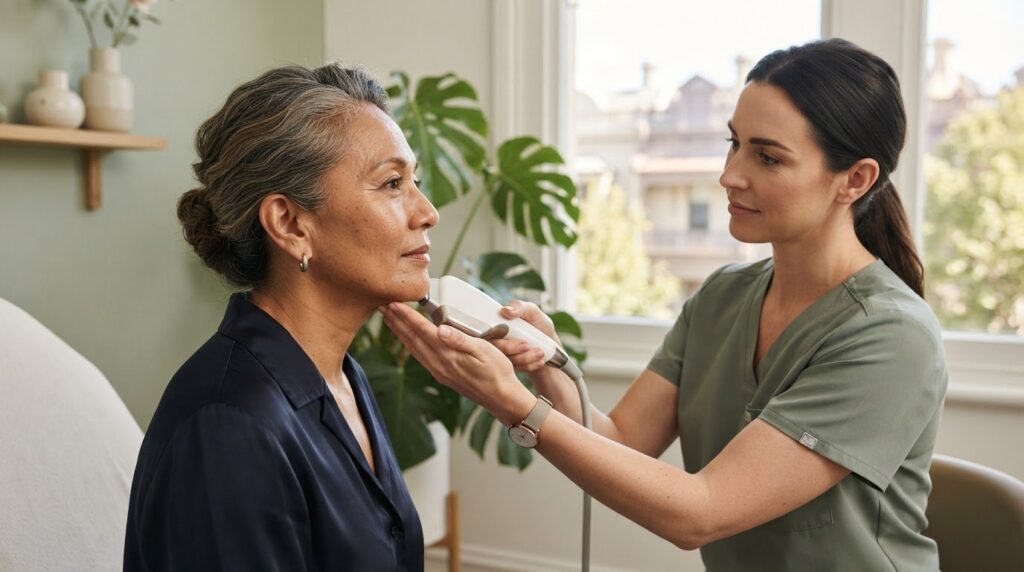
Forehead Line Treatment in Melbourne: A Clinical Buying Guide to Medical-Grade Solutions
June 26, 2026
Smokers Lines Treatment Melbourne: A Clinical Guide to Perioral Rejuvenation
June 28, 2026
True frown line reduction is not merely about “freezing” a muscle; it is a sophisticated biological recalibration of the dermal architecture. Many individuals find that their reflection conveys a sense of persistent frustration or fatigue that doesn’t align with their actual mood. This discrepancy often stems from the repetitive contraction of the corrugator supercilii and procerus muscles, leading many to seek professional frown line reduction in Melbourne to restore a more neutral, composed appearance.
We understand the apprehension surrounding unnatural results and the confusion caused by varying treatment modalities. This guide provides a comprehensive medical overview of how modern aesthetic science addresses these concerns through a dual-phase approach of neurological relaxation and dermal regeneration. We’ll explore the mechanics of prescription injectables, the structural benefits of PDO threads, and the latest 2025 AHPRA safety regulations that govern these clinical procedures. By the end of this explainer, you’ll be equipped with the technical knowledge necessary to discuss a personalised, evidence-based treatment plan with a qualified practitioner. This methodical approach ensures that your aesthetic journey is grounded in safety, transparency, and clinical excellence.
Key Takeaways
- Identify the specific anatomical roles of the corrugator supercilii and procerus muscles in the formation of glabellar creases.
- Understand the biochemical process by which prescription injectables intercept neurological signals to achieve localised muscle relaxation.
- Explore the clinical synergy between muscle relaxation and dermal regeneration required to effectively manage deep-seated static lines.
- Assess the regulatory and professional standards necessary for safe frown line reduction in Melbourne following the 2025 AHPRA guideline updates.
- Recognise the importance of practitioner experience and medical-grade technology in ensuring precise and natural aesthetic outcomes.
Understanding Frown Lines: The Biological Basis of Glabellar Creases
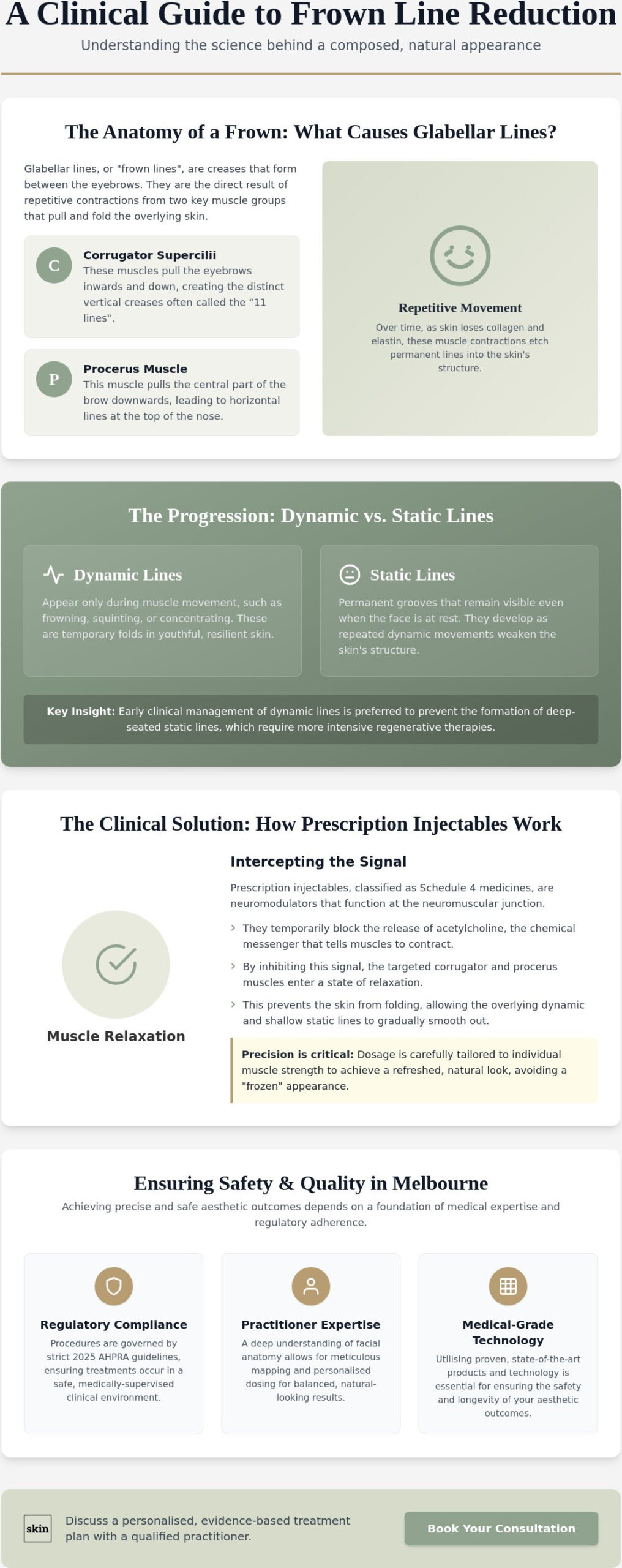
The glabella is the anatomical region located between the eyebrows and above the nose. While this area is naturally smooth in youth, it is the primary site for the development of glabellar lines, colloquially known as frown lines. These creases are the direct result of the complex interplay between facial muscles and the overlying skin. Specifically, the corrugator supercilii and the procerus muscles drive these changes. The corrugators are responsible for pulling the eyebrows together and downwards, while the procerus muscle depresses the medial brow, creating the horizontal bridge often seen at the top of the nose. For patients investigating frown line reduction in Melbourne, a clinical understanding of these muscle groups is the first step in achieving a precise aesthetic outcome.
Facial expressions are a fundamental part of human communication, yet the repetitive nature of these movements exerts significant mechanical stress on the dermis. In younger skin, high levels of collagen and elastin allow the tissue to recover its shape immediately after a contraction. However, as biological ageing progresses, the skin’s structural integrity weakens. This decline in protein density means that the skin eventually loses its resilience. Understanding Frown Lines involves recognising that what begins as a temporary fold during an expression can, over decades, become a permanent feature of the facial landscape.
Dynamic vs. Static Lines: Why Timing Matters
Clinicians categorise facial creases into two distinct phases: dynamic and static. Dynamic lines are only visible during active muscle contraction, such as squinting in the bright Australian sun or concentrating on a task. Over time, these repeated contractions etch permanent grooves into the dermal layer, leading to static lines that remain visible even when the face is completely relaxed. Factors such as high UV exposure and specific lifestyle habits accelerate this transition by degrading the skin’s extracellular matrix. Early clinical intervention is often preferred to manage dynamic movement before it evolves into deep-seated static scarring, which requires more complex regenerative therapies.
The Anatomy of the “11 Lines”
The vertical creases that form between the brows are frequently referred to as “11 lines” due to their characteristic parallel appearance. These are primarily driven by the corrugator muscles. It’s important to note that facial anatomy is rarely perfectly symmetrical; one side of the glabella often possesses greater muscular strength or a different insertion point than the other. Professional frown line reduction in Melbourne relies on meticulous anatomical mapping to identify these variances. By assessing the unique strength and pull of each muscle group, a practitioner can tailor a treatment plan that addresses the specific depth and orientation of the lines, ensuring a balanced and natural-looking result.
Clinical Reduction Methods: The Mechanism of Prescription Injectables
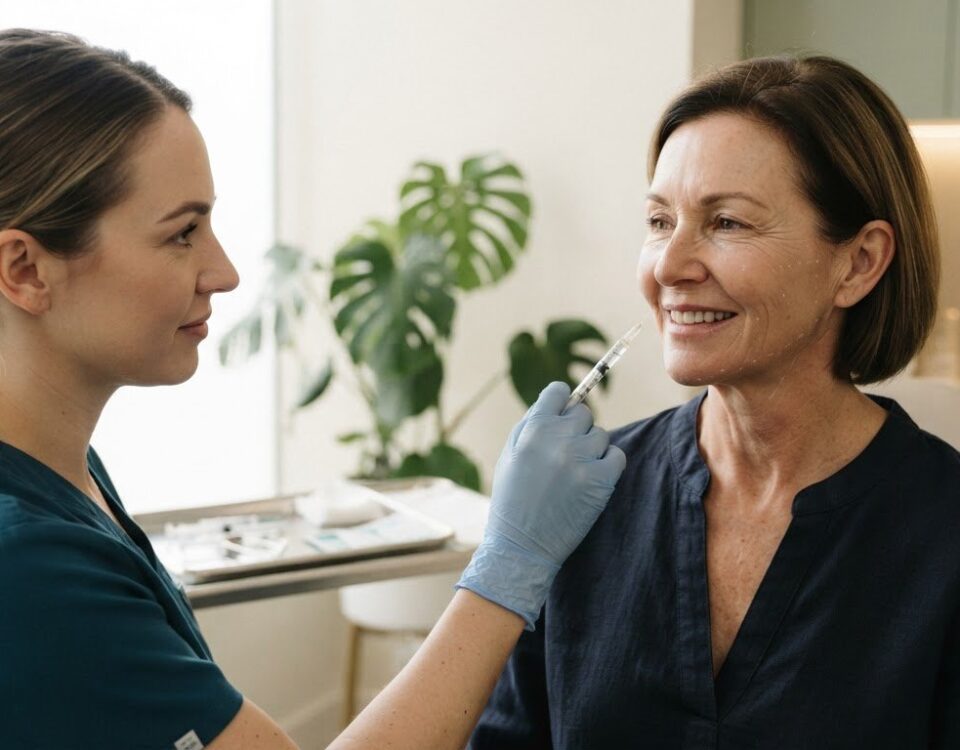
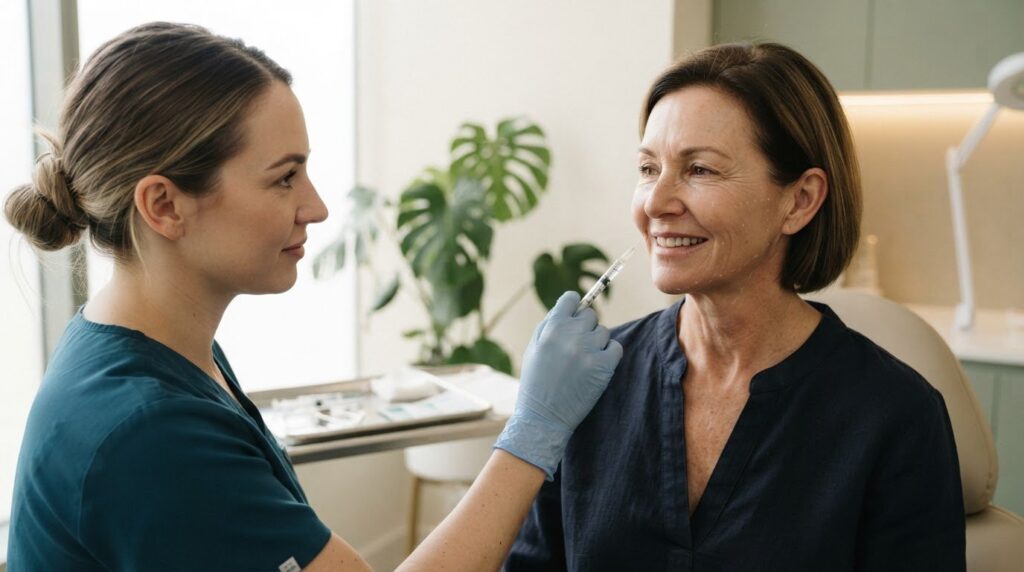
The efficacy of prescription injectables for frown line reduction in Melbourne rests upon the precise application of neuromodulators. These substances are classified as Schedule 4 medicines, a designation that necessitates rigorous medical oversight and a professional clinical environment. On a biological level, the treatment functions by inhibiting the release of acetylcholine, which is the primary neurotransmitter responsible for muscle contraction. By temporarily disrupting this chemical signal at the neuromuscular junction, the overactive muscles in the glabellar region are allowed to relax. This localised relaxation prevents the skin from folding, which facilitates the gradual smoothing of the overlying tissue.
Dosage selection is a critical component of the clinical plan. It’s not a one-size-fits-all application; rather, it requires a deep understanding of individual muscle mass and contraction strength. While some patients require higher concentrations to address robust muscle activity, others benefit from a micro-dosing approach that maintains expressive mobility. Recent clinical studies on botulinum toxin dosage suggest that personalised titration is essential for both safety and aesthetic longevity. This tailored approach ensures that the result is a refreshed and neutral appearance rather than a static or “frozen” look. Understanding these technical nuances is vital when selecting a provider for medical-grade aesthetic treatments in a clinical setting.
The Procedure: From Assessment to Application
A real-time clinical consultation is the mandatory first step for any patient seeking frown line reduction in Melbourne. During this phase, the practitioner assesses the patient’s medical history and facial dynamics. The injection process itself involves the use of fine-gauge needles to deliver the solution into specific anatomical landmarks identified during mapping. While the procedure is relatively brief, the physiological transition is gradual. Initial softening typically commences within three to five days, with the full clinical effect manifesting at the fourteen-day mark. Comfort is managed through precise technique and, where necessary, topical cooling agents.
Safety Standards and Professional Oversight
Adherence to the AHPRA guidelines implemented on 2 September 2025 is a non-negotiable aspect of modern aesthetic medicine. These regulations mandate that a prescribing medical professional must conduct a consultation, either in person or via video, before any injectable is administered. This ensures that the treatment is appropriate for the individual’s physiological profile. Professional oversight is a safeguard against complications such as ptosis or asymmetrical results. Regular follow-up intervals allow for the maintenance of the dermal matrix and ensure that the treatment continues to align with the patient’s evolving aesthetic goals.
Advanced Management for Persistent Static Lines
While neuromodulators effectively address dynamic movement, they cannot always resolve static lines that have physically scarred the skin over time. For many individuals seeking frown line reduction in Melbourne, these persistent creases require a strategy that moves beyond muscle relaxation to focus on structural repair. Static lines represent a loss of dermal volume and a breakdown of the extracellular matrix where the skin has essentially lost its resilience. Managing these deep-set folds necessitates a synergistic approach where we combine neurological intervention with biological dermal regeneration. This dual-phase methodology ensures the skin’s surface is refined while the underlying architecture is reinforced.
Bio-Stimulation with Rejuran and Exosomes
Bio-stimulators represent a significant advancement in regenerative medicine within the aesthetic field. Rejuran utilises polynucleotides to trigger cellular repair and increase the density of the dermis. These biological molecules don’t just fill a space; they actively repair damaged DNA and encourage the skin to rebuild itself. Additionally, the clinical application of exosomes provides a concentrated source of growth factors and signalling proteins. These components accelerate tissue regeneration and stimulate fibroblasts to produce fresh collagen and elastin. This internal healing process is essential for smoothing the etched appearance of long-term glabellar creases that don’t respond to muscle relaxation alone.
Skin Needling and Laser Resurfacing
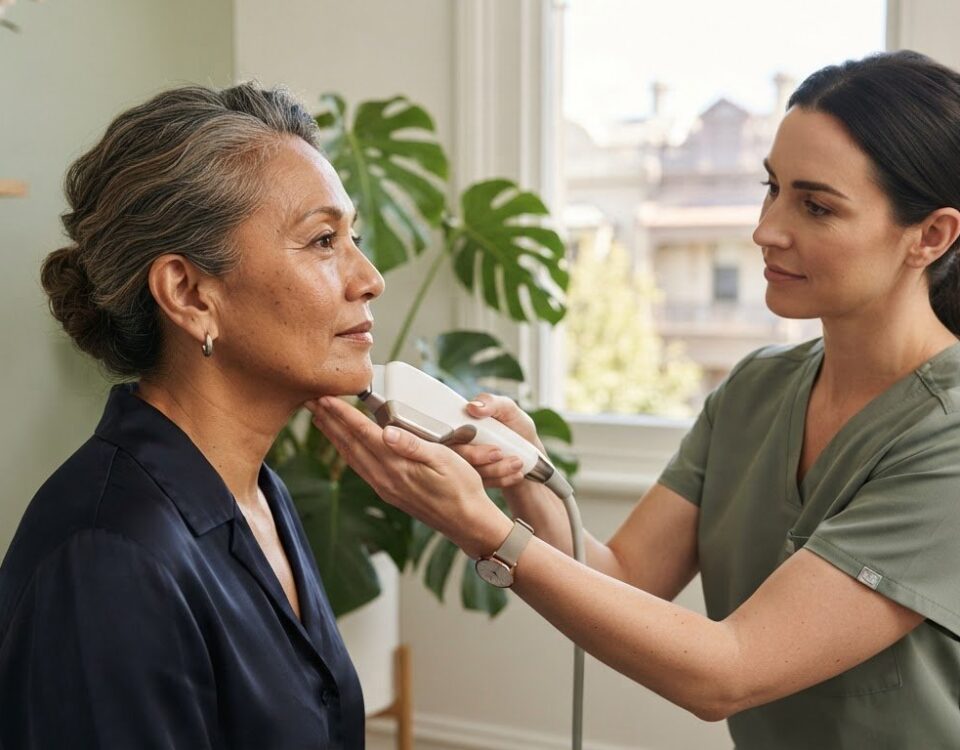
Mechanical and thermal therapies provide another layer of intervention for complex cases where the skin texture has become permanently compromised. Professional skin needling creates controlled micro-injuries that trigger the body’s natural wound-healing response, leading to a surge in collagen induction. For more significant dermal remodelling, the Fractional CO2 Laser is employed to vaporise columns of damaged tissue. This process stimulates a dramatic contraction of the skin and a subsequent refinement of the surface texture. When these modalities are integrated into a comprehensive frown line reduction melbourne treatment plan, the result is a significant improvement in both the depth of the lines and the overall health of the glabella region. Non-surgical lifting techniques, such as High Intensity Focused Ultrasound (HIFU), can also be utilised to provide a subtle elevation of the brow, further reducing the physical pressure on the glabellar area.
Professional Standards for Frown Line Reduction in Melbourne
Professional standards in aesthetic medicine are defined by the intersection of clinical expertise and patient safety. Selecting a facility for frown line reduction in Melbourne requires a thorough evaluation of the practitioner’s longevity and the medical grade nature of the environment. At Skinstitute, we maintain a 26 year benchmark of excellence, ensuring that every procedure is governed by established scientific principles rather than fleeting industry trends. A clinical setting provides the necessary infrastructure for precise outcomes, including sterile protocols and advanced diagnostic tools that are often absent in non-medical environments. This commitment to professional integrity ensures that the focus remains on the biological suitability of the treatment for the individual patient.
Ethical considerations are central to patient centric care. A transparent approach involves providing an objective overview of what a procedure can and cannot achieve. Practitioners must prioritise the patient’s long term health by adhering to rigorous safety standards and refusing treatments that may compromise facial harmony or physiological function. By maintaining this sober and focused personality, a clinic functions as a reliable guide through the complexities of aesthetic science. To ensure your journey is supported by over two decades of clinical experience, you may book a professional consultation at Skinstitute.
The Consultation: A Clinical Requirement
The consultation process is a mandatory clinical requirement that serves as the foundation for any successful intervention. During this phase, a practitioner conducts a comprehensive assessment of the patient’s medical history and identifies any potential contraindications. This is not merely a formality; it’s a critical safety step to ensure the patient’s physiology is compatible with the proposed neuromodulators or bio-stimulators. Meticulous anatomical mapping follows, allowing for a bespoke treatment plan that respects the unique facial symmetry of the individual. Clinical photography is utilised to provide an objective baseline, allowing both the practitioner and the patient to track progress and verify the efficacy of the treatment over time.
Aftercare and Long-Term Maintenance
Optimal results are not achieved through the procedure alone; they are sustained through evidence based aftercare protocols. Patients are provided with specific instructions to manage the treated area in the hours following an injection to prevent the migration of the solution. Long term maintenance is equally vital. Given the high UV index in Australia, the daily application of broad spectrum sun protection is essential to prevent the degradation of the dermal matrix. Scheduling maintenance sessions at regular intervals, typically every three to four months for injectables, prevents the return of deep creases and maintains the skin’s structural integrity. This methodical approach to maintenance ensures that frown line reduction in Melbourne remains a consistent and reliable component of a broader skin health programme.
Precise Aesthetic Outcomes at Skinstitute Melbourne
Achieving precise aesthetic outcomes for frown line reduction in Melbourne requires more than just technical application; it demands the integration of decades of clinical observation and scientific rigour. At Skinstitute, our practitioners draw upon a 26 year history of aesthetic medicine to inform every treatment plan. This extensive experience allows us to navigate the complexities of facial anatomy with quiet confidence, ensuring that each intervention is both safe and effective. By maintaining a commitment to medical-grade technology and strict prescription standards, we provide a level of care that prioritises the biological health of the skin over superficial trends. This authoritative approach ensures that every patient receives a treatment tailored to their unique physiological profile.
Our clinical suite offers a comprehensive range of regenerative therapies, allowing us to address glabellar creases from multiple biological angles. Whether a patient requires the muscle-relaxing effects of prescription injectables or the structural reinforcement provided by High Intensity Focused Ultrasound (HIFU) and Fractional CO2 laser, all treatments are conducted under one roof. We’ve found that a conservative, natural-looking approach yields the highest patient satisfaction. By focusing on subtle refinements rather than drastic changes, we preserve the natural character of the face while effectively reducing the appearance of persistent lines. This dedication to technical mastery and evidence-based results defines our position as a leader in the Melbourne aesthetic community.
The Skinstitute Difference in Patient Care
The Skinstitute Melbourne philosophy is built upon educational clarity and transparent clinical communication. We don’t rely on marketing hype; instead, we provide patients with a thorough understanding of the “why” and “how” behind their procedures. Our methodology focuses on achieving refreshed results that don’t look “worked-on,” maintaining the delicate balance of facial expressions. We view skin health as a long-term journey, where the goal is to enhance the skin’s natural regenerative capabilities through the precise application of bio-stimulators and medical-grade skincare.
Next Steps for Your Clinical Journey
The transition toward smoother, rejuvenated skin begins with a professional assessment at our clinic. To initiate your path for frown line reduction melbourne, you can book a consultation where our experienced practitioners will evaluate your facial dynamics and dermal health. Before your first appointment, it’s helpful to prepare a summary of your medical history and any previous aesthetic treatments you’ve undergone. This methodical preparation allows us to design a bespoke clinical path that addresses both dynamic movement and static creases. By combining expert anatomical mapping with the latest regenerative science, we ensure a reliable and sophisticated outcome for every patient.
Taking the Next Step Toward a More Composed Appearance
Effective frown line reduction in Melbourne requires a clinical framework that addresses both the neurological drivers of muscle overactivity and the structural degradation of the dermal matrix. The key insight from this guide is that lasting results depend on understanding which phase of line development you’re managing, whether dynamic or static, and selecting therapies that correspond to the underlying biology rather than surface-level concerns.
Choosing the right clinical environment is equally critical. AHPRA-registered practitioners, a medical-grade treatment setting, and over 26 years of clinical experience are not incidental considerations; they are the foundational criteria that determine both your safety and the precision of your outcome.
Your skin’s architecture is complex, and it deserves a treatment plan built on evidence, anatomical expertise, and transparent clinical communication. When you’re ready to move from information to action, the next step is a professional assessment tailored to your unique facial profile. Book your clinical consultation at Skinstitute Melbourne and begin your journey toward a more refreshed, naturally composed appearance with confidence.
Frequently Asked Questions
How long does frown line reduction treatment typically last?
Clinical frown line reduction using neuromodulators typically maintains its efficacy for a duration of three to four months. This timeframe is subject to individual variation based on the patient’s metabolic rate and the inherent strength of the glabellar muscle group. Consistent maintenance sessions are recommended to prevent the muscles from returning to full contractile strength, which helps to protect the dermal matrix from further mechanical stress.
Is the procedure for glabellar line reduction painful?
Discomfort is minimal as the procedure involves the use of fine-gauge needles designed for precise, superficial delivery. Most patients report a minor, brief pinching sensation at the injection site. To ensure a professional and comfortable experience, clinical practitioners may utilise topical cooling agents or specific comfort management techniques to desensitise the area before the application begins.
Can I achieve a natural look without looking “frozen”?
A natural result is entirely achievable through the precise titration of the prescription injectable based on your specific facial anatomy. By adjusting the dosage to soften muscle activity rather than eliminating it entirely, practitioners preserve the ability to convey facial expressions. This nuanced approach is a core focus of professional frown line reduction in Melbourne, ensuring the outcome appears refreshed and neutral.
What is the difference between anti-wrinkle injections and dermal fillers for frown lines?
Neuromodulators work by intercepting chemical signals to relax the muscles that cause dynamic folds, whereas other treatments focus on structural restoration. For example, Rejuran or PDO threads are utilised to stimulate collagen and repair the skin’s architecture from within. While the injectable addresses the muscular cause of the crease, bio-stimulators and regenerative therapies focus on healing the etched line in the skin itself.
How soon will I see results after my treatment in Melbourne?
Initial softening of the glabellar area is usually observed within three to five days after the clinical procedure. The full physiological effect, where the muscles have reached their peak relaxation and the skin appears most refined, typically manifests at the fourteen-day mark. A follow-up assessment is often conducted at this stage to verify that the aesthetic outcome is symmetrical and meets the clinical objectives.
Are there any side effects associated with prescription injectables?
Potential side effects are generally localised and transient, including minor swelling, redness, or small bruises at the entry points. Some patients may experience a mild, short-lived headache following the treatment. Significant complications, such as ptosis or asymmetry, are rare when the procedure is performed by highly experienced, AHPRA-registered practitioners who adhere to strict medical-grade safety protocols.
Can men also benefit from frown line reduction treatments?
Men frequently seek frown line reduction in Melbourne to manage deep glabellar creases that can project an unintended appearance of sternness or fatigue. Because male patients often possess greater muscle mass in the brow region, the clinical dosage is typically adjusted to account for this increased strength. The objective is to achieve a smoother appearance while maintaining the natural character and strength of the masculine face.
What is the recommended age to start preventative frown line treatments?
The appropriate time to commence preventative care is dictated by the transition of dynamic lines into static creases rather than a specific chronological age. This often occurs between the mid-20s and early 30s as natural collagen production begins to decline. Intervening when lines first remain visible at rest allows for the preservation of the skin’s structural integrity and prevents the formation of deep-set permanent scarring.