How to Look Less Tired: A Clinical Guide to Cosmetic Treatments in Melbourne
July 6, 2026
Nasolabial Fold Treatment Melbourne: A Clinical Guide to Midface Rejuvenation (2026)
July 8, 2026
The structural degradation of the delicate neck dermis, often exacerbated by the repetitive flexion of modern device use, represents a physiological change that topical cosmetics are fundamentally unequipped to resolve. Many patients find themselves increasingly self-conscious of deep horizontal creases or a loss of tissue tension, yet they often remain unsure if their concerns stem from postural habits or genuine dermal damage. If you’ve been searching for the best treatment for tech neck Melbourne, it’s essential to understand that meaningful improvement requires a transition from superficial skincare to targeted, medical-grade interventions that address the skin’s underlying architecture.
We recognise that the frustration of failed over-the-counter treatments often leads to a desire for a more rigorous, evidence-based approach to skin health. This clinical guide outlines the specific aesthetic procedures required to structurally repair horizontal lines and address dermal thinning at its source. By exploring the biological mechanisms of treatments such as Fractional CO2, High Intensity Focused Ultrasound (HIFU), and bio-stimulatory injectables, you’ll gain a comprehensive understanding of the professional pathway toward restoring skin elasticity and achieving a smoother, more resilient neck profile.
Key Takeaways
- Identify the physiological causes of cervical rhytids and how the unique anatomy of the neck contributes to premature horizontal creasing.
- Understand why medical-grade interventions are required to initiate a regenerative healing cascade that topical skincare cannot effectively stimulate.
- Compare the clinical mechanisms of HIFU, PDO Thread Lifting, and Rejuran to determine the best treatment for tech neck Melbourne based on your specific dermal profile.
- Learn the essential components of a professional treatment plan, including the necessity of diagnostic skin analysis and structured clinical aftercare.
What is Tech Neck? Understanding the Clinical Anatomy of Cervical Creasing
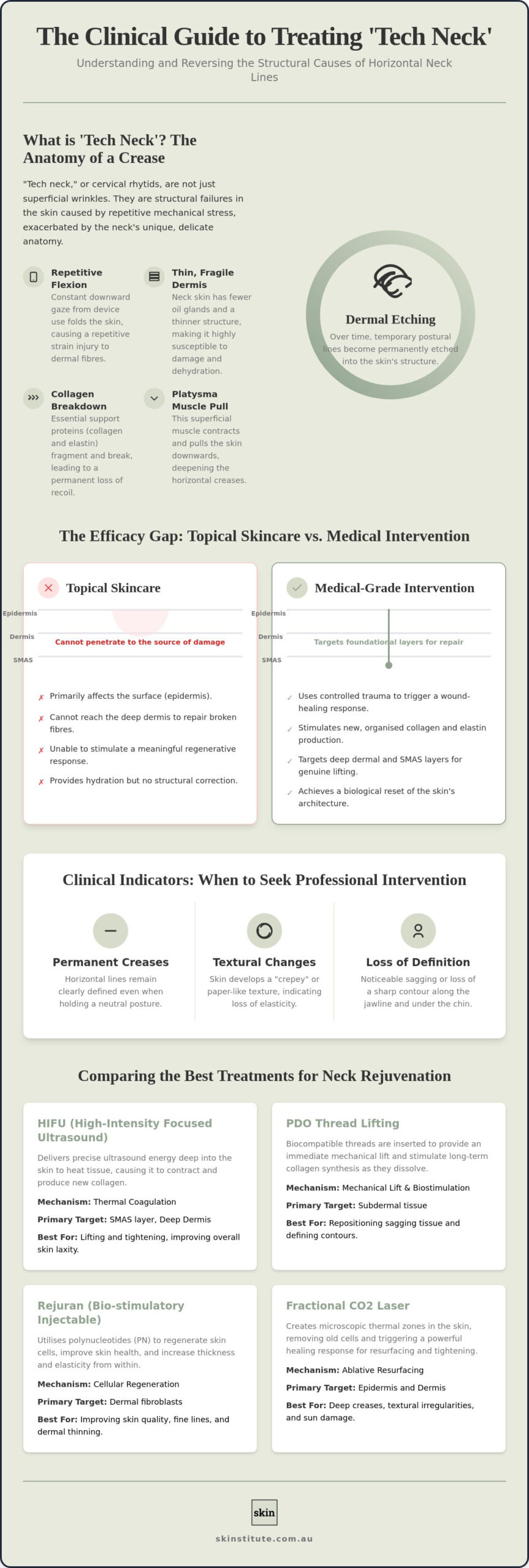
The term “tech neck” refers to the premature manifestation of cervical rhytids, which are the horizontal lines and creases that develop across the neck region. While often discussed in postural terms by musculoskeletal therapists, the condition involves significant structural changes to the skin’s architecture. Unlike the facial dermis, the skin on the neck is remarkably thin and possesses far fewer sebaceous glands, making it highly susceptible to dehydration and environmental damage. The anatomy of this region is further complicated by the superficial platysma muscle, a broad sheet of muscle that extends from the chest and shoulder up to the jawline. Constant downward gaze, necessitated by modern device use, creates a mechanical stressor that forces the skin into repetitive folds.
This recurring physical stress can be classified as a form of Repetitive Strain Injury (RSI), where the micro-trauma of constant flexion leads to the fragmentation of collagen and elastin fibres. When these essential proteins break down, the skin loses its ability to recoil into a smooth state. Over time, what begins as temporary postural redness or faint shadows transitions into permanent dermal etching. Finding the best treatment for tech neck Melbourne requires moving beyond superficial solutions to address these deep-seated structural deficits through targeted clinical intervention.
The Biological Impact of Repetitive Flexion
The repetitive flexion of the cervical spine causes the platysma muscle to contract and pull the overlying skin downwards. Because the neck lacks the robust dermal thickness found elsewhere on the body, the collagen matrix is more easily compromised. Standard moisturising products, while beneficial for surface hydration, cannot penetrate the deeper layers of the dermis to repair these broken fibres. The etching occurs because the skin is essentially being folded in the same place thousands of times a day, leading to a permanent loss of structural integrity. This process requires medical-grade technologies to initiate genuine tissue remodelling and dermal thickening.
Signs You Need Medical-Grade Intervention
Determining when to seek professional assistance involves assessing the visibility of creases during a neutral posture. If horizontal bands remain clearly defined even when you aren’t looking at a screen, the damage has moved beyond the epidermis. Other clinical indicators include a crepey or paper-like skin texture and a noticeable loss of definition along the jawline and submental area. These signs suggest that the skin’s elastic threshold has been exceeded. Identifying the best treatment for tech neck Melbourne at this stage is critical for preventing the progression of tissue laxity and ensuring the restoration of the neck’s youthful contour.
The Science of Dermal Repair: Why Medical-Grade Treatments are Essential
The transition from preventative skincare to corrective clinical intervention is often necessitated by the physical depth of cervical creases. While high-quality topical retinols and peptides serve a purpose in maintaining epidermal hydration, they lack the molecular weight and delivery mechanisms required to penetrate the deep dermis where structural “etching” occurs. For those seeking the best treatment for tech neck Melbourne, it’s vital to acknowledge that once a crease has become established, the solution must involve a biological reset of the skin’s architecture. Retail products simply cannot reach the depths required to repair the fragmented collagen fibres that characterise deep neck bands.
Medical-grade procedures rely on the principle of “controlled trauma” to initiate a wound-healing response within the skin. By delivering precise energy or mechanical stimulus to the deeper dermal layers, we trigger a regenerative cascade that forces the body to replace damaged tissue with new, organised fibres. This process isn’t merely about surface refinement; it’s about targeting the Superficial Musculoaponeurotic System (SMAS) layer. The SMAS is the foundational tissue that surgeons manipulate during invasive procedures, and effectively stimulating this layer with non-surgical technologies is essential for achieving a perceptible lift and tightening of the neck without the need for surgery.
Drawing on 26 years of clinical experience in the Melbourne aesthetic industry, our practitioners emphasise that the neck requires a highly calibrated approach. Because the cervical skin is significantly thinner than facial skin, the margin for error is narrow. An expert assessment of dermal thickness is paramount before selecting a modality, ensuring that the treatment is aggressive enough to yield results without compromising the skin’s integrity. This level of precision ensures that we avoid over-treating delicate tissue while still achieving the density required for a rejuvenated appearance.
Collagen Induction and Elastin Synthesis
The effectiveness of clinical intervention lies in the stimulation of fibroblasts, the cells responsible for synthesising collagen and elastin. When medical devices penetrate the deep dermis, they prompt these cells to enter a state of heightened activity. This biological process, known as neocollagenesis, isn’t instantaneous. It typically takes between three and six months for the new collagen matrix to fully mature and provide visible structural support. This timeline explains why patients see progressive improvement in skin density and elasticity long after their initial session, as the body gradually repairs the structural gaps caused by repetitive device use.
Combining Modalities for Optimal Results
A multi-faceted approach often yields the most sophisticated outcomes by addressing various layers of tissue simultaneously. While heat-based devices target deep laxity and the SMAS layer, other technologies focus on surface irregularities. For instance, Fractional CO2 Laser Resurfacing Melbourne is frequently utilised to refine skin texture and diminish the appearance of fine, superficial lines. By pairing these energy-based devices with bio-stimulatory injectables, we can address both the loss of volume and the degradation of the skin’s surface. If you’re ready to move beyond topical creams, a clinical skin analysis can help determine the most effective combination for your specific dermal needs.
Comparing the Best Treatments for Tech Neck in Melbourne
Selecting the best treatment for tech neck Melbourne requires a nuanced understanding of how different technologies interact with various anatomical layers. Clinical intervention is rarely a binary choice between one device or another; instead, it’s a strategic selection based on the patient’s specific dermal thickness and the severity of their cervical rhytids. While some patients present with superficial etching, others exhibit significant tissue laxity that necessitates a more structural approach. A professional assessment ensures that the selected modality targets the correct depth, whether that be the epidermis, the deep dermis, or the underlying muscle architecture.
Prescription injectables also play a critical role in managing the platysma muscle. When this muscle is hyperactive, it exerts a downward pull on the lower face and neck, which exacerbates horizontal bands and obscures the jawline. By precisely relaxing these active bands, we can reduce the mechanical stress on the skin, allowing other regenerative treatments to work more effectively. This multi-layered strategy is why bespoke treatment plans are superior to “off-the-shelf” packages; every neck ages differently, and the clinical response must be equally individualised.
HIFU: Non-Surgical Tightening for the SMAS Layer
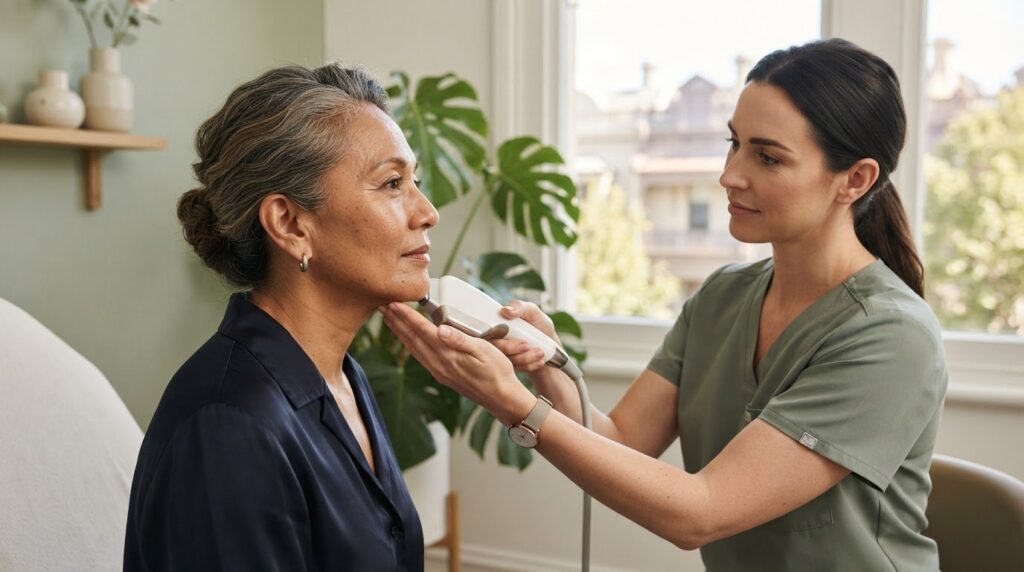
High-Intensity Focused Ultrasound (HIFU) remains a cornerstone for addressing deep tissue laxity. By delivering focused ultrasound energy at precise depths, typically 3.0mm and 4.5mm, it bypasses the surface to reach the SMAS layer. This energy creates thermal coagulation points that trigger a contraction of the foundational tissue. It’s an ideal option for patients with mild to moderate laxity or “heavy” neck skin who wish to avoid surgical intervention. For busy Melbourne professionals, the primary benefit is the absence of downtime, allowing for a return to daily activities immediately after the procedure.
PDO Threads and Rejuran: Structural Support and Bio-Stimulation
For patients whose primary concern is skin thinning and sagging, mechanical and biological support is paramount. PDO Thread Lifting involves the insertion of dissolvable polydioxanone sutures that act as a mechanical scaffold. These threads physically support the tissue while stimulating a long-term collagen response as they gradually dissolve. Conversely, Rejuran focuses on cellular repair rather than just structural support. This Clinical Guide to Rejuran in Melbourne explains how polynucleotides work to heal the dermis from within. By improving elasticity and texture at a biological level, Rejuran is particularly effective for the “crepey” skin texture often found alongside horizontal tech neck lines.
The choice between these modalities depends on several clinical factors:
- Skin Laxity: Higher degrees of sagging often require the mechanical lift provided by PDO threads or the deep contraction of HIFU.
- Dermal Thickness: Thinner, more fragile skin may benefit more from the bio-stimulatory and healing properties of Rejuran.
- Muscle Activity: Significant platysma banding usually requires prescription injectables to soften the “pull” before dermal repairs can be fully realised.
Planning Your Clinical Journey: Consultations and Aftercare
The transition from clinical research to active treatment requires a structured pathway that prioritises safety and efficacy. Identifying the best treatment for tech neck Melbourne is only the first step; the subsequent clinical journey involves a rigorous diagnostic phase and a commitment to long-term maintenance. Unlike superficial spa visits, a medical-grade approach treats the neck as a complex anatomical unit that requires specific preparation and tailored aftercare to ensure the longevity of the results. This methodical approach ensures that every intervention is matched to the specific biological needs of your skin.
Preparing for advanced laser or injectable treatments often involves a period of skin priming to optimise the healing response. This might include the use of specific medical-grade topicals to strengthen the skin barrier before the application of energy-based devices. Realistic expectations regarding social downtime are also discussed during your initial visit. While non-invasive treatments like HIFU typically allow for an immediate return to work, more intensive procedures such as Fractional CO2 or PDO Thread Lifting may involve several days of localised redness or mild swelling. Understanding these timelines allows you to plan your treatments around professional and social commitments without unnecessary stress.
What to Expect During a Professional Assessment
A professional assessment involves more than a cursory glance at skin texture. We evaluate the depth of established creases to distinguish between static etching and dynamic movement caused by the platysma muscle. This distinction is critical because it dictates whether a patient requires energy-based devices for tissue tightening or prescription-only options to address muscle hyperactivity. During this phase, we also review your medical history and current skincare regimen to ensure suitability for advanced modalities. This collaborative process culminates in a 12-month rejuvenation roadmap, which provides a clear timeline for expected milestones and maintenance sessions.
Maximising Longevity: Clinical Aftercare and Posture
Post-treatment care is vital for protecting the new collagen matrix as it develops. The application of medical-grade, broad-spectrum sun protection is non-negotiable; UV exposure accelerates the degradation of elastin fibres, undermining the progress made during clinical sessions. For Melbourne CBD professionals, ergonomic adjustments to your workspace are equally important. Raising your monitors and being mindful of your mobile device habits can significantly reduce the mechanical load on the cervical region. The clinical repair of existing dermal damage achieves its full potential only when supported by proactive postural adjustments to mitigate ongoing mechanical stress.
To begin your personalised journey toward structural neck rejuvenation, we recommend booking a comprehensive clinical skin analysis with our experienced practitioners.
Why Skinstitute is Melbourne’s Authority on Neck Rejuvenation
Skinstitute has established itself as a cornerstone of the Melbourne aesthetic sector over more than 26 years. This longevity provides a level of clinical insight that is difficult to replicate in newer, trend-focused establishments. When patients seek the best treatment for tech neck Melbourne, they are often navigating a market saturated with superficial solutions that fail to address the underlying dermal architecture. Our authority stems from a commitment to medical-grade, prescription-only technologies that are scientifically proven to alter the skin’s structural integrity. We understand the specific demands placed on the modern professional, particularly those working in the Melbourne CBD, where prolonged screen time has made cervical rhytids a primary concern.
Our core philosophy centres on “regeneration over inflation.” While the cosmetic industry often relies on dermal fillers to mask volume loss, the neck requires a different strategy. Adding weight to an already lax area can exacerbate sagging and create an unnatural contour. Instead, we focus on bio-stimulatory processes that encourage the skin to repair its own internal framework. By prioritising the health of the extracellular matrix and the synthesis of new collagen, we achieve results that are both natural in appearance and structurally sound. This approach ensures that the neck remains flexible and youthful without the heavy, over-filled look associated with less sophisticated methods.
A Legacy of Clinical Excellence
Decades of experience allow our practitioners to calibrate treatment parameters with extreme precision. Every patient presents with a unique dermal thickness and varying degrees of tissue tension, requiring a nuanced understanding of how different energies interact with the skin. Being a practitioner-led clinic means that every protocol is overseen by experienced professionals who prioritise safety and evidence-based outcomes. For a broader understanding of our clinical standards and our approach to aesthetic medicine, you may refer to Skinstitute Melbourne: A Clinical Guide.
Bespoke Protocols for Tech Neck
We reject the “one-size-fits-all” approach often found in commercial aesthetic packages. Our facility houses a comprehensive suite of advanced technologies, including High Intensity Focused Ultrasound (HIFU) and Fractional CO2, allowing us to combine modalities under one roof. This access ensures that we don’t force a single device to solve every problem; rather, we select the tool that best matches the patient’s specific stage of tech neck. If you’re ready to address the structural causes of neck creasing, we invite you to book a clinical consultation at our Melbourne centre to begin your personalised rejuvenation programme.
Advancing Your Dermal Rejuvenation Strategy
Addressing established cervical creases requires a shift from superficial skincare to evidence-based clinical interventions that target the skin’s underlying architecture. We’ve established that the most effective outcomes are achieved through a combination of medical-grade technologies such as HIFU and PDO Thread Lifting; these are designed to repair the collagen matrix from within. Identifying the best treatment for tech neck Melbourne is a process that relies on practitioner-led assessments to ensure your rejuvenation roadmap is anatomically precise. This methodical approach ensures that every session contributes to the long-term restoration of your skin’s elasticity and density.
With over 26 years of experience in the Melbourne aesthetic industry, Skinstitute provides a stable and authoritative environment for your clinical journey. Our specialised expertise in advanced bio-stimulatory treatments ensures that your results are both natural and structurally sound. We encourage you to move beyond temporary solutions and commit to a professional pathway of dermal repair. Book a clinical consultation for Tech Neck at Skinstitute Melbourne to begin your personalised treatment programme. We look forward to helping you restore confidence in your skin health through clinical excellence.
Frequently Asked Questions
Can exercises alone fix established tech neck lines?
Physical exercises and postural adjustments are effective for mitigating musculoskeletal strain, but they cannot resolve established dermal etching. Once horizontal creases have formed due to collagen fragmentation and elastin degradation, the skin requires medical-grade intervention to repair its structural matrix. While improving your ergonomic habits prevents further damage, clinical treatments are necessary to physically remodel the existing “etched-in” lines within the dermis.
How many HIFU sessions are typically required for neck tightening?
Most patients achieve perceptible results following a single High Intensity Focused Ultrasound (HIFU) session, although a second treatment may be recommended three to six months later for those with more significant tissue laxity. Because the process relies on the biological timeline of neocollagenesis, the full tightening effect develops progressively over several months. Annual maintenance is often suggested to sustain the structural integrity of the SMAS layer against the ongoing effects of gravity and device use.
Are horizontal neck lines permanent without clinical treatment?
Cervical rhytids that remain visible while the neck is in a neutral position are considered permanent without professional intervention. These lines represent a structural failure where the skin has lost its ability to recoil after repetitive flexion. Clinical procedures like Fractional CO2 or PDO Thread Lifting are required to initiate the regenerative healing cascade necessary to thicken the dermis and smooth these established bands.
What is the difference between neck fillers and bio-stimulators like Rejuran?
Traditional dermal fillers utilise hyaluronic acid to add physical volume and “fill” a crease from beneath, whereas bio-stimulators like Rejuran focus on cellular repair. Rejuran utilises polynucleotides to improve the skin’s biological function, enhancing elasticity and texture by healing the tissue rather than just inflating it. This distinction is vital when seeking the best treatment for tech neck Melbourne, as bio-stimulation often yields a more natural and enduring result for the delicate neck region.
Is there any downtime associated with PDO thread lifting for the neck?
PDO thread lifting is a minimally invasive procedure, yet it does involve a short period of clinical recovery. Patients may experience mild swelling, bruising, or a sensation of tightness in the cervical region for approximately three to seven days post-treatment. These effects are typical of the inflammatory response required to trigger collagen production around the threads. Most individuals return to their professional duties within 48 hours, provided they avoid strenuous physical activity.
How long do the results of medical-grade tech neck treatments last?
The longevity of clinical results depends on the specific modality used and the patient’s adherence to maintenance protocols. Structural treatments such as HIFU and PDO threads typically provide results that last between 12 and 24 months as the new collagen matrix matures. However, because the ageing process and device use are continuous, we recommend a structured maintenance plan to preserve the achieved dermal density over the long term.
Are tech neck treatments painful?
Most medical-grade neck treatments are well-tolerated and involve only minimal discomfort. Energy-based devices like HIFU may elicit a deep tingling or heat sensation, while injectable treatments are performed using fine-gauge needles or cannulas to minimise tissue trauma. We often utilise topical anaesthesia to ensure patient comfort throughout the procedure. Our practitioners prioritise precise energy delivery to achieve optimal results without causing unnecessary distress to the patient.
Can I combine tech neck treatment with jawline contouring?
Combining neck rejuvenation with jawline contouring is frequently recommended to achieve a cohesive and balanced aesthetic outcome. Addressing the “pull” of the platysma muscle often involves treating both the neck and the mandibular line simultaneously to restore a sharp, defined profile. Integrating these procedures ensures that the transition between the lower face and the cervical region is seamless, providing the best treatment for tech neck Melbourne for those seeking comprehensive lower-face restoration.