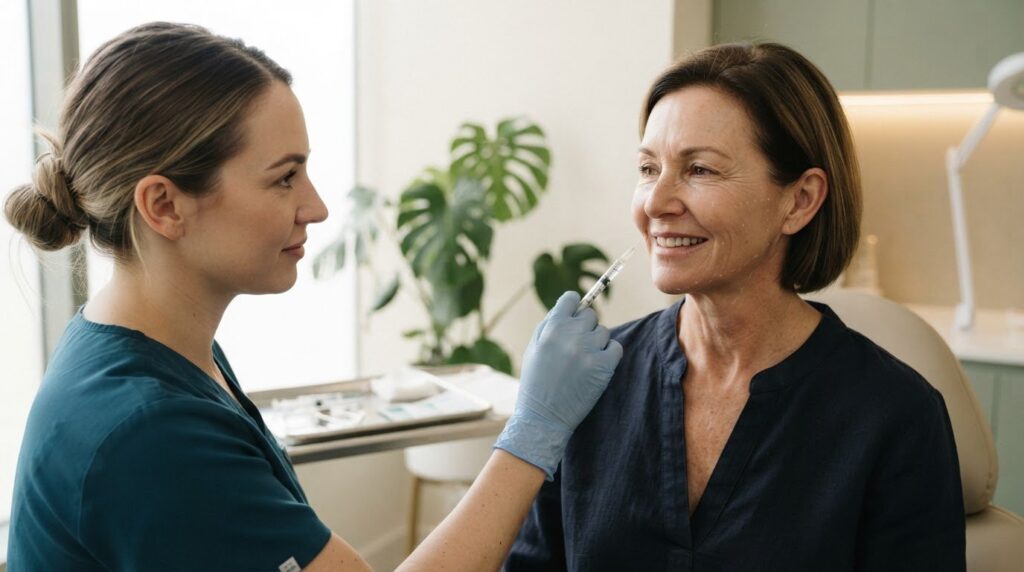
Best Treatment for Tech Neck Melbourne: A Clinical Guide to Dermal Rejuvenation
July 7, 2026
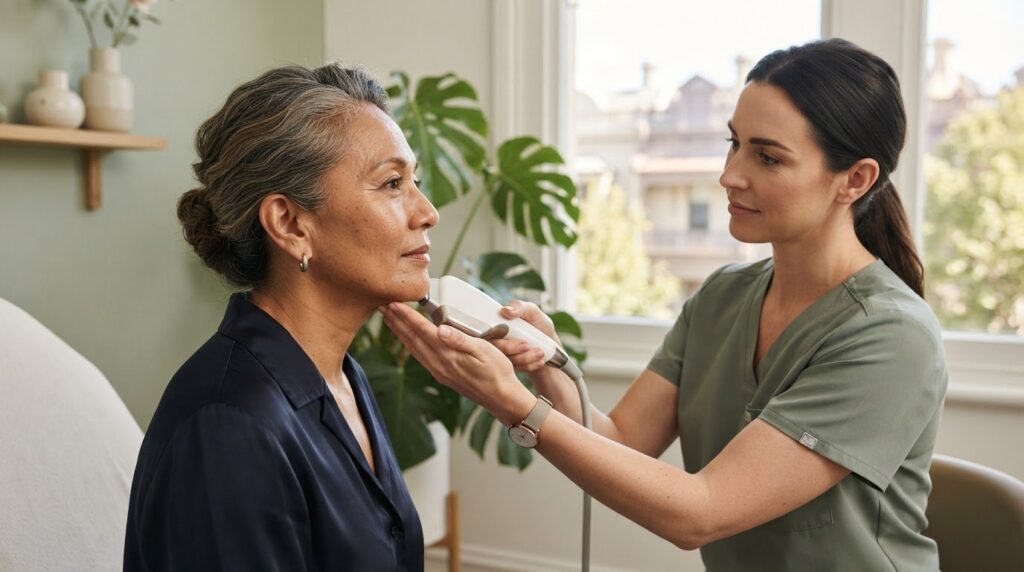
HIFU for Neck Tightening in Melbourne: A Clinical Guide to Non-Surgical Lifting
July 9, 2026
Directly filling the crease of a nasolabial fold is frequently the least effective method for achieving a natural, rejuvenated appearance. Many patients seeking nasolabial fold treatment Melbourne focus solely on the “smile lines” themselves, yet clinical evidence suggests these depressions are often a secondary symptom of volume loss in the midface rather than an isolated skin concern. As the malar fat pads descend and collagen density diminishes, the skin inevitably folds, creating the tired or sagging look that many find difficult to address with topical solutions alone.
It’s understandable to feel overwhelmed by the variety of clinical options, from dermal fillers and PDO thread lifting to advanced energy-based devices like HIFU or fractional CO2 lasers. You likely want a solution that restores structural integrity. This guide provides a technical overview of how medical-grade interventions interact with your facial anatomy to provide a precise, multi-layered lift. We’ll examine the latest 2026 medical guidelines and TGA-approved technologies to help you understand which physiological approach best aligns with your unique facial geometry and aesthetic goals.
Key Takeaways
- Understand the anatomical distinction between dynamic expression lines and deep, static folds caused by the physiological descent of malar fat pads.
- Learn why a structural “lift vs. fill” framework is the clinical standard for nasolabial fold treatment Melbourne, ensuring results appear natural and balanced.
- Discover the biological role of collagen and elastin depletion in midface sagging and how medical-grade interventions can restore the skin’s internal scaffolding.
- Recognise the importance of a professional clinical assessment that evaluates facial symmetry and bone structure rather than applying a one-size-fits-all approach.
- Explore how 26 years of industry experience and a medical-grade clinical environment contribute to safer, evidence-based aesthetic outcomes.
Understanding Nasolabial Folds: More Than Just Smile Lines
The nasolabial fold is the anatomical transition zone where the soft tissue of the cheek meets the upper lip. While popularly referred to as “smile lines,” this term simplifies a complex physiological process. In a clinical context, these folds represent a demarcation line between different facial compartments. Understanding the underlying Anatomy of Nasolabial Folds is essential before seeking nasolabial fold treatment melbourne. The appearance of these lines is often the first visible indicator of deeper midface structural changes. It isn’t merely a surface wrinkle; it’s a sign that the internal scaffolding of the face is shifting. Addressing these folds requires more than a topical approach; it necessitates a deep understanding of how various tissue layers interact over time.
The Anatomy of the Midface
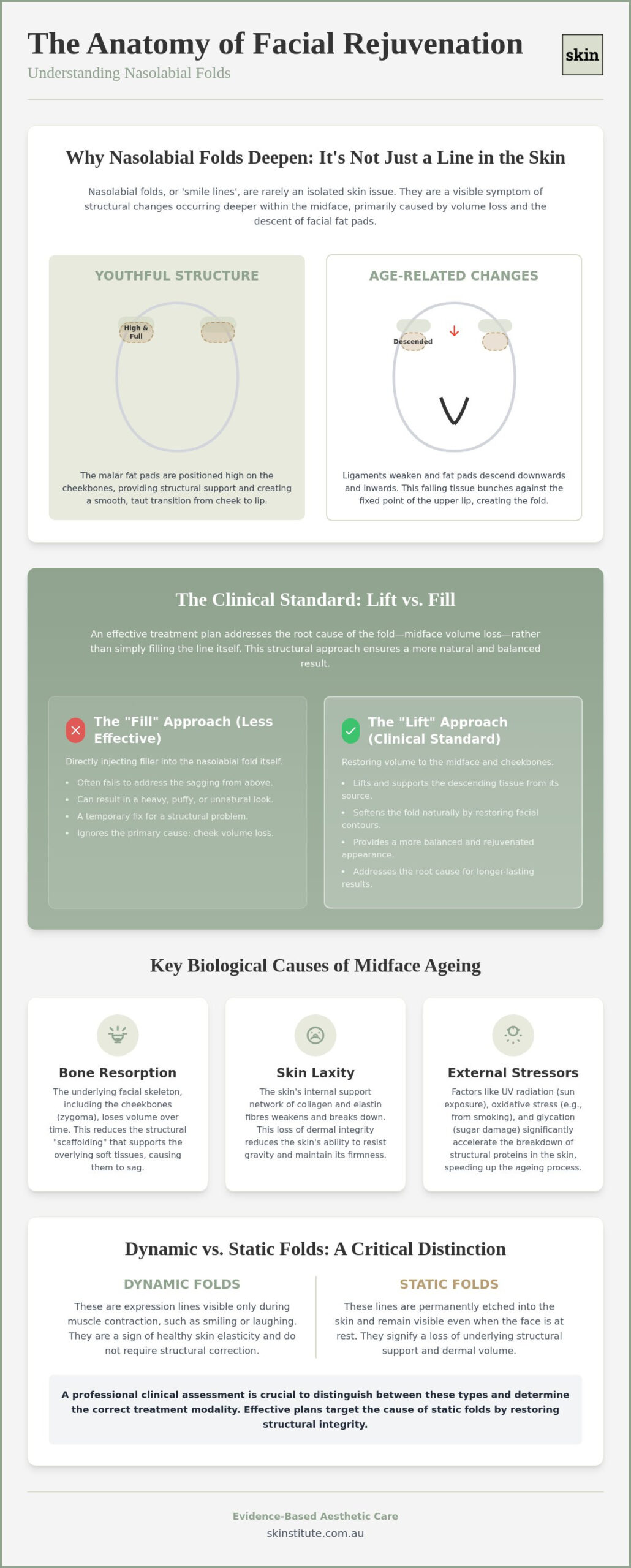
The midface relies on a precise arrangement of fat pads and bone structure to maintain a lifted, youthful contour. The malar fat pad, located over the cheekbone, provides the necessary volume to keep the skin taut and the midface defined. As we age, the suspensory ligaments supporting these fat pads begin to weaken and stretch. This leads to a gradual descent of tissue toward the nasolabial sulcus, which acts as a fixed physical boundary. When the zygomatic bone (cheekbone) begins to lose volume and the overlying fat pads shift downwards, the skin inevitably bunches at this boundary. This creates the characteristic deep fold. It’s a structural slide, where the “heavy” look of the fold is actually caused by tissue falling from above.
Dynamic vs. Static Folds
Clinicians categorise facial lines into two distinct types to determine the appropriate intervention. Dynamic folds appear only during active muscle contraction, such as when you smile or laugh. These are a natural part of human expression and indicate healthy skin elasticity. Static folds, however, remain visible even when the facial muscles are completely relaxed. They signify that repetitive movement, combined with a loss of dermal scaffolding like collagen and elastin, has created a permanent indentation in the skin’s matrix. Treating dynamic lines often involves different modalities than those used for static folds. Effective nasolabial fold treatment melbourne must therefore distinguish between these states to ensure the intervention targets the actual biological cause of the fold. We don’t simply treat the line; we treat the underlying cause.
- Dynamic Folds: Temporary lines visible during muscle activity that disappear at rest.
- Static Folds: Permanent indentations present even when the face is in a neutral position.
The Biological Causes of Deepening Nasolabial Folds
The progression of nasolabial folds is a multi-dimensional biological process that involves changes to bone, fat, and skin. While the previous section established the anatomical boundaries, we must examine the physiological drivers behind these changes. One of the most significant factors is bone resorption. Over time, the maxilla (the upper jaw bone) and the zygomatic arch undergo subtle structural recession. This loss of skeletal support creates a deficit in the facial foundation, causing the overlying soft tissue to collapse inward and downward. When the skeletal “peg” that holds the midface in place diminishes, the visible crease between the nose and mouth inevitably deepens.
External stressors significantly accelerate these internal biological shifts, particularly:
- Ultraviolet (UV) Radiation: Triggers the breakdown of elastic fibres and inhibits collagen production.
- Oxidative Stress: Often caused by smoking, this reduces cutaneous blood flow and impairs cellular repair.
- Glycation: A process where sugar molecules attach to collagen, making the fibres brittle and prone to breakage.
These factors, combined with the natural ageing process, make professional nasolabial fold treatment melbourne a necessity for those seeking to address the root cause of midface descent. Understanding these drivers allows for a more targeted clinical intervention.
Volume Loss and Fat Migration
Facial fat is organised into distinct deep and superficial compartments. As we age, the deep fat pads in the medial cheek area undergo atrophy, meaning they physically shrink in volume. This loss of internal volume creates a “curtain effect,” where the skin and superficial fat layers, no longer supported from beneath, drape heavily over the nasolabial boundary. A common clinical mistake is attempting to “fill” the fold itself without addressing this superior volume loss. Simply adding weight to the fold can inadvertently make the lower face appear heavier, which is why a comprehensive clinical assessment is vital to determine where volume is actually required.
Dermal Thinning and Elasticity
At the dermal level, the skin’s internal scaffolding begins to weaken due to the physiological reduction of Type I and Type III collagen. These proteins provide the tensile strength and resilience necessary for the skin to “snap back” after movement. When collagen levels drop, the dermis thins and loses its structural integrity. This thinning is further exacerbated by a decrease in endogenous hyaluronic acid, which is responsible for maintaining dermal hydration and turgor. Without this internal moisture and protein support, the skin becomes more susceptible to permanent creasing, turning dynamic expression lines into deep, static folds that persist even when the face is at rest.
Comparing Clinical Modalities for Nasolabial Fold Correction
The clinical framework for nasolabial fold correction has shifted from a simplistic “filling” approach to a more sophisticated “lifting” strategy. When considering nasolabial fold treatment melbourne, practitioners now evaluate whether the patient requires volume replacement, mechanical repositioning of tissue, or dermal tightening. This “Lift vs. Fill” paradigm ensures that the face remains balanced and avoids the unnatural, heavy appearance often associated with over-injecting the fold itself. By addressing the midface structure, the fold is softened as a secondary result of restored support, rather than being camouflaged with excess product.
Prescription Injectables and Bio-stimulators
Volumising injectables serve as a foundational tool for restoring the deep fat pads and skeletal support discussed in previous sections. By strategically placing product in the malar region, the cheek is subtly projected, which creates an indirect lift on the nasolabial fold. For patients whose primary concern is skin laxity rather than volume loss, polynucleotide treatments like Rejuran offer a method for enhancing skin resilience and cellular repair. These bio-stimulators work at a physiological level to improve the skin’s internal matrix, making it less prone to static creasing. The longevity of these interventions varies, typically ranging from six to twenty-four months depending on the specific rheology of the product used.
Mechanical Lifting with PDO Threads
PDO thread lifting provides a mechanical solution for repositioning descending soft tissue. Unlike injectables that add volume, threads utilise micro-barbs to physically grasp and elevate the malar fat pads back to their original, superior position. This process provides an immediate visible lift while simultaneously triggering a secondary healing response that stimulates long-term collagen production around the thread. While the recovery profile for threads involves more initial swelling than simple injectables, the structural result is often more significant for patients with moderate skin laxity. It’s a precise method for de-bulking the fold by moving the tissue rather than masking it.
Energy-Based Tightening: HIFU and Laser
High Intensity Focused Ultrasound (HIFU) targets the Superficial Musculoaponeurotic System (SMAS), which is the same fibrous layer addressed in surgical procedures. By delivering thermal energy to this deep layer, HIFU induces tissue contraction and non-surgical lifting. This is often paired with surface-level treatments like Fractional CO2 Laser to address fine lines and textural irregularities within the fold itself. Combining energy-based modalities with nasolabial fold treatment melbourne allows clinicians to treat the face across multiple depths, from the deep SMAS layer to the superficial epidermis.
Customising Your Treatment Plan: The Skinstitute Approach
A successful clinical outcome depends entirely on a bespoke diagnostic process rather than a transactional selection of services. When seeking nasolabial fold treatment melbourne, patients often arrive with a specific modality in mind, yet the most effective results are achieved through a comprehensive evaluation of the facial architecture. Every face presents a unique combination of skeletal support, fat pad distribution, and dermal thickness. A clinical approach prioritises these biological variables to ensure the intervention restores natural balance rather than creating an artificial or “overdone” appearance.
The Clinical Consultation Process
The journey begins with a detailed visual and physical assessment of the midface and jawline. We examine the degree of maxillary recession and the mobility of the malar fat pads to determine the root cause of the fold. Your medical history and specific skin type are critical factors; they influence how your body will respond to various stimuli, such as thermal energy or injectable agents. Establishing realistic clinical expectations is a vital component of this phase. We focus on achieving a refreshed rather than a different version of yourself, ensuring you understand the physiological possibilities of non-surgical rejuvenation.
Layered Rejuvenation Strategies
We often employ a multi-layered strategy to address the various depths of facial ageing. For instance, combining High Intensity Focused Ultrasound (HIFU) to tighten the SMAS layer with strategic volumising to restore bone-level support typically yields superior results compared to a single-modality approach. This “less is more” philosophy ensures we don’t over-fill the face, which can lead to a heavy or distorted look. Instead, we layer treatments to build a stable foundation. Maintaining these results requires a consistent skin health programme, as the biological processes of ageing are continuous. To begin your journey toward a more structured and rejuvenated midface, you can book a clinical consultation with our experienced practitioners.
The timeline for visible results varies based on the chosen combination. While volumising treatments provide immediate structural support, energy-based modalities like HIFU or bio-stimulators like Rejuran rely on the body’s natural collagen synthesis. This biological process typically peaks between eight and twelve weeks post-treatment. This gradual improvement ensures a subtle transition that reflects natural physiological repair rather than an overnight change.
Why Skinstitute is Melbourne’s Choice for Advanced Aesthetic Care
Skinstitute has spent 26 years establishing itself as a definitive authority within the Melbourne aesthetic landscape. This longevity is not merely a measure of time; it reflects a consistent commitment to evidence-based results and rigorous patient safety standards. When patients seek nasolabial fold treatment melbourne at our facility, they enter a medical-grade clinical environment that prioritises technical precision over superficial marketing trends. Our approach is defined by a sober, clinical perspective that views aesthetic intervention as a medical discipline. We utilise a suite of advanced technologies, including high-tech laser systems and emerging biotechnologies like Exosomes, to address the skin’s regenerative needs at a fundamental cellular level. This integration of established medical principles with cutting-edge science ensures that every treatment plan is grounded in physiological reality.
Experience and Technical Proficiency
The clinical expertise required for advanced procedures, particularly PDO thread lifting and complex midface volumising, cannot be overstated. Our practitioners possess an intimate understanding of the facial fat compartments and the suspensory ligaments that govern facial ageing. This technical proficiency allows us to reposition descending tissues with anatomical accuracy, ensuring that the vectors of lift align perfectly with your natural bone structure. We remain at the forefront of aesthetic science by continuously reviewing global clinical data and upgrading our technological suite. This dedication ensures that we provide personalised care to every Melbourne patient, moving beyond standardised “menu-based” treatments to offer bespoke anatomical corrections that respect the unique geometry of your face. Our team values transparency, providing you with an honest, objective assessment of what can be achieved through non-surgical means.
Next Steps: Booking Your Assessment
Effective midface rejuvenation is a collaborative process that begins with a thorough professional analysis. Understanding your specific facial anatomy is the first step toward restoring structural integrity and softening deep folds. We invite you to experience a consultation process that mirrors a professional medical appointment, where the “why” and “how” of every recommendation are explained with educational clarity. Our booking process is designed to be methodical and straightforward, allowing you to secure a comprehensive assessment where your aesthetic goals are evaluated against clinical benchmarks. We focus on long-term skin health and structural stability rather than quick, temporary fixes. Organise your clinical consultation at Skinstitute today.
Advancing Your Journey to Midface Restoration
Restoring a youthful midface contour requires a transition from simply camouflaging lines to addressing the underlying anatomical descent. By understanding that deep folds are a physiological result of fat pad migration and bone resorption, you’re better equipped to choose a treatment path that prioritises structural integrity. Whether through the mechanical elevation of PDO thread lifting or the precise volume replacement of prescription injectables, the goal is always a balanced and natural rejuvenation. Each approach must be tailored to your specific facial geometry to ensure the results appear seamless and medically precise.
Selecting the right clinical partner is vital for achieving these outcomes safely. At Skinstitute, we combine over 26 years of clinical experience with advanced technology to provide a sophisticated standard of nasolabial fold treatment melbourne. Our specialists operate within a medical-grade facility in the heart of Melbourne, focusing on technical mastery and patient safety above all else. We’re committed to providing a transparent, educational environment where your long-term aesthetic health is the priority.
Take the next step in your aesthetic journey by consulting with practitioners who value precision and evidence-based results. Book Your Clinical Midface Assessment at Skinstitute Melbourne to develop a bespoke plan tailored to your unique anatomy. We look forward to helping you achieve a refreshed and structurally supported appearance.
Frequently Asked Questions
How long do nasolabial fold treatments typically last?
The longevity of a nasolabial fold treatment melbourne depends largely on the specific modality utilised during the procedure. Hyaluronic acid based injectables typically maintain their structural effect for six to twenty-four months, while PDO thread lifting provides a mechanical lift that often persists for twelve to eighteen months. Secondary collagen synthesis triggered by these interventions can extend the visible benefits beyond the initial absorption of the materials.
Will nasolabial fold treatment make my face look puffy?
A puffy or unnatural appearance is usually the result of an incorrect clinical strategy that focuses on over-filling the fold itself rather than addressing superior volume loss. By prioritising a “lift and fill” framework, practitioners restore the malar fat pads and skeletal support. This approach elevates the descending tissue naturally, ensuring the midface remains contoured rather than appearing excessively volumised or distorted.
What is the difference between smile lines and nasolabial folds?
Smile lines are dynamic expression lines that manifest during active muscle contraction, such as laughing or smiling. In contrast, nasolabial folds are static anatomical depressions that remain visible when the face is in a neutral position. These folds represent a deeper structural transition between the cheek and the upper lip, often exacerbated by the physiological descent of midface fat compartments over time.
Can I combine PDO threads with dermal volumisers for better results?
Combining PDO threads with prescription injectables is frequently the most effective strategy for comprehensive midface rejuvenation. While threads provide the necessary mechanical repositioning of sagging tissue, volumisers address the underlying fat pad atrophy and skeletal recession. This multi-layered approach ensures both the structural lift and the internal volume required for a natural, three-dimensional result are achieved simultaneously.
Is there any downtime associated with nasolabial fold treatments in Melbourne?
Recovery requirements vary significantly depending on the clinical depth of the treatment. Non-invasive energy-based modalities like HIFU typically involve no downtime, allowing patients to return to regular activities immediately. More intensive procedures, such as PDO thread lifting or Fractional CO2 laser resurfacing, may involve three to seven days of swelling or minor bruising as the treated tissues undergo the initial inflammatory healing phase.
Are these treatments suitable for younger patients with genetic folds?
Clinical interventions are appropriate for younger patients who possess a genetically deep nasolabial sulcus or early signs of midface structural weakening. For these individuals, the focus is often on preventative maintenance and dermal thickening rather than significant tissue repositioning. Addressing these concerns early can help maintain the integrity of the skin’s internal scaffolding and delay the progression of deeper static folds.
How much do clinical nasolabial fold treatments cost at a Melbourne clinic?
The cost for nasolabial fold treatment melbourne is determined by the complexity of the case and the volume of clinical materials required. Current 2026 industry data indicates that dermal filler procedures in Melbourne generally range from $480 to $1,700, with individual syringes often priced between $700 and $750. A formal clinical assessment is necessary to provide an accurate cost based on your specific anatomical requirements.
What should I avoid doing immediately after my treatment?
Patients must avoid strenuous physical exertion, high-heat environments like saunas, and applying direct pressure to the treated area for at least twenty-four to forty-eight hours. These activities can increase peripheral blood flow or cause the mechanical displacement of injectable products. Adhering to these post-procedure guidelines is essential for ensuring the stability of the clinical result and minimising the risk of prolonged swelling or bruising.