Fractional CO2 Laser Cost Melbourne: 2026 Clinical Pricing Guide
July 30, 2026
PDO Threads vs HIFU Melbourne: A Clinical Guide to Non-Surgical Lifting in 2026
August 1, 2026
The most effective way to restore a youthful complexion isn’t always to add more volume, but rather to reinforce the skin’s own biological foundation. It’s common to feel apprehensive about invasive surgical procedures or the ‘puffy’ look often associated with over-filled faces. You’ve likely noticed your skin becoming thinner or more fragile over time, particularly around the delicate areas of the mouth and eyes where fine lines begin to settle. If you’re seeking a way to improve elasticity without looking ‘done’, pdo mono threads for face rejuvenation melbourne provide a sophisticated, medical-grade solution. This treatment prioritises the health of your skin’s architecture over temporary camouflage.
We understand that clinical clarity is essential when considering aesthetic interventions. By choosing this path, you’re opting for a process that works in harmony with your body’s natural regenerative abilities. This article explores the precise biological mechanisms of polydioxanone, the clinical benefits of thread-induced collagen synthesis, and what you should expect during your professional treatment sessions. You’ll gain a clear, evidence-based understanding of how this biological scaffolding works to naturally thicken and revitalise your skin from within.
Key Takeaways
- Understand the biological process of neocollagenesis, where polydioxanone threads trigger the production of Type I and III collagen to naturally thicken the dermis.
- Learn why pdo mono threads for face rejuvenation melbourne focus on structural skin quality and elasticity rather than the mechanical lifting associated with barbed or cog threads.
- Discover the clinical “mesh” technique used by practitioners to organise threads for maximum coverage and structural reinforcement in delicate facial areas.
- Recognise the importance of a professional clinical assessment to ensure the treatment is tailored to your unique skin chemistry and anatomical requirements.
- Gain insight into the expected timeline for rejuvenation as the medical-grade polymer gradually dissolves while leaving a supportive, long-term collagen matrix.
Understanding PDO Mono Threads for Facial Rejuvenation in Melbourne
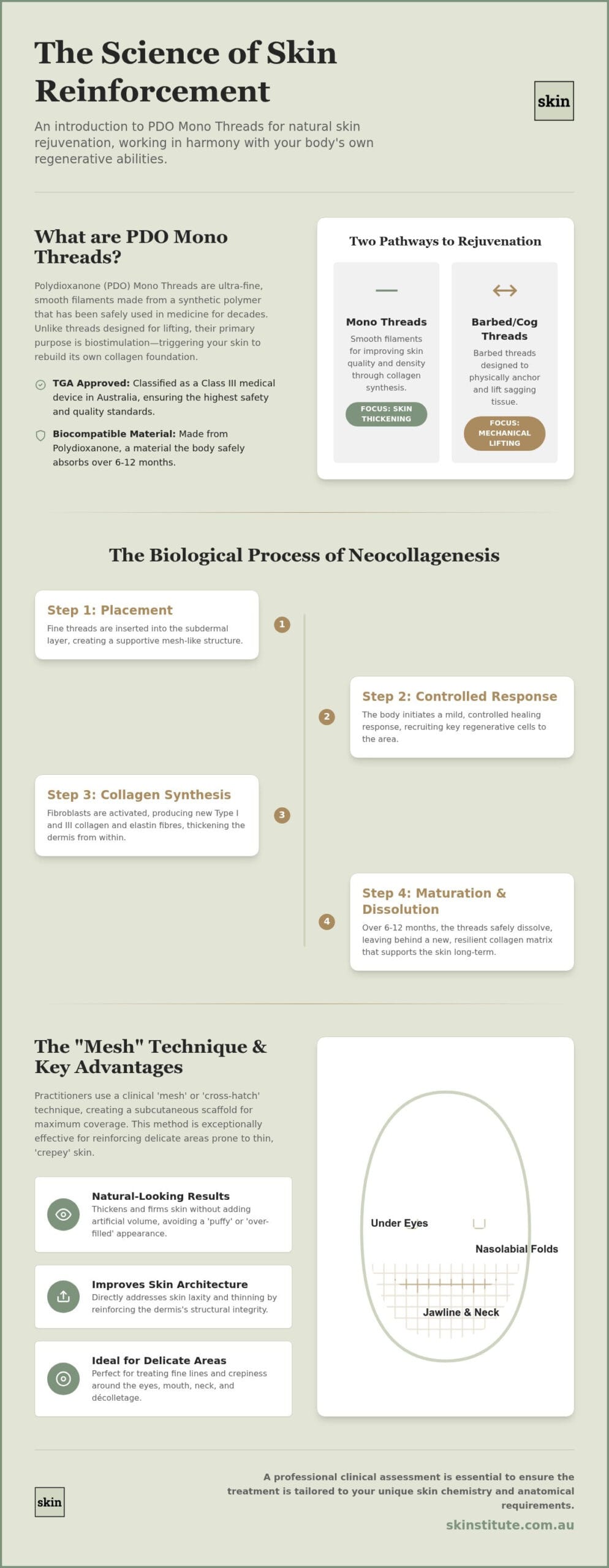
Polydioxanone (PDO) is a synthetic, absorbable polymer that has been utilised in complex surgical environments, such as cardiothoracic surgery, for several decades. In the Australian clinical context, the Therapeutic Goods Administration (TGA) classifies these threads as Class III medical devices. This classification requires that every product used in a clinic is listed on the Australian Register of Therapeutic Goods (ARTG), ensuring it meets stringent safety benchmarks. When discussing pdo mono threads for face rejuvenation melbourne, it’s vital to distinguish them from their “cog” or “barbed” counterparts. While cog threads are designed with microscopic barbs to physically anchor and lift sagging tissue, mono threads are smooth, single filaments. Their primary function isn’t mechanical lifting, but rather the induction of biological skin thickening and texture refinement.
Understanding PDO Mono Threads requires looking beyond the immediate procedure to the long-term physiological response they elicit. They are often preferred for patients who notice a loss of skin “snap” or the onset of fine, crepe-like wrinkles that don’t necessarily require a surgical facelift or significant volume replacement. These threads act as a biological scaffolding, encouraging the dermis to renew itself from the inside out.
The Material Science of Polydioxanone
The selection of Polydioxanone for aesthetic rejuvenation is based on its proven safety profile in orthopaedic and vascular medicine. Its biocompatibility means the body doesn’t recognise it as a harmful foreign object, but rather as a scaffold that requires integration. The threads undergo a predictable degradation process known as hydrolysis. During this period, which typically lasts between 6 and 12 months, the polymer is slowly broken down into water and carbon dioxide, which the body then naturally excretes. The significance of this timeline is that the presence of the thread keeps the skin’s repair cells active for an extended duration, ensuring the structural benefits remain long after the physical thread has vanished.
Rejuvenation vs. Volume: The Mono Thread Advantage
A common concern for patients is the fear of an “over-filled” or “puffy” face, which can occur when dermal fillers are used excessively to treat skin laxity. Mono threads offer a distinct advantage by improving skin density without adding exogenous volume. This makes them a superior choice for treating “crepiness” in areas where the skin is naturally thin, such as the neck or under the eyes. By creating a subcutaneous mesh, clinicians can reinforce the skin’s structural integrity, leading to a more resilient and smoother surface. This method supports a “natural harmony” approach, where the goal is to look like a refreshed version of yourself rather than a modified one.
The Biological Mechanism: How Mono Threads Stimulate Neocollagenesis
The efficacy of pdo mono threads for face rejuvenation melbourne relies on the body’s innate ability to repair and regenerate tissue in response to a controlled stimulus. When these fine filaments are inserted into the subdermal layer, they act as a foreign body that triggers a localized, low-grade inflammatory response. This is a deliberate clinical objective. This biological signal recruits fibroblasts to the area, which are the primary cells responsible for the synthesis of extracellular matrix components. By strategically placing these filaments in a cross-hatch or mesh pattern, the practitioner creates a structural matrix that supports the skin’s architecture while the body begins the complex task of cellular repair.
This regenerative cascade is not instantaneous but follows a predictable physiological timeline. The initial mechanical presence of the thread provides a minor immediate support, but the true transformation occurs as the tissue integrates the material. As the inflammatory phase transitions into the proliferative phase, the skin begins to produce new structural proteins. This process ensures that the skin becomes more resilient and dense over time, addressing the underlying causes of texture degradation rather than merely masking the symptoms. For those seeking a deeper understanding of these regenerative pathways, a professional assessment at Skinstitute can provide clarity on how these mechanisms apply to your specific skin profile.
Collagen Induction and Skin Quality
The primary outcome of thread insertion is the stimulation of Type I and Type III collagen. Neocollagenesis is the biological process of new collagen formation triggered by controlled micro-trauma. While Type III collagen is often associated with the early stages of wound healing, it eventually matures into the stronger, more resilient Type I collagen. This transition leads to a measurable increase in dermal thickness and a visible improvement in skin “snap” or elasticity. Most patients begin to observe these qualitative changes in skin texture approximately 6 to 12 weeks post-procedure, as the new collagen matrix becomes sufficiently dense.
The Degradation Process and Scaffolding
As the PDO threads undergo hydrolysis, they are gradually replaced by the body’s own tissue. Even as the physical polymer dissolves, it leaves behind a “tunnel” of freshly synthesised collagen that maintains the structural integrity of the treated area. This ensures the persistence of results for 12 to 18 months, long after the threads have been metabolised. Many clinical protocols now involve the synergy between PDO threads and other bio-stimulators, such as Rejuran. Combining these modalities can enhance the regenerative environment, as the polynucleotides in Rejuran work at a cellular level to repair DNA and improve hydration while the threads provide the structural scaffolding required for neocollagenesis.
Mono Threads vs. Barbed Threads: Selecting the Correct Rejuvenation Pathway
Choosing the correct thread modality is a critical step in achieving a patient’s specific aesthetic objectives. While both options utilise the same biocompatible polymer, their physical structures dictate entirely different clinical applications. For patients investigating pdo mono threads for face rejuvenation melbourne, it’s essential to recognise that these smooth filaments are distinct from “cog” or barbed threads. Cog threads feature microscopic barbs designed to anchor into the subcutaneous fat, allowing the practitioner to physically reposition sagging tissue. In contrast, mono threads are smooth, single filaments that focus on dermal thickening and structural reinforcement rather than mechanical lifting.
The primary clinical objective of a mono thread treatment is the improvement of skin quality. By inserting a series of these smooth threads, we initiate a biological response that increases the density of the dermis. This makes them an ideal choice for patients who are satisfied with their facial contours but wish to address fine lines, crepiness, or a loss of skin resilience. While cog threads are utilised for patients with significant tissue descent, mono threads serve as a tool for refined, cellular-level rejuvenation.
When to Choose Mono Threads for Rejuvenation
The ideal candidates for mono threads are typically individuals noticing the early signs of ageing, such as thinning skin or “accordion” lines on the cheeks. This treatment is particularly effective in zones where the skin is thin and prone to fine wrinkling, including the perioral area (around the mouth), the submental region (under the chin), and the forehead. Clinicians often utilise these filaments as part of a “pre-juvenation” strategy. This approach focuses on building a “collagen bank” in younger patients, effectively delaying more significant skin laxity by maintaining high levels of structural protein within the dermal layers.
The Limitations of Non-Barbed Threads
Managing clinical expectations is paramount when selecting a treatment pathway. It is important to understand that mono threads will not correct significant jowling or heavy tissue sagging, as they lack the barbs required for mechanical suspension. During a clinical consultation, the practitioner determines the appropriate thread gauge and count based on the patient’s skin thickness and the severity of the texture concerns. While mono threads excel at providing internal scaffolding, they are often compared to Fractional CO2 Laser treatments. While the laser excels at resurfacing the skin’s top layers and addressing pigmentation, mono threads provide deeper structural support that the laser may not reach, making them complementary rather than interchangeable solutions.
Clinical Application: Target Areas and Treatment Protocols in Melbourne
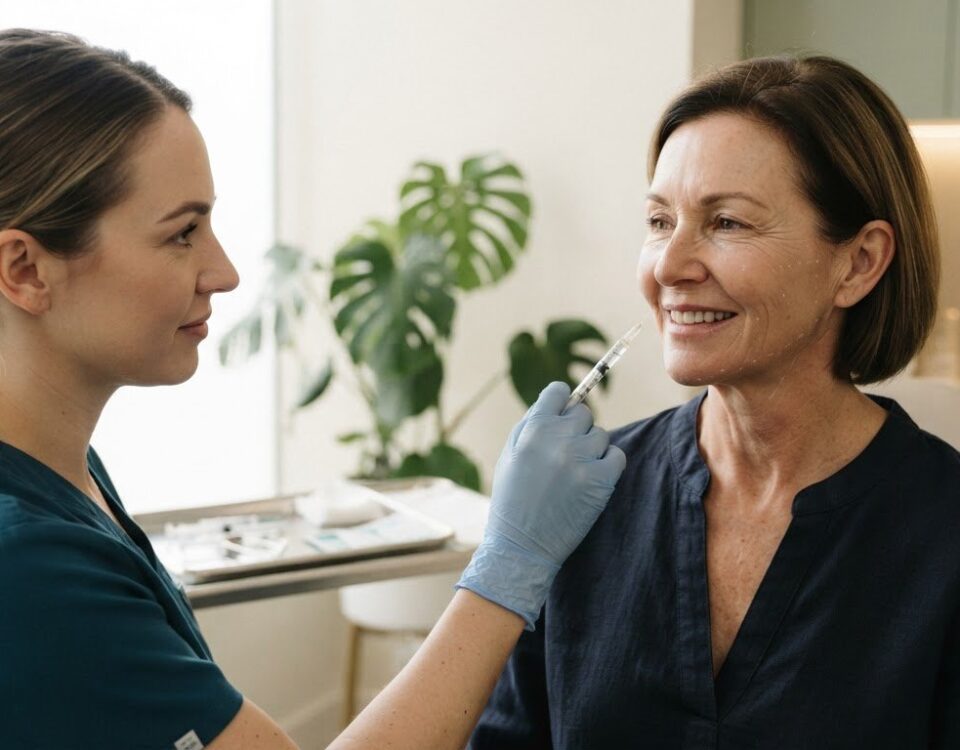
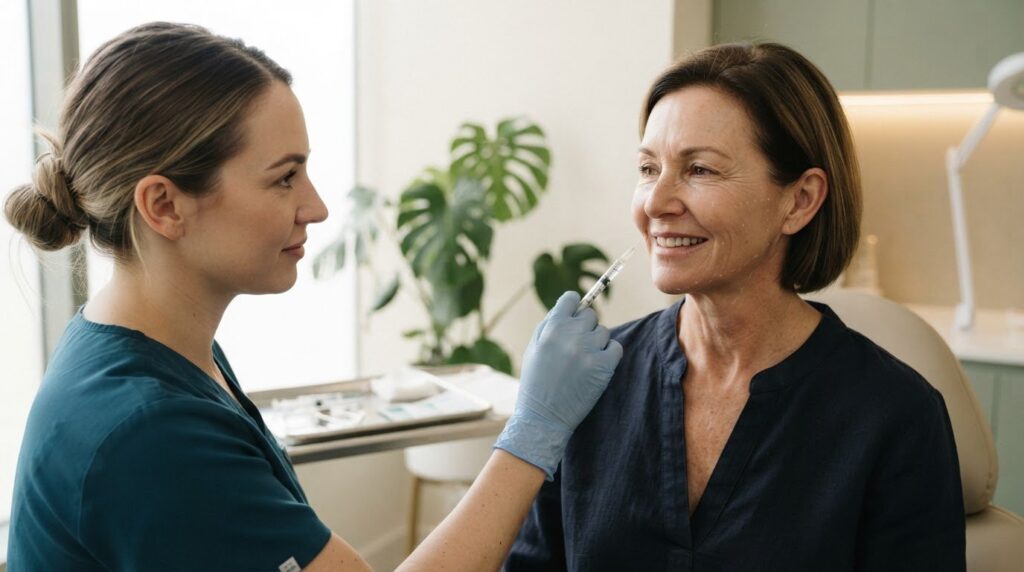
The administration of pdo mono threads for face rejuvenation melbourne follows a rigorous clinical protocol to ensure both safety and biological efficacy. The procedure begins with the application of a high-strength topical anaesthesia to the target zones, ensuring patient comfort throughout the insertion process. Once the area is prepared, the practitioner utilises a fine-gauge cannula or needle to place the polydioxanone filaments into the subdermal layer. This process is methodical and precise, typically requiring between 30 and 60 minutes depending on the complexity of the treatment plan and the number of zones being addressed.
A fundamental element of this protocol is the “mesh” technique. Rather than placing threads in isolation, clinicians organise them in a cross-hatch pattern. This configuration creates a comprehensive support matrix that maximises the surface area for neocollagenesis. For a targeted rejuvenation zone, such as the perioral area, a practitioner might utilise between 10 and 30 mono threads. In contrast, a more extensive treatment addressing multiple facial regions may require 50 or more filaments to achieve the desired structural reinforcement. To ensure optimal outcomes, it’s essential to book a clinical consultation with an experienced practitioner who can tailor the thread count to your specific anatomical needs.
Common Treatment Zones for Facial Rejuvenation
The lower face and jawline are frequent priorities for patients seeking to improve definition without the bulk of traditional fillers. By reinforcing the tissue along the mandibular line, mono threads help to firm the skin and reduce the appearance of early jowl formation. In the neck and submental area, the threads are used to address skin laxity and thinning, providing a thickening effect that restores a smoother profile. Additionally, the periorbital region benefits significantly from this approach, as the threads can smooth fine lines around the eyes where the skin is naturally most delicate and prone to crepiness.
Procedural Expectations and Clinical Safety
Patients should expect a medical-grade environment that adheres to strict Australian safety standards. It is mandatory for all injectable procedures in Melbourne to be conducted within sterile, professional settings to mitigate the risk of infection or complications. While the procedure involves minimal downtime, common side effects include localised bruising, swelling, and temporary tenderness at the insertion sites. These responses are generally mild and resolve within a few days. The immediate post-procedural appearance may show slight inflammation, which is a normal part of the body’s inflammatory response and serves as the catalyst for the subsequent regenerative process.
Why Professional Clinical Assessment is Essential for Thread Treatments
Professional assessment serves as the foundation for any successful aesthetic outcome. At Skinstitute, we leverage over 26 years of clinical experience to evaluate facial anatomy with a high degree of technical precision. This seasoned expertise is vital when administering pdo mono threads for face rejuvenation melbourne, as the placement must account for the specific depth of the dermal layers and the patient’s unique skin chemistry. A practitioner’s ability to identify the correct vectors for thread insertion determines whether the resulting collagen matrix will provide the necessary structural reinforcement. Without this detailed analysis, there’s a significant risk of suboptimal thread integration or an aesthetic result that lacks natural harmony.
We view this procedure as one essential component of a comprehensive medical-grade aesthetic treatment plan. Our clinical philosophy prioritises evidence-based results over fleeting industry trends, ensuring that every intervention is biologically justified. By understanding the complex physiological interaction between polydioxanone and the surrounding fibroblasts, we can accurately predict how the skin will respond over the subsequent 12 to 18 months. This long-term perspective is what distinguishes a medical-grade clinic from a standard aesthetic centre. It’s about building a sustainable foundation for skin health rather than providing a temporary fix.
Tailored Rejuvenation Programmes
A thorough clinical assessment serves as a critical safeguard against over-treatment. It allows us to determine if mono threads are the most appropriate primary modality or if they should be integrated with other regenerative technologies to achieve a superior outcome. For example, combining threads with High Intensity Focused Ultrasound (HIFU) can address different layers of tissue laxity, while the application of exosomes can accelerate the healing response and enhance cellular signalling. This holistic strategy ensures that the rejuvenation process is gradual, respecting the patient’s natural proportions and avoiding the ‘over-filled’ look. Long-term follow-up is a standard part of our protocol, allowing us to monitor the maturation of the collagen matrix and adjust the maintenance programme as required.
Beyond topical and structural interventions, addressing internal biological factors can further enhance your results. For those interested in how hormone optimisation supports cellular health and longevity, you may visit Summit Rejuvenation to explore their specialised therapies.
For patients looking to extend these regenerative principles to other areas of the body, clinics such as King Wellness Institute offer specialised treatments that focus on enhancing tissue quality and aesthetic harmony.
Next Steps for Melbourne Patients
Preparing for your initial consultation at Skinstitute involves a review of your aesthetic history and current skin health objectives. During your skin analysis session, we recommend bringing a list of any previous cosmetic interventions and a summary of your current topical skincare regime. This transparency allows our practitioners to design a personalised rejuvenation roadmap that aligns with your physiological requirements and lifestyle. You can contact the clinic directly to arrange an appointment with our clinical team to discuss whether pdo mono threads for face rejuvenation melbourne are the suitable next step in your regenerative journey. We’re dedicated to providing a clear, technical, and honest assessment of what can be achieved through non-surgical skin thickening.
Advancing Your Skin Regeneration Journey
The implementation of polydioxanone filaments into an aesthetic regimen represents a commitment to long-term biological skin health rather than superficial volumisation. It’s essential to recognise that pdo mono threads for face rejuvenation melbourne function as a sophisticated tool for neocollagenesis, facilitating a gradual transition toward improved skin density and resilience. This treatment addresses the structural causes of crepiness by reinforcing the dermal architecture from within. Optimal results are contingent on clinical precision and an expert understanding of facial anatomy to ensure the filaments are placed for maximum biological impact.
With over 26 years of clinical aesthetic experience, our team at Skinstitute maintains deep expertise in advanced bio-stimulators and PDO technology. We specialise in developing personalised medical-grade treatment plans that prioritise your unique physiological requirements. Book your clinical skin assessment at Skinstitute Melbourne today to begin a structured pathway toward evidence-based rejuvenation. We look forward to supporting you in achieving a refreshed and naturally resilient complexion.
Frequently Asked Questions
How many PDO mono threads are typically required for a full face rejuvenation?
A full face rejuvenation typically requires between 50 and 100 mono threads to create a sufficiently dense structural mesh across multiple zones. This volume ensures that the inflammatory response is uniform, leading to consistent collagen synthesis throughout the dermal layers. For smaller, targeted areas such as the submental region or the perioral zone, a practitioner may utilise between 10 and 30 threads depending on the degree of skin laxity.
Is the PDO mono thread procedure painful for most patients?
Most patients report only mild discomfort during the procedure, as a high-strength topical anaesthesia is applied to the treatment area prior to thread insertion. While you may experience a sensation of pressure or slight tugging as the fine-gauge needles or cannulas are placed, the process is generally well-tolerated in a clinical setting. Any residual tenderness or localised sensitivity typically resolves within 24 to 48 hours after the session.
How long does it take to see visible results from PDO mono threads?
Visible improvements in skin texture and resilience typically become apparent between 6 and 12 weeks post-procedure as the neocollagenesis process matures. While some patients notice a slight immediate tightening effect due to localised inflammation, the true structural benefits of pdo mono threads for face rejuvenation melbourne develop gradually. The newly formed collagen matrix continues to support the skin’s architecture for 12 to 18 months, even after the threads have been naturally metabolised.
What is the expected downtime after a mono thread treatment in Melbourne?
The expected downtime for pdo mono threads for face rejuvenation melbourne is minimal, with most patients returning to their professional or social activities immediately following the 30 to 60-minute procedure. You should anticipate mild swelling, redness, or bruising at the insertion sites, which typically subsides within three to five days. We recommend avoiding significant social events for at least one week to allow any localised inflammation to resolve completely.
Can I combine PDO mono threads with dermal fillers or anti-wrinkle injections?
PDO mono threads are highly compatible with other prescription injectables, such as dermal fillers and anti-wrinkle treatments, and are often integrated into a holistic rejuvenation plan. While the threads focus on improving skin density and elasticity, other injectables can address volume loss or dynamic expression lines. Your practitioner will determine the appropriate sequencing of these modalities during your clinical assessment to ensure optimal tissue integration and safety.
Are there any specific contraindications for PDO thread treatments?
Specific contraindications include active skin infections or inflammation in the target area, pregnancy, breastfeeding, and certain systemic autoimmune disorders that may affect the healing response. Patients with blood clotting disorders or those taking particular anticoagulant medications may also be advised against the procedure. A comprehensive medical history is reviewed during your consultation to identify any factors that may compromise the safety or efficacy of the treatment.
How do I choose between mono threads and a traditional thread lift?
The choice between these modalities depends on whether your primary clinical objective is skin quality improvement or mechanical tissue repositioning. Mono threads are smooth filaments designed to thicken the skin and improve elasticity through biological collagen induction. Conversely, a traditional thread lift utilises barbed or cog threads to physically lift and anchor sagging tissue, making it more suitable for patients with moderate to significant skin laxity.
What should I avoid doing immediately after my thread rejuvenation treatment?
Immediately following your treatment, you should avoid high-intensity exercise, saunas, and steam rooms for at least 48 hours to minimise the risk of increased swelling or bruising. It is also important to refrain from facial massages, vigorous skin scrubbing, or invasive dental procedures for at least two weeks to ensure the threads remain correctly positioned during the initial integration phase. Sleeping on your back in a slightly elevated position can also assist in reducing localised oedema during the first few nights.