Fox Eye Thread Lift Cost Melbourne: A Clinical Guide to PDO Thread Treatments (2026)
August 7, 2026
PDO Thread Lift Recovery Time: A Clinical Timeline and Aftercare Guide
August 9, 2026
While the physical polydioxanone material remains within the subcutaneous tissue for only six to nine months, the structural elevation it provides often persists for up to two years. This discrepancy between the presence of the thread and the longevity of the aesthetic result is the most frequent source of confusion for those investigating how long do pdo threads last. It’s understandable to feel hesitant about a procedure if you’re concerned the investment might fade prematurely or if the various types of cogs and mono threads seem overly complex.
By examining the biological lifecycle of these medical-grade sutures, you can gain a clear understanding of how the body constructs a permanent collagen architecture around the dissolving template. This guide provides a detailed timeline of result degradation and clinical strategies to maximise your non-surgical lift results in Melbourne. We will explore the technical nuances of thread selection and the specific physiological processes that allow a temporary intervention to deliver lasting facial rejuvenation.
Key Takeaways
- Understand the chemical process of hydrolysis, where the medical-grade polydioxanone polymer is naturally absorbed by the body over a period of six to nine months.
- Learn about the dual-phase nature of the procedure and exactly how long do pdo threads last as the initial mechanical lift transitions into a lasting collagen architecture.
- Identify the clinical variables, such as baseline collagen density and thread volume, that determine the ultimate longevity of your non-surgical results.
- Discover how synergistic regenerative therapies like Rejuran and HIFU can be utilised to reinforce the biological support structures initiated by the threads.
- Recognise the importance of a structured clinical roadmap and follow-up assessments to ensure optimal integration and maintain your aesthetic outcomes in Melbourne.
The Lifecycle of Polydioxanone: How Long Do PDO Threads Physically Last?
Polydioxanone (PDO) is a medical-grade, absorbable synthetic polymer that has been utilised in cardiovascular surgery and specialised wound closure for over three decades. Its integration into aesthetic medicine relies on its high biocompatibility and its predictable degradation profile. Unlike permanent implants, PDO is designed to be temporary, serving as a biological stimulus rather than a permanent foreign body. This safety profile is a primary reason for its widespread clinical adoption in Melbourne and globally.
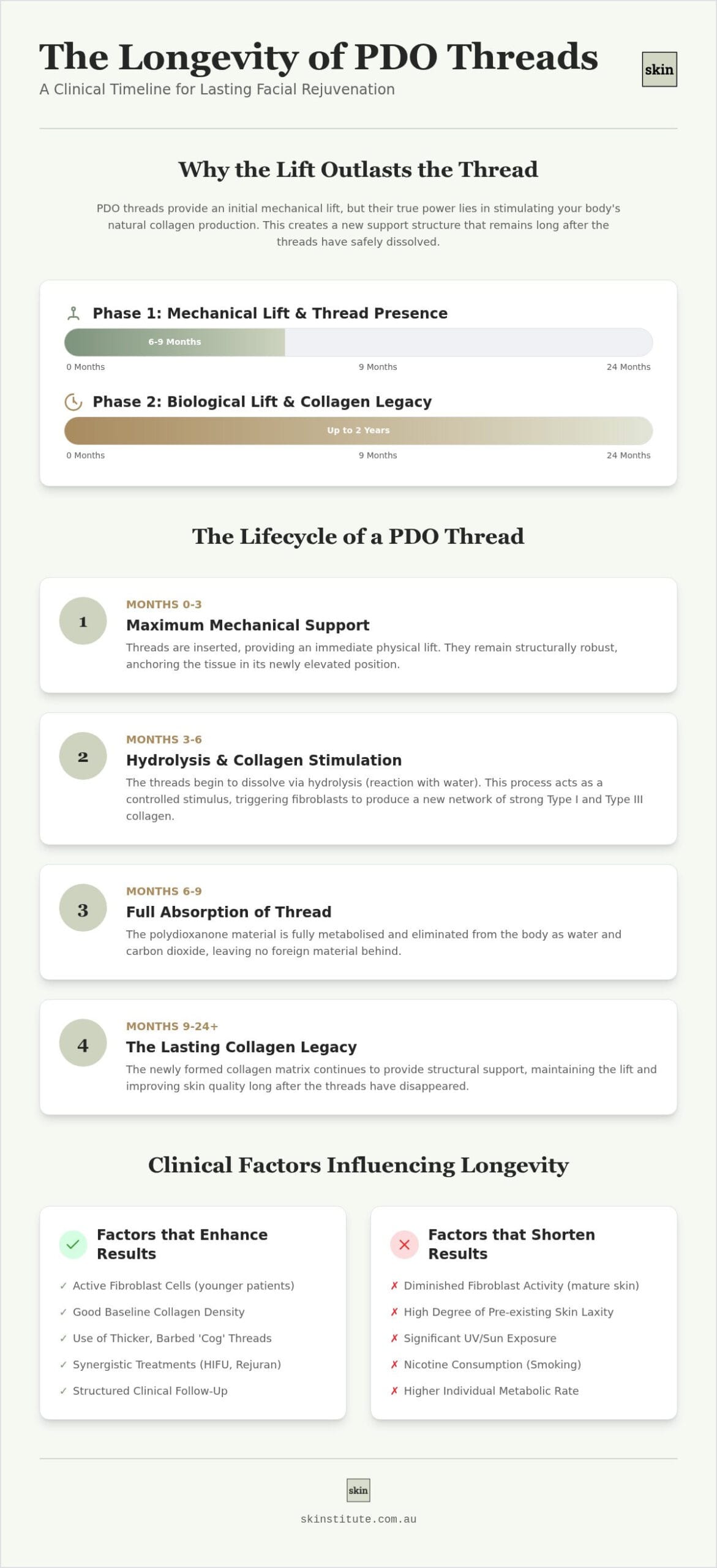
The degradation of the material occurs through a process known as hydrolysis. During this chemical reaction, the polymer chains react with the water present in the body’s tissues, gradually breaking down into water and carbon dioxide. These by-products are naturally eliminated through the renal system and respiration. While the aesthetic results may endure significantly longer, the physical presence of the threads typically persists for 6 to 9 months post-insertion. Understanding this distinction is vital when evaluating how long do pdo threads last, as the visible lift is a secondary biological effect that outlives the primary material.
The Dissolution Timeline: Month 0 to Month 9
Upon initial insertion, the primary elevation is mechanical. This concept evolved from early Contour threads, which used non-absorbable materials to physically anchor tissue. In the first three months, the PDO threads remain structurally robust, providing maximum tension and support. Between months 3 and 6, the hydrolysis process begins to soften the material, reducing its tensile strength while concurrently triggering the body’s regenerative response. By month 9, the physical polymer is usually fully resorbed by the tissue, leaving behind a newly formed matrix of collagen fibres.
Factors Affecting the Rate of Absorption
Several physiological variables influence the speed at which the body processes polydioxanone. Individual metabolic rates play a significant role; patients with higher metabolic activity may experience faster hydrolysis. Additionally, the configuration of the thread itself dictates its surface area. Thicker, barbed cog threads possess more mass and take longer to resorb than fine mono threads used primarily for skin texture improvement. Tissue vascularity also remains a critical factor. Areas with high blood flow often facilitate more rapid metabolic turnover compared to denser, less vascularised regions. Clinical assessment ensures the correct thread density is chosen to account for these individual biological differences.
Clinical Factors Influencing the Longevity of Your Results
While the chemical dissolution of polydioxanone is a predictable event, the persistence of the aesthetic outcome varies significantly between individuals. When patients consider how long do pdo threads last, they must account for the host environment into which the threads are placed. The visible lift is a secondary biological response; its duration is dictated by the body’s capacity to maintain the newly formed collagen matrix. Clinical experience suggests that determining how long do pdo threads last for a specific individual requires a thorough analysis of their baseline skin health and lifestyle habits.
Biological Variables: Age and Skin Quality
The role of fibroblasts is central to the success of the treatment. In younger patients, these cells are highly active and respond vigorously to the mechanical stimulus of the thread, producing a dense network of supportive tissue. Mature skin may have a diminished fibroblast population, which can result in a less robust regenerative phase. Pre-existing skin laxity also determines the structural load on the threads. If the tissue is excessively heavy, the mechanical tension may be compromised sooner than in cases with mild laxity. A detailed thread lift overview suggests that the body’s internal healing mechanisms are the ultimate arbiter of how long the structural elevation remains visible.
Lifestyle and Environmental Degradation
Melbourne’s unique climate, particularly its high UV index, presents a specific challenge to maintaining clinical results. Ultraviolet radiation is a primary driver of collagen fragmentation. If the skin is not adequately protected, the sun can break down the newly synthesised scaffold that supports the lift. Lifestyle choices also play a pivotal role. Nicotine consumption causes systemic vasoconstriction, which restricts the flow of oxygenated blood to the dermis and impairs the neocollagenesis process. Physical factors such as sleep hygiene are critical in the first four weeks; applying excessive pressure to the face during sleep can displace the threads before they have fully integrated into the tissue. To ensure your anatomy is prepared for this process, a clinical assessment for PDO thread lifting in Melbourne can identify potential biological hurdles before treatment commences.
The Biological Legacy: Why the Lift Outlasts the Thread
A common misconception regarding polydioxanone treatments is that the aesthetic benefits cease the moment the physical polymer is resorbed by the body. However, the clinical reality is that the thread serves merely as a temporary scaffolding for a much more enduring biological event. When patients ask how long do pdo threads last, the answer must distinguish between the presence of the synthetic material and the persistence of the newly formed tissue. The true value of the procedure lies in its ability to induce a regenerative phase that fundamentally alters the dermal architecture.
Neocollagenesis: The Science of Cellular Regeneration
The insertion of a PDO thread initiates a controlled, localised inflammatory response. This biological “alarm” signals the body to activate fibroblasts, the primary cells responsible for the production of extracellular matrix components. Neocollagenesis is the process of building a new protein matrix around the dissolving thread. As the polydioxanone undergoes hydrolysis, it is replaced by a dense network of Type I and Type III collagen fibres. This transition ensures that as the mechanical tension of the thread diminishes, it is seamlessly superseded by a permanent biological framework. This cellular activity transforms the skin from a state of laxity to one of increased structural density and resilience.
Structural Integrity Post-Absorption
Patients often observe a “secondary peak” in their aesthetic results approximately six months after the initial procedure. This phenomenon occurs because the newly synthesised collagen has matured and reached its maximum tensile strength just as the physical thread is completing its dissolution. While the thread itself may vanish within nine months, the resulting collagen scaffold typically maintains the skin’s elevated position for 12 to 18 months in total. This duration is supported by the development of mild, healthy fibrosis along the thread tracks, which creates a form of “tissue memory” that resists further sagging. Understanding how long do pdo threads last requires recognising that the lift is maintained by your own anatomy, long after the clinical intervention has concluded. This biological legacy provides a sustained, natural-looking rejuvenation that far outlives the physical presence of the polydioxanone material.
Extending Longevity: Synergistic Clinical Treatments
A multi-modal approach is the clinical standard for achieving superior longevity in non-surgical facial rejuvenation. While the primary inquiry for many remains how long do pdo threads last, the answer is increasingly linked to the surrounding tissue environment. By integrating complementary therapies, practitioners can provide the biological fuel necessary to sustain the lift long after the polydioxanone has undergone hydrolysis. This strategy is particularly relevant for patients seeking cosmetic injectables in Melbourne, where environmental stressors necessitate a more robust regenerative response than a single modality can provide.
Pairing Threads with Rejuran and Exosomes
The efficacy of a thread lift is fundamentally limited by the baseline health and regenerative capacity of the skin. Polynucleotides, the active components in Rejuran, work at a cellular level to repair damaged DNA and improve overall skin elasticity. When administered in conjunction with threads, Rejuran creates a more receptive dermal environment for the production of new structural proteins. Similarly, exosome therapy introduces potent signalling molecules that accelerate the healing phase and amplify the body’s collagen output. This synergy ensures that the protein matrix built around the threads is denser and more resilient, directly influencing how long do pdo threads last in a visible capacity by reinforcing the tissue from within.
HIFU and Laser Resurfacing for Surface Longevity
While threads address mid-dermal support and structural elevation, High-Intensity Focused Ultrasound (HIFU) targets the Superficial Muscular Aponeurotic System (SMAS). Utilising HIFU to prime this deeper layer before thread insertion, or as a maintenance tool months later, reinforces the foundation of the lift. To address the superficial skin quality, Fractional CO2 Laser treatments can be utilised to resolve pigmentation and fine lines that threads alone cannot correct. Strategic timing is paramount; heat-based modalities must be scheduled carefully to ensure they do not interfere with the initial integration of the threads. This layered methodology provides a comprehensive solution that addresses ageing across multiple anatomical planes. For an individualised treatment plan, you may book a clinical assessment to discuss how these technologies can be sequenced for your specific anatomy.
Maintenance and Realistic Expectations at Skinstitute
Achieving a sustained aesthetic outcome requires a shift in perspective, moving from viewing the procedure as a singular event to understanding it as a structured clinical roadmap. While the metabolic rate of the individual remains a primary variable, the question of how long do pdo threads last is often determined by the rigour of the post-procedure maintenance plan. A proactive approach allows the practitioner to monitor the transition from mechanical support to biological architecture, ensuring that the lift remains consistent as the polydioxanone material is resorbed. At Skinstitute, we prioritise this ongoing clinical oversight to ensure the longevity of the results aligns with the patient’s expectations.
This commitment to clinical excellence is shared by other world-class providers, such as Urban Escape, which sets a high benchmark for luxury aesthetic services and patient-focused care.
The Recommended Maintenance Schedule
A structured timeline is essential for managing the biological lifecycle of the threads and the subsequent collagen production. This schedule typically involves three critical milestones:
- Initial Treatment and 4-Week Clinical Review: The one-month follow-up is a mandatory assessment to verify the successful integration of the threads into the subcutaneous tissue. During this appointment, the practitioner evaluates symmetry and the initial tissue response to the mechanical tension.
- The 12-Month Assessment: As the physical threads are typically resorbed by the nine-month mark, the one-year review is the “sweet spot” to evaluate the density of the new collagen scaffold. This is the point where supplementary mono threads may be recommended to “top up” the regenerative stimulus in areas of high facial mobility, such as the perioral region.
- 18 to 24-Month Repetition: While the biological effects can persist longer, most patients find that a full repetition of the procedure every 18 to 24 months is necessary to maintain the structural foundation and counteract the natural progression of chronological ageing.
Booking Your Clinical Assessment in Melbourne
A professional skin analysis at Skinstitute involves a comprehensive evaluation of your anatomical requirements and dermal health. With over 26 years of industry experience, our practitioners recognise that there is no universal answer to how long do pdo threads last for every patient. We meticulously tailor the specific thread count, configuration, and density to your baseline collagen levels and aesthetic goals. This level of precision ensures that the treatment plan respects your unique biological constraints while maximising the durability of the lift. To begin your journey with a science-led approach to rejuvenation, organise your clinical consultation at Skinstitute today.
A Science-Led Path to Lasting Facial Rejuvenation
Understanding how long do pdo threads last ultimately comes down to recognising two distinct timelines: the physical dissolution of the polydioxanone material and the enduring collagen architecture it leaves behind. The procedure’s true value lies in this biological legacy, one that continues to support the skin’s structural integrity long after the thread itself has been resorbed.
Your results are shaped by individual biology, lifestyle habits, and the clinical precision applied during treatment. A structured maintenance schedule, combined with synergistic therapies where appropriate, ensures that the regenerative foundation remains robust as the years progress.
At Skinstitute, over 26 years of clinical experience informs every treatment plan. Our practitioners assess your unique dermal environment and configure thread density accordingly, applying advanced medical-grade technology to deliver outcomes that are both scientifically grounded and personally tailored. You deserve a clear, honest roadmap rather than generic promises.
When you’re ready to take the next step, book a clinical consultation at Skinstitute and begin your journey toward sustained, natural-looking rejuvenation with confidence.
Frequently Asked Questions
How long do the results of a PDO thread lift actually last?
Results typically remain visible for 12 to 18 months depending on individual biological factors. While the physical polydioxanone suture is resorbed via hydrolysis within six to nine months, the newly synthesised collagen matrix provides continued structural support. This biological legacy ensures the aesthetic elevation outlasts the material itself, providing a sustained rejuvenation that persists long after the clinical intervention has concluded.
Will my face sag more once the PDO threads dissolve?
Your skin won’t sag more than its baseline state after the polydioxanone threads dissolve. The neocollagenesis process actually strengthens the dermal layer by replacing the thread with a network of Type I and Type III collagen. This means your skin is often in a superior structural condition compared to its pre-treatment state, providing a lasting benefit even as the biological lift eventually softens over time.
Can I make my thread lift last longer with specific skincare?
Medical-grade skincare that supports collagen synthesis and UV protection can certainly extend the life of your results. Utilising topical retinoids and antioxidants helps maintain the health of the fibroblasts responsible for the new collagen scaffold. Consistent application of high-SPF sunscreen is also critical to prevent ultraviolet radiation from fragmenting the newly formed protein matrix that maintains your facial elevation and skin quality.
How often should I get a PDO thread lift to maintain the look?
Most patients schedule a repeat procedure every 18 to 24 months to maintain optimal elevation and skin density. Determining how long do pdo threads last for your specific anatomy involves monitoring the gradual softening of the lift over several months. Some individuals benefit from minor top-up treatments with mono threads at the 12-month mark to sustain the regenerative stimulus and maintain dermal thickness.
Is the longevity different for cog threads versus mono threads?
Longevity is different for cog threads versus mono threads because they serve distinct anatomical purposes. Cog threads provide a more enduring mechanical lift due to their barbed structure and greater mass, taking slightly longer to undergo hydrolysis. Mono threads are primarily used for skin thickening; their effects are cumulative and often require more frequent sessions to maintain the resulting dermal density and structural resilience across the treatment area.
Does age affect how long the PDO threads stay in the skin?
Age doesn’t significantly change the chemical rate of thread dissolution, but it does influence the longevity of the visible lift. The physical thread dissolves at a predictable rate regardless of age. However, younger skin typically has more active fibroblasts, resulting in a more robust collagen response that maintains the aesthetic outcome for a longer duration than mature skin with lower regenerative capacity and pre-existing laxity.
What happens if I combine my thread lift with Rejuran?
Combining these treatments creates a synergistic effect that improves the density and quality of the collagen scaffold. Rejuran introduces polynucleotides that repair the skin at a cellular level, creating a more receptive environment for the threads to perform. This dual-action approach reinforces the tissue, which can positively impact how long do pdo threads last by providing a superior biological foundation for the mechanical lift.
Can Melbourne’s weather and sun exposure affect my thread lift results?
Melbourne’s high UV index can accelerate the degradation of the collagen produced by the treatment. Ultraviolet radiation is a primary cause of collagen fragmentation in the dermis. Without diligent sun protection, the environmental stressors typical of the Victorian climate can break down the supportive framework that holds the skin in its elevated position, leading to a premature loss of the visible aesthetic lift and skin firmness.