Melbourne Cheek Filler: A Science-Led Clinical Guide
August 18, 2026
Sclerotherapy Melbourne: A Clinical Guide to Leg Vein Removal
August 20, 2026
What if the most effective way to address years of photo-ageing isn’t by adding volume, but by delivering a precise biological instruction manual directly to your skin cells? For many patients, the challenge of persistent sun damage and the frustration of slow healing after intensive treatments are all too familiar. While you might be acquainted with various bio-stimulatory options, exosome therapy melbourne is redefining the standard for cellular repair. These microscopic messengers facilitate complex intercellular communication, providing the necessary signals to trigger robust tissue regeneration and collagen synthesis from within the dermis.
It’s common to feel confused by the technical distinctions between treatments like Rejuran, PRP, and newer regenerative technologies. This clinical guide explains the medical science of exosomes, detailing how they accelerate recovery and improve skin elasticity through evidence-based pathways. You’ll gain a clear understanding of how these messengers function as a sophisticated alternative or enhancement to traditional methods. We’ll examine the physiological benefits of this approach, moving beyond marketing claims to provide a transparent overview of how cellular signalling creates visible, structural improvements in the skin’s health and appearance.
Key Takeaways
- Understand the role of extracellular vesicles as biological messengers that trigger endogenous collagen production and cellular repair at a molecular level.
- Learn how exosome therapy melbourne specifically addresses the physiological impact of high UV exposure and photo-ageing common in the Australian climate.
- Distinguish between various bio-stimulatory modalities by comparing the unique signalling functions of exosomes with the structural properties of Rejuran and PRP.
- Discover how these regenerative messengers are integrated with clinical procedures like skin needling to accelerate recovery times and enhance overall tissue quality.
What is Exosome Therapy? Defining the Next Generation of Regenerative Medicine
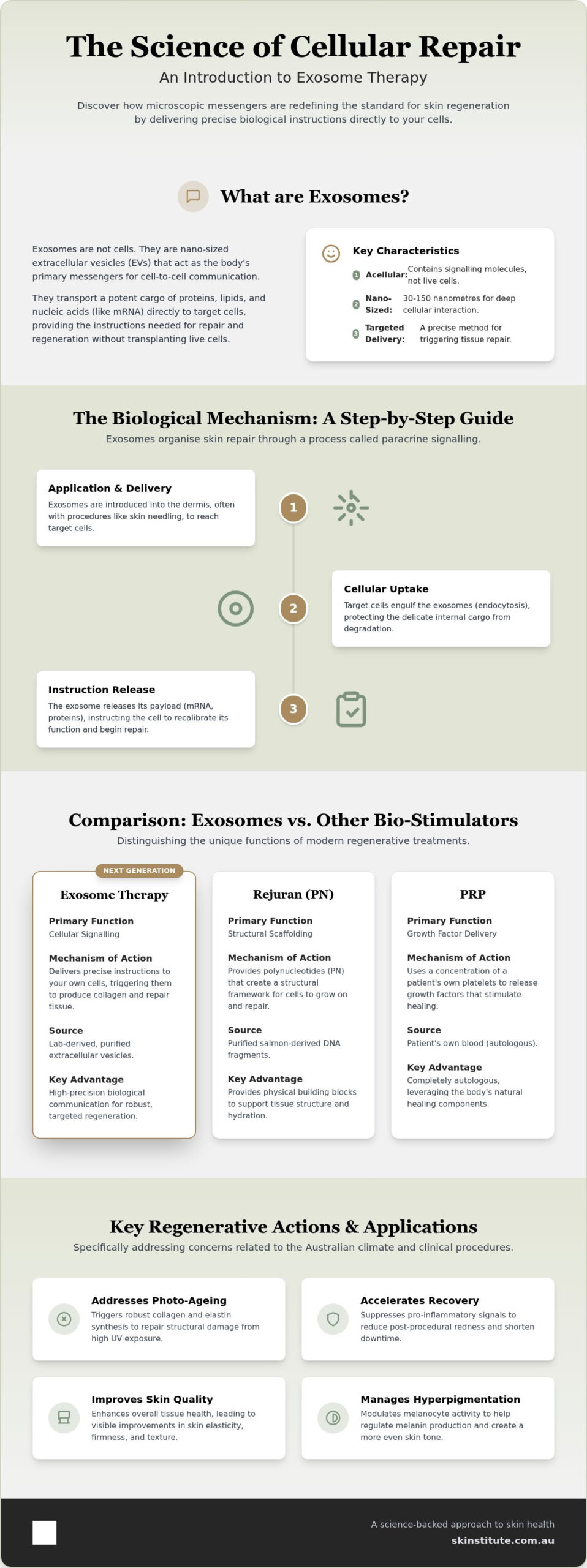
Exosomes represent a significant leap in regenerative medicine, moving beyond the traditional use of whole cells to focus on the specific signals those cells produce. To understand the science behind What are exosomes?, one must view them as nano-sized extracellular vesicles (EVs) that function as the body’s primary system for cell-to-cell communication. While stem cell therapy involves the introduction of live cells, exosome therapy melbourne utilises the refined “message” these cells secrete. These vesicles are not cells themselves; they’re lipid-bound containers that transport a potent cargo of proteins, lipids, and nucleic acids directly to target tissues. Typically measuring between 30 and 150 nanometres, they’re small enough to facilitate deep cellular interaction within the dermis.
Initially utilised in general medicine for their ability to modulate immune responses and promote systemic healing, exosomes have transitioned into high-end aesthetic applications. This shift reflects a deeper clinical understanding of how these vesicles can be harnessed to address skin-specific concerns at a cellular level. They provide a precise method for delivering regenerative instructions without the complexities associated with live cell transplantation, offering a stable and highly concentrated alternative for tissue repair.
The Role of Extracellular Vesicles in Skin Health
These vesicles facilitate complex biological functions without requiring direct cell-to-cell contact. By traversing the extracellular space, they deliver growth factors and cytokines that initiate a cascade of repair mechanisms. Paracrine signalling is the mechanism where cells communicate with their immediate neighbours to coordinate a healing response. Once an exosome reaches its target cell, it releases its genetic and proteomic cargo, effectively instructing the cell to increase its metabolic activity and production of vital structural proteins. This targeted delivery ensures that the skin’s regenerative capacity is activated exactly where it’s needed most to address structural decline.
Why Exosomes are Gaining Popularity in Melbourne Clinics
The Melbourne aesthetic market is currently experiencing a transition towards “bio-hacking” and regenerative aesthetics. Patients are increasingly seeking treatments that move beyond superficial changes, opting instead for biological repair that yields natural-looking results. Exosome therapy melbourne aligns with this demand for high-tech, non-surgical procedures that leverage the body’s innate regenerative capacity. It’s a sophisticated solution for those who prioritises science-backed interventions over traditional marketing trends.
This clinical approach ensures that the treatment is delivered within a framework of safety and technical proficiency. It satisfies a sophisticated patient demographic that values evidence-based outcomes and professional integrity. By focusing on the biological “why” of skin ageing, practitioners can offer a more thorough level of care that supports long-term tissue health and structural resilience.
The Biological Mechanism: How Exosomes Organise Skin Repair
The biological efficacy of exosome therapy melbourne is predicated on the precise interaction between extracellular vesicles and target dermal cells. This interaction occurs through endocytosis, a cellular process where the target cell’s membrane engulfs the exosome, allowing its internal cargo to bypass traditional biological barriers. The lipid bilayer of the exosome protects these delicate signalling molecules from degradation in the extracellular environment. Once internalised, the exosome releases its molecular payload, consisting of messenger RNA (mRNA), microRNA, and specific proteins. This triggers a cascade of intracellular responses that recalibrate the cell’s function. By utilising this paracrine signalling pathway, exosomes act as high-definition instructions that direct cells to repair damage and synthesise new tissue components.
Beyond structural repair, these vesicles possess significant immunomodulatory properties. They actively suppress pro-inflammatory cytokines, which effectively reduces post-procedural erythema and accelerates the resolution of redness following intensive clinical treatments like fractional CO2 laser. This makes them an invaluable addition to recovery protocols. Simultaneously, exosomes exert a regulatory influence on melanocytes. By modulating the signalling pathways responsible for melanin production, they help manage hyperpigmentation at a cellular level, leading to a more uniform skin tone.
Collagen and Elastin Synthesis
Fibroblasts, the primary cells responsible for the skin’s structural framework, are highly responsive to exosome signalling. The vesicles provide the biological blueprints required to stimulate the production of Type I and Type III collagen, alongside essential elastin fibres. This dual stimulation is vital for restoring dermal integrity and increasing skin thickness over time. Unlike temporary surface treatments, this endogenous production creates a resilient internal architecture that improves the skin’s overall tensile strength and elasticity.
Angiogenesis and Tissue Oxygenation
A critical component of tissue regeneration is the promotion of angiogenesis, or the formation of new micro-vessels. Exosomes carry specific growth factors that encourage vascular proliferation, ensuring the treated area receives an optimal supply of oxygen and essential nutrients. This enhanced micro-circulation is what produces the characteristic clinical glow, reflecting a genuine improvement in tissue vitality rather than a transient cosmetic effect. A thorough skin analysis at a professional clinic can determine how exosome therapy melbourne might best serve your specific dermal requirements.
Exosome Applications for Melbourne Skin Concerns
Melbourne’s environmental profile presents specific dermatological challenges that require a sophisticated clinical response. The local climate is characterised by high UV exposure, which accelerates the degradation of the dermal matrix and leads to premature photo-ageing. This environmental stressor damages skin cell DNA and structural proteins, resulting in a loss of resilience. Exosome therapy melbourne provides a biological solution by delivering repair signals that address these solar-induced changes at a molecular level. These vesicles don’t just mask the damage; they provide the genetic instructions necessary for cells to initiate genuine repair protocols.
Chronic low-grade inflammation, often termed “inflammageing”, is another concern effectively managed through exosome signalling. By modulating the skin’s inflammatory response, exosomes help preserve tissue integrity and prevent the premature breakdown of collagen fibres. For patients dealing with textural irregularities, such as acne scarring or enlarged pores, these vesicles facilitate the remodelling of fibrotic tissue. This results in a smoother, more refined skin surface as the body replaces damaged tissue with healthy, organised collagen. The treatment’s ability to recalibrate cellular behaviour makes it a versatile tool for addressing both environmental damage and structural skin concerns.
Repairing Photo-Ageing and Sun Damage
The Australian sun causes a specific type of damage known as solar elastosis, where elastin fibres become thickened and disordered. Exosome therapy targets these damaged areas, providing the necessary signals to synthesise functional proteins and regulate pigmentation. There is a profound synergy when combining these vesicles with fractional CO2 laser resurfacing Melbourne. While the laser creates precise micro-channels and removes damaged surface layers, the exosomes penetrate deeply to initiate rapid cellular repair, leading to more comprehensive structural rejuvenation and a more uniform skin tone.
Post-Treatment Recovery and Downtime Reduction
For Melbourne professionals who cannot afford long recovery periods, exosomes have become the gold standard for post-procedural aftercare. Their ability to accelerate the healing phase is clinically significant. Research indicates that clinical studies show exosomes can reduce post-laser redness by up to 50% within the first 24 hours. This rapid resolution of erythema allows patients to return to their daily activities sooner while ensuring the skin remains in an optimal state for regeneration. By shortening the inflammatory window, exosomes not only improve comfort but also enhance the final aesthetic outcome by focusing the body’s energy on tissue repair rather than prolonged inflammation.
Comparison: Exosomes vs Rejuran vs PRP
Distinguishing between modern bio-stimulatory treatments requires a precise understanding of their biological origins and primary functional pathways. While all three modalities aim to rejuvenate the dermis, they operate through fundamentally different mechanisms. Exosomes are nano-sized extracellular vesicles that function as a sophisticated signalling system. Rejuran consists of polynucleotides, which are DNA fragments derived from salmon. PRP utilises autologous platelets harvested from the patient’s own blood. Choosing the appropriate treatment depends on the specific dermal requirements and the degree of tissue maturity being addressed.
The primary differences can be categorised by their biological role:
- Exosomes: Signalling vesicles that deliver molecular “blueprints” to instruct cells to repair and regenerate.
- Rejuran: Polynucleotides that provide the physical DNA fragments required for structural rebuilding and hydration.
- PRP: Autologous platelets that release a broad spectrum of growth factors to stimulate general healing.
Exosomes vs Rejuran: The Bio-Stimulator Debate
For patients seeking a comprehensive understanding of polynucleotides, our clinical guide to Rejuran in Melbourne provides deeper context on how these DNA fragments support tissue repair. The primary distinction lies in the relationship between materials and instructions. Rejuran provides the physical DNA fragments that serve as building blocks for repair. Exosomes provide the specific instructions that tell the cells how to execute that repair. Delivery methods also vary significantly. Rejuran is typically administered through targeted intradermal injections. Exosome therapy melbourne is frequently applied topically following skin needling or laser procedures, utilising micro-channels to reach the deeper dermal layers.
Why Exosomes are Replacing Traditional PRP
The transition from Platelet-Rich Plasma (PRP) to exosome therapy reflects a move towards greater clinical precision. PRP is inherently variable; the concentration of growth factors depends entirely on the patient’s individual blood quality, which is influenced by age, diet, and health. Medical-grade exosome preparations offer standardised consistency and significantly higher concentrations of active signalling molecules. This removes the biological variability associated with autologous treatments. Patients also benefit from reduced procedural discomfort. Because exosome therapy melbourne does not require a blood draw, the treatment process is more streamlined and comfortable than traditional PRP protocols.
Layering these modalities can create what practitioners call an “entourage effect.” By combining the structural building blocks of Rejuran with the rapid cellular signalling of exosomes, we can address skin regeneration from multiple biological perspectives. This sequential approach ensures that cells have both the instructions and the raw materials needed for optimal repair. To determine the most effective combination for your skin, you can book a clinical consultation to discuss a personalised regenerative plan.
The Clinical Protocol: What to Expect at Skinstitute
The administration of exosome therapy melbourne requires a controlled clinical environment to ensure both safety and biological efficacy. Every procedure begins with a rigorous assessment of the patient’s dermal health. At our cosmetic clinic in Melbourne, we utilise advanced diagnostic tools to evaluate skin integrity and identify specific areas of concern, such as solar damage or structural depletion. This initial analysis is vital because the success of regenerative signalling depends on the precise calibration of the delivery method to the individual’s tissue requirements. Once the assessment is complete, the skin is thoroughly cleansed and a topical anaesthetic is applied to ensure patient comfort throughout the procedure.
The delivery phase is the most technical component of the protocol. Because exosomes are nano-sized vesicles, they require a pathway to bypass the stratum corneum, the skin’s outermost protective layer. We achieve this by creating precise micro-channels using medical-grade skin needling or fractional laser technology. These channels serve as direct conduits for the exosome serum, allowing the concentrated messengers to reach the fibroblasts and melanocytes in the deeper dermis. This controlled micro-trauma also triggers the body’s natural wound-healing response, which works in tandem with the exosome signalling to maximise the regenerative outcome.
Step-by-Step Treatment Journey
- Step 1: Clinical Consultation: A thorough assessment of skin integrity and the mapping of treatment areas to ensure appropriate parameter selection.
- Step 2: Controlled Micro-Trauma: The use of skin needling or laser to create the necessary micro-channels for deep vesicle penetration.
- Step 3: Exosome Application: The topical application of a high-concentration exosome solution, which is rapidly absorbed through the newly created pathways.
- Step 4: LED Phototherapy: A concluding session of medical-grade LED therapy to soothe the tissue and further stimulate cellular metabolic activity.
Clinical Results and Maintenance
Patients often observe an immediate improvement in skin hydration and a reduction in redness due to the potent anti-inflammatory properties of the vesicles. However, the true structural changes occur over several weeks as the signalling molecules trigger endogenous collagen and elastin synthesis. For chronic concerns such as deep acne scarring or advanced photo-ageing, we typically recommend a cycle of three to four treatments spaced approximately four weeks apart. This methodical approach ensures a sustained regenerative signal. The Skinstitute philosophy prioritises long-term tissue health and dermal resilience over temporary cosmetic fixes, ensuring that the results are both visible and biologically grounded. Following the procedure, the use of clinical-grade home care is essential to support the ongoing repair process and protect the newly regenerated tissue.
Advancing Your Regenerative Journey with Precision Signalling
Regenerative medicine has reached a pivotal stage where we can now influence skin health at a molecular level. By prioritising cellular communication over temporary surface corrections, exosome therapy melbourne offers a sophisticated solution for addressing the long-term effects of the Australian climate. This clinical approach ensures that your skin receives the precise biological instructions needed to synthesise new collagen and repair sun-damaged DNA. It represents a move away from traditional fillers toward a model of genuine tissue restoration.
At Skinstitute, we combine 26 years of aesthetic medicine experience with advanced bio-stimulatory protocols to deliver measurable results within a professional, medical-grade environment. Our focus remains on the long-term structural integrity of your tissue, ensuring that every treatment supports your skin’s innate capacity for repair. If you are ready to move beyond traditional rejuvenation methods and explore the science of cellular messengers, we invite you to take the next step in your dermal care.
Book a Clinical Consultation at Skinstitute Melbourne to discuss how a personalised regenerative protocol can restore your skin’s vitality and resilience. We look forward to partnering with you on your journey toward healthier, scientifically revitalised skin.
Frequently Asked Questions
Is exosome therapy safe and where do the exosomes come from?
Exosome therapy is considered highly safe because it utilises cell-free signalling vesicles rather than live cells, which significantly reduces the risk of an adverse immune response. The exosomes used in clinical settings are typically derived from various sources, including plant, synthetic, or human-derived stem cells. At our clinic, we prioritise medical-grade preparations that are rigorously purified to ensure the highest standards of safety and biological activity for every patient.
How many sessions of exosome therapy will I need for visible results?
For optimal results in exosome therapy melbourne, a series of three to four sessions is typically recommended. These treatments are usually spaced three to four weeks apart to align with the skin’s natural cellular turnover cycle. While some patients observe an immediate improvement in skin hydration and tone, the most significant structural changes occur over several months as the signalling molecules stimulate the production of new collagen and elastin fibres.
Can exosome therapy be combined with other cosmetic injectables?
Yes, exosome therapy can be effectively combined with other aesthetic treatments to enhance overall results. While exosomes focus on cellular signalling and tissue repair, other modalities like prescription injectables or Rejuran address volume loss and structural hydration. Combining these protocols allows for a multi-layered approach to rejuvenation, where the exosomes accelerate the healing of the skin surface while other treatments target deeper anatomical concerns.
What is the difference between exosomes and stem cell facials?
The primary difference lies in the biological delivery system. Stem cell facials often utilise plant-based extracts or whole-cell derivatives that may not penetrate the dermal barrier effectively. In contrast, exosome therapy melbourne involves nano-sized vesicles that are specifically designed to carry molecular instructions directly into target cells. This allows for a more precise and potent signalling process, moving beyond superficial application to achieve genuine cellular regeneration.
Is there any downtime associated with exosome treatments in Melbourne?
Downtime following an exosome treatment is typically minimal, lasting between 24 and 48 hours. Most patients experience mild erythema or redness similar to a light sunburn, which resolves quickly due to the potent anti-inflammatory properties of the vesicles. Because exosomes accelerate the repair of micro-channels created during the procedure, the recovery period is significantly shorter than traditional skin needling or laser treatments performed without regenerative enhancements.
Who is the ideal candidate for exosome skin rejuvenation?
The ideal candidate is anyone experiencing signs of photo-ageing, loss of elasticity, or textural irregularities such as acne scarring. It’s particularly effective for individuals with slow-healing skin or those who have significant sun damage from the Australian climate. Because the treatment focuses on biological repair rather than temporary masking, it’s suitable for patients seeking long-term improvements in skin health and a more resilient dermal structure.
How soon can I apply makeup or exercise after an exosome treatment?
We recommend waiting at least 24 hours before applying makeup to ensure the micro-channels created during the delivery phase have closed completely. Similarly, strenuous exercise should be avoided for 24 to 48 hours to prevent excessive heat and perspiration from irritating the treated area. Following these guidelines ensures that the exosome solution remains undisturbed within the dermis, allowing for optimal absorption and cellular interaction without external interference.
Are exosomes effective for treating hair loss and scalp health?
Exosomes are highly effective for addressing hair thinning and improving scalp health by stimulating the hair follicles at a cellular level. The signalling molecules encourage the transition of follicles into the growth phase and increase the diameter of the hair shaft. For hair restoration, a series of five sessions spaced two to four weeks apart is typically recommended to achieve visible improvements in hair density and scalp vitality.