Exosome Therapy Melbourne: A Clinical Guide to Cellular Skin Regeneration
August 19, 2026
2026 Clinical Guide: HIFU Neck Tightening in Melbourne
August 21, 2026
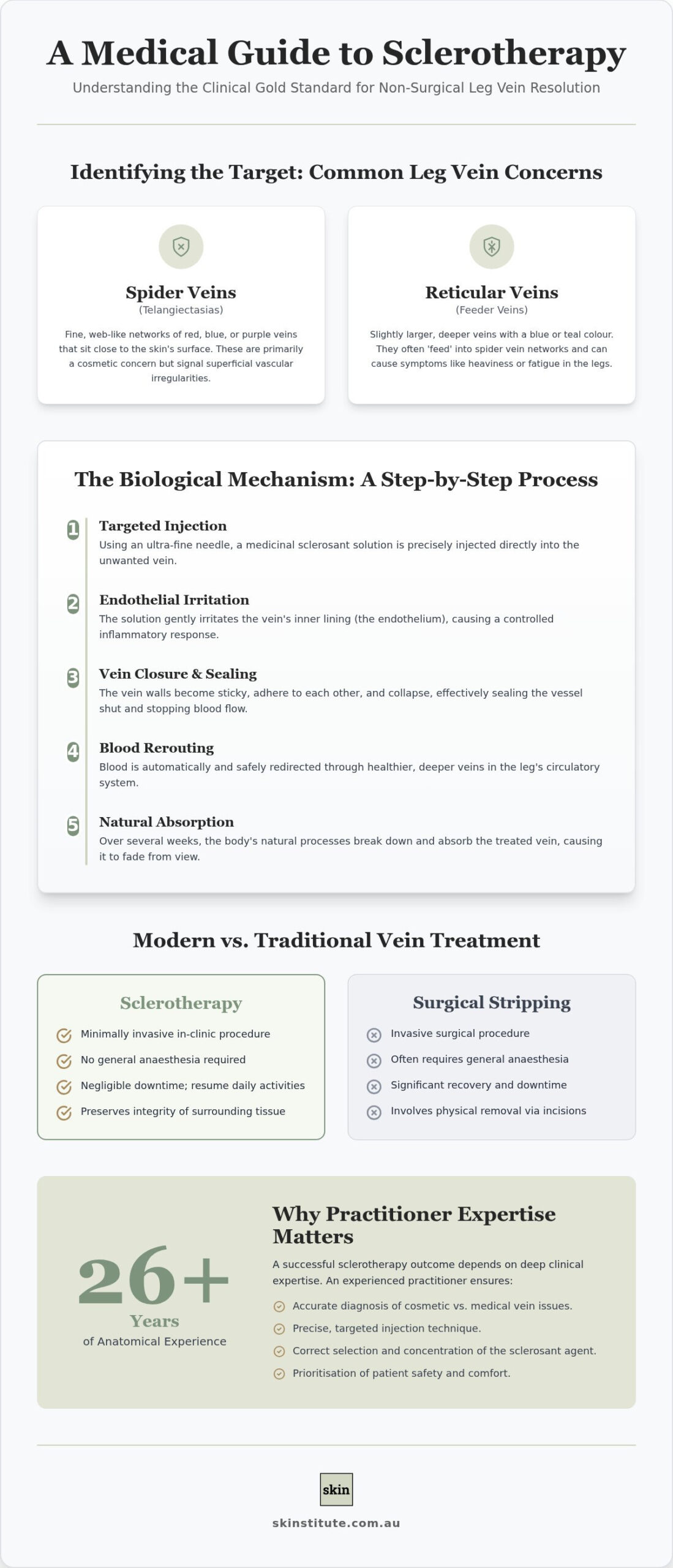
The visible network of blue and red veins on the lower limbs is rarely just a surface-level aesthetic concern; it’s a physiological signal of underlying vascular dynamics that requires a precise, medical-grade response. Many individuals in Melbourne find themselves concealing their legs due to the intricate webs of spider veins or the deeper, teal-coloured reticular veins that often cause a persistent sense of heaviness or fatigue by the end of the day. It’s common to feel a degree of uncertainty regarding whether these vascular patterns are purely cosmetic or indicative of a more complex venous condition.
This guide provides a comprehensive medical overview of sclerotherapy melbourne, detailing how this established clinical intervention resolves vascular irregularities through controlled chemical endosclerosis. By understanding the biological process of vein closure, you can make an informed decision about your vascular health. We will examine the physiological distinctions between cosmetic and medical vein concerns, the technical mechanics of the sclerosant injection, and the clinical outcomes you can expect when treated by a practitioner with over 26 years of anatomical experience.
Key Takeaways
- Learn how targeted chemical agents induce endothelial closure to resolve visible vascular networks without the requirement for invasive surgical intervention.
- Understand the clinical distinction between superficial telangiectasias and deeper reticular “feeder” veins to ensure a comprehensive and lasting treatment outcome.
- Discover why sclerotherapy melbourne remains the clinical gold standard for leg vein removal, prioritising technical precision and minimal patient downtime.
- Identify the essential safety benchmarks for selecting a medical aesthetic practitioner, focusing on the necessity of deep anatomical expertise and established clinical experience.
- Review the streamlined recovery protocol and the role of ultra-fine needle technology in maintaining patient comfort throughout the vein resolution process.
Understanding Sclerotherapy for Leg Vein Management
Sclerotherapy is the established clinical gold standard for the non-surgical resolution of small to medium-diameter leg veins. Unlike invasive procedures that require general anaesthesia, this method involves the targeted injection of a medicinal solution directly into the lumen of the vessel. The primary objective is to induce a controlled biological response that leads to the eventual absorption of the vein by the body’s natural metabolic processes. For patients seeking sclerotherapy melbourne offers a clinical environment where technical precision meets aesthetic expertise, ensuring that vascular concerns are addressed with medical-grade rigour and safety.
The Evolution of Non-Surgical Vein Removal
Historically, the management of problematic leg veins often necessitated surgical stripping, a process involving the physical removal of the vessel through multiple incisions. Modern vascular science has shifted toward minimally invasive alternatives that preserve the integrity of the surrounding tissue. This Sclerotherapy overview highlights how the procedure has transitioned from early, less stable solutions to refined liquid and foam sclerosants. Liquid sclerotherapy remains the preferred method for superficial vessels, while foam variants are often utilised for larger reticular veins. These advancements allow for a procedure performed in a clinical suite with negligible downtime, prioritising physiological efficiency over the trauma associated with traditional surgery.
Who Should Seek Sclerotherapy in Melbourne?
Individuals might notice a physical sensation of heaviness or mild discomfort alongside the visible changes. While these symptoms are often vascular, they can overlap with musculoskeletal issues; for context, experts at The Orthopaedic & Sports Medicine Institute emphasise the importance of comprehensive care when addressing lower limb pain or sports-related injuries. At a professional clinic like Skinstitute, which brings 26 years of industry experience to every consultation, the initial assessment is critical. A practitioner evaluates the vascular anatomy to distinguish between purely cosmetic concerns and deeper venous insufficiency. This methodical approach ensures that the treatment plan is tailored to the individual’s biological needs, moving beyond surface-level aesthetics to provide a technically proficient solution for those in the Melbourne region.
The Biological Mechanism: How Sclerotherapy Resolves Visible Veins
Sclerotherapy operates through a precisely controlled chemical interaction with the internal anatomy of the vessel. When performing sclerotherapy melbourne practitioners utilise a sclerosant solution to target the endothelium, which is the thin layer of cells lining the interior surface of blood vessels. This interaction isn’t merely a mechanical blockage but a sophisticated biochemical process designed to alter the vessel’s structure permanently. By compromising the cellular integrity of the vein, the treatment initiates a sequence of biological events that leads to the safe and effective removal of the vascular network from the skin’s surface.
Understanding the Sclerosant Agent
In clinical practice, a sclerosant is typically classified as either a detergent or an osmotic agent. Detergent sclerosants work by disrupting the lipids within the cell membranes of the vein wall, while osmotic agents utilize high salt concentrations to dehydrate the endothelial cells. The practitioner carefully calibrates the concentration of the solution to match the specific diameter and flow characteristics of the target vessel. The sclerosant’s primary role is to trigger a controlled local inflammation that causes the vessel to contract and close. Ensuring the correct agent is selected requires the technical proficiency found at an established medical aesthetic clinic.
Once the endothelial lining is sufficiently compromised, the vein walls become “sticky” and adhere to one another. This collapse effectively removes the vessel from the active circulatory system, prompting blood to be naturally redirected to healthier, deeper veins. Over the following weeks, the defunct vein undergoes a process known as fibrosis, where the body converts the non-functional vessel into a microscopic strand of harmless fibrous scar tissue. This transition is a key component of The Sclerotherapy Procedure, allowing for a permanent resolution of the visible vein.
The Timeline of Vascular Resolution
Patients should understand that the resolution of visible veins follows a steady biological timeline rather than occurring instantaneously. After the initial fibrotic phase, the lymphatic system identifies the defunct tissue as waste and begins the process of natural absorption. This reabsorption phase typically spans four to eight weeks, during which the treated vessels gradually fade from view. Because the body’s response is individualised, multiple sessions are often necessary to achieve a uniform skin tone and ensure that all “feeder” vessels are fully addressed. This methodical approach prioritises long-term physiological stability and safety over immediate, superficial results.
Identifying Candidates: Spider Veins vs. Reticular Veins
Identifying the specific nature of a vascular concern is fundamental to achieving a clearer skin tone. While many individuals view all visible leg veins as a singular cosmetic issue, clinical practice distinguishes between vessels based on their depth, diameter, and physiological role. For those seeking sclerotherapy melbourne, this diagnostic clarity ensures that the underlying cause of the visible network is addressed, rather than merely treating the surface symptoms. A successful treatment plan relies on an accurate anatomical assessment to determine which vessels require intervention.
Spider Veins (Telangiectasias)
Telangiectasias, colloquially known as spider veins, are the most superficial of vascular concerns. These manifest as fine, intricate webs of red, purple, or blue lines situated immediately beneath the epidermis. Their development is often linked to genetic predispositions, hormonal fluctuations during pregnancy or menopause, and localised skin trauma. Because they are situated so close to the surface, they respond exceptionally well to liquid sclerotherapy. However, treating these in isolation without investigating deeper vessels often leads to underwhelming long-term results and rapid recurrence.
Reticular Veins: The “Feeder” Vessels
Reticular veins are slightly larger vessels, typically greenish-blue in colour, located deeper within the dermis. In the context of the vascular tree, these function as “feeder” veins that provide the high-pressure flow responsible for the emergence of surface spider veins. Addressing these vessels first is a critical clinical priority for the following reasons:
- Pressure Reduction: Closing the reticular vein removes the source of pressure that distends the smaller surface capillaries.
- Longevity of Results: By resolving the feeder vessels, the practitioner ensures the longevity of the aesthetic outcome.
- Prevention: Systematic treatment of the reticular system reduces the likelihood of new spider veins forming in the same region.
It’s equally important to differentiate these concerns from larger, truncal varicose veins. Varicose veins are often bulging or twisted and may indicate a more significant failure of the venous valves. While sclerotherapy melbourne is highly effective for spider and reticular veins, truncal varicosities often require ultrasound-guided sclerotherapy or other medical interventions to manage deep venous insufficiency. A professional consultation at a clinic with 26 years of experience allows for a precise anatomical mapping of these structures. This ensures that the most appropriate clinical method is selected for your specific vascular profile, moving beyond surface aesthetics to address the root of the concern.
The Clinical Procedure and Recovery Protocol
The execution of a sclerotherapy melbourne session is a precise medical event that typically requires between 30 and 45 minutes, depending on the complexity of the vascular network being addressed. The procedure is performed using ultra-fine needles, which significantly reduces patient discomfort to a minor pinching sensation. Because the focus is on clinical accuracy, the practitioner follows a methodical protocol to ensure the sclerosant is delivered with absolute precision into the target vessels. This clinical focus ensures that the solution remains contained within the vessel lumen to maximise the fibrotic response.
Step-by-Step: Your Sclerotherapy Session
The session begins with the thorough cleaning of the treatment site and a final mapping of the vascular structures. This anatomical mapping allows the practitioner to identify the optimal entry points for the liquid or foam sclerosant. Once the injection is completed, immediate pressure is applied to the site. This immediate compression is vital; it ensures the vein walls remain in contact to facilitate successful adhesion and eventual fibrosis. The practitioner’s technical proficiency is key to ensuring the solution is distributed evenly throughout the targeted network.
Aftercare and the Melbourne Lifestyle
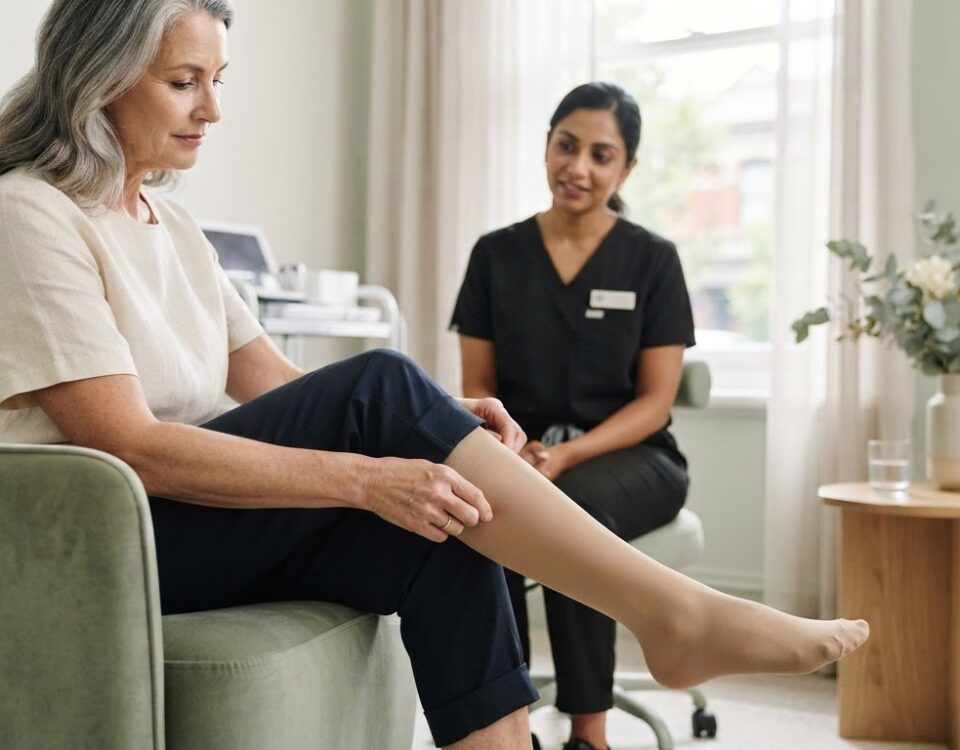
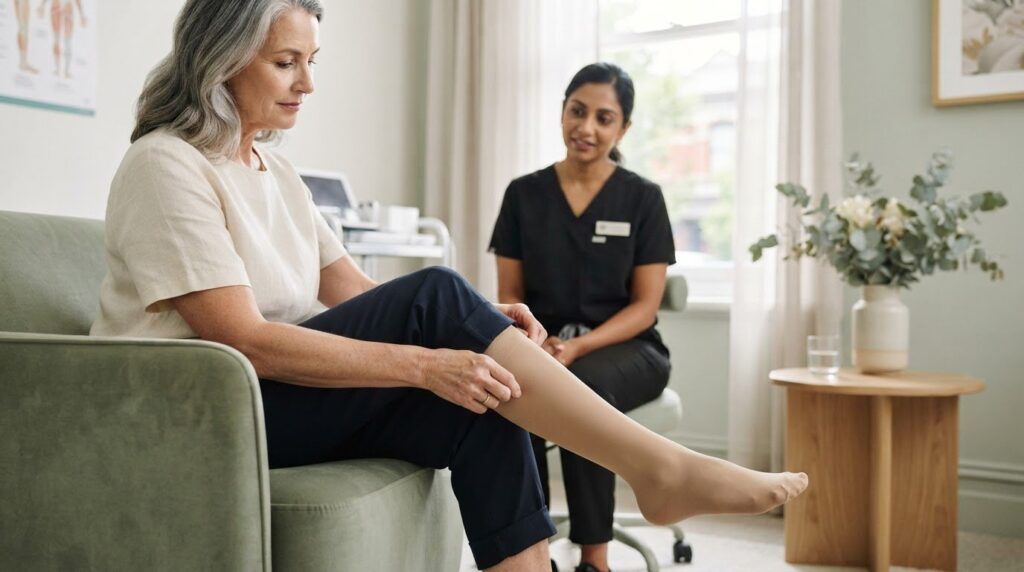
Post-treatment recovery is highly influenced by the patient’s adherence to aftercare protocols. In Melbourne, where the climate can fluctuate, patients are advised to wear medical-grade compression garments for a period of seven to fourteen days. These garments maintain the necessary pressure to keep the treated veins collapsed while the body begins the absorption process.
Walking immediately after the procedure is mandatory. It promotes healthy circulation and assists the body in processing the sclerosant. Many Melbourne patients choose to undergo treatment during the autumn or winter months. This seasonal timing is practical because it makes wearing heavy compression stockings more comfortable in cooler weather and protects the healing skin from intense Australian UV radiation. Sun exposure on recently treated areas can lead to permanent pigment changes, so rigorous sun protection is essential throughout the recovery phase.
Managing Post-Treatment Expectations
When managing expectations for sclerotherapy melbourne, it’s normal to observe temporary bruising or “staining” at the injection sites. This staining, known as hemosiderin deposition, occurs when iron from red blood cells is trapped in the skin as the vein breaks down. It typically resolves naturally over several months as the lymphatic system clears the cellular debris.
A follow-up appointment is usually scheduled for six weeks post-treatment to evaluate the biological response and determine if further top-up sessions are required. Adhering to these professional standards is central to the care provided at our clinic. For more information on our standards, you may review Skinstitute Melbourne: A Clinical Guide to Medical-Grade Aesthetic Treatments. To begin your journey toward clearer skin, you can book a clinical assessment with our experienced team.
Selecting a Sclerotherapy Practitioner in Melbourne
Selecting a practitioner for sclerotherapy melbourne requires more than a surface-level comparison of clinical availability. It demands an assessment of the practitioner’s anatomical depth and their ability to navigate the complex vascular structures of the lower limbs. A comprehensive consultation serves as the foundation of any successful treatment plan. This initial step allows for a detailed mapping of spider and reticular veins to ensure every target vessel is identified. Skinstitute’s 26 years of industry experience in Melbourne provides a marker of clinical stability and technical proficiency that is essential when performing procedures involving the circulatory system.
The Importance of Clinical Experience
A seasoned practitioner possesses the diagnostic insight required to identify subtle vascular patterns that a less experienced clinician might overlook. This expertise is particularly relevant when distinguishing between superficial telangiectasias and the deeper feeder veins that often support them. Safety is paramount. Established safety protocols are deeply embedded in the operations of a medical aesthetic clinic, ensuring that every injection is performed with precision. Technical mastery in this field prevents complications and ensures that the sclerosant remains localised within the target vessel.
In some clinical scenarios, vascular resolution is only one component of a broader aesthetic objective. For patients seeking to address both visible veins and age-related skin laxity, sclerotherapy can be strategically integrated with other medical-grade technologies. Following the resolution of the vascular network, Fractional CO2 Laser Resurfacing Melbourne may be utilised to improve the overall quality and resilience of the skin on the legs. This multi-modality approach ensures that the final result is both physiologically sound and aesthetically uniform.
Integrated Skin Health at Skinstitute
Vascular clarity provides a clean canvas for further regenerative therapies. At Skinstitute, we view the resolution of leg veins as part of a holistic commitment to skin health. Once the inflammatory response from sclerotherapy has subsided and the defunct vessels have been absorbed, other treatments can be employed to enhance dermal vitality. When considering sclerotherapy melbourne, it’s vital to partner with a clinic that values long-term results over quick conversions.
Regenerative options such as Rejuran can be used to stimulate polynucleotide-based bio-stimulation. This improves the skin’s biological function at a cellular level, aiding in the restoration of skin tone and texture. By moving beyond isolated symptoms and addressing the skin as a complex organ, our practitioners provide results grounded in scientific principles. This dedication to clinical excellence ensures that every patient benefits from a legacy of technical mastery and a deep understanding of the intersection between vascular health and skin regeneration.
Advancing Your Vascular Health and Skin Clarity
Sclerotherapy represents a sophisticated intersection of vascular science and aesthetic medicine, providing a reliable pathway to resolve visible leg veins. By understanding the biological mechanism of endothelial closure and the necessity of addressing the deeper reticular system, patients can set realistic expectations for their recovery. The transition from visible vascular networks to a more uniform skin tone is a gradual process of natural absorption that prioritises physiological stability and safety.
When seeking sclerotherapy melbourne, selecting a practitioner with a deep understanding of vascular anatomy is the most critical factor for ensuring both safety and efficacy. Skinstitute offers a medical-grade clinical environment backed by over 26 years of industry experience, specialising in the non-surgical resolution of complex vascular concerns. Our team remains dedicated to providing technically proficient care that aligns with established scientific principles. We invite you to Book a Clinical Sclerotherapy Consultation at Skinstitute Melbourne to begin your journey toward lasting skin rejuvenation and confidence.
Frequently Asked Questions
Is sclerotherapy painful?
Sclerotherapy is associated with minimal physical discomfort, as the procedure utilises ultra-fine needles for the delivery of the sclerosant solution. Most patients describe the initial sensation as a minor stinging or a brief pinch, comparable to a mosquito bite. This sensation typically subsides within minutes of the injection. Because the procedure is minimally invasive and performed in a clinical setting, no anaesthesia is required, allowing patients to remain comfortable throughout the duration of the treatment session.
How many sessions of sclerotherapy will I need?
While some patients observe a noticeable reduction in vascular visibility after a single appointment, most individuals require two to four sessions per area to achieve complete clinical resolution. The total number of treatments depends on the density and diameter of the vascular network being addressed. For those undergoing sclerotherapy melbourne, these sessions are typically spaced six weeks apart. This interval allows the body sufficient time to metabolise and absorb the treated vessels before subsequent injections are administered.
Can I walk immediately after my sclerotherapy treatment?
Walking immediately following the procedure is a mandatory component of the clinical recovery protocol. This physical activity promotes healthy venous return and ensures that the sclerosant remains effectively distributed within the target vessels. It also significantly reduces the risk of deep vein complications by maintaining active circulation in the lower limbs; for those interested in the broader scope of internal and respiratory health, apic.com.pk demonstrates the clinical precision required in specialised medical environments. Patients are typically advised to walk for approximately twenty to thirty minutes straight after their session to support the biological integration of the treatment.
Medical-grade compression garments must be worn for three to seven days during daylight hours, depending on the specific diameter of the veins treated. These garments provide the external pressure necessary to keep the vein walls adhered while the fibrotic process initiates. Consistent use of compression is vital for preventing the vessel from reopening or filling with blood during the early healing phase. Your practitioner will provide a specific wearing schedule based on your individual anatomical response and treatment complexity.
Will the treated veins ever come back?
Once a vein has been successfully sclerosed and absorbed by the body’s lymphatic system, that specific vessel cannot reappear. The fibrotic conversion of the vein into scar tissue is a permanent biological change. However, sclerotherapy does not prevent the formation of new spider or reticular veins in the future. Factors such as genetic predisposition, hormonal changes, or prolonged standing can lead to the development of new vascular networks, which may require separate clinical attention over time.
Is sclerotherapy safe for all skin types?
Sclerotherapy is a safe and effective intervention for all skin types when performed by an experienced practitioner. However, patients with deeper skin tones must be particularly diligent regarding post-treatment aftercare to mitigate the risk of post-inflammatory hyperpigmentation. This condition, sometimes referred to as “staining,” can occur if the treated area is exposed to ultraviolet radiation prematurely. Rigorous sun protection and adherence to clinical guidelines are essential for maintaining an even skin tone across all Fitzpatrick phototypes.
What is the best time of year for sclerotherapy in Melbourne?
The cooler months of autumn and winter are often considered the optimal time for sclerotherapy melbourne. Lower ambient temperatures make the mandatory wearing of heavy, medical-grade compression stockings significantly more comfortable for the patient. Additionally, treating veins during the winter ensures that the healing skin is protected from the intense Australian summer sun. This seasonal timing allows ample time for the biological resolution and fading of vessels before the warmer months arrive, ensuring optimal aesthetic results.
Are there any activities I should avoid after treatment?
Following your clinical session, you should avoid high-impact exercise and strenuous activities for approximately seven days to prevent unnecessary pressure on the treated vessels. It’s equally important to avoid hot baths, saunas, and spas, as heat can cause vasodilation and interfere with the vein closure process. Direct sun exposure on the treated areas must also be strictly avoided for several weeks. These precautions ensure the stability of the fibrotic response and reduce the likelihood of complications or pigment changes.