What Not to Do After Sclerotherapy: A Clear Aftercare Guide
October 15, 2026
Microneedling with Exosomes in Melbourne: A Clinical Guide
October 17, 2026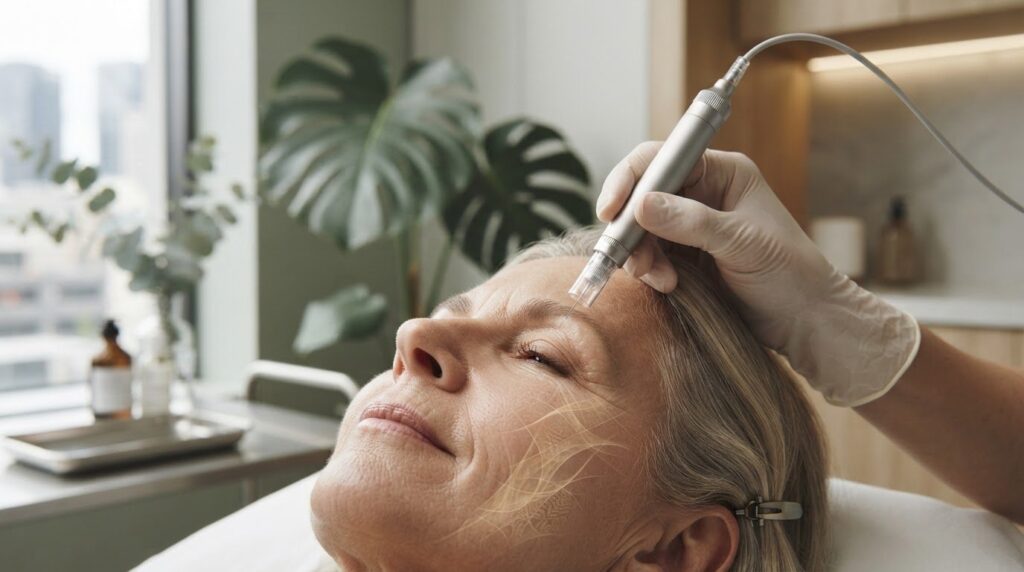
Skin needling can stimulate collagen, but it can’t guarantee a particular change in your skin. The potential collagen induction therapy benefits depend on how your skin responds to controlled micro-injuries, which activate the body’s wound-healing processes. This may support changes in concerns such as fine lines, skin laxity, enlarged pores and a dull complexion, but results vary between individuals.
It’s reasonable to want clarity about what treatment may address, what improvement is realistic and what recovery may involve. Understanding the biological process helps distinguish the treatment’s intended effects from claims that overstate what it can do.
This article explains how skin needling works, which concerns it may help improve and where its limitations lie. It also covers suitability, possible adverse effects and recovery, so you can approach treatment with informed expectations. At Skinstitute, a face-to-face consultation informs a tailored treatment plan and helps determine whether skin needling is appropriate for your concerns and skin.
Key Takeaways
- Understand how controlled skin injury prompts collagen induction, and why the response differs between individuals.
- Learn which concerns the potential collagen induction therapy benefits may address, including fine lines, skin laxity, enlarged pores and dull complexion.
- Compare skin needling, IPL and fractional CO2 resurfacing by their treatment aims, rather than assuming they address the same concerns.
- Discuss suitability, possible risks, recovery and realistic expectations during a clinical assessment.
- See how Skinstitute’s face-to-face consultation in Melbourne informs a tailored skin-needling plan.
Collagen induction therapy benefits: which skin concerns may it address?
The potential collagen induction therapy benefits depend on the skin’s response to controlled injury, not on an immediate or uniform change in appearance. Collagen induction means stimulating new collagen production through controlled skin injury. Skin needling is intended to prompt a healing response that may support improvement in selected concerns over time.
During treatment, a needling device creates small, controlled injuries in the skin. As the skin responds and repairs these areas, collagen production may be stimulated. This is the treatment’s biological rationale, not a guarantee that a particular concern will improve. The term and its broader applications are outlined in Collagen Induction Therapy on Wikipedia.
Skinstitute offers Skin Needling for concerns including skin laxity, fine lines, dull complexion and enlarged pores. These concerns can have different underlying characteristics, so the treatment aim should be matched to the individual’s skin rather than assumed from a general list of benefits.
Potential changes to texture, fine lines and skin laxity
Fine lines and mild changes in skin firmness may relate to changes in collagen, which helps provide structural support in the skin. By stimulating collagen induction, skin needling aims to encourage a repair response that may contribute to smoother-looking texture or a subtle improvement in the appearance of laxity. It does not replace lost tissue or remove excess skin.
Visible change depends on the skin’s starting condition and individual response. Someone with mild textural concerns may have different treatment aims from someone with more pronounced laxity. These are potential benefits to discuss, not guaranteed individual results.
Dull complexion and enlarged pores: realistic benefit claims
Skinstitute also offers Skin Needling for concerns such as dullness and enlarged pores. Treatment may aim to support a more even-looking surface, but needling cannot eliminate pores or promise a uniform complexion. Pore visibility and dullness can reflect different skin characteristics. A clinical assessment helps determine whether a collagen-induction approach is relevant to the concern.
During a face-to-face assessment, the practitioner can consider the concern’s appearance, the skin’s condition and the change you hope to achieve. A concern being a possible treatment aim does not establish that needling is suitable or that it will produce the desired result. The discussion should set realistic expectations for the degree of change and whether another treatment approach may better match your concern.
For Melbourne patients considering Skin Needling, start by identifying your main priority, such as fine lines rather than overall complexion. This gives the clinician a clearer basis for discussing the intended benefit and an individually appropriate plan.
How collagen induction works: from controlled skin injury to collagen response
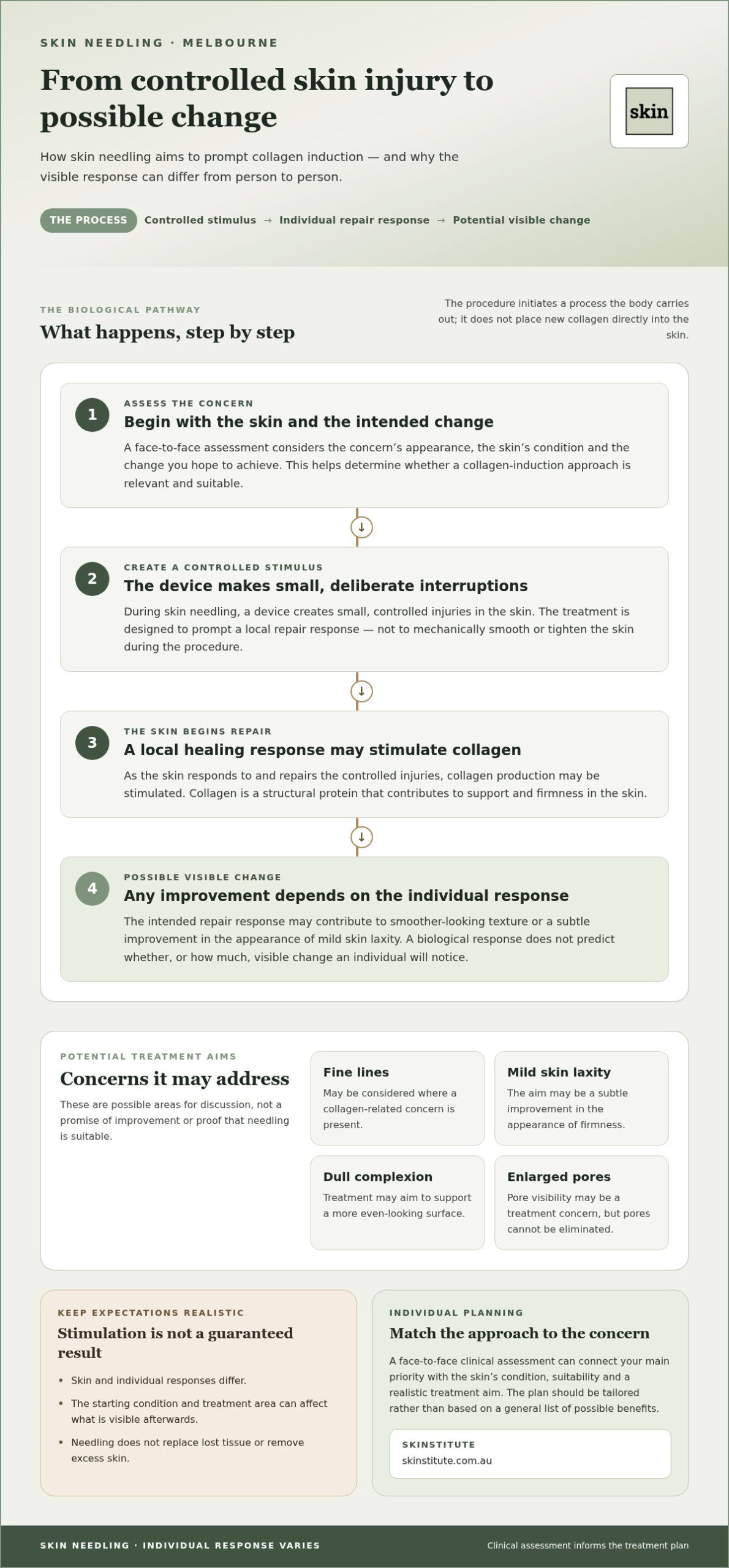
Collagen induction is the stimulation of new collagen production through controlled skin injury. In Skin Needling, a device creates small, deliberate interruptions in the skin’s surface to prompt a local repair response. The procedure is designed to encourage this biological process, rather than mechanically smooth or tighten the skin during treatment.
Collagen is a structural protein in the skin that contributes to support and firmness. The treatment rationale is that, as the skin repairs the controlled injuries, it may produce new collagen. This explains why collagen induction therapy benefits are discussed in relation to concerns such as texture or fine lines, but it does not predict how much visible change an individual will experience.
What happens in the skin during needling?
The needling process creates controlled injury, signalling the skin to begin a repair response. Collagen production is one part of the biological aim of this response. The extent of the stimulus depends on the treatment plan and the skin being treated; no single device setting or treatment depth applies to everyone.
This distinction helps keep the mechanism in perspective. Skin Needling initiates a process that the body carries out; it does not place new collagen directly into the skin. The intended response is not the same as a guaranteed cosmetic result, so treatment should be planned around an assessed concern.
Why stimulation does not predict a fixed result
A biological response and a visible cosmetic change are related, but they are not interchangeable. Collagen stimulation describes an intended activity within the skin. It cannot, by itself, predict whether a person will notice an improvement or how pronounced that change may be. Collagen induction cannot guarantee identical results, because each person’s skin and response to treatment are individual.
Baseline skin condition matters when setting expectations. The same treatment aim may be considered for different concerns, yet the starting appearance, area being treated and individual response can affect what is visible afterwards. Treatment planning should connect the proposed procedure to a specific concern and realistic goal, rather than assume collagen stimulation will produce a standard outcome.
A face-to-face assessment provides an opportunity to discuss your concern, relevant history and suitability before a plan is made. It also separates the intended biological effect from the change you hope to see. For patients considering Skin Needling at Skinstitute, this discussion helps shape an individual approach without treating a possible response as a promise.
Collagen induction therapy compared with other skin treatments
Skin needling, Intense Pulsed Light (IPL) and fractional CO2 resurfacing are distinct approaches, even when someone is concerned about visible skin changes. Their methods and treatment aims differ, so the suitable option depends on the concern being assessed. Consider the potential collagen induction therapy benefits alongside the different aims of light-based and laser procedures, rather than treating the options as interchangeable.
Skin needling, IPL and fractional CO2: different treatment aims
Skin needling creates controlled micro-injuries to stimulate the skin’s repair response. IPL uses pulses of broad-spectrum light to address concerns such as uneven tone, surface imperfections, capillary damage, sun spots and freckles. Fractional CO2 resurfacing uses laser energy in a fractional pattern to resurface the skin. These are different treatment categories, not variations of one procedure. A clinician considers the concern, skin condition and treatment aim when discussing which approach may be appropriate.
| Treatment | General approach | Treatment intent to discuss |
|---|---|---|
| Skin needling | Controlled mechanical injury using a needling device. | May be considered for selected concerns involving texture, fine lines or skin laxity. |
| IPL | Light-based treatment using intense pulsed light. | May be considered for concerns such as uneven tone, surface imperfections, capillary damage, sun spots or freckles. |
| Fractional CO2 resurfacing | Laser resurfacing delivered in a fractional pattern. | May be considered when the treatment aim involves resurfacing the skin. |
The table describes broad treatment categories, not a recommendation or prediction of results. IPL and fractional CO2 have different characteristics from needling, and suitability depends on individual assessment. Skinstitute’s guide to fractional CO2 laser resurfacing explains that treatment approach in more detail.
Professional skin needling and home rollers
Professional skin needling is not equivalent to using a home roller. The treatment setting, device and clinical plan differ, and a home device should not be assumed to deliver the same controlled intervention or intended effect. Skin response depends on how a procedure is planned for the individual, not simply on the presence of needles.
This comparison is not a guide to performing needling at home. Skin concerns and device use require careful consideration; attempting to reproduce a clinical treatment without an assessment may not address the underlying concern. A face-to-face clinical discussion can clarify the treatment objective and whether professional skin needling is suitable.
In Melbourne, Skinstitute offers Skin Needling and Fractional CO2 resurfacing. Compare them by first identifying the concern and intended treatment approach, rather than assuming one procedure is universally better. IPL is another distinct light-based option to consider where relevant to the assessment.
Suitability, risks and recovery: what to consider before skin needling
Skin needling involves controlled injury to the skin, so deciding whether it is suitable requires more than matching a concern to a list of potential collagen induction therapy benefits. Skin condition, relevant medical history, treatment goals and ability to follow personalised aftercare all inform clinical planning. General information can help you prepare, but it cannot determine whether treatment is appropriate for you.
Suitability depends on the person and their skin
A face-to-face consultation allows a clinician to assess the area and condition of your skin, discuss relevant health history and understand the change you hope to achieve. These details inform suitability, treatment planning and realistic expectations. Suitability requires individual clinical assessment, not a decision based on general advice alone.
Before the consultation, consider these discussion points. They are prompts for a clinical conversation, not a self-diagnosis checklist:
- Describe the skin concern you want assessed and how it affects you.
- Share relevant medical history, current skin concerns and previous treatments.
- Discuss your expectations, including the type and degree of change you hope for.
- Ask what recovery and aftercare would involve for your individual plan.
Clinical guidance should determine which factors affect suitability. A general article cannot reliably identify every contraindication, and it should not be used to decide independently whether to proceed.
Risks and recovery expectations
Skin needling can cause temporary skin reactions, and adverse effects are also possible. Their nature and likelihood depend on the individual and the procedure. A clinician should explain the relevant risks before treatment, including which signs require follow-up. Specific contraindications, risks and aftercare advice should be based on current clinical guidance and tailored to the treatment plan.
Recovery requirements vary. Don’t assume skin needling involves little or no downtime, or that another person’s experience predicts yours. The treated area and individual skin response can affect recovery, so general descriptions cannot establish when your skin will settle or what restrictions may apply. Before proceeding, make sure you understand your personalised aftercare instructions and how to seek clinical advice if you have concerns.
For Skinstitute patients in Melbourne, a face-to-face consultation informs a tailored plan, including discussion of suitability, expectations, risks and recovery. Individual clinical advice takes precedence over general article guidance. Arrange a face-to-face skin-needling assessment to discuss whether treatment may suit your skin concerns.
Skinstitute skin needling in Melbourne: personalised treatment planning
Skinstitute offers Skin Needling in Melbourne for selected concerns, including fine lines, skin laxity, dull complexion and enlarged pores. Treatment planning is not based on a concern name alone. A face-to-face consultation gives the clinician an opportunity to assess your skin, discuss relevant history and understand the change you hope to achieve.
Skinstitute draws on over 26 years of clinical experience in Melbourne. The consultation considers whether skin needling aligns with your concern, what the procedure is intended to address and what expectations are realistic. An assessment cannot guarantee that you will be suitable or achieve a particular result.
How a face-to-face consultation shapes the plan
The clinician can discuss the area of concern, your skin’s current condition, relevant medical history and treatment aims. For example, someone concerned mainly about fine lines may have different priorities from someone seeking advice about dullness or visible pores. Clarifying the main concern helps shape a plan around the individual rather than applying a standard approach to every face.
The consultation is also a time to discuss practical considerations, including potential risks, recovery requirements and aftercare. These conversations help you understand what the proposed treatment involves and what it may not achieve. A tailored plan sets out an intended approach, not a promise of eligibility or outcome.
Discussing skin needling alongside other treatment options
Assessment can help establish whether skin needling is relevant to your concern or whether another treatment approach should be discussed. The decision depends on your skin and the intended treatment aim, not on a general ranking of procedures. If a regenerative treatment is relevant to the discussion, Skinstitute’s clinical guide to Rejuran provides further context on polynucleotide-based treatment.
Understanding the collagen induction therapy benefits means separating the biological aim from the outcome an individual may see. A consultation can explain that distinction in the context of your skin, concerns and expectations. It also gives you a chance to raise questions before deciding on a treatment plan.
For people in Melbourne considering Skin Needling, a face-to-face assessment is a practical next step to discuss suitability and an individualised plan. Skinstitute’s approach centres on matching treatment intent to the concern and setting realistic expectations. Review the clinic’s clinical information and consider which concerns you would like to discuss.
Make your next step an informed one
Before deciding on treatment, identify the skin change that matters most to you and what a satisfactory outcome would mean in practical terms. This helps focus a clinical discussion on whether skin needling’s intended approach aligns with your priorities, rather than relying on broad claims about collagen induction therapy benefits.
It may also help to note questions about suitability, possible risks and recovery, so they can be considered as part of an individual assessment. A treatment decision should leave you with a clear understanding of the proposed plan and its limitations, without pressure to proceed.
Skinstitute provides Skin Needling across Melbourne metro locations, with treatment plans tailored after a face-to-face consultation. To discuss suitability and an individualised plan, explore Skinstitute’s skin needling approach.
Frequently Asked Questions
How long do the results of collagen induction therapy last?
There isn’t a fixed timeframe that applies to everyone. The duration of any visible change can depend on your skin, the concern treated and your response to the procedure. As the skin continues to change over time, the outcome may change too. A clinician can discuss what to monitor and whether future treatment might be considered, without guaranteeing a particular duration or result.
How many collagen induction therapy sessions might be needed?
The number of sessions depends on the treatment aim and individual assessment, so there’s no single course that suits everyone. At consultation, clarify which concern is being addressed and how progress would be reviewed before deciding whether further sessions are appropriate. The collagen induction therapy benefits discussed for one person don’t determine another person’s treatment schedule. A plan should be personalised rather than based on a standard session count.
Is collagen induction therapy painful?
Skin needling can cause discomfort, but the sensation varies between individuals and treatment plans. Discuss any concerns about pain, sensitivity or previous experiences with skin procedures during your consultation. The clinician can explain what to expect for the proposed treatment and how comfort will be managed within the clinical plan. Don’t assume another person’s experience predicts yours, and raise discomfort during treatment with the practitioner.
Can collagen induction therapy be combined with other skin treatments?
It may be possible to consider skin needling alongside other treatments, but whether they are suitable together and how they should be planned requires clinical assessment. A clinician can consider the different treatment aims, your skin and the sequence of procedures. Combining treatments isn’t automatically more appropriate or effective. Discuss current or planned skin treatments at consultation so the practitioner can account for them when developing an individual plan.
Is professional skin needling different from using a home roller?
Yes. Professional skin needling and home rollers aren’t equivalent procedures, and a home device shouldn’t be assumed to provide the same clinical assessment or treatment planning. Skin concerns may need individual evaluation before a procedure is chosen. Avoid trying to reproduce a professional treatment at home; a consultation can clarify the approach being considered and give you a chance to discuss devices and skin safety.
Can collagen induction therapy treat acne scarring?
Whether skin needling is appropriate for acne scarring depends on the type and condition of the scarred skin, as well as individual suitability. Don’t assume all scars respond in the same way or that needling will remove them. Describe the scarring and any active skin concerns during a face-to-face assessment. The clinician can discuss whether the treatment’s intended approach fits your concern and what limitations should shape expectations.
What should I avoid after skin needling?
Follow the aftercare instructions provided for your treatment, because advice should reflect the procedure and your skin’s response. Don’t add products, resume potentially irritating skincare or change your usual routine based on generic online guidance without checking whether it suits your plan. Before treatment, ask the clinician which products or activities to avoid, for how long, and what to do if you have concerns about your skin’s recovery.
Is collagen induction therapy suitable for every skin type?
No single treatment plan can be assumed to suit every skin type or condition. Skin characteristics, current concerns and relevant medical history all inform an individual suitability assessment. If your skin is particularly sensitive or you have an ongoing concern, raise this before treatment rather than relying on general advice. A face-to-face consultation helps the clinician consider whether skin needling is appropriate and explain any relevant limitations.