
Microneedling with Exosomes in Melbourne: A Clinical Guide
October 17, 2026
How Many HIFU Sessions for a Double Chin? A Melbourne Guide
October 19, 2026
Compression after sclerotherapy isn’t guided by one timetable for every patient. Skinstitute’s sclerotherapy aftercare compression stockings protocol is ten days. Your clinician’s instructions for your treatment take priority if they provide individual guidance. Sclerotherapy involves injecting an irritant solution into a targeted blood vessel, and compression stockings are applied after treatment as part of the aftercare plan.
This guide explains the purpose of compression and what Skinstitute’s ten-day protocol means. It also covers practical questions about fit, daily wear and when to seek advice. The duration alone does not tell you whether to wear stockings overnight or when to remove them, so follow the instructions provided for your procedure.
Aftercare can depend on the treatment and your individual clinical circumstances. If the stockings feel difficult to wear, or your instructions don’t explain when to put them on or take them off, ask your treating clinical team to clarify. Keeping your questions specific can help you get practical guidance that relates to your care.
Key Takeaways
- Compression stockings are part of sclerotherapy aftercare and apply external pressure around the treated area.
- Skinstitute’s stated protocol is to apply stockings for ten days after treatment. This is not a universal duration for every patient.
- Follow the instructions provided for your treatment, including guidance on fit and when to wear or remove the garment.
- If stockings slip, bunch or feel persistently uncomfortable, describe the issue to your treating clinical team before changing how you wear them.
- Skinstitute provides sclerotherapy in Melbourne, with treatment planning discussed through a face-to-face consultation.
Why Are Compression Stockings Used After Sclerotherapy?
After sclerotherapy, compression stockings apply external pressure around the treated area. At Skinstitute, stockings form part of the stated aftercare protocol. They support contact between the walls of the treated vein as it responds to the procedure, but they do not guarantee a particular result.
Sclerotherapy involves injecting an irritant solution into a targeted blood vessel. Compression is one part of aftercare, alongside the instructions provided for your treatment. General information can explain the purpose of stockings, but your clinician’s advice should guide how you use them.
What happens to a treated vein after sclerotherapy?
The injected solution irritates the inner lining of the selected vessel. This encourages the vein walls to close together. The treated vessel may then gradually be absorbed by the body. The response takes place in the targeted vein; it does not mean that the wider venous circulation has been treated or that every vein in the area will respond in the same way.
The process and visible changes can vary, so complete disappearance of a treated vein should not be assumed. The Sclerotherapy procedure and aftercare overview describes the treatment and the use of compression after injection. Your clinician can explain what the procedure was intended to address in your case.
What is the purpose of compression stockings?
Compression stockings apply pressure around the leg. After sclerotherapy, that pressure is intended to support contact between the walls of the treated vessel as it closes. The stockings are a supportive measure, not a guarantee that the vein will close or that complications will be prevented. Follow the instructions for the garment and wear schedule provided for your treatment.
Post-sclerotherapy compression is the clinician-directed use of stockings to apply external pressure around a treated vein as part of aftercare. This describes the role of compression without implying that stockings alone determine the outcome. Skinstitute’s stated protocol includes compression stockings after treatment for ten days.
Online recommendations can differ because general guidance may not describe the schedule for your specific procedure. Follow the written instructions from your treating clinician rather than combining advice from different sources. If you’re unsure how the stockings should feel or how an instruction applies to you, ask your treating clinical team to clarify.
How Long Should You Wear Compression Stockings After Sclerotherapy?
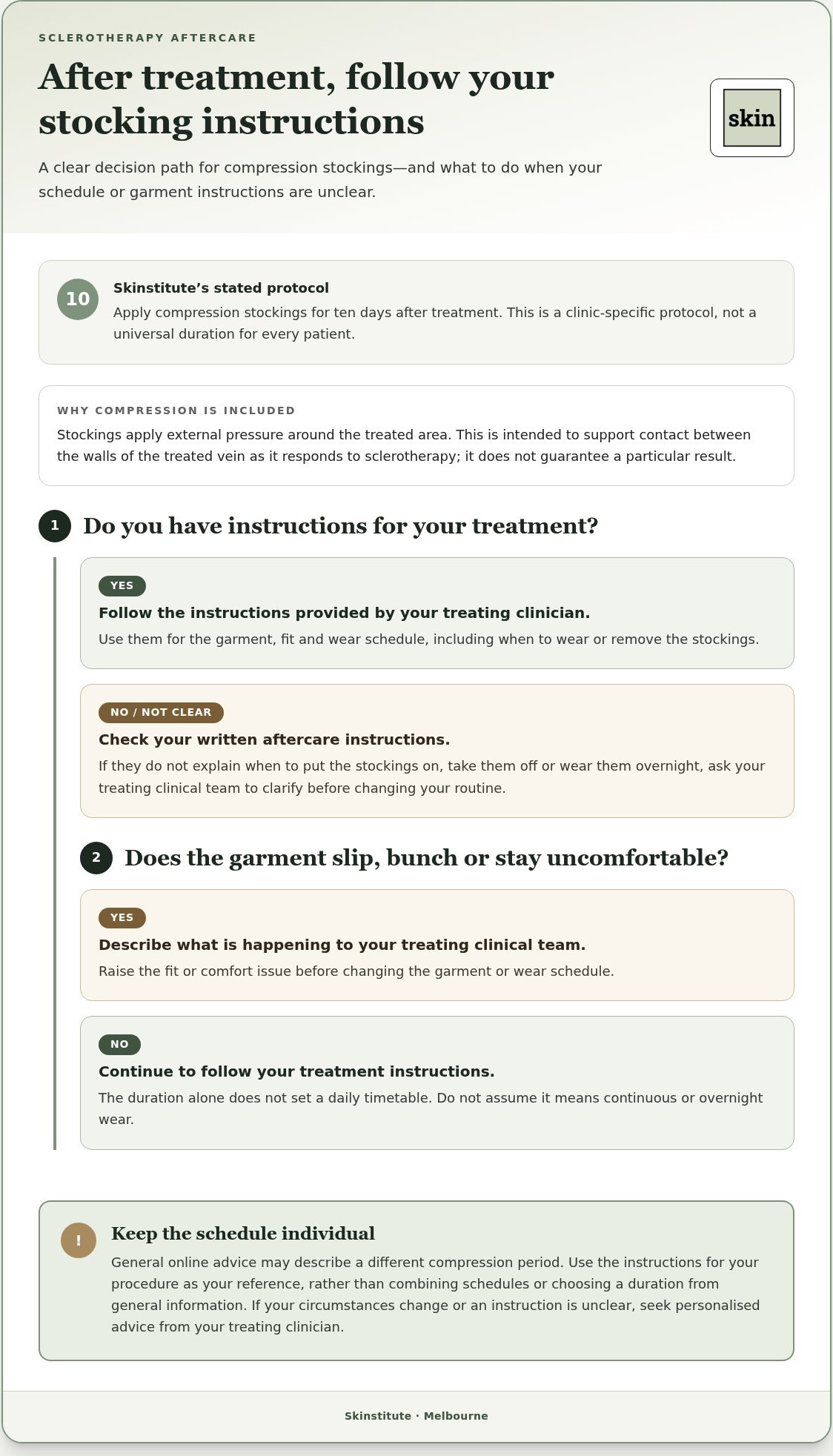
Skinstitute’s stated instruction is to apply compression stockings for ten days after sclerotherapy. This is the clinic’s protocol, not a universal duration for every patient or treatment. Follow the aftercare instructions provided for your procedure, including any individual directions from your treating clinician.
What does Skinstitute’s ten-day instruction mean?
The ten-day period sets the duration in Skinstitute’s treatment information. It does not, by itself, explain whether stockings should be worn continuously or overnight, or when they may be removed. Don’t infer a daily timetable from the duration alone. Your written instructions should explain how to manage the stockings during the day and what to do if a detail is unclear.
For example, knowing the protocol lasts ten days does not answer whether to remove a stocking for a particular activity or what to do if it feels uncomfortable. These practical details should come from the instructions for your treatment. If they’re not clear, ask your treating clinical team before changing the schedule.
Why can online wear-time advice differ?
Published sources and clinic instructions may describe different compression periods because general guidance is not necessarily a schedule for your procedure. The Mayo Clinic recommendations for sclerotherapy aftercare provide general information about treatment and aftercare, while Skinstitute’s ten-day instruction relates to its protocol. Neither should be treated as a universal timetable for every patient.
Skinstitute’s ten-day stocking instruction is a clinic-specific protocol, not a universal duration for sclerotherapy aftercare. Conflicting advice online does not mean you should combine schedules or choose the shortest or longest period. Use the instructions given for your treatment as your reference point, and ask your treating clinician to clarify any apparent difference between those instructions and information you’ve read elsewhere.
Keep your written aftercare instructions somewhere accessible and refer to them if you’re unsure what to do. If they don’t address your question, or your circumstances change during the stated period, seek personalised clinical advice before altering how you wear the stockings. This keeps your sclerotherapy aftercare compression stockings routine aligned with your treatment plan.
Patients in Melbourne can explore Skinstitute’s sclerotherapy care as part of a treatment plan shaped through face-to-face consultation. Your treating clinician’s instructions remain the reference for your individual stocking schedule.
Choosing and Wearing Compression Stockings After Sclerotherapy
Stockings need to be wearable in the way your clinician has instructed. A garment that slips, bunches or remains uncomfortable may make it harder to follow the agreed instructions. Note what is happening and raise it with your treating clinical team before changing the garment or wear schedule.
Follow your treatment instructions for the garment, including its fit and how to wear it. General advice about stocking fit cannot replace guidance based on your procedure, particularly if the garment doesn’t seem to sit as expected.
How should patients think about fit and comfort?
Notice how the stockings feel and whether they stay in place during ordinary movement. For example, note if a stocking repeatedly shifts, forms folds or causes discomfort that doesn’t settle. These details help you explain the issue when seeking advice. Don’t assume that a different garment or a change in how you wear it will be suitable for your treatment.
When discussing a concern, be specific: explain where the stocking moves or feels uncomfortable, when you notice the issue and whether it affects your ability to follow the instructions. Your treating clinician can advise in light of your procedure and aftercare plan. If the garment seems unsuitable, seek guidance rather than guessing at a solution.
What should you clarify about daily wear?
If your instructions don’t answer a practical question, clarify it before changing your routine. Questions to raise include:
- When should I put the stockings on, and when may I remove them?
- Should I wear them overnight, or is there a different instruction for sleeping?
- What should I do about the stockings during showering, exercise or other usual activities?
- How should I care for the garment during the period I’ve been instructed to wear it?
- What should I do if the stocking slips, bunches or remains uncomfortable?
These are questions to discuss with your clinical team, not a general wear schedule. Don’t infer permission to remove the stockings or change how you use them from advice intended for other patients. If the written guidance doesn’t match what you’re experiencing, ask your treating clinician to clarify the next step.
For sclerotherapy aftercare compression stockings, the practical approach is to follow the instructions provided for your treatment and raise concerns about fit or daily wear with the team responsible for your care. Avoid substituting another garment or altering the routine without clinical advice. Clear, treatment-specific guidance can help you manage the aftercare period without relying on assumptions about stocking type, fit or wear.
Managing the Ten-Day Compression Period Safely
Skinstitute’s stated protocol is to apply compression stockings for ten days after sclerotherapy. This sets the clinic’s specified period, but it does not provide every practical detail about wearing or caring for the garment. Use the written advice for your treatment to guide those details. If an instruction is unclear, ask your treating clinical team rather than changing the routine yourself.
A practical checklist for following clinic instructions
Keep your aftercare information accessible throughout the stated period. This simple sequence can help you follow it without relying on memory:
- Read the instructions. Check the details for your procedure, including any guidance about putting on, removing or caring for the stockings.
- Follow the stated period. Use the ten-day instruction as Skinstitute’s protocol, while following any individual directions from your treating clinician.
- Record questions as they arise. Note uncertainties about wear times, removal, overnight use or garment care, then raise them with the clinical team.
This checklist is a practical aid, not a substitute for your individual aftercare plan. If the written information gives the duration but doesn’t explain when to remove the stockings, don’t assume a schedule based on advice intended for someone else. Follow the directions you do have and ask your treating clinician to clarify the missing detail.
When should a patient seek clinical guidance?
Contact your treating clinic if you’re concerned about how the stockings fit or feel, or if you notice symptoms that concern you after treatment. This article can’t determine the cause of a symptom or tell you whether it is harmless. The clinical team familiar with your procedure can advise whether assessment or another next step is appropriate.
When you seek advice, describe what you’ve noticed, when it began and whether it has changed. If the issue relates to the garment, explain where it slips, bunches or feels uncomfortable and how that affects your ability to follow the instructions. Don’t substitute another garment, alter the wear schedule or stop following the plan based only on general online information.
The ten-day stocking period is distinct from other aftercare advice. Don’t assume it also defines how long to follow activity guidance or other instructions. Use the information provided by your clinician for each part of your recovery. If instructions appear to conflict, ask the treating team to clarify them rather than combining schedules or choosing between them yourself.
For guidance related to your procedure, discuss your sclerotherapy aftercare with Skinstitute. Personalised clinical advice can address questions about your stocking instructions and concerns that arise during the stated period.
Sclerotherapy Aftercare in Melbourne: Skinstitute’s Clinical Approach
For patients in Melbourne, aftercare is part of the clinical plan. Skinstitute provides sclerotherapy and states that compression stockings are applied for ten days after treatment. This is the clinic’s stated protocol; your treating clinician’s instructions guide how it applies to your individual circumstances.
How personalised aftercare fits into treatment planning
A face-to-face consultation gives the clinical team an opportunity to discuss your concerns, assess your circumstances and plan treatment with you. It is also a time to raise practical questions about compression stockings, such as how to interpret the wear instructions or what details to clarify in your aftercare plan.
An article can explain the clinic’s general protocol, but it can’t assess an individual patient or replace instructions from the clinician. After treatment, refer to the written guidance you receive. If you’re uncertain about fit, removal or daily wear, ask the treating team rather than adapting the schedule based on advice intended for someone else.
Skinstitute brings over 26 years of clinical experience in Melbourne to its aesthetic practice. Its consultation-led approach means the treatment plan is discussed face to face, with aftercare questions considered in the context of the care provided. The ten-day stocking period is one stated element of aftercare, not a promise of a particular outcome.
Where can Melbourne patients take the next step?
If you’re considering sclerotherapy, a consultation is an opportunity to discuss whether treatment is appropriate for you and what the proposed plan involves. You can also raise questions about recovery and the compression instructions you may need to follow. This helps distinguish general educational information from guidance specific to your planned treatment.
Skinstitute’s medical-grade aesthetic treatments guide offers further context about the clinic’s approach. For advice about your own sclerotherapy aftercare compression stockings, follow the instructions provided by your treating clinician, especially if you have a concern or find an instruction unclear.
To explore sclerotherapy in Melbourne and discuss a personalised treatment plan, book a face-to-face consultation with Skinstitute.
Take Your Aftercare Questions Into Your Next Step
Aftercare is easier to manage when you know which questions need a clinician’s answer. Before treatment, note anything you’d like clarified about stocking comfort, wear instructions or what to do if the garment doesn’t seem to fit as expected. This keeps decisions about sclerotherapy aftercare compression stockings grounded in advice relevant to your care rather than assumptions based on general information.
Use your consultation to discuss what treatment involves and how you’ll receive guidance during recovery. Understanding the plan in advance can help you feel prepared to follow the instructions and raise concerns if they arise. Personalised clinical guidance remains the right reference for questions about your aftercare.
If you’re considering treatment in Melbourne, explore Skinstitute’s sclerotherapy care. A face-to-face conversation about your concerns and the proposed plan is the next step towards discussing treatment.
Frequently Asked Questions
How long do you wear compression stockings after sclerotherapy?
Skinstitute’s stated instruction is to apply compression stockings for ten days after sclerotherapy. This is the clinic’s protocol, not a universal schedule for every patient. The duration alone doesn’t say whether the stockings should be worn overnight or when they may be removed. Follow the instructions for your treatment and clarify any missing detail with your treating clinician.
Do you need to wear compression stockings overnight after sclerotherapy?
Whether to wear stockings overnight depends on the instructions for your treatment. The ten-day duration doesn’t establish a day-and-night schedule, so don’t assume you should sleep in them or remove them before bed. If your written advice doesn’t address overnight wear, ask your treating clinic what applies to you before changing your routine.
Can you take compression stockings off to shower after sclerotherapy?
Follow your clinic’s instructions about removing stockings, including for showering. If this detail isn’t covered, don’t assume it’s appropriate to take them off or decide how long they can remain off. Ask your treating clinician for guidance that fits your aftercare plan. You can also ask how to manage the garment if showering falls during a time you’ve been told to wear it.
What should you do if compression stockings feel too tight after sclerotherapy?
If the stockings feel uncomfortably tight, contact your treating clinic for advice rather than folding, cutting or substituting the garment. Describe where the pressure feels uncomfortable and whether it changes with movement. If the stockings are difficult to keep in place or affect your ability to follow the instructions, explain that too. Your clinician can advise on the next step for your situation.
Can you use your own compression stockings after sclerotherapy?
Don’t assume that stockings you already own are suitable for post-treatment use. Their fit or compression may not match the instructions for your procedure. Before using your own pair instead of the garment specified in your aftercare plan, ask your treating clinician whether it is appropriate. Have the garment available so you can describe what you have and receive relevant guidance.
Do compression stockings guarantee better sclerotherapy results?
No. Wearing stockings as directed doesn’t guarantee a particular result. They are one part of aftercare, and individual responses to treatment can differ. Follow your instructions and attend any follow-up recommended by your treating clinician. If you’re uncertain about expected changes or concerned about your progress, discuss this with the clinical team rather than treating the stockings as a measure of treatment success.
When should you contact your clinic about symptoms after sclerotherapy?
Contact your treating clinic if you notice symptoms that concern you, persist, worsen or differ from what you were told to expect. Describe when they began, where they occur and whether they are changing. This can help the clinical team advise you about the next step. If symptoms feel severe or urgent, seek prompt medical assessment rather than waiting for routine clinic clarification.