Safety standards in Australian cosmetic clinics: key checks
October 24, 2026
How to improve skin texture, tone and understand their causes
October 26, 2026
The pain relief you choose can affect bruising after filler injections: paracetamol may help with discomfort, while aspirin and ibuprofen can increase bruising. Managing bruising after filler injections generally starts with a wrapped cold pack and avoiding pressure on the treated area; don’t stop prescribed aspirin or other blood-thinning medication without medical advice.
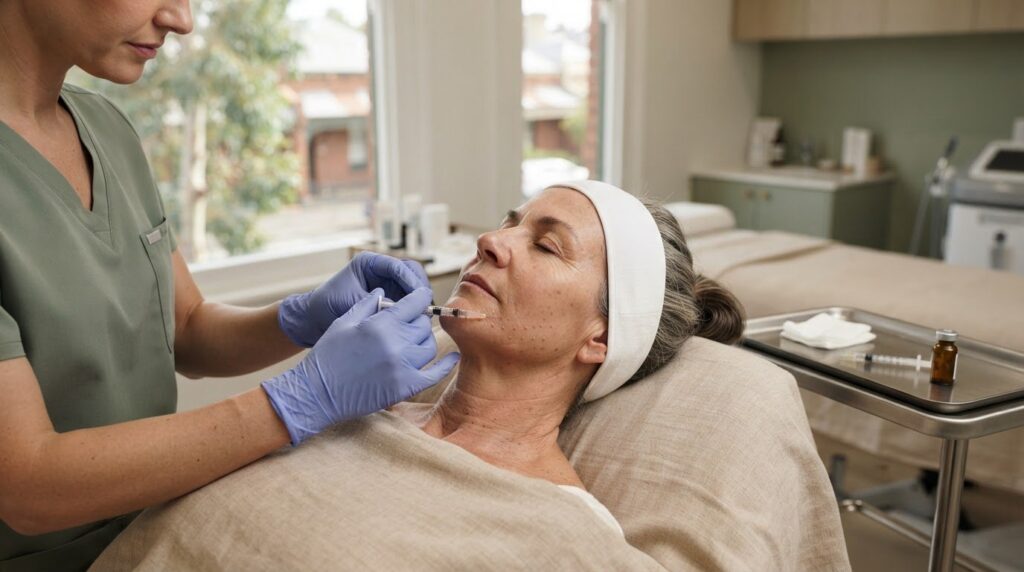
Bruising is a recognised response to filler injections because a needle can disrupt small blood vessels beneath the skin. Discolouration after treatment can be frustrating, but gentle care is usually more appropriate than trying several remedies at once.
This article explains which medicines and supplements may contribute to bruising, how cold packs and heat fit into aftercare, and what is known about topical options such as arnica, vitamin K and bromelain. It also explains why bruises form and when an unexpected change needs prompt clinical assessment.
Key Takeaways
- Bruising occurs when an injection disrupts small blood vessels; the colour change often fades gradually as the body clears the leaked blood.
- Some pain relievers and supplements can increase bruising, but prescribed aspirin or anticoagulants should not be stopped without medical advice.
- A cloth-wrapped cold pack can be used gently after treatment; the timing of cold and heat matters.
- Arnica, vitamin K and bromelain are often discussed for bruising, but topical products and supplements are not interchangeable.
- Note any changes in the treated area and seek clinical assessment if symptoms are concerning or worsening.
1. Why Do Lips Bruise After Fillers?
A filler needle can puncture small vessels around the lips, allowing blood to leak into nearby soft tissue. This produces bruising, known medically as ecchymosis, and its extent varies with injection site, technique, and individual tendency to bruise. Studies report bruising in 19 to 24 per cent of cases in one study, and as many as 68 per cent in another. Bruising commonly fades within 10 to 14 days, although some people take longer.
Arnica is sometimes suggested as a preparation for filler treatment, but it is not a guaranteed way to prevent bruising. Some advice recommends oral Arnica for 4-5 days before and after treatment; other advice suggests beginning a couple of days beforehand. These differences reflect varied recommendations, not a standard regimen. Arnica may be unsuitable for people with high blood pressure or heart problems, so discuss it with a health professional before use.
Alcohol can increase bruising risk, so advice commonly recommends avoiding it for 24 hours before and after treatment. Before your appointment, disclose medicines and supplements, including garlic supplements, and mention any history of easy bruising. Aspirin, non-steroidal anti-inflammatory medicines and some supplements may affect bleeding or bruising. Don’t stop prescribed aspirin or anticoagulants on your own; their medical purpose must be weighed against bruising concerns.
Which activities and medicines should you avoid after filler injections? Avoid strenuous exercise for 24 hours, and vigorous exercise for 48 hours, as exertion can aggravate developing bruising. Avoid alcohol for 24 hours after treatment, and hot yoga or inverted positions for 48 hours. Don’t add aspirin or ibuprofen for pain without clinical advice, particularly if you already take medicines affecting bleeding.
How can you tell normal filler bruising from an infection or allergic reaction? A local bruise causes discolouration around an injection site. Infection or an allergic reaction may involve symptoms beyond the bruise, such as increasing redness, warmth, marked tenderness, rash or spreading swelling. Watch for changes, not just colour, and seek prompt clinical assessment if symptoms worsen or feel unusual.
When should you seek medical care for bruising or swelling after dermal fillers? Contact a health professional promptly if pain or swelling is severe, worsening, or accompanied by signs of infection or an allergic reaction. Sudden vision changes, difficulty breathing or difficulty swallowing require urgent medical attention. A clinician can assess whether symptoms are consistent with expected bruising or need further care.
Some guidance advises avoiding listed supplements for 7 days before cosmetic injections. Arnica has been used for bruising and swelling for hundreds of years.
2. Medicines and supplements that may increase bruising
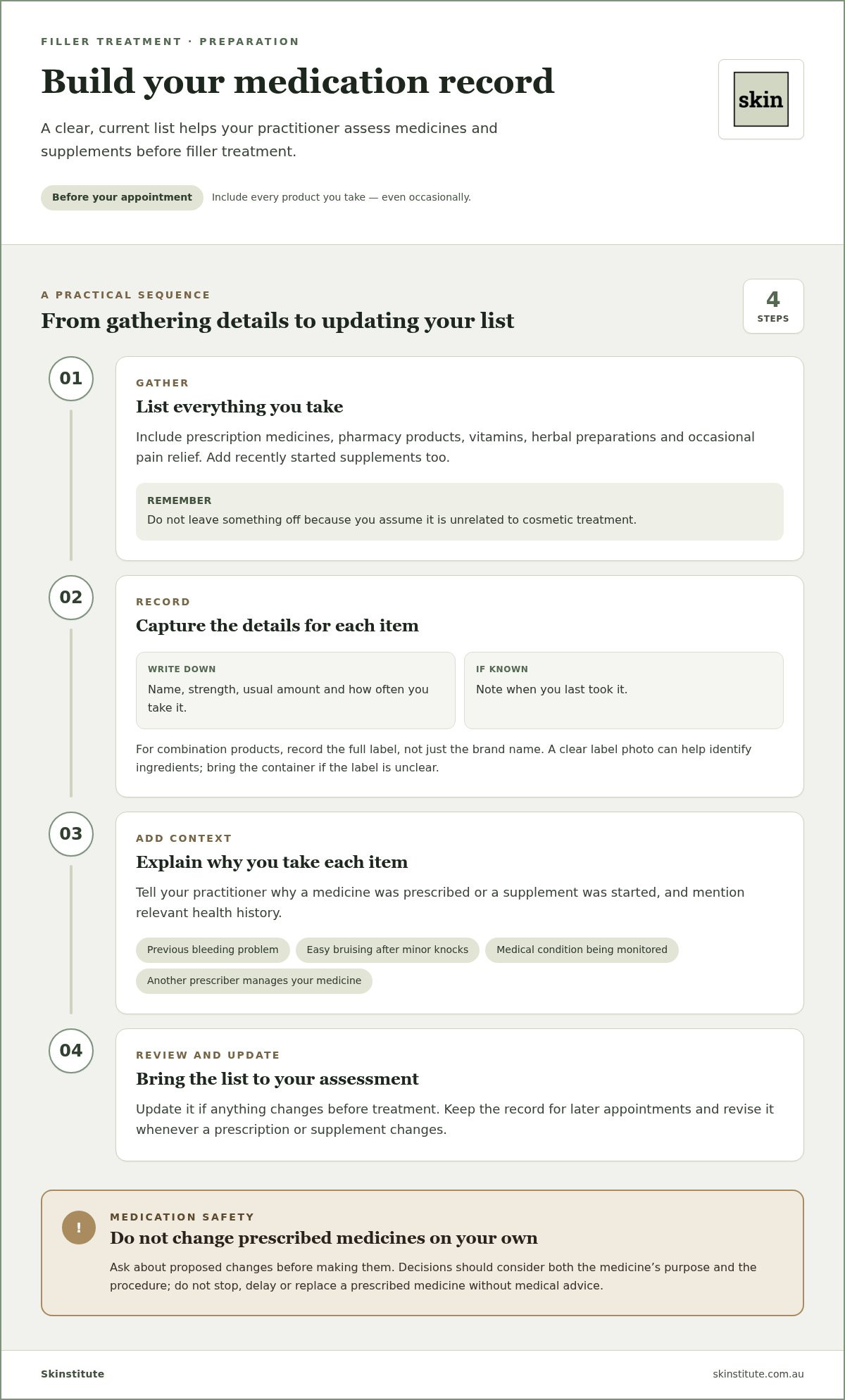
Before your filler appointment, prepare a written record of everything you take. Include prescription medicines, pharmacy products, vitamins, herbal preparations and occasional pain relief. For each item, note its name, strength, usual amount and how often you take it. Add when you last took it, if known. A clear photo of each label can help identify ingredients when the product name alone is not enough.
Include products you take occasionally, such as a pain reliever for a headache, and any recently started supplements. Combination products may contain several active ingredients, so record the full label, not just the brand name. Bring the list to your assessment and update it if anything changes before treatment.
Explain why each medicine was prescribed or started, and mention relevant medical history. For example, tell the practitioner about a previous bleeding problem, bruising after minor knocks, or a medical condition being monitored. These details help the practitioner assess potential risks and plan appropriate care. Don’t leave out a medicine because you assume it is unrelated to cosmetic treatment.
Ask about proposed changes to your medication schedule before making them. Prescribed treatment may be managing a condition that needs ongoing care, so decisions should take into account both the medicine’s purpose and the procedure. Don’t stop, delay or replace a prescribed medicine on your own. If another prescriber manages your medication, mention this during the assessment so your clinical history is clear.
Disclose supplements just as you would medicines. Write down the product name and ingredients, particularly for herbal blends or products marketed for circulation, inflammation or general wellbeing. If the label is unclear, bring the container instead of guessing what it contains. The practitioner can consider the specific preparation alongside your health history, rather than relying on a broad product category.
What are the warning signs of vascular occlusion after filler injections? Severe or increasing pain, pale or mottled skin, and sudden vision changes after treatment need urgent medical attention. These symptoms are different from simply documenting a medicine history; don’t wait for a routine review if they occur.
Keep your medication record for later appointments and update it whenever a prescription or supplement changes. Accurate details help make the assessment relevant to your current health, rather than relying on memory or an outdated list. If you’re unsure whether a product belongs on the list, include its name and packaging so it can be considered during the discussion.
3. Cold packs and heat for bruise management
What should you do immediately to reduce bruising after filler injections? Follow the treating practitioner’s aftercare plan and avoid rubbing, massaging or repeatedly pressing the injection sites. Cooling may help with early swelling, but it can’t prevent every bruise or treat a circulation complication. Watch how the area changes and seek clinical assessment if pain or discolouration worsens.
Do ice packs help bruising after dermal fillers, and how should they be applied? Cooling may reduce local swelling and help limit bruising during the early aftercare period. Use a brief application of 5-10 minutes when swelling occurs, then allow the skin to return to its usual temperature. Repeated short applications are preferable to prolonged cooling; stop if the skin becomes painful, numb or unusually pale.
After dermal filler treatment, one recommendation is to reapply a cold compress for 10 minutes. Intermittent cooling during the first 48 hours may ease swelling and bruising, particularly around the lips. Keep contact gentle rather than pressing the pack into the tissue. This avoids adding unnecessary pressure to recently treated sites.
Timing also guides the use of heat. Advice describes cold packs during the first 48 hours after bruising, followed by gentle warmth to aid resolution. Avoid applying heat immediately after injections, when early swelling may still be developing. Intense heat, including a sauna, may make a treated area feel more swollen or uncomfortable, so follow your practitioner’s specific instructions.
Cooling before a cosmetic injection has also been studied. Evidence cited in the research reports contact cooling before injection reduced ecchymosis incidence by 60 to 88 per cent. This finding relates to cooling before the procedure; it does not establish what will happen for an individual afterwards. Injection technique and personal bruising tendency also affect risk.
How can an Australian-registered injector help manage bruising after dermal fillers? An injector can examine the treated area, review your symptoms and distinguish routine bruising from a complication. They can also provide aftercare instructions for the injection site. Severe or increasing pain, pale or mottled skin, or vision changes need urgent medical attention, not home cooling.
Don’t treat a cold pack as a remedy for every change after treatment. Ibuprofen may increase bruising in some people, so ask for advice before taking it after a cosmetic procedure. If swelling increases or the skin looks unexpectedly different, contact the treating practitioner promptly rather than cooling for longer or switching to heat.
4. Topical arnica, vitamin K and bromelain
Arnica gel or cream is applied directly to the skin around a bruise. One recommendation is regular use for 3-4 days after injections, following the product label. Use a small amount on intact skin and avoid the injection punctures, lips and any irritated area. Don’t rub firmly to work the product in; gentle application avoids unnecessary friction on recently treated tissue. Stop using it if the skin becomes itchy, inflamed or develops a rash.
Evidence about arnica needs careful interpretation. A study cited in the research found statistically less bruising with preventative Arnica montana on Day 1 and Day 7 compared with a control group. That finding concerns a study protocol and does not establish that every gel, cream or brand produces the same result. For managing bruising after filler injections, topical arnica is best regarded as an optional adjunct, not a substitute for aftercare or assessment.
Vitamin K creams are another topical remedy marketed for bruise discolouration. Applying a cream is different from taking a vitamin K supplement, and one form should not replace the other. Follow the product instructions and avoid applying cream to broken skin or fresh injection points. Using one product at a time also makes it easier to identify an ingredient that may cause irritation.
Bromelain is an enzyme present in pineapple. Some advice suggests eating fresh pineapple after treatment, while another recommendation describes bromelain supplements at 200 to 400 mg three times per day. Eating pineapple and taking a concentrated supplement are not equivalent approaches. The supplement amount is not a universal instruction, so discuss it with a health professional before use, especially if your medical history or medicines make supplements unsuitable.
These remedies work differently: arnica and vitamin K are applied to the skin, while bromelain may be consumed as food or a supplement. Don’t apply any of them over a concerning skin change to delay assessment. Avoid combining several creams or adding multiple supplements at once, as this can complicate irritation and make it harder to identify the cause of a reaction.
A practical approach to managing bruising after filler injections is to choose a topical product carefully and follow its label, rather than layering remedies or applying more than directed. For example, apply a thin layer of one suitable product to the bruise, then leave the area undisturbed. These measures may support comfort, but they won’t make bruising disappear immediately.
If the treated area becomes increasingly painful, red or swollen, stop using topical products and seek clinical assessment. Changes in symptoms matter more than whether a cream seems to alter the bruise’s colour. Follow the treating practitioner’s aftercare advice while your skin recovers.
5. Why bruising occurs after dermal filler injections
A bruise forms when small blood vessels are punctured and blood escapes into surrounding soft tissue. With a dermal filler injection, the needle passes through tissue to reach the planned treatment area, so a nearby vessel can be affected. Blood trapped beneath the skin creates visible colour changes as the body gradually breaks it down. The effect is local, but the visible mark can extend beyond the precise point where the vessel was injured.
The lips and surrounding facial areas contain many small vessels, so injection location can affect bruising. Everyone’s anatomy is different, and vessels don’t follow the same pattern in every person. A practitioner plans injection points around the intended result and facial structures, but avoiding every vessel isn’t always possible. A needle passing through soft tissue can still cause some bleeding.
Bruising and swelling are related reactions, but they describe different changes. Bruising reflects blood leaking into tissue; swelling is fluid accumulation and local inflammation after the procedure. Both may occur together, which can make the treated area look fuller or feel tender. For lip filler, swelling commonly peaks during the first 48 hours, while the colour of a bruise changes as it resolves.
The amount of filler can also influence bruising. Bruising is reported more often in patients receiving larger volumes of dermal filler, as treatment may involve more injection points or greater tissue manipulation. The number of entry points, treatment area and individual tendency to bruise all affect the final appearance. That’s why the same procedure may leave one person with a small mark and another with more visible discolouration.
Medicines and supplements that affect clotting may also contribute. Aspirin, ibuprofen and some supplements can increase bleeding beneath the skin, while a history of easy bruising is relevant during assessment. Disclose prescription medicines, over-the-counter products and supplements before treatment. Never stop prescribed aspirin or anticoagulants on your own: the reason you take them matters.
Not every grey or blue mark after filler represents a bruise. The Tyndall effect can cause greyish discolouration when hyaluronic acid filler sits too superficially beneath the skin, and it may improve over 2-3 weeks after the discolouration appears. A clinician can assess the location, colour and progression to distinguish this appearance from bruising or another complication.
The practical takeaway is that bruising can reflect several factors working together: vessel position, injection route, treatment volume, medication and individual tissue response. A bruise’s changing colour alone doesn’t show how the filler sits or whether another issue is present. Track changes over time, and seek clinical assessment for worsening pain, unusual skin colour or unexpected symptoms—a standard of care echoed by doctor-led aesthetic centres like yoyimeclinic.com.
Skinstitute: Prescription injectables
Skinstitute offers prescription injectables in Melbourne, with a face-to-face consultation to assess whether treatment suits your anatomy, medical history and goals. The consultation also allows you to discuss expected effects, risks and aftercare, including possible bruising.
If bruising or swelling is worsening after an injection, seek prompt clinical assessment rather than relying on cosmetic treatment or home remedies. For treatment planning, Skinstitute can discuss prescription injectables and whether they are appropriate for your concerns. Other options, including PDO Thread Lifting, Fractional CO2 and High Intensity Focused Ultrasound (HIFU), address different aesthetic concerns and are not substitutes for assessing an injection complication.
Contact Skinstitute to discuss a face-to-face assessment and your treatment questions.
Make your next step an informed one
After treatment, keep a brief record of how your skin responds. Note when discolouration first appeared, how it changes, and whether discomfort or swelling changes too. This information can help guide a future discussion about your treatment history and personal response.
Managing bruising after filler injections carefully means distinguishing routine aftercare from symptoms that need prompt clinical attention. If you’re unsure about a change in the treated area, seek an assessment rather than relying on another topical product or changing prescribed medicine yourself.
For advice related to filler aftercare or to discuss whether prescription injectables suit your goals, contact Skinstitute about your treatment questions. A considered conversation can help you decide on a suitable next step and approach future treatment with greater clarity.
Frequently Asked Questions
What Can I Take?
Paracetamol may help with discomfort after filler treatment. Follow the packet directions and consider your health conditions and other medicines. Aspirin and ibuprofen can increase bruising, so don’t take them for post-treatment pain without advice. If you take prescribed aspirin or anticoagulants, don’t stop or change them yourself. Discuss supplements such as arnica or bromelain with a health professional before using them, particularly if you take regular medication.
Why Do Lips Bruise After Fillers?
Lips can bruise when an injection needle disturbs small vessels beneath the skin, allowing blood to collect in nearby tissue. How visible the mark is depends partly on the vessel’s location and how your tissue responds. Bruising isn’t simply caused by the filler’s colour. If the area develops unusual pain, spreading discolouration or worsening swelling, arrange prompt clinical assessment rather than treating it as ordinary bruising.
How long does bruising last after dermal filler injections?
Bruising after dermal filler injections commonly settles within 10 to 14 days, though it can last longer. If you bruise easily, the mark may take up to two weeks to fade. Track its size and colour in consistent lighting, such as a daily photo near a window. A bruise that keeps worsening, or occurs with increasing pain, needs clinical assessment rather than waiting for the usual recovery period.
Can arnica, bromelain or vitamin K reduce filler bruising, and is the evidence reliable?
Evidence varies by remedy. One study reported statistically less bruising with preventative Arnica montana on Day 1 and Day 7, but that finding doesn’t establish the same effect for every person or product. Bromelain is discussed as a supplement, while vitamin K is used topically; neither should be treated as a proven substitute for aftercare. Ask a health professional before taking supplements, especially alongside medicines that affect bleeding.
Can you cover filler bruises with makeup, and when is it safe?
Wait at least 24 hours after filler injections before applying makeup, unless your treating practitioner gives different instructions. Once that interval has passed, use a clean applicator and apply concealer lightly, without rubbing or pressing the injection sites. Avoid makeup over broken or irritated skin. If swelling, redness or tenderness is increasing, leave the area uncovered and seek clinical advice before applying cosmetic products.