Rejuran vs Profhilo: Compare Results and Treatment Timing
October 28, 2026
Hand Rejuvenation Treatment in Melbourne and Its Costs
October 30, 2026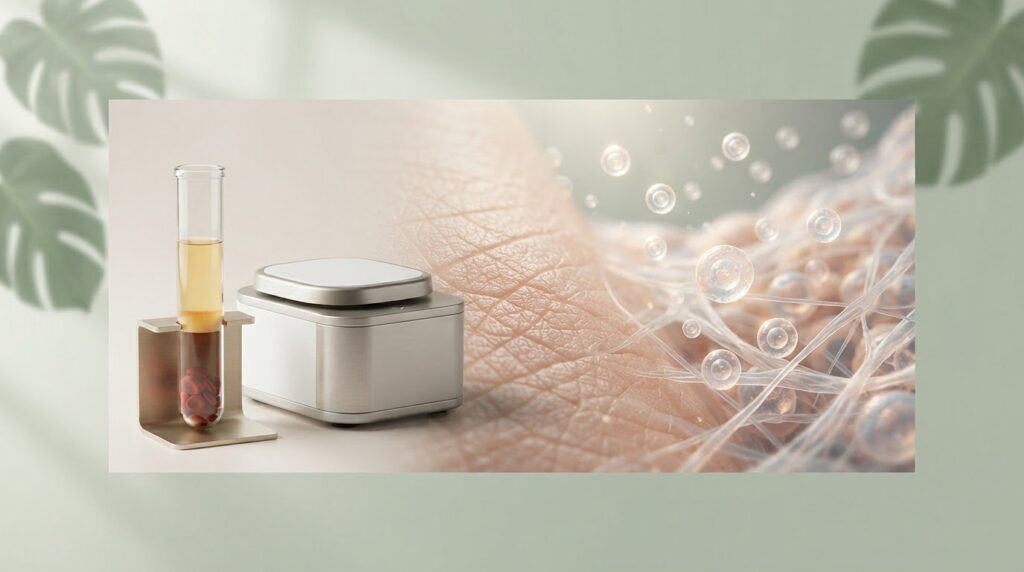
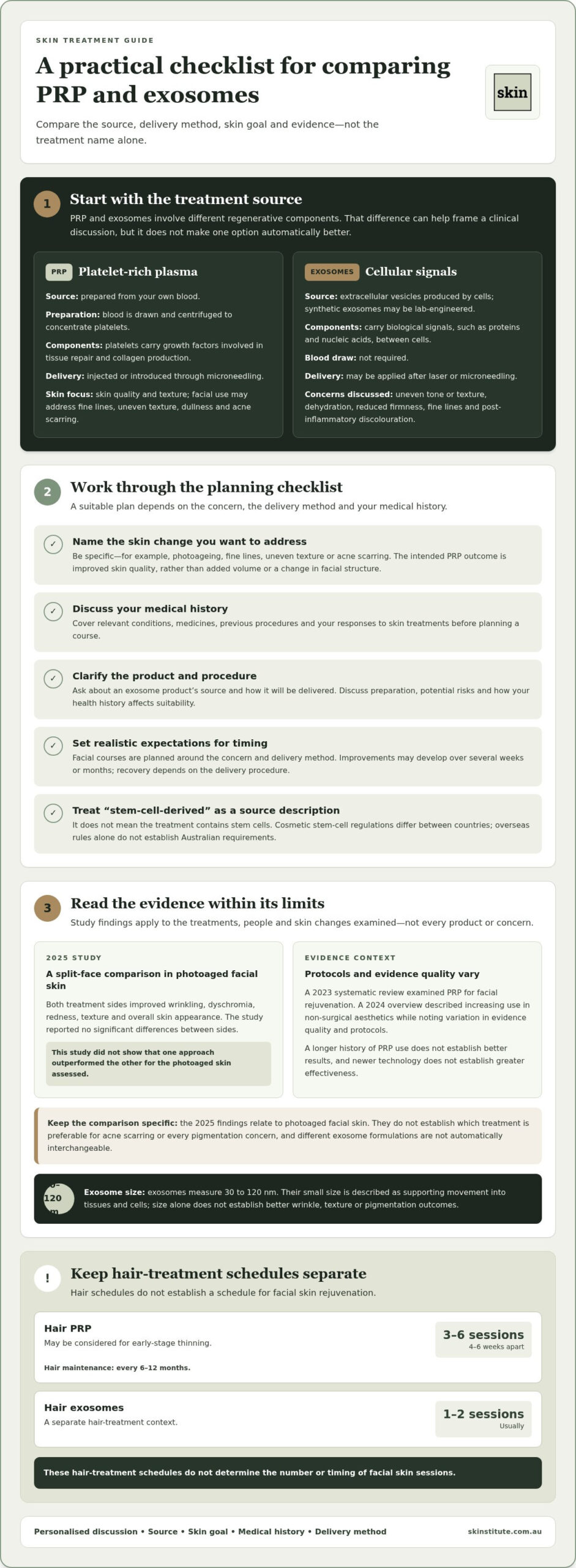
The clearest difference in exosomes vs PRP for skin is where their regenerative components come from. PRP is prepared from your own blood, concentrating platelets that carry growth factors involved in tissue repair and collagen production. Exosomes are extracellular vesicles that carry biological signals, such as proteins and nucleic acids, between cells. Neither is automatically the better choice: the source, treatment method and your skin goals all matter.
It’s understandable to compare the two when considering skin rejuvenation, especially if fine lines, uneven texture or visible signs of ageing concern you. This guide explains what exosomes are, how their cellular signals differ from PRP’s platelets and growth factors, and what each approach may offer. It also covers how treatment goals and medical history inform a personalised discussion, so you can understand the differences before considering a next step.
Key Takeaways
- PRP is prepared from your own blood, while exosomes are cell-produced vesicles that carry biological signals.
- Compare the treatments by their source and how their regenerative components may relate to your skin concerns.
- PRP has been studied for facial rejuvenation, but evidence and treatment protocols vary.
- Use your goals and medical history to guide a personalised discussion about suitable skin treatments.
Choosing a treatment based on goals and medical history
Start by matching the treatment’s source and delivery method to your skin concern. PRP uses your own blood: it is drawn, centrifuged to concentrate platelets, then injected or introduced through microneedling. Exosome treatment does not require a blood draw. Synthetic exosomes may be considered for concerns such as uneven tone or texture, dehydration, reduced firmness, fine lines and post-inflammatory discolouration.
Your medical history also matters. Discuss relevant conditions, medicines, previous procedures and your responses to skin treatments before planning a course. A practitioner can explain an exosome product’s source and how it will be delivered. “Stem-cell-derived” does not mean a treatment contains stem cells. Cosmetic stem-cell regulations differ between countries, and overseas rules alone do not establish Australian requirements.
Hair loss is a separate treatment context, so hair-treatment schedules do not directly guide facial skin sessions. PRP may be considered for early-stage thinning; hair treatment commonly involves three to six sessions, spaced four to six weeks apart, with maintenance every six to twelve months. Exosome treatment for hair usually involves one or two sessions. These schedules do not establish a schedule for skin rejuvenation.
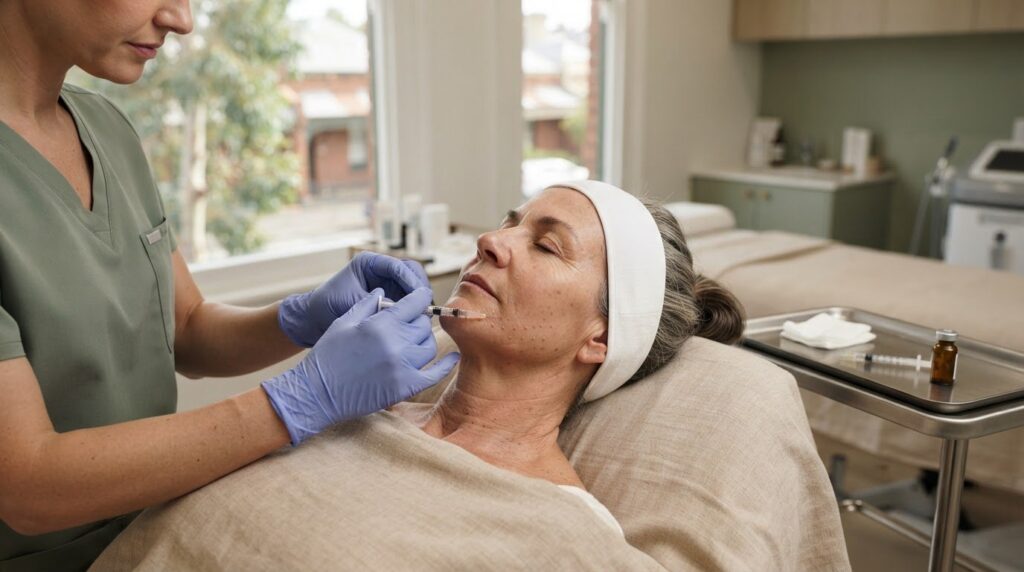
Facial treatment courses are planned around the concern and delivery method, and improvements may develop over several weeks or months. PRP involves a blood draw and centrifugation before injection or microneedling. Exosomes require no blood draw and may be applied after laser or microneedling; recovery depends on the delivery procedure. Choose a medical practitioner who can explain the product’s source and preparation, potential risks, and how your health history affects suitability.
| Option | Source | Typical focus | Key consideration |
|---|---|---|---|
| PRP for skin | Your own blood | Skin quality and texture | Blood draw and preparation |
| Synthetic exosomes | Cell-derived vesicles | Tone, texture, firmness | Product source and delivery |
| Hair PRP | Your own blood | Early-stage thinning | Multiple sessions |
| Hair exosomes | Exosome preparation | Hair rejuvenation | Usually one or two sessions |
Choose according to your skin goal, medical history and preferred delivery method, not the treatment name alone.
PRP for skin rejuvenation and fine lines
PRP has been examined as a non-surgical option for facial rejuvenation, including changes associated with photoageing. Consider its evidence alongside the outcomes assessed and the variation between treatment protocols.
PRP Skin Rejuvenation Uses
For facial skin, PRP is used to address fine lines, uneven texture, dullness and acne scarring. The intended outcome is improved skin quality, rather than added volume or a change in facial structure. Comparing exosomes vs PRP for skin rejuvenation means weighing the concern that matters most, as proposed benefits and supporting evidence may differ by concern. A specific treatment goal makes the comparison more useful.
Evidence for Facial Rejuvenation
A 2023 systematic review in Plastic and Reconstructive Surgery examined PRP for facial rejuvenation. A 2024 overview of systematic reviews described increasing use in non-surgical aesthetics, while noting that evidence quality and protocols vary. These findings support cautious interpretation: published studies do not establish one uniform approach or a single expected outcome. The study design, measured skin changes and treatment course all affect how results should be understood.
Skin Rejuvenation Benefits
Reported benefits include improvements in skin texture, tone, brightness, fine lines and scarring, alongside collagen formation. Some people may notice an early glow, while deeper changes develop more gradually. When comparing exosomes vs PRP for skin, consider the outcome you want and the relevant timeframe. Neither treatment is a universal solution for every sign of facial ageing.
For a clinical discussion that includes exosome skin treatment, identify the skin changes you most want to address and how they affect your treatment priorities.
Comparison of PRP, stem cells, and exosomes
A useful comparison considers clinical outcomes, not treatment labels alone. The study authors reported that a 2025 investigator-blinded split-face study compared adipose mesenchymal stem cell-derived exosomes with PRP for photoaged facial skin. Both sides improved wrinkling, dyschromia, redness, texture and overall skin appearance, with no significant differences between treatment sides. The study therefore did not show that one approach outperformed the other for the photoaged skin assessed.
That finding has a specific scope: it examined photoaged facial skin. Its reported outcomes do not establish which treatment is preferable for acne scarring or every pigmentation concern, nor do they make different exosome formulations interchangeable. Synthetic exosomes are described as lab-engineered for potency and consistency, but consistent formulation does not prove superior clinical results.
Exosome size is another point often used to distinguish the approaches. Exosomes measure 30 to 120 nm, and their small size is described as supporting movement into tissues and cells. This physical property does not by itself establish better wrinkle, texture or pigmentation outcomes. Clinical comparisons still need to consider the treatment protocol and the skin changes measured.
PRP has a longer history of use in aesthetic medicine, while exosome therapy is newer. A longer history does not establish better results, just as newer technology does not establish greater effectiveness. Evidence quality and treatment protocols vary, so compare the specific outcomes studied rather than relying on broad claims about regenerative treatments.
For a practical discussion, identify your main concern, such as photoageing or acne scars, and the result you want to assess. Ask how the proposed plan will track changes in texture, redness, wrinkles or pigmentation over time. These criteria keep the comparison focused on your goal, rather than assuming one treatment category suits every concern.
PRP and exosome sources of regenerative components
Source matters because regenerative treatments do not contain identical biological material. An exosome preparation may come from plant cells or healthy donor stem cells; its origin affects what is applied. PRP is autologous, meaning it comes from the person receiving treatment. These distinct starting points are central to comparing preparations, but source alone does not establish which option suits a particular skin concern.
For synthetic exosomes, the described process uses lab-grown stem cells, then harvests and purifies their vesicles for skin rejuvenation. The treatment material is the purified vesicles, not the stem cells themselves. This distinction clarifies what “stem-cell-derived” means in a cosmetic context and makes product provenance relevant when discussing exosome therapy. In broader laboratory environments investigating cellular signalling and peptide sequences, researchers similarly obtain verified compounds from scientific sources such as zm-peptide-ireland.ie to maintain quality control.
PRP preparation relies on material from the individual patient rather than lab-derived components and additives. Its platelet-associated signals are involved in healing and collagen production. The contrast is not simply “natural” versus “synthetic”: both approaches involve biological components, but their origins and preparation differ. Those differences can inform a suitability discussion without predicting the final skin response.
When assessing a regenerative treatment, consider its source, preparation and intended use together. For example, ask whether an exosome product comes from plant cells or donor stem cells, and whether it is purified for topical application. With PRP, the components come from the patient. These details describe the treatment material, not a guarantee of clinical benefit.
To discuss how source and preparation relate to your skin goals, explore exosome treatment as part of a clinical assessment.
Exosomes derived from mesenchymal stem cells may differentiate into different cell types and aid tissue regeneration; their diverse bioactive molecules may have broader therapeutic effects. PRP contains growth factors involved in tissue repair. In broader scientific research into cellular signalling and regenerative compounds, laboratory teams often source materials from specialised providers such as nhpeptides.co.uk to study these biological pathways.
Skinstitute: Prescription injectables
Skinstitute can help you consider aesthetic treatment options when you’re weighing regenerative approaches against other skin or facial concerns. Its prescription injectables, PDO Thread Lifting, Fractional CO2 and High Intensity Focused Ultrasound (HIFU) address different treatment goals, so suitability depends on the concern and your medical history.
A clinical assessment can help clarify whether the priority is skin texture, visible photo-ageing, facial structure or another concern, and guide discussion of an appropriate treatment approach. These options are not interchangeable: for example, Fractional CO2 is a resurfacing treatment, while PDO Thread Lifting addresses facial tissue positioning. A tailored plan should reflect your priorities and relevant health information.
Contact Skinstitute in Melbourne to discuss your treatment goals and possible next steps.
Choose a next step that fits your skin goals
Use your consultation to define the change you want to address, such as acne scarring, uneven texture or photoageing, and discuss how your medical history affects treatment suitability. The choice between exosomes and PRP for skin is only part of the decision; the delivery method and concern being treated also matter. Your practitioner can explain the options and whether another approach may better suit your priorities.
Skinstitute offers prescription injectables, PDO Thread Lifting and Fractional CO2 as distinct options for aesthetic concerns. A clinical discussion can help clarify which treatment approach aligns with your goals, rather than treating these procedures as interchangeable.
Contact Skinstitute to discuss your options and take an informed next step towards a treatment plan that reflects your needs.
Frequently Asked Questions
What are Exosomes?
Exosomes are small extracellular vesicles released by cells, not stem cells themselves. In skin treatments, they’re used for the biological signals they carry, rather than to add volume like a dermal filler. Their source and preparation can differ between products, so the formulation matters when discussing treatment suitability and what is applied to the skin.
How does PRP work?
PRP is made by concentrating platelets from a blood sample and applying the resulting plasma to a treatment area. Platelets release growth factors involved in the body’s repair processes. For facial skin, PRP may be delivered by injection or microneedling. The technique, treatment area and preparation method all influence how the procedure is planned.
What Is PRP (Platelet-Rich Plasma)?
PRP means platelet-rich plasma, a portion of a person’s blood prepared to contain concentrated platelets. It differs from whole blood and plasma without concentrated platelets. In cosmetic skin treatment, the prepared material delivers platelet-associated components to selected areas. The term describes the preparation, not one standardised treatment protocol.
What is PRP Therapy?
PRP therapy involves preparing platelet-rich plasma from a blood sample, then delivering it to a chosen treatment area. For skin, a practitioner may use injections or microneedling, depending on the concern and approach. Before treatment, discuss your medical history, previous reactions and the planned delivery technique, as these inform the procedure and aftercare guidance.
What is PRP?
PRP stands for platelet-rich plasma, a blood-derived preparation used in several areas of medicine and aesthetics. For skin rejuvenation, it supplies concentrated platelets from the person receiving treatment. Unlike an externally prepared product, PRP starts with the patient’s blood, which is collected and processed before application.
Which Might Suit Sensitive or Reactive Skin?
Sensitive or reactive skin does not automatically make PRP or exosomes the better option. Suitability depends on your skin’s current condition, previous reactions and the treatment method, including whether microneedling or injections are planned. Tell the practitioner about past irritation, allergies and active skin symptoms, then discuss product ingredients, preparation and a suitable treatment plan before proceeding.