Exosomes vs PRP for Skin: How Their Sources Differ
October 29, 2026
Skin needling or a chemical peel for acne scars: which to choose
October 31, 2026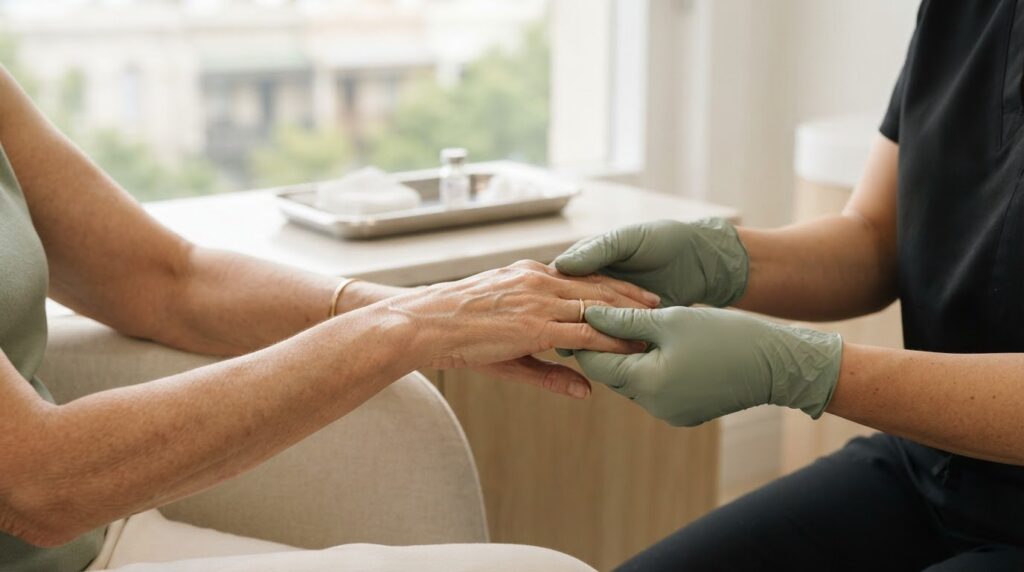
A hand rejuvenation treatment in Melbourne should start with identifying what has changed, rather than focusing on prominent veins alone. Treatment may address volume loss or changes in skin clarity, with the approach guided by the concern and your anatomy. Infection prevention is also an important consideration for any procedure involving the skin.
It’s understandable to want to know whether treatment may be uncomfortable and how infection risk is managed. These questions are part of making an informed decision, along with realistic expectations about temporary effects such as tenderness, redness, swelling or bruising after some dermal treatments.
This guide explains how hand rejuvenation approaches wrinkles, visible veins and sun-related changes, what can influence suitability and discomfort, and what infection prevention and aftercare involve. It also explains why treatment planning is individual, so you can understand the considerations before deciding whether to proceed.
Key Takeaways
- Suitability for hand-volume treatment depends on your anatomy, the degree of volume loss and your preferences.
- Biostimulatory compounds may support collagen production over time, rather than adding volume alone.
- Changes in skin elasticity and dermal thickness can make tendons and veins more visible, so the cause of the concern matters.
- Learn how treatment planning considers both hand volume and skin clarity, as well as discomfort and infection prevention.
Is dermal treatment painful?
Discomfort during hand dermal treatment varies with the area treated, the technique and personal sensitivity. A consultation should establish whether your concern is volume loss, skin texture or both. Hollowing and surface wrinkles are distinct treatment goals, and that difference helps shape the plan and discussion of expected sensations. Before proceeding, ask how discomfort will be managed and what you might feel during treatment.
When comparing Melbourne clinics, consider the practitioner’s qualifications, experience with hand procedures and clarity of explanation. Ask how their experience relates to hand anatomy and volume treatment. A useful consultation covers your concerns, options, potential complications and aftercare. The practitioner should also explain infection-prevention measures, including how the treatment area is prepared and equipment is handled.
Suitability depends on hand anatomy, the degree of volume loss and your preferences. During consultation, describe the result you hope to achieve and any previous treatment or relevant medical history. The practitioner can assess whether volume restoration suits your concern or whether skin quality is the main issue. For example, prominent veins call for an assessment of the features involved before treatment planning. Discuss risks and realistic expectations before deciding.
Ask how the clinic prepares the treatment area, handles equipment and explains aftercare. Follow the clinician’s instructions for caring for treated skin, and seek advice if you notice signs of infection. Temporary effects can include tenderness, redness, bruising and swelling, which may affect comfort after the procedure. Ask how these fit into expected recovery. A clear consultation should leave you understanding the proposed approach, its risks and the steps to take afterwards.
What is “hand rejuvenation”?
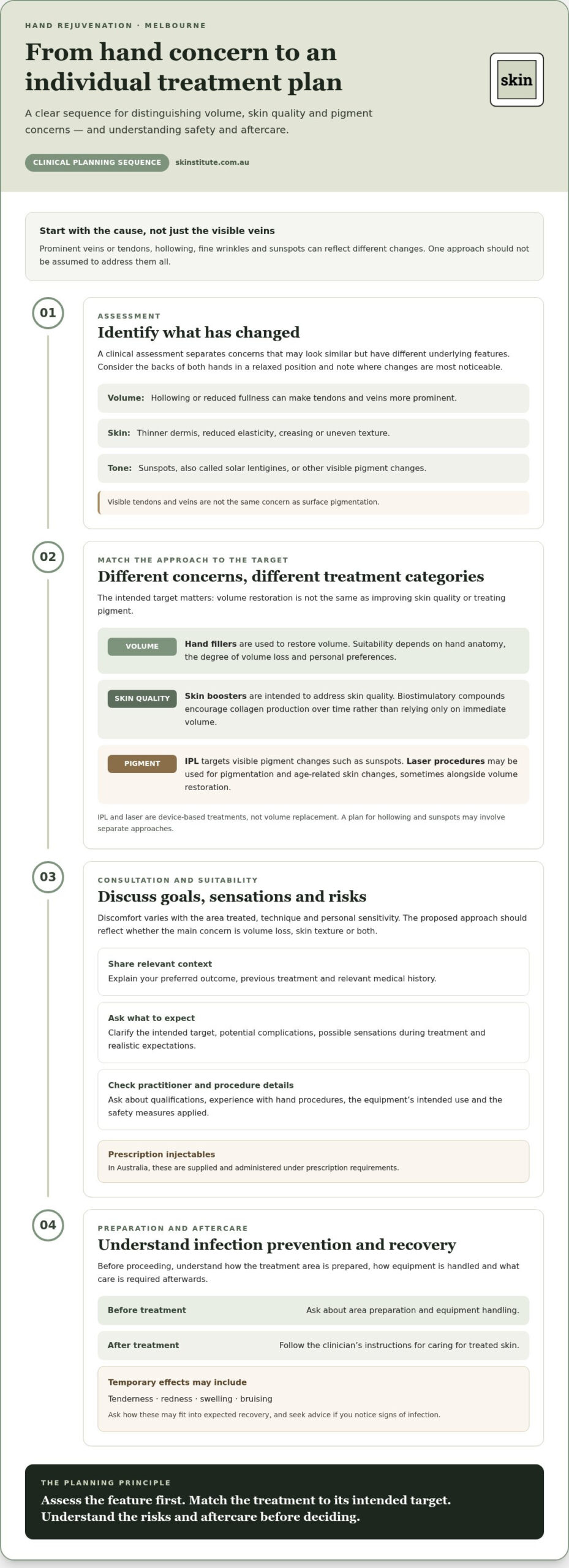
Hand rejuvenation refers to treatment approaches selected for different changes in the hands, rather than one single procedure. Collagen loss contributes to skin thinning, while reduced fat can change volume and appearance on the backs of the hands. Planning starts by distinguishing these concerns from visible pigmentation or surface texture changes. This helps match each concern to an appropriate treatment category and clarify what the method is intended to address.
Hand fillers are used to restore volume, while skin boosters are intended to address skin quality. Biostimulatory compounds work differently: they encourage the body’s collagen production over time rather than relying only on immediate volume. Collagen provides structural support within the skin, so gradual stimulation aims to improve skin quality. The appropriate approach depends on whether volume loss or skin changes are the main focus.
Laser and Intense Pulsed Light (IPL) are device-based treatments, not volume replacement. IPL targets visible pigment changes such as sunspots. Laser procedures may be used alongside volume restoration to address pigmentation and age-related skin changes. Neither should be assumed to correct hollowing just because veins appear more noticeable. Identifying the intended target, such as a solar lentigo or reduced volume, helps explain why different methods may be considered.
Prescription injectables in Australia are supplied and administered under prescription requirements. Laser and IPL are device-based procedures; ask the practitioner to explain the equipment, its intended use and the safety measures applied. During treatment planning, clarify whether the proposed method targets volume, skin quality or pigment. A plan addressing hollowing and sunspots, for example, may involve separate approaches for each concern rather than expecting one treatment to address both.
Wrinkly skin, prominent tendons and veins
Age-related changes can affect hand skin and underlying volume in different ways. Separating these concerns helps clarify which features a treatment plan should address.
Wrinkles and skin elasticity
Ageing can reduce skin elasticity and thin the dermis, the deeper layer of skin. As support changes, creases may become more noticeable, particularly across the backs of the hands. Reduced volume can also make tendons and veins stand out. Discuss whether fine wrinkling, thin skin or visible underlying structures concerns you most, as each reflects a different aspect of hand ageing.
Hand skin texture and tone
Texture and tone refer to the skin’s surface and colour, not the prominence of tendons. Sun exposure can contribute to sunspots, also called solar lentigines, while uneven texture can be assessed separately. Laser procedures may be used alongside volume restoration for pigmentation and age-related skin changes. The key consideration is whether discolouration, roughness or wrinkling is your main surface concern.
During assessment, compare both hands in a relaxed position and note where creases, veins or tendons are most visible. This helps show whether concerns are widespread or concentrated in particular areas. Prominent veins and tendons can reflect age-related changes, including a thinner dermis; they are not the same as surface pigmentation. Treatment planning should distinguish these features rather than assume one approach addresses them all.
For example, someone may have sunspots alongside thin-looking skin and noticeable veins. Skin clarity and volume are separate treatment considerations, so discuss each concern individually. Laser treatment may address pigmentation, while volume-related changes require a different assessment. Considering skin texture, tone, elasticity and underlying contours together helps define the intended outcome and focus the plan on the features that matter to you.
Hand rejuvenation treatment in Melbourne
In Melbourne, treatment planning can address hand volume and skin clarity as separate concerns. A clinical assessment should identify which changes matter most to your goals.
Melbourne treatment availability
Aesthetic hand treatment may involve assessing volume loss and skin changes, including pigmentation, as distinct concerns. Ask how the proposed approach relates to the feature you want addressed, such as hollowing or sunspots. A plan for visible veins may differ from one for solar lentigines. Clarifying the treatment’s purpose helps you understand what it addresses and what it does not.
Clinics offering hand rejuvenation
In a Melbourne clinical assessment, explain whether thin-looking skin, visible veins or pigmentation concerns you most. Ask the practitioner to outline the proposed method, possible temporary effects and aftercare. These details clarify the treatment’s purpose and recovery expectations, while helping distinguish options for different signs of ageing.
Solar lentigines are pigment changes, while a hollow appearance relates to volume loss. Laser procedures may be used alongside volume restoration to address pigmentation and age-related skin changes. Assessment should consider the backs of the hands and the pattern of visible changes. Discuss sunspots or rough areas too, as they may require separate assessment from volume concerns.
Recovery and timing depend on the treatment. After minimally invasive dermal treatment, swelling and bruising may last a few days; avoid heavy hand use for 24-48 hours. Initial improvements may occur within 2-4 weeks as swelling resolves and early collagen forms. Further changes may develop over 1-3 months, while peak results may manifest over 3-6 months as collagen stimulation and tissue remodelling progress. Dermal treatment commonly lasts 6-18 months, depending on the product and metabolism. These timelines describe possible progress, not a guaranteed schedule for every person.
Skinstitute: Prescription injectables
Skinstitute provides prescription injectables as part of its medical aesthetic services in Melbourne. If you’re considering injectable treatment for hand volume, a clinical discussion can clarify your concern, the intended effect and relevant risks. Hand anatomy and the degree of volume change influence whether this approach is suitable.
Skinstitute also offers PDO Thread Lifting, Fractional CO2 and High Intensity Focused Ultrasound (HIFU). These treatments address different concerns and should not be treated as interchangeable options for hands. The focus of your assessment is matching your concern with an appropriate treatment approach, while setting realistic expectations about outcomes and recovery.
For a considered next step, contact Skinstitute to discuss your aesthetic concerns and possible treatment options.
Take the next step with a clear treatment goal
Before pursuing a hand rejuvenation treatment in Melbourne, decide which change matters most to you and what outcome would feel proportionate. This gives your practitioner a practical starting point to discuss treatment purpose, suitability and recovery. Results aren’t guaranteed, so realistic expectations should be part of the conversation from the outset.
Skinstitute offers prescription injectables, PDO Thread Lifting and Fractional CO2 for different aesthetic concerns. These are distinct treatments, not interchangeable solutions, and their relevance depends on the area and concern being assessed. A focused conversation can help clarify whether an available approach aligns with your goals, or whether another plan is more appropriate.
Bring your priorities to the discussion, such as concerns about visible veins, skin texture or volume. You can then consider the proposed approach with a clearer understanding of its purpose and limitations. Discuss your hand rejuvenation concerns with Skinstitute and take an informed next step at a pace that suits you.
Frequently Asked Questions
How is infection risk minimised?
Infection risk is reduced through appropriate clinical preparation and following the practitioner’s aftercare directions. Skinstitute notes that instant cauterisation can reduce infection risk in procedures where it is used, but it does not remove every risk. After treatment, follow the specific wound-care instructions you receive, and contact the treating clinic if the area develops changes that concern you.
How long do results last?
Results from dermal hand treatments commonly last 6-18 months, depending on the product and your metabolism. This timeframe applies to dermal treatment, not every method used for hand concerns. For example, an approach intended to improve skin clarity may have a different course from one addressing lost volume. Ask how the chosen treatment’s expected duration relates to your goals and treatment plan.
Is there much downtime?
Most practical restrictions after minimally invasive dermal hand treatment relate to the first 24-48 hours. Swelling and bruising may remain for a few days, so consider this when planning work or activities requiring frequent hand use. Heavy use of the hands is best avoided during the advised recovery period. The amount of disruption depends on the procedure and your individual response.
What aftercare should I expect?
Aftercare may include avoiding heavy hand use, heat, excessive exercise and alcohol for 24-48 hours after treatment. Follow the practitioner’s instructions for caring for the treated skin, rather than applying unadvised products or rubbing the area. Sunscreen is advised after skin treatments to help protect the skin. Your instructions should relate to the specific procedure and its healing needs.
What are the common side effects and risks?
Temporary effects after dermal hand treatment can include swelling, bruising, tenderness and redness. These may last a few days, and their severity can vary between individuals. Treatment also carries risks and potential complications, so discuss the proposed procedure before proceeding. Consider how visible bruising or tenderness could affect your usual activities, and follow the aftercare advice provided.
What happens during a consultation?
A consultation typically begins with your concerns and the changes you want to address. The practitioner assesses your hand anatomy and considers the degree of volume loss alongside your preferences. Before deciding how to proceed, discuss the proposed treatment’s purpose, potential risks and recovery instructions. Bring questions, including how the plan addresses your main concern and what aftercare it requires.