
Financing Cosmetic Procedures in Melbourne Through Planned Repayments
November 23, 2026
Not every filler concern requires dissolving. If you’re asking what happens if you hate your filler, mild swelling, bruising, tenderness or small lumps may settle as the area recovers, while persistent concerns can be assessed for a tailored correction. Allow 14 days for filler to settle before making an objective assessment of the result.
It’s understandable to feel unsettled when your appearance differs from what you expected. Hyaluronic acid filler can sometimes be partially dissolved with hyaluronidase, but the enzyme cannot dissolve every filler type. Whether correction is appropriate depends on the product, its location and the result you want. Dissolving may also affect naturally occurring hyaluronic acid in the lips, so it cannot guarantee an exact return to your pre-treatment appearance.
This article explains which irregularities may improve with time, when prompt medical assessment matters, and how a practitioner can weigh options such as observation, conservative correction or dissolving. It also outlines how a careful consultation and a measured treatment plan can support a natural-looking result.
Key Takeaways
- Distinguish expected early swelling and bruising from changes that worsen or appear later, which need professional assessment.
- Seek prompt medical assessment for severe or increasing pain, blanching, unusual skin discolouration, worsening redness or warmth, or progressive swelling.
- Keep details of the filler product, treatment date and location, amount used, and treating practitioner to inform any corrective assessment.
- Discuss your desired result and treatment history during consultation; a conservative plan can help avoid adding volume before the area has settled.
Can Minor Filler Irregularities Be Corrected Without Dissolving?
A minor contour concern does not always require dissolving. During a medical consultation, the practitioner assesses whether an uneven edge, small lump or apparent imbalance reflects a temporary tissue response, product placement or excess volume. The distinction matters: adding more hyaluronic acid may improve a local hollow, but can make an already overfilled area heavier. If swelling or tenderness is still changing, observation may be more appropriate than immediate correction.
For hyaluronic acid filler, hyaluronidase is an enzyme used to break down the filler. It may be administered conservatively to reduce some product while preserving volume where the shape looks balanced. The amount and location of previous filler, the product used, time since treatment and tissue response all affect the plan. Hyaluronidase cannot dissolve every type of dermal filler, so identifying the product is important before treatment.
Dissolving has potential drawbacks. In the lips, hyaluronidase can also break down naturally occurring hyaluronic acid, temporarily making them smaller than before filler. Results can vary, and correction may not restore the exact pre-treatment appearance. Filler breakdown commonly occurs within 24 to 48 hours, while visible reduction may take 24 to 72 hours. Mild swelling or tenderness can follow, and some cases need more than one session, depending on the amount present and the desired correction.
If the concern is local, partial dissolving may preserve areas with a smoother contour rather than remove all filler. If assessment identifies a small volume deficit instead of excess, a carefully considered adjustment may support facial balance, but additional filler can worsen overfilling. Each option has practical implications: dissolving may involve staged treatment and review, while adding product introduces more volume. The decision should account for filler type, facial anatomy, previous treatment and the specific irregularity being addressed.
Normal post-filler swelling, bruising, soreness and lumps
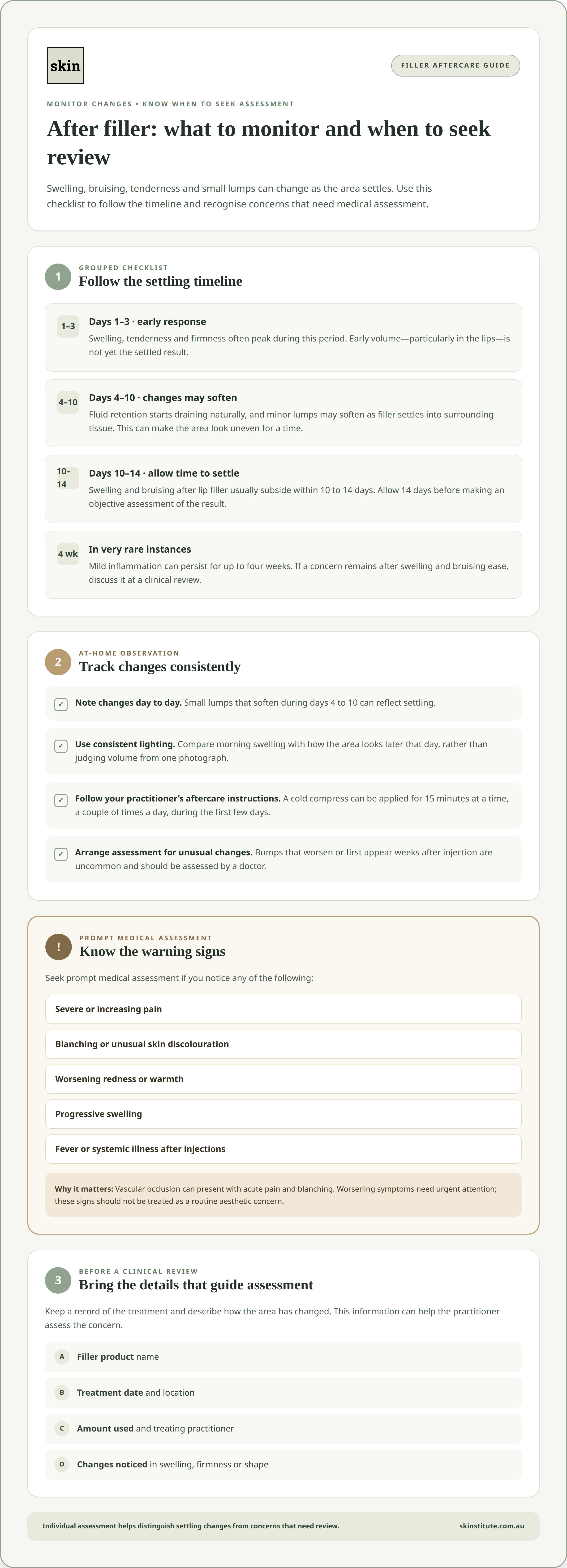
During the first few days after dermal filler, swelling, bruising, soreness and small lumps are common. Lips can look different within minutes of injection, but early volume isn’t the settled outcome. Days 1 to 3 often bring peak inflammatory swelling, tenderness and firmness. From days 4 to 10, fluid retention starts draining naturally, and minor lumps may soften as filler settles into surrounding tissue. These changes can make an early result appear uneven.
Swelling and bruising after lip filler usually subside within 10 to 14 days. In very rare instances, mild inflammation can persist for up to four weeks. A cold compress can be applied for 15 minutes at a time, a couple of times a day, during the first few days. Follow the treating practitioner’s aftercare instructions, particularly if tenderness or bruising changes.
Look at the area in consistent lighting and note changes from day to day. For example, compare morning swelling with the appearance later that day, rather than judging volume from one photograph. Small lumps that soften during days 4 to 10 can reflect settling. Bumps that worsen or first appear weeks after injection are uncommon and should be assessed by a doctor.
How soon after filler can it be dissolved or adjusted? Elective correction is generally considered after the initial settling phase, once the area can be assessed more clearly. If you’re wondering what happens if I hate my filler, record the treatment date and note how the swelling, firmness or shape changes. This timeline can help distinguish an early recovery change from a persistent concern. If the area remains uneven after bruising and swelling ease, discuss it at a clinical review.
Choosing a practitioner for corrective treatment
From 2 September 2025, Australian requirements include a consultation with the prescribing practitioner before prescription-only cosmetic injectables are prescribed. This requirement does not apply to every injectable procedure. For correction, assessment should consider facial anatomy, the dermal filler used, treatment history and the concern affecting your appearance. A clear explanation should cover the proposed procedure, expected changes and relevant risks before treatment proceeds.
Seek prompt medical assessment for significant or worsening pain, blanching, unusual skin colour, increasing redness or warmth, or progressive swelling. Vascular occlusion can present with acute pain and blanching. Fever or systemic illness after injections also warrants prompt assessment. These signs differ from a normal, mild injection-site response and should not be treated as a routine aesthetic concern.
Ask the practitioner to explain how the examination will distinguish a contour issue from a complication. For suspected vascular compromise, skin colour and pain are important signs; worsening symptoms need urgent attention. Keep the filler product name, treatment date, location, amount used and practitioner details available. These records can clarify which material was injected and help guide assessment of the affected area.
Correction may be gradual rather than a single procedure. If hyaluronic acid filler has been dissolved, new filler may be considered after the area has healed, if appropriate following clinical assessment. A staged approach allows the practitioner to evaluate facial balance before deciding whether further volume is suitable. Hyaluronidase treatment can cause mild swelling or tenderness, so any review should account for these temporary effects. The enzyme cannot dissolve every dermal filler type.
Choose a practitioner who discusses normal after-treatment effects alongside serious warning signs and explains the reasoning behind each step. A considered consultation should address the product, injection location, symptoms and desired outcome, rather than treating every lump or asymmetry alike. If pain, blanching, discolouration or swelling is worsening, seek prompt medical care instead of waiting for a routine review.
Natural-looking results and avoiding overfilling
Subtle outcomes depend on facial balance, the area treated and the amount of filler placed.
In Australia, raise a complaint with the treating clinic in writing, describing the procedure, dates and concern. If the matter remains unresolved, the appropriate complaint pathway depends on the practitioner and your state or territory.
Reasons for Dissatisfaction with Filler
Dissatisfaction can reflect excess volume, asymmetry, visible lumps or a shape that differs from the agreed cosmetic outcome. For example, fuller lips may feel disproportionate even after the injected area has healed. The cause matters because swelling, product placement and the amount used call for different responses. Photos from before treatment can help a practitioner compare the change with your starting appearance and intended result.
Responding to an Unwanted Result
Respond by documenting the concern and arranging an assessment before seeking further treatment. Tell the provider what looks wrong, when you noticed it and whether it has changed. Avoid adding filler simply to disguise an uneven contour, as extra volume may compound overfilling. If you remain unhappy after the area has settled, discuss observation, partial correction or dissolving, where the filler type allows it.
Photos and short videos can help track changes: use similar lighting, facial expression and camera angle each time. Compare these records with your pre-treatment images and note when each was taken. Hyaluronic acid filler may gradually fade, with longevity often falling around four to six months in many applications. Duration varies with the product, injection site and tissue response, so it will not follow the same timeline for everyone.
A complaint record is clearer when it includes the treatment date, product name, amount used, treated area and a concise description of the outcome. Keep copies of messages, photographs and any response from the clinic. For example, distinguish a cosmetic concern, such as unwanted volume, from new or worsening pain or skin changes that need prompt medical assessment. A documented timeline helps show what happened and when.
Skinstitute
Skinstitute can assess your filler concern in a face-to-face consultation with a medical professional. The discussion considers your treatment history, the affected area and the result you want, helping clarify whether further assessment or a tailored treatment plan is appropriate. If prescription injectables are considered, suitability and potential risks are part of the clinical discussion. A consultation is not a substitute for prompt medical assessment if you have symptoms such as acute pain, blanching or unusual skin discolouration, which may signal a serious complication requiring urgent care. Decisions should be based on your anatomy and circumstances, rather than adding treatment automatically. To discuss your concerns and possible next steps, contact Skinstitute.
Choose a considered next step
If you’re wondering what happens if you hate your filler, start by clearly describing what feels wrong and what outcome you would prefer. This gives the consultation a practical focus: your concern, treatment history and priorities can guide a discussion about whether to wait, assess a correction or consider another approach. The right next step depends on your clinical assessment.
Skinstitute offers prescription injectables, PDO Thread Lifting and Fractional CO2 as part of its broader aesthetic services. These treatments address different concerns, so they are not substitutes for assessing an unwanted filler result. A measured discussion can help clarify which options relate to your goals and which do not.
Take the next step when you’re ready to discuss your concerns and possible options. Contact Skinstitute about filler concerns to arrange a conversation, and approach the decision with a clear understanding of your priorities.
Frequently Asked Questions
Can all types of dermal filler be dissolved if I dislike the outcome?
No. Whether filler can be dissolved depends on its composition, not simply the area treated. If you don’t know the product, request the treatment record from the clinic that performed the injections. The product name, treatment date and amount used can help a practitioner identify the material and explain which correction options are relevant.
How long should I wait before refilling an area that has been dissolved?
There is no single waiting period that suits every person or treatment area. Before planning another injection, a practitioner needs to assess whether the tissue has recovered and the contour has stabilised. For example, ongoing tenderness or a changing shape can make it difficult to judge the available volume. Base the decision on an examination, not the calendar alone.
How quickly does hyaluronidase work to dissolve unwanted dermal filler?
Hyaluronidase starts acting on hyaluronic acid on contact, but the time until you notice a change varies. Some people see changes within hours, while others notice improvement gradually over several days. The visible result can also be harder to judge while the area is swollen or tender. A practitioner can assess the response before deciding whether further correction is appropriate.
Will dissolving dermal filler damage or thin my natural skin and tissue?
Hyaluronidase targets hyaluronic acid, not collagen, the structural protein that supports skin. It can also affect naturally occurring hyaluronic acid, which contributes to tissue volume and hydration. As a result, the treated area may look temporarily less full. Skin texture, laxity and volume loss are different concerns, so describe any change clearly during assessment.
Can fillers be reversed?
“Reversed” doesn’t always mean returning precisely to the appearance you had before treatment. The term may mean reducing a particular concern, rather than removing every trace of product or resetting the tissue. The available approach depends on the filler material and the change you want addressed. A clinical assessment helps define a realistic correction goal before treatment is planned.
What can I do if I hate how my dermal filler looks?
Write down what specifically bothers you, such as an uneven outline, excess projection or a difference between sides. Bring dated photographs showing the area before and after treatment, if available, and describe any changes since injection. This gives the practitioner a clearer comparison than relying on memory alone. Avoid making another treatment decision while your concern is still being assessed.