PDO Threads vs. Dermal Fillers Melbourne: A Clinical Structural Comparison
August 13, 2026
Rejuran for Dark Circles: Melbourne Clinical Guide
August 16, 2026
True facial rejuvenation isn’t defined by the mere erasure of surface wrinkles, but by the precise restoration of the underlying biological architecture that shifts with age. When considering a liquid facelift Melbourne clinical standards suggest a move away from simple volume replacement toward sophisticated, multi-layered anatomical restoration that prioritises long-term structural integrity. You’ve likely observed a gradual loss of jawline definition or a subtle hollowing in the mid-face, yet the fear of looking overfilled or unnatural often creates hesitation. It’s a valid concern, as the objective of clinical aesthetics should always be to restore natural symmetry and structural elevation rather than creating a distorted or over-volumised appearance.
This guide provides a medical-grade exploration into how non-surgical lifting strategies and bio-stimulators work in tandem to achieve refined results with minimal social downtime. We’ll examine the physiological mechanics behind these treatments, detailing how a combination of prescription injectables and regenerative technologies can restore lost volume and stimulate dermal health. By understanding the functional relationship between different modalities, you can make an informed decision about your clinical approach toward facial rejuvenation.
Key Takeaways
- Identify the anatomical shift from the “triangle of youth” to the “square of ageing” and how fat pad migration necessitates a multi-layered clinical response.
- Understand the three pillars of a liquid facelift Melbourne, which integrate mechanical support, thermal contraction, and chemical volumisation for balanced results.
- Evaluate the clinical differences between non-surgical modalities and traditional surgery, specifically regarding recovery profiles and social downtime.
- Recognise the importance of current Australian regulatory standards and medical oversight in ensuring patient safety and predictable aesthetic outcomes.
- Explore how regenerative therapies, including Rejuran and Exosomes, complement structural procedures like HIFU and PDO threads to enhance cellular skin health.
Understanding the Anatomy of a Non-Surgical Facelift
A non-surgical facelift represents a clinical integration of minimally invasive procedures designed to address age-related changes within the dermis and deeper structural layers. Unlike traditional methods that may focus solely on surface volume, a modern liquid facelift Melbourne approach targets the underlying architecture of the face. Central to this methodology is the SMAS (Superficial Musculoaponeurotic System), a fibrous layer of tissue that connects facial muscles to the skin. This layer serves as the primary foundation for facial support; its gradual laxity is a significant contributor to the visible signs of ageing. By initiating neocollagenesis and elastin synthesis, practitioners can trigger biological age-reversal, improving the skin’s tensile strength and resilience from within.
The Ageing Cascade: From Bone Resorption to Soft Tissue Laxity
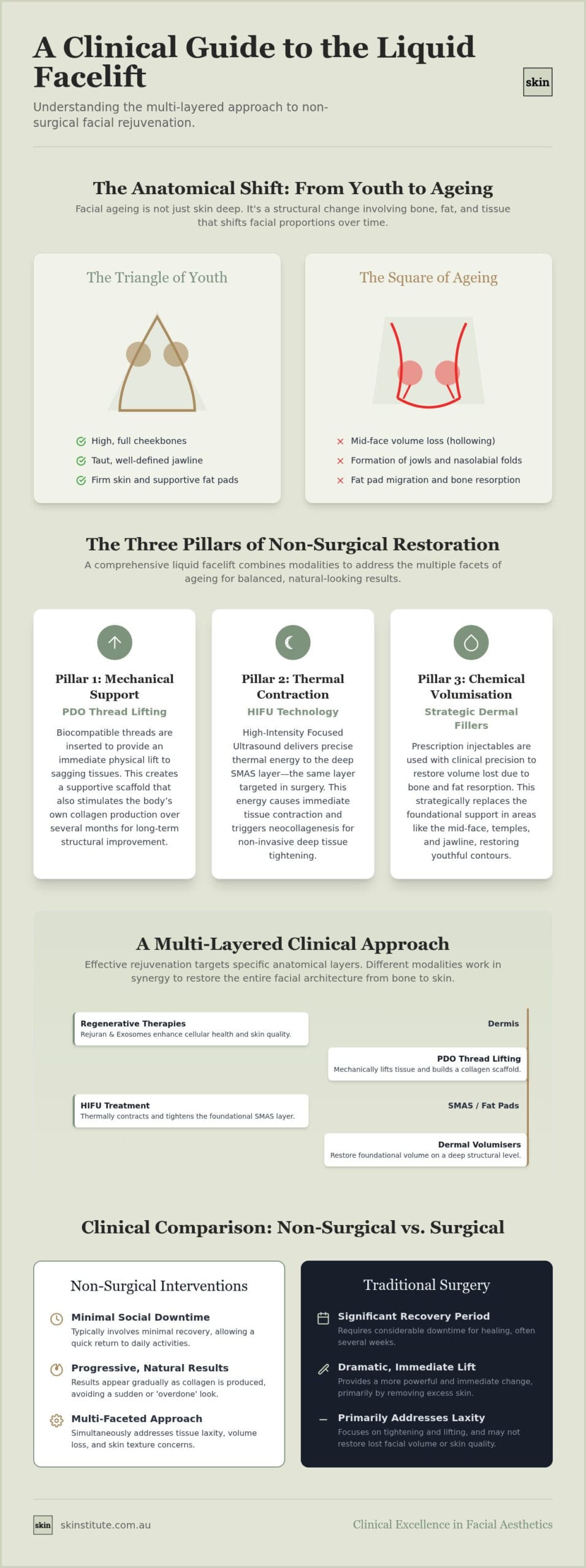
Facial ageing is a multi-dimensional process that begins with bone resorption. As we age, the skeletal structure, particularly in the mid-face and jaw, begins to recede, which reduces the physical support available for overlying soft tissues. This skeletal change is compounded by the biological degradation of collagen and elastin fibres, a process accelerated by both chronologic factors and environmental stressors. Consequently, the malar fat pads, which provide youthful fullness to the cheeks, begin to migrate inferiorly. This descent shifts the facial profile from the “triangle of youth”, wide at the temples and narrow at the chin, to the “square of ageing,” characterised by prominent nasolabial folds and a loss of jawline definition.
It is also worth noting that significant physiological changes, such as those achieved through the specialised weight loss programmes at Nusbaum Medical Centers, can further impact facial volume. When weight is lost, the skin may struggle to retract, necessitating a clinical approach to restore the underlying structural support and dermal density.
The Clinical Objective: Structural Support Without Surgery
The primary objective of a medical-grade intervention is to establish a supportive scaffold that compensates for these structural deficits. While surface-level rejuvenation treatments address pigmentation and fine texture, a comprehensive liquid facelift Melbourne focuses on deep-tissue restoration. This involves a strategic assessment to determine where structural elevation is required to reposition descended tissues. Clinical precision is essential here. A practitioner with extensive experience must evaluate the unique anatomical requirements of each patient to ensure that the intervention respects natural facial symmetry. By focusing on the SMAS and deep fat compartments, it’s possible to achieve a refined lift that avoids the overfilled appearance often associated with less sophisticated techniques. This multi-layered approach ensures that results are grounded in anatomical restoration rather than temporary camouflage.
Primary Modalities for Facial Lifting and Structural Integrity
Achieving a comprehensive liquid facelift Melbourne involves a strategic integration of three primary pillars: mechanical support, thermal contraction, and chemical volumisation. Relying on a single modality often fails to address the multi-faceted nature of facial descent. By combining different technologies, practitioners can manage tissue laxity, structural support, and volume loss simultaneously. This multi-modality framework ensures the final result remains balanced and respects the patient’s underlying anatomy. Clinical precision is essential. Each modality targets a specific physiological layer to create a cohesive and natural-looking elevation of the facial profile.
PDO Thread Lifting: Mechanical Repositioning and Collagen Scaffolding
PDO thread lifting utilises Polydioxanone, a medical-grade, biocompatible material that has been used in surgery for decades. These threads provide an immediate mechanical lift by physically elevating the mid-face and jawline tissues. Beyond this initial repositioning, the presence of the threads stimulates a sustained biological response known as neocollagenesis. Over a six-month period, the body replaces the threads with a natural collagen scaffold, reinforcing the skin’s structural integrity long after the initial procedure. This dual action provides both immediate gratification and long-term dermal resilience.
HIFU: Thermal Contraction of the SMAS Layer
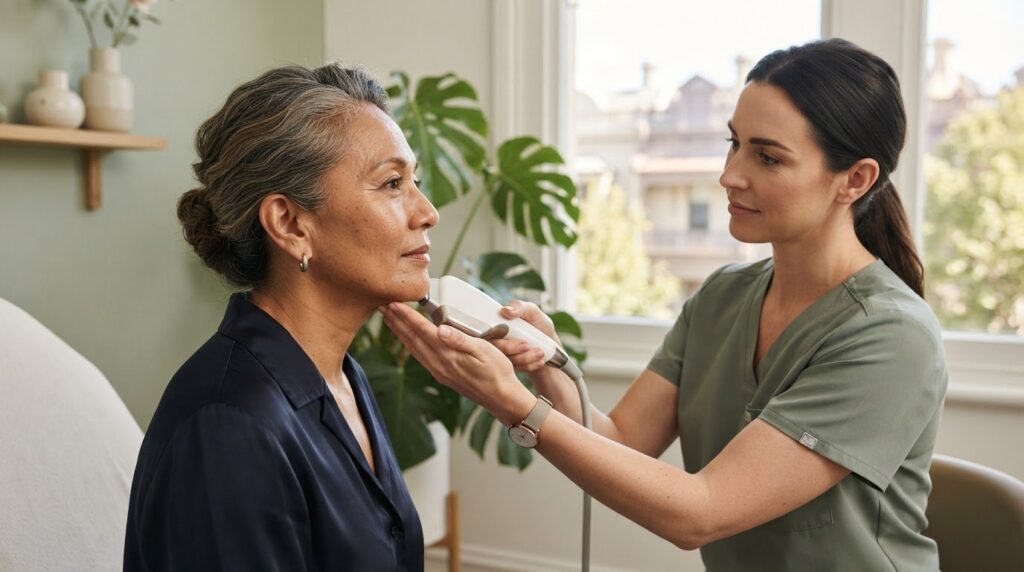
High Intensity Focused Ultrasound (HIFU) serves as a non-invasive method for deep-tissue tightening. It delivers precise thermal energy to the SMAS layer, the same foundation targeted in surgical procedures. This thermal energy induces immediate contraction of existing collagen fibres and triggers a healing cascade that leads to gradual tissue tightening. While the effects of a liquid facelift Melbourne using HIFU aren’t immediate, the biological reorganisation of collagen continues to improve facial contours for several months following treatment. It’s an essential component for patients seeking to address laxity without the use of foreign materials.
Prescription Injectables for Volumisation and Facial Balance
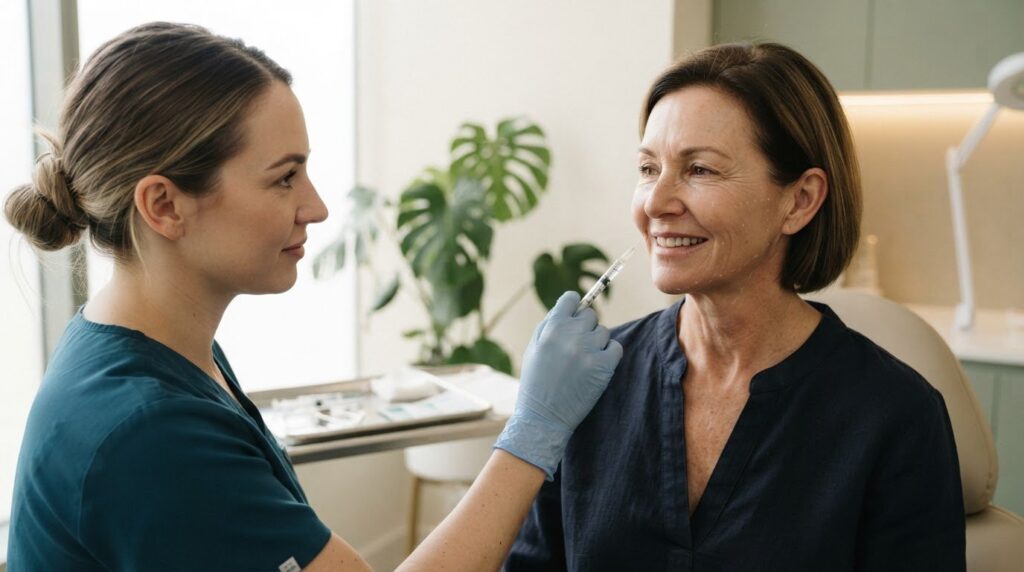
Prescription-only injectables are essential for addressing the hollowing that occurs in the temples and mid-face due to fat pad migration. Strategic placement of these solutions provides the necessary volume to support the skin envelope, effectively reducing the appearance of nasolabial folds and sagging. Clinical success depends on a conservative application that avoids an “overfilled” look. By focusing on restoration rather than augmentation, practitioners can maintain natural facial movement and symmetry. For those seeking a detailed assessment, a professional clinical consultation in Melbourne can identify the specific volume requirements for your anatomical profile. This personalised approach ensures that volumisation complements the mechanical and thermal lifting components of the treatment plan.
Clinical Comparison: Non-Surgical Interventions vs. Traditional Surgery
Choosing between a surgical rhytidectomy and a clinical liquid facelift Melbourne requires a clear understanding of anatomical outcomes and recovery demands. While surgery involves the physical excision of redundant skin and deep-plane repositioning, clinical interventions utilise biological triggers to restore structure. Surgery remains the definitive solution for advanced ptosis, yet it carries the inherent risks associated with general anaesthesia and permanent scarring. Conversely, non-surgical strategies prioritise tissue quality and structural reinforcement without the invasive nature of a scalpel. These treatments are particularly effective as a preventative measure, building collagen density in the early stages of laxity to potentially delay the need for invasive procedures in the future.
The recovery profile is a primary differentiator. Surgical patients typically face several weeks of downtime involving swelling, bruising, and a necessary withdrawal from social and professional commitments. Clinical lifting procedures, however, offer minimal social downtime. Most patients resume their daily routines within 24 to 48 hours, making these treatments a practical choice for those with demanding lifestyles who cannot accommodate a lengthy healing phase. It’s important to acknowledge that clinical results have limitations; they cannot replicate the dramatic skin tightening achieved when significant excess tissue is surgically removed.
Longevity and Maintenance of Clinical Results
The structural support provided by PDO threads and HIFU typically persists for 12 to 24 months. Maintaining these results involves a strategic programme of periodic interventions to sustain collagen density and prevent the recurrence of sagging. The cumulative benefit of bio-stimulatory treatments over several years reinforces dermal thickness and slows the visible rate of physiological ageing. Regular maintenance ensures the “scaffold” created by these treatments remains robust, providing a stable foundation for the overlying skin.
Assessing Patient Candidacy for Non-Invasive Lifting
The ideal candidate for a liquid facelift Melbourne typically presents with mild to moderate skin laxity and possesses a healthy regenerative capacity. Practitioners look for patients who still have relatively good skin elasticity, as the success of these treatments depends on the body’s ability to produce new collagen. Contraindications include excessive skin redundancy, which clinical modalities cannot physically remove, or specific medical histories that may impair the body’s natural healing response.
A thorough initial consultation is vital to define a bespoke journey. This process manages expectations by identifying the specific anatomical concerns that can be addressed non-surgically. It ensures that the chosen modalities align with the patient’s physiological potential, providing a transparent pathway toward natural-looking rejuvenation.
Navigating the Melbourne Aesthetic Landscape: Safety and Standards
The regulatory environment in Victoria is exceptionally stringent, governed by AHPRA and TGA standards that prioritise patient safety. Effective from 2 September 2025, AHPRA guidelines mandate real-time consultations for all cosmetic injectables and require registered nurses to have at least 12 months of full-time general nursing experience before performing these procedures. TGA updates from 18 June 2026 strictly prohibit the direct advertising of prescription-only substances to the public. These measures ensure that a liquid facelift Melbourne is conducted within a clinical framework rather than a commercial one. Medical oversight is non-negotiable; it guarantees that high-risk procedures are performed by practitioners with the necessary anatomical knowledge and emergency protocols. Medical-grade technology provides the precision required for predictable outcomes, distinguishing clinical results from the variable effects seen with lower-standard equipment.
The Value of Clinical Experience in Achieving Natural Outcomes
Experience is the most critical factor in aesthetic medicine. Skinstitute Melbourne brings over 26 years of industry experience to every consultation, ensuring that technical mastery is applied to unique facial structures. There’s a profound difference between a high-street salon and a specialised medical aesthetic clinic. A clinical environment provides access to prescription-only solutions and comprehensive follow-up care that a beauty salon cannot legally or technically offer. Personalised aftercare is essential for monitoring the biological integration of treatments like threads or bio-stimulators, ensuring safety and longevity.
Addressing Environmental Stressors in the Australian Context
Melbourne residents face distinct environmental challenges, specifically a high UV index that accelerates photo-ageing and degrades skin elasticity. Chronic sun damage can compromise the structural success of lifting procedures by thinning the dermal layer. To address surface texture and solar damage, we often recommend fractional CO2 laser resurfacing Melbourne as a complementary modality. This helps clear damaged cells and improves the skin’s ability to support the underlying structural lift. Maintaining these results requires consistent use of medical-grade skincare to protect the skin barrier against the harsh Australian climate.
When selecting a clinic in the Melbourne CBD or surrounding suburbs, verify the practitioner’s registration and the facility’s adherence to current AHPRA standards. A reputable clinic will always prioritise a thorough clinical assessment over a sales-driven approach. If you’re ready to discuss a liquid facelift Melbourne with an established medical team, contact our Melbourne clinic to schedule a formal assessment of your anatomical needs.
The Skinstitute Multi-Modality Framework for Facial Regeneration
The Skinstitute philosophy is built on the principle that structural lifting must be paired with cellular skin health to achieve an authentic result. While mechanical and thermal modalities provide the necessary elevation, the quality of the overlying tissue determines the ultimate success of a liquid facelift Melbourne. If the skin is thin, dehydrated, or damaged, even the most precise structural lift will lack the vibrancy associated with youth. Our framework prioritises facial regeneration, ensuring that the dermal layer is biologically capable of supporting the changes initiated by PDO threads or HIFU. This approach moves beyond the traditional “fill and lift” model, positioning the clinic as a centre for technical mastery where scientific integrity guides every clinical decision.
Integrating Rejuran and Exosomes for Cellular Skin Health
Regenerative “skin healers” like Rejuran and Exosomes play a vital role in enhancing the outcomes of structural procedures. Polynucleotides, as detailed in our clinical guide to Rejuran in Melbourne, work at a cellular level to repair damaged DNA and stimulate the body’s natural regenerative processes. When integrated into a treatment plan, these bio-stimulators improve dermal thickness and elasticity, providing a more resilient foundation for mechanical lifting. Exosome therapy further facilitates this by improving intercellular communication, which accelerates collagen production and reduces the inflammatory response post-treatment. These modalities don’t just mask the signs of ageing; they improve the biological function of the skin, resulting in a natural glow and refined texture that complements the underlying structural restoration.
Developing Your Personalised Clinical Treatment Plan
A successful liquid facelift Melbourne is rarely the result of a one-off procedure. At Skinstitute, we develop a bespoke “Skin Journey” through meticulous anatomical mapping and initial skin analysis. This allows us to identify specific areas of bone resorption, fat pad migration, and dermal thinning before any intervention begins. Treatments are typically staged over several months, allowing the body sufficient time to respond to each stimulus. This sequential approach ensures a balanced and natural evolution of the facial profile, avoiding the abrupt changes that can occur with aggressive, single-session treatments.
By taking a long-term view of facial health, we prioritise safety and structural integrity over immediate, temporary fixes. This methodical pace mirrors the body’s natural healing rhythms, ensuring that every procedure builds upon the last. Our commitment to evidence-based results means that each treatment plan is tailored to the patient’s unique physiological potential, fostering a partnership between the practitioner and the patient. This dedication to technical proficiency ensures that the results are not only visible but also grounded in sound medical principles.
Advancing Toward Anatomical Restoration and Dermal Health
Safety and predictable outcomes are best achieved within a comprehensive medical-grade clinical setting. Skinstitute provides over 26 years of medical aesthetic experience in Melbourne, specialising in advanced PDO thread lifting and HIFU to ensure technical mastery throughout your treatment journey. A professional consultation allows for precise anatomical mapping of your unique requirements, moving beyond surface-level treatments toward sustainable facial health. We invite you to book your clinical facial assessment at Skinstitute Melbourne today to begin a personalised pathway toward restoration. With a focus on precision and evidence-based results, you can move forward with a refreshed appearance that reflects your internal vitality.
Frequently Asked Questions
How long does a liquid facelift last compared to a surgical facelift?
A liquid facelift typically lasts between 12 and 24 months, whereas a surgical facelift can provide results for 10 to 15 years. The longevity of non-surgical results depends on the specific modalities used, such as PDO threads or HIFU, and the patient’s individual rate of collagen degradation. Maintenance treatments are required to sustain the structural lift, while surgery involves permanent anatomical changes and skin excision. This makes clinical interventions ideal for those seeking ongoing rejuvenation without surgery.
Is a non-surgical facelift painful, and what is the expected downtime?
Most patients experience only mild discomfort during a liquid facelift Melbourne procedure, as topical anaesthesia and local infiltrates are used to manage sensitivity. Downtime is minimal compared to surgery, with most social activities resuming within 24 to 48 hours. Some minor swelling or bruising may occur at injection or thread entry sites, but these typically resolve quickly without requiring a withdrawal from professional commitments. The non-invasive nature of these treatments allows for a rapid return to daily routines.
Can I combine PDO threads with HIFU for a better lifting result?
Combining PDO threads with HIFU is a highly effective strategy for achieving a multi-layered lift. HIFU targets the SMAS layer to induce thermal contraction and deep-tissue tightening, while PDO threads provide immediate mechanical repositioning and long-term collagen scaffolding. This synergistic approach addresses both deep structural laxity and mid-face descent, resulting in a more comprehensive and natural-looking rejuvenation than either treatment could achieve in isolation. It effectively treats the face across multiple depths for superior structural integrity.
What is the average cost of a non-surgical facelift in Melbourne?
The cost of a non-surgical facelift varies significantly based on the volume of product required and the combination of technologies utilised. Factors such as the number of PDO threads, the areas targeted with HIFU, and the specific prescription injectables needed for volumisation all influence the final investment. A personalised clinical consultation is essential to determine an accurate cost based on your unique anatomical requirements and desired aesthetic outcomes. This ensures the treatment plan is bespoke and medically appropriate.
Are the results of a liquid facelift immediate or do they take time?
You will notice an immediate improvement in facial contouring from mechanical lifting and volumisation, but the full biological results take several months to develop. PDO threads provide an initial lift, while the subsequent neocollagenesis process peaks around three to six months. Similarly, HIFU results evolve gradually as the body reorganises collagen fibres in the SMAS layer, leading to a progressive tightening and refinement of the facial profile. This gradual evolution ensures that the aesthetic changes appear natural and balanced.
What are the potential risks associated with non-invasive lifting procedures?
Potential risks include temporary swelling, bruising, and minor asymmetry, though serious complications are rare when procedures are performed in a medical-grade setting. More significant risks, such as vascular occlusion or infection, are mitigated through strict adherence to clinical protocols and the use of sterile, prescription-only materials. Choosing an experienced practitioner with deep anatomical knowledge is the most effective way to ensure patient safety and predictable results. A professional environment prioritises risk management and high standards of clinical care.
How do I know if I am a good candidate for a non-surgical lift?
The ideal candidate for a liquid facelift Melbourne typically presents with mild to moderate skin laxity and sufficient dermal thickness to support biological regeneration. If you have significant skin redundancy or severe sagging, a surgical rhytidectomy may be more appropriate. A clinical assessment is necessary to evaluate your skin elasticity, bone structure, and overall health to determine if non-invasive modalities can achieve your specific rejuvenation goals. This assessment ensures that expectations align with your unique physiological potential.
What is the main difference between a liquid facelift and a thread lift?
A liquid facelift is a multi-modality approach that often includes a thread lift as one of its core components. While a thread lift focuses specifically on the mechanical repositioning of tissues using PDO threads, a liquid facelift integrates additional tools such as prescription injectables for volume restoration and HIFU for deep-tissue tightening. This comprehensive framework addresses volume loss, skin laxity, and structural descent simultaneously. It provides a more holistic solution than a single-modality treatment by targeting multiple layers of facial anatomy.