Clinical Guide to Liquid Facelifts in Melbourne: A Multi-Modality Approach to Rejuvenation
August 14, 2026
HIFU Treatment Cost in Melbourne: A Clinical Guide to Value and Results
August 17, 2026
Treating under-eye hollowness with traditional dermal fillers can sometimes exacerbate the appearance of dark circles rather than resolving them. Many patients researching rejuran for dark circles melbourne are seeking a solution that goes beyond temporary volume to address the underlying skin quality issues that contribute to a fatigued look. You’ve likely found that even the most expensive topical serums or consistent sleep schedules don’t quite fix the persistent shadows or crepey texture in your periorbital zone. It’s a common clinical challenge where the skin is simply too thin to mask the underlying vascularity or pigment.
This guide provides an authoritative medical overview of under-eye injectable treatments, focusing on the shift from temporary masking to genuine cellular regeneration. You’ll learn how polynucleotides work at a biological level to repair the skin’s DNA and stimulate collagen production. We’ll distinguish between structural volume loss and skin degradation, helping you understand which injectable technology is most appropriate for your specific anatomical needs. By the end, you’ll have a clear technical understanding of how to achieve a refreshed, medically-sound outcome for the delicate eye area.
Key Takeaways
- Identify the biological factors contributing to periorbital fatigue, including the specific role of the tear trough ligament and the unique anatomy of thin under-eye skin.
- Learn how rejuran for dark circles melbourne employs polynucleotides to initiate cellular repair and stimulate collagen production for improved skin density and texture.
- Distinguish between the structural volume restoration achieved with prescription dermal fillers and the regenerative properties of bio-stimulators to select the most appropriate clinical intervention.
- Understand the importance of professional diagnostic tools, such as the “Snap Test,” in assessing eyelid laxity and ensuring a safe, tailored treatment plan.
- Explore the technical advantages of using blunt-tipped cannulas to minimise trauma and enhance safety in the highly vascularised periorbital region.
Clinical Anatomy of the Periorbital Region
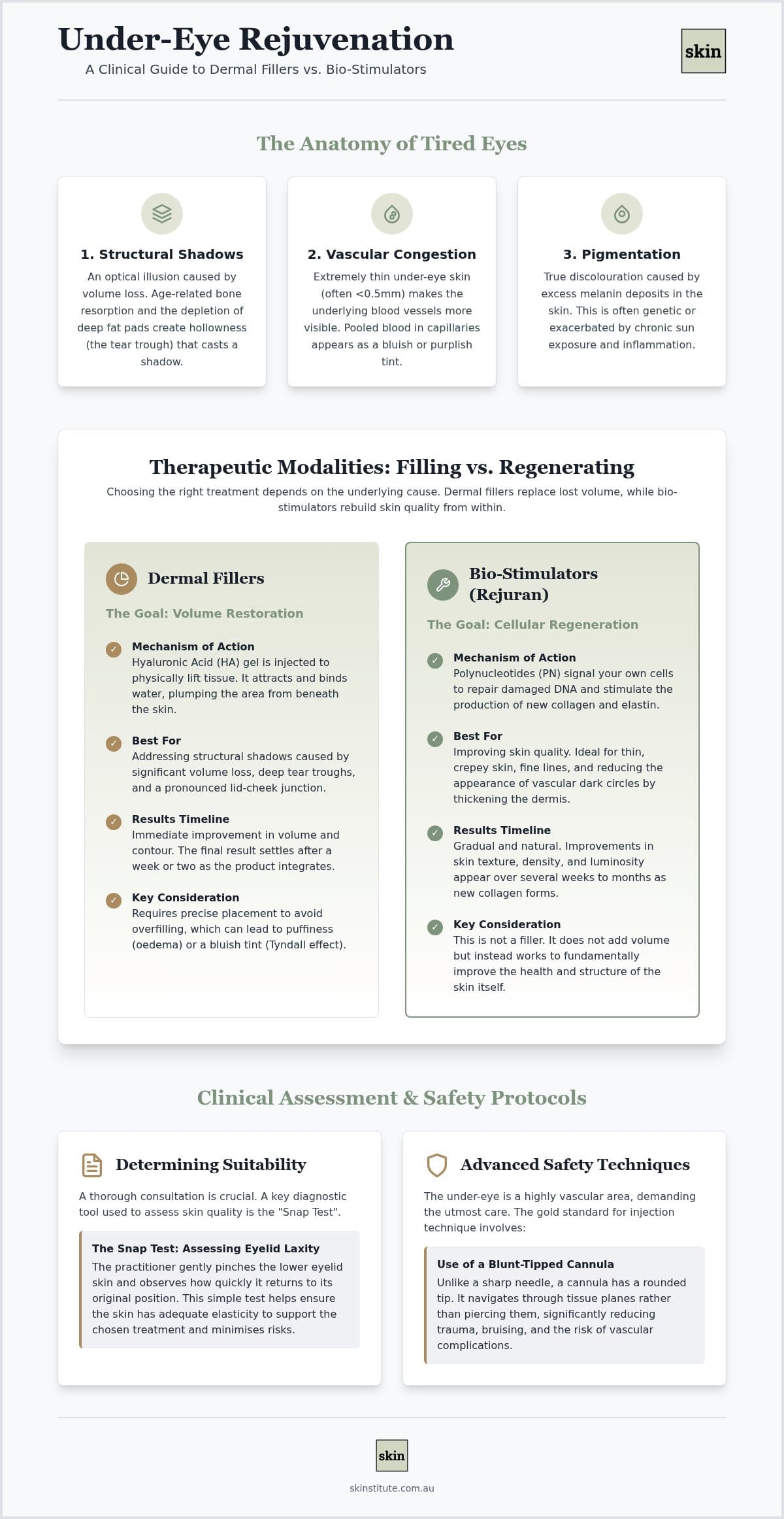
The periorbital region represents a unique anatomical challenge because it contains the thinnest skin on the human body, often measuring less than 0.5mm in thickness. This lack of dermal density means that underlying structures, such as the orbicularis oculi muscle and various vascular networks, are more visible to the naked eye. A critical component of this anatomy is the tear trough ligament, a true osteocutaneous ligament that tethers the skin to the underlying bone of the orbital rim. When we assess patients for rejuran for dark circles melbourne, we must first determine if the concern is a result of this ligamentous tethering or a broader loss of mid-face support. The structural integrity of the periorbital zone is maintained by a complex interplay of ligaments, muscles, and fat pads that shift as part of the natural ageing process.
The Role of Facial Fat Pads and Bone Resorption
The appearance of under-eye hollowness is rarely a superficial issue. It’s often driven by the depletion of deep medial fat pads and significant osteological changes. As we age, the bones of the orbital rim undergo resorption, causing the eye socket to widen and the overlying soft tissue to lose its structural foundation. This process, combined with the downward migration of malar fat, creates a distinct transition between the lower eyelid and the cheek. This lid-cheek junction becomes more pronounced, resulting in a sunken appearance that topical treatments cannot address. A sophisticated clinical approach considers these multi-layered changes rather than simply treating the skin’s surface. Hollowness is a three-dimensional problem involving the skin, the subcutaneous fat, and the underlying skeletal support.
Pigment vs. Shadow: Diagnostic Clarity
Effective treatment requires a precise diagnosis of what constitutes the darkness. Periorbital dark circles can be categorised into three primary types: vascular, pigmented, or structural. Vascular congestion occurs when blood pools in the capillaries, appearing as a bluish tint through the thin skin. Pigmented circles are caused by actual melanin deposition, often due to genetics or chronic UV exposure. Conversely, structural shadows are an optical illusion created by light refracting off a hollow tear trough. Clinical skin analysis is essential to define these differences before selecting a modality. For many patients, rejuran for dark circles melbourne is utilised specifically to thicken the dermal layer. This increased thickness helps to mask underlying vascularity and improves the skin’s light-reflective properties, effectively reducing the appearance of shadows caused by thinning tissue.
Therapeutic Modalities: Dermal Fillers vs. Bio-stimulators
Selecting the correct therapeutic intervention for the periorbital region depends on whether the primary clinical deficit is structural or cellular. While prescription dermal fillers excel at replacing lost volume in the deep tissues, the emerging field of regenerative medicine offers tools like rejuran for dark circles melbourne to address skin laxity and thinning at its source. A diagnostic approach ensures that we don’t simply mask a problem but rather select the modality that matches the patient’s specific biological requirements.
Hyaluronic Acid Fillers for Volume Restoration
Hyaluronic acid (HA) gels are the clinical standard for volume restoration in the tear trough. These substances are naturally hydrophilic, meaning they attract and bind water molecules within the tissue to create a lifting effect. However, the delicate nature of the under-eye area necessitates the use of specific, low-hydrophilicity fillers. Using a product that attracts excessive water can lead to chronic oedema or the Tyndall effect, where the skin takes on a bluish hue due to light scattering through the gel. For detailed safety profiles and approved uses, patients can review FDA information on Dermal Fillers, which outlines the risks associated with these medical-grade materials. In a professional setting, these injectables provide immediate results and remain reversible, offering a high degree of control for the practitioner.
Regenerative Medicine: Rejuran and Exosomes
Regenerative treatments represent a shift from filling a space to repairing the tissue itself. Rejuran Melbourne protocols utilise polynucleotides, which are DNA fragments derived from salmon, to trigger the body’s natural wound-healing response. This process stimulates fibroblast activity, leading to increased collagen and elastin synthesis. It’s particularly effective for patients with “crepey” skin who don’t necessarily require more volume but need a thicker, more resilient dermis. Exosome therapy complements this by delivering signalling molecules that reduce inflammation and enhance cellular communication. Together, these bio-stimulators improve skin quality without the risk of over-filling or puffiness often associated with traditional methods. It’s a biological repair rather than a mechanical fill.
Choosing between volume and regeneration isn’t always a binary decision. Many clinical plans involve a phased approach, perhaps starting with skin thickening before considering structural support. If you’re unsure which path fits your anatomy, a professional clinical assessment can provide the necessary diagnostic clarity for your journey.
Clinical Suitability: Who is a Candidate for Under-Eye Injectables?
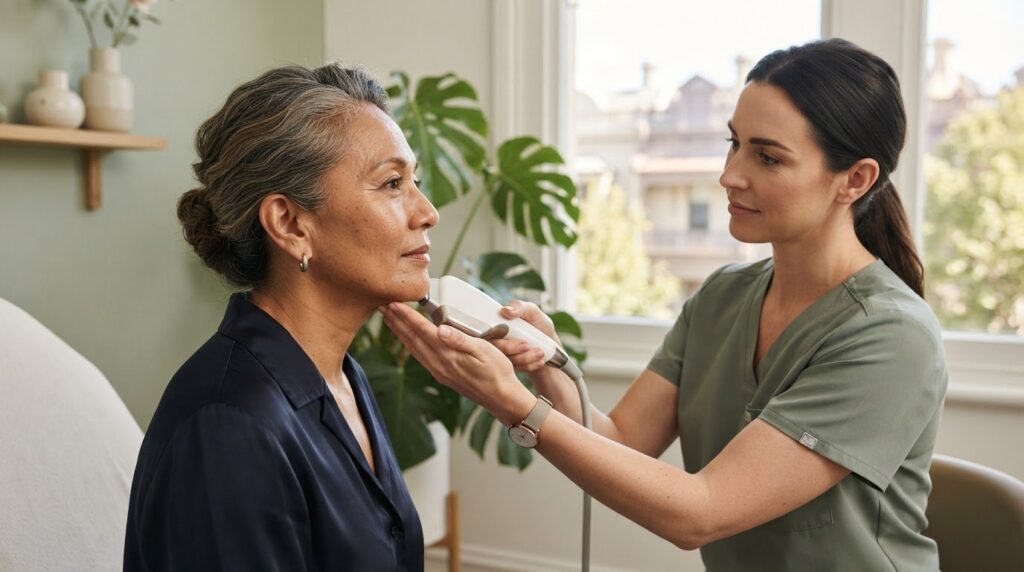
Determining suitability for periorbital intervention requires more than a visual assessment of shadows. A primary clinical tool used during consultation is the “Snap Test,” which evaluates the elasticity of the lower eyelid and the functional strength of the orbicularis oculi muscle. During this assessment, the skin is gently pulled away from the eye; a slow recoil indicates significant dermal laxity. For patients considering rejuran for dark circles melbourne, a slow snap often suggests that cellular regeneration is necessary to improve skin density before any structural volume is added. If the skin doesn’t return to its original position almost instantly, it may lack the structural integrity required to support traditional dermal fillers.
Patients presenting with malar bags or festoons require particular caution. These are fluid-filled pockets or structural protrusions located on the cheekbone, distinct from the tear trough itself. Introducing hydrophilic dermal fillers into this area can exacerbate oedema by attracting more fluid, leading to a “puffy” or unnatural appearance. In such cases, bio-stimulators that improve skin quality without increasing fluid volume are often the preferred clinical choice. If skin laxity is severe or if there is significant fat prolapse (eye bags), injectables may reach their functional limit. At this stage, we transition the conversation toward surgical considerations, such as a lower blepharoplasty, to achieve a predictable outcome.
The Importance of Mid-Face Support
Effective under-eye rejuvenation often begins several centimetres below the eye. The mid-face and cheeks provide the essential scaffolding for the periorbital zone. When the deep medial fat pads in the cheek diminish, the tear trough loses its foundation, making it appear deeper and darker. By restoring lateral and medial cheek volume using prescription injectables, we achieve an “indirect lift.” This tensioning of the mid-face tissues can significantly reduce the depth of the tear trough without ever placing product directly into the delicate under-eye skin. This holistic approach ensures a harmonious facial contour rather than an isolated, over-filled look.
Contraindications and Risk Assessment
Safety is the cornerstone of any clinical protocol. We must defer treatment in the presence of active skin infections, such as cold sores or dermatitis, in the intended injection zone. A detailed medical history is also vital to identify severe autoimmune conditions or previous adverse reactions to injectable materials. Patients with chronic fluid retention or systemic conditions affecting lymphatic drainage should be managed with conservative expectations, as they’re at a higher risk of post-procedural swelling. A thorough diagnostic consultation allows us to map the periorbital vasculature and define realistic aesthetic goals, ensuring that rejuran for dark circles melbourne or other modalities are used only when they offer a high probability of a safe, successful outcome.
The Treatment Journey: Safety, Technique, and Aftercare
The treatment journey begins with a meticulous clinical consultation where we map the complex periorbital vasculature to identify high-risk zones. This diagnostic phase is essential for defining realistic aesthetic goals and ensuring the patient’s anatomical profile is compatible with their chosen modality. When administering rejuran for dark circles melbourne, we prioritise a methodical approach that respects the delicate nature of the under-eye tissues. We evaluate the skin’s thickness and the presence of any underlying vascular congestion before proceeding. Patient comfort is managed through the application of medical-grade topical anaesthesia and the use of products containing integrated lidocaine, which together facilitate a pain-free clinical experience.
Cannula vs. Needle: A Safety Perspective
In the periorbital zone, we predominantly utilise blunt-tipped cannulas rather than sharp needles. This technical choice is driven by a commitment to safety and the reduction of post-procedural trauma. Blunt cannulas are designed to navigate around delicate blood vessels and nerves, significantly minimising the risk of bruising and intravascular injection. By using a single entry point, we can precisely deposit either polynucleotides or hyaluronic acid deep beneath the orbicularis oculi muscle. This deep-plane placement ensures that the product provides structural support or cellular repair without being visible through the thin surface skin, resulting in a seamless transition between the eyelid and the cheek.
Recovery Timeline and Clinical Aftercare
The biological integration of injectables follows a predictable sequence. Immediately after treatment, patients may experience mild oedema or pinpoint bruising at the entry site, which typically resolves within 48 hours. We recommend avoiding strenuous exercise or heat exposure during this initial window to minimise vascular dilation. During the subsequent two-week integration phase, the injectable settles into the local facial tissues and begins to hydrate or initiate cellular repair. We conduct a clinical review at the end of this period to monitor the progress and ensure optimal tissue response. Long-term maintenance of the periorbital area requires a dedicated approach to skin health. Protecting the regenerated dermis involves the consistent use of medical-grade skincare and diligent sun protection to prevent further UV-induced collagen degradation.
If you are ready to address under-eye concerns with technical precision, you can book a professional clinical consultation with our experienced team.
The Skinstitute Melbourne Approach to Eye Rejuvenation
The clinical philosophy at Skinstitute is built upon over 26 years of aesthetic experience, prioritising medical-grade technology and technical proficiency to deliver refined, natural results. When patients seek rejuran for dark circles melbourne, they receive a treatment plan that respects their underlying facial anatomy and biological ageing patterns. We don’t believe in universal solutions; instead, we focus on the specific structural and cellular needs of the individual. For many, optimal rejuvenation requires integrating polynucleotides with other advanced modalities to achieve a comprehensive outcome. We often recommend Fractional CO2 Laser Resurfacing Melbourne to address superficial skin laxity and fine lines while Rejuran repairs the deeper dermal structures. This synergistic approach ensures that both skin texture and dermal density are addressed simultaneously, leading to more resilient periorbital tissue.
Comprehensive Periorbital Assessment
Every journey at Skinstitute begins with a thorough clinical skin analysis. We use this diagnostic phase to map volume loss, pigmentary issues, and vascular concerns within the periorbital zone. By strategically combining prescription injectables, lasers, and bio-stimulators, we create a multi-modal plan tailored to your unique anatomical requirements. We value patient education as a cornerstone of our practice. Informed consent is more than a regulatory step; it’s a fundamental part of our professional integrity. You’ll leave your consultation with a clear understanding of the physiological mechanisms behind every recommended procedure, ensuring you feel respected and informed throughout the process.
Safety Standards and Professional Integrity
Our practice maintains rigorous clinical protocols to ensure patient safety and predictable results. We adhere strictly to TGA-compliant practices for all prescription-only treatments and medical-grade devices, reflecting the serious nature of the services we provide. Our practitioners engage in continuous professional development, staying at the forefront of advanced injection techniques and regenerative medicine. This dedication to technical mastery allows us to offer a reassuring sense of stability and clinical authority. We avoid the persona of the trendy innovator, opting instead for a sober, evidence-based approach that relies on established scientific principles. To discuss your periorbital concerns with an experienced practitioner, book a clinical consultation at Skinstitute Melbourne.
Advancing Your Periorbital Rejuvenation Strategy
Effective under-eye treatment requires a transition from surface-level corrections to a sophisticated, anatomically-driven approach. We have examined how the unique physiology of the periorbital region necessitates a choice between structural volume restoration and cellular repair. By prioritising diagnostic clarity through clinical assessments, patients can determine whether their concerns stem from volume loss or dermal thinning. Clinical precision is essential. It’s this level of technical insight that ensures a predictable and safe outcome for every patient.
As specialists in advanced bio-stimulators and regenerative medicine, our team focuses on delivering natural-looking results that respect your unique facial contours. With over 26 years of medical aesthetic experience, we ensure that every protocol for rejuran for dark circles melbourne is executed with technical mastery. Whether your plan involves polynucleotides or prescription injectables, it’s the methodical clinical review that secures long-term success. Safety remains our primary clinical priority throughout your entire journey.
We invite you to Book a Clinical Consultation at Skinstitute Melbourne to discuss your specific periorbital needs with a seasoned practitioner. Taking this professional step ensures your journey is guided by scientific principles and a commitment to clinical excellence. We look forward to partnering with you on your path to rejuvenation.
Frequently Asked Questions
How long do under-eye injectables typically last?
Under-eye injectables offer varying durations of efficacy based on the specific material’s biological interaction. Prescription dermal fillers typically maintain their structural volume for 12 to 18 months in the periorbital region due to the area’s limited movement. Regenerative treatments like Rejuran follow a different timeline; after an initial course of two to three sessions, the improvements in skin density often require maintenance every six to twelve months to sustain cellular repair and collagen synthesis.
Is the procedure painful, and what anaesthetic options are available?
Patient comfort is managed through a multi-layered approach to anaesthesia. We apply a medical-grade topical numbing cream approximately 30 minutes before the procedure to desensitise the skin surface. Most modern prescription injectables also contain integrated lidocaine, which provides immediate local anaesthesia as the product is deposited. The use of blunt-tipped cannulas further reduces discomfort by navigating around sensitive nerves rather than piercing them, ensuring a tolerable clinical experience for most individuals.
What is the “Tyndall effect” and how can it be avoided?
The Tyndall effect is a clinical phenomenon where light scatters through hyaluronic acid gel placed too superficially, creating a bluish discoloration under the skin. This can be avoided by utilising low-hydrophilicity fillers that don’t attract excessive water and by ensuring the product is deposited deep beneath the orbicularis oculi muscle. When considering rejuran for dark circles melbourne, this risk is eliminated as polynucleotides integrate into the dermis without forming a visible gel mass.
Can under-eye fillers cause blindness, and what are the safety protocols?
Vascular occlusion leading to visual impairment is an extremely rare but serious complication associated with facial injectables. We mitigate this risk through rigorous safety protocols, including the use of blunt-tipped cannulas which are less likely to penetrate blood vessels than sharp needles. Our practitioners maintain a deep understanding of periorbital vasculature and follow established clinical guidelines, such as slow injection speeds and low-pressure delivery, to ensure the highest standards of safety during every procedure.
What is the difference between tear trough fillers and Rejuran for under eyes?
The primary distinction lies in the physiological objective of the treatment. Tear trough fillers utilise hyaluronic acid to mechanically restore lost volume and “fill” the hollow space between the eyelid and cheek. In contrast, rejuran for dark circles melbourne employs polynucleotides to stimulate the body’s natural healing response and thicken the skin’s dermal layer. While fillers address structural deficits, Rejuran focuses on cellular regeneration to improve skin quality, elasticity, and the appearance of vascular dark circles.
How much downtime should I expect after an under-eye injectable treatment?
Most patients experience minimal downtime, with mild swelling or pinpoint bruising typically resolving within 24 to 48 hours. The periorbital area is highly vascular, so some minor oedema is a normal physiological response to the injection process. We advise patients to avoid strenuous exercise and heat exposure for the first two days to prevent increased blood flow to the area. The final aesthetic result is usually assessed at a two-week review once the product has fully integrated.
Can I have under-eye injectables if I have significant eye bags?
Significant fat prolapse, commonly referred to as eye bags, often serves as a clinical contraindication for traditional dermal fillers. Adding volume to an area with existing structural protrusion can exacerbate puffiness and create an unnatural contour. In these instances, a professional assessment is vital to determine if regenerative treatments like Rejuran can improve the overlying skin tension or if a surgical blepharoplasty is the only effective solution. We prioritise honest diagnostic clarity over inappropriate injectable application.
Are the results of under-eye injectables reversible if I am unhappy?
Hyaluronic acid-based fillers are fully reversible through the administration of hyaluronidase, an enzyme that dissolves the gel within hours. This provides a significant safety margin for patients concerned about their aesthetic outcome. Regenerative treatments like Rejuran are not reversible in the same manner, as they trigger biological changes within the skin’s own collagen structure rather than leaving a foreign substance. However, because Rejuran doesn’t add volume, it carries a much lower risk of creating an undesirable or over-filled appearance.