How to improve skin texture, tone and understand their causes
October 26, 2026
Rejuran vs Profhilo: Compare Results and Treatment Timing
October 28, 2026
A poor filler result is not always corrected by adding more product. For people correcting botched filler in Melbourne, hyaluronidase may dissolve hyaluronic acid (HA) filler, but it does not work on every filler type. The next step is an assessment of the product used, where it was placed and the concern or symptoms.
An uneven, overfilled or uncomfortable result can be distressing, and it’s understandable to want a clear explanation before considering another procedure. This article explains why filler outcomes can go wrong, how hyaluronidase works and what an injector should assess before recommending treatment. It also outlines the signs that need urgent medical attention and the qualifications and clinical standards to look for when choosing an injector in Melbourne.
Key Takeaways
- Filler concerns can arise from placement, product volume or individual factors; identifying the cause guides the next step.
- Hyaluronidase can dissolve hyaluronic acid filler, but assessment of the filler type and treatment area is essential.
- Check an injector’s registration, relevant experience and approach to discussing risks, suitability and aftercare.
- Recognise symptoms that may need urgent medical attention, including severe pain or changes in skin colour.
Why Are Botched Fillers So Common?
Filler results can disappoint when the product, placement or volume does not suit a person’s facial anatomy. Excessive cheek filler, for example, can alter facial balance, while unevenly placed lip filler can create an irregular contour. Cosmetic treatments performed by inexperienced or inadequately qualified practitioners can also lead to unwanted outcomes and complications.
Facial areas differ in tissue depth, movement and nearby structures, so the same approach does not suit every site. Lip filler, for instance, needs to account for movement during speech, while cheek treatment should consider facial proportions. A plan based only on requested volume, without assessing anatomy and existing filler, may not address the actual concern.
Previous injections can complicate assessment. Filler may have been placed at different depths or in several areas, so treatment records can help establish what was used and where. Bring any available product information and describe when each area was treated. Pressing, rubbing or sleeping on an injected area too soon can also contribute to filler shifting, so follow the treating practitioner’s aftercare instructions.
Regulatory oversight matters as well. In NSW, breaches of regulatory requirements that put clients at risk could attract fines of up to $110,000, according to NSW Health. This figure relates to NSW and should not be treated as a Victorian penalty. In Melbourne, focus on whether the practitioner is appropriately registered, understands facial anatomy and discusses risks before treatment.
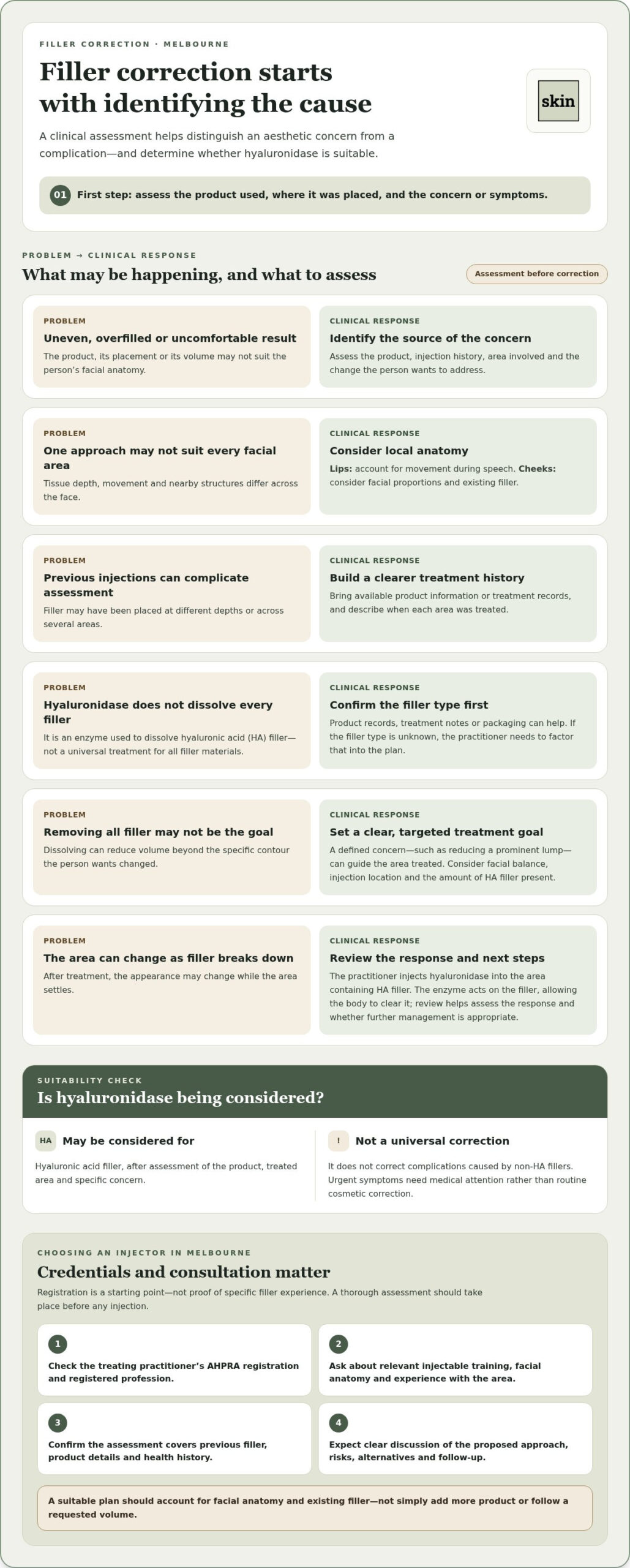
If a result concerns you, the first step is a clinical assessment, not automatically adding more filler. The practitioner considers the product, injection history, area involved and change you want. Hyaluronic acid filler may sometimes be dissolved, while other filler materials need a different approach. The assessment should establish whether the concern is aesthetic or a complication requiring medical care, then guide a suitable plan for the affected area.
Hyaluronidase treatment for dissolving hyaluronic acid filler
Hyaluronidase is an enzyme used to dissolve hyaluronic acid (HA) filler. It works on HA, so it is not a universal dissolving treatment for every filler material. Before considering this procedure, identify the product used and the area treated. Product records, treatment notes or packaging can help with the assessment. If the filler type is unknown, the practitioner needs to factor that into the plan.
The assessment also considers the specific concern. A localised lump, uneven contour and widespread overfilling, for example, involve different areas and amounts of product. The practitioner examines the face and discusses the change you want to address. They can then determine whether dissolving HA filler is appropriate and which area to target. A history of previous injections can help clarify where the filler is distributed.
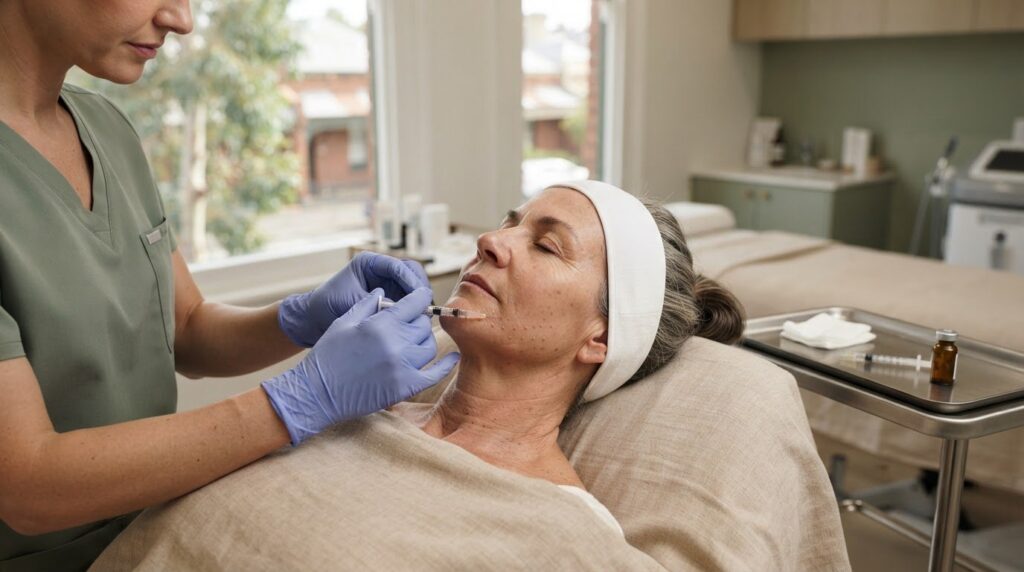
During treatment, hyaluronidase is injected into the area containing HA filler. The enzyme acts on the filler, allowing the body to clear it. The goal is not always to remove all the filler. A clearly defined treatment goal, such as reducing a prominent lump, can guide the approach. The practitioner should explain the procedure and its risks before proceeding.
After treatment, the appearance can change as the filler breaks down and the area settles. Reviewing the treated area helps assess the response and whether further management is appropriate. Dissolving can also reduce volume beyond the specific contour you wanted changed. This is why assessment should consider facial balance, injection location and the amount of HA filler present, rather than treating appearance in isolation.
Hyaluronidase does not correct complications caused by non-HA fillers, and urgent symptoms require medical attention rather than routine cosmetic correction. For a considered review of a previous filler result, a clinical assessment of aesthetic concerns can help establish the next step. Bring available product details and describe when the concern began.
Choosing a qualified injector and checking credentials
In Australia, only authorised registered health practitioners, such as doctors or nurses, are legally allowed to perform cosmetic injections. Before booking, check the practitioner’s name and registration on the Australian Health Practitioner Regulation Agency (AHPRA) register. Confirm that the registered profession matches the person performing your treatment, not only the clinic owner or prescriber.
Registration is a starting point, not proof of specific filler experience. When correcting botched filler in Melbourne, checking an injector’s registration and relevant experience is important. Ask about training in facial anatomy, injection technique and complication management. A brief course alone may not provide adequate preparation, so scrutinise claims based on short training. Ask for a clear explanation of the practitioner’s experience with the facial area and procedure being considered.
A thorough assessment should take place before any injection. The practitioner should ask about previous filler, product details, medical history, medicines, allergies and your reasons for seeking treatment. For example, someone seeking correction after cheek filler needs an assessment of the existing product, its placement and facial anatomy before discussing a treatment plan.
Use the consultation to assess how decisions are made. A qualified injector should explain the proposed approach, expected outcomes, material risks and alternatives in language you understand. They should also discuss whether treatment is suitable and give you time to decide. Pressure to proceed immediately, or a plan that ignores your medical history, warrants caution.
- Check the treating practitioner’s AHPRA registration and profession.
- Ask about relevant injectable training and experience with the treatment area.
- Confirm that the assessment covers previous procedures and your health history.
- Look for a clear discussion of risks, alternatives and follow-up arrangements.
Filler correction may require a different assessment from an initial cosmetic injection. When correcting botched filler in Melbourne, bring available treatment records or product information, and describe when the result changed. This helps the practitioner consider previous treatment alongside your current concerns. Good clinical judgement includes explaining when further injections are unsuitable, rather than treating every concern with more filler.
Dermal filler adverse reactions
An adverse reaction is a medical response to treatment, rather than simply dissatisfaction with the cosmetic result. The distinction matters because the appropriate response depends on the reaction, the filler material and the patient’s health. Cosmetic correction should not replace assessment of a possible medical complication.
Some reported consequences can be serious. A study published in Plastic and Reconstructive Surgery reported that almost 200 people globally suffered blindness after dermal filler injections in the past year. The reported number increased by 94 per cent on the previous year. These global figures do not predict an individual’s risk, but they underline why visual disturbance after an injection requires urgent medical attention.
Suitability matters before treatment. An Australian patient with known skin conditions considered unsuitable for dermal fillers experienced an adverse reaction that required filler dissolution and steroid treatment. This example shows why a practitioner needs to consider relevant skin conditions and medical history before recommending filler, rather than assessing only the requested area.
If you suspect a reaction, give the treating practitioner the product name, injection date and any procedure records. Describe the sequence of events clearly, including when the concern began and how it has changed. This timeline can help distinguish a reaction associated with treatment from an unrelated change, and inform the next clinical assessment.
Management is specific to the reaction and the material injected. Dissolving may be considered for some hyaluronic acid filler concerns, while another response may be needed for different products or complications. Do not assume that a cosmetic adjustment is suitable before the clinical issue has been assessed. If you are concerned about a reaction, contact Skinstitute to discuss a clinical assessment.
Skinstitute: Prescription injectables
Skinstitute provides prescription injectables for patients considering cosmetic treatment, following an assessment of their concerns and goals. If you are unhappy with a previous filler result, discuss the treatment details and any symptoms with a practitioner before considering further injections. Acute pain, skin colour changes or visual symptoms require urgent medical assessment, not a routine aesthetic appointment.
Where further cosmetic treatment is appropriate, the plan should reflect your facial anatomy, medical history and desired outcome. Skinstitute also offers PDO Thread Lifting, Fractional CO2 and High Intensity Focused Ultrasound (HIFU); each addresses different concerns and is not a substitute for urgent care or filler dissolution. Contact Skinstitute to discuss your concerns and the appropriate next step.
Take a considered next step
Deciding what to do after an unwanted filler result can take time. If you are considering correcting botched filler in Melbourne, focus on a clear treatment goal rather than rushing into another aesthetic procedure. The appropriate approach depends on the filler material, its position and the tissue response.
Before proceeding, consider what change would feel meaningful and which trade-offs you are prepared to accept. A measured plan may address one concern at a time, with a review before any additional cosmetic treatment. This keeps decisions grounded in your health, facial structure and personal priorities.
Skinstitute can discuss your concerns and the options relevant to your circumstances. Contact Skinstitute to discuss your options and take the next step with a clearer understanding of the available approach.
Frequently Asked Questions
What is the next step?
Arrange a clinical assessment before booking another injection. Gather the product name, treatment date and any records from the original procedure. Note when the concern appeared and whether it has changed. Photographs taken in consistent lighting can help document changes for discussion. If you have sudden severe pain, skin colour changes or visual symptoms, seek urgent medical attention rather than waiting for a cosmetic appointment.
Where can I get botched dermal filler corrected in Melbourne?
In Melbourne, Skinstitute provides medical-grade aesthetic care and prescription injectables. If you are unhappy with a filler result, contact the clinic to discuss your concern and next steps. Bring your treatment records and describe the affected area. A clinical discussion can help clarify whether the concern is aesthetic or needs urgent medical attention before further cosmetic treatment is considered.
Which Melbourne practitioners are qualified to dissolve dermal filler?
In Australia, cosmetic injections may be performed by authorised registered health practitioners, including doctors and nurses. For hyaluronidase treatment, look for relevant experience assessing filler concerns and administering the enzyme, as well as appropriate registration. Check the practitioner’s name and profession on the Australian Health Practitioner Regulation Agency register. Registration confirms professional status, while experience with the specific procedure is a separate consideration.
How does hyaluronidase dissolve hyaluronic acid filler, and how many sessions are needed?
Hyaluronidase is an enzyme that breaks down hyaluronic acid filler; it does not dissolve every filler material. The amount of product, its location and how it is distributed inform the treatment plan. The number of sessions depends on these findings and the response after treatment. The practitioner reviews the treated area before deciding whether further hyaluronidase is appropriate.
How much does filler dissolving cost in Melbourne?
A clinical assessment is the right starting point for discussing filler dissolving in Melbourne. It can establish what product was used, which area is involved and whether dissolving is suitable for your concern. Bring treatment records or product information, and describe any changes since the injection. The practitioner can then discuss an appropriate plan and alternatives relevant to your circumstances.
What should I expect during a filler correction consultation and treatment?
Expect to discuss your treatment history, symptoms, health background and desired change. The practitioner may examine the area and review product records before explaining suitable options and material risks. If you agree to treatment, they should describe the planned area and what to observe afterwards. Bring a list of medicines and relevant allergies so these can inform the clinical discussion.