The Clinical Guide to Selecting the Best Cosmetic Clinic in Melbourne
September 3, 2026
Sclerotherapy Melbourne: The Clinical Guide to Leg Vein Removal
September 5, 2026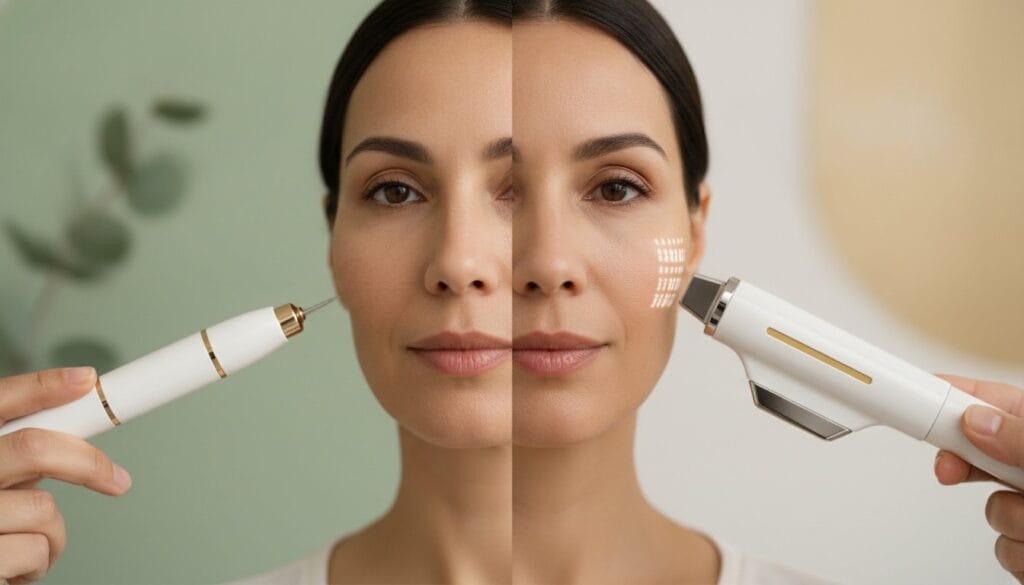
The most intensive treatment isn’t always the superior choice for your specific dermal concerns. When deciding between fractional co2 vs skin needling, many patients assume that the higher intensity of a laser naturally yields better results for every skin type. You likely recognise that both modalities aim to stimulate collagen through controlled injury, yet the biological pathways they trigger are fundamentally different. It’s common to feel overwhelmed by the choice between thermal ablation and mechanical stimulation, particularly when balancing the desire for structural transformation with the practicalities of recovery time and clinical safety.
This professional analysis clarifies the technical distinctions to help you make an evidence-based decision for your skin rejuvenation journey. We’ll examine the mechanics of thermal versus mechanical wounding, providing a clear comparison of clinical outcomes and recovery expectations. By the end of this guide, you’ll understand which procedure aligns with your Fitzpatrick skin phototype and your specific aesthetic goals. We’ll also explore how these treatments address structural correction versus surface maintenance to ensure your chosen path is both safe and effective for your long-term skin health.
Key Takeaways
- Understand the fundamental biological differences between mechanical micro-trauma and thermal ablation to determine how each modality triggers collagen induction.
- Compare the recovery expectations and ‘social downtime’ associated with fractional co2 vs skin needling to ensure your treatment plan aligns with your professional and personal schedule.
- Identify the critical safety considerations for various Fitzpatrick skin phototypes when utilising intensive laser energy versus mechanical wounding.
- Learn how to match the severity of your skin concerns, such as deep acne scarring or structural laxity, to the appropriate depth of clinical intervention.
- Discover why a professional skin analysis is the essential first step in navigating medical-grade rejuvenation technologies for predictable, high-standard results.
Understanding Skin Resurfacing: Mechanical vs. Thermal Modalities
The field of medical-grade skin rejuvenation encompasses a broad spectrum of technologies designed to induce cellular turnover and collagen synthesis. At the core of clinical decision-making is the distinction between mechanical and thermal wounding. While both methods aim to improve skin texture and tone, the biological pathways they activate differ significantly. Understanding the nuances of fractional co2 vs skin needling requires a look at how the body responds to physical versus light-based stimuli. The choice of modality is rarely about which technology is superior in a general sense, but rather which mechanism is most appropriate for the depth and severity of the specific dermal concern.
Aesthetic science categorises these treatments based on how they interact with the skin’s architecture. Techniques like Photorejuvenation and laser resurfacing utilise controlled energy to target specific chromophores or water molecules, whereas mechanical methods rely on physical disruption. At our Melbourne clinic, we find that patient outcomes are most predictable when the treatment intensity matches the biological requirements of the tissue being treated.
Skin Needling: The Versatile Mechanical Approach
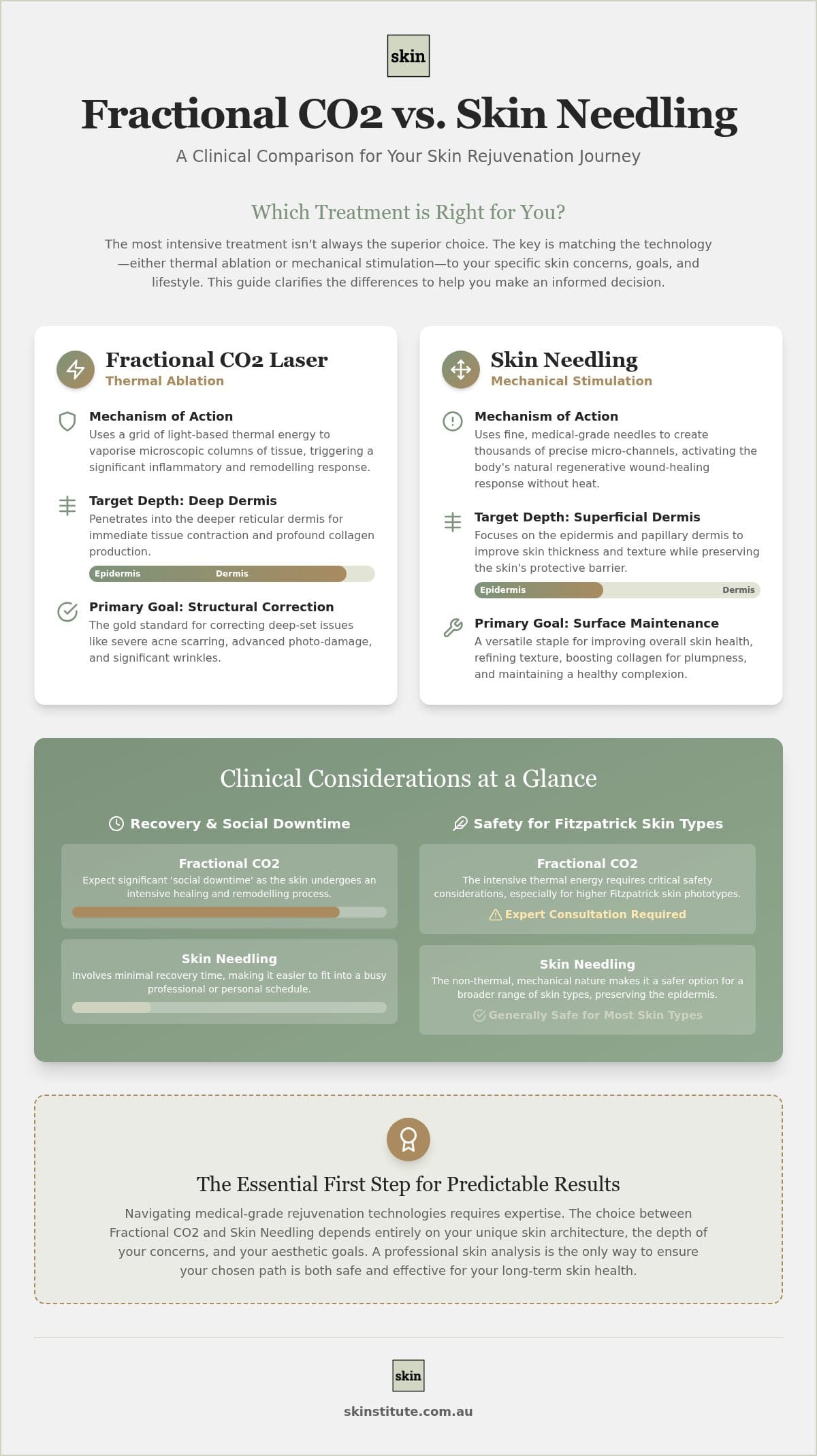
Skin needling, often referred to as collagen induction therapy, is a non-thermal, mechanical procedure. It involves the use of specialised medical-grade needles to create thousands of precise micro-channels through the epidermis and into the papillary dermis. Because this process doesn’t utilise heat, it avoids the risk of thermal damage to the surrounding tissue. The primary mechanism is the activation of the body’s natural wound-healing response. This trigger leads to the release of essential growth factors and the subsequent production of new collagen and elastin fibres. It remains a staple for general skin health and maintenance, offering a reliable solution for those seeking to improve skin thickness and texture with minimal recovery time.
Fractional CO2: The Gold Standard for Structural Correction
Fractional CO2 laser technology represents a more intensive, ablative approach to skin resurfacing. The term ‘fractional’ refers to the delivery of laser energy in a grid pattern, treating only a specific percentage of the skin’s surface while leaving bridges of untouched tissue in between. This allows for rapid re-epithelialisation and reduced downtime compared to traditional fully ablative lasers. The CO2 laser targets water molecules within the skin cells, vaporising microscopic columns of tissue to reach the deeper reticular dermis. This profound thermal energy causes immediate tissue contraction and initiates a significant remodelling process. When comparing fractional co2 vs skin needling for deep acne scarring or advanced photo-damage, the thermal ablation provided by the laser is often necessary to achieve meaningful structural correction.
Ultimately, the selection process is governed by the depth of the pathology. Superficial irregularities and maintenance goals are well-suited to the mechanical micro-trauma of needling. However, when the skin requires a total architectural reset to address deep rhytids or significant scarring, the precision and power of fractional thermal energy become the clinical priority.
Mechanism of Action: Biological Remodelling and Collagen Induction
The biological response to dermal intervention is determined by the nature of the stimulus. In the comparison of fractional co2 vs skin needling, we observe two distinct pathways to neocollagenesis. Skin needling relies on mechanical trauma. Fine needles penetrate the stratum corneum to create micro-channels that trigger the release of growth factors like TGF-beta 3. This process promotes a regenerative healing response rather than a fibrotic one. Conversely, the CO2 laser operates on the principle of photothermolysis. It targets intracellular water, causing rapid vaporisation of tissue columns. This thermal shock induces a more aggressive inflammatory response, which is often required for deep structural remodelling.
Mechanical Micro-trauma vs. Thermal Ablation
Mechanical needling is often preferred for its ability to preserve the epidermis while stimulating the underlying dermis. By keeping the protective barrier largely intact, the risk of post-inflammatory hyperpigmentation is reduced. In contrast, Fractional CO2 provides a profound tissue tightening effect that mechanical tools can’t replicate. This occurs because the heat causes immediate collagen fibre shrinkage. Fractional technology is defined by leaving bridges of untreated skin between the laser columns to accelerate the healing process. Data from a clinical trial comparing laser and microneedling suggests that while both are effective, the thermal component of the laser provides superior results for deep rhytids and significant structural damage.
Stimulating the Fibroblast Response
The depth of penetration plays a critical role in the final clinical outcome. A 1.5mm needle creates a physical pathway for growth factor infiltration. However, a CO2 laser beam can reach deeper into the reticular dermis with high precision. Thermal injury leads to more significant long-term skin contraction because the heat-induced stress triggers a more robust fibroblast activation. This results in the production of Type I collagen over several months. It’s essential to treat the correct dermal layer to address specific concerns like ice-pick scars or loss of elasticity. Professional assessment at a clinic like Skinstitute ensures that the selected modality reaches the necessary depth for your unique skin architecture.
The timeline for results is a gradual physiological process. Initial inflammation typically subsides within days, but the true remodelling phase lasts for three to six months. During this period, the initial Type III collagen is replaced by stronger, more organised Type I collagen. This biological maturation is what leads to the visible improvement in skin density and smoothness. By understanding these mechanisms, patients can better appreciate why certain conditions require the intensity of a laser while others respond best to the steady approach of mechanical needling.
Clinical Comparison: Recovery, Sensation, and Results
The practical experience of undergoing fractional co2 vs skin needling differs significantly in terms of patient comfort and immediate post-procedural appearance. During skin needling, patients typically report a mechanical “scratching” sensation. This is generally well-tolerated with the application of a high-strength topical anaesthetic. In contrast, Fractional CO2 laser involves a more intense thermal sensation, often described as a series of sharp, hot “snaps” against the skin. While both procedures utilise anaesthesia to manage discomfort, the laser’s thermal component necessitates a more robust approach to pain management and post-treatment cooling.
The Recovery Timeline: What to Expect
Quantifying ‘social downtime’ is essential for Melbourne-based professionals who must balance clinical results with their work commitments. Skin needling offers a rapid recovery window. Most patients experience mild erythema, similar to a moderate sunburn, which typically resolves within 24 to 48 hours. This allows for a swift return to daily activities and the application of mineral makeup by the second day.
The recovery phase for Fractional CO2 is more involved, usually spanning five to seven days. During the first 72 hours, the skin may appear bronzed and feel tight. This is followed by a period of significant peeling and textural changes as the vaporised columns of tissue are replaced. Clinical aftercare is paramount during this week. Patients must adhere to strict hydration and sun protection protocols to safeguard the newly regenerated skin surface from environmental damage. Using medical-grade occlusives helps maintain the skin barrier while the underlying dermis completes its initial healing phase.
Treatment Efficacy and Frequency
A primary consideration in the fractional co2 vs skin needling debate is the number of sessions required to reach a specific aesthetic goal. Skin needling is a cumulative therapy. Because it relies on a gentler mechanical stimulus, a series of three to six sessions, spaced four to six weeks apart, is often necessary to achieve visible improvements in skin texture and collagen density. It’s an excellent modality for long-term maintenance and subtle rejuvenation.
For those seeking more dramatic structural correction, a single, intensive fractional co2 laser resurfacing melbourne session can often deliver results comparable to multiple needling treatments. The laser’s ability to reach deeper dermal layers and induce immediate tissue contraction makes it the preferred choice for deep acne scars and advanced photo-ageing. While the initial downtime is longer, the efficiency of the results often justifies the recovery period for patients with significant concerns. Safety remains a priority in both instances, and adhering to professional guidelines, such as the FDA Safety Communication on microneedling, ensures that even mechanical treatments are conducted within a rigorous clinical framework. Maintenance protocols, involving annual or bi-annual follow-ups, help sustain these clinical outcomes for several years.
Selection Criteria: Matching Technology to Skin Type and Concern
The clinical selection between fractional co2 vs skin needling requires a rigorous evaluation of the patient’s dermal architecture and their Fitzpatrick skin phototype. While both modalities address collagen depletion, the decision to use thermal energy versus mechanical wounding is governed by the severity of the concern and the patient’s biological risk profile. We must assess whether the goal is surface refinement or a deep architectural reset. In a clinical setting, we also consider the patient’s lifestyle, as the ability to manage a recovery period is often as important as the desired aesthetic outcome.
Melbourne residents often present with specific patterns of chronic sun damage and environmental stress due to high UV exposure. This accelerated photo-ageing frequently manifests as deep rhytids and significant loss of elasticity. To achieve predictable results, a professional skin analysis at Skinstitute is the essential first step in determining which technology aligns with your unique skin health requirements.
Best for Texture, Pores, and Maintenance
Skin needling is the indicated modality for patients presenting with enlarged pores, superficial fine lines, or those seeking preventative collagen stimulation. One of its primary clinical advantages is its superior safety profile for patients with darker skin phototypes (Fitzpatrick IV through VI). Because the procedure is non-thermal, it carries a significantly lower risk of post-inflammatory hyperpigmentation compared to laser-based treatments. It’s also the preferred choice for individuals who require a treatment that fits into a busy professional schedule without the necessity of a week-long recovery phase.
Best for Deep Scars, Wrinkles, and Photo-ageing
When the clinical objective involves correcting stubborn acne pitting, deep-set perioral lines, or advanced dermal laxity, we typically escalate to Fractional CO2. This ablative technology is the gold standard for significant dermal remodelling. The laser’s ability to vaporise precise columns of tissue induces a profound contraction that mechanical needling cannot replicate. This results in a visible lifting effect and a total resurfacing of the skin’s texture. For those exploring medical-grade laser options for pigmentation and skin clarity, specialists like Be-Youth highlight the importance of using advanced technology to achieve precise aesthetic outcomes. While the recovery is more intensive, the structural transformation achieved in a single session is often required for patients with advanced photo-damage or complex scarring. Selecting this intensive path requires careful consideration of the healing window, but for many, the high-impact results justify the temporary downtime.
Ultimately, the choice isn’t about which technology is better in isolation, but which one is safer and more effective for your specific biological needs. By matching the correct depth of penetration and energy delivery to the skin’s condition, we ensure that every treatment provides a meaningful improvement in both appearance and structural integrity.
Skinstitute brings over 26 years of clinical industry experience to the Melbourne aesthetic landscape. This depth of knowledge allows us to move beyond superficial trends, focusing instead on established scientific principles and evidence-based results. Every patient’s dermal journey begins with a professional skin analysis. This step is the most critical phase of your treatment because it identifies the precise biological requirements of your tissue. We don’t believe in a one-size-fits-all solution; instead, we use this diagnostic phase to navigate the choice of fractional co2 vs skin needling based on your unique skin architecture and recovery capacity.
Our commitment to patient safety is reflected in our rigorous protocols. We often integrate advanced regenerative therapies to enhance the healing process. For instance, combining resurfacing with rejuran melbourne or exosomes can significantly accelerate re-epithelialisation. These polynucleotide and growth factor treatments provide the essential building blocks for cellular repair. This ensures that the inflammatory response triggered by the laser or needles leads to the highest quality collagen production rather than unnecessary stress on the dermal barrier.
Personalised Clinical Assessment
During your assessment, we evaluate the specific characteristics of your skin, including hydration levels, barrier integrity, and the presence of underlying vascularity or pigment. This data allows us to customise treatment parameters such as the depth of needle penetration or the energy density of the CO2 laser. By adjusting these variables, we ensure the procedure is as effective as possible while maintaining a high safety margin. Professional preparation of the skin before the treatment and meticulous clinical expertise during the process are essential to ensuring patient comfort and predictable outcomes.
Starting Your Journey at Skinstitute
Your initial consultation at our Melbourne clinic is designed to be a thorough educational experience. We take the time to explain the physiological “why” behind our recommendations, allowing you to feel informed and respected throughout the process. This diagnostic clarity is essential when weighing the benefits of fractional co2 vs skin needling for your specific lifestyle. This consultation isn’t just about the immediate procedure; it’s about developing a long-term skin health plan that sustains your results over several years. We focus on the gradual improvement of skin quality, prioritising professional integrity and long-term dermal health over quick conversions.
To begin your transformation with a team that values precision and clinical mastery, Book your clinical skin analysis at Skinstitute Melbourne.
Choosing Your Path to Dermal Integrity
Choosing your path to dermal integrity requires a sophisticated understanding of how specific technologies interact with your biological architecture. Whether your clinical objective is the steady maintenance provided by mechanical needling or the profound structural reset of thermal ablation, it’s clear that the success of the procedure depends on precise application. Determining the ideal choice of fractional co2 vs skin needling is most effectively achieved through a professional analysis that considers your Fitzpatrick skin phototype and lifestyle requirements.
At Skinstitute, we leverage over 26 years of clinical experience to guide patients through these technical decisions from our specialised clinic in the heart of Melbourne. Our use of medical-grade technology and evidence-based protocols ensures that your treatment plan’s both safe and structurally transformative. By matching the correct modality to the depth of your dermal concerns, we prioritise long-term skin health and predictable aesthetic outcomes. Take the first step toward a scientifically informed rejuvenation strategy by visiting us for a comprehensive assessment. Book Your Professional Skin Consultation at Skinstitute to begin your journey with confidence.
Frequently Asked Questions
Is Fractional CO2 or skin needling better for deep acne scars?
Fractional CO2 is the clinically indicated choice for deep acne scarring due to its ability to reach the reticular dermis and vaporise scar tissue. While skin needling improves superficial texture, it lacks the thermal energy needed for profound structural remodelling of pitted scars. Most patients with significant acne pitting require the ablative power of a laser to achieve a smoother skin surface. A professional consultation is necessary to determine the depth of your specific scarring.
How much downtime is really required after a Fractional CO2 treatment?
A Fractional CO2 treatment typically requires five to seven days of social downtime. During the first 72 hours, you’ll likely experience erythema and swelling, followed by a period where the skin feels dry and begins to peel. In contrast, skin needling involves a much shorter recovery window of 24 to 48 hours. Melbourne professionals often schedule laser treatments during a quiet week to allow the skin’s barrier to regenerate fully without environmental stress.
Can I have skin needling if I have a darker skin tone?
Skin needling is an excellent option for patients with darker skin phototypes, specifically Fitzpatrick scales IV through VI. Because it’s a mechanical, non-thermal treatment, it carries a significantly lower risk of post-inflammatory hyperpigmentation compared to laser resurfacing. This makes it a safer choice for individuals prone to pigmentation issues. We always conduct a thorough skin analysis to ensure the treatment parameters are safe for your specific melanin levels and dermal health.
Does a Fractional CO2 laser treatment hurt more than skin needling?
Patients generally report that Fractional CO2 involves a higher level of discomfort than skin needling. The laser delivers thermal energy that feels like sharp, hot snaps, whereas needling is described as a mechanical scratching sensation. We utilise high-strength topical anaesthetics for both procedures to ensure comfort. However, the heat-induced inflammatory response of the laser often necessitates more intensive post-treatment cooling and clinical monitoring than the mechanical micro-trauma of needling.
How many sessions of skin needling equal one Fractional CO2 treatment?
In the comparison of fractional co2 vs skin needling, clinical outcomes suggest that one intensive laser session often delivers results comparable to three to six skin needling treatments. This is due to the laser’s ability to induce immediate tissue contraction and reach deeper dermal layers. While needling is effective for cumulative maintenance, the thermal ablation of the CO2 laser provides a more efficient path for those seeking dramatic structural correction for deep wrinkles or scarring.
What is the best time of year in Melbourne to have a Fractional CO2 laser?
The best time to undergo Fractional CO2 laser in Melbourne is during the autumn or winter months. Reduced UV levels during these seasons lower the risk of developing post-treatment pigmentation while the skin is in its vulnerable healing phase. Melbourne’s summer sun can be particularly harsh on newly resurfaced skin. Regardless of the season, strict adherence to medical-grade sun protection is mandatory to safeguard your results and ensure safe dermal regeneration.
Can these treatments be combined with cosmetic injectables?
These treatments can be successfully combined with prescription injectables, but the sequence and timing are vital. We typically recommend completing your laser or needling sessions before administering injectables like dermal fillers. This prevents the thermal energy or mechanical trauma from interfering with the placement of the product. If you’ve recently had injectables, we usually advise waiting at least two to four weeks before proceeding with intensive skin resurfacing to ensure optimal integration.
Are the results of Fractional CO2 laser resurfacing permanent?
The structural improvements and collagen induction from Fractional CO2 laser are long-lasting, but they don’t stop the natural ageing process. The new collagen fibres created during the remodelling phase provide a more resilient dermal matrix for several years. However, environmental factors and biological ageing will eventually affect the skin’s appearance. We recommend a long-term maintenance plan, which may include annual skin needling sessions or advanced regenerative therapies like exosomes, to sustain your results.