Sclerotherapy Melbourne: The Clinical Standard for Leg Vein Removal
July 28, 2026
Fractional CO2 Laser Cost Melbourne: 2026 Clinical Pricing Guide
July 30, 2026
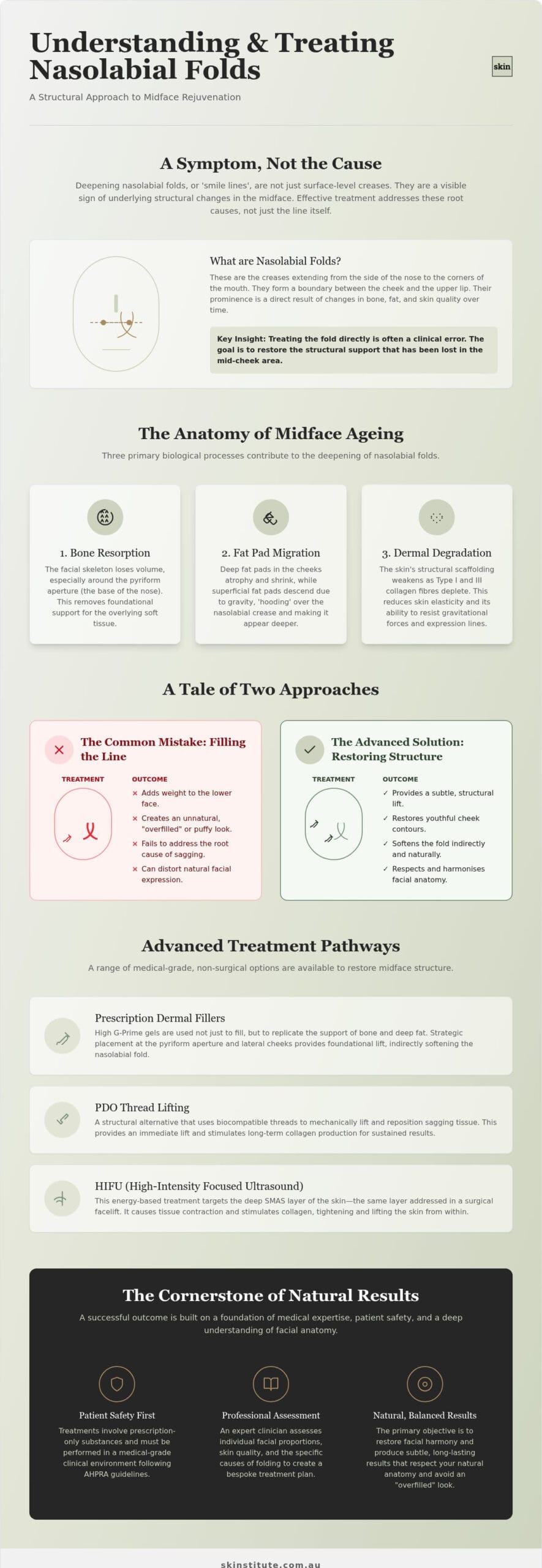
Treating a nasolabial fold by simply filling the crease is often a clinical error that leads to the distorted, over-volumised appearance many patients fear. Effective rejuvenation requires more than just addressing a surface-level line; it demands a sophisticated understanding of how the underlying fat pads and bone structure shift over time. When considering injectables for nasolabial folds Melbourne residents should look for a clinical approach that prioritises structural restoration rather than mere volume replacement. You aren’t alone if you’ve noticed your smile lines becoming more pronounced or your cheeks losing their definition, and it’s natural to feel cautious about results that look excessive or unnatural.
This article provides a detailed overview of the biological causes of midface ageing and the medical-grade, non-surgical treatments available to address them. You’ll gain a clear understanding of how targeted clinical interventions can produce subtle, long-lasting results that respect your natural anatomy. We will explore the technical nuances of midface support, the importance of the mandatory AHPRA consultation guidelines, and how a seasoned practitioner develops a bespoke plan to restore your facial harmony without the need for invasive surgery.
Key Takeaways
- Understand that nasolabial folds are primarily driven by midface fat pad migration and bone resorption rather than simple surface-level dermal creasing.
- Discover how medical-grade injectables for nasolabial folds Melbourne practitioners utilise can restore foundational support at the pyriform aperture for a subtle, structural lift.
- Learn about advanced structural alternatives like PDO Thread Lifting and HIFU that mechanically reposition sagging tissue or tighten the deeper SMAS layer.
- Identify the importance of a professional clinical assessment of facial proportions to ensure results remain natural and avoid the common “overfilled” appearance.
- Recognise why prescription-only substances and a medical-grade clinical environment are essential for patient safety and evidence-based outcomes.
Understanding the Anatomy of Nasolabial Folds
Nasolabial folds are the linear dermal creases that extend from the lateral aspect of the nose to the corners of the mouth. While they are a natural feature of human expression, their deepening often signals a transition in facial architecture. To understand the role of Anatomy of Nasolabial Folds in aesthetic medicine, one must look beneath the skin surface. These lines aren’t merely surface wrinkles; they represent a boundary where the mobile tissues of the cheek meet the more fixed tissues of the upper lip. When assessing candidates for injectables for nasolabial folds Melbourne clinicians must distinguish between a fold caused by volume loss and one caused by skin laxity.
The progression of these folds is largely dictated by midface volume loss. As we age, the facial skeleton undergoes bone resorption, particularly in the midface and around the pyriform aperture. Simultaneously, the deep fat pads that provide a youthful “lift” begin to atrophy. This loss of internal support causes the superficial fat pads to migrate downwards. When the malar fat pad descends, it rests against the nasolabial fold, creating a heavy, hooded appearance that can’t be resolved by simply treating the line itself. Chronic depletion of elastin and collagen fibres means the skin no longer maintains its original tension, allowing the nasolabial fat pad to expand and bulge over the crease.
The Biological Causes of Deep Smile Lines
The degradation of Type I and Type III collagen fibres is the primary biological driver of dermal thinning. These fibres provide the structural scaffolding for the skin, and their decline reduces the skin’s resistance to mechanical stress. Repeated contraction of the underlying facial musculature, specifically the levator labii superioris, etches these dynamic expression lines deeper into the dermis over time. Effectively, nasolabial folds are a symptom of midface structural descent rather than an isolated skin concern.
Why Some Folds Appear Earlier Than Others
Genetic predispositions play a significant role, specifically the depth of the pyriform fossa, which is the bony depression at the base of the nose. Individuals with a naturally recessed pyriform fossa often see deeper folds in their twenties because there’s less skeletal support for the overlying tissue. Lifestyle factors like significant weight loss can also accelerate volume depletion, causing the skin to drape more heavily. In a local context, Melbourne environmental stressors, particularly high UV exposure, accelerate the breakdown of elastin, leading to premature dermal thinning and fold prominence. When looking for injectables for nasolabial folds Melbourne patients often find that their unique facial bone structure dictates the specific clinical approach required.
Prescription Injectables and Dermal Fillers for Nasolabial Correction
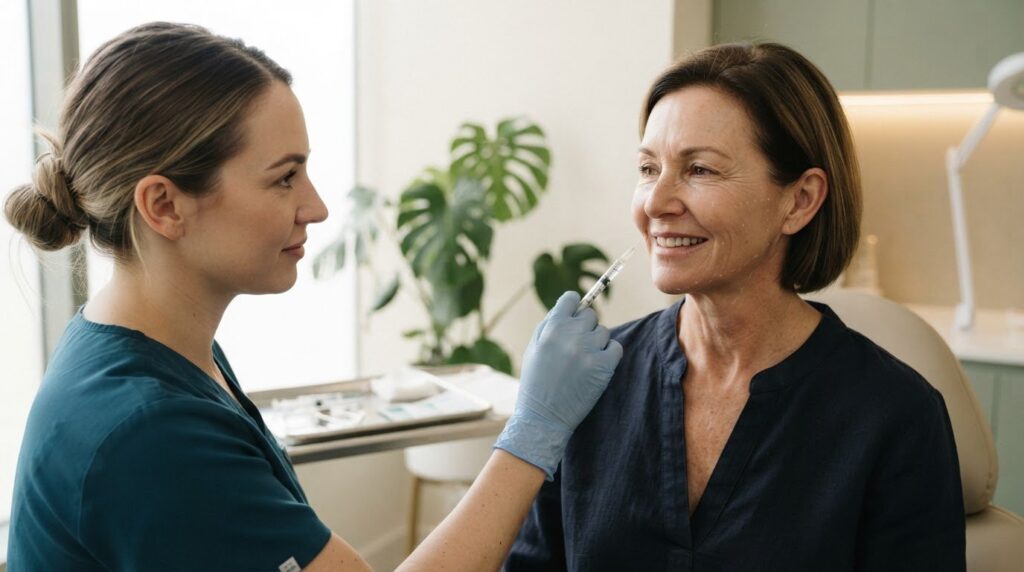
Correcting the nasolabial region requires more than just filling a line; it involves the strategic placement of biocompatible substances to restore lost structural integrity. For those seeking professional prescription injectables, the focus is often on addressing the root cause identified in the anatomical assessment. While many associate these treatments with immediate volume, their primary function is to replicate the support once provided by youthful fat pads and bone density. When administering injectables for nasolabial folds melbourne clinicians focus on the mechanical interaction between the gel and the surrounding facial tissues.
A critical target in modern aesthetic medicine is the pyriform aperture, which is the bony opening for the nose. By placing high-density gel at this foundational point, practitioners provide a base that lifts the medial aspect of the fold. This is often combined with “cheek loading,” a technique where volume is restored to the lateral midface. By re-volumising the cheeks, the overlying skin is pulled upward and back, naturally softening the nasolabial crease without making the lower face look heavy. This indirect approach is why FDA-Approved Dermal Fillers are increasingly utilised for structural restoration rather than just line filling.
Selecting the Right Substance for Your Skin Type
The choice of substance depends on its G-Prime, which refers to the gel’s ability to resist deformation and provide lift. High G-Prime gels are essential for structural support at the bone level, whereas lower molecular weight, softer gels are better suited for superficial fine lines. Safety is paramount, which is why clinical practitioners use reversible, prescription-only substances. These allow for precise control and provide a safety net, as they can be dissolved with a specific enzyme if necessary.
The Clinical Procedure: What to Expect
Patient comfort is managed through topical anaesthesia and the use of products containing integrated lidocaine. To optimise safety and minimise bruising, clinicians often utilise blunt-tipped cannulas rather than traditional needles. Cannulas slide through tissues with less trauma to blood vessels, which is particularly beneficial in the vascular-rich nasolabial area. While some results are visible immediately, the substance requires a 14-day integration period to fully settle into the tissue and hydrate. Typically, these injectables for nasolabial folds melbourne patients select last between six and eighteen months, depending on individual metabolic rates and lifestyle factors.
Beyond Fillers: Advanced Structural and Regenerative Alternatives
While volumisation is a critical component of facial rejuvenation, treating deep creases often requires a multi-modality approach that addresses tissue laxity and cellular health. For patients seeking injectables for nasolabial folds melbourne, relying solely on dermal fillers can occasionally lead to a heavy appearance if the primary issue is the physical descent of the malar fat pad. In such instances, clinical practitioners look toward mechanical lifting and regenerative biostimulators to restore the face’s natural architecture. These advanced therapies work synergistically with traditional injectables to provide a more comprehensive, structural result.
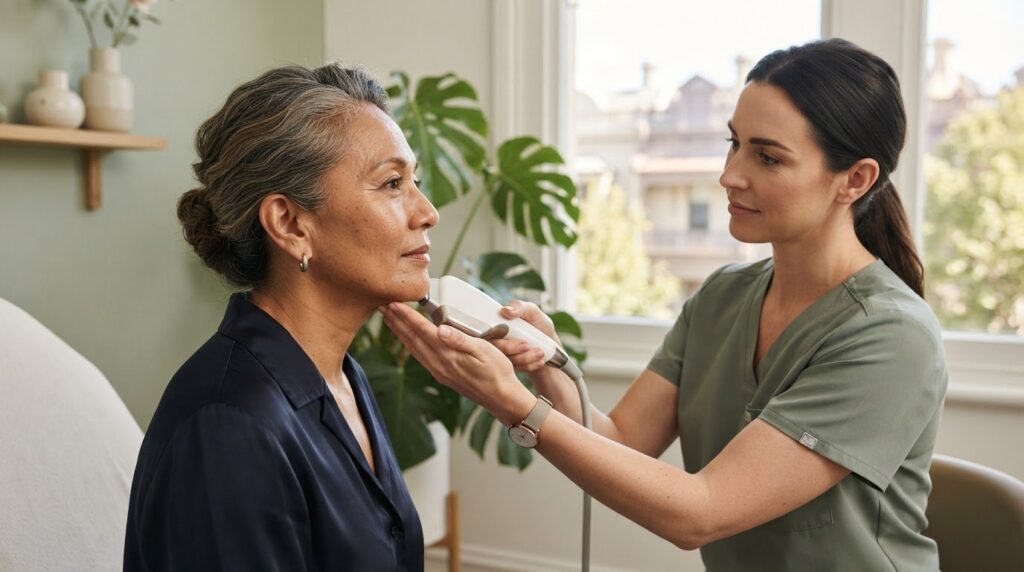
PDO Thread Lifting involves the strategic insertion of polydioxanone sutures into the subcutaneous layer to physically elevate sagging tissue. By mechanically repositioning the malar fat pad, the pressure on the nasolabial fold is reduced, which softens the crease without adding unnecessary volume. Similarly, High Intensity Focused Ultrasound (HIFU) targets the Superficial Musculoaponeurotic System (SMAS), the same layer addressed in surgical procedures. HIFU delivers focused thermal energy to induce immediate collagen contraction and long-term neocollagenesis, effectively tightening the midface from within. While these advanced modalities offer structural benefits, clinicians must still adhere to FDA guidance on dermal filler safety when combining treatments to ensure optimal patient outcomes.
Comparing Fillers, PDO Threads, and HIFU
| Modality | Primary Action | Target Layer | Clinical Outcome |
|---|---|---|---|
| Prescription Fillers | Volumising | Deep Fat / Supraperiosteal | Restores lost support and bone projection. |
| PDO Thread Lifting | Lifting | Subcutaneous | Mechanically repositions descended fat pads. |
| HIFU | Tightening | SMAS / Deep Dermis | Contracts the structural foundation of the face. |
Combining these therapies often yields a superior result, sometimes referred to as a “liquid facelift.” For example, a practitioner might use a structural filler at the pyriform aperture and then utilise PDO threads to lift the cheek. For those focused on cellular repair, the Clinical Guide to Rejuran in Melbourne details how polynucleotides can heal the skin from within, improving the dermal thickness that often thins with age.
Regenerative Medicine for Skin Texture
Regenerative treatments address the fine, “etched-in” lines that fillers cannot always resolve. A Fractional CO2 Laser is frequently employed to resurface the skin surrounding the nasolabial area, stimulating a profound healing response that smooths the epidermis. Skin needling serves as a maintenance tool, preserving collagen density and ensuring the skin remains resilient post-injectable treatment. Exosomes represent the latest advancement in this field. These microscopic vesicles act as signaling molecules that instruct fibroblasts to accelerate the synthesis of collagen and elastin, ensuring that the results of injectables for nasolabial folds melbourne patients receive are supported by healthy, robust skin cells.
The Clinical Consultation: Tailoring Treatments to Melbourne Skin
Every face is anatomically unique, which is why a “one-size-fits-all” methodology invariably fails in aesthetic medicine. When assessing candidates for injectables for nasolabial folds melbourne, the primary objective is to evaluate the “triangle of beauty.” In a youthful face, the widest part of this triangle sits across the cheekbones, tapering down to the chin. As structural descent occurs, this triangle inverts, shifting the weight of the face toward the jawline. A clinical evaluation must identify whether the nasolabial crease is a result of this global inversion or isolated dermal thinning, as the treatment strategy differs significantly for each.
Managing expectations is a core component of the clinical process. The goal of a sophisticated treatment is to soften the shadow and depth of the fold rather than completely erase the line. A face devoid of any nasolabial movement appears “uncanny” and lacks natural expression. By restoring the midface structure, the fold sits more shallowly, reflecting a rested and healthy appearance that respects the patient’s original facial dynamics.
Melbourne’s specific environmental profile, characterised by high UV indices and rapid temperature fluctuations, often results in compromised skin barrier function. This can influence how the dermis responds to trauma and the speed at which it recovers. When administering injectables for nasolabial folds melbourne practitioners must consider these local stressors, as they often accelerate the degradation of collagen. Professional assessment ensures that treatments are timed and selected based on the current health of your skin’s dermal matrix.
Your First Appointment at Skinstitute
During your initial consultation, we conduct a comprehensive review of your medical history and a detailed assessment of facial symmetry. This is not a “quick-fix” session but the beginning of a long-term treatment plan tailored to your physiological needs. Choosing a clinic with 26 years of experience in medical-grade aesthetic treatments ensures that your plan is grounded in established safety protocols and technical mastery. We focus on the “why” behind every injection point to ensure a harmonious result.
Pre-Treatment and Aftercare Protocols
To ensure the best outcome and minimise the risk of haematoma, patients should avoid blood-thinning supplements, such as fish oil or certain anti-inflammatories, for at least five days prior to treatment. Following the procedure, specific protocols must be observed to protect the integration of the substance:
- Avoid strenuous exercise for 24 to 48 hours to prevent increased blood flow to the area.
- Manage initial swelling with cool compresses applied at regular intervals.
- Prioritise high-SPF sun protection to prevent UV-induced degradation of the dermal matrix.
To begin your clinical journey and achieve a naturally refreshed appearance, we recommend you book a comprehensive facial assessment with our senior practitioners.
Safety, Ethics, and Natural Results in Cosmetic Injectables
Clinical excellence in aesthetic medicine is defined by a commitment to safety and anatomical precision. When considering injectables for nasolabial folds melbourne, the priority must always remain the maintenance of a medical-grade environment and the use of TGA-approved, prescription-only substances. These standards ensure that the products utilised are biocompatible and, where necessary, fully reversible. A seasoned practitioner understands that the nasolabial region is highly vascular, requiring an intimate knowledge of facial artery pathways to mitigate risks. While minor bruising or swelling is a common physiological response to the procedure, rare but serious complications such as vascular occlusion demand immediate clinical recognition and intervention. This is why 26 years of industry experience is not just a statistic; it represents a deep repository of clinical knowledge that directly impacts patient safety.
Achieving a natural result involves avoiding the “overfilled” look that occurs when excessive volume is placed in the superficial dermis. This phenomenon, often referred to as the “uncanny valley,” distorts natural facial expressions and creates an artificial, heavy appearance in the lower face. By focusing on the structural causes of the fold, such as the midface descent discussed in previous sections, clinicians can achieve a result that is both subtle and effective. It’s the difference between masking a symptom and addressing the underlying anatomical cause, ensuring the face retains its unique character and movement.
The Skinstitute Philosophy: Subtle Rejuvenation
Our clinical philosophy prioritises global facial harmony over the isolated eradication of a single wrinkle. We believe that a successful treatment is one that remains undetectable to the untrained eye, leaving the patient looking refreshed rather than “done.” This commitment includes the ethical responsibility to refuse treatment when further intervention is not in the patient’s best interest. A sober and transparent consultation ensures that patients understand the biological limitations of non-surgical procedures, leading to more sustainable and satisfying outcomes. We value long-term structural health over temporary, high-volume corrections.
Choosing Your Injector in Melbourne
Selecting a provider for injectables for nasolabial folds melbourne requires a diligent review of the clinical setting and the practitioner’s credentials. Patients should look for an established clinic with a permanent physical location and long-term staff, which signals stability and ongoing accountability. A professional assessment should include verifying that the facility adheres to strict cleanliness standards and can provide verifiable case studies of their clinical work. To discuss a tailored plan for your facial rejuvenation, we invite you to book a clinical assessment for nasolabial folds at Skinstitute, where safety and technical mastery are the foundations of our practice.
Advancing Your Journey Toward Facial Harmony
Effective rejuvenation of the midface requires a transition from simply filling lines to restoring the underlying biological structures. By understanding that nasolabial folds are often a symptom of fat pad migration and bone resorption, you can choose treatments that offer sustainable, natural-looking results. Whether utilising structural prescription fillers, mechanical PDO Thread Lifting, or regenerative therapies like Rejuran, the objective remains the restoration of your unique facial proportions without the risk of over-volumisation.
When selecting injectables for nasolabial folds melbourne, the clinical environment and the practitioner’s technical proficiency are the most critical factors for your safety. A doctor-led assessment ensures that every intervention is evidence-based and tailored to your specific anatomy. With over 26 years of medical aesthetic experience, our team specialise in advanced techniques that prioritise subtle refinement and long-term dermal health.
We invite you to take the next step in your clinical care by visiting our centre in the heart of the city. Book Your Clinical Consultation at Skinstitute Melbourne to develop a bespoke plan that respects your natural features while addressing the biological causes of ageing. We look forward to partnering with you to achieve a refreshed and authentic version of yourself.
Frequently Asked Questions
What are nasolabial folds and why do they form?
Nasolabial folds are the indentation lines stretching from the edge of the nose to the outer corners of the mouth. They form due to a combination of biological ageing factors, including the resorption of facial bone and the downward migration of midface fat pads. As the skin loses structural proteins like collagen and elastin, it no longer possesses the tension required to resist the weight of these descending tissues, resulting in a deeper crease.
How long do injectables for nasolabial folds typically last?
Most injectables for nasolabial folds melbourne patients receive typically remain effective for a period of six to eighteen months. The exact duration of the results depends on the specific molecular weight of the substance used and your individual metabolic rate. Lifestyle factors, such as high levels of UV exposure or intense physical activity, can also influence how quickly your body naturally metabolises the biocompatible gel.
Can nasolabial folds be treated without using dermal fillers?
Yes, several advanced alternatives exist for those who prefer not to use traditional volumising substances. PDO Thread Lifting provides a mechanical lift by repositioning the malar fat pad, while High Intensity Focused Ultrasound (HIFU) tightens the underlying SMAS layer. Regenerative options like Rejuran or Exosome therapy focus on healing the dermis from within to improve skin thickness and resilience, offering a structural rather than a purely volumising solution.
Is the treatment for nasolabial folds painful?
The procedure is generally well-tolerated with minimal discomfort due to modern clinical protocols. We utilise high-strength topical anaesthesia before the treatment, and most prescription substances contain integrated lidocaine to numb the area during delivery. Using a blunt-tipped cannula instead of a needle also significantly reduces tissue trauma and the sensation of the treatment, ensuring a more comfortable experience for the patient.
Will I look “overdone” or unnatural after the procedure?
An overfilled or unnatural appearance is avoided by prioritising structural support at the bone level rather than over-volumising the superficial skin layers. Our clinical philosophy focuses on softening the fold to achieve a rested appearance that respects your natural facial dynamics. By addressing the “triangle of beauty” and restoring midface proportions, we ensure that your results remain subtle and harmonious with your original features.
How much downtime is required after nasolabial fold injectables?
Most patients experience minimal downtime and can return to their daily activities immediately following the session. We recommend avoiding strenuous exercise and excessive heat for 24 to 48 hours to minimise the risk of localised swelling or bruising. While minor swelling may occur, it usually resolves within a few days as the substance integrates into the surrounding facial tissues during the initial 14-day settling period.
Are results for nasolabial fold treatments immediate?
While you will notice an immediate softening of the crease, the final aesthetic outcome is typically visible after 14 days. This period allows the substance to fully integrate with your natural tissue and reach its optimal level of hydration. During this time, any initial minor swelling subsides, and the substance settles into its intended anatomical position, providing a more refined and natural-looking result.
Am I a good candidate for PDO threads instead of fillers for my smile lines?
You may be a suitable candidate for PDO threads if your nasolabial folds are primarily caused by the physical descent of the cheek tissue. While injectables for nasolabial folds melbourne clinicians provide are excellent for restoring lost volume, threads are designed to mechanically lift and reposition sagging fat pads. A clinical assessment is essential to determine whether your face requires foundational volume, mechanical lifting, or a combination of both.