Sclerotherapy: The Clinical Standard for Leg Vein Resolution in Melbourne
May 30, 2026
How to Choose a Cosmetic Clinic in Melbourne: A Clinical Selection Guide for 2026
June 1, 2026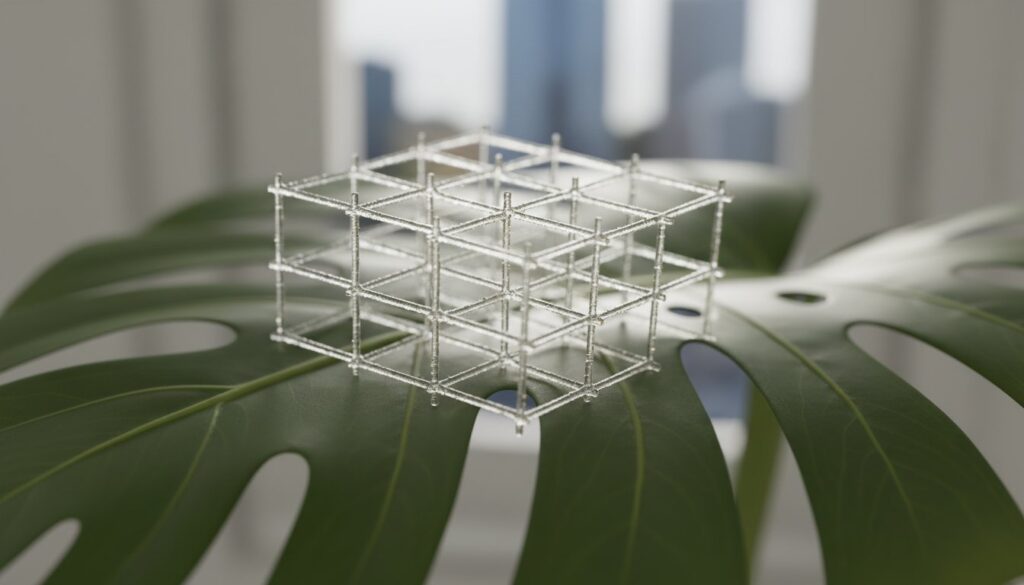
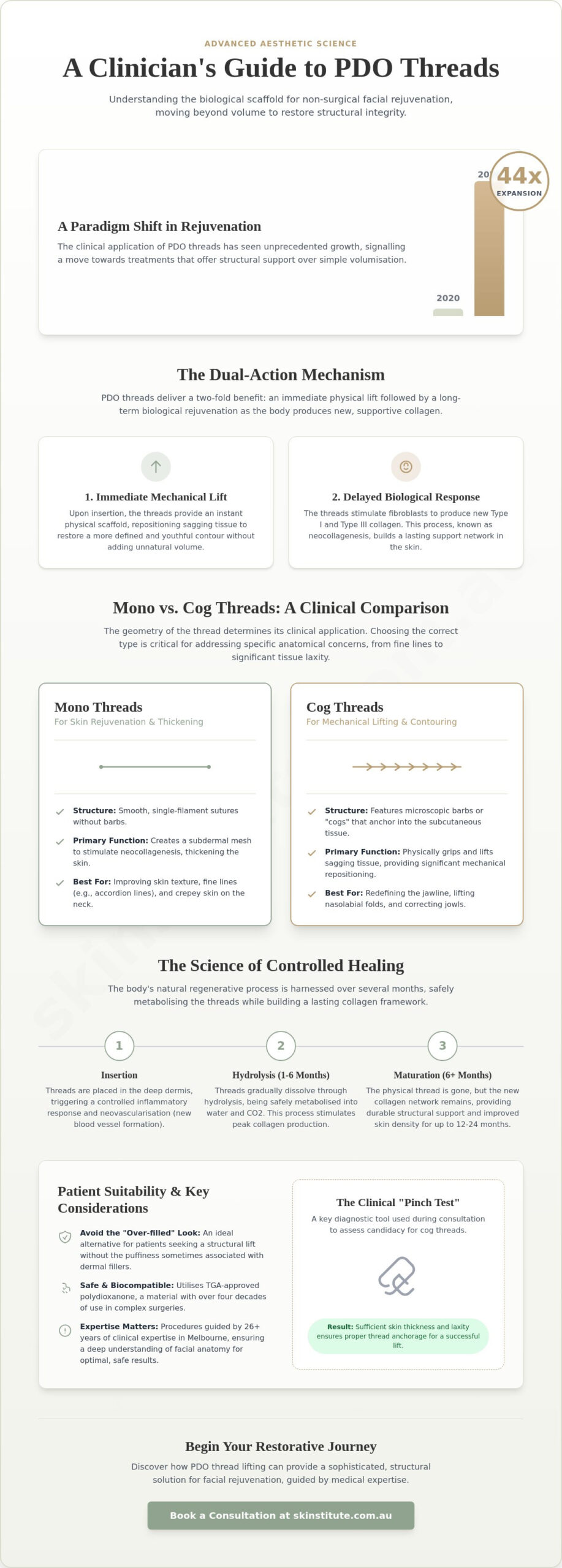
Between 2020 and 2024, the clinical application of pdo threads in major markets expanded by more than 44 times, signalling a significant evolution in non-surgical facial rejuvenation. You likely understand that as dermal laxity increases, the resulting loss of jawline definition and prominent nasolabial folds require an intervention that addresses underlying structural integrity. Many patients express a legitimate apprehension regarding traditional injectables, specifically the risk of an over-filled or “puffy” appearance that can distort natural facial contours. It’s a common concern for those who value anatomical precision over mere volume replacement.
This article provides a rigorous analysis of how these threads function as a biological scaffold, facilitating a sophisticated lifting effect that differs fundamentally from volume-based treatments. We will detail the physiological process of neocollagenesis triggered by polydioxanone and compare these outcomes to other clinical modalities such as High Intensity Focused Ultrasound (HIFU) and Fractional CO2. By examining the technical mechanisms and current TGA regulatory context, we aim to provide the educational clarity necessary for a restorative journey rooted in safety and evidence-based results.
Key Takeaways
- Understand the biological properties of polydioxanone, a high-tensile medical suture that facilitates neocollagenesis as it safely absorbs into the dermal tissue.
- Learn to differentiate between smooth mono threads and barbed cog threads to determine which geometry best addresses your specific anatomical concerns.
- Discover why pdo threads offer a unique mechanical lift for sagging tissue, providing a structural alternative for those who wish to avoid the “puffy” appearance associated with over-volumisation.
- Explore the clinical “Pinch Test” used during consultations to assess skin thickness and ensure sufficient anchorage for optimal lifting results.
- Benefit from over 26 years of clinical expertise in Melbourne, where procedures are guided by a deep understanding of facial anatomy and medical-grade standards.
Understanding PDO Threads: The Biological Scaffold
Polydioxanone, commonly referred to as PDO, is a synthetic, monofilament polymer that has served as a cornerstone in complex surgical disciplines for over four decades. Originally utilised in cardiovascular and orthopaedic surgery due to its high tensile strength and non-antigenic properties, it’s a material that the human body tolerates with remarkable consistency. In the context of aesthetic medicine, pdo threads function as a temporary biological scaffold. Unlike permanent implants, these sutures are designed to be fully absorbed by the body through a process known as hydrolysis, where water molecules gradually break down the polymer chains until they’re entirely eliminated. This predictable degradation profile makes them an ideal candidate for non-surgical rejuvenation.
The clinical efficacy of this treatment relies on a dual-action mechanism. Upon insertion, the threads provide immediate mechanical support to the dermal layers, creating a visible lifting effect that repositions sagging tissue. However, the more profound transformation occurs over several months as the material triggers a delayed biological response. This process, often explored in a broader overview of thread lift techniques, involves the activation of fibroblasts. These specialised cells are responsible for the synthesis of new extracellular matrix components, specifically Type I and Type III collagen. While the physical thread eventually disappears, the newly formed collagen network remains, providing a lasting internal structure that improves skin density and elasticity.
The Science of Controlled Healing
When pdo threads are placed within the subcutaneous fat or deep dermis, they initiate a controlled inflammatory response. This isn’t a detrimental reaction; rather, it’s a targeted signal to the body’s repair mechanisms. One of the most critical aspects of this phase is neovascularisation, which is the formation of new micro-capillaries around the thread site. This increased blood flow delivers essential nutrients and oxygen to the skin, enhancing overall tissue vitality. As the hydrolysis process continues, the body safely metabolises the material into water and carbon dioxide, typically over a period of six months, though the structural benefits often persist much longer due to the matured collagen fibres.
Why Medical-Grade Materials Matter
In the Australian clinical environment, the quality of the suture material is a non-negotiable factor for patient safety. We utilise only TGA-approved pdo threads that meet rigorous standards for purity and mechanical integrity. This focus on medical-grade materials is essential to prevent complications such as biofilm formation or chronic inflammation. At Skinstitute, our commitment to sterile clinical conditions and premium, evidence-based materials ensures that the biological scaffold performs exactly as intended. By prioritising anatomical precision and high-quality sutures, we provide a stable environment for the body’s natural regenerative processes to take place, resulting in a refined and technically superior outcome.
Mono vs. Cog Threads: Differentiating Clinical Applications
The clinical efficacy of pdo threads depends heavily on the specific geometry of the suture selected for the procedure. While the material remains polydioxanone, the physical structure of the thread determines whether the primary outcome is dermal thickening or mechanical repositioning. Distinguishing between smooth mono threads and barbed cog threads is essential for developing a realistic treatment plan that aligns with specific anatomical requirements. Practitioners must evaluate the degree of tissue laxity to select the appropriate tool for the desired physiological change.
PDO Mono Threads for Skin Rejuvenation
Mono threads are smooth, single-filament sutures designed to stimulate neocollagenesis within the dermal layers. Rather than providing a mechanical lift, they function by creating a sub-dermal mesh that encourages the body to produce new collagen around each suture. This intervention is specifically indicated for improving skin thickness and texture in areas prone to fine lines, accordion lines, or crepey skin on the neck. Because the results rely on the body’s biological response rather than physical tension, multiple sessions are often required to achieve the optimal collagen density for visible skin tightening.
PDO Cog Threads for Structural Lifting
In contrast, cog threads feature microscopic barbs or “cogs” along their length. These structures allow the thread to anchor into the subcutaneous adipose tissue, providing the necessary traction to physically lift and reposition sagging areas. This modality is the preferred choice for jowl reduction, brow lifting, and softening deep nasolabial folds. The procedure requires high technical precision, as the practitioner must ensure the threads are placed at the correct depth and along precise anchor points to avoid visible irregularities or tissue dimpling.
When utilising pdo threads for structural improvement, the success of the intervention relies on the concept of “vectoring.” This involves placing the threads in a specific orientation to counteract the effects of gravity on facial fat pads. By carefully directing the tension, a practitioner can achieve a natural, non-surgical lift that restores facial contours without the artificial appearance sometimes seen with volume-based methods. It’s a process that prioritises anatomical balance over aggressive pulling, ensuring the face maintains its natural expressive capacity.
Patients must maintain a clear understanding of the PDO thread lift benefits and risks before proceeding with treatment. While mono threads address skin quality, cog threads focus on structural repositioning; neither is a direct substitute for the other. For those seeking a tailored approach, a clinical consultation at Skinstitute can help determine the optimal combination of thread types for your unique facial structure. Managing these expectations ensures that the final result remains subtle, restorative, and grounded in clinical reality.
PDO Threads vs. Alternative Modalities: A Comparative Framework
Selecting the appropriate aesthetic intervention requires a precise diagnosis of whether a patient’s concern stems from volume depletion, gravitational descent, or cellular degradation. While many modalities aim for rejuvenation, their biological targets differ significantly. A professional assessment prioritises the most effective mechanism for the specific anatomical deficit. For many patients in Australia, the choice isn’t between one treatment or another, but rather a strategic combination that addresses multiple layers of facial ageing. Understanding how pdo threads interact with other technologies is fundamental to achieving a balanced, natural outcome.
Threads vs. Dermal Fillers
Dermal fillers are primarily designed for volume restoration, effectively replacing lost subcutaneous fat or addressing bone resorption. However, a common clinical error involves attempting to “lift” sagging tissue by over-injecting filler into the mid-face. This often results in an unnatural, over-filled appearance that lacks anatomical definition. In contrast, pdo threads address gravitational descent by mechanically repositioning existing adipose tissue. By using threads to restore the jawline and soften nasolabial folds, practitioners can avoid the “puffy” aesthetic while achieving a genuine structural lift. Clinical indicators for threads over fillers include visible tissue laxity where volume is already sufficient.
Threads vs. Rejuran and Bio-stimulators
While threads provide a physical scaffold for structural support, other advanced treatments like Rejuran focus on cellular repair and DNA-level skin healing. Scientific literature regarding the clinical applications of PDO threads highlights their ability to induce Type I and Type III collagen through a controlled inflammatory response. Rejuran, which utilises polynucleotides, operates through a different pathway by promoting fibroblast activation and reducing inflammation to improve overall skin quality. A phased treatment plan often yields the best results; threads establish the structural foundation, while polynucleotides refine the dermal texture and hydration.
Synergy with Energy-Based Devices
Energy-based devices such as High Intensity Focused Ultrasound (HIFU) or Fractional CO2 offer non-invasive skin tightening and resurfacing. HIFU targets the SMAS layer using thermal energy to induce contraction, which complements the mechanical lift provided by pdo threads. However, for patients with moderate laxity, threads offer a more immediate and visible vector of lift that energy-based devices alone may struggle to replicate. It’s vital to recognize the limitations of non-surgical interventions. When skin laxity is severe and involves significant excess tissue, the results from threads may be limited. In such instances, a surgical intervention may be more appropriate, and we encourage patients to seek a consultation with a specialist plastic surgeon to discuss invasive options.
Patient Suitability and the Clinical Consultation
Determining the candidacy for a procedure involving pdo threads requires a meticulous physical assessment that extends beyond surface-level observations. A primary tool in this evaluation is the “Pinch Test.” By manually assessing the thickness and elasticity of the skin, a practitioner can determine if the dermal layers possess sufficient integrity to support thread anchorage. If the skin is too thin, the threads may become visible or palpable; conversely, excessively heavy or thick tissue may exceed the mechanical load capacity of the barbs, leading to sub-optimal lifting. This technical screening ensures that the biological scaffold integrates seamlessly with your unique anatomy.
During the consultation, the practitioner maps specific facial vectors to plan the trajectory of each thread. This isn’t a one-size-fits-all application. It’s a bespoke architectural plan designed to counteract your specific patterns of gravitational descent. Age-related considerations play a vital role here. Patients in their 30s to 50s often see the most significant benefits because their bodies still maintain a robust capacity for neocollagenesis. While older patients can still achieve results, those in this “middle” demographic benefit from the threads acting as both a corrective and a structural preventative measure.
Clinical safety remains our priority, meaning certain contraindications will preclude treatment. These include active skin infections at the insertion site, certain autoimmune conditions that may affect wound healing, and blood-clotting disorders. We also value transparency regarding outcomes. If a patient presents with unrealistic expectations or severe skin laxity that requires surgical excision, we’ll provide an honest referral rather than proceeding with a non-surgical option that won’t meet their needs. To begin your professional assessment, you can book a clinical consultation with our experienced team.
Managing the Recovery Phase
Following the procedure, patients should expect a standard physiological response. Mild oedema, bruising, and a temporary sensation of tightness are common clinical outcomes as the tissue adjusts to the new mechanical support. The first 48 hours are critical for thread stability. During this window, patients must follow strict aftercare protocols, such as avoiding strenuous facial movements or sleeping on the treated area, to ensure the cogs remain securely anchored. While an immediate lift is visible, the full maturation of results occurs over 12 weeks as biological collagenesis peaks and the internal scaffold strengthens.
Addressing Common Misconceptions
A frequent concern involves the perceived discomfort of the procedure. Modern anaesthetic techniques, including targeted local numbing, ensure that the process is well-tolerated and far from the “painful” experience often depicted in non-clinical media. It’s also vital to understand the dissolvable nature of pdo threads. Because they’re made of polydioxanone, they’re safely hydrolysed by the body, leaving no permanent foreign material behind. Threads do not replace a facelift but serve as a significant preventative measure. This temporary presence allows for a safe, repeatable intervention that evolves alongside your natural ageing process.
The Skinstitute Approach: Advanced PDO Thread Lifting in Melbourne
Operating within a medical-grade environment is a fundamental requirement for the safe administration of pdo threads. At Skinstitute, our clinical practice is built upon over 26 years of experience in aesthetic medicine, prioritising technical proficiency and anatomical accuracy. We recognise that the success of a thread lift is not merely dependent on the material used, but on the practitioner’s ability to integrate that material with the patient’s unique biological structure. In the heart of Melbourne, we maintain a professional setting that reflects the serious nature of the medical procedures we provide, ensuring that every intervention is grounded in established scientific principles.
The administration of pdo threads is a sophisticated task that requires a deep understanding of the SMAS layer and subcutaneous fat compartments. Because the placement of sutures occurs beneath the dermal surface, it is effectively a blind procedure that relies entirely on the practitioner’s internal map of facial anatomy. Precision is essential to avoid vascular structures and nerve pathways while ensuring the threads are placed at a depth that facilitates optimal neocollagenesis. Our approach rejects the standardised “one-size-fits-all” methodology in favour of a methodical, instructional process where the patient understands the “why” and “how” of their specific treatment plan.
A Legacy of Clinical Excellence
Experience is the most critical variable when managing the complexities of tissue repositioning. Our long-standing history in medical-grade aesthetics allows us to execute procedures with a quiet confidence and technical mastery. We focus on achieving refined results that respect the natural harmony of the face, avoiding the aggressive over-correction often seen in less experienced settings. By operating within a formal clinical framework, we ensure that every step, from the initial vector mapping to the post-treatment follow-up, is conducted with a dedication to patient safety and professional integrity.
Customised treatment mapping is at the core of our methodology. No two faces follow the same vector plan because no two individuals experience gravitational descent in the exact same manner. We carefully analyse the patient’s skin thickness, fat pad migration, and bone structure to design a bespoke internal scaffold. This transparent and objective presentation of information allows our patients to feel informed and respected throughout their journey, knowing that their plan is tailored specifically to their physiological needs.
Your Next Steps
A formal clinical consultation is a mandatory prerequisite for any thread procedure at our clinic. This assessment allows us to confirm patient suitability, conduct a thorough anatomical review, and establish a realistic timeline for result maturation. During this consultation, we develop a comprehensive rejuvenation plan that may incorporate other medical-grade technologies, such as HIFU or Rejuran, to address the skin’s unique requirements. If you’re ready to discuss a structural intervention rooted in evidence-based results, we invite you to organise a professional skin assessment at our Melbourne clinic. This initial step ensures that your journey toward facial restoration is guided by seasoned practitioners dedicated to clinical excellence.
Taking the Next Step Toward Structural Facial Restoration
The clinical evidence surrounding pdo threads is clear: when tissue laxity is the primary concern, a mechanical scaffold that simultaneously triggers neocollagenesis offers a fundamentally different solution to volume-based approaches. Selecting the right thread geometry, understanding how this modality integrates with complementary technologies, and confirming anatomical suitability through a thorough consultation are all prerequisites for a result that genuinely honours your facial structure.
At Skinstitute, these decisions are guided by over 26 years of medical aesthetic experience, TGA-approved suture materials, and a methodology built around non-surgical facial contouring. The path toward a more defined, structurally supported appearance begins with an honest and precise clinical assessment, not a sales conversation.
If you’re ready to explore whether this intervention is appropriate for your specific anatomy, book a clinical PDO thread consultation at Skinstitute Melbourne and take the first considered step toward a restorative outcome grounded in evidence-based practice.
Frequently Asked Questions
Are PDO threads safe for all skin types?
PDO threads are generally safe for all skin types because polydioxanone is a non-antigenic, biocompatible material that has been used in medical sutures for decades. However, the thickness and quality of the dermal tissue are critical factors during the clinical assessment. Patients with extremely thin or fragile skin may require a more cautious approach to ensure the threads remain invisible and impalpable beneath the surface.
How long do the results of a PDO thread lift typically last?
The clinical results of a pdo threads treatment typically persist for 12 to 24 months, depending on the individual’s metabolic rate and lifestyle factors. While the physical threads are safely hydrolysed by the body within approximately six months, the structural benefits are sustained by the matured Type I and Type III collagen network formed during the biodegradation process. This internal scaffold provides a lasting improvement in skin density and contour.
Can I combine PDO threads with dermal fillers or anti-wrinkle injections?
Combination therapy is a standard clinical practice used to achieve a comprehensive pan-facial rejuvenation. Dermal fillers are utilised to restore lost volume in the mid-face or temples, while pdo threads address the gravitational descent of the jawline and neck. Prescription anti-wrinkle injections can also be used in conjunction to reduce muscle tension in areas like the brow, which may help to stabilise the thread anchorage and extend the longevity of the lift.
What is the difference between a thread lift and a surgical face lift?
A thread lift is a minimally invasive, non-surgical intervention that repositions sagging tissue without the need for skin excision or general anaesthesia. In contrast, a surgical facelift involves invasive cutting, the removal of excess skin, and a significantly longer recovery period. Threads are an appropriate solution for patients with mild to moderate laxity who wish to avoid the risks and downtime associated with theatre-based surgery.
Is there significant downtime after a PDO thread treatment?
Downtime is minimal compared to surgical alternatives, with most patients returning to their regular professional activities within 24 to 48 hours. You should expect some mild oedema, bruising, or a temporary sensation of tightness in the treated area. Clinical protocols suggest avoiding strenuous exercise, saunas, and aggressive facial massages for approximately two weeks to ensure the threads remain securely anchored while the initial inflammatory response subsides.
How many threads are usually required for a jawline lift?
The number of threads required for a jawline lift is determined by the degree of tissue laxity and the specific anatomical goals of the patient. A typical structural lift might involve between 4 and 8 cog threads per side to provide sufficient mechanical traction. In cases where skin quality is also a concern, a practitioner may incorporate additional mono threads to create a dermal mesh that improves skin thickness and texture over time.
Will I be able to feel the threads under my skin after the procedure?
It is common to experience a sensation of “tightness” or to feel the presence of the threads during the first two weeks as the tissue integrates with the barbs. However, when placed at the correct subcutaneous depth by an experienced practitioner, the threads should not be palpable or visible once the initial healing phase is complete. The material is designed to be discreet and eventually dissolves entirely, leaving only your natural collagen behind.
What happens if I am not happy with the results of my thread lift?
Because pdo threads are fully absorbable, the results are not permanent and will gradually resolve as the material undergoes hydrolysis. Minor asymmetries or irregularities can often be managed through clinical massage or complementary treatments during the follow-up phase. The temporary nature of the material provides a safety margin, ensuring that the facial structure returns to its baseline state without the permanent alterations associated with invasive surgery.